%201.webp)
02
AI Snaps
.svg)
.svg)
01
Our Work
03
About Us
04
Brand Audit
05
Contact Us
06
Client Success
12
07
Blogs
08
Careers
Book A Call
.svg)



.svg)
Need Help In Building Your Brand?
Click the button below & book a call with our founder directly.

Rishabh Jain
Managing Director
The true importance of branding lies in how it helps in achieving actual business outcomes. This post tells you exactly that: what branding actually does for your business with examples.
We'll cover the financial case of branding, the category-specific dynamics and what weak branding actually costs your brand.
%2520(1).webp)
Branding is the structural system of signals that shapes consumer perception before a purchase, during use, and after the transaction ends. It includes:
Branding is the management of perception.
When someone buys a packet of Parle Glucose biscuits, they rarely question its quality. Years of consistent product experience have built that trust. That's branding.
When a startup chooses Razorpay, it's not just choosing features. It's choosing a reputation for reliability and ease of use. That's branding.
What Branding is Not!
👉 Branding is not your logo. A logo is an identifier; change it, and only recognition changes.
👉 Branding is not your website. A website is a channel, not the brand itself.
👉 Branding is not your advertising. Advertising buys attention; branding earns it.
Your logo, packaging, pricing, tone of voice, and visuals are all signals. A strong brand makes those signals consistent, coherent, and commercially aligned. A weak brand sends mixed signals, creates confusion, and forces the price to do all the work.
Here's how the key terms associated with branding actually differ:
Many businesses confuse brand identity with branding. They are not the same thing.
Brand identity is what people see: your logo, colours, typography, packaging, and tone of voice. Branding is the strategy behind those choices: the position you own, the audience you serve, and the perception you want to create.
When brands focus only on identity, they often look great at launch but lose consistency as they grow. Products feel disconnected, messaging becomes fragmented, and recognition weakens.
This happens because branding's real job is to close the perception gap: the difference between what a product is and what people believe it is.
A strong brand makes a product feel more premium, trustworthy, and valuable before anyone uses it.
Take Forest Essentials. Ayurveda was traditionally associated with affordable, mass-market products. By combining premium packaging, refined storytelling, luxury retail experiences, and aspirational visuals, Forest Essentials repositioned Ayurveda as high-end skincare.
The product category didn't change. The meaning attached to it did. That's what branding does. It doesn't change the product. It changes what the product means.
%2520(1).webp)
The importance of branding goes beyond the usual: trust, loyalty, recognition. Here are the most useful metrics for your business:
Customers don't pay for what a product is. They pay for what they believe it to be. Branding controls that belief. Branding directly controls the price a customer considers reasonable.
According to Kantar's BrandZ India research, strong brands grow their value more than twice as fast as weak ones, and command price premiums that persist even in recessionary periods.
Let’s consider Britannia. When it raises biscuit prices by Rs 5, most consumers do not switch to a local unbranded alternative. When a generic packaged chai brand raises prices by Rs 2, consumers leave. The difference is brand equity.
💡Branding builds a buffer against price competition.
Now, take 4700BC. Popcorn is a commodity snack. A 50g bag at a kirana costs about ₹10. Yet 4700BC sells packs for ₹150–₹250. The gap isn't in the ingredients; it's in the brand. Through gourmet positioning, global flavours, premium packaging, and distribution in multiplexes and modern retail, 4700BC turned a commodity into a premium category.
💡The principle holds across categories. If your brand signals premium, customers will pay premium. If your brand signals generic, they will price-compare and choose the cheapest option. The brand sets the ceiling on what you can charge.
Customer acquisition cost (CAC) is one of the most watched metrics in D2C and one of the most directly affected by brand strength.
💡A recognised brand needs less paid advertising to convert a prospect.
In India, where digital ad costs on Meta and Google have risen 30-40% year over year since 2021, that preference translates directly to margin.
Unknown brand: Rs 500 CAC. Known brand: Rs 300 CAC. Same product. Different starting line.
A strong brand sells before any ad does. When shoppers see your product on Blinkit, Instagram, or a store shelf, your branding, positioning, and familiarity are already influencing their decision.
Brands with consistent brand identities convert better because customers recognize them. Weak or inconsistent brands face the opposite challenge: every impression feels like a first introduction, making acquisition more expensive.
Shelf space is contested real estate. Distributors stock what moves. But they also stock what consumers ask for by name. A strong brand forces distribution pull.
Retailers stock your product because walk-ins request it. For FMCG brands whether in India, UAE or any other market, that pull effect cuts years off expansion timelines.
Apart from retailers, category buyers, and quick-commerce platform managers evaluate brand presentation as part of their listing criteria.
💡A weak visual identity can limit a brand's retail performance, leading to poorer shelf placement, fewer facings, and less negotiating power.
Brands that look more established often win attention before your customer evaluates the product.
For brands moving from D2C to offline retail, branding becomes a growth lever. In Miduty's case, the rebrand created a packaging system that worked equally well as an Amazon thumbnail and on a pharmacy shelf, guiding every design decision.
Discounting is the most expensive way to drive repeat purchases. It trains customers to wait for offers, erodes margin, and signals to the market that your product isn't worth full price.
The root cause of discount-dependence is almost always a branding failure: the brand hasn't created strong enough preference to make customers pay full price when alternatives exist.
💡A strong branding enables: preference that doesn't require a discount to activate.
Look at Tata. The brand alone carries weight in negotiations, talent acquisition, and regulatory environments. When Tata entered the airline business, it did not start from zero trust.
It inherited decades of institutional credibility. That is brand equity capitalised.
💡For founders seeking acquisition or investment, brand strength directly multiplies valuation.
Acquirers buy trust, not just factories and inventory.
Investors evaluate brands, not just products. For founders approaching their Series A or B, or preparing for a strategic acquisition conversation, the strength of the brand is increasingly part of the due diligence.
💡Weak branding at that stage can become a valuation problem.
Example: Bombay Shaving Company raised multiple rounds, expanded into offline retail, and built category leadership in men's grooming, a category that in India carried significant social stigma around self-care.
The branding made that possible. By positioning men's grooming as confident, modern, and aspirational rather than vanity-adjacent, the brand changed what the category meant. Investors were buying into a positioning that had created a new consumer behaviour, not just a product line.

Start with a brand strategy session with Confetti experts to clarify and strengthen your brand.
Book A Call
Most founders don't think of branding as a hiring tool. It is.
💡The best designers, marketers, and operators choose companies that stand for something: where the brand gives them a clear sense of what the work is in service of.
A strong brand makes that case without a recruitment pitch. It signals ambition, taste, commercial seriousness, and a point of view. A weak or generic brand signals the opposite.
Plus, it's seen that many professionals often take pay cuts to work for brands they respect. In a competitive hiring market, brand reputation reduces recruitment spending by 15-25% for well-known employers. Your brand works on potential employees before HR makes the first call.
Stronger talent translates directly to more positive outcomes for your business in the long run.
In crowded FMCG categories, recognition is a competitive advantage. Strong brands are easier to find, easier to remember, and more likely to be trusted by your target customers.
This recognition comes from consistent branding. Our work on ITC Bingo Chatpat Kairi, focused on refreshing the packaging while preserving the brand's distinctive personality. The goal was to make it feel new without sacrificing familiarity.
Branding also shapes trust. Before consumers try a product, they rely on signals such as packaging, brand name, and visual consistency. Brands like The Whole Truth built trust through radical transparency, using packaging to communicate honesty and clarity long before customers experienced the product.
This trust fuels word of mouth which cannot be bought. It is earned through a combination of product quality, customer experience, and branding that gives people something worth remembering and recommending.
One of branding's most valuable functions is making growth easier. Strong brand systems allow companies to expand into new channels, markets, and formats without reinventing themselves each time.
💡The core identity remains consistent while execution adapts to different contexts.
Take Blue Tokai Coffee Roasters as an example. From specialty coffee retail into cafes, into D2C subscription, and into modern trade, the brand's identity including spare, craft-forward, roastery-aesthetic has remained coherent across all three, because the strategic foundation is clear enough to guide execution in each context.
Brands that can expand into new channels or products without rebranding are compounding on their original brand investment. Brands that need to redesign for every new channel/ product dilute recognition and create unnecessary costs.
The most commercially powerful brands create their own categories. Category creation is essentially a branding exercise.
It requires naming a new space, owning the vocabulary that describes it, and building enough brand recognition to be synonymous with the category before competitors arrive.
4700BC is a great example here. It did not compete in the "better-for-you snack" space that already existed, but created the "gourmet popcorn" category in India. Before 4700BC, premium popcorn in Indian retail didn't exist as a category. It does now and 4700BC is the category anchor.
💡The brand that defines a category is hard to displace.
Competitors aren't just competing with a product, they're competing with the category itself, making price-based competition far less effective.
For Indian D2C founders operating in crowded categories, this is worth examining seriously.
Strong brands survive bad news in ways that weak brands cannot.
When a product recall, a negative review cycle, a social media controversy, or a quality issue hits a brand with accumulated equity, consumers give it more benefit of the doubt.
The trust that has been built over time acts as a buffer. The brand has a relationship to 💡draw on.
Brands with weak equity have no such buffer. A single negative viral moment can be terminal because there is no reservoir of goodwill to absorb the impact.
That resilience is the compound return on branding investment. Every consistent, credible brand signal sent over time is a deposit into a trust reserve that the brand can draw on when something goes wrong.

FMCG and D2C brands both need strong branding. But where branding has the most leverage, and what "strong branding" looks like, differs for each.
An FMCG product sits next to 20 competitors on a store shelf. A consumer makes a purchase decision in seconds. They scan a shelf visually, looking for something that matches a felt need and either finding it or moving on.
At the glance when a customer's eyes meet your product, it must communicate its category, signal its value, and create enough trust for a first purchase or enough recognition for a reorder.
That entire job has to be done by the packaging design rooted in branding essentials. This is why we at Confetti treat packaging design as a brand's primary media channel.
FMCG branding also has a second job: building habit. Daily-use categories are not won through single purchases. They are won when purchase becomes automatic.
Consistent branding across years builds that automaticity. Haldiram's learned this. Their core product range maintains visual stability while limited editions experiment.
Branding failure in FMCG shows up as shelf blindness. The product is present, priced competitively, and genuinely good, but the visual system doesn't generate enough contrast to trigger attention. The brand pays for shelf space it isn't actually occupying.
A D2C brand lives on multiple touchpoints: Instagram, YouTube, and e-commerce/ Quick commerce marketplaces. The consumer has infinite scrolling options.
Each of these touchpoints is a branding moment. Each one either reinforces or fragments the brand's accumulated perception.
Branding must interrupt the scroll. That demands sharper visual distinctiveness: unusual colour palettes, distinctive typography, memorable mascots or illustration styles.
The challenge is not just designing for any single touchpoint, it is maintaining consistency across all of them so that each encounter compounds on the last. A customer who sees your brand on Instagram, clicks through to your product page, and then receives the delivery should have a single coherent experience from first impression to unboxing.
The D2C Touchpoint Consistency Test:
Before scaling ad spend, run your brand through these five checkpoints:
If any answer is no, you have a consistency gap that is actively limiting your retention and word-of-mouth growth.
Branding is important but equally important is getting it right. Here are some specific, measurable failure patterns we see repeatedly across brands:
🏷️The Discount Trap: Weak brands end up competing on price instead of identity. Customers who buy mainly for price are not loyal and will switch as soon as a cheaper option appears.
Frequent discounting trains people to expect deals and avoid paying full price, which slowly lowers what they believe the product is worth. The only real fix is stronger brand preference, not deeper or more frequent discounts.
◼️Category Blindness: When a product doesn’t clearly signal its category, customers often skip it even if it’s better. Over-emphasising uniqueness can make a brand feel unfamiliar or risky, which reduces consideration.
Shoppers usually choose what they immediately recognise as “safe” within a category. Strong brands balance clear category cues with enough distinctiveness to stand apart.
💰The Rebrand Tax: Brands that launch without strong strategic branding often end up needing a full rebrand within a few years. This usually happens when growth slows, expansion exposes identity gaps, or investors demand clearer positioning.
Rebranding is expensive because it includes new packaging, updated assets, rollout disruption, and loss of existing brand equity. For physical products especially, the transition across shelves makes the cost even higher.
Gap 2020 Logo Rebrand
In January 2020, Gap Inc. tried a new minimalist logo, removing the famous blue box and switching to a simple wordmark.
The reaction was very fast and mostly negative. Many customers said it looked generic and lost the brand’s identity. The change spread widely on social media and was heavily criticized.
Within a week, Gap brought back the original logo. The company said the new design was meant as a short experiment for digital use, but it was widely seen as a permanent rebrand attempt.
Lesson: A brand’s heritage builds trust over time. If it is changed too quickly, customers may feel disconnected and not follow the new direction.
Jaguar EV Rebrand
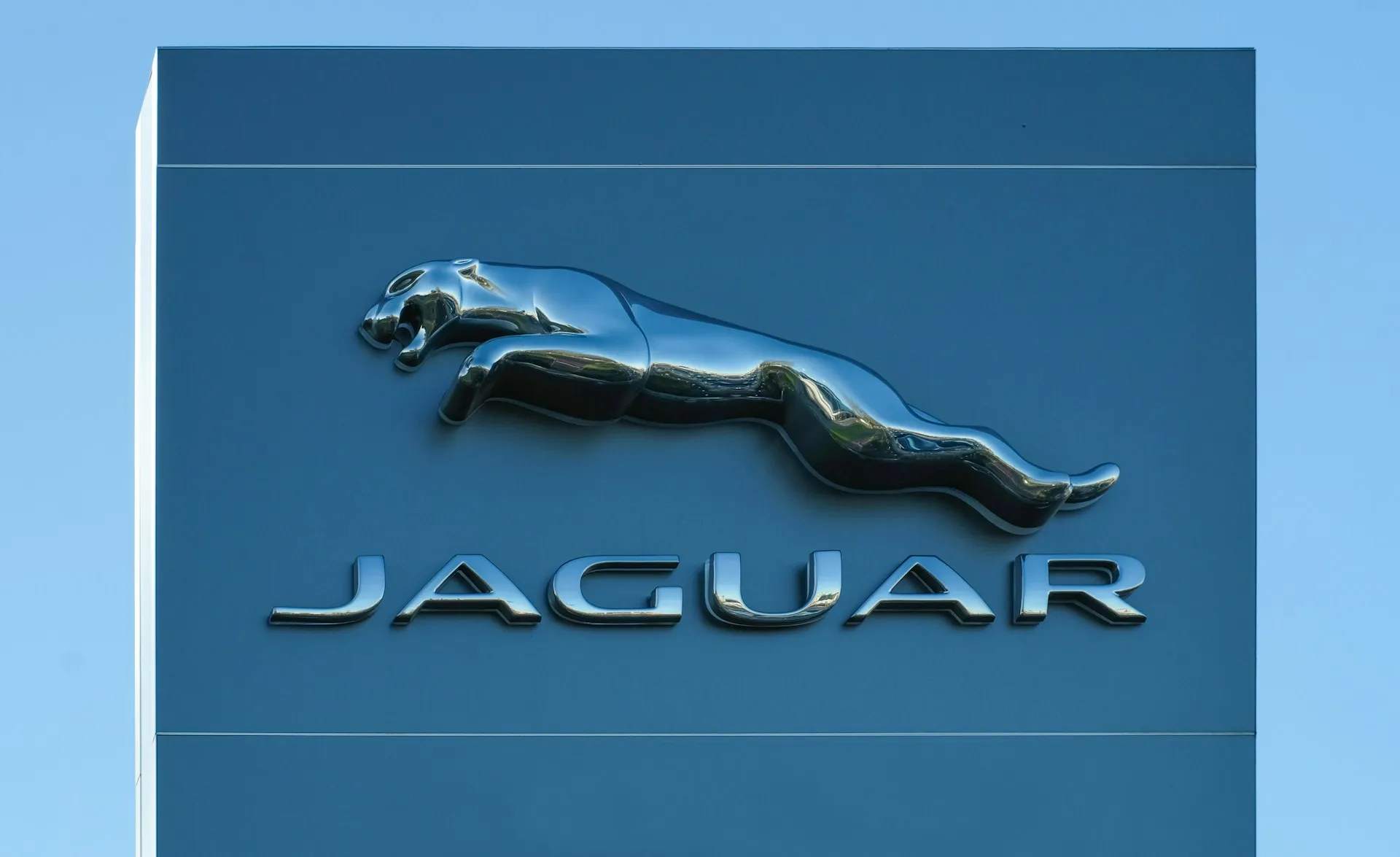
In late 2024, Jaguar Land Rover rebranded as an all-electric luxury brand. It replaced its well-known leaping jaguar logo with a simple name-style logo and used abstract marketing with slogans like “Copy Nothing.”
The change received heavy criticism and was widely discussed as a controversial auto rebrand. Elon Musk also publicly mocked the campaign.
Sales fell in 2024–2025, but this was mainly because Jaguar stopped making petrol and diesel cars before its new EV range was fully ready. The brand change added confusion during this transition.
Lesson: Big changes only work when customers can still recognize and follow the brand. Without that, even good brand strategy can feel unclear.
Kraft Heinz Unrealised Brand Value
In 2015, The Kraft Heinz Company was formed through a major merger backed by investor Warren Buffett.
After the merger, the company focused heavily on cost-cutting and efficiency. This improved short-term profits but reduced spending on product innovation, marketing, and brand development. Over time, some brands lost momentum and market share.
In 2019, the company recorded a large $15.4 billion impairment charge, reflecting that some of its brand assets had been overvalued.
The main issue was that brand building was treated more like a cost to reduce rather than an asset to grow. At the same time, integrating different corporate cultures proved difficult, which further weakened long-term brand performance.
Lesson: Cost efficiency can improve short-term results, but brands need continuous investment to stay relevant. In mergers, culture and brand management are just as important as financial strategy.
Celebrity‑Led Brands Failing
Star power does not replace brand strategy. A 2025 analysis found that over 80% of celebrity‑led brands in India struggle to survive despite high visibility.
Many are built “star‑first, product‑second,” without a coherent brand identity or clear consumer positioning beyond the celebrity’s image. When endorsement cycles end or controversies occur, the brands often have nothing to fall back on.

At Confetti, we have worked with both established and emerging FMCG and D2C brands. We understand what a category buyer looks for in a brand.
That category-specific experience is what separates strategic branding from aesthetic branding and it is the only kind that reliably moves business metrics.
Confetti's branding process is structured, strategic, and built for commercial outcomes. Here is how we work:
Phase 1: Brand immersion and discovery
We work directly with leadership through in-depth conversations to understand vision, audience, and challenges. This is dialogue, not a questionnaire.
Phase 2: Research and user personas
We study the market and build user personas. Consumer behaviour varies sharply across regions like India, EU or the UAE, so research ensures the brand fits real users, not assumptions.
Phase 3: Brand strategy framework
We define positioning, archetype, story, and communication structure. This becomes the blueprint for everything that follows.
Phase 4: Mood boards as strategy tools
We create 2–3 distinct mood boards combining imagery, typography, colour systems, and visual references. These translate strategy into clear visual direction.
Phase 5: Logo and identity system
Only after strategy is set do we design the logo. We test multiple concepts across real applications like packaging, social media, and print to ensure performance in context.
Phase 6: Packaging and digital presence
We extend the identity across packaging design, websites, and social media to ensure consistency across every touchpoint.
Phase 7: Guidelines and trademark support
We document full usage rules and support trademark readiness to protect long-term brand equity.
What we have built
Across 200+ brand projects, including work for FMCG and retail brands trusted by names like ITC and Dabur. Confetti's team blends strategy, cultural understanding, and creative precision.
Branding is not a one-time project. It is a structured system that scales with your business. We build it that way from the very first day.
What is the importance of branding?
Branding shapes what customers believe about your product before they use it. For Indian FMCG and D2C brands, it determines shelf visibility, digital conversion rates, pricing power, and long-term customer retention.
A strong brand lets you hold price under competitive pressure, earn shelf placement in modern trade, and build repeat purchase without discounting. Without it, businesses compete on price alone, a position that destroys margin and limits scale.
What are the five advantages of branding?
The five core commercial advantages of branding are:
Each advantage grows and adds up. A strong brand becomes harder and more expensive for competitors to replicate.
What is the rule of 7 in branding?
The rule of 7 states that a consumer needs to encounter a brand at least seven times before taking action.
In a fragmented media environment, where consumers interact with brands across physical retail, Instagram, quick-commerce apps, delivery packaging, and word of mouth, consistent branding across every touchpoint is what makes those seven impressions land as a single coherent identity rather than as seven disconnected ones.
What are the 5 C's of branding?
The 5 C's of branding are: Clarity (a precise, ownable definition of what the brand stands for), Consistency (the same visual and verbal signals across every touchpoint), Credibility (brand signals that match what the product actually delivers), Connection (emotional resonance with the target audience), and Competitiveness (clear differentiation from alternatives in the category). Weakness in any one of these creates a gap that either limits growth or requires expensive correction.
Why is branding important for D2C brands?
D2C brands in India operate across more touchpoints than traditional FMCG like Instagram, product pages, quick-commerce tiles, delivery packaging, unboxing moments, and WhatsApp re-engagement.
Inconsistency across these touchpoints fragments brand memory and lowers conversion. Strong branding makes every interaction reinforce the same perception, which compounds into recognition, preference, and unprompted repeat purchase, especially on quick commerce where reorder behaviour is almost entirely driven by brand recall.
Want strategic branding and packaging like this for your business?





.webp)
.webp)

.webp)
.webp)
.webp)
.webp)
.webp)







.svg)
.webp)