%201.webp)
02
AI Snaps
.svg)
.svg)
01
Our Work
03
About Us
04
Brand Audit
05
Contact Us
06
Client Success
12
07
Blogs
08
Careers
Book A Call
.svg)



.svg)
Need Help In Building Your Brand?
Click the button below & book a call with our founder directly.

Rishabh Jain
Managing Director
You've decided you need a rebrand or a new brand built from scratch. You've even shortlisted a few agencies. Now the real work begins, providing the brief to your branding agency in Dubai.
A branding brief is the most important document you will create in the entire engagement and the quality of the agency's output will largely depend on the brief. Here’s how you can get it right.
A weak branding brief may be polished, detailed, and full of visual references. The problem is usually what it doesn't tell the agency.
Here are some most critical pitfalls:
The Outputs vs. Outcomes Trap
Most weak briefs describe outputs instead of outcomes. Example:
“We need a new logo and brand identity for our snacks brand launching in Dubai”
Instead of :
“Our current identity makes us look similar to established competitors, and we need to establish a more distinctive premium position before entering the Dubai market.”
👉The first tells an agency what to produce not what the brand needs to achieve, the second brief gives the agency a problem to solve which changes the quality of the work that can follow.
If you prescribe the solution too early, you limit the agency before the design process has started. You may have a strong reason for wanting a particular colour, style, or logo treatment, but the brief should explain why rather than assume the solution.
You are hiring a branding agency for its ability to make those crucial decisions. Give it the context needed to make them well.
Information Overload
The opposite problem is an overloaded brief containing every presentation, research document, competitor link, internal opinion, and piece of historical brand material.
More information does not automatically create a better brief. The agency needs enough context to understand:
Focus on clarity without clutter. Supporting documents can be shared separately when they are genuinely needed.
Internal Disagreements
One of the most expensive problems is disagreement within your team.
The founder wants a premium identity, the marketing team wants something disruptive, and another stakeholder wants the brand to remain close to its existing identity.
The agency cannot solve that conflict through design.
Surface those disagreements before the project starts and agree on the decisions that are important. Otherwise, they tend to appear during presentations as conflicting feedback, sending the project back to fundamentals that should already have been settled.
A branding agency does not need you to arrive with the brand strategy already solved. Also it does not need every internal document you have. It does need the right context to understand the problem, make informed decisions, and recommend the right direction.
☑️Business context
Explain what the company does, who it serves, its current market position, and where the business is heading over the next 12–24 months. Relevant information about competitors, customer perceptions, or commercial constraints can help the agency understand the situation.
☑️Reason for the project
Be clear about what has changed or what is not working. This could be a new market entry, an outdated identity, a shift in audience, increased competition, or a need to reposition the business.
☑️Cear definition of success
Explain what the branding needs to achieve. Could be stronger differentiation, entering a new market, attracting a different customer segment, supporting expansion, or creating a more consistent brand across touchpoints.
☑️Specific audience
Avoid broad descriptions such as “everyone,” “SMEs,” or “premium customers.” Explain who actually makes the buying decision, what they value, what they may distrust, and what influences their choice.
☑️Constraints and working parameters
State what is fixed and what is open to change. Include relevant details such as whether the brand name is staying, which existing assets must be retained, the expected timeline, budget range, and who has final decision-making authority.
⚠️Your entire internal strategy library, every stakeholder's personal preference. A detailed description of what the logo should look like, a list of fonts you like, a reference to a competitor's brand that you want to copy.
⚠️They also do not need a brief that dictates creative execution. You are hiring experts, so trust their craft. If you tell them exactly what to do, you will get exactly what you asked for but not what you did not know to ask for.
Writing the brief is faster once you have this on hand, and the brief itself will be sharper.
1. Get Internal Alignment First
Decide who has final approval before the brief goes out. If several stakeholders can influence the project, agree on their roles and how conflicting feedback will be resolved. Otherwise, disagreements that could have been settled internally become agency revisions later.
Also define what is fixed and what is open to change. If the brand name must stay, certain assets need to be retained, or an existing element cannot be changed, make that clear from the start.
2. Gather the Business Context
Collect the information that helps the agency understand the business beyond its visual identity:
For a rebrand, gather existing brand guidelines, logo files, packaging, campaigns, website assets, and other relevant materials. The agency needs to understand what it is building on and what needs to change.
3. Prepare Practical Inputs
Have a realistic budget range and timeline ready. Include hard launch dates linked to events such as a retail launch, trade show, funding announcement, or market entry.
Also identify practical constraints the agency needs to account for, such as packaging specifications, production limitations, existing vendors, or regulatory deadlines.
If price positioning is important, relevant financial or category information can also help the agency make better strategic decisions.
4. Explain Your Reference Examples
References are useful when you explain what you like about them and why. Instead of saying “make it feel like Brand X,” identify the specific quality you admire, such as its restrained colour palette, packaging structure, photography, or tone of voice.
5. Financials and Category Data, where relevant
If price positioning is important to the project, share your current pricing against competitors, even roughly.
An agency designing packaging for a product priced 15% above the category average needs to know that before the first concept, not after they've designed something that reads mid-market.
6. Pressure-Test Your Own Clarity
Before sending the brief, ask:
If you cannot answer these questions, you must first resolve the gaps internally.
These sections apply whether you're in Dubai, Manchester, Mumbai, or anywhere else, but each one carries local weight when the market is the UAE.
Explain what your company does, who you serve, how long you have operated, and what has changed. Are you launching a product, entering the UAE, expanding across the GCC, facing new competition, or recognising that your current brand no longer works?
Dubai is a gateway to the Middle East, Africa, and South Asia, so clarify whether the brand needs to work across multiple markets or primarily in the UAE.
Define measurable outcomes rather than vague ambitions such as “look more premium.” For example: justify a 20% price increase, increase average basket size by 15%, or improve shelf visibility at Lulu or Carrefour.
In Dubai’s competitive retail, objectives should connect brand performance to commercial outcomes.
Describe who buys from you, where they shop, and what they currently think about your brand and competitors. Go beyond demographics: identify their motivations, concerns, trust signals, and emotional context.
Dubai’s population includes people from more than 200 nationalities, so specify whether you are targeting Indian expatriates, Western professionals, Arab families, or multiple segments.
Name three to five competitors you genuinely compete against. Explain what each does well, where they fall short, and what you do differently.
For a brand entering Dubai, consider established international players alongside direct category competitors. The goal is to identify a clear opportunity your brand can own.
Be precise about what you need: logo, packaging, brand guidelines, social templates, website design, retail signage, uniforms, and so on.
For Dubai, specify whether deliverables need Arabic-English bilingual applications, including packaging and guidelines. Also clarify how Arabic should be treated and whether the brand name will be translated.
State your launch date, key milestones, retail deadlines, seasonal opportunities, and budget or budget range.
Dubai’s retail calendar includes important windows such as Ramadan, Eid, GITEX, and Dubai Shopping Festival.
A good brief should answer one question: Could an agency understand the problem well enough to make informed decisions on your behalf?
The clearer the brief, the stronger the strategic and creative output.
A branding brief for Dubai needs to cover more than the usual audience, positioning, and visual preferences. The market context can affect language, approvals, compliance, launch timing, and where the brand will appear.
If Arabic will appear alongside English, state this before the agency begins the identity or packaging work. Arabic is not just a translation layer added to an existing English layout. Language direction, typography, hierarchy, and available space can all affect the design system.
Specify:
Dubai-based projects can involve founders, family-business stakeholders, regional teams, or a head office in another country. If approvals involve more than one person, company, or location, identify them in the brief.
State who provides input, who has final approval, and whether any stakeholder has the authority to reject a direction after it has been approved internally. This gives the agency a clear decision-making structure and reduces avoidable rework.
Some branding and packaging projects have compliance requirements that directly affect design. These may include Arabic labelling, country-of-origin information, conformity requirements, halal considerations, or other product-specific rules.
The brief does not need to contain a legal interpretation. It should flag the requirements that apply and identify who is responsible for confirming them. This allows the agency to account for known constraints rather than discovering them during production.
Tell the agency whether you are:
An established brand may have existing equity, recognition, and assets that need to be protected. A new brand has more freedom to establish its positioning and identity from the beginning.
If the brand will sell through supermarkets, specialty retail, e-commerce, quick commerce, hospitality, or gifting, state this upfront. Each channel can create different requirements for how the brand needs to perform.
For packaging projects, also flag practical production considerations such as existing packaging formats, printer or supplier limitations, structural requirements, and environmental conditions that may affect materials or adhesives.
Conflicting stakeholder opinions are one of the biggest threats to a successful branding project. If they are not resolved before the brief is written, they will surface during the project and they will be far more expensive to resolve then.
Identify Everyone Who Has a Say
List everyone who needs to provide input or approve the work. This should include stakeholders who may not be involved day to day but still have the authority to reject the final direction.
For each person, clarify their role and what they are responsible for approving. This prevents a stakeholder from appearing late in the project with a completely different expectation.
Hold a Pre-Brief Alignment Session
Before writing the brief, bring the key decision-makers together and agree on three things:
You do not need to force everyone to have the same opinion. If there is a genuine disagreement, make it visible. For example, if one stakeholder wants a significant departure from the existing identity while another wants to preserve its established equity, tell the agency. That is a strategic problem they can help solve.
Establish One Final Decision-Maker
Other stakeholders can provide input, but there should be a clear final authority when opinions conflict. Make this explicit in the brief and agree internally on how feedback will be consolidated before it reaches the agency.
Document the Agreement
Record the decisions made during the alignment process. The brief should reflect the agreed objectives, constraints, stakeholder roles, and approval structure.
The quality of the agency's response tells you as much about the agency as the brief tells them about you.
Do they ask useful questions?
A good agency should identify gaps or assumptions in your brief. Their questions should make the business challenge, audience, positioning, or scope clearer. An agency that moves straight to a quote without engaging with the brief may be relying on assumptions.
Do they show that they understood your situation?
Look for a response that reflects the specifics of your brief. They should be able to summarise what they believe the challenge is, what needs to change, and what the project needs to achieve. A generic proposal with your company name inserted is a warning sign.
Do they challenge the brief where necessary?
You are hiring an agency for its expertise, not just its ability to execute instructions. If something in the brief does not make strategic sense, a strong agency should explain why and suggest a better approach.
Is the process clear?
They should be able to explain how the project will move from discovery and strategy through design and final delivery. You should understand what happens at each stage, when decisions are made, and what they need from your team.
Is the scope specific?
The proposal should clearly state what is included, such as deliverables, concepts, revision stages, timeline, and fees. Avoid comparing agencies based only on the final price. Compare what you are actually getting for that investment.
Does the timeline match the work?
The proposed schedule should reflect the complexity of your project. A bilingual identity, packaging system, or multi-market rebrand may require more stages than a straightforward visual refresh.
The best response should leave you with more clarity than you had when you sent the brief. If it does, you have a stronger basis for comparing agencies and deciding who is actually equipped to solve the problem.
At Confetti, we receive briefs from founders, marketing leads, and brand managers across the UAE and beyond. Here is what we look for when we read them and what separates great work from confusion:
✅The business problem behind the request
If a brief says, “We need a new logo,” we want to know why. Is the brand entering a new market? Has your business outgrown its current identity? Is it struggling to differentiate from competitors?
The deliverable is important, but the reason behind it gives us the context to solve the right problem.
✅A real understanding of the audience
We look for more than demographic labels. What does the audience value? What makes them trust a brand? What might make them hesitate?
Even if you do not have formal customer research, sharing what you know from conversations, sales, or experience can make the brief more useful.
✅Honest constraints
Budget, timeline, existing assets, production limitations, and internal approval structures all affect how a project should be approached. We would rather know about these constraints at the beginning than discover them halfway through the work.
If something is still uncertain, say so. A useful brief does not need to pretend that every answer has already been decided.
✅Dubai-specific requirements
For UAE projects, we also look for practical details that can affect the scope from the beginning.
These might include Arabic and English requirements, multiple approval teams, retail channels, packaging considerations, or category-specific compliance requirements.
These details help determine how the project should be scoped and planned.
✅Room for expertise
Finally, we look for a clear distinction between what you know and what you want us to solve.
Tell us the problem, the objective, the audience, and the boundaries. You do not need to decide the logo style, colour palette, typography, or creative route before hiring us.
The strongest briefs give us enough information to ask better questions, challenge assumptions where necessary, and develop a direction that is grounded in the business rather than simply following a predetermined visual solution.
Ready to brief your branding project? Schedule a consultation.
Before the brief leaves your inbox, run it against this list. Missing even one of these is usually where projects lose their first two weeks.
Standard Pre-Brief Essentials
☐ Decision-maker named, one person (or a small group with a stated process) has final sign-off. Not "the team will review."
☐ Budget range stated, a number or range, not "let's discuss." Agencies scope differently for AED 40,000 than for AED 150,000.
☐ Timeline with hard dates, not "as soon as possible" — the actual launch date, trade show, or retail deadline driving it.
☐ Existing assets attached like old logo files, brand guidelines, packaging photos, past campaign material, sent, not described.
☐ Audience defined in one paragraph, who buys this, where, and why even a rough draft beats a blank field.
☐ Reference brands with reasons. Three to five examples, each with the specific element you're pointing at.
☐ Market context flagge,. is this a UAE launch of an existing brand, a new brand built for the region, or an India-to-Dubai expansion?
☐ Internal conflicts resolved, not hidden. If stakeholders disagree, name it in the brief rather than let the agency discover it in round two.
Dubai-Specific Pre-Brief Essentials
☐ Retail channel specified like Lulu Hypermarket, Carrefour, Spinneys, boutique, or e-commerce? Each channel requires different packaging.
☐ Arabic language treatment decided. Is Arabic primary or secondary? Has the brand name translation been checked for cultural appropriateness?
☐ Climate considerations flagged. Dubai's 45°C+ temperatures and humidity require UV coating, heat-resistant adhesives, and humidity-tested materials.
☐ Regulatory requirements listed: ECAS conformity marks, halal certification, Arabic labelling, date markings, list them all.
☐ Gifting economy acknowledged. Ramadan and Eid represent 31% of annual revenue. If your brand needs to perform as a gift object, say so.
☐ Competitive set named with UAE-specific context. Not global competitors, the ones on Lulu and Carrefour shelves.
☐ Retail Ready Packaging (RRP) requirements stated. Major chains increasingly require RRP. Specify if you need it.
☐ Influencer and creator strategy flagged. UAE Media Council's Advertiser Permit is mandatory from 1 February 2026.
☐ Third-party approval timeline noted. Retailer approvals, regulatory approvals, factor them into the schedule.
☐ Previous attempts documented if you've tried branding before and it didn't work, explain why.
Quick Summary
Send these three things separately:
☐ One-page summary with business problem, success definition, decision-maker, budget, timeline, the one thing the agency must know about Dubai
☐ Full brief document with all sections above, detailed
☐ Asset pack with logo files, guidelines, photos, references
What should I include in a branding brief if I don't have a marketing team?
Focus on what only you know: your business goals, your budget, your timeline, and honest reference examples with reasons attached. An experienced agency like Confetti Design Studio will help structure the rest through a discovery call, you don't need marketing language, just accurate information.
How detailed does a branding brief need to be before contacting an agency?
Detailed enough to cover objectives, audience, budget, timeline, and any existing assets. It doesn't need to be polished or long. A clear one-page document beats a vague ten-page one every time.
Do I need a brief ready before the first meeting with a branding agency?
Not necessarily a final one, but come with the raw material: budget range, timeline, business context. Many agencies will help refine the brief together in that first conversation, but you need the facts on hand first.
What's the difference between a creative brief and a project brief?
A project brief covers logistics: timeline, budget, deliverables, stakeholders. A creative brief goes deeper into brand strategy, audience, and positioning. Most branding projects need both, and they're often combined into one document.
Should the brief include a budget, or is that discussed separately?
Include a range in the brief itself. Agencies scope differently at different budget levels, and a proposal built without a number attached is usually a generic one, not a tailored one.
Can an agency help me write the brief if I'm not sure where to start?
Yes, most established agencies, including ours, will run a discovery call to help pull the brief together if you're starting from a blank page. Come with whatever raw information you have, even if it's incomplete.
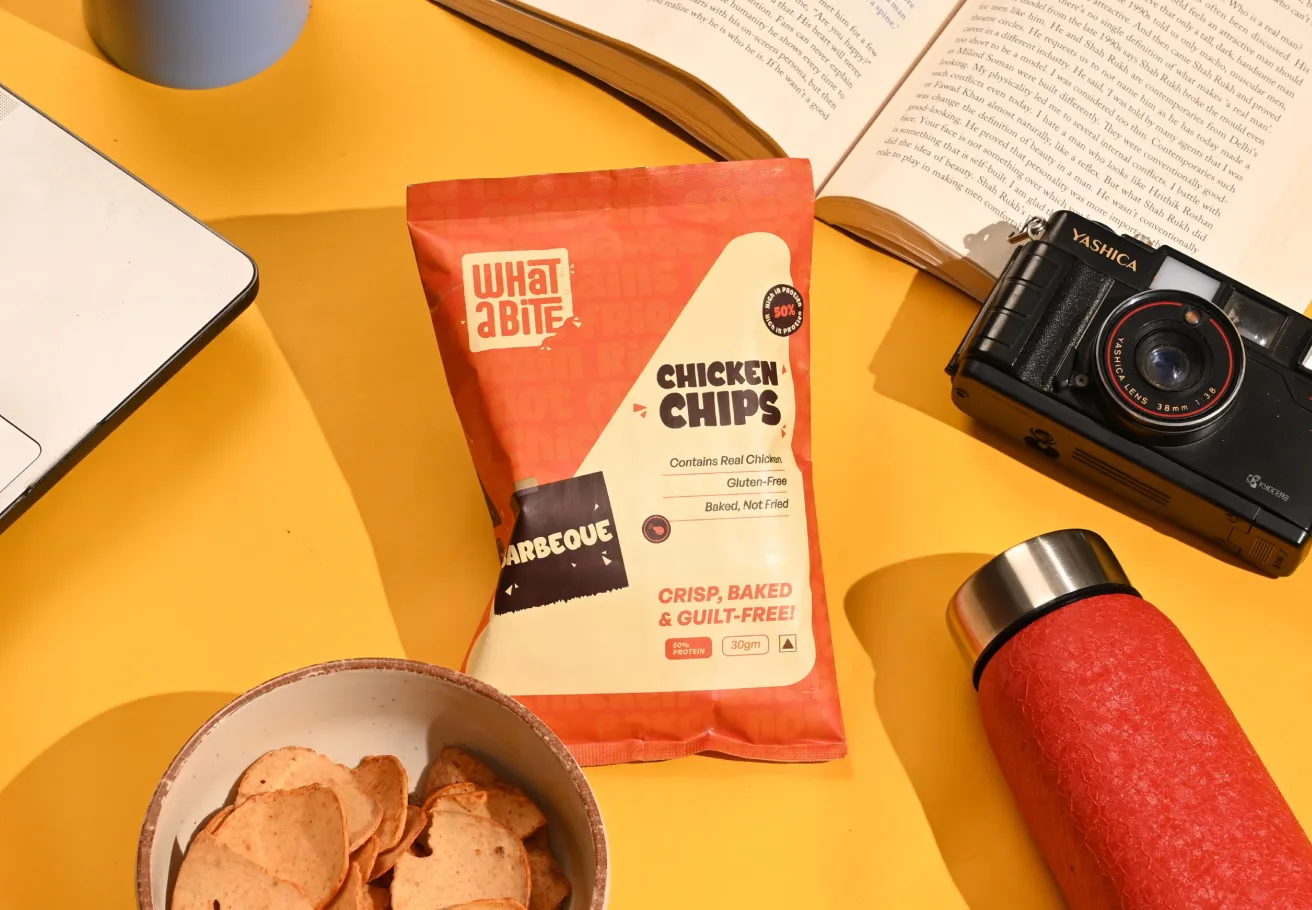
Want strategic branding and packaging like this for your business?





.webp)
.webp)

.webp)
.webp)
.webp)
.webp)
.webp)







.svg)
.webp)