%201.webp)
02
AI Snaps
.svg)
.svg)
01
Our Work
03
About Us
04
Brand Audit
05
Contact Us
06
Client Success
12
07
Blogs
08
Careers
Book A Call
.svg)



.svg)
Need Help In Building Your Brand?
Click the button below & book a call with our founder directly.

Rishabh Jain
Managing Director
A branding budget allocates funds for activities that build and maintain brand identity, covering design, advertising, content creation, and market positioning.
Whether you're bootstrapping or investor-backed, knowing how much branding will cost is crucial to avoid overspending while still building a brand that resonates.
In this guide, we break down realistic branding costs for startups, explore branding agency rates, and share how to plan your brand design budget without losing focus on growth.

A branding budget is the portion of a company’s budget dedicated to defining and strengthening how the business is perceived in the market.
It focuses on building a clear identity, consistent visual presence, and a compelling brand narrative that customers recognize and trust.
Let’s break it down:
Most people think branding is about a fancy logo or a catchy tagline. In reality, branding is the first layer of trust between your product and your customer.
Over 75% of consumers judge a company’s credibility based on visual branding alone. That means before a customer ever touches your product, they’re making decisions based on how your brand looks and feels.
Strong branding builds recognition, trust, and loyalty. It helps your product stand out, makes your marketing more effective, and can even help you charge a premium.
For D2C brands, where customers often buy online without ever seeing the product in person, branding is your silent salesperson.
Here’s what you’ll usually find in a branding package:
Before design work starts, businesses need clarity on positioning, audience, and differentiation. This is where brand strategy comes in.
This phase ensures the brand communicates a clear, differentiated message before visual assets are created.
Brand strategy investments:
Example: A company entering a crowded FMCG market may invest in research to identify a positioning gap such as sustainability, health benefits, or regional authenticity.
Visual identity is the most recognizable part of a brand.
These elements create the visual system that customers associate with the brand across websites, packaging, advertising, and social media.
Covers:
For D2C brands, visual identity also impacts shelf visibility and recognition, which directly influence purchase decisions.
This portion of the branding budget focuses on defining the brand voice and messaging system.
Clear messaging ensures consistency across every touchpoint, from product packaging to social media posts.
Deliverables include:
Brand guidelines act as the operational manual for the brand.
They ensure internal teams, agencies, and partners use the brand consistently across all channels.
Guideline includes:
Brands today interact with customers primarily through digital channels, so branding budgets often include the design of key digital touchpoints.
May include:
While website development may partly fall under marketing or product budgets, the visual and experiential design of the website is generally considered a branding investment.
For retail and FMCG businesses, packaging design is one of the most influential branding investments.
It includes:
Well-designed packaging helps products stand out in crowded retail environments and reinforces brand recognition.
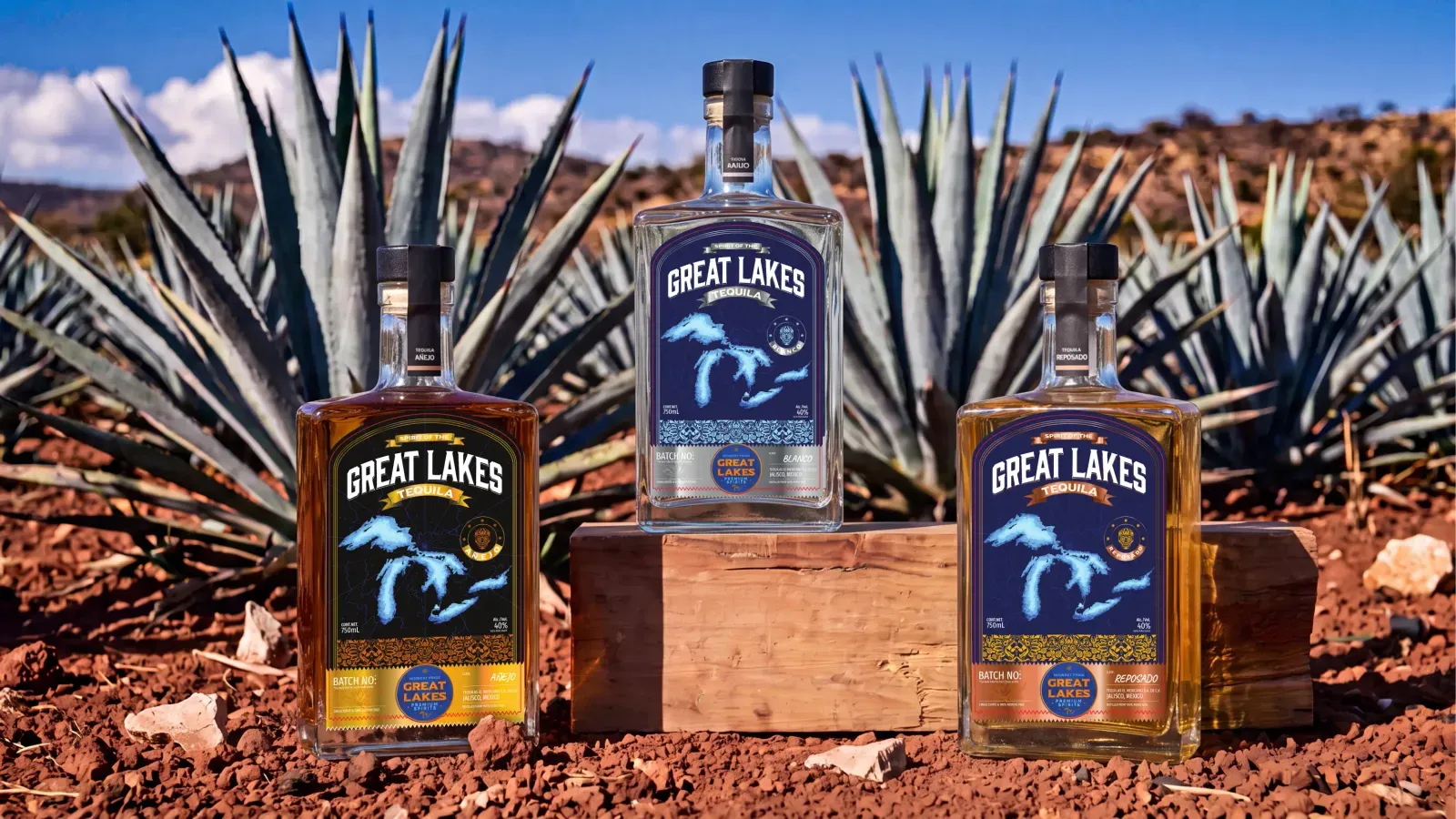
Explore some of the packaging transformations we accomplished at Confetti ✨
Visual storytelling plays an important role in brand perception.
Many branding budgets include:
These assets ensure that marketing campaigns and digital platforms maintain a consistent visual style aligned with the brand identity.
With the advent of AI, brands are rethinking visual production as AI-generated photography now delivers highly realistic results, making it faster and more cost-effective to create marketing imagery.
Branding is not a one-time project. It requires ongoing management to maintain consistency and relevance.
Many companies often allocate part of the branding budget to:
Many organizations allocate 10–15% of the branding budget annually for maintenance and updates.
Many agencies, including Confetti, offer these branding services as part of a full brand identity package, making it easy for D2C businesses to get everything they need in one place.
Companies that treat branding and marketing budgets as the same often overspend on short-term campaigns while underinvesting in the brand foundation that drives long-term growth.
Key Differences Between Branding and Marketing Budgets:
Branding creates the strategic foundation, while marketing activates that foundation to drive business results.
A strong brand makes marketing more effective because customers already recognize and trust the company.
Without branding:
Conversely, branding without marketing can limit growth because customers may never discover the brand.
Successful companies treat both as complementary investments.
Example: Branding builds the identity, packaging, and positioning + Marketing promotes products through ads, campaigns, and content.
Together, they create a system where brand recognition attracts attention and marketing converts that attention into sales.
Most businesses allocate 5–15% of total revenue to branding and marketing combined. The exact percentage depends on factors such as business size, industry competition, growth stage, and long-term goals.
New brands need to invest more because they are building awareness from scratch, while established companies tend to focus on maintaining and evolving their brand.
The 60/40 rule in marketing & branding suggests allocating:
This balance supports short-term revenue while building long-term brand equity.
Short-term marketing effects fade quickly, while brand investment compounds over time.
Brand building improves brand recall, customer trust, organic search demand and repeat purchases.
✨Companies balancing brand + performance tend to achieve higher long-term ROI than those relying only on paid acquisition.
The rule 60/40 Ratio is a guideline, and is not set in stone. Here are some situations where you can consider altering the allocation:
70/30 (Brand-heavy)
50/50 (Balanced)
40/60 (Performance-heavy)
Branding investments usually scale with revenue, organizational complexity, and market reach.
Here are common benchmarks based on business size.
At this stage, companies should prioritize building a strong brand foundation rather than spreading resources across too many initiatives.
Branding investments you can consider:
At the growth stage, branding becomes more complex because the brand must operate across multiple platforms and customer touchpoints.
So, the focus needs to be on strengthening recognition and maintaining consistency across scale.
Key investments include:
Large organizations treat branding as a strategic function rather than a one-time project.
Managing brand consistency across regions, teams, and product portfolios becomes a major priority at this level.
Common enterprise branding investments:
It depends on your stage and goals. Here’s a realistic breakdown:
For D2C brands in India, pricing can be a bit lower due to local agency rates, but the quality of work and the essentials remain the same.
Affordable branding for startups is possible, but don’t cut corners on the things that matter most.
Different industries require different levels of branding investment because of varying competition, customer expectations, and purchase behavior.
Let’s quickly look at the common benchmarks:
💰Recommended allocation:15–25% of revenue in early stages.
These brands rely heavily on brand identity because they often lack physical retail distribution.
D2C brands often succeed when packaging and unboxing experiences become shareable across social platforms.
Branding Priorities:
💰Recommended allocation: 8–15% of revenue.
In fast-moving consumer goods, branding is heavily tied to packaging design, shelf visibility, and brand recall.
For FMCG companies, packaging design often acts as the primary marketing channel at the point of purchase.
Branding Priorities:
Our work with brands like ITC, Dabur, and Aashirvaad all involved significant investment in enhancing shelf impact, setting up new visual hierarchies, and modernising while retaining core values
💰Recommended allocation: 10–18% of revenue.
E-commerce brands compete in an environment where customers compare products instantly across multiple platforms.
A strong digital brand experience can significantly improve conversion rates.
Branding Priorities:
💰Recommended allocation: 10–20% of revenue, especially in early growth stages.
Technology companies often invest heavily in branding to clarify complex value propositions, build credibility with enterprise buyers, reduce customer acquisition costs, and strengthen long-term market positioning.
Branding Priorities:
As SaaS companies scale, branding helps create category leadership and long-term differentiation.
Once you decide how much to invest in branding, the next question is where that money should go.
Before we go into details, here’s how the allocation may look:
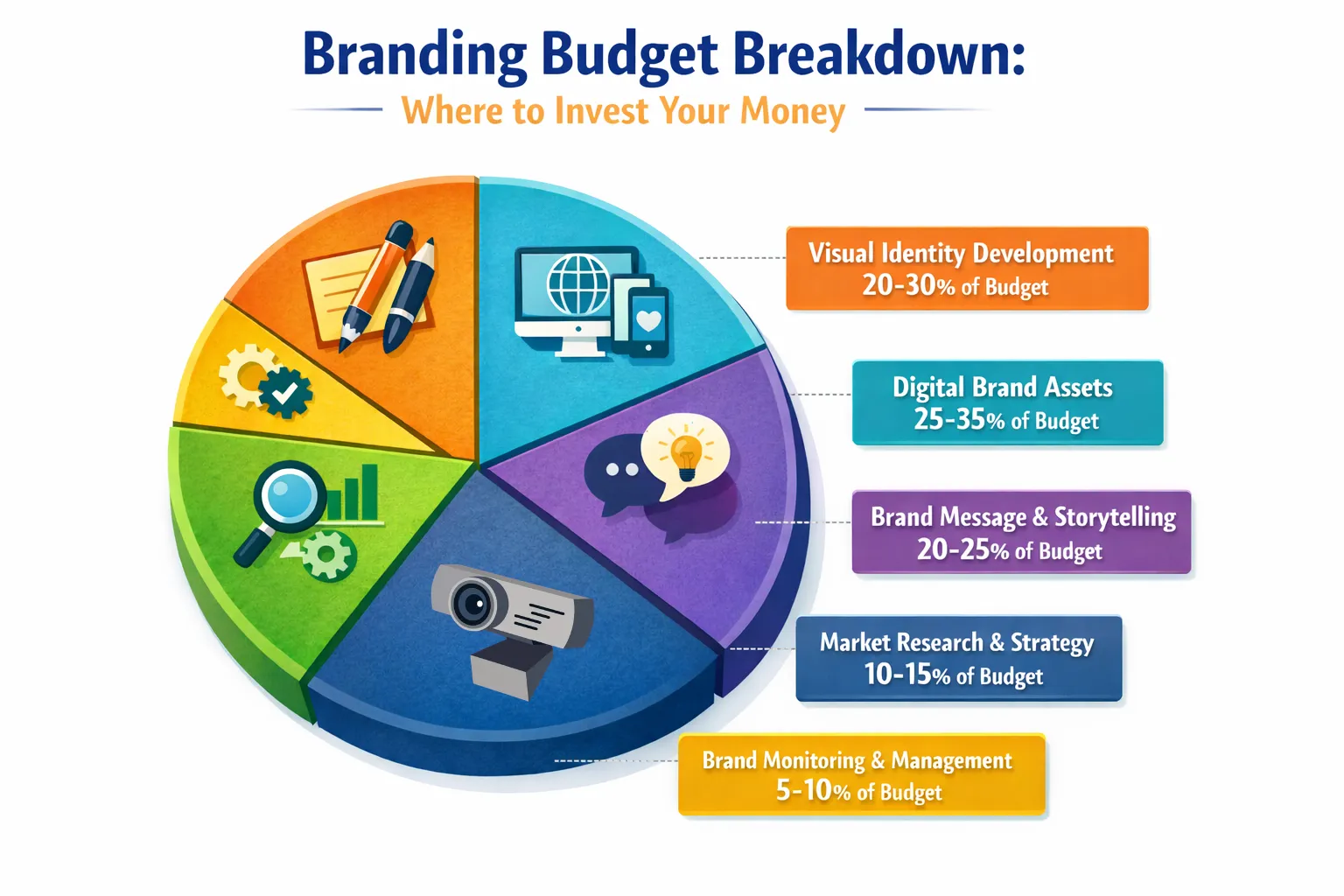
A well-developed visual identity helps customers quickly recognize your brand and creates consistency across every interaction.
Allocating 20–30% of your branding budget to visual identity ensures the brand has a strong and memorable visual foundation.
Research by Adobe shows that brands with consistent visual presentation can experience over three times greater brand visibility compared to inconsistent branding.
Today, most customers experience a brand online before encountering it anywhere else.So, digital assets often receive the largest share of the branding budget.
This category typically accounts for 25–35% of total branding investment.
While visual design attracts attention, stories and messaging create emotional connection. Content helps communicate what the brand stands for and why it exists.
Original messaging is especially valuable because it differentiates the brand from competitors who rely heavily on generic stock imagery or templated messaging.
Organizations such as Forrester have reported that businesses with deep customer insights often see higher customer satisfaction and stronger retention.
Therefore investing in this foundational stage is of utmost importance.
Although it receives a smaller portion of the budget, it often has the greatest influence on branding success because it guides every decision that follows.
Branding does not end once the identity and messaging are created. Companies must also monitor and maintain brand consistency over time.
Ongoing monitoring ensures the brand remains consistent, relevant, and aligned with its strategic goals.
Here’s a step-by-step framework that will help you frame a branding budget:
Start by clarifying why you need branding: launching a new brand, refreshing an outdated one, or executing a full rebrand.
Each scenario requires different investment levels.
Set Clear and Measurable Goals: Define measurable targets. For example:
Follow the SMART framework: Specific, Measurable, Achievable, Relevant, and Time-bound.
Identify Metrics That Measure Branding Success: Branding results can be measured through several indicators:
Before investing in new branding, review your existing assets. A brand audit helps identify what to reuse, improve, or replace.
Inventory Your Assets
Evaluate Quality: Score each asset from 1–5:
5 = excellent/on-brand • 4 = good (minor updates) • 3 = outdated • 2 = poor/inconsistent • 1 = missing
Identify “Brand Debt”: Brand debt is the buildup of outdated or inconsistent branding. Common signs:
High brand debt usually means more upfront investment is needed before expanding the brand.
Once you know your goals and brand gaps, decide what to tackle first. Most budgets can’t fix everything at once.
Use an Impact vs Effort Matrix
Rank initiatives by impact and effort:
✅High Impact + Low Effort: Do immediately
✅High Impact + High Effort: Plan and budget carefully
✅Low Impact + Low Effort: Do later
✅Low Impact + High Effort: Avoid for now
Allocate 60–70% of your budget to high-impact work.
Apply the MoSCoW Method
✅Must Have (≈60%) – Essential
✅Should Have (≈25%) – Important
✅Could Have (≈10%) – Nice to add
✅Won’t Have Yet (≈5%) – Future ideas not needed now.
With priorities defined, you can begin researching market pricing and potential partners.
Costs vary widely depending on the provider.
Compare Vendor Types
Watch for Hidden Costs: Budget for additional expenses such as: font licensing, website hosting and domains, software subscriptions, etc.
We recommend a 15–20% contingency buffer to manage unexpected costs.
With cost estimates in hand, you can construct the actual budget structure.
Start with the total available investment based on revenue, marketing allocation, or available cash flow.
Example $10,000 Branding Budget
This structure ensures the budget supports both brand development and long-term management.
Large branding investments are easier to manage when spread across phases. Spread it across different quarters in a year.
Phasing prevents early overspending and allows learning and adjustments over time.
Once the budget is drafted, present it to leadership or stakeholders.
Focus on explaining:
Position branding as a long-term strategic investment, not just a design expense.
Effective branding isn’t about how much you spend. It’s about clarity, consistency, and smart prioritisation.
Large companies may invest heavily, but small businesses can still build strong brands by focusing on what matters most and expanding as revenue grows.
Remember: “Don’t try to do everything at once. Do the right things first.”
Start with Strategy, Not Design
A common mistake is jumping straight into logos or websites before answering key questions:
Without clear answers, businesses often redesign later, wasting time and money.
Instead, define your brand purpose, ideal customer, competitors, and core message first.
Tools like the Value Proposition Canvas, customer interviews, and simple competitor research can help. Strategy costs little but prevents expensive mistakes.
Consistency Is Your Biggest Advantage
Consistency is the most powerful low-cost branding tool. Even simple brands become memorable when applied consistently. Start with:
A simple but consistent brand beats an expensive, inconsistent one.
Use Affordable Professional Tools
Modern tools make quality branding accessible:
Design
Photography
Websites
Follow the 80/20 Rule
Focus your budget on the assets that shape perception most.
Must-Fund
Add Later
Skip for Now
Save Smartly Without Looking Cheap
Reduce costs by using high-quality templates, creating content in-house, encouraging user-generated content, and working with freelancers instead of agencies.
However, never compromise on logo quality, website performance, clear messaging, or professional photography—these strongly affect trust.
Invest in One High-Impact Asset
When budgets are tight, focus on one asset that matters most:
One outstanding asset can dramatically improve credibility.
Build Your Brand in Phases
Branding works best as a gradual process.
Year 1 — Foundation
Logo, basic website, photography, core messaging
Year 2 — Expansion
Video, social templates, content library
Year 3 — Optimisation
Design systems, marketing automation, deeper brand experiences
Most brands waste 30-40% of their branding budget on initiatives that don't move the needle.
At Confetti, our focus is simple: help brands invest their branding budgets in ways that create measurable impact.
One of the most common reasons branding budgets get wasted is poor prioritization.
Most agencies want bigger budgets. Confetti wants smarter budgets.
Many companies invest heavily in design assets, advertising campaigns, packaging redesign, and marketing materials
But they do this before clearly defining their brand positioning.
At Confetti, every branding engagement begins with strategic discovery. This process includes:
When strategy comes first, every design and marketing decision becomes clearer and more effective.
Example: B Natural Packaging
During Confetti’s work with ITC’s B Natural, strategic insights revealed an opportunity to differentiate the brand through distinctive illustration-based packaging.
Instead of following the common industry approach of using fruit photography on packs, the branding investment focused on creating a unique illustration style. This helped the product stand out clearly on retail shelves.
Confetti creates phased implementation roadmaps that build brand equity progressively:
Foundation Phase (Months 1-3): Focus investment on strategic positioning, core visual identity, and essential touchpoints.
Build the strongest possible foundation without overspending on premature optimization.
Growth Phase (Months 4-9): Expand brand presence across key channels, develop content libraries, and establish consistency systems.
Scale what's working while maintaining budget discipline.
Optimization Phase (Months 10-12+): Refine messaging, test variations, and invest in advanced brand experiences.
Optimize based on real performance data, not assumptions.
Confetti's proprietary scoring system evaluates every potential branding investment across four dimensions:
Impact Potential: How much will this move key brand metrics?
Resource Efficiency: What's the ROI relative to investment?
Strategic Alignment: Does this support core positioning?
Implementation Risk: What's the probability of successful execution?
This framework prevents emotional decision-making and gut-feel budgeting.
Every dollar gets allocated based on measurable business impact.
Confetti offers flexible engagement models matching your budget reality:
Sprint Model: Intensive 4-6 week projects tackling specific brand challenges with fixed budgets and clear deliverables.
Retainer Model: Ongoing strategic partnership providing continuous optimization, monthly audits, and proactive brand management.
Project-Based Model: Comprehensive brand development with phased payments aligned to milestone delivery.
Advisory Model: Strategic guidance for brands with internal teams needing expert direction without full execution.
Whether working with startups or established companies like Aashirvaad and Bingo!, Confetti’s goal remains the same: help brands make smarter decisions about where their money goes.
How much should a startup spend on branding?
The branding cost for startups can range widely from ₹50,000 to ₹5 lakhs or more in India. depending on the scope and the agency or freelancer involved. A lean D2C brand can start with affordable branding for startups, focusing on essentials like logo, color palette, and packaging design. As a benchmark, allocating 5–10% of your total launch budget toward branding is a good starting point. Consider your product category, audience, and long-term goals when planning your startup branding pricing.
What’s the difference between logo design and full branding?
A logo is just one part of your brand identity. While logo design gives you a recognizable visual mark, full branding includes strategy, messaging, tone of voice, visual systems, packaging, and digital assets. When you invest in full brand identity pricing, you're building a cohesive ecosystem that shapes how your audience sees, hears, and connects with your brand across all touchpoints.
What budget should I keep aside for my pre-launch branding?
For pre-launch, it’s smart to keep aside ₹1–3 lakhs (or $1,500–$5,000) for essential branding—especially for D2C branding cost in India. This includes logo, color palette, font system, basic website visuals, and packaging design if applicable. If you’re bootstrapped, you can start lean with freelancers or studios offering affordable branding for startups, and scale later as revenue grows.
Can branding improve conversion and customer trust?
Yes, strong branding directly impacts how packaging affects buying decisions, perceived quality, and brand loyalty. A well-thought-out identity builds recognition and emotional connection, making it easier for customers to convert and come back. Great branding reduces buyer hesitation and builds trust, which is critical in crowded D2C markets.
How do you create a branding budget with limited funds?
Start with essentials (logo, basic website, brand guidelines), use budget-friendly tools, phase your rollout, and scale as revenue grows.
What's included in a typical branding budget?
Logo design, website, brand guidelines, marketing collateral, photography, copywriting, market research, and ongoing brand management.
How do you measure branding budget ROI?
Track brand awareness, search volume for branded terms, customer perception scores, share of voice, and lifetime customer value increases.
Want strategic branding and packaging like this for your business?





.webp)
.webp)

.webp)
.webp)
.webp)
.webp)
.webp)






.svg)
.webp)