02
AI Snaps


01
Our Work
03
About Us
04
Brand Audit
05
Contact Us
06
Client Success
12
07
Blogs
08
Careers
Book A Call




Need Help In Building Your Brand?
Click the button below & book a call with our founder directly.

Rishabh Jain
Managing Director
The right D2C skincare brand identity agency can help you define how your brand is positioned and how it looks, sounds and behaves wherever buyers meet it.
As a branding and packaging specialist with experience in skincare branding, this post is meant to help you answer: what you need to be looking at, what branding agency should deliver, how to evaluate one, what you will need to bring, and what affects cost and timeline.
Choosing the right partner starts with identifying the problem your D2C skincare brand needs to solve.
We see brands come up to us with different problems assuming that they fall under brand identity services.
However, each option serves different purposes, and hiring the wrong one can leave you with attractive assets but no coherent brand.
Skincare customers often cannot evaluate a formula before buying. They rely on product claims, packaging, website design, imagery and reviews to judge whether a product deserves their money.
If your brand positioning and identity are unclear, a marketing agency may amplify the confusion. Your ads, influencer content, product pages and packaging can communicate different messages, making it harder to build recognition and trust.
A brand identity agency addresses the foundation: what your brand stands for, who it serves, why its products are different and how that difference should appear across customer touchpoints.
A packaging studio then translates the identity into physical products, while a marketing agency helps bring those products to market.
Hiring a full service studio like Confetti that handles both branding and packaging design is recommended for a more consistent and cost effective approach.
A capable freelancer can be the right choice when you need a logo, basic identity or a limited set of assets. However, a growing skincare range may require broader strategic, packaging and digital expertise than one person can provide.
▶️Choose based on the problem, not the agency's service list. If your brand lacks a clear identity, establish that foundation before investing heavily in customer acquisition.
If the identity is already working and sales are underperforming, a marketing partner may be the more immediate priority.
Skincare brand identity work has always involved packaging, claims and trust. Selling direct to consumers changes where those are tested and what the identity has to do.
Brands such as Forest Essentials, Minimalist, Dr. Sheth’s and Dot & Key show how different identity systems can serve different positions.
Minimalist uses clinical design and visible ingredient information, while Dot & Key uses colourful, playful packaging design.
A new brand needs a clear position and a recognisable identity to compete without relying mainly on discounts or paid acquisition.
For D2C skincare brands, identity must do five jobs:
The physical experience is also important. Without a beauty adviser at the point of purchase, packaging, inserts and unboxing help introduce the product and guide its use.
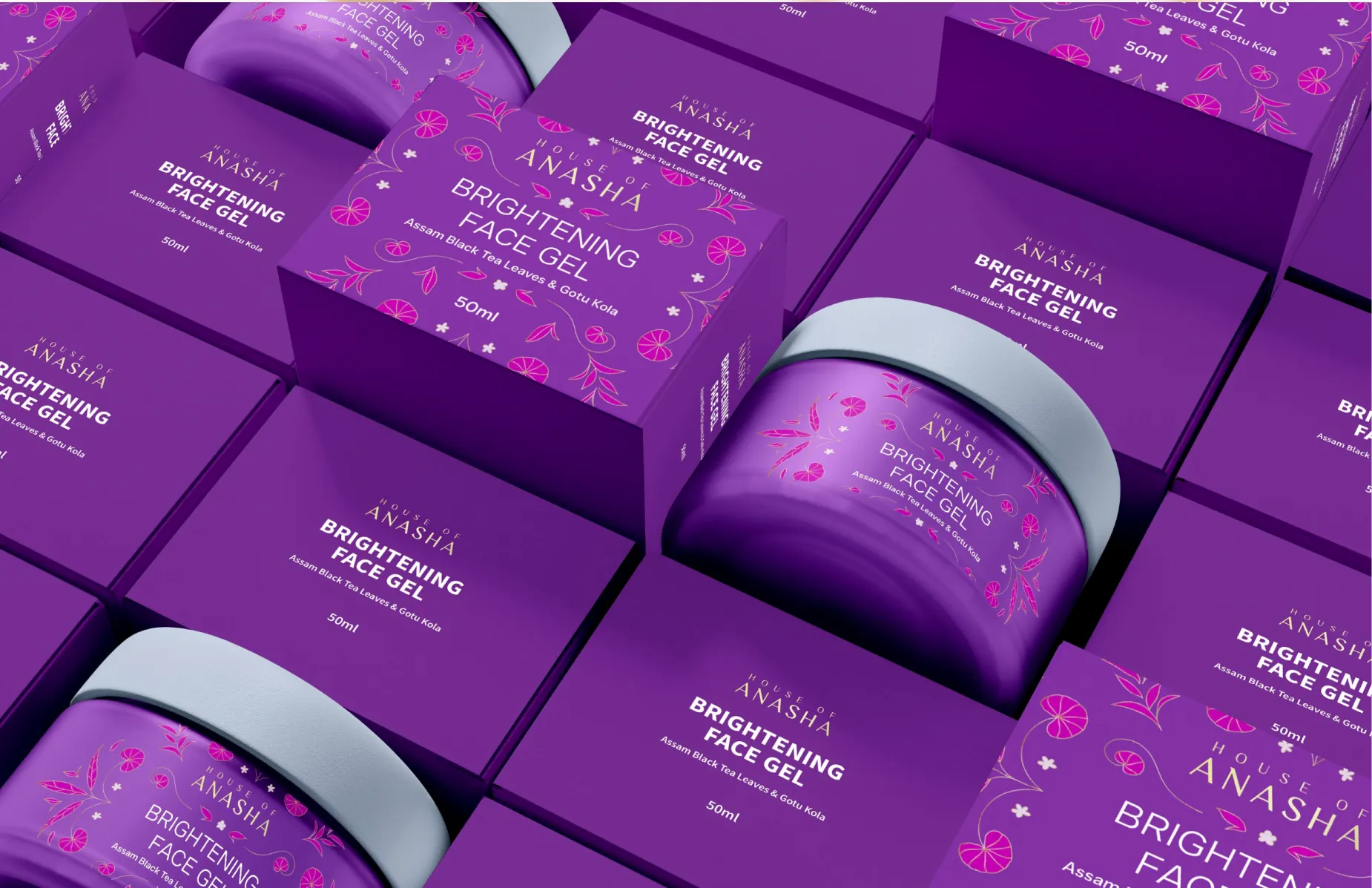
For House of Anasha, Confetti treated unboxing as part of the brand experience alongside strategy, identity and packaging.
📌D2C skincare brand identity should be designed around the brand’s positioning, product range, claims and growth plans, not around the logo alone.
When comparing agency D2C skincare brand identity proposals, check whether the scope covers these six layers:
The scope should define the target customer, competitive position, brand promise and key reasons to believe.
For skincare, it should also establish a claims hierarchy: which active or benefit leads, what supports it, and where sensory language fits.
This should be delivered as a written document.
he brand voice, messaging architecture, and claim framework. For skincare, this is not optional. The voice must be able to carry efficacy without sounding clinical, and confidence without overpromising.
Confetti’s work with House of Anasha built a verbal identity that blended “sincerity, excitement, and glamour” conversational yet expert-led, so the brand could communicate skincare expertise without sounding like a lab report .
The visual system should include primary, compact and icon logo versions; colour architecture; typography; layout rules; and photography or illustration direction.
Check that the logo works on a small bottle, website favicon and mobile thumbnail. Colours and typography must also remain legible across glass, frosted plastic, tubes and cartons.
Confirm that fonts and other assets are licensed for their intended commercial use.
The scope should cover the formats you use or plan to launch, such as droppers, pumps, tubes, jars and cartons. It should include variant rules, material and finish specifications, dielines, print-ready artwork, mailers and inserts.
Allow enough space for ingredient lists, directions, warnings and market-specific labelling. Packaging must work in the hand and remain recognisable in a small online image.
Your team should receive practical assets for product pages, marketplace listings, social posts, ads and email campaigns. These help maintain consistency as new products launch and different teams create content.
For Celesti, Confetti designed a website with a dreamy, celestial visual mood, balanced by structured layouts that keep navigation and product information clear.
The guidelines should explain how to apply every part of the identity, with usage rules, examples and do’s and don’ts.
Rules must cover new SKUs, new channels and new markets, written so that a marketplace content team or a new freelancer can apply them correctly.
📌When reviewing proposals, check both the deliverables and how your team will use them.
A logo-led scope may suit a small launch, but a growing D2C skincare brand needs a system that can support new SKUs, channels and markets without starting the design process from scratch.

Not every D2C skincare brand needs a branding agency. That depends on where you are in your journey.
A freelancer may be the right fit if you have 1-3 SKUs, sell in one market and have a clear positioning that the founders agree on.
Someone in-house can manage printers and component suppliers. In that situation, a capable freelancer with skincare experience can deliver an identity and packs that work, at a fraction of agency cost.
When the range triples, the system may need rebuilding. If you go this route, ask the freelancer to document naming and pack rules as they work, so a later agency can extend the system instead of starting again.
A branding agency becomes more useful when:
At this stage, an agency contributes more than design. It brings strategic direction, documented rules and coordination across touchpoints. For founders preparing for retail expansion or investing in growth, that structure can save repeated redesign work.
At Confetti, we work with skincare brands that have proven their products and need an identity built to support their next stage of growth.
If customers report poor product results or the price does not match the perceived value, changing the identity will not solve the underlying problem.
It may raise expectations the product cannot meet. Address product performance, pricing or positioning first.
Most agency websites say they specialise in skincare. These are the checks that tell you whether it is true.
1. Check category experience
Ask for skincare or personal care case studies that explain the business problem, design decisions and project scope.
Look for evidence that the team understands ingredient-led positioning, product ranges and the trade-offs involved in packaging design.
2. Look for strategy before visuals
The process should begin with discovery, customer research and positioning before moving to creative concepts. Ask how the agency will define your target audience, competitive position and claims hierarchy.
If the proposal opens with logo concepts before addressing these questions, it may be focused on execution rather than strategy.
3. Test packaging and production knowledge
Ask about experience with droppers, airless pumps, tubes, jars and frosted glass, as well as finishes such as foil, soft-touch coatings and screen printing.
Find out who coordinates with printers and component suppliers, checks proofs and manages colour consistency across materials.
A design must work with your chosen packaging formats, production methods and order quantities, not only in a presentation.
4. Check claims, labelling and digital execution
The agency should understand that skincare claims need evidence and that packaging must accommodate ingredient lists, warnings and market-specific labelling.
Regulatory advice may require a specialist, but the design process should account for these requirements from the start.
Also review product pages, marketplace images, mobile thumbnails and social assets alongside physical packaging.
Ask whether website UX and page structure are included or quoted separately.
5. Evaluate commercial thinking
Ask what changed after previous projects. Did the work support a clearer price position, stronger retail presentation or more consistent customer communication?
Request evidence where available, but be cautious of agencies that promise conversion or sales improvements without explaining how they were measured.
6. Confirm the team, process and handover
A D2C skincare brand identity project can take 7-16 weeks, depending on scope, SKU count and how quickly decisions are made.
The launch date also depends on supplier lead times, claims checks and product registration where required.
Some stages can overlap, but strategy and claims should be settled before final artwork begins.
What your team needs to provide
Prepare formulation details, evidence for product claims, competitor references, your channel mix and an 18–24-month SKU roadmap.
Share accurate dimensions and specifications from bottle, pump and carton suppliers, along with market-specific labelling requirements. Appoint one person to coordinate feedback and approve decisions.
What impacts the launch date?
The main delays often come from late product changes, missing packaging specifications, multiple decision-makers and regulatory checks started too late.
Component availability, minimum order quantities, production proofs and product registration can also affect when products ship.
Plan supplier discussions alongside design, not after it. Confirm that the agency’s proposal includes SKU adaptations, print-ready artwork, proof checks, digital templates and final guidelines.
Choosing a concept is only one milestone; the system still needs to be prepared for production and rollout.
📌keep the project on track: agree on scope before work begins, provide accurate inputs early, set review dates and assign a single final approver.
Also decide who will manage future SKU launches after handover, whether that is your internal team, the agency or a packaging partner.
D2C skincare brand identity costs depend on the scope, team experience and number of products and markets involved.
A logo-only package and a complete brand system are different investments.
These are broad benchmarks. Actual pricing depends on deliverables and project complexity.
The main factors that could push your costs up:
How to compare agency quotes
Compare proposals against the same branding deliverables: strategy, verbal identity, visual identity, packaging, digital assets and guidelines.
Mark each item as included, excluded or unclear. A lower quote may simply cover less work, leaving packaging adaptations or templates to be commissioned later.
Where to save, and where not to
You can phase secondary-channel templates or additional campaign assets. However, establish the claims hierarchy and packaging system early. Retrofitting them after the range expands can mean revising multiple SKUs and reprinting packs.
Confetti Design Studio is a full service agency and for a complete branding project, our focus is on building a usable identity system, including the rules and assets your team needs after handover.
The right budget is one that covers the work your brand actually needs, not simply the cheapest quote or the largest package.

Skincare founders come to us with different versions of the same problem. The product is working, the brand is not yet carrying it.
Our work starts before the packaging.
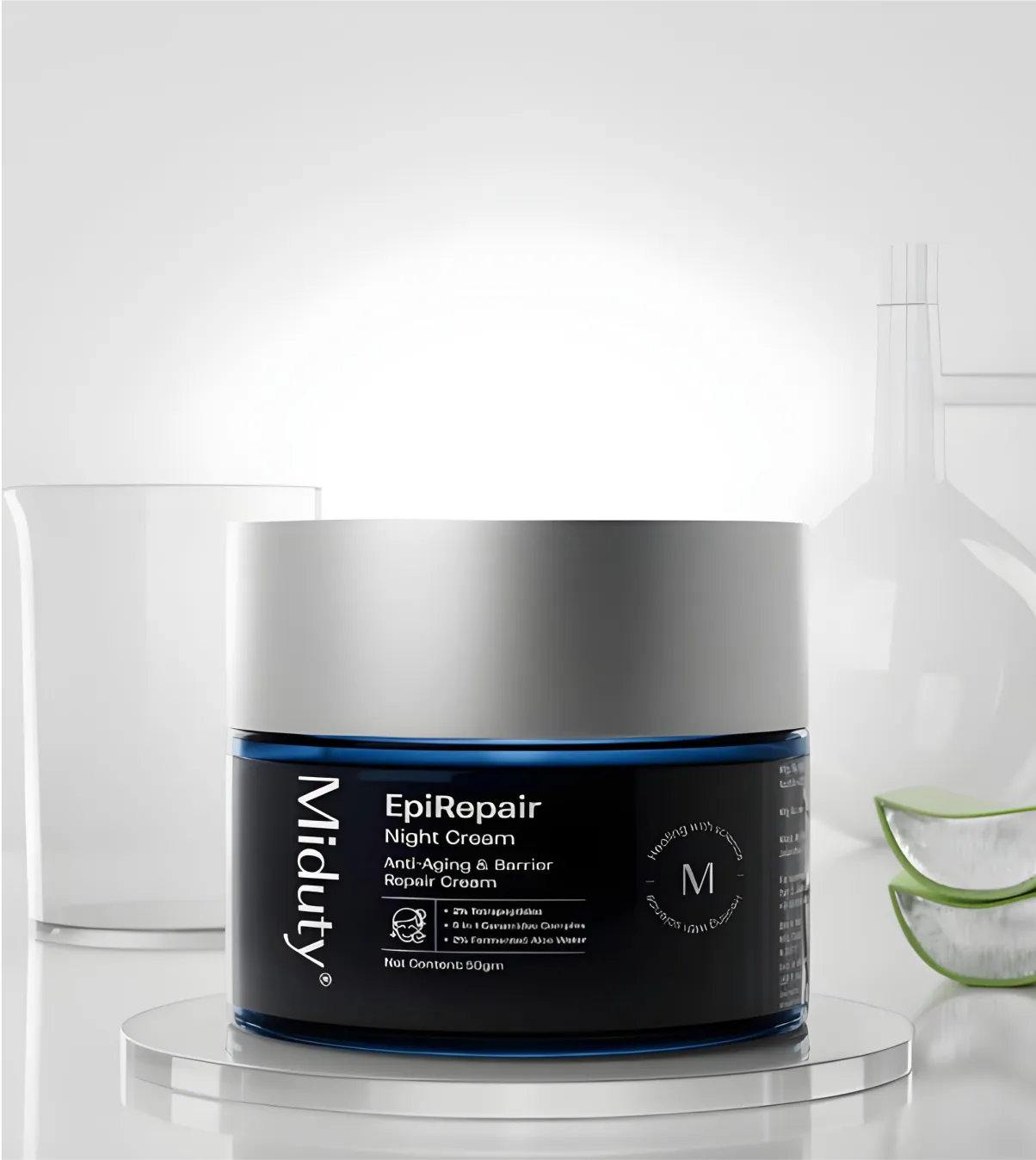
While Miduty’s wider business centres on nutraceuticals and health supplements, its dedicated skincare range extends its science-led positioning into topical skincare.
The branding opportunity was to make a broad wellness philosophy feel specific and tangible in skincare.
Customers needed to understand not only the science behind a formulation, but also what a product is designed to do, where it fits into a routine, and why they should trust it.
We focussed on clear product architecture, consistent visual cues, ingredient communication, and straightforward benefit-led messaging to help translate that philosophy into a more cohesive skincare experience.
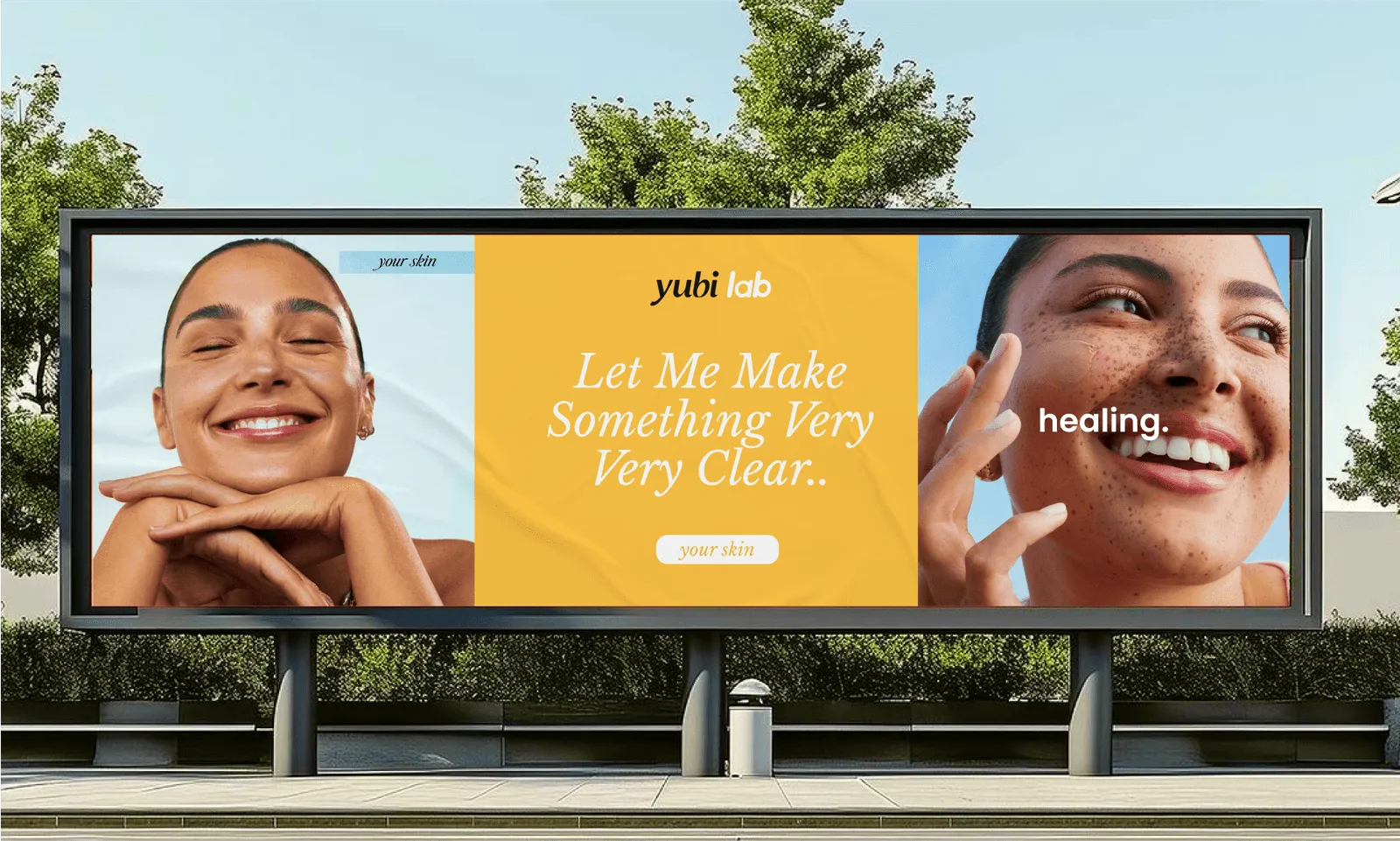
Yubi Labs came to us with a credibility problem. The market was saturated with “science-backed” claims, and the brand needed to stand out without sounding like every other high-tech skincare label.
We re-did the brand DNA from the ground up, shaping a narrative around trust, professionalism, and innovation. The verbal identity became bold and knowledgeable, balancing expertise with approachability.
The visual system used a structured logo and an amber, black, and white palette to signal confidence, with a secondary palette adding vibrancy. The result was a brand that looked as precise as the science it claimed.
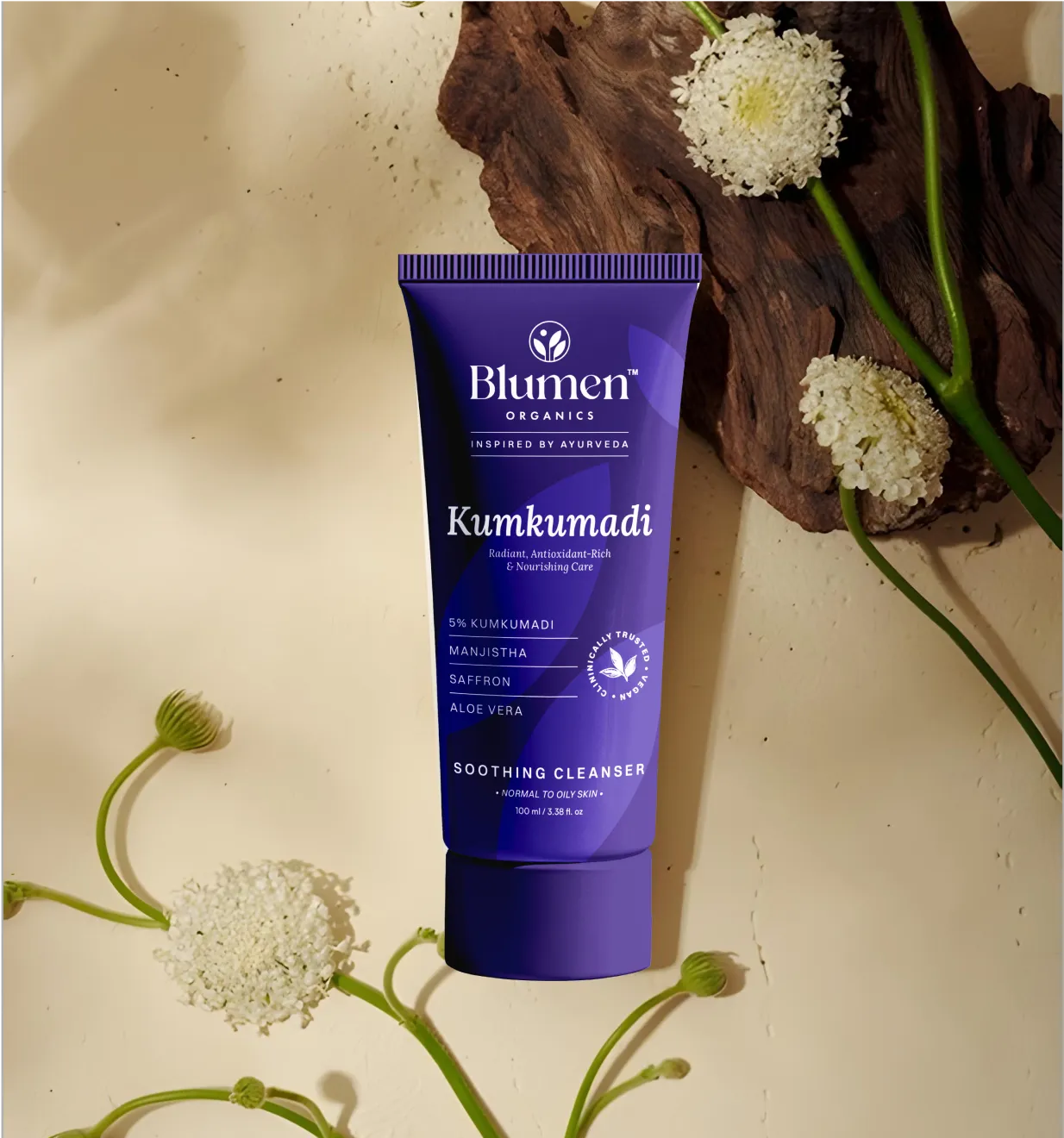
Blumen Organics presented the opposite challenge. The brand was built on a fusion of Ayurvedic tradition and dermatological science, with sustainability as a core value. The difficulty was communicating that duality without sounding contradictory.
We positioned the brand as a wellness companion rather than a product line, with a strategy built on long-term skin health, education, and transparency. The verbal identity was calm and reassuring, avoiding exaggerated claims.
The visual identity balanced modern elegance with Ayurvedic warmth: a minimalist organic logo, a palette of Orchid Pink, Pearl, and Berry, and packaging designed to feel eco-conscious and tactile.
For the three projects, the method is the same. We begin with the question the brand cannot answer alone: what is the one tension this product resolves, and how does the identity make that tension visible?
For Yubi, it was science versus noise. For Blumen, it was tradition versus innovation. For Miduty's skincare range, it was translating a science-led wellness philosophy into clear, relevant, everyday skincare communication.
What does a skincare branding agency do?
A skincare branding agency defines how a skincare brand is positioned and how it looks, sounds and behaves. For a D2C brand that usually means positioning and claims hierarchy, naming for products and actives, the visual identity, packaging for bottles, tubes, jars and mailers, product-page and photography direction, and guidelines that keep every new SKU and channel consistent.
How do I choose a branding agency for my skincare brand?
Look for skincare work you can inspect, a process that settles positioning and claims before visuals, and evidence the team understands production: droppers, pumps, tubes, cartons and print finishes. Ask how they design for product pages and marketplace thumbnails, how many revision rounds are included, who works on your account, and what they will need from your team.
Should I hire a freelancer or an agency for skincare branding?
A freelancer can work well for one to three products, one market and a founder who can manage printers and suppliers. An agency is usually worth it when the range is growing past ten SKUs, the brand is entering retail or new markets, investors or retailers are involved, or touchpoints already look inconsistent and need one system.
How much does skincare branding cost?
Costs vary widely by scope. Freelancer packages at around $1,000 to $5,000 and full service agency packages can begin at $15,000 or more, in US terms. The main cost drivers for skincare are the number of SKUs and pack formats, strategy depth, photography direction and how many markets the identity must serve.
What should a D2C skincare brand identity include?
As a trusted and experience D2C skincare brand identity agency our deliverables include positioning and a claims hierarchy, a naming system for products and actives, a logo suite that works at thumbnail size, colour and typography, a pack system across formats and mailers, product-page and photography direction, unboxing, and guidelines. Without the pack and digital layers, the identity rarely survives the first range extension.
Want strategic branding and packaging like this for your business?