02
AI Snaps


01
Our Work
03
About Us
04
Brand Audit
05
Contact Us
06
Client Success
07
07
Blogs
08
Careers
Book A Call




Need Help In Building Your Brand?
Click the button below & book a call with our founder directly.

Rishabh Jain
Managing Director
You decide to launch a refill range, and refill packaging design becomes your first big challenge. Retailers are asking for it, sustainability goals need tangible action, and packaging costs keep rising.
But just creating a pouch version of your existing product is not enough.
This Confetti guide explores how FMCG, beauty, personal care and home-care brands can design, launch and scale refill ranges, covering reuse models, structures, materials, consumer experience, shelf visibility and regulatory requirements across India, the EU and beyond.
Your first decision in a refill packaging project is the refill model.
Each model creates different packaging requirements, customer behaviours, retail needs and operating costs.
When you design before making this choice, it can result in packaging that looks sustainable but is difficult to use or support commercially.
These approaches broadly fit the four reuse models: refill at home, refill on the go, return from home and return on the go.
Return systems involve collecting and reusing containers, rather than simply supplying a refill, so they require a separate logistics and cleaning operation.
For most FMCG and D2C brands, prefilled refill packs are the simplest starting point.
Refill pouches are already familiar in categories such as handwash, dishwash and detergents in India. Customers keep the original container and buy a lighter refill instead.
Concentrates can reduce shipping weight, but ask customers to mix or dilute the product. In-store stations and BYOC programmes need more infrastructure and behaviour change. Subscription and return models require reliable delivery, collection and reuse systems.
Can customers find the refill easily? Can they transfer the product without a funnel, mess or complicated instructions? Is the refill available wherever they buy the original product?
👉Choose a model your business can operate consistently and customers can use conveniently. The packaging design should make that system easier.

A refill system has two separate components: the durable container and the refill. They serve different purposes and should be designed as two connected products, not as variations of the same packaging.
Your container stays on a bathroom shelf, kitchen counter or dressing table for months or years. It needs to be attractive enough to keep, durable enough to survive repeated use and easy to operate.
Material, finish, shape, dispensing mechanism and ease of cleaning all matter. A pump that jams, a lid that cracks or a finish that deteriorates after a few uses can break the refill habit.
Dove's refillable deodorant is one of the best examples here. Its reusable case uses stainless steel, a palm-friendly shape and a laser-etched logo. The refill uses 54% less plastic than a standard Dove stick.
👉Design the container for the third refill. The first fill is a purchase; the third fill is the habit.
Its durability and everyday usability determine whether customers continue using the system.
The refill is a consumable, so its priorities are different. It should be lightweight, cost-effective, easy to open and simple to pour, insert or connect without spilling.
It does not need the same material investment or elaborate finishes as the container. However, it must retain enough brand recognition for customers to identify the product quickly and know which container it fits.
At home, the durable container carries the brand. At the point of purchase, the refill does much of that work through its shelf presence, marketplace thumbnail and product information.
Most refill systems need two types of products:
The two should look like parts of the same system while making their different purposes clear.
👉The container creates the desire to keep using the product. The refill makes repeat use convenient and affordable. Both need to work together for the refill habit to last.

If your refill packaging design can't be found, or doesn't look like the product the customer already uses, it won't be bought twice.
Keep the fixed brand cues identical
The logo position, brand colour, variant colour, product name and typeface should match between container and refill.
Shoppers recognise products by these cues long before they read the words. If the refill uses a different colour or layout to signal "eco", it may look like a different product altogether.
Use one consistent refill marker
Add a "Refill" marker in the same position, size and style on every refill SKU. It tells the shopper what they're looking at without forcing a redesign of the whole pack.
On marketplace listings, put the same word at the start of the product title so refills group together in search.
Show the saving clearly
Customers buy refills partly to save money and partly to reduce waste. Show both in specific terms. Price per millilitre or per use, compared with the original pack, makes the saving concrete.
Plastic reduction should be stated as a specific figure you can substantiate, such as Dove's "54% less plastic" claim, rather than a vague "eco" label.
Make compatibility obvious
The customer needs to know which container a refill fits, especially if you sell more than one container size or shape.
Use the same product name, a fit indicator such as "fits 300 ml bottle", and simple pictograms showing how to transfer or install the refill. Where the refill physically connects to the container, as with cartridges or twist-lock systems, make the connection visually obvious as well.
Range logic for refills
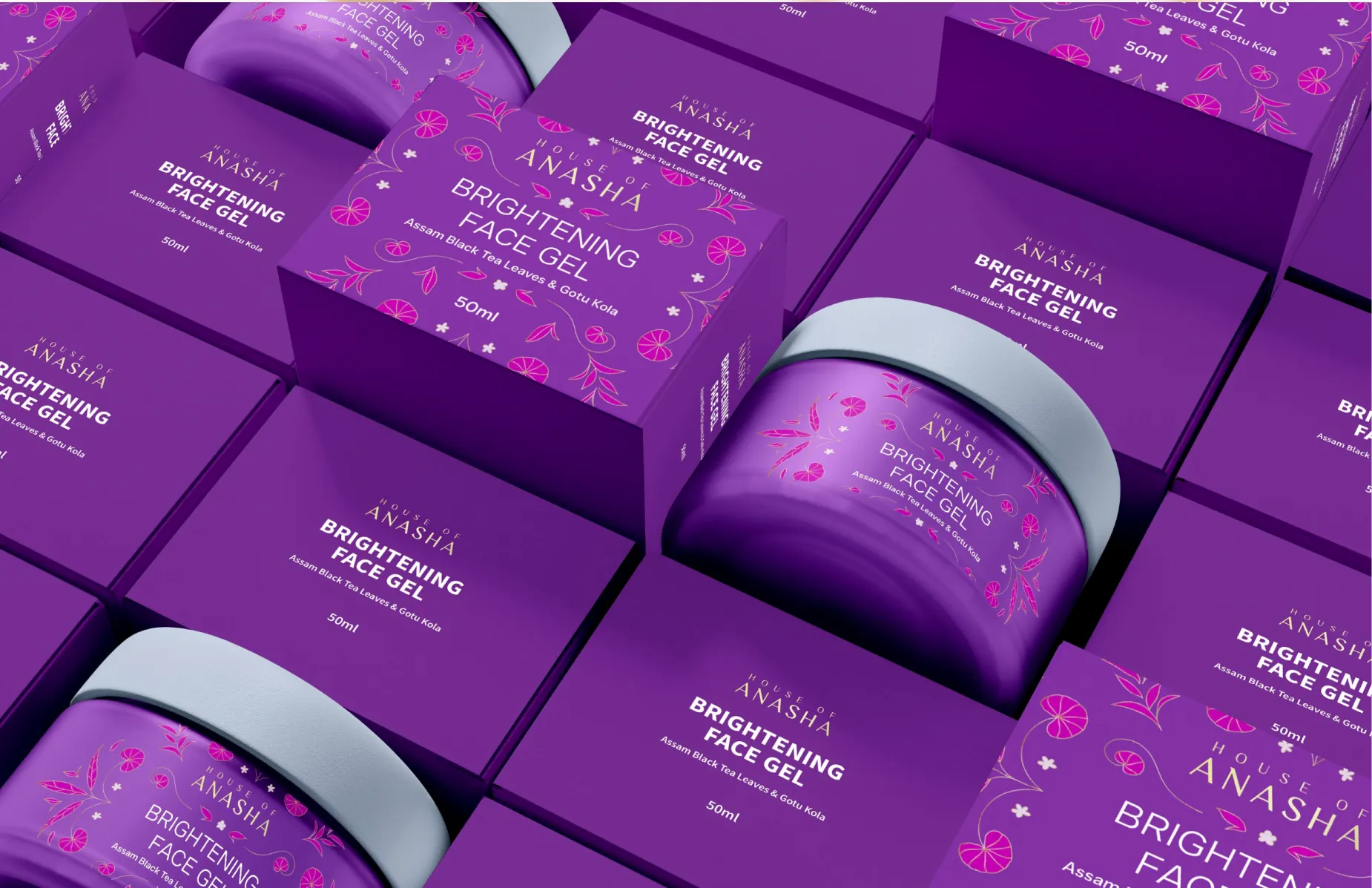
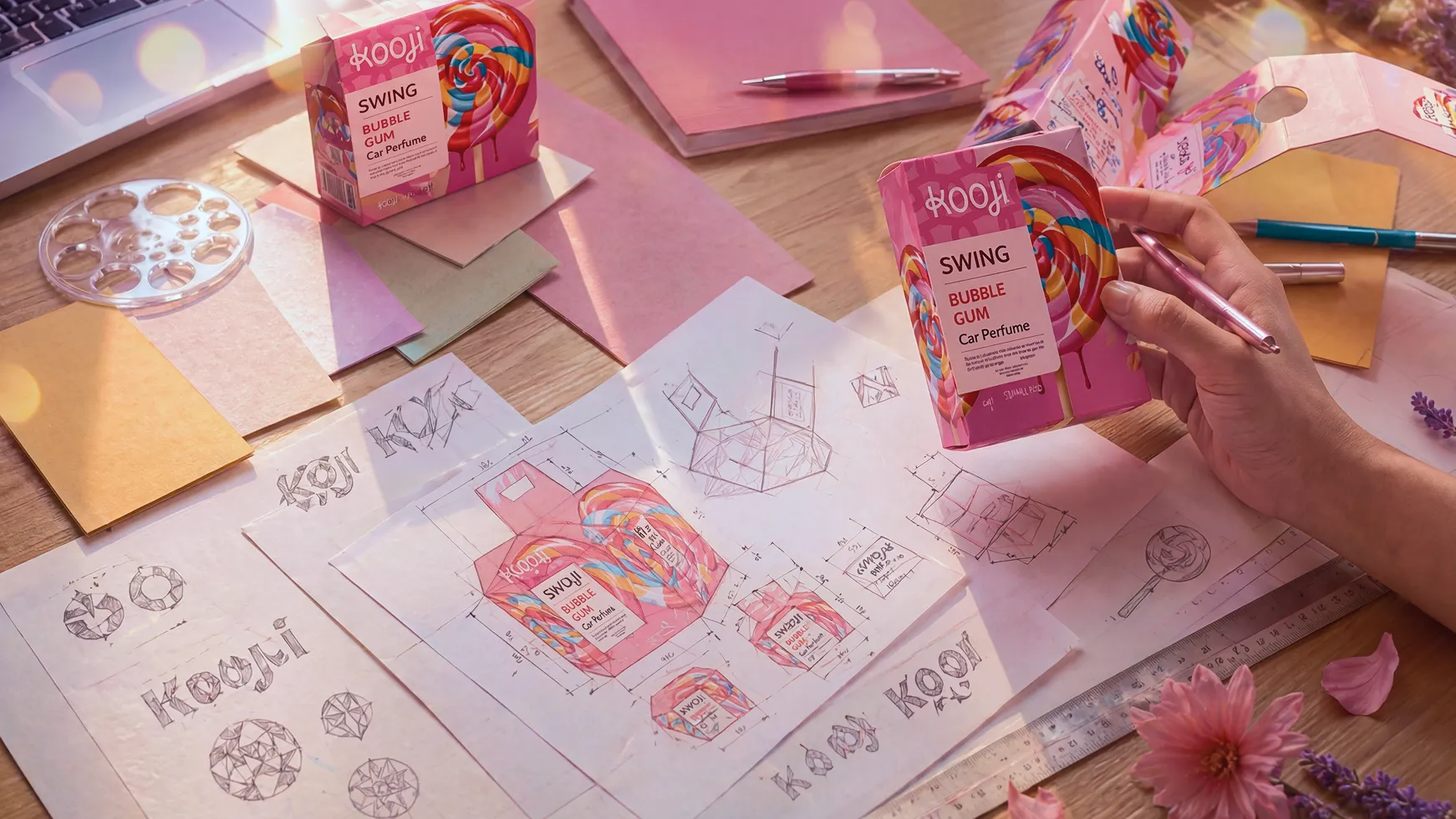
A refill range needs the same system thinking as any multi-SKU range. For Kooji, we built one packaging template across three product lines and 24 SKUs, with a fixed structure and a different illustrated world for each scent.
For Uncanned, a character-led illustration system lets each can signal its flavour while the range reads as one family.
Refills need the same logic: a fixed structure that says "this brand", and flexible cues that say "this variant, refill format".
A refill system's structure and material choices affect its durability, cost, usability and environmental impact.
The goal is to make the container last, the refill easy to use and the material choices suitable for the recycling infrastructure available in each market.
1. Choose Materials That Support Recycling
Where practical, use mono-material components such as PP or PE instead of combining plastics, metals and other materials that are difficult to separate. Pumps, caps, closures and flexible pouches should be considered as part of the same material system.
However, a material being technically recyclable does not guarantee that local collection systems can process it.
Check actual recycling access before making on-pack environmental claims.
2. Engineer the Refill Interface
The connection between the refill and the container is one of the most important structural decisions.
Spouts, valves, threads and openings must be compatible and allow easy transfer without spills.
Test the refill with the actual product, particularly for viscous liquids such as shampoo, lotion and detergent. A messy or difficult transfer can discourage repeat use.
3. Make the Pump and Container Durable
Pumps, closures and dispensing mechanisms must withstand repeated use. Test pump performance, dose consistency, leakage and compatibility with the product's viscosity.
Also consider cleaning and hygiene between refills, especially for personal care products. The container should remain functional through multiple refill cycles, not just the first few uses.
4. Select the Right Refill Format
The format should match the product, customer habits and distribution model.
5. Calculate the Cost Across Multiple Refills
A durable container usually costs more upfront than disposable packaging, while refill formats can cost less per use. Model the initial investment against expected repeat purchases to understand when the system becomes commercially viable.
QR codes or NFC tags can also help customers find compatible refills, access instructions or reorder products, provided they solve a genuine usability problem.
Design for repeated use, test the complete system and make environmental claims that the materials and local recycling infrastructure can support.
A refill pack is a regulated package in its own right. It cannot rely on the original container to carry mandatory product information.
Brands must account for labelling, plastic packaging obligations and market-specific requirements before finalising the artwork.
Under India's Legal Metrology (Packaged Commodities) Rules, 2011, retail refill packs must carry applicable declarations, including manufacturer or packer details, product name, net quantity, MRP and consumer care information.
You also need to comply with the category-specific requirements such as FSSAI declarations for food and relevant cosmetics labelling rules for personal care products.
Plastic refills also fall under the Plastic Waste Management Rules and Extended Producer Responsibility (EPR) framework. You must account for applicable recycling, reuse and recycled-content obligations. The rules were amended again in March 2026, so check the latest requirements and marking provisions on the CPCB portal before approving artwork.
Do not assume one label or approval process covers every GCC market. Confirm the requirements for each country, product category and sales channel.
For the UAE, allow space for applicable Arabic product information alongside English, and verify the required declarations with the local importer or regulatory consultant.
The UAE launched an EPR pilot covering packaging, electronics and batteries in July 2025. In 2026, government discussions reviewed the pilot and its next steps. The national framework is still developing, so brands should monitor official updates rather than assume a final compliance schedule.
Brands exporting to the EU should also account for the Packaging and Packaging Waste Regulation (PPWR), which began applying on 12 August 2026.
☐ Include all applicable declarations on the refill itself.
☐ Confirm EPR registration, reporting and marking obligations.
☐ Document material composition and substantiate recycled-content or recyclability claims.
☐ Check local-language instructions and safety information.
☐ Verify hygiene, tamper-evidence and product-specific requirements.
☐ Obtain regulatory approval before sending artwork to print.
A refill range succeeds through repeat purchases.
Customers must find the refill easily, see a clear price benefit and be able to use it without frustration.
The launch plan should therefore focus on building a repeat-purchase habit.
Begin with categories that have regular repeat purchases and are easy to refill. Handwash, shampoo, conditioner, body wash, detergents and surface cleaners are good starting points.
Prioritise products that transfer cleanly into a durable container and are used often enough to justify keeping one. Low-frequency products may not generate enough repeat purchases to support the system.
The refill must be available wherever customers buy the original product.
Customers expect refills to cost less than buying the original pack again. The saving should be visible enough to justify the effort of transferring the product.
Build the pricing model around repeat purchases. The durable container can carry a higher initial cost, but refill pricing should reward customers for continuing with the system.
A refill habit cannot develop if the refill is frequently out of stock. Retailers need to give refill SKUs sufficient shelf space, and D2C brands need reliable inventory and replenishment.
Track the measures that show whether the system is working:
Launch with one category and one or two channels. Test transfer ease, packaging durability, pricing, availability and repeat purchase before extending the system across the range.
Common reasons refill programmes fail include containers that are not worth keeping, confusing refill formats, poor availability, insignificant savings and messy transfers.
Refill is also not suitable for every product. Where repeat purchases are infrequent, hygiene risks are high or the container offers little long-term value, concentrates or lighter recyclable packaging may be more practical. Our guide to the [packaging sustainability audit] helps compare these options.
Scale only when customers come back to refill. A successful refill system should turn convenience into repeat purchases.
As an award winning branding and packaging design studio based in Mumbai and Dubai, we at Confetti work with FMCG, F&B, beauty, wellness, and D2C brands.
With over 200 projects successfully delivered, our refill design draws on work we do across most of our projects.
Here’s how we sequence works for a refill packaging design system:
Brand strategy, packaging design, product photography for listings and identity work all under one roof, and website development, including D2C subscription flows, runs through our sister studio, Suplex.
We'll also tell you when a refill range isn't the right answer for your products, and what would reduce waste more simply.
If you're planning a refill range or fixing one that isn't selling, book a call and share your highest-repeat SKUs.
What is refill packaging design?
It's the design of a system where customers buy a durable container once and then buy refills, usually pouches, cartridges or concentrates, to top it up. Good refill design treats the container and the refill as one system: the container is worth keeping, and the refill is easy to find, trust and transfer.
What are the main refillable packaging models?
There are four: refill at home (pouches or concentrates), refill on the go (in-store dispensers), return from home (collection or delivery of reusable containers) and return on the go (deposit-return points). Most Indian FMCG and D2C brands start with refill at home because it needs the least infrastructure.
How should a refill pouch look compared to the original pack?
It should keep the brand's fixed cues (logo position, brand colour, variant colour and product name) identical to the container, and add a consistent "Refill" marker. Shoppers should recognise it in two seconds on a shelf or marketplace thumbnail and know which container it fits.
What labelling does a refill pack need in India?
A refill is a separate package, so it needs its own complete declarations: net quantity, MRP and manufacturer details under Legal Metrology, plus category rules such as FSSAI for food or cosmetics labelling for beauty, and EPR details for plastic packaging. It can't rely on information printed on the container.
Which products work best in refill formats?
High-repeat, low-risk liquids and powders: handwash, body wash, shampoo, dishwash, detergents, surface cleaners, and many skincare and haircare products. Products sensitive to contamination, or bought rarely, are harder to make work, and lighter packaging may be a better choice for them.
How do you encourage customers to keep buying refills?
Make the container worth keeping, price refills visibly lower per ml, keep refills in stock wherever the original sells, show compatibility clearly, make transfer clean, and use D2C reminders or subscriptions. Track how many container buyers come back for refills, and fix the main friction point first.
Want strategic branding and packaging like this for your business?