%201.webp)
02
AI Snaps
.svg)
.svg)
01
Our Work
03
About Us
04
Brand Audit
05
Contact Us
06
Client Success
12
07
Blogs
08
Careers
Book A Call
.svg)



.svg)
Need Help In Building Your Brand?
Click the button below & book a call with our founder directly.

Rishabh Jain
Managing Director
India's subscription box market is growing, but most brands underinvest in packaging design. What that box looks, feels, and opens impacts if users photograph it, share it, or toss it without a second thought.
This guide tells you exactly what makes subscription box packaging work: the right box type, print finish, structural design, and unboxing moment.
We’ve also included costs, and a checklist to help you brief your packaging design agency efficiently..
Subscription box packaging isn't just a box. It's the only physical touchpoint your brand has with a subscriber every single month.
The global subscription box market is valued at 49.7 billion in 2026 and is projected to reach 101.81 billion by 2030. That’s a 19.6% CAGR!
That growth is built on retention, not just acquisition. And retention starts with how your packaging makes people feel.
Most brands treat packaging as a logistics decision. They prioritise durability, dimensional weight, and cost per unit.
Those are important, no doubt, but when you reduce packaging to protection alone, you're wasting the only guaranteed monthly interaction with your customer.
The Unboxing Effect for Subscription:
Research shows that 62% of potential buyers watch unboxing videos to research products before purchasing
A custom-branded packaging turns a standard delivery into a shareable event that directly increases brand visibility. Your box design determines whether your subscribers become your marketing engine.
Every month, a subscriber decides, consciously or not, whether the experience is worth continuing. The box they receive is a vote in that decision.
What D2C Brands Get Wrong About Subscription Packaging:
❌Treating the box as a container, not a canvas
A plain brown corrugated box with a printed sticker is a missed opportunity. It says nothing beyond "this product ships."
For a brand charging a monthly fee on the promise of a curated experience, that does no good.
❌Ignoring the inside of the box entirely
Most of the emotional impact happens the moment the flaps open, yet most brands leave that surface completely blank.
❌No thought given to the unboxing experience
What does the customer see first? What's revealed second? Packaging design that ignores this sequence feels flat, regardless of how attractive the outside looks.
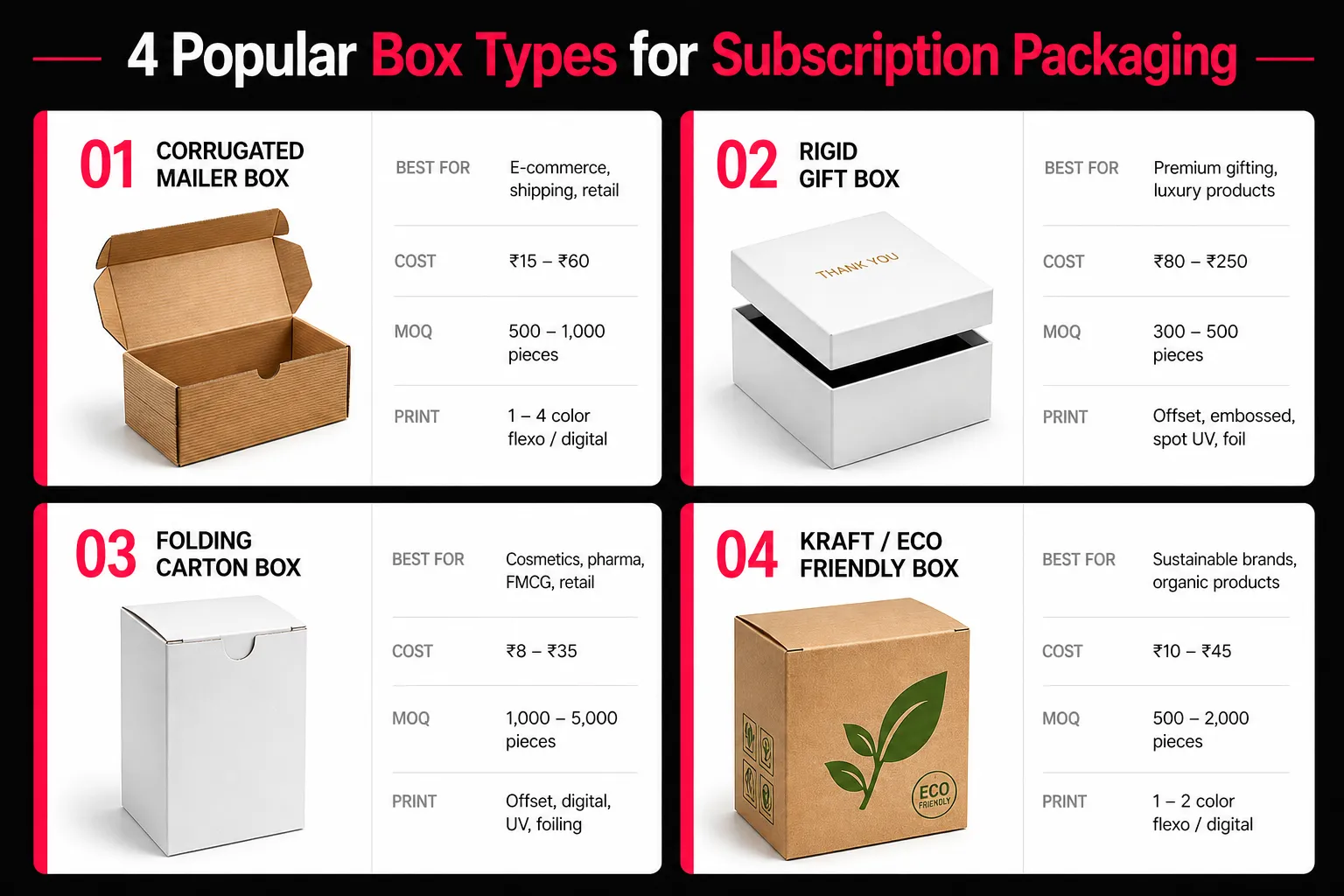
Not every box type works for every subscription model. Your choice affects unboxing flow, shipping costs, and brand perception.
They are the standard for most D2C subscriptions.Corrugated mailer boxes are structurally sound, lightweight, and fully printable inside and out.
3-ply corrugated handles most subscription products. 5-ply is a better option for heavier or fragile items.
In India, these are available from vendors across Mumbai, Delhi, Bengaluru, Hyderabad, and Pune.
At 500 units, you're generally looking at ₹50–₹80 per box for a full-colour printed mailer.
Setup charges for dies and print plates are usually one-time costs, expect ₹3,000–₹8,000 depending on box size.
One look at a rigid box and your customer knows its premium. The weight, the resistance of the lid, the clean finish, it all signals quality.
These are best suited for high-value subscriptions: beauty hampers, jewellery, wellness, or quarterly gift tiers. Magnetic closure adds a satisfying tactile element. Ribbon pulls are a lower-cost alternative.
Rigid boxes are more expensive per unit and less flexible for reorders. Plan production at least 25–30 working days out.
If your subscription product is uniform in shape and relatively light, folding cartons are cost-efficient at scale.
They're fast to assemble and compatible with most standard print finishes.
The limitation: they offer less structural drama than a mailer or rigid box. If your unboxing experience depends on the reveal moment, this format makes that harder to engineer.
Kraft boxes are now a clear brand signal for sustainable D2C brands and consumer demand is real.
The audience is actively looking for sustainable packaging design.
Unbleached kraft, recycled corrugated board, and soy-based inks are all available from Indian vendors.
The key is specifying these in your brief and asking for certification documentation before production begins.
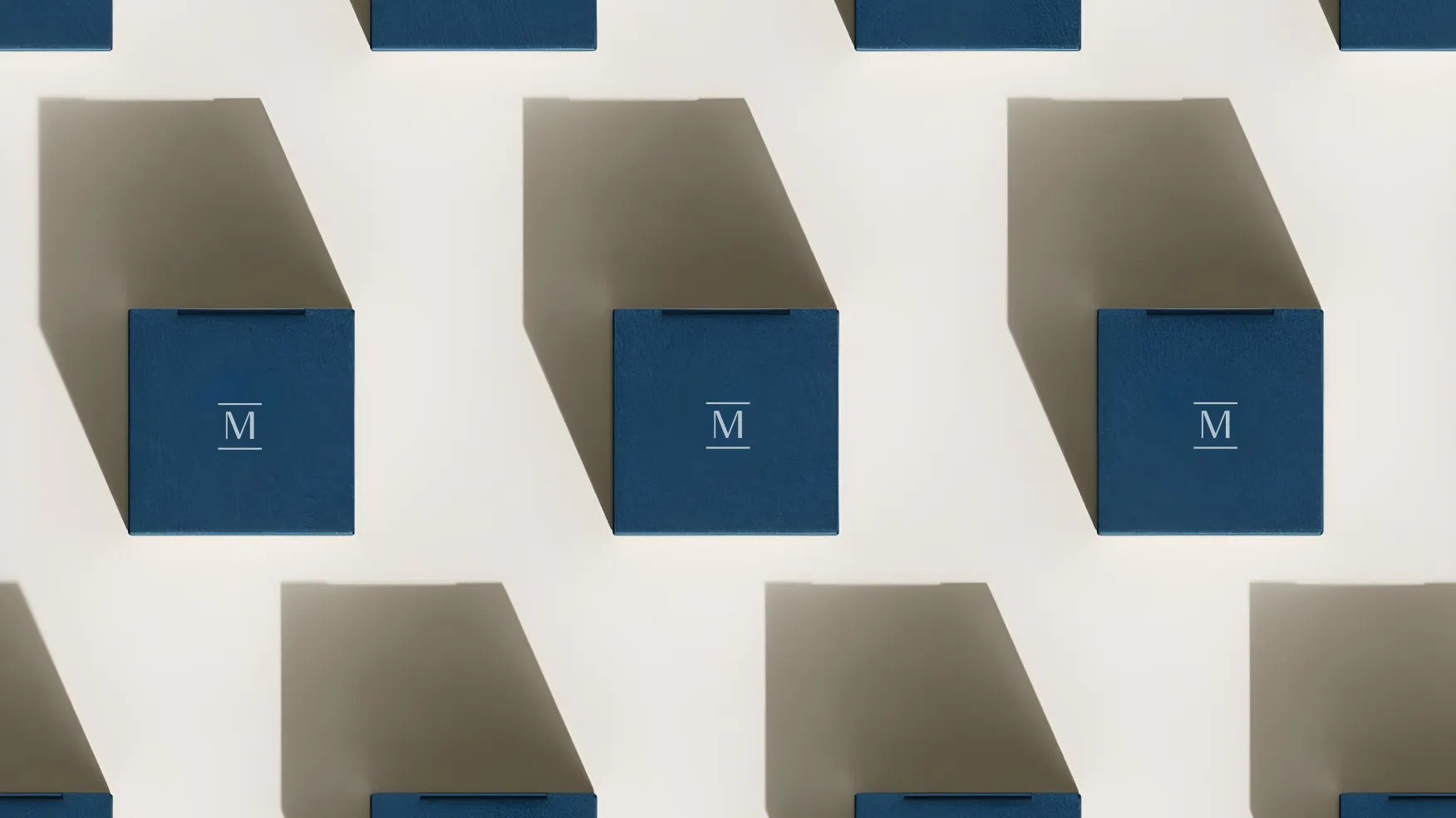
Subscription packaging design follows different rules than retail packaging. Here’s what you need to consider:
Your subscriber picks up the box from their doorstep or mailroom. That’s your brand's first impression.
One clear visual statement works better than a crowded design. A strong brand colour, a well-placed logo, and a single line of copy or brand mark is enough.
Print finishes that work well on subscription boxes:
✅Matte lamination: Premium feel, minimal glare. Pairs well with bold colour.
✅Gloss lamination: High contrast, vivid colour. Cost-effective.
✅Spot UV: Selective gloss on matte base. Creates tactile interest without full gloss.
✅Foil stamping: High-end look for luxury positioning. Adds cost; reserve for hero elements like logos.
Apply finishes where they carry weight. Spot UV on a logo or product name creates a tactile moment. Foil on the entire box is expensive and usually unnecessary.
The interior is where most brands ignore. A full interior print, even a single flat colour with a brand message, changes the open moment completely.
It signals that the box was designed.
Tissue paper with a logo sticker is a ₹3–₹8 addition per box that has an outsized effect on perceived quality. Shredded filler adds visual depth and protects contents during transit.
Personalisation is worth considering at scale. Name printing on insert cards, QR codes linking to subscriber-specific content, handwritten-style messages, these create a connection that mass-produced packaging rarely achieves.
Material durability affects perceived value. Thicker material keeps items safe during transit and ensures products arrive in great condition.
For subscription boxes that travel through India's logistics network, 3-ply or 5-ply corrugated cartons with appropriate GSM and burst strength (BF) ratings are recommended. A box that arrives dented signals cheapness, regardless of what's inside.
The box also needs to work before it can look good. That means choosing the right structural format for your product.
✅Tuck-top boxes are simple, fast to assemble, and cost-effective
✅Roll-end tuck-front (RETF) boxes are sturdier and better suited to heavier products
✅Self-locking bases eliminate the need for glue assembly at your packing station
✅Tamper-evident sealing is necessary for food, pharma, or high-value subscription products.
Work through the dieline early. Structural and material decisions made before design save expensive revisions later.
Two typefaces maximum. One display font for your brand name or key message. One legible body font for product information, addresses, and copy.
Colour psychology varies by subscription category:
✅Wellness/beauty: Soft neutrals, pastels, botanical greens
✅Food/gourmet: Warm earthy tones, deep reds, kraft textures
✅Books/stationery: Muted editorial palettes, inky blues, cream
✅Kids/lifestyle: Bold primaries, high contrast, playful shapes
For printed packaging, always design in CMYK, not RGB.
Colours shift significantly between screen and print, and a mismatch between your digital mockup and the printed box is a common and avoidable problem.
📌Colour consistency across months is super important. If your March box uses a slightly different CMYK breakdown than your May box, long-term subscribers will notice.
Especially when they stack boxes or post comparison photos. Document exact colour specifications and enforce them with your printer for every batch.
On a retail shelf, your packaging has two seconds to grab attention. In a subscription box, that pressure is gone. Instead, your design needs to reward closer inspection.
Use unexpected interior prints, hidden messaging under flaps, or patterns that only become visible when the box is fully opened. These discoveries create shareable moments.
Unlike retail packaging that contains identical products every time, your subscription box holds different items each month.
Your box design needs to be flexible enough to accommodate varying product colours, sizes, and presentations without clashing.
Neutral backgrounds with bold logo placement and strategic use of brand colours work better than product-specific imagery.
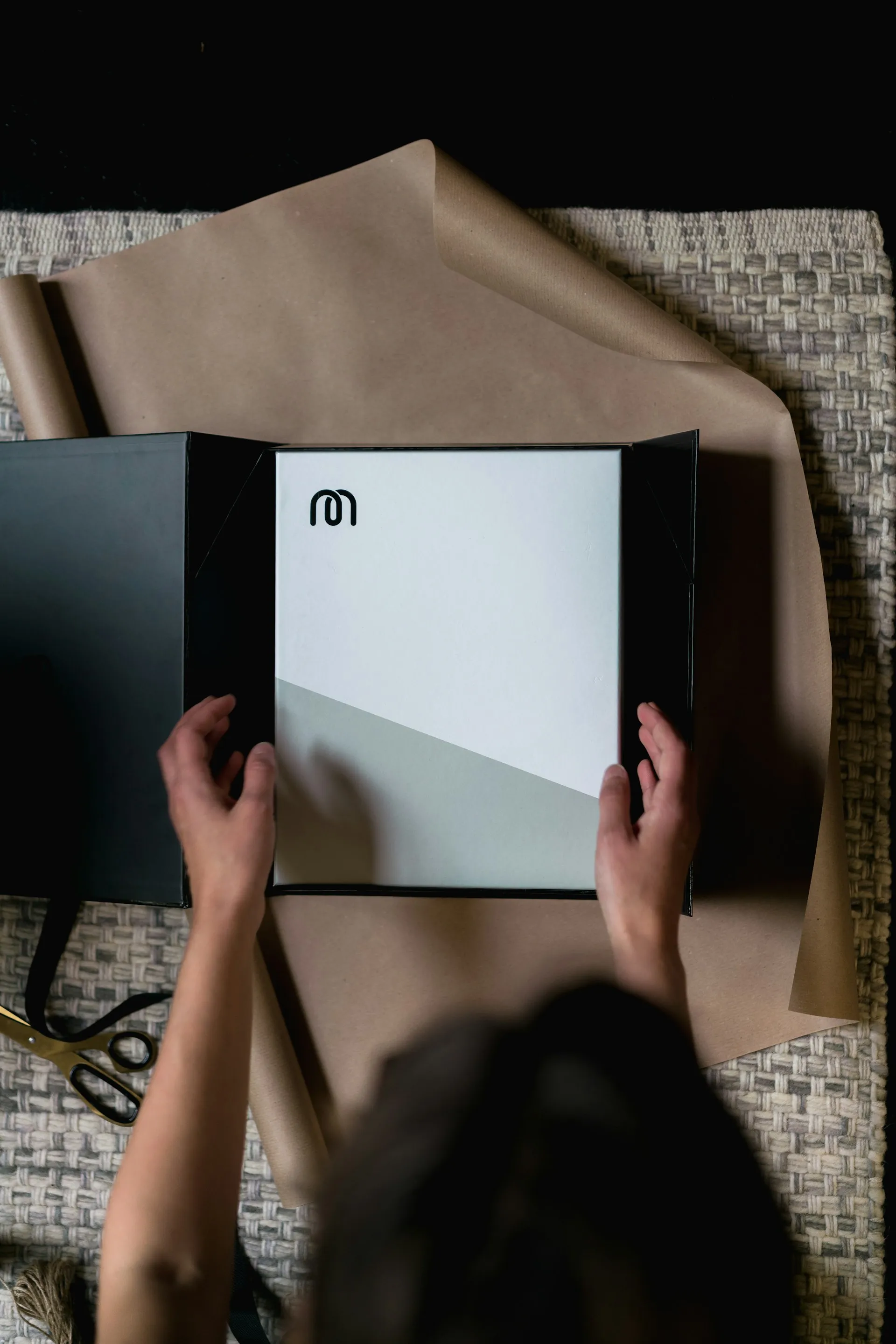
Unboxing is the moment a brand truly meets its customer. It's about creating a small, memorable experience that delights and sticks in the mind.
In subscription models, that moment happens repeatedly. Each unboxing either reinforces the subscriber's decision to stay or plants the seed of cancellation.
Structure the unboxing in layers:
Subscription boxes with a dedicated unboxing stage: a lift-off lid, a branded inner sleeve, or a folded paper layer that must be opened to reach the products, see higher social sharing rates compared to boxes that simply open to reveal products all at once
Other tools:
At Confetti, we evaluate unboxing designs using a structured internal framework called the Packaging Resonance Score, assessing options across price positioning, ease of use, manufacturing feasibility, logistics efficiency, and unboxing distinctiveness
An insert card should do more than say "thank you for subscribing."
Here's what works:
The referral code insert is particularly valuable. It turns your packaging into an acquisition channel.
A subscriber who shares their referral link was likely influenced by a positive unboxing experience. The box and the referral mechanism work together.
A flat-lay that photographs well is a marketing asset.
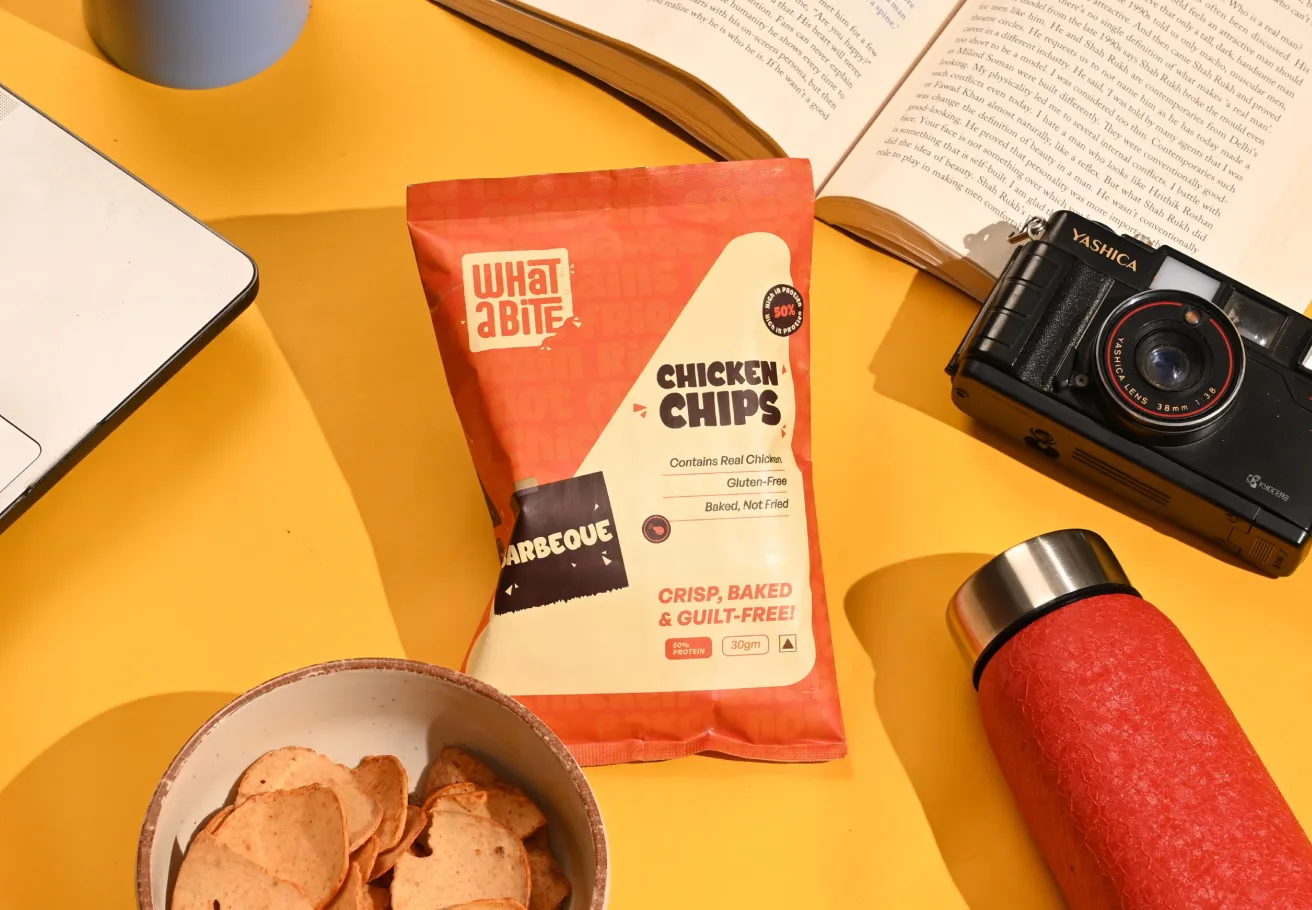
Design your box with the flat-lay in mind. A clean top panel with a strong brand mark or minimal graphic photographs in two seconds. A busy, cluttered surface takes work to style.
Consider the colour relationships: box exterior + tissue paper + product + insert card.
Do these colours work together in a photograph? Do they contrast in a way that's visually interesting?
For D2C brands with limited production budgets, packaging that generates organic social content is free media. Design for that.
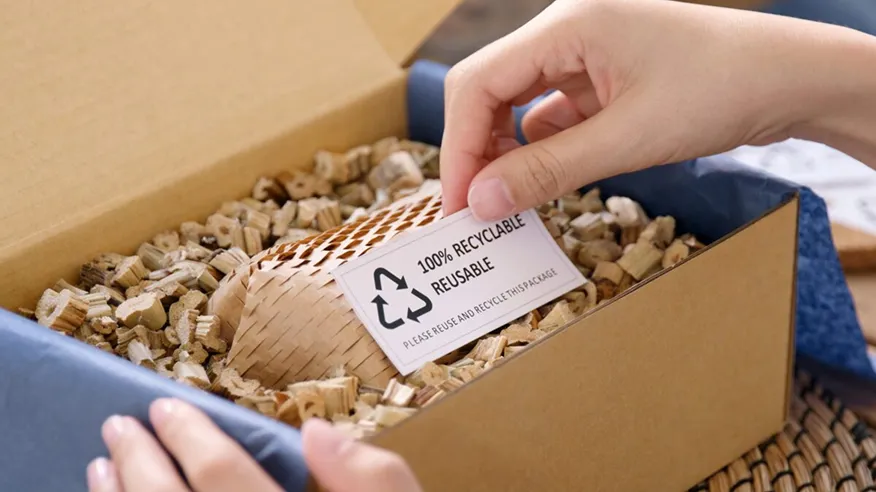
Sustainability in Indian subscription packaging is growing. Let’s see what actually works for subscription boxes in India:
The word "eco-friendly" is used loosely. Here's what it actually means in a packaging context:
📦FSC-certified board: Means the paper pulp comes from responsibly managed forests. This is the most credible third-party verification for paper-based packaging.
📦Recycled corrugated: Made from post-consumer waste. Available widely in India. Lighter in colour (more grey than white), account for this in your colour design.
📦Water-based and soy-based inks: Standard petroleum-based inks are more toxic and harder to recycle. Water-based alternatives are now cost-competitive with conventional inks at most Indian print volumes.
📦Recyclable vs. biodegradable: These are not the same. Recyclable packaging can be processed in India's existing recycling infrastructure. Biodegradable packaging requires specific conditions to break down that most landfills don't provide. For Indian D2C brands communicating sustainability, "100% recyclable" is a more honest and verifiable claim than "biodegradable."
📦Paper-based alternatives: Used instead of plastic packaging are gaining traction. A March 2026 report published by Packaging South Asia confirmed that paper could play a valuable role in tackling plastic pollution. For inner compartments and product separators, paper pulp trays work well and are fully recyclable.
📦Bamboo-fibre based paper packaging: It has emerged as a viable alternative for brands willing to pay a premium. These materials offer comparable strength to wood-pulp paper without contributing to deforestation. Amazon and IIT Roorkee are even developing packaging from crop waste, transforming agricultural residues into biodegradable packaging materials while addressing stubble burning.
Beyond FSC, the relevant certifications for Indian packaging include:
Ask your vendor for documentation before making sustainability claims on your packaging. Vague claims without certification create regulatory and reputational risk.
The assumption that eco-friendly packaging is always more expensive is outdated.
At volumes above 500 units, FSC-certified corrugated board generally costs 5–15% more than non-certified equivalents.
At 1,000+ units, the premium narrows further. Soy-based inks are now at cost parity with petroleum-based inks at most Indian printers running medium-volume runs.
The real cost driver is finish, not material certification. A matte-laminated FSC box costs more than a plain kraft box but the lamination is the cost driver, not the FSC certification.
Custom subscription box packaging costs vary based on volume, material, and complexity.
Here are realistic 2026 benchmarks for the Indian market:
These figures cover the outer box only. Add ₹5–₹15 per unit for inserts, tissue paper, or branded filler materials.
Die-cutting setup: One-time charge for custom box dimensions. Typically ₹3,000–₹8,000 per box style. You pay this once; subsequent reorders do not incur this cost.
Print plate charges: For CMYK flexo printing, each colour requires a plate. Expect ₹2,500–₹5,000 per colour per plate. Digital printing (for lower volumes) skips plates but costs more per unit.
Inland freight: Packaging manufacturers are concentrated in specific industrial hubs. Shipping from Mumbai to Bengaluru, for example, adds ₹3–₹8 per unit depending on volume and mode of transport.
Packaging inserts: Tissue paper (₹3–₹8/unit), insert cards (₹5–₹15/unit), shredded filler (₹4–₹10/unit), ribbon or sealing sticker (₹2–₹6/unit). These are budgeted separately and add up quickly.
Sampling: Any reputable vendor will produce samples before the full run. Sample production costs ₹500–₹3,000 depending on complexity. Factor this into your timeline, not just your budget.
A packaging brief that's vague gets a vague quote. To get accurate, comparable pricing from multiple vendors, your brief needs to include:
Send the same brief to at least three vendors.
Compare not just unit price but MOQ, sampling policy, and whether they can provide print-ready file templates (dielines) for your designer to work from.
📌Keep packaging under 5% of product value.
📌Use fewer spot colours (2–3 instead of 5–6).
📌Standardise on one or two box sizes instead of custom-sizing every month.
📌Order 3–6 months of inventory at once to lower per-unit costs.
📌If your brand is in early stages, work with packaging suppliers who offer low MOQ solutions and flexible printing options specifically designed for MSMEs and growing brands.
The incremental cost of custom branding over plain boxes is ₹3–₹10 per unit at scale.
That small premium buys brand recognition, shareability, and retention lift. When considering costs, think if you can afford to send generic boxes to subscribers every month.
At Confetti, we don't treat packaging as a standalone deliverable.
We integrate it into a 360-degree solution that runs from concept development and structural design through artwork and production guidance, streamlining the entire process for brands.
Confetti works with D2C and subscription brands across India on packaging that functions both as a brand system and a production-ready deliverable.
Good packaging starts before any design software is opened.
The brief process involves understanding the brand positioning, the subscriber persona, the product category, and the price point.
These inputs determine the box type, finish direction, and design vocabulary before a single element is placed.
From there, design moves through:
The final deliverable is a file your vendor can take to print without revision.
The constraint that makes subscription box design interesting: the box has to work for every product in that month's curation, not just one.
A beauty subscription box might contain 5–8 different products in different sizes, textures, and brand identities.
The box design has to create visual cohesion around products you don't fully control.
That requires a design system, not just a one-time box design, that works across recurring editions.
For subscription boxes specifically, we evaluate design across visual appeal, brand alignment, emotional impact, functionality, and environment (retail or unboxing context). This removes subjective guesswork.
Material and shape decisions aren’t trend-driven. We evaluate price, usability, manufacturability, logistics, and distinctiveness, and support sourcing when specialised execution is needed.
Virality isn’t treated as a gimmick, it comes from real consumer insight. How people interact, share, and find emotional value. Every detail, from contents to reveal, is intentional.
We design proprietary shapes in-house with 3D modelling, ensuring concepts are both distinctive and manufacturable at scale. This is critical for subscription brands seeking impactful unboxing without compromising feasibility.
If you're launching or scaling a subscription box, book a call with our founder directly.
A bad brief guarantees bad packaging. Here's exactly what your packaging brief must include:
Strategic inputs (non-negotiable):
☑️Brand positioning statement (3–4 lines max)
☑️Target customer profile (age, income, purchase behaviour, not generic demographics)
☑️Key competitors and what they do well/poorly in packaging
☑️Subscription model details (monthly, quarterly, or surprise boxes; price point; typical item dimensions)
☑️Retention goals (what behaviour do you want packaging to drive?)
Technical requirements:
☑️CMYK colour specifications for every brand colour, including tolerance allowances
☑️Pantone (PMS) references for critical colours (required for colour consistency across print runs)
☑️Required box dimensions for each product variation, with weight information
☑️Print run quantities for initial order and expected reorder frequency
☑️Budget per unit, including box plus all inserts
☑️Manufacturing lead time requirements (Indian suppliers typically need 4–8 weeks for custom boxes, variable based on complexity)
Mandatory file specs for print-ready packaging files:
☑️CMYK colour mode (not RGB converted at the end)
☑️3mm bleed on all cut edges
☑️Fonts outlined or embedded
☑️300 DPI minimum resolution for all images
☑️Spot colour separation if using Pantone
☑️Dieline clearly marked on a separate layer
☑️Safe zone identified (no critical elements within 5mm of trim)
Logistics and operations:
☑️Fulfilment process (hand pack or automated, packing speed targets)
☑️Storage constraints at your warehouse (stacking height, pallet dimensions)
☑️Shipping carrier requirements (dimensional weight rules, label placement areas)
☑️Climate conditions during transit (monsoon considerations for paper-based packaging)
Subscription-specific checklist:
☑️Will box designs change monthly or remain consistent?
☑️How many different product configurations must the box accommodate?
☑️Does the box need to telegraph theme without revealing contents entirely?
☑️Where should carrier labels be placed so they don't cover branding or key messaging?
☑️How will subscribers dispose of or repurpose the packaging?
Sustainability requirements:
☑️Recycled content percentage targets (if any)
☑️Plastic elimination goals (be specific: "no single-use plastic" or "100% paper-based"?)
☑️Compostability certification requirements (home or industrial)
☑️EPR compliance documentation needs
Before any packaging file is submitted to print, every item on a pre-submission checklist should be confirmed and signed off.
At minimum, that checklist must include colour mode verification, bleed confirmation, font outlining, resolution check, and dieline alignment.
If you're working with a packaging design agency in India, send the brief before discussing quotes.
A good agency will ask questions about points you missed. A great agency will flag potential issues before you've committed to a direction.
How much does custom subscription box packaging cost in India?
Custom corrugated mailer boxes in India typically cost ₹35–₹120 per unit, depending on size, print finish, and order volume. At 500 units, most brands pay ₹50–₹80 per fully printed mailer. Rigid gift boxes cost more, ₹100–₹250 per unit at scale. Setup charges for dies and print plates are usually one-time costs, ranging from ₹5,000–₹15,000 for a standard box.
What is the minimum order quantity (MOQ) for custom subscription boxes in India?
Most Indian packaging manufacturers accept custom orders from 100–500 units. Some premium rigid box suppliers require 200–500 units minimum. For runs under 100 units, digital printing vendors can produce custom boxes at higher unit costs with limited finish options.
What box type is best for a subscription box business in India?
Corrugated mailer boxes suit most Indian subscription brands. They're lightweight, durable, fully printable inside and out, and available from manufacturers across the country. Rigid boxes make sense for premium, low-frequency tiers, quarterly gift boxes or luxury subscriptions.
How do I design subscription box packaging that customers share on social media?
Focus on the interior reveal. A dramatic interior print, layered unboxing sequence, and a well-placed branded insert create a shareable moment. Flat-lay-friendly colours, a clean branded top panel, and tissue paper with a logo sticker are low-cost upgrades that consistently improve social sharing rates. Ensure the box photographs well in natural light.
Can I get eco-friendly subscription box packaging in India?
Yes. FSC-certified corrugated boards, kraft paper boxes, and soy-ink printing are available from multiple Indian vendors. Specify materials and certifications in your brief and ask for documentation before production.
Want strategic branding and packaging like this for your business?





.webp)
.webp)

.webp)
.webp)
.webp)
.webp)
.webp)







.svg)
.webp)