%201.webp)
02
AI Snaps
.svg)
.svg)
01
Our Work
03
About Us
04
Brand Audit
05
Contact Us
06
Client Success
12
07
Blogs
08
Careers
Book A Call
.svg)



.svg)
Need Help In Building Your Brand?
Click the button below & book a call with our founder directly.

Rishabh Jain
Managing Director
The complete branding timeline usually spans 8-16 weeks from discovery to launch, though the branding process varies significantly based on your scope and goals.
In this guide, we break down every stage of the branding timeline as well as the packaging timeline. We also reveal what factors speed up or slow down your project, and show how you can prevent the unnecessary delays.

In most cases, the complete branding timeline takes around 8 to 16 weeks, depending on project complexity, internal approvals, and the number of assets involved.
Most professional brand development projects with experts like Confetti Design Studio follow a structured process.
Tentative Branding Timeline:
Each phase builds on the previous one, ensuring the final brand identity is completely aligned with business goals and customer needs.
This stage lays the foundation by helping businesses understand their market, competitors, and customers.
Rather than relying on assumptions, companies gather real insights to guide the branding strategy.
This helps avoid mistakes such as unclear positioning, inconsistent messaging, or targeting the wrong audience.
Key activities:
Example: A new skincare startup might discover through research that customers value transparency and clean ingredients. This insight can influence everything from the brand story to packaging design.
Output: Brand discovery report that summarizes insights and defines the strategic direction for the rest of the branding process. Investing time here reduces the risk of expensive design revisions later.
The next step is defining the brand strategy and messaging framework. This stage clarifies what the brand stands for and how it communicates with its audience.
It answers important questions such as:
Key elements developed:
Brand mission and vision: These define the company’s purpose and long-term aspirations.
Core brand values: Values establish the principles that guide decision-making and behavior.
Unique Value Proposition (UVP): The UVP explains what makes the brand different and why customers should care.
Brand positioning: Positioning determines how the brand should be perceived within the market. For example, a company might position itself as a premium provider, a budget-friendly option, or the most innovative solution in its category.
Brand personality and tone of voice: This defines how the brand communicates across channels such as websites, advertising, and social media.
Businesses also develop brand messaging frameworks, including taglines, elevator pitches, and brand stories.
These ensure consistent communication across marketing campaigns and customer touchpoints.
This is the stage where the brand becomes recognizable to customers.
Here, the designers translate the brand concept into a visual identity system.
The visual identity reflects the brand’s personality and positioning through design elements such as:
Professional design teams usually present 3-5 concept directions during the initial design phase. Each concept interprets the brand strategy in a different visual style.
Based on feedback, these concepts are refined through revision rounds to align the visuals with business expectations.
With the visual identity now approved, the next step is documenting it in a brand guidelines document or brand style guide.
Brand guidelines are important because they ensure that the brand is applied consistently across every platform and by every team member.
Brand guideline document includes:
They also show what not to do, like stretching the logo or using colors that aren’t part of the brand. These rules help keep the brand consistent as the company grows.
For businesses working with multiple teams or agencies, a clear brand guide becomes the single source of truth for all branding decisions.
The final stage is brand implementation and launch, where the new brand identity is rolled out across all customer touchpoints.
This phase focuses on applying the brand consistently throughout the organization and introducing it to the market.
Implementation activities:
Many companies choose a phased rollout. It allows teams to test applications and fix any issues before the full release.
But branding doesn’t stop after launch. Strong brands keep tracking performance metrics, customer feedback, and market trends so they can refine and improve their strategy over time
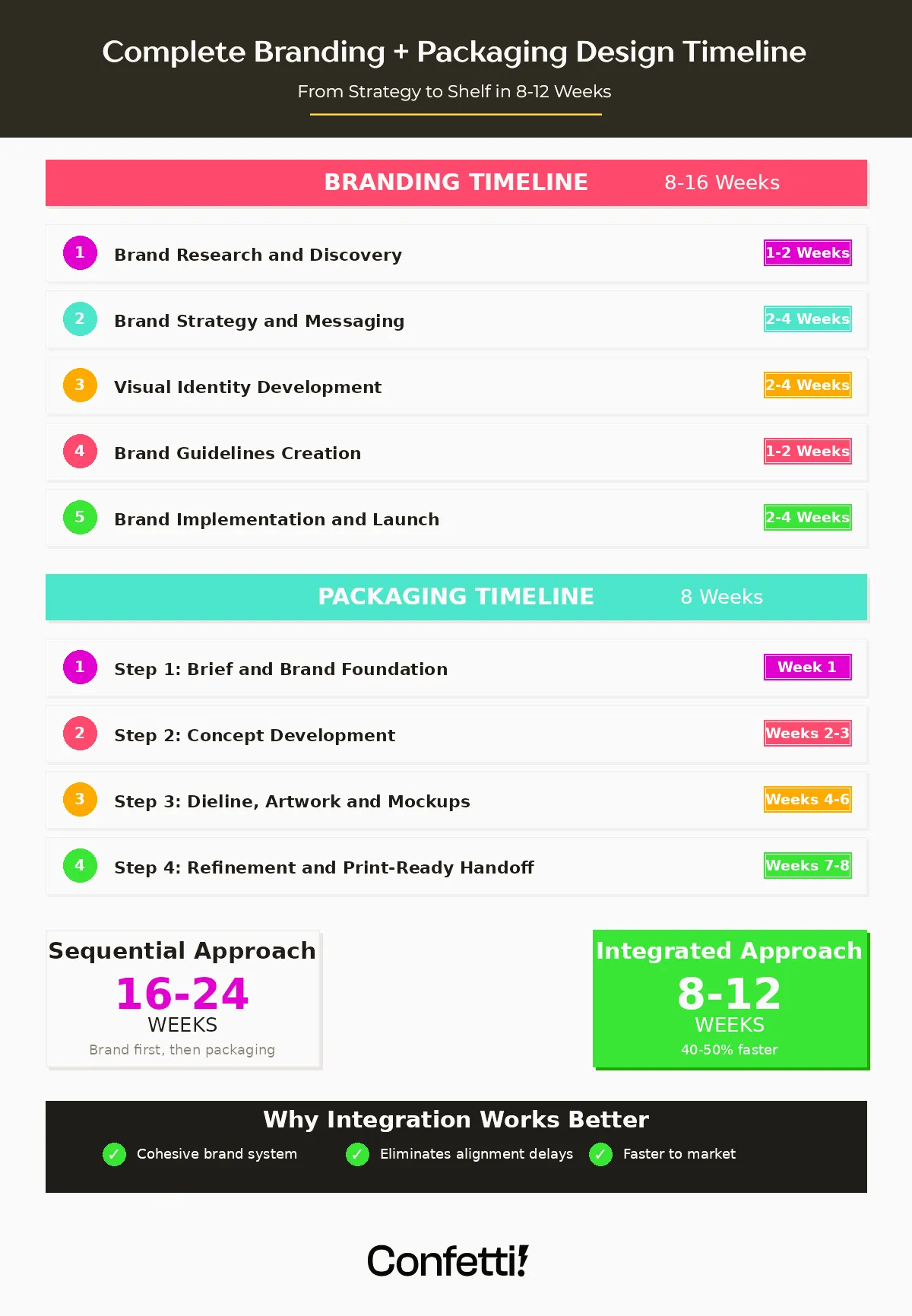
Packaging design sits at the intersection of brand identity, product function, and regulatory requirements.
A structured packaging design process helps brands balance creativity with precision. It reduces the risk of production errors, ensures compliance with industry regulations, and improves shelf visibility.
Most professional packaging projects move through the following stages:
\Before designers begin creative work, they need a complete understanding of the product specifications, brand guidelines, and regulatory requirements.
This step ensures the packaging design matches brand identity while meeting production and legal standards.
Important information collected:
Example: For food and beverage packaging must include ingredient lists, nutritional information, allergen warnings, and labeling standards as required by regulators such as the FSSAI.
Another key activity during this phase is competitive packaging analysis.
Designers study how competing products look on retail shelves to identify category conventions and differentiation opportunities. For instance, if most competitors use bright packaging, a minimalist design may stand out more effectively.
The target retail environment also shapes early decisions. Packaging created for supermarkets, specialty stores, or D2C shipping may need different structures, materials, and visual styles.
Next is the creative exploration phase. The goal is to generate multiple design directions that match brand strategy while maximizing shelf impact and customer engagement.
Packaging designers usually present three to five concept options for review. Each concept explores a different visual direction while still staying true to the brand’s core identity.
Key considerations:
Shelf visibility: Packaging must stand out in crowded retail environments where consumers make quick decisions.
Visual hierarchy: Critical information such as brand name, product type, and key benefits should be immediately visible.
Brand storytelling: The design should communicate the brand’s values and product promise quickly.
Color and typography strategy: Color psychology and typography choices influence how customers perceive the product.
Example: bold colors and large typography may communicate energy and innovation, while softer palettes and minimal design often signal premium quality.
Designers also consider unboxing experience, sustainability messaging, and functional requirements such as resealable closures or tamper-proof seals.
After a concept is selected, the project moves into the technical design phase, where the packaging becomes production-ready.
The most important element here is the dieline, which acts as the packaging blueprint. A dieline shows the flat layout of the package, including cut lines, fold areas, glue zones, and safety margins.
Designers apply the final graphics and messaging to the dieline while carefully managing production requirements such as:
At this stage, teams create digital 3D mockups that show how the flat design will look once assembled.
These mockups help stakeholders visualize the packaging from different angles and confirm that the layout works on the actual structure.
For complex products or high-volume launches, companies often produce physical prototypes. These prototypes allow teams to evaluate:
Consumer testing may also take place during this stage to assess purchase intent and shelf appeal before committing to large production runs.
In the last stage, designers incorporate stakeholder feedback while ensuring the packaging maintains brand consistency and visual impact.
Production preparation involves careful attention to technical specifications, including:
Before mass production begins, manufacturers often produce pre-press proofs. These proofs allow teams to verify color accuracy and detect any last-minute issues.
Designers then deliver print-ready files to the manufacturer along with detailed production specifications, such as:
A well-prepared handoff ensures the final packaging produced by the factory matches the approved design precisely.
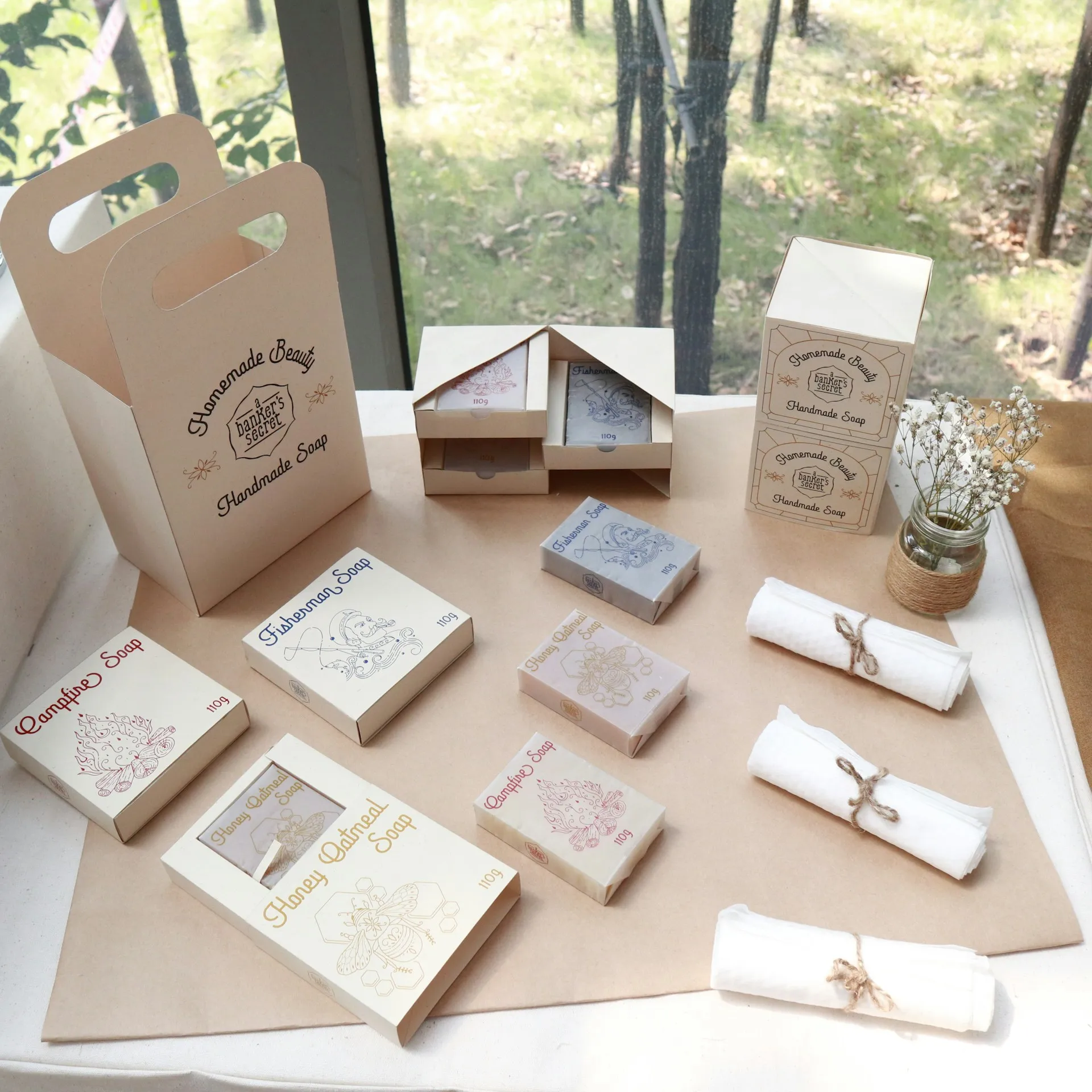
While simple packaging projects may take around 6–8 weeks, more complex packaging programs can extend to 12–20 weeks depending on the factors below:
Multiple SKUs: Products with many flavors or variations often require additional design adjustments and labeling updates.
Custom structural packaging: Unique box structures or packaging formats require prototype testing and engineering validation.
Regulatory approvals: Food, beverage, pharmaceutical, or cosmetic products may require legal review before final approval.
International distribution: Packaging intended for global markets may need multilingual labels and region-specific compliance.
Structural Packaging Complexity: Simple, standard packaging formats speed up development, while custom structures require extra time for prototyping, testing, and manufacturing validation.
Material Selection and Sustainability Requirements: Choosing sustainable or specialty packaging materials often requires additional sourcing, testing, and supplier verification, which can delay production.
Once your packaging design is approved, it’s time to hand off the files to your manufacturer. This step is critical for ensuring your packaging is produced exactly as you envisioned.
Manufacturers typically need high-resolution print-ready files, including:
After you submit your files, the manufacturer will review them and provide a proof for your approval.
Once approved, production usually takes four to six weeks, depending on the complexity of your packaging and the manufacturer’s schedule.
If you have multiple SKUs, each will need its own set of files and may require additional time for production and approval.
With your packaging in production, it’s time to focus on the final touches that will help you make a great first impression:
Photo Shoot Planning
High-quality product photography is essential for your website, social media, and marketing materials. Plan your photo shoot early so you have images ready when your packaging arrives.
Website and POS Materials
Update your website and create point-of-sale (POS) materials that reflect your new branding. Consistency across all channels is key to building trust and recognition.
Design Updates You May Need Post-Sampling
Sometimes, after seeing a physical sample, you may want to make small tweaks to your design. Build in some extra time for these adjustments before your final production run.
Locking in Your Brand’s First Impression
Your packaging is often the first physical interaction a customer has with your brand. Make sure it reflects your values, stands out on the shelf, and delivers a memorable unboxing experience.
"Packaging that wins on shelf, campaigns that stop the scroll, identities that endure, none of it happens in a sprint. At Confetti, we've learned that the brands willing to trust the process are always the ones that end up owning their category."
— Rishabh Jain, Founder & Managing Director, Confetti Design Studio
If you’re planning a new retail brand, the right branding and packaging design timeline can make all the difference.
At Confetti, we specialize in helping retail brands go from zero to shelf with a streamlined, professional process.
Our branding timeline has been refined over hundreds of successful launches, ensuring every phase is efficient, strategic, and designed for impact.
Focused Workshops: Half-day sessions extract key business insights and align stakeholders immediately.
Rapid Iteration: Collaborative design sprints with built-in feedback loops prevent delays.
Real-Time Collaboration: Stakeholders provide input instantly, avoiding email chains or “big reveal” setbacks.
Integrated Design: Brand identity and packaging developed simultaneously, reducing typical 4–8 week delays.
Production-Ready: Designs account for regulatory compliance and manufacturing feasibility from day one.
With experience across FMCG, beauty, beverage, and food brands, we anticipate regulatory and production challenges early and design with manufacturing feasibility in mind.
Clear decision frameworks, defined revision rounds, and dedicated project management keep timelines predictable, helping brands launch retail-ready packaging in weeks, not months. 🚀
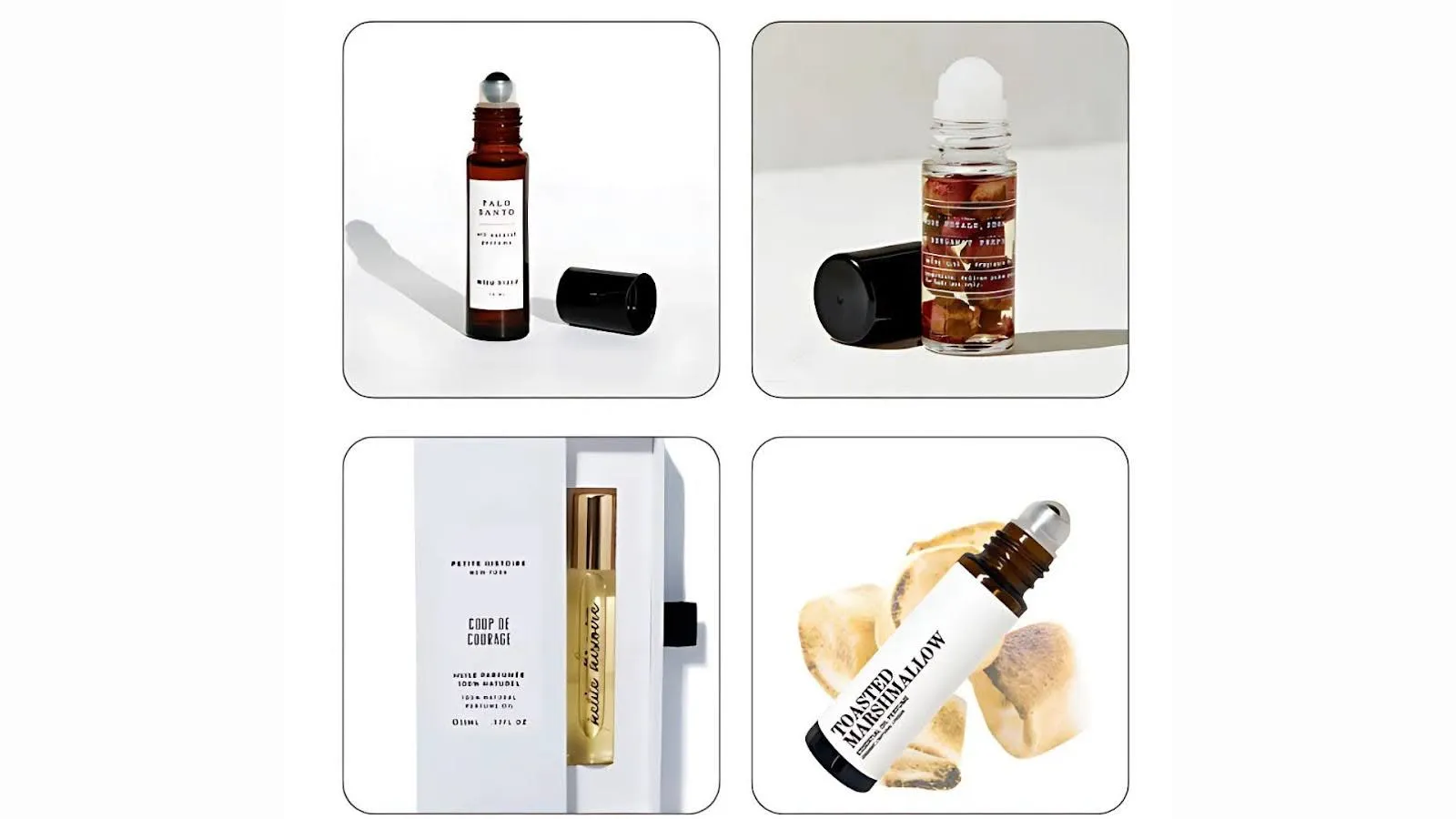
At Confetti, we recently worked with a new wellness brand that needed to launch in just nine weeks. Here’s how we made it happen:
By following a clear branding and packaging design timeline, the brand was able to launch on time and make a strong first impression.
Whether you need branding, packaging design, or AI photography, we’re your one-stop shop for everything your retail brand needs.
Don’t let your launch timeline slip, start your branding and packaging design process todayt. Book a call with Confetti and let’s turn your vision into reality.
Branding timelines vary depending on business size, project scope, and decision-making speed.
Small startups move faster, while larger organizations require deeper strategy, research, and coordination.
For startups and small businesses, branding usually focuses on essential identity elements needed for launch. With fewer decision-makers, the process is faster and more streamlined.
Rough timeline
A clear understanding of the target audience + competitors, limited revision rounds, and working with agencies like Confetti experienced in startup branding can significantly speed up the process.
Growing companies often require deeper strategic work beyond a logo.
This includes defining positioning, messaging, and a full visual system to support long-term growth.
Because these projects involve workshops, research, and multiple approval cycles, experienced agencies usually estimate 12–18 weeks.
Rough timeline:
For large corporations, rebranding is an organization-wide transformation rather than a simple design project. It requires alignment across leadership teams, markets, and product lines.
Because of this complexity, enterprise rebrands usually take 6–10 months, sometimes 10–12 months for global organizations.
Typical phases
After launch, companies continue updating digital platforms, packaging, signage, advertising, and internal systems.
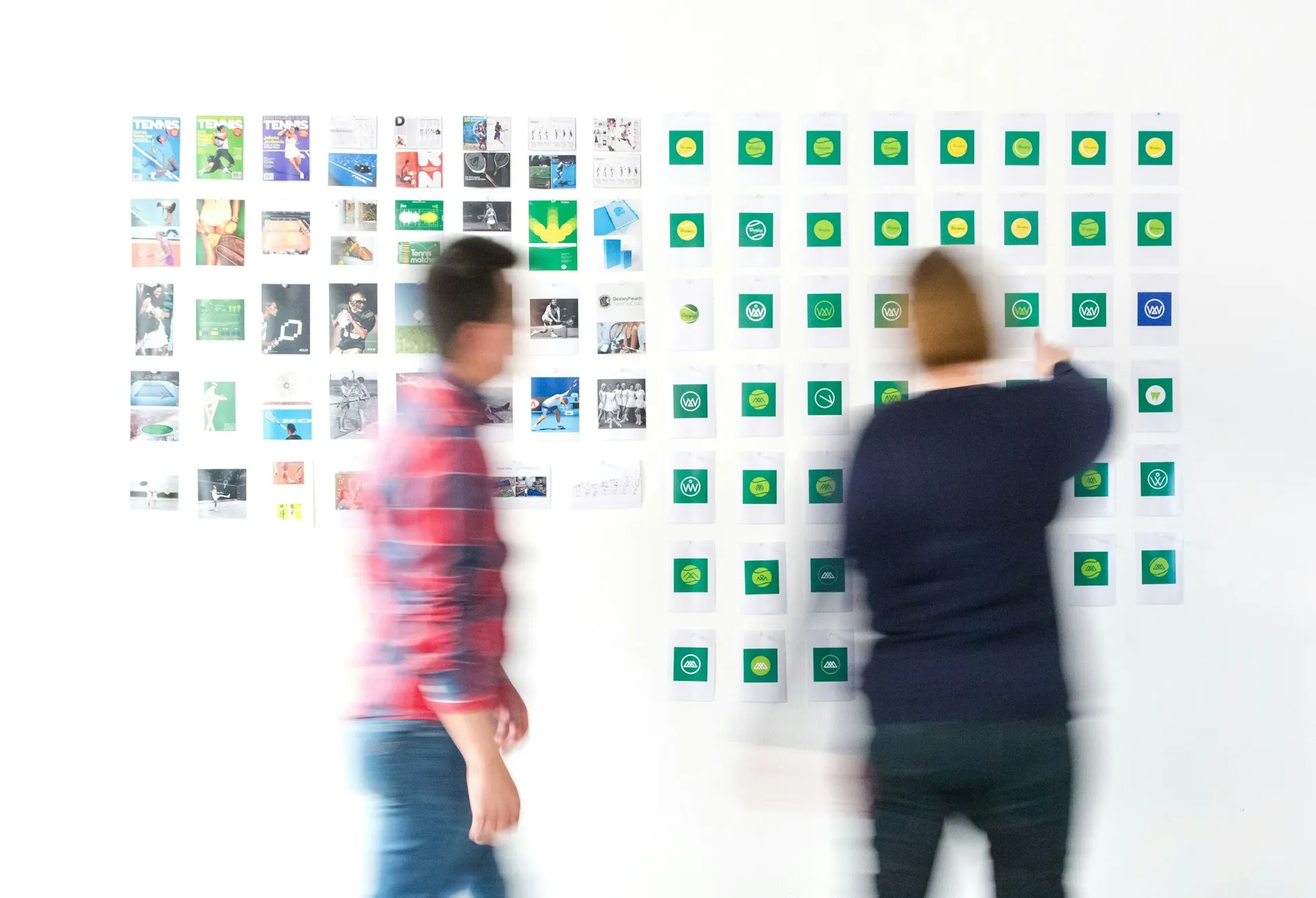
Branding projects often take longer than expected, but delays rarely come from the creative work itself.
Slow decisions, unclear direction, or lack of preparation are the usual culprits.
Here are strategies that help move through the branding process faster and more efficiently:
Preparing key information before the design phase can help shorten branding timelines.
Many projects spend the first few weeks gathering insights about competitors, customers, and positioning. Doing some of this work early makes discovery faster and more focused.
Competitive analysis: Start by reviewing major competitors and how they position themselves. Focus on:
Collect examples of competitor websites, packaging, and marketing materials. Organized references help designers quickly understand the market and identify opportunities for differentiation.
Audience research: A clear picture of your target audience speeds up strategic decisions. Document information such as:
Customer reviews, surveys, or sales data provide valuable insights that help branding teams create messaging and visuals that resonate with real buyers.
Brand inspiration and references: Providing visual inspiration helps designers understand your aesthetic preferences. It is also helpful to include styles you dislike. This prevents designers from exploring directions that do not match your expectations.
Internal alignment: Before starting a branding project, ensure your team agrees on key fundamentals:
When stakeholders align early, the project moves faster and avoids major changes later.
Slow decision-making is one of the biggest causes of branding delays.
Establish clear approval authority: Define who makes the final decision at each stage. While multiple people can provide input, a small group should have final approval to prevent conflicting feedback.
Set quick review timelines: Maintain momentum by requesting feedback within three to five business days after presentations.
The experience of your branding partner also affects project speed.
Established branding and packaging design agencies like Confetti Design Studio have structured workflows for research, strategy, design, and implementation.
They accelerate projects through:
With these elements in place, companies can often reduce branding timelines while still building a strong brand identity that supports long-term growth.
How long does it take to develop a brand from scratch?
Most new retail brands can expect the branding and packaging design timeline to take between 6 and 12 weeks from start to finish, depending on complexity and the number of SKUs. Full custom packaging from concept to shelf can take 6–12 months if you include manufacturing and testing, but for most startups, the design and approval process is much shorter.
What’s the ideal timeline for branding and packaging design before a retail launch?
Ideally, start your branding and packaging design at least 3–4 months before your planned launch date. This gives you enough time for strategy, design, approvals, production, and any final tweaks.
What if I have multiple SKUs? Will the timeline extend?
Yes, each additional SKU will add time to your timeline. Expect to add 1–2 weeks per SKU for design and approval, and potentially more for production and sampling.
Which design steps come first: branding or packaging?
Branding always comes first. You need a clear brand identity (logo, colors, tone) before you can design effective packaging.
How far in advance should I hire a branding and packaging designer?
Hire your designer as soon as you have a clear product idea and know your target audience. This gives you enough time to develop a strong brand and packaging strategy before you need to start production.
Want strategic branding and packaging like this for your business?





.webp)
.webp)

.webp)
.webp)
.webp)
.webp)
.webp)






.svg)
.webp)