%201.webp)
02
AI Snaps
.svg)
.svg)
01
Our Work
03
About Us
04
Brand Audit
05
Contact Us
06
Client Success
12
07
Blogs
08
Careers
Book A Call
.svg)



.svg)
Need Help In Building Your Brand?
Click the button below & book a call with our founder directly.

Rishabh Jain
Managing Director
You spend countless hours perfecting collections but neglect the one touchpoint every customer experiences, fashion brand packaging design.
This guide breaks down why that's a mistake, what fashion packaging has to do differently than other categories, and how to design for the unboxing moment, and the return, all at once. You'll get a practical framework, and real brand examples.

Fashion doesn't follow the same packaging design rules as FMCG.
When you apply generic packaging thinking to a clothing brand, you end up with a design that looks fine but solves the wrong problems.
🧩The Product Comes First
Garments wrinkle, absorb moisture, lose shape, and can be damaged during storage and transit. Even premium clothing loses its perceived value if it arrives creased or poorly protected.
Structural packaging is therefore as important as visual design. Materials, folding methods, tissue paper, inserts, moisture protection, and carton strength all work together to ensure the product reaches customers in perfect condition.
🧩Packaging Is the New Store Experience
Most fashion brands today, especially D2C ones, sell overwhelmingly online. That means the customer forms their first impression of the product from a photograph, not from picking it up in a store.
Packaging has to work backward from that reality, reinforcing what the customer already believed about the brand from the listing image.
Brands like Louis Vuitton, Gucci, Nicobar, and Suta use packaging to extend their brand experience beyond the product.
🧩The Question of Returns
Apparel carries the highest return rate of any e-commerce category by a wide margin. Industry estimates suggest return rates at 20 to 40%, well above footwear, electronics, and beauty.
A packaging system that isn't designed for easy re-sealing and damage-free handling turns every return into a more expensive, more frustrating process, both for the customer and for the brand's margin.
🧩The Sustainability Challenge
Fashion brands must reduce packaging waste without compromising the premium experience customers expect.
The shift is moving toward recyclable mono-materials, FSC-certified paper, water-based inks, and right-sized packaging that eliminates unnecessary components. Regulations such as the EU's PPWR are also pushing brands toward more recyclable and circular packaging solutions.
🧩Premium Perception Must Still Make Commercial Sense
Premium packaging influences perceived value, but luxury finishes also increase manufacturing costs.
Rather than relying on expensive materials, successful brands invest where customers notice the most value. Often, a thoughtfully designed folding carton delivers a stronger premium impression than an oversized rigid box with excessive embellishments.
🧩Digital and physical, Simultaneously
Fashion brands no longer operate in a single channel. Packaging must work across e-commerce, quick commerce, retail stores, and returns. Each channel has different demands.
E-commerce requires durability for shipping. Retail needs shelf presence. The packaging that feels luxurious in a store may be impractical for shipping. The packaging that protects during transit may feel excessive for a quick delivery.
Effective fashion packaging balances product protection, branding, customer experience, fulfillment efficiency, sustainability, and cost.
📌At Confetti, we design packaging as an integrated brand system, optimizing every structural, material, and visual decision to perform across packing, shipping, unboxing, returns, and repeat purchases.
Packaging is often the first physical proof of what your brand stands for. Before customers touch the fabric or try on the garment, they judge the brand through the box, mailer, tissue paper, and finishing details.
Every packaging decision sends a positioning signal. The goal is to ensure that signal matches your pricing, audience, and brand promise.
The best packaging is not the most expensive. It is the one that feels appropriate for your market.
The biggest mistake is a mismatch. Premium pricing paired with generic packaging weakens perceived value, while over-investing in luxury packaging for a value-focused brand can reduce margins without improving customer loyalty.
Customers form quality judgments within seconds. Colour, typography, material texture, box weight, and the opening experience all influence how premium a product feels.
For example, minimal branding and generous white space often communicate quiet luxury, while oversized logos and bold colours create a stronger streetwear aesthetic. Likewise, a rigid box with textured paper feels more premium than a lightweight folding carton, but only if it aligns with the brand's positioning.
Brands like Zalando have strengthened their identity by making packaging instantly recognisable through bold, consistent branding across every customer touchpoint.
Packaging now communicates more than quality. It reflects a brand's environmental commitment.
Using FSC-certified paper, recycled materials, right-sized packaging, and reducing unnecessary plastics demonstrates genuine progress. Customers increasingly recognise the difference between meaningful material choices and superficial "green" messaging, so be specific about what has changed.
Packaging should reinforce the same message customers receive from your website, social media, advertising, and products. When every touchpoint communicates a consistent story, packaging becomes an investment in long-term brand equity rather than simply a shipping cost.
At Confetti, we design fashion packaging systems that align with your positioning, protect your products, and create a consistent brand experience across retail, e-commerce, and every customer interaction.
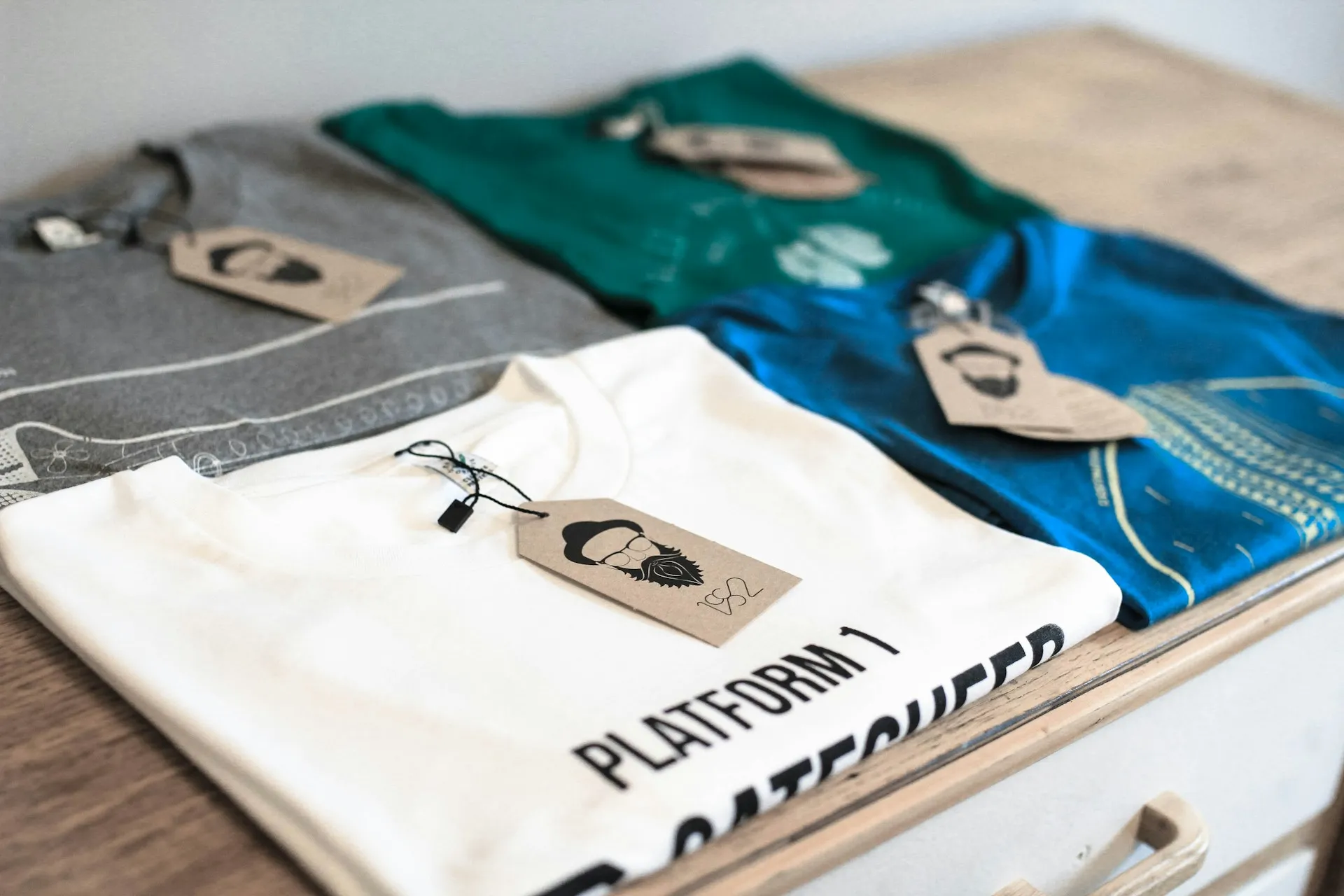
Fashion packaging design is a system of interconnected components that must work together to communicate quality, protect the garment, and create a memorable brand experience.
Here are the core elements that define effective fashion packaging design:
The logo is the most concentrated expression of the brand. Its placement on packaging must be intentional and consistent.
On shopping bags, the logo often sits centrally or at the bottom corner. Both communicate different things.
The size matters as much as the position. A logo that is too large can feel aggressive. A logo that is too small can feel uncertain.
On boxes and garment packaging, the logo should be visible without dominating. On tissue paper, it should repeat subtly: a watermark, a deboss, a delicate foil stamp. The goal is recognition without repetition fatigue.
👉Key principle: The logo placement should feel inevitable, not forced. It should belong where it sits.
Colour is the most immediate signal of brand identity. In fashion packaging, the colour palette must be applied consistently across every touchpoint.
The primary brand colour should anchor the packaging system. It appears on the box, the bag, the tissue, and the ribbon.
Secondary colours can provide accents and differentiation between product categories. The contrast ratio between brand colour and logo ensures legibility.
The most effective fashion packaging often uses a restrained palette.
The chosen palette reflects the brand's positioning and communicates it instantly to the customer.
👉Key principle: Brand colours on packaging should match the brand's broader identity system. Inconsistency between packaging and other brand touchpoints creates confusion.
Typography in fashion packaging does more than communicate information, it communicates character. The choice of typeface on packaging should mirror the brand's broader typographic system.
Serif typefaces, with their elegance and reliability, are often used in luxury fashion packaging. Sans-serif typefaces suggest modernity, clean design, and simplicity.
Display fonts can convey bold, urban, or rebellious character like in the case of streetwear fashion.
The application matters as much as the choice:
👉Key principle: Typography should be legible at the size and distance where the packaging is experienced. A beautiful typeface that is illegible on a small garment label is not effective typeface selection.
Material choice in fashion packaging has to balance three tensions: protecting the garment, controlling shipping weight and cost, and communicating the brand's actual positioning.
Tactility communicates quality as powerfully as visuals in the case of fashion branding and packaging design.
The material choices signal how much the brand cares and how much it expects the customer to care:
The physical sensation of touching fashion packaging, its weight, its texture, its warmth, shapes the customer's perception of the brand and product inside.
A brand that invests in premium packaging materials signals that it values its customers and its products. A brand that cuts corners on packaging signals that the product itself may be equally compromised.
👉Key principle: The materials used should feel like a natural extension of the product. A luxury garment in a flimsy box is a contradiction that customers notice, even if they cannot articulate it.
Texture and finishes provide the finishing touches that elevate packaging from functional to memorable.
👉Key principle: Texture and finishes should be used intentionally, not applied indiscriminately. A single strategic finish is more effective than multiple competing ones.
Structure determines whether the packaging protects the product, presents it effectively, and opens with ease.
The structure must suit the garment. Shirts need boxes or bags that prevent creasing. Dresses require hanger bags or long boxes. Shoes need boxes with interior fittings to hold them in place. Delicate fabrics require acid-free tissue and protective wrapping.
The opening mechanism matters. A magnetic flap feels luxurious. A simple fold feels casual. The fit between lid and base should be precise: neither too tight (difficult to open) nor too loose (feels cheap). The internal structure: tissue, inserts, dividers, must hold the garment in place during transit.
👉Key principle: Structural design must serve the product before it serves the aesthetics. A beautiful box that fails to protect a garment is not effective packaging.
The final, most crucial element is consistency. A fashion brand's packaging should feel like it belongs to a single family.
This means using the same logo placement across all packaging types, the same colour palette across boxes and bags, the same typography from garment label to hangtag, the same material sensibility from shopping bag to tissue paper.
Consistency builds recognition. When a customer receives a shipment and recognises the packaging as the brand's, even before opening it, the brand has earned a place in their mental library. That familiarity builds trust—and trust builds loyalty.
👉Key principle: Packaging should be designed as a system, not as individual components. Every piece should work together to communicate a unified brand identity.
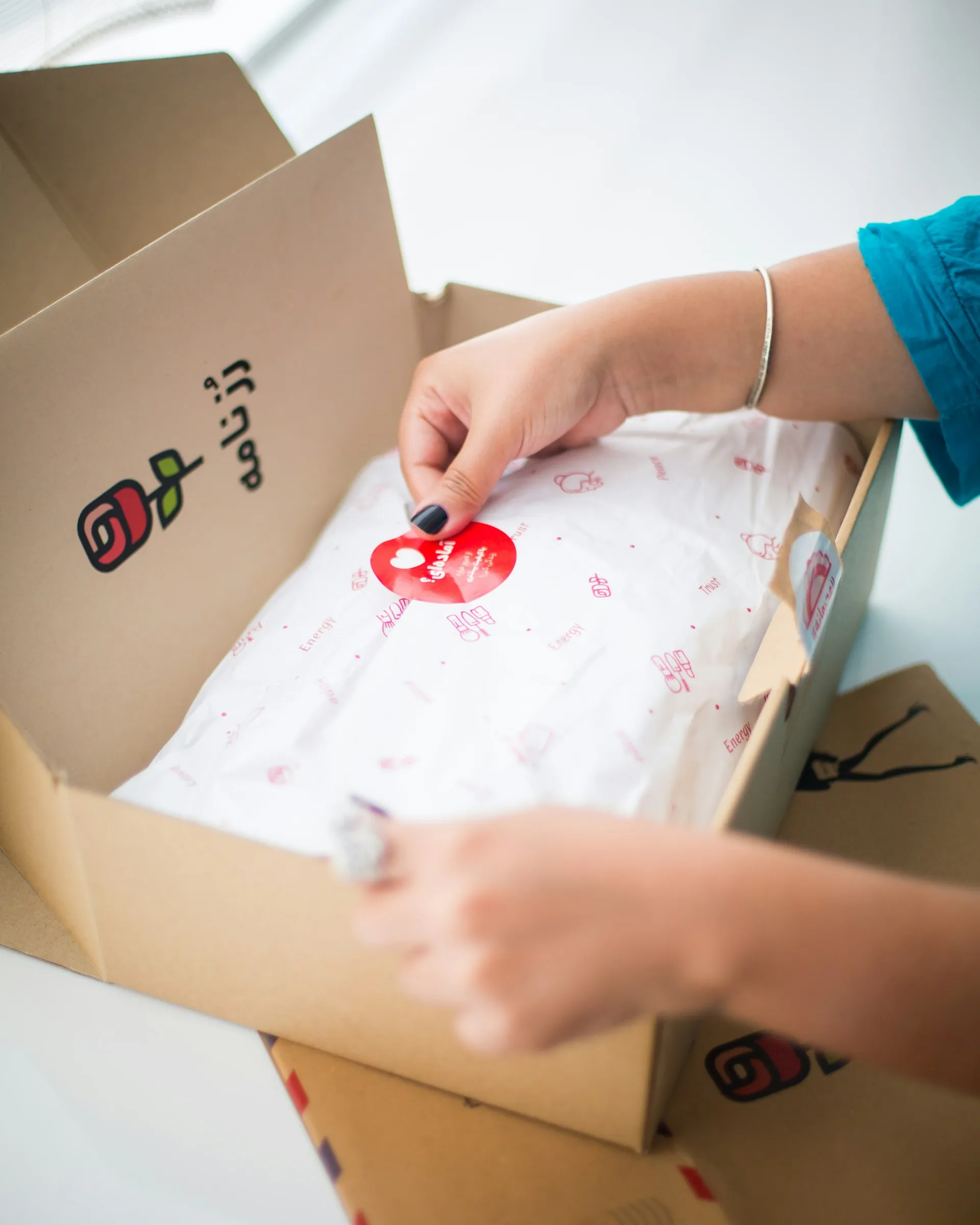
In fashion e-commerce, packaging is the customer's first physical interaction with your brand and often the moment that confirms whether the online promise matches reality.
A well-designed unboxing experience reinforces the customer's purchase decision. It signals care, attention to detail, and premium quality. Every touchpoint, from the shipping box to the tissue paper, contributes to how customers perceive the brand.
It also creates a natural content moment. Fashion is inherently visual, making it one of the easiest categories for customers to photograph and share. Packaging that feels thoughtful and distinctive encourages organic social media posts that traditional advertising cannot replicate.
The best unboxing experiences are carefully sequenced rather than overloaded with decorative elements.
Confetti's work with Desi Minimals treated this sequence as a distinct deliverable rather than an afterthought bolted onto the garment design.
The brand's packaging was built specifically for shelf readiness and for the unboxing experience as its own design problem, reflecting the founders' vision of getting dressed as something closer to a ritual than a routine. That intention had to survive the box, not just the product.
Consumers increasingly expect brands to reduce waste, while regulations are pushing manufacturers toward recyclable and circular packaging systems.
For brands selling internationally, packaging designed today also needs to meet tomorrow's compliance requirements.
The most effective sustainable packaging strategies reduce material use, eliminate virgin plastics, and prioritize recyclability.
The challenge is maintaining the sensory appeal of luxury while meeting sustainability targets. This means:
Balenciaga's signature grey gift packaging and black-on-black ribbon offer a layer of refinement using material updates: smoother paper stock, silkier Tencel Lyocell shopper handles, and softer Ecovero Viscose dustbags.
Even the invitation for its 55th Couture Collection was designed as a metal plaque housed in a fabric-covered box.
👉The packaging reflects the brand's architectural, minimalist aesthetic, refined without being excessive.
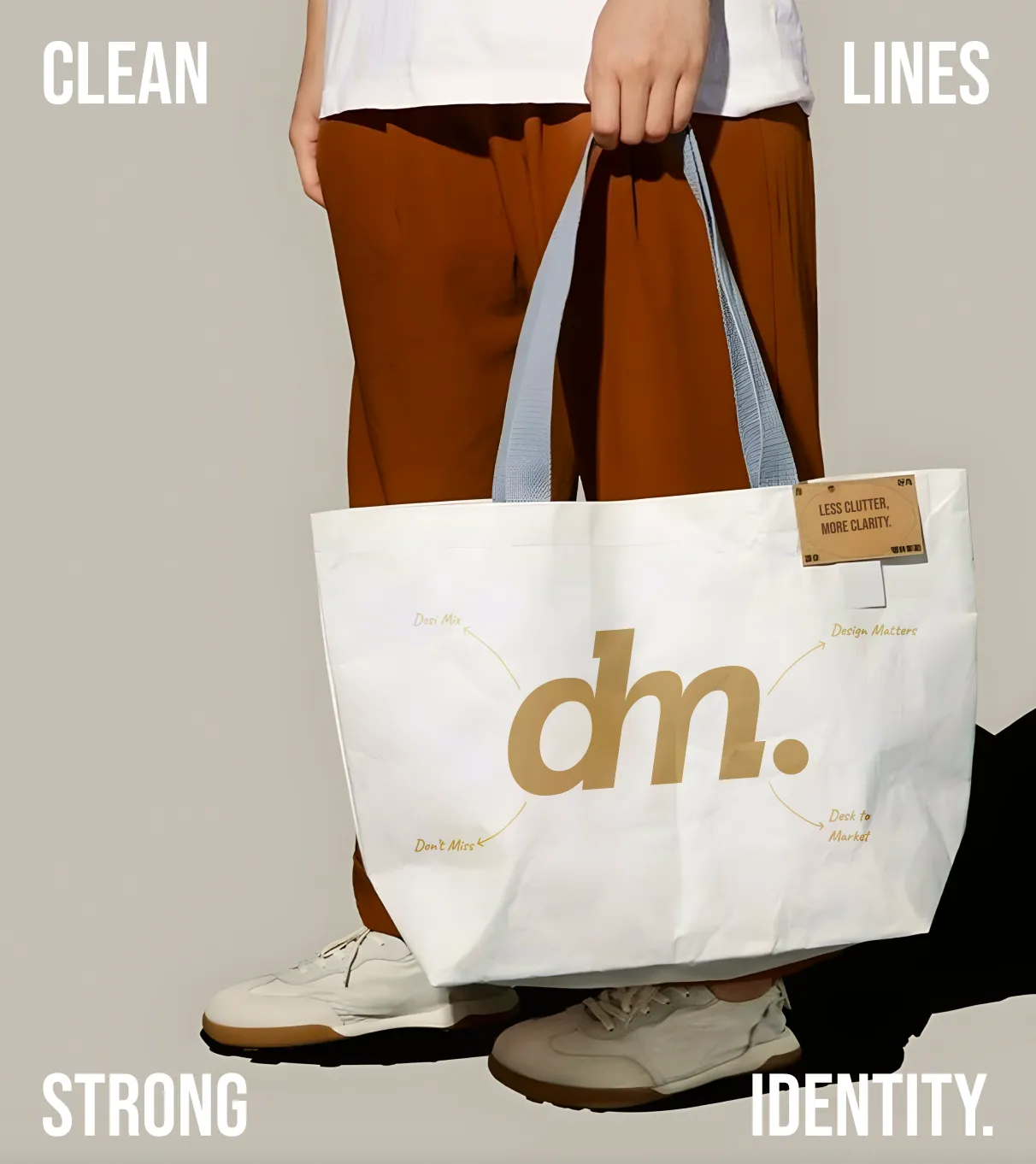
Confetti partnered with Desi Minimals to refine their identity and visual language. Before the rebrand, the brand lacked a cohesive identity that reflected its chill, laid-back vision.
We shaped a visual and verbal system that felt calm, grounded, and relatable. The brand's positioning,"Less noise. More you." is built around presence over performance.
The verbal identity mirrors the clothing: soft, minimal, and grounded.
👉The packaging and identity system reflects the brand's belief that style should feel effortless. Every element reinforces confidence through ease.
LML Clothing by Halfwait, an independent streetwear label known for its minimalist design, sustainable sourcing, and music-rooted origin story, treats packaging as "the first touchpoint in what we want to be a long-term connection".
The packaging is 100% recyclable, using FSC-certified materials and soy-based inks. It features minimalist branding, signature graphics, and music-inspired details such as QR codes linking to exclusive content.
The unboxing includes recycled shipping boxes, premium garment sleeves, poster inserts, and custom Sydney coordinate hang tags.
👉LML proves that independent streetwear brands can invest in premium, intentional packaging without sacrificing sustainability. The packaging extends the brand's storytelling arc across fashion, music, and lifestyle.
Kith treats packaging as part of the product experience, transforming it into a collectible. Its limited-edition collaborations, such as the KITH x ASICS Marvel vs. Capcom release, feature immersive, themed packaging that appeals to collectors.
The brand also commissions artists to create exclusive shopping bags, turning everyday packaging into sought-after keepsakes. Seasonal capsules, including Kith Women and Kith Treats, use distinctive boxed presentations that reinforce exclusivity and storytelling.
By treating packaging as a creative extension of the brand, Kith enhances the unboxing experience, strengthens cultural relevance, and makes the packaging itself a valued part of the product.
👉Kith turns packaging into part of the product, using storytelling and design to make the unboxing a memorable brand experience.
Ganni’s packaging strategy reflects its commitment to circularity and responsible sourcing. The brand has joined Canopy’s Pack4Good initiative, pledging to eliminate fibres from ancient and endangered forests in its paper packaging.
It also uses recycled and FSC-certified materials while reducing overall packaging use. These efforts align with Ganni’s broader goal of becoming fully circular, with products designed for future fibre-to-fibre recycling.
By integrating sustainability into its packaging, Ganni reinforces its environmental values while maintaining a premium brand experience.
👉Ganni proves that sustainability is not a trade-off for desirability. The brand's packaging strategy is embedded in a broader circularity framework, eliminating virgin plastics, sourcing responsibly, and designing for recyclability.
Monday’s Child transforms packaging into an interactive experience with its reusable Little Pink House box. Designed like a dollhouse, the recycled cardboard packaging can be cut into windows and doors, becoming a toy that encourages imaginative play.
The brand turns unboxing into a memorable ritual through thoughtful details like bows, seals, and seasonal decorations.
By combining sustainability, functionality, and creativity, Monday’s Child extends the life of its packaging beyond delivery. Its small-batch approach also allows the brand to test and refine designs while maintaining a unique, handcrafted feel.
👉Monday's Child proves that packaging can be an extension of the brand's values: sustainability, whimsy, and childhood wonder, while serving a functional purpose.
CDLP transformed underwear packaging into a brand signature with its iconic yellow rigid box. Made from durable materials with a bold yellow finish, white foil logo, and subtle debossing, the box communicates premium quality and modern design.
Beyond aesthetics, it serves as a social media asset, giving customers a recognizable item to share when the product itself is less visible.
For collaborations, CDLP adapts the packaging with custom designs and artwork, reinforcing its belief that packaging is an essential part of the luxury experience and a reflection of the brand’s identity.
👉CDLP recognised that packaging is a carrier of brand meaning. By investing in premium packaging, CDLP signals that its product is worth the premium price.
We treat packaging as part of the full brand system, not as a separate box-buying decision made after the identity has already been locked.
A garment can be perfectly designed and still underperform commercially if the packaging around it sends a mismatched or inconsistent signal.
Our approach centres on packaging that has to perform in two environments at once, online and offline, on a marketplace thumbnail and in a customer's hands, because that's the actual reality most fashion brands operate in today.
Battle-testing packaging concepts against both contexts before production, rather than designing for a studio photoshoot and hoping it translates, is core to how we brief and evaluate every fashion packaging project.
Our work with Desi Minimals reflects this directly. The brand's relaxed, intentional positioning, getting dressed as a ritual rather than a routine, needed packaging and an unboxing experience that carried that same tone, not a generic mailer that happened to have the right logo printed on it.
A handful of recurring mistakes show up across fashion brands at nearly every stage, from early D2C launches to established labels redesigning their systems.
Designing the box before designing the product photography
These two elements need to reinforce each other, since most customers encounter the photography first and the physical packaging second. When they're briefed separately, often to different vendors or designers, the visual language frequently drifts apart, creating a subtle disconnect the customer notices even without being able to name it.
Choosing a packaging tier that doesn't match price point
This cuts both ways. Premium pricing paired with budget-tier packaging undercuts perceived value at exactly the moment, unboxing, when a brand has the most leverage to reinforce it. Budget pricing paired with over-engineered packaging quietly erodes margin without generating proportional brand benefit.
Ignoring return-friendly structure
Given how high apparel return rates already run, packaging that can't be re-sealed cleanly or that gets damaged the first time it's opened creates avoidable friction and cost on top of a return rate that's already the highest of any e-commerce category.
No garment-specific folding or protection standard
Without a documented standard, presentation quality varies wildly depending on who's packing a given order, especially once a brand scales past founder-led fulfillment into a warehouse or third-party logistics setup. What looked considered and premium in the first hundred orders can quietly degrade into inconsistent, careless-looking presentation by order ten thousand if nobody wrote the standard down.
What makes fashion brand packaging different from other product packaging?
Fashion packaging has to protect a soft, crease-prone product, perform at small thumbnail size in online listings, and create a shareable unboxing moment, often within tight shipping-weight and cost constraints that don't apply the same way to rigid or liquid products in other categories.
How do you design packaging that creates a good unboxing experience?
Think in a deliberate sequence: outer protection, brand reveal, product reveal, and a small delight like a note or sample. Each stage should build anticipation rather than presenting everything at once, and the full sequence should photograph and film well for social sharing.
Is sustainable packaging worth it for fashion brands?
Yes, and it's becoming a baseline expectation rather than a differentiator. A brand claiming sustainable manufacturing while shipping in single-use plastic sends a mismatched signal customers increasingly notice. Recyclable mailers, molded fiber inserts, and paper-banded bundling are practical, cost-manageable alternatives.
How much should a fashion brand spend on packaging?
Packaging spend should scale with price point and margin rather than being treated as a fixed percentage across the board. A premium brand under-investing in packaging undercuts its own pricing, while a budget brand over-investing often erodes margin without a matching increase in perceived value.
Should fashion packaging be designed before or after product photography?
Together, ideally, since most fashion purchases start online. Packaging and product photography need to reinforce the same visual signals from the first customer touchpoint. Designing the box in isolation often creates a mismatch between what a customer sees in the listing and what they experience at unboxing.
How does packaging affect returns in fashion e-commerce?
Packaging designed for easy re-sealing and damage-free handling reduces return-related complaints and simplifies the process for both customer and brand, which matters more in fashion than most categories given how return-heavy apparel purchasing already is compared to other e-commerce verticals.
Want strategic branding and packaging like this for your business?





.webp)
.webp)

.webp)
.webp)
.webp)
.webp)
.webp)







.svg)
.webp)