02
AI Snaps


01
Our Work
03
About Us
04
Brand Audit
05
Contact Us
06
Client Success
12
07
Blogs
08
Careers
Book A Call




Need Help In Building Your Brand?
Click the button below & book a call with our founder directly.

Rishabh Jain
Managing Director
A CPG brand strategy agency can help your brand define what they stand for, who they serve, and why shoppers should choose them over competitors and cheaper alternatives.
The right agency can help you align positioning, pricing, packaging, and messaging before investing in design or marketing. This Confetti guide explains what these agencies do, when to hire one, and how to choose the right partner.
A CPG brand has two audiences: the retail buyer who decides whether you get shelf space, and the shopper who decides whether you keep it.
Brand strategy is the discipline that satisfies both with one coherent system.
Shelf reality is unforgiving
The average US supermarket carried 33,248 items in 2025, and shoppers decide in roughly 13 seconds.
A brand that cannot be understood in that window is competing on whether anyone notices it at all.
Competitive is getting tougher
McKinsey identifies four simultaneous spending shifts pulling volume away from scaled manufacturers: trading down to private label, trading up for functional benefits, eating out more, and buying fresh staples to cook at home.
The same household can do all four in a week.
Brands positioned solely as affordable lose to private label; those positioned as premium lose to functional challengers. The undifferentiated middle is where CPG brands struggle to survive.
Meanwhile, smaller brands are capturing disproportionate growth. Scale is no longer the advantage it once was. A clear reason to choose your brand is.
That’s what a brand strategy delivers: a defensible reason to exist on the shelf, at that price, for that shopper, even when private label matches the quality and undercuts the price.
At Confetti, the CPG brand strategy work we do starts with a category and shelf audit rather than a positioning workshop.
Before we can say what a brand should stand for, we need to know what the shelf is already saying: which codes it rewards, which it punishes, and where the unclaimed space actually sits.
An experienced branding agency like Confetti helps you connect shopper behaviour, competitive positioning, packaging and brand design.
The engagement should produce clear decisions and practical tools that guide packaging, sales, marketing and future product launches.
A competitive map covering branded products, private labels, price tiers and shelf conventions.
Include a physical and digital shelf audit, shopper insights and, where possible, retailer or broker feedback. The output should identify where the brand can differentiate.
A clear brand positioning statement should include target customer, value proposition and reason to choose the product.
Includes naming rules, SKU relationships, variant logic and guidelines for extending the range without fragmenting the brand.
A claims matrix listing each proposed claim, its supporting evidence, relevant market requirements and intended placement.
This helps teams identify potential compliance issues before artwork is finalised. Regulatory specialists should review claims where required.
Define the front-of-pack hierarchy, primary benefit, supporting claims, variant system and information architecture across panels.
If packaging design is included in the scope, deliverables should also cover applicable dielines, material and finish specifications, and production-ready artwork.
Give the sales team a concise narrative explaining the category opportunity, the brand's difference, its packaging rationale and its role for the retailer.
This helps buyers understand why the product deserves shelf space.
Provide brand guidelines, templates, approved assets and practical rules for designers, manufacturers and marketing partners.
Where relevant, include a brief for digital commerce and campaign execution.
Your designer should be able to develop the packaging without guessing at the positioning.
Your sales team should be able to explain the product's commercial value. Your marketing agency should know which messages to amplify.
If each team still needs a meeting to interpret the strategy, the handover is incomplete.
Agree on deliverables before signing the proposal.
A strategy-only engagement may stop at the brief; an integrated strategy and design engagement should specify which identity, packaging and production files are included.
Brand strategy does not replace paid media, marketplace management, sales teams, retail brokers or in-store execution.
Nor does it guarantee sales velocity. Branding cannot compensate for a product that disappoints on taste, quality or performance.
A CPG brand strategy agency defines the position and the reasons to believe. A CPG marketing agency activates that position through campaigns, shopper marketing and digital channels. Marketing can amplify a strong position, but it cannot fix a weak one.
Some consultancies deliver strategy documents for another team to implement. Others like us at Confetti carry the work through to identity and packaging.
An integrated approach for branding and packaging design can reduce the gap between what the strategy recommends and what shoppers eventually see on the pack.
The right time to hire a CPG brand strategy agency is when the business has a problem that better positioning, packaging or brand architecture can solve.
These are the most common signs:
If you are still testing demand through a small launch, a focused positioning workshop and a flexible package design may be sufficient.
If your positioning and packaging already convert and the main constraint is traffic, a retail media or performance marketing agency may be the better choice.
If customers dislike the product or it fails to deliver on taste, quality or performance, address the product before investing in rebranding.
Retail listings have deadlines. Work backwards from buyer meetings and allow time for research, strategy, packaging design, claims review, artwork approval, printing and sample production.
Starting too late can force compromises or leave the new packaging unavailable for the review.
At Confetti, when CPG brands come to us, we first determine whether a business needs a strategic reset, a packaging refresh or a more focused design solution.
Based on that we invest in the work that addresses the actual problem, before inventory and media commitments make changes more expensive.

Choosing a CPG brand strategy agency means finding a partner who understands how products compete, how shoppers make decisions and how strategy translates into packaging that works in the market.
Category experience: Look for work in your category or one with similar shelf dynamics.
Strategies for supplements, refrigerated food and household products involve different shopper expectations, retail conditions and packaging needs.
Shelf and shopper thinking: The agency should understand your competitors, private-label alternatives, shelf visibility and the reasons customers choose one product over another.
Ask how research informs the positioning and packaging decisions.
Claims and regulatory awareness: The team should understand how claims affect brand messaging and packaging.
Ask how they identify claims requiring substantiation and when they involve regulatory specialists.
Range and architecture experience: Ask to see packaging for a complete product range, not just individual hero products.
You need evidence that the agency can organise multiple SKUs, flavours and formats within one recognisable system.
Clear ownership and handover: Find out who will lead the project, who makes key decisions and what you receive at completion, including guidelines, templates and production-ready files.
Beautiful packaging with no visible strategic rationale, presentations that offer mood boards instead of decisions, promised results before the agency understands your business, and proposals that do not clearly define scope.
A lack of questions about retail buyers, claims or SKU architecture is another warning sign.
At Confetti, CPG brand strategy starts with the shelf.
We look at what competitors communicate, what shoppers can recognise quickly, what retail buyers need to justify a listing and which product claims can be supported.
We use that understanding into positioning, packaging and a brand system that works commercially.
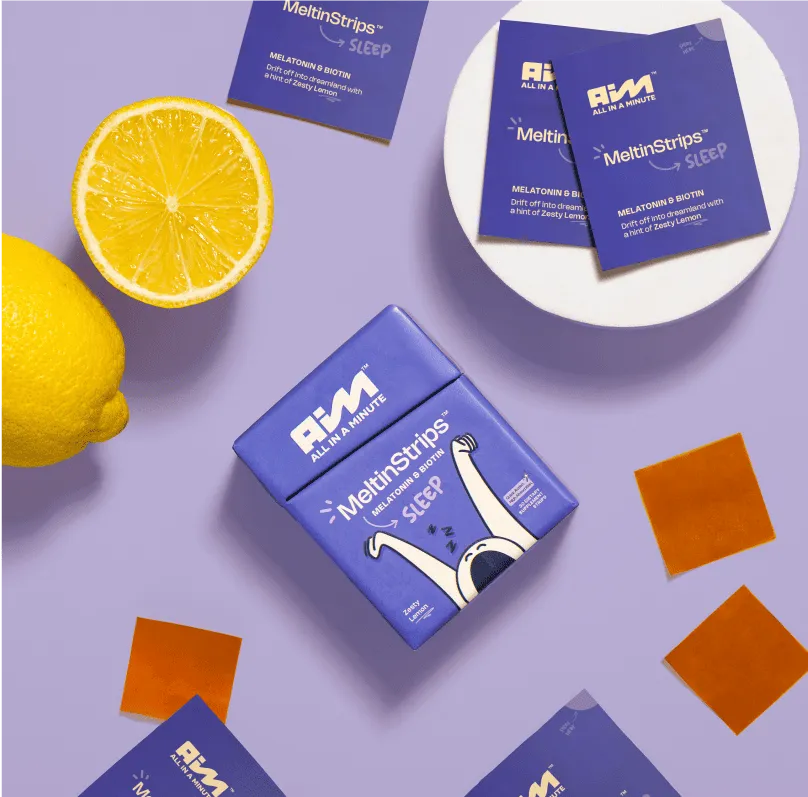
For AIM, a wellness brand targeting busy people, we built the positioning around a simple promise: wellness that fits into life, one minute at a time.
The strategy emphasised convenience, trust and simplicity, giving the brand a clear direction for its messaging, visual identity, packaging and photography.
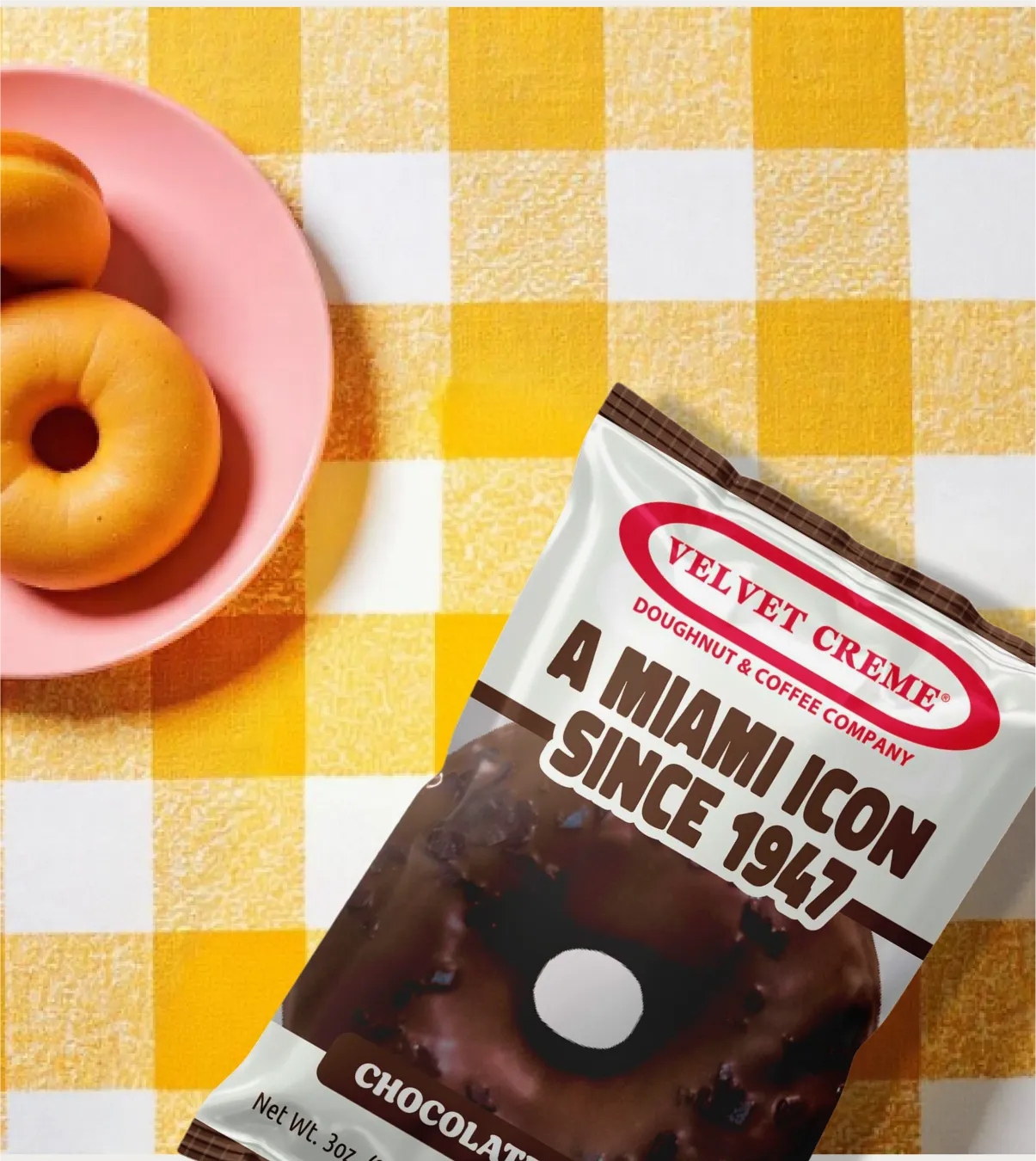
Velvet Creme, a Miami bakery established in 1947, needed packaging that honoured its history while appealing to new customers.
We combined retro-modern visuals, bold colours, custom illustrations and the signature line “A Miami Icon Since 1947” to connect nostalgia with contemporary appeal.
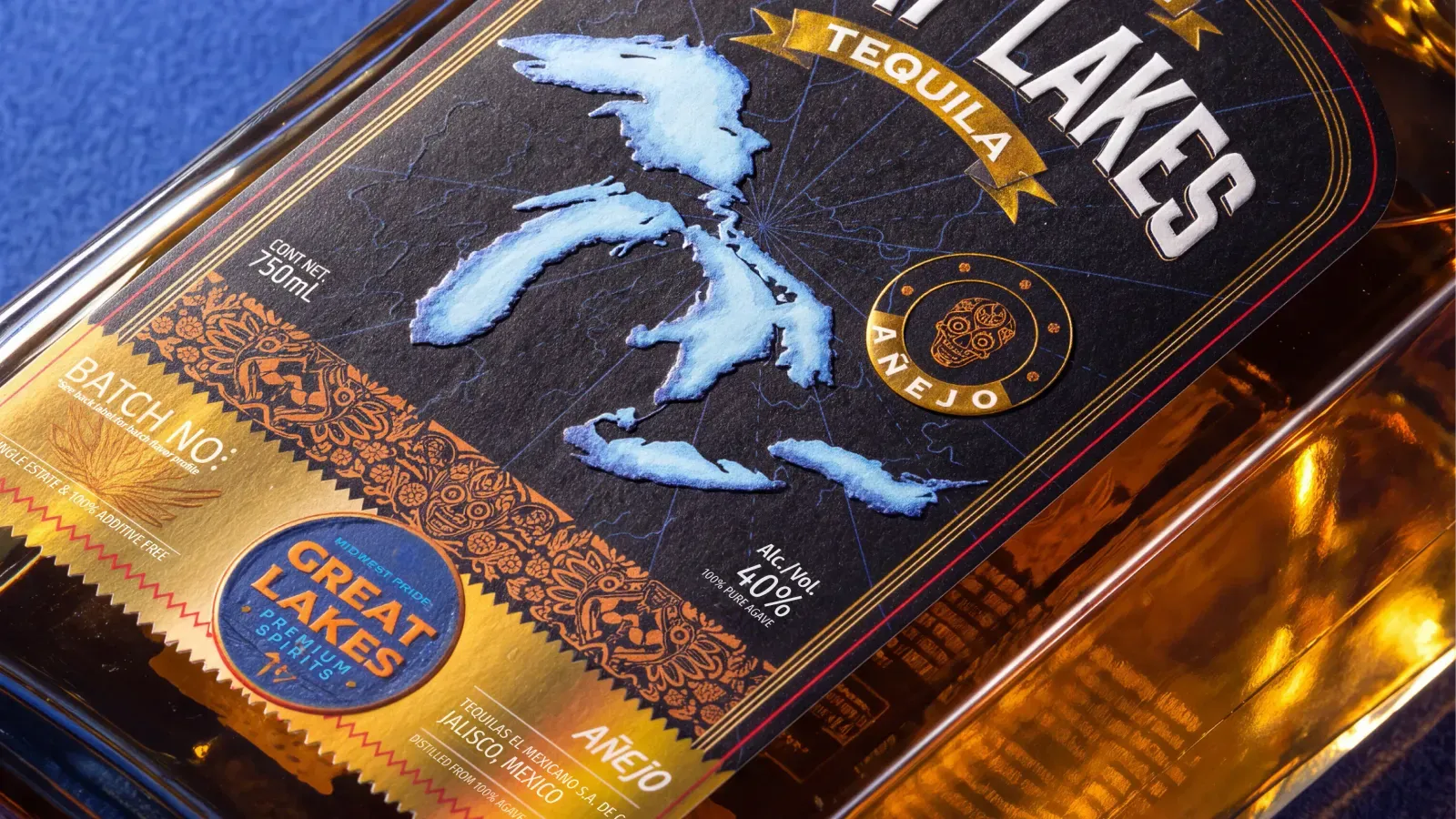
For Great Lakes, a tequila brand connecting Michigan's landscape with Mexican agave heritage, the challenge was to bring two cultural identities together without reducing either to a stereotype.
The packaging combined regional landscape details with Mexican craft references, while giving Blanco, Reposado and Añejo distinct visual characters within one coherent family.
Across these projects, the sequence is consistent: understand the audience and category, define the brand's reason to choose, then build the identity and packaging around it.
For CPG brands, this creates a stronger foundation for launch, retail presentation and future product extensions than designing each pack as a separate exercise.
The quality of the output is determined as much by what you bring as by what the agency does.
Sales data by SKU and by door for at least twelve months. Velocity per door, not just total revenue. Buyer feedback, including the reasons given for rejections.
The competitive set as you actually see it, not as a category report defines it. Any claims substantiation you already hold.
Production constraints: co-manufacturer minimums, existing dielines, packaging formats you are locked into. And an honest account of what has already been tried.
A single decision-maker with authority to approve positioning and packaging.
The person who owns the retailer relationships, because the buyer's perspective is an input, not an afterthought.
And whoever owns the P&L, because packaging decisions are cost decisions and the strategy has to survive the unit economics.
A diagnostic phase of four to eight weeks produces the audit, the positioning, and the roadmap.
A refresh or rebuild of 16 to 26 weeks produces the full system, including packaging across the SKU range and the guidelines.
Anything materially faster is either a narrower scope or a thinner process.
The most common failure in the client–agency relationship is a brief that describes the deliverable rather than the problem. "We need a new pack" is a deliverable.
"We are losing velocity to private label in the Midwest and the pack is not earning a second look" is a problem. The second brief produces a strategy. The first produces artwork.
A CPG brand strategy must satisfy: the retail buyer who decides whether to stock the product, the shopper who decides whether to buy it, and the regulator who determines whether its claims and labels meet applicable requirements.
If you fail any one of these, you risk your brand's growth.
Retail buyers want to understand the product’s role in the category, the shoppers it attracts, its margin potential and why it deserves space alongside established brands.
A strong CPG brand strategy gives the sales team a clear story to present: what category gap the product fills, how it differs from competitors and why it can contribute to the retailer's business.
Shoppers make decisions quickly, whether they are scanning a supermarket shelf or browsing a marketplace.
The brand must communicate what the product is, its primary benefit and its reason to believe without requiring lengthy explanation.
The front of the pack should establish one clear reason to choose the product, supported by relevant evidence and appealing design.
It should also help customers understand why the product is worth buying again or paying more for than a private-label alternative.
Every claim needs to be checked against the rules in the markets where the product will be sold.
Statements about nutrition, environmental benefits, ingredients or product origin may require specific evidence or meet defined conditions.
Build claims review into the strategy stage, rather than waiting until artwork is nearly complete.
This reduces the risk of changing packaging, removing claims or delaying a launch. Retailers may also apply their own product and packaging review requirements.
Rate your brand from 1 to 5 against each audience:
Involve sales, marketing and regulatory specialists in the assessment. The lowest score identifies where the work should begin.
The most impactful CPG strategies bring all three perspectives together. They give retailers a credible commercial case, shoppers a clear reason to buy and the business a claims framework it can defend.
Facing a velocity problem, a private-label squeeze, or a range that has outgrown its packaging? Schedule a consultation, we will tell you in the first conversation whether you need a strategy rebuild, a packaging refresh, or a marketing agency instead.
What does a CPG brand strategy agency do?
A CPG brand strategy agency helps consumer packaged goods brands decide where to play and how to win before money goes into design or media. Typical work covers category and shopper research, positioning, brand architecture, naming, claims strategy and packaging direction. Many also design the identity and packaging, while performance marketing is usually handled by a separate specialist.
What is the difference between a CPG marketing agency and a brand strategy agency?
A CPG marketing agency mainly runs growth activity such as paid media, retail media, social content, Amazon and lifecycle marketing. A brand strategy agency works earlier and decides what the brand stands for, who it is for, how it is positioned against competitors and private label, and how that shows on pack. Many brands need both, in that order.
How much does a CPG brand strategy agency cost?
Costs are determined by the scope, category and the agency's size. A focused positioning project for an emerging brand costs far less than a full strategy, identity and packaging program for a national range across many SKUs. For instance, a full service branding engagement with Confetti can start at USD 15000 and go up to USD 25000 or more depending on the size of the project.
When should a CPG brand hire a brand strategy agency?
Bring an agency in before a launch, a retail expansion such as a first national chain, a line extension into a new category or tier, a rebrand after slowing velocity, or a funding round that depends on a sharper story. The earlier the strategy is set, the less likely you are to redesign packaging after it has gone to print.
What should I look for in a CPG branding agency?
Look for CPG category experience, work that has been on US shelves, an understanding of retailer buyers and private label, and the ability to turn positioning into packaging and claims that survive regulatory review. Ask to see the strategy behind past work, not only the finished packs, and who will actually work on your account.
Want strategic branding and packaging like this for your business?