02
AI Snaps


01
Our Work
03
About Us
04
Brand Audit
05
Contact Us
06
Client Success
12
07
Blogs
08
Careers
Book A Call




Need Help In Building Your Brand?
Click the button below & book a call with our founder directly.

Rishabh Jain
Managing Director
For founders launching a brand in the UAE, the right design agencies in Dubai can help with a seamless launch and a series of costly handoffs. From brand strategy and packaging to photography, digital content and e-commerce, every element needs to work together.
This guide explains what full-service design looks like, what fragmented hiring costs in real terms, and how to choose a partner by launch stage rather than by portfolio.
Search for design agencies in Dubai and you will find firms offering very different services under the same label.
Before you can onboard a packaging design agency in Dubai, knowing which kind you need helps you compare proposals and avoid paying one agency to fix another’s work.
Branding and identity studios develop brand strategy, naming, logos, visual identities and guidelines. Some also handle packaging and brand applications.
Graphic and print design firms produce brochures, catalogues, presentations, marketing materials and campaign artwork. They may work on retainers but do not always offer brand strategy.
Digital design and marketing agencies focus on websites, UI/UX, social media, digital campaigns and performance creative. Their strength is often how a brand appears and performs online.
Web and app development firms build websites, apps and digital platforms. Some offer design services, but development expertise alone does not guarantee strong branding or visual design.
Architecture and interior design studios work on physical spaces, retail environments, offices and hospitality projects. They share the word “design” but require a different specialist skill set.
Some agencies like Confetti Design Studio combine several disciplines including brand strategy, identity, packaging, photography and web design (with our sister concern Suplex), under one team.
This reduces the need to coordinate multiple suppliers.
Most Dubai brands need to work across physical retail, marketplaces, social media and websites. Many also need Arabic and English versions of their identity and communications.
When different suppliers work from separate briefs, consistency can break between the packaging, product photography, website and campaign.
Specialists can be the right choice, particularly when you have an experienced in-house team to manage them.
For growing businesses without that resource, an integrated agency can reduce coordination and rework. The key is to confirm what the agency actually delivers rather than relying on a broad “full-service” claim.
Start with the job you need done, then shortlist firms with relevant work and clear responsibility for delivery.
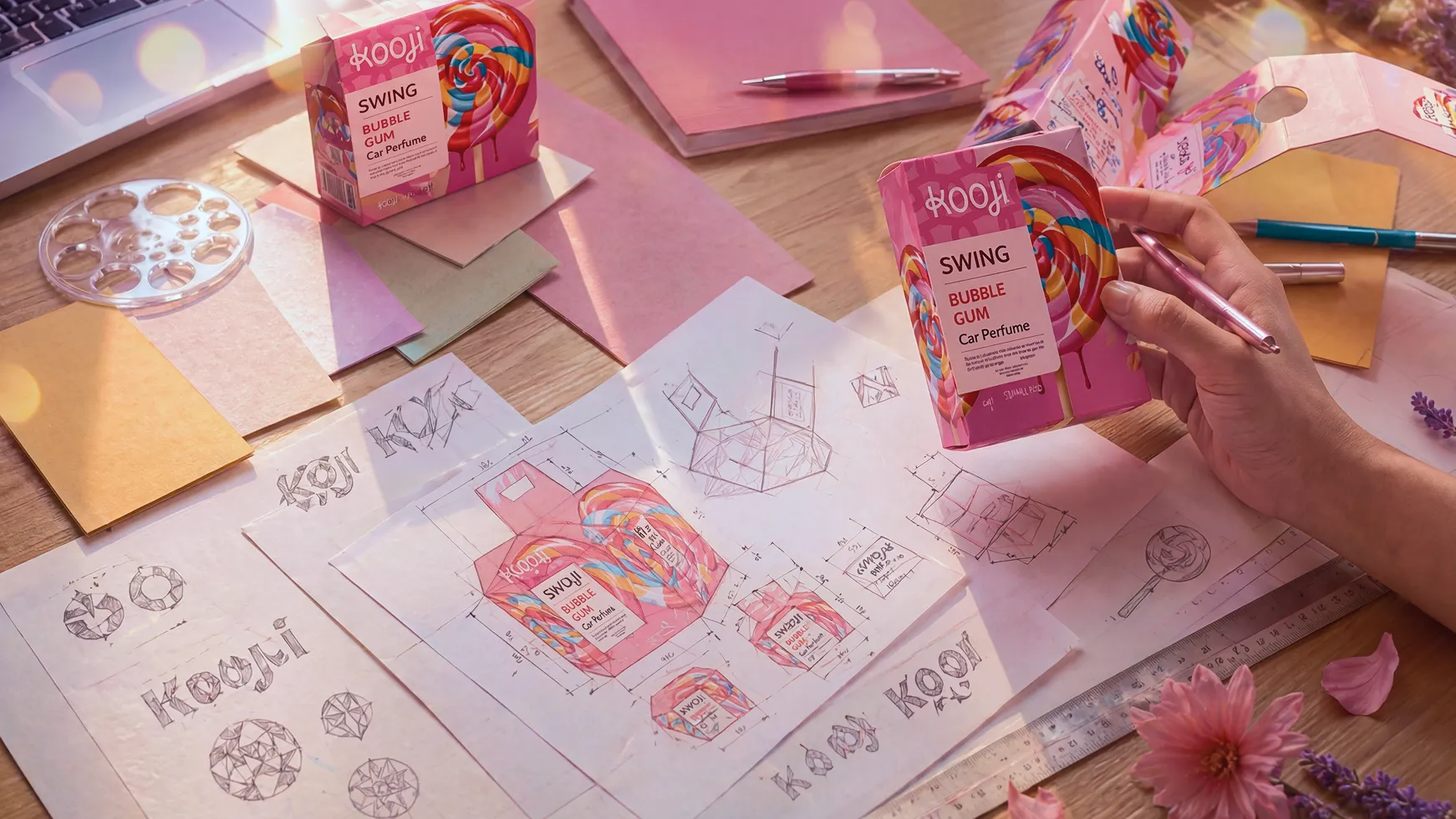
Hiring separate design agencies or freelancers can look cheaper because each quote covers only one deliverable. But when you add all of that up, the picture is different.
For a UAE consumer brand, a launch might involve brand strategy, logo design, Arabic adaptation and packaging, print production, product photography, social content and a website.
If different suppliers handle each part, someone must ensure they all work as one brand. Often, that someone is the founder.
List the work your launch needs and assign an owner to each item. Then count how often work passes between suppliers.
For example, packaging files go to the printer, finished packs go to the photographer, images go to the social media agency, and brand assets go to the website developer.
Arabic naming and typography may involve additional rounds between translators and designers.
Every handoff means new files to share, context to explain and decisions to review. It also creates another opportunity for typography, colours, messaging or product details to drift.
Coordination: The founder or marketing lead becomes the project manager, briefing vendors, resolving conflicting feedback and keeping the overall vision consistent.
Delays: Work often moves in sequence. Photography may wait for final packaging, while website content waits for approved images. One late deliverable can delay the launch.
Inconsistency: Packaging, product photography, social content and the website may look as though they belong to different brands when each supplier works from a separate brief.
Rework: If the packaging changes after the photoshoot, images may need to be reshot. If the identity changes after the website is built, digital assets may need revising.
At Confetti we have learned that 5 or more vendors on one launch creates a high coordination burden. 3-4may be manageable if one partner owns the brand standards. 1-2 partners can reduce coordination, provided they have the skills your brief requires.
Separate specialists can work well when your brand already has clear guidelines, an experienced in-house team and a specific gap to fill.
But when you need strategy, identity, packaging, photography and digital design together, evaluate the project as one connected system.
For many growing brands in Dubai, an integrated design agency can simplify that process by aligning teams around one brief, one visual system and clear accountability.
The goal is not to eliminate every handoff; it is to reduce unnecessary coordination, rework and delays.
For a consumer brand in Dubai, “Full-service” should mean the agency can connect strategy, identity, packaging and digital design without leaving you to manage every handoff.
1. Brand strategy and naming
Positioning, audience definition, competitive differentiation, brand story and naming. Strategy should guide the design work, not be added after it.
2. Brand identity in Arabic and English
Logo systems, colour palettes, typography, layout rules and brand guidelines. For bilingual brands, Arabic should be designed into the identity from the start, not squeezed in after the English version is approved.
3. Packaging and production
Packaging concepts, structural requirements, dielines, materials, finishes, artwork and print-ready files. Check if your agency supports production or stops at visual mockups. For UAE products, confirm how it coordinates Arabic labelling and regulatory reviews with your adviser.
4. Photography and content
Product photography, lifestyle imagery, and the art direction that connects them to the brand system. This is the discipline most often outsourced, and the one that most often breaks consistency, because a photographer working from a mood board rather than a brand system will produce beautiful images that do not belong to the brand.
5. Website and e-commerce design
Website structure, product pages and digital brand applications that remain consistent with the physical brand. Confirm whether development is included or handled by a separate supplier.
6. Guidelines and working assets
Editable templates, organised files and clear usage rules that your internal team, printers and retail partners can apply without starting from scratch.
One owner, one brief, one accountability. The structural benefit of a full-service studio is not that it can do everything. It is that someone is responsible for the whole.
When the pack and the photography disagree, there is one team to resolve it. When the website uses the wrong shade, there is one team to fix it. That accountability is the product.

Confetti is a branding and packaging studio with a Dubai office in Al Garhoud and a Mumbai office.
We work with consumer brands on strategy, identity, packaging and go-to-market needs, with a focus on making each part work as a connected system.
For brands that also need websites or e-commerce platforms, we work with our sister studio, Suplex, which focuses on digital experiences and online stores. This gives brands access to complementary design and development capabilities without treating every customer touchpoint as a separate project.
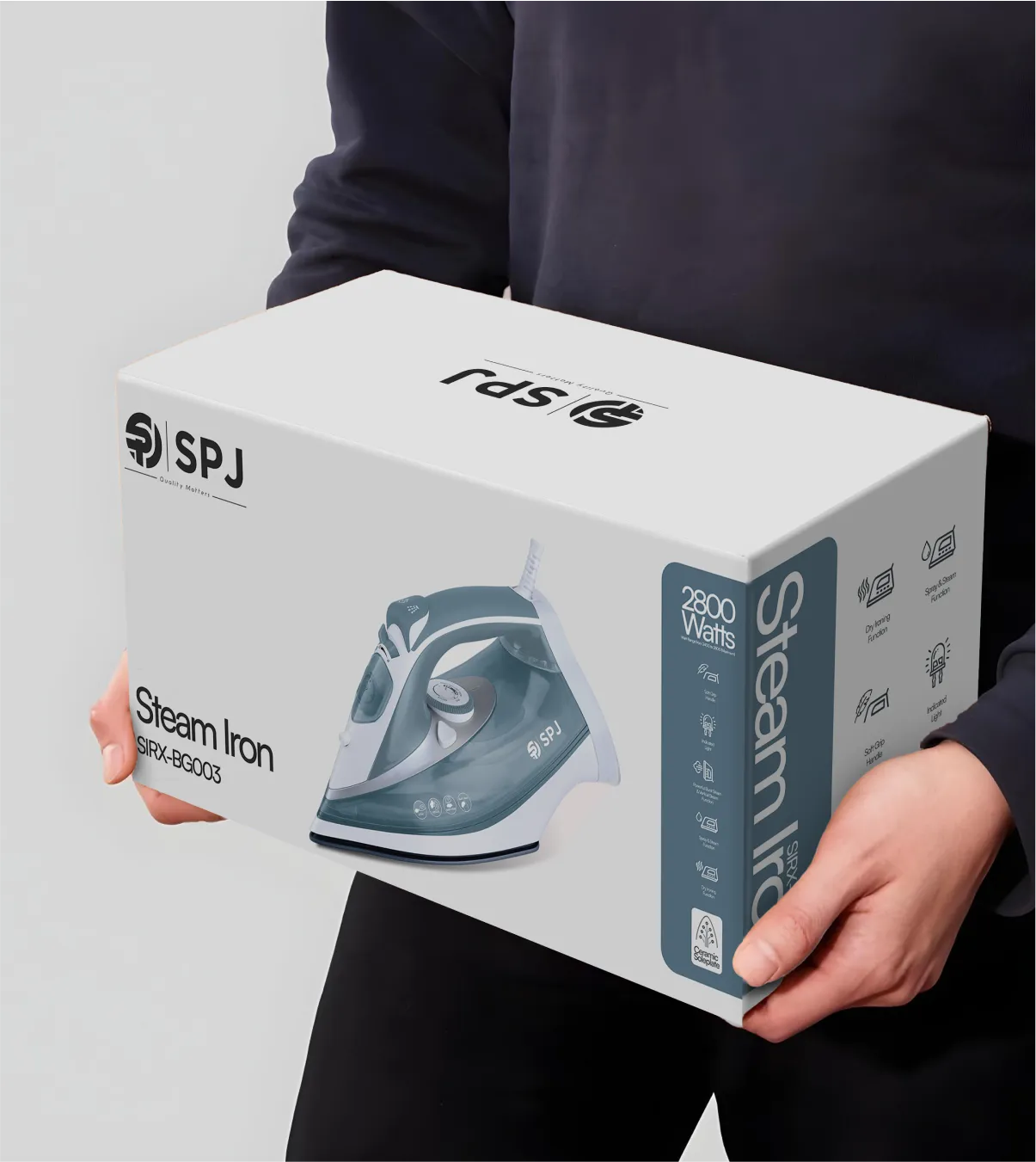
For SPJ Electronics, which sells products ranging from smart TVs and air conditioners to refrigerators and kitchen appliances, the challenge was to make packaging protective, cost-effective and visually distinctive.
The packaging combined sturdy, lightweight materials with easier-to-open structural features, clearer product information and consistent visual branding. The project demonstrates why packaging design involves more than graphics: it must protect the product, support transport and communicate value to the customer.
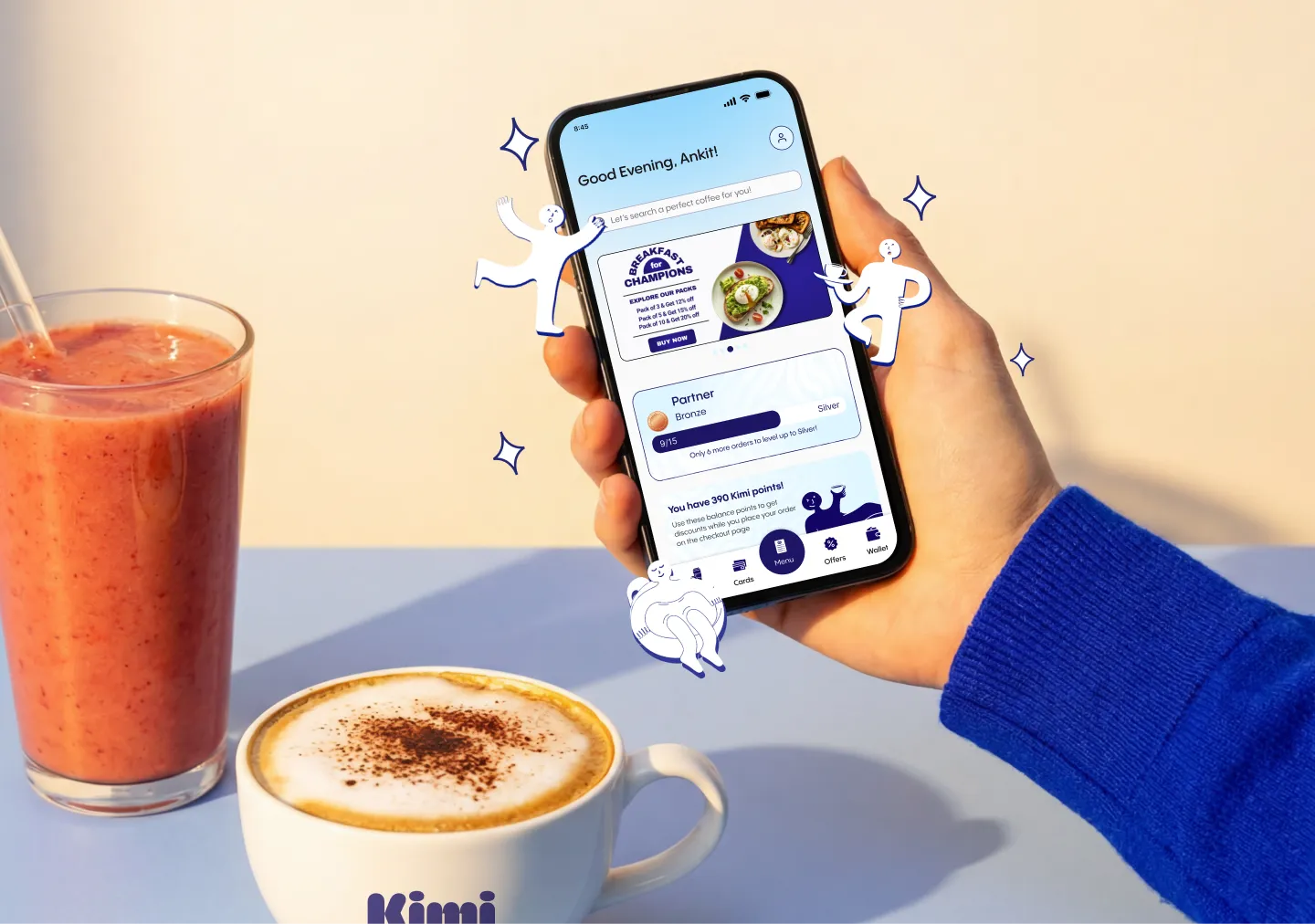
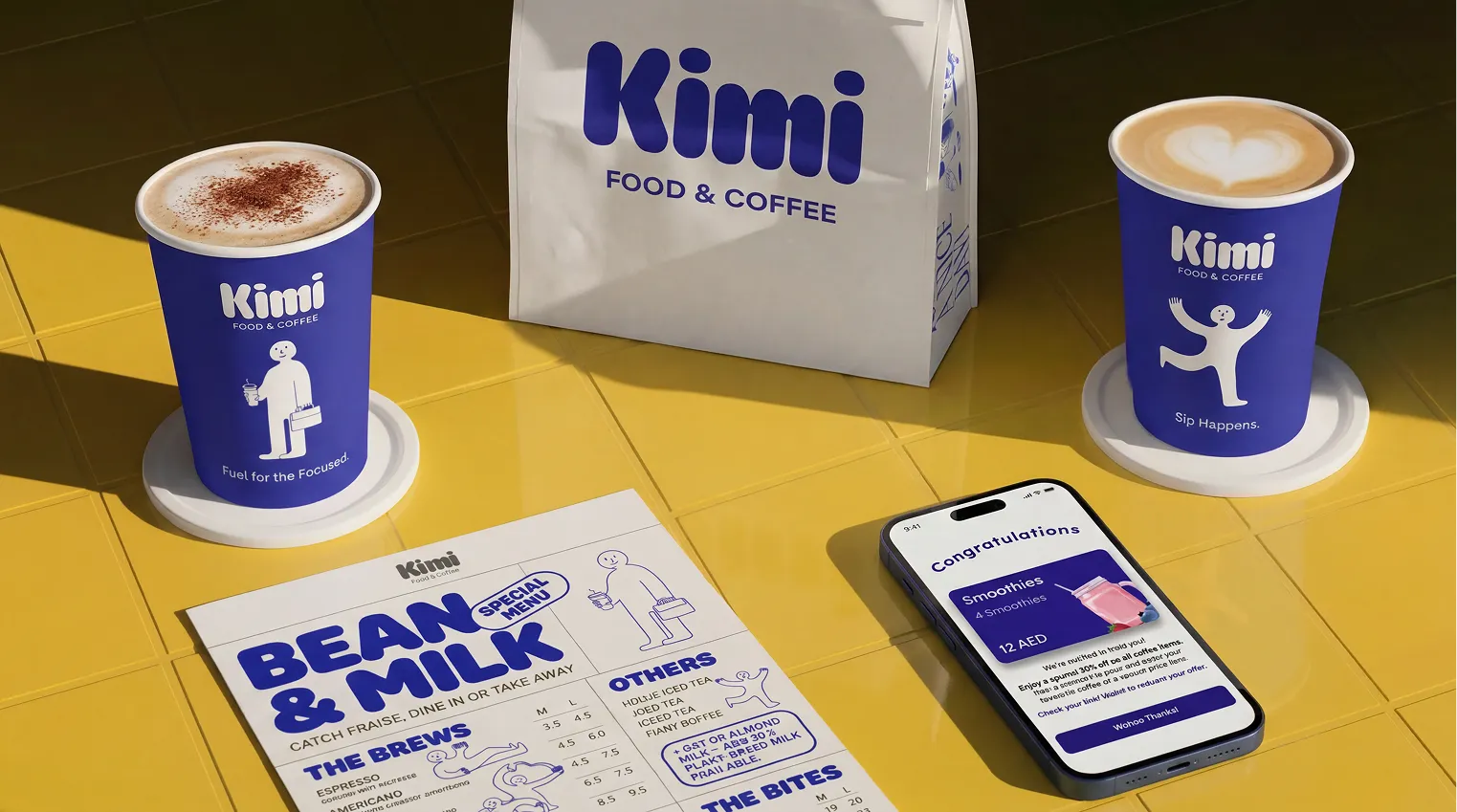
For Kimi Cafe, a Dubai-based cafe, the challenge was to make its mobile app do more than process orders. The experience needed to encourage customers to return.
The solution included a simpler ordering flow, prepaid coffee bundles through Kimi Card and tier-based rewards that made benefits more visible during ordering and checkout.
The work shows how design can support commercial goals such as repeat purchases and customer loyalty, not just visual appeal.
SPJ and Kimi address different needs, but both start with the customer experience.
Packaging needs to protect products and communicate their value; a mobile app needs to make ordering easy and give customers reasons to return.
For UAE businesses, the right design partner should understand the specific job each touchpoint must do and ensure the brand remains consistent across them.
Confetti is best suited to consumer brands that need thoughtful branding, packaging and connected customer experiences.
Photography is often booked late in a launch, yet it has a major effect on how customers perceive a brand.
When product images, packaging and digital content are created by separate teams without a shared brief, the brand can quickly lose consistency.
Lighting, styling, composition and colour grading all express brand identity. When photography is planned alongside packaging and visual design, the team can create images that reinforce the same visual language.
This is important for UAE consumer brands selling across retail, websites and marketplaces. Customers may see a product on a shelf, then encounter it on Amazon.ae, noon or a social feed.
Pack shots must communicate clearly at thumbnail size, while lifestyle images need to convey the product's appeal and fit the brand.
A useful test is to place your packaging, a product photo, a social post and your website's product page side by side. If they look like different brands, your content may lack a shared visual system.
AI photography can help produce campaign concepts, social content and lifestyle visuals without organising a traditional shoot for every asset.
It is a production option, not a replacement for brand direction.
For e-commerce product images, accuracy remains essential.
The product, packaging, labels and claims must be represented correctly, and teams should follow applicable platform and advertising rules.
Consumer brands need images for launches, marketplace listings, seasonal campaigns, social media and ongoing testing. A single shoot rarely covers every future need.
A repeatable photography system should define lighting, composition, styling, colour treatment and image formats. It gives internal teams and external photographers a consistent brief, making future content easier to produce without losing the brand's identity.
The same principle applies to launch content and user-generated content.
Creator collaborations, social posts and campaign assets should follow the brand's core visual and verbal guidelines, even when different people produce them.
The images are the deliverables; the system behind them is what helps a brand stay consistent as it grows.
The right design agency depends on your brand's stage, existing assets and immediate commercial goals.
A startup building its identity needs different support from an established brand expanding into new retail channels.
New brand launch: Focus on a clear position, distinctive identity and production-ready packaging. Avoid spending heavily on complex brand architecture before validating your product and market. An integrated partner can reduce coordination between design, packaging and launch content.
Early traction and scaling: Review whether your packaging, photography and website communicate the same message. Before expanding your SKU range or increasing advertising spend, fix inconsistencies that may affect recognition and conversion.
Entering the UAE: An identity that works internationally may still need adjustments for local retail, Arabic typography, bilingual labelling and regional customer expectations. Choose an agency that understands both your category and the UAE market.
Rebranding: Start with a brand audit to identify what customers already recognise and what needs improvement. A redesign should protect valuable brand equity while addressing weaknesses in positioning, packaging or customer experience.
Ongoing design support: Established brands may benefit more from a specialist or retainer than another full branding engagement. This works particularly well for new SKUs, seasonal packaging, Ramadan and Eid campaigns, and recurring social content.
If most of your brand assets need to be created or redesigned, consider an integrated design agency that can manage the work under one brief.
If your identity is already established and documented, hire a specialist or design team for the specific gap.
Match agency capabilities to your current needs, not pay for services your brand has already completed.
The questions below separate studios that can deliver a system from studios that can deliver a deliverable.
What comes before design. The answer should be strategy, research, and a written positioning. If the first phase is creative, the agency is selling execution, not a system.
Who does each discipline. For a full-service claim, ask for the names and work of the packaging lead, the photographer or photography lead, and the web lead. A studio that cannot name them is coordinating, not delivering.
Ask whether photography is in-house or commissioned. In-house photography produces consistency because the photographer works from the same brief as the designer. Commissioned photography can be excellent, but it requires a brand system to art-direct it and if that system does not exist, the images will be beautiful and off-brand.
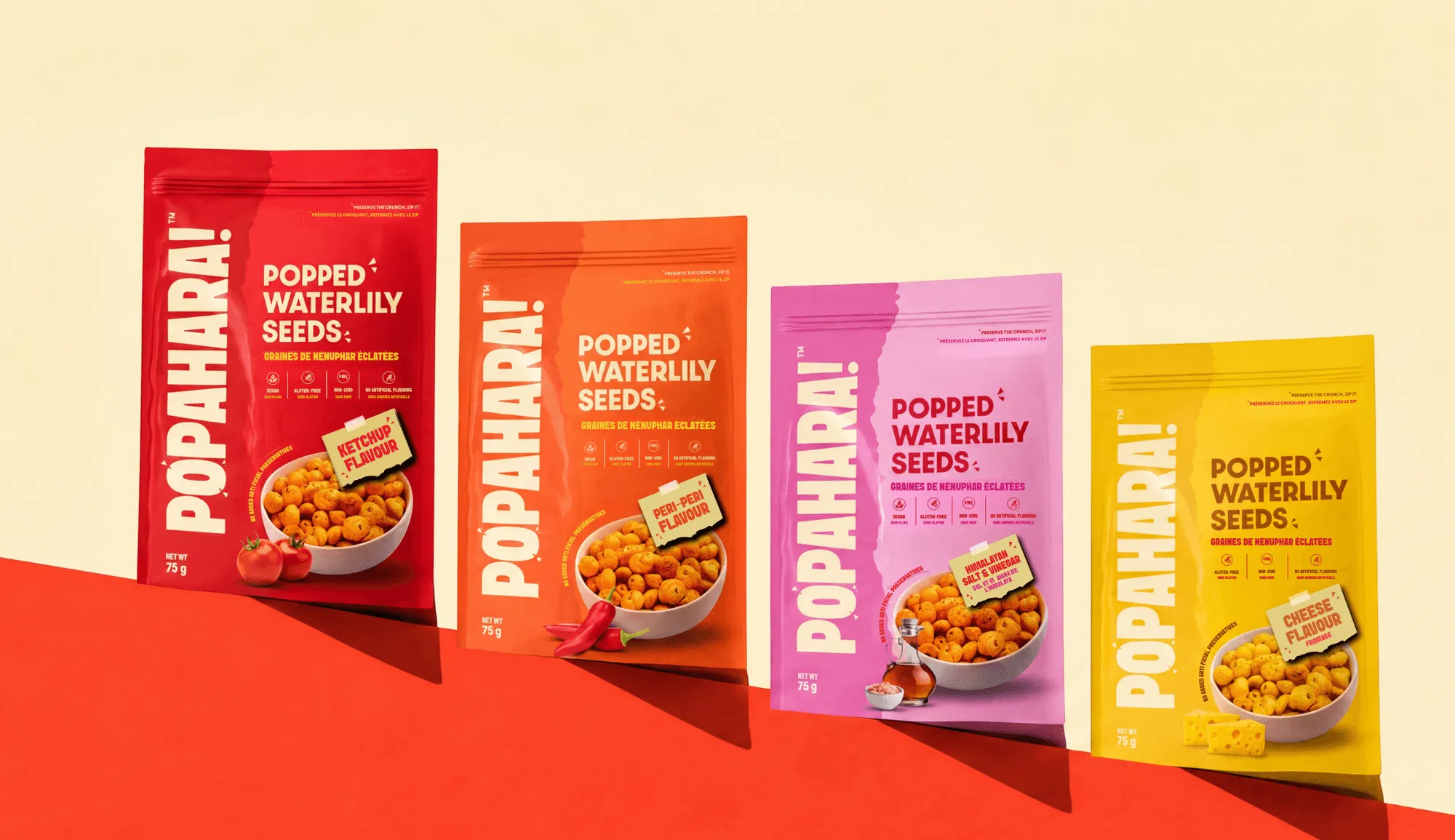
Ask for a range of eight or more SKUs designed as a system. A portfolio of single-hero packs does not demonstrate the capability that scaling brands actually need. A range shows whether the agency can build architecture rather than one-offs.
Who builds the dielines and checks the print. A packaging partner should be able to answer this without hesitating. A design vendor will not.
What happens after handover. The answer should include templates, asset libraries, and guidelines. If the engagement ends with a PDF, the brand will need another agency within a year.
Who the day-to-day contact will be. The team in the pitch should be the team on the project. Ask specifically whether the founder or principal is involved after the pitch.
How the brand will hold across the pack, the photography, and the website. This is the question that reveals whether the agency thinks in systems or in deliverables. A studio that can describe how the same visual logic will govern all three is a studio that has done it before.
Arabic and bilingual requirements. In Dubai, this is not a translation task. Ask to see Arabic wordmarks in the portfolio, not Arabic captions beneath English logos.
What the agency will tell you not to do. An agency that agrees with every element of your brief is not providing judgement. The best partner will tell you that you do not need a full rebrand, or that the photography can wait, or that the pack is the problem and the website is not.
Which type of design agency do I need in Dubai?
It depends on what you need designed. Branding studios handle strategy and identity, packaging-led studios handle shelf and labels, graphic design firms handle day-to-day collateral, and digital agencies build websites and run social media. If your project spans several of these, look for a partner that covers the full journey or works closely with trusted specialists.
What does a full-service design agency include?
A full-service design agency like Confetti Design Studio covers the main parts of a brand launch under one roof or one contract: brand strategy, identity, packaging, product photography, social and launch content, and often the website. The value is fewer handoffs, one consistent standard across every touchpoint, and a single team accountable for the result.
How much does a design agency in Dubai cost?
Costs vary widely with scope. A logo and simple identity costs much less than a full programme covering strategy, identity, packaging, photography and a website. Ask each agency to price phases separately and to list what is included, because bundled quotes are easier to compare when you can see what each part covers.
Should my design agency also handle product photography?
Usually yes, if consistency matters. When photography is briefed by the team that designed the identity and packaging, lighting, styling and composition match the brand from the start. Separate photographers can produce good images, but someone still has to brief them, review the work and keep it consistent across launches.
Can a design agency build my website too?
It can, provided the website team works from the same brand guidelines and is briefed alongside the identity and packaging. Many design agencies partner with web specialists rather than building sites in-house. At Confetti we work with our sister concern Suplex for handling website and app development projects on platforms including Shopify, Wordpress, Webflow and more
How do I choose the best design agency in Dubai?
Look for relevant work in your category, Arabic and English handled as one system, real applications such as printed packs and live websites, and a clear explanation of who does what. Ask how many separate vendors your project would involve and who manages them, because every extra handoff adds time and risk.
Want strategic branding and packaging like this for your business?