%201.webp)
02
AI Snaps
.svg)
.svg)
01
Our Work
03
About Us
04
Brand Audit
05
Contact Us
06
Client Success
12
07
Blogs
08
Careers
Book A Call
.svg)



.svg)
Need Help In Building Your Brand?
Click the button below & book a call with our founder directly.

Rishabh Jain
Managing Director
An FMCG packaging brief is the single most important document in any packaging project. Done right, it eliminates guesswork, cuts revision rounds, and gets stronger packaging to market faster.
Learn with us the fundamentals of packaging design grief for FMCG brands and how to create an effective brief that gives results.

An FMCG packaging brief is a formal document that tells your design agency everything they need to know about your product and brand before the actual design process begins.
This includes target audience, sustainability requirements, and technical specs.
It is the single source of truth for everyone involved, from marketing and design to production and legal teams.
Good Vs Bad FMCG Packaging Brief:
A standard design brief might tell a studio what a logo should feel like, or what colours to use on a website.
An FMCG packaging brief has to do far more. This is because of the following reasons:
Skipping the FMCG packaging brief can cost you time, instead of saving it.
Brands that provide poor or no briefs have to deal with avoidable design revisions, non-compliant materials, missed retailer deadlines, and packaging that simply doesn't work on shelf.
Most FMCG packaging delays start in the briefing stage.
When your packaging design agency doesn't have the full picture, they fill the gaps with assumptions which can lead to:
1. Design Revisions Multiply: Without a defined design direction, concept development becomes guesswork.
What should take 1–2 rounds turns into 4–5. This slows decision-making and increases agency costs.
2. Legal Issues Surface Too Late: Mandatory requirements like ingredient declarations, nutritional labels, claims, and disclaimers often appear at the artwork stage instead of the briefing stage.
This forces layout changes, panel resizing and reworking of the entire designs. In some cases, structural packaging needs to be redesigned.
3. Sustainability Gets Retrofitted: If recyclability, material restrictions, or compliance targets are not defined early:
Fixing this after tooling or sourcing decisions can increase costs.
4. Retailer Compliance Breaks Down: Retailers have strict requirements such as Shelf-ready packaging (SRP), barcode placement and planogram compatibility
If these are not included in the brief, products fail compliance check and listings get delayed or rejected
In FMCG, missing a retail window can mean lost revenue for an entire cycle.
5. Supply Chain Inefficiencies Increase: Packaging design affects logistics.
Without clear specifications packaging may not stack efficiently, shipping costs increase and damage risks go up.
These are recurring costs, not one-time mistakes.

A well-built brief changes how the entire project runs.
Faster, more confident design: When your agency has a complete brief - The first round of concepts is tighter. Decisions get made faster. Revision rounds shrink.
Fewer late-stage surprises: Legal, sustainability, and supply chain have already been included in the brief. These requirements get included into the design from concept stage. There are no last-minute shocks.
Better shelf performance. A brief that includes competitive shelf analysis, fixture context, and shopper behaviour insight produces packaging that's designed to work in the real retail environment.
Cleaner compliance. Regulatory requirements are in the brief. The design team knows what mandatory copy they're working with. The structural packaging is chosen with material compliance in mind.
A faster route to market. Spending more time on the brief feels like it slows things down. It doesn't. It front-loads the decisions that would otherwise stall the project mid-flight. Brands that invest in a rigorous briefing process consistently get to market faster than those that don't.
An FMCG packaging brief goes far beyond your usual creative brief.
It covers: project overview, brand identity, target audience, design direction, technical specifications, sustainability requirements, regulatory and legal, and timeline/deliverables.
Let’s take a look at each section:
Core question: Why does this project exist?
This section sets the foundation. It gives everyone clarity on the purpose, scope, and definition of success.
Without clear context, packaging design teams make assumptions. Assumptions lead to misalignment, rework, and wasted cost.
What to include:
Expert Tip: A strong project overview is like a filter. Any design concept that doesn't match with the main "why" should be immediately off the table. It keeps everyone focused on the main gia.
Core question: What must the design represent and protect?
This defines how the brand should show up on pack and what cannot be compromised.
Packaging is often the most visible brand touchpoint. Weak alignment here leads to inconsistent or diluted brand presence.
What to include:
Core question: Who are we designing for?
This section ensures packaging design connects with real shoppers.
Design without a clear audience can become generic. Specificity leads to stronger, more effective packaging.
What to include:
Core question: What should the design feel like and what should it avoid?
This provides creative guidance while leaving room for exploration.
Ambiguity here leads to misinterpretation. Clear direction reduces revisions and improves creative output.
What to include:
Core question: What are the production constraints?
This ensures the design can actually be manufactured efficiently.
Ignoring technical realities leads to designs that are either too expensive or impossible to produce.
What to include:
Core question: How does this packaging meet environmental expectations?
Sustainability is now a business and regulatory requirement and must be in the brief before design begins.
What to include:
Core question: What must legally appear on the pack?
The mandatory copy and compliance requirements that must be incorporated into the packaging design from day one.
Missing or incorrect legal information leads to delays, fines, or product recalls.
What to include:
Core question: How will the project be executed and approved?
This final section turns the brief from a creative document into a managed process with clear milestones, accountabilities, and file requirements.
What to include:
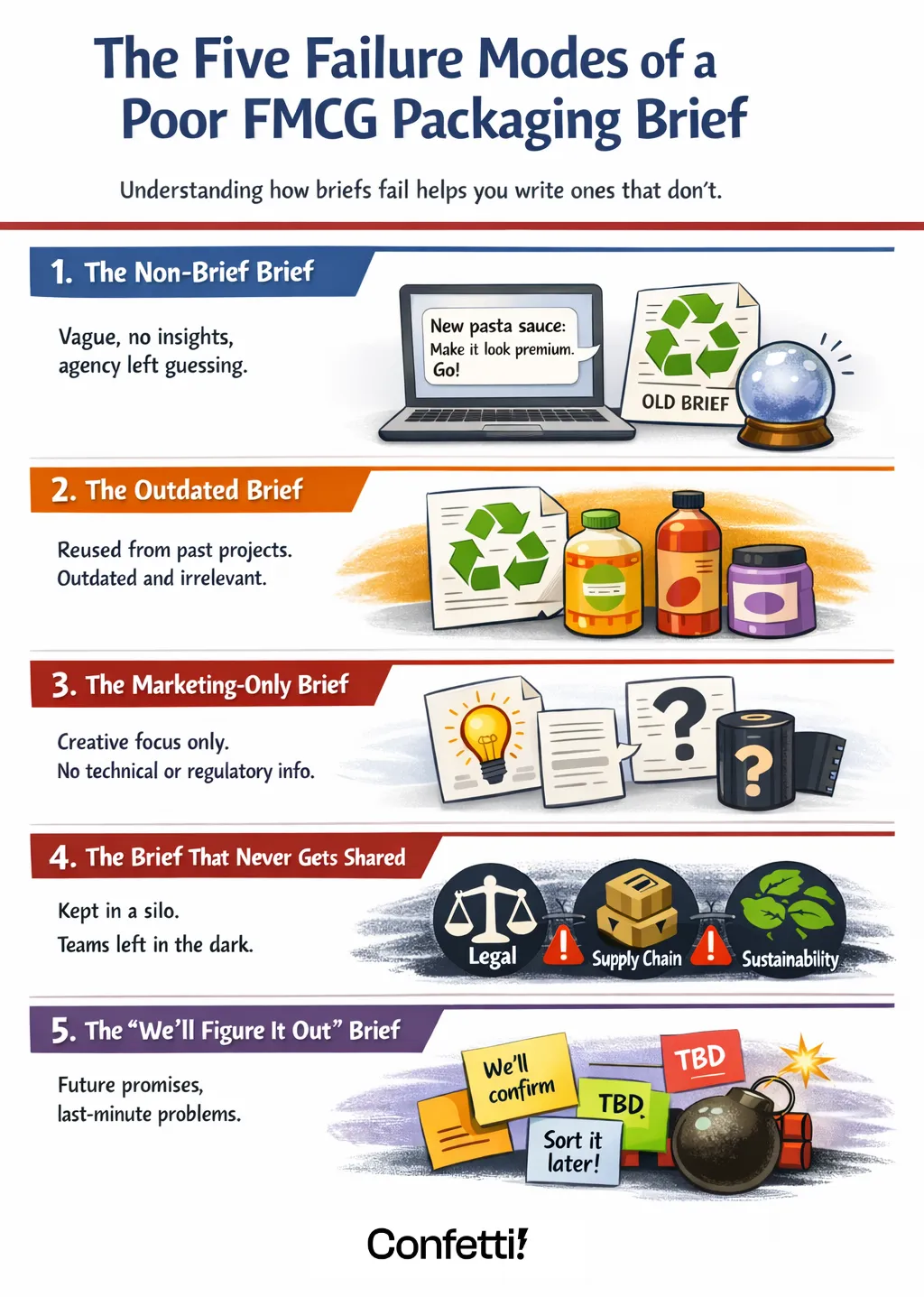
Even experienced teams get packaging briefs wrong. Not because of lack of skill, but because speed, pressure, and internal complexity push the brief into the background.
Here are the five most common mistakes show up again and again:
1. Burying Sustainability at the Bottom: Sustainability gets reduced to a vague line like “make it recyclable where possible.”
By the time sustainability is considered, the structure and materials are already locked. Any change now means redesign, new tooling, or higher costs.
How to fix it: Define sustainability upfront, not at the end:
2. Not Defining What to Avoid: The brief explains what good looks like, but never says what’s off-limits.
Agencies make reasonable creative choices that end up being completely wrong for the brand, leading to rework and frustration.
How to fix it: Be explicit about what you don’t need:
3. Bringing Legal in Too Late: Legal and regulatory input only shows up at artwork stage.
Mandatory copy doesn’t fit. Layouts break. Panels get reworked. Sometimes even the structure needs to change.
How to fix it: Involve legal early, at brief stage:
Design works best when constraints are known upfront.
4. Ignoring the Retail Environment: Designing the pack in isolation, without shelf context.
The pack looks great in presentations but disappears in-store.
How to fix it: Anchor the brief in real retail conditions:
5. No Clear Sign-Off Process: Unclear approval structure and decision-making authority.
Endless feedback loops. Conflicting opinions. Delays at every stage.
How to fix it: Define decision ownership clearly:
One accountable decision-maker per stage. No ambiguity.
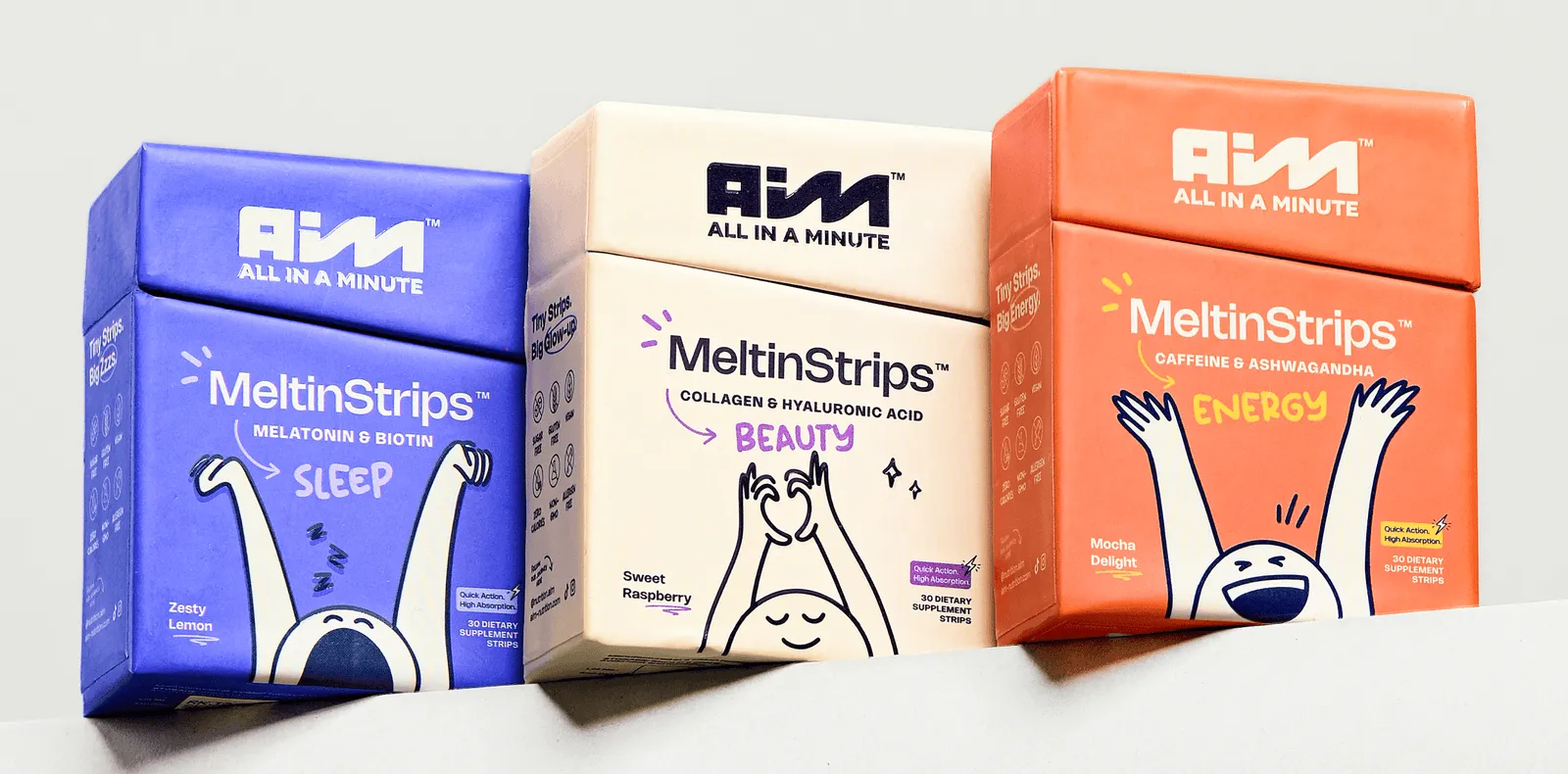
Getting a packaging brief right is part strategy, part process, part institutional knowledge. Most FMCG teams are under-resourced for a project of this complexity, especially when they're managing multiple SKUs, range extensions, or international rollouts simultaneously.
That's where specialist packaging consultancies and creative studios like Confetti come in.
A packaging studio with genuine FMCG experience brings:
This kind of input sharpens the brand team's ownership of the brief. It sharpens it.
Confetti brings end-to-end packaging strategy expertise. From consumer insight and brief development through to design, pre-press, and production management, we are adept at handling it all.
Our team supports your FMCG brand, taking into account category dynamics, retailer requirements, and sustainability mandates
Whether launching a new product as a startup or refreshing an existing range, we at Confetti help brands get the brief right before the design clock starts ticking
What is an FMCG packaging brief?
An FMCG packaging brief is a structured document that outlines all the strategic, creative, technical, sustainability, and regulatory requirements for a product's packaging. It acts as the briefing document between the brand team and their packaging design agency, ensuring both parties are on the same page before design work begins.
What should be included in a packaging design brief?
A complete packaging design brief should include: a project overview, brand identity and positioning, target audience profile, design direction and moodboard references, technical specifications, sustainability requirements, regulatory and legal copy requirements, and a clear timeline with approval milestones.
How is an FMCG packaging brief different from a standard design brief?
It is more complex than a standard design brief because it must address a wider range of factors including retailer compliance, high-volume print specifications, sustainability regulations, category shelf dynamics, and multi-market legal requirements.
How long should an FMCG packaging brief be?
There's no fixed length, but a thorough FMCG packaging brief is usually 5–15 pages depending on the complexity of the project.The goal is clarity and completeness, not length for its own sake.
Who should be involved in writing an FMCG packaging brief?
The best packaging briefs are collaborative and include brand/marketing, supply chain/procurement, legal/regulatory), sustainability/ESG, and an external packaging agency or consultant.
Want strategic branding and packaging like this for your business?





.webp)
.webp)

.webp)
.webp)
.webp)
.webp)
.webp)







.svg)
.webp)