%201.webp)
02
AI Snaps
.svg)
.svg)
01
Our Work
03
About Us
04
Brand Audit
05
Contact Us
06
Client Success
12
07
Blogs
08
Careers
Book A Call
.svg)



.svg)
Need Help In Building Your Brand?
Click the button below & book a call with our founder directly.

Rishabh Jain
Managing Director
Yes, startups can sell on quick commerce platforms. Blinkit, Zepto, and Swiggy Instamart now reach 100+ cities in India.
But your product needs 50%+ gross margins, packaging that survives rapid handling, and a supply chain capable of weekly replenishment.
This guide covers what platforms actually want, what it costs, and what separates brands that win on quick commerce from those that burn budget finding out they weren't ready.
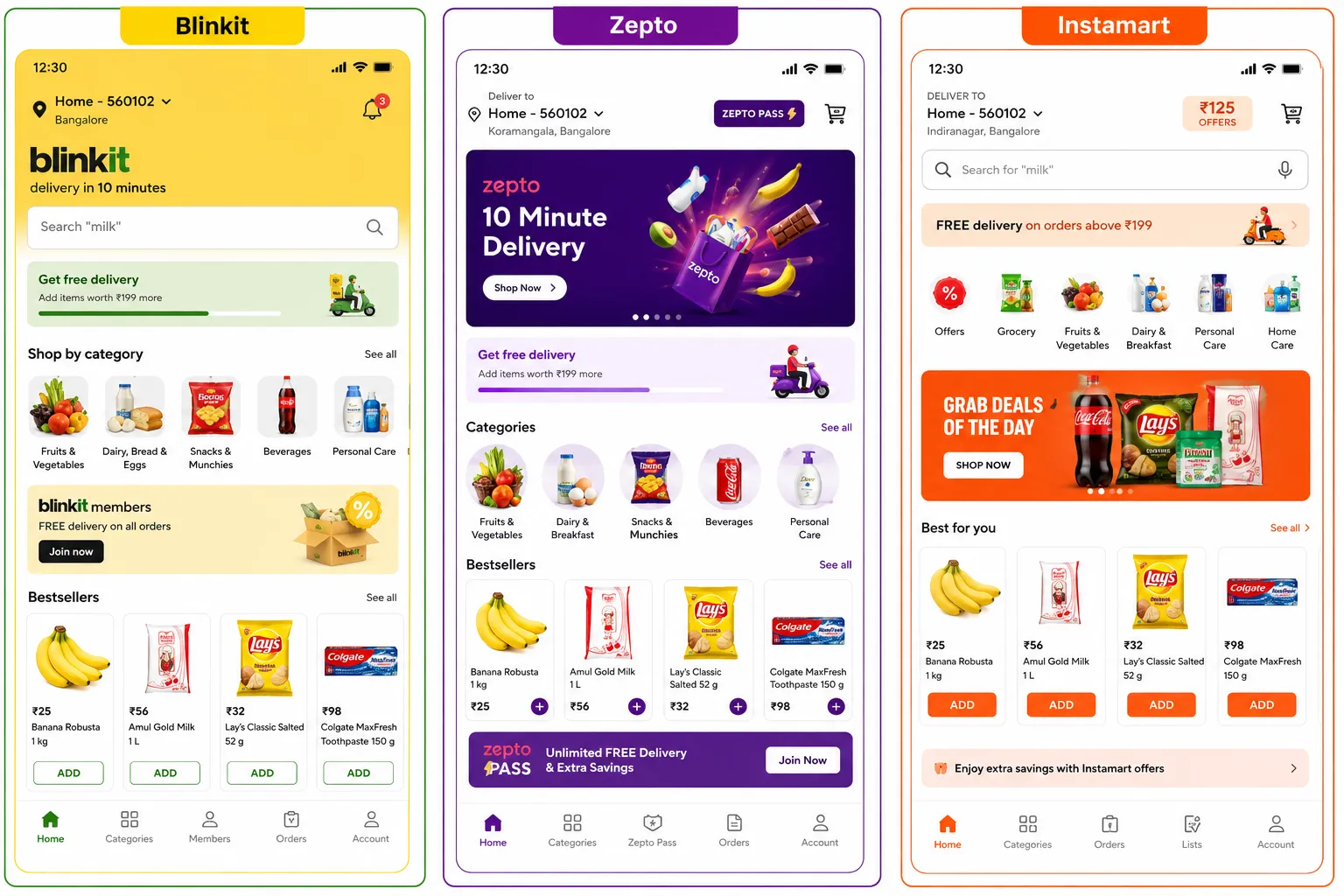
Quick commerce platforms don't work like Amazon, where listing volume is a feature.
Each dark store carries 2,000–4,000 SKUs at most. Space is finite, replenishment is rigid, and a non-performing product gets delisted.
The platforms operate closer to a convenience retail buyer managing limited shelf slots, every addition has to earn its place.
Understanding this upfront changes how you approach onboarding on quick commerce.
You're not applying to list a product. You're making a case that your SKU will sell fast, restock reliably, and not create operational friction.
Before Category Managers look at your deck, your product is already being filtered by a simpler question: does anyone on this app search for what you make?
Platforms assess four things in roughly this order:
Categories with strong q-commerce fit include snacks, packaged beverages, personal care, health supplements, baby care, and household essentials.
These drive the top 25–30% of impulse orders on quick commerce. If you're in one of these spaces with a price point under ₹500–600, your baseline fit is solid.
🚫Weak fit looks like: high-consideration products priced above ₹2,000, anything that needs explanation before purchase, fragile or oversized SKUs that create handling problems, and perishables without cold chain infrastructure in place.
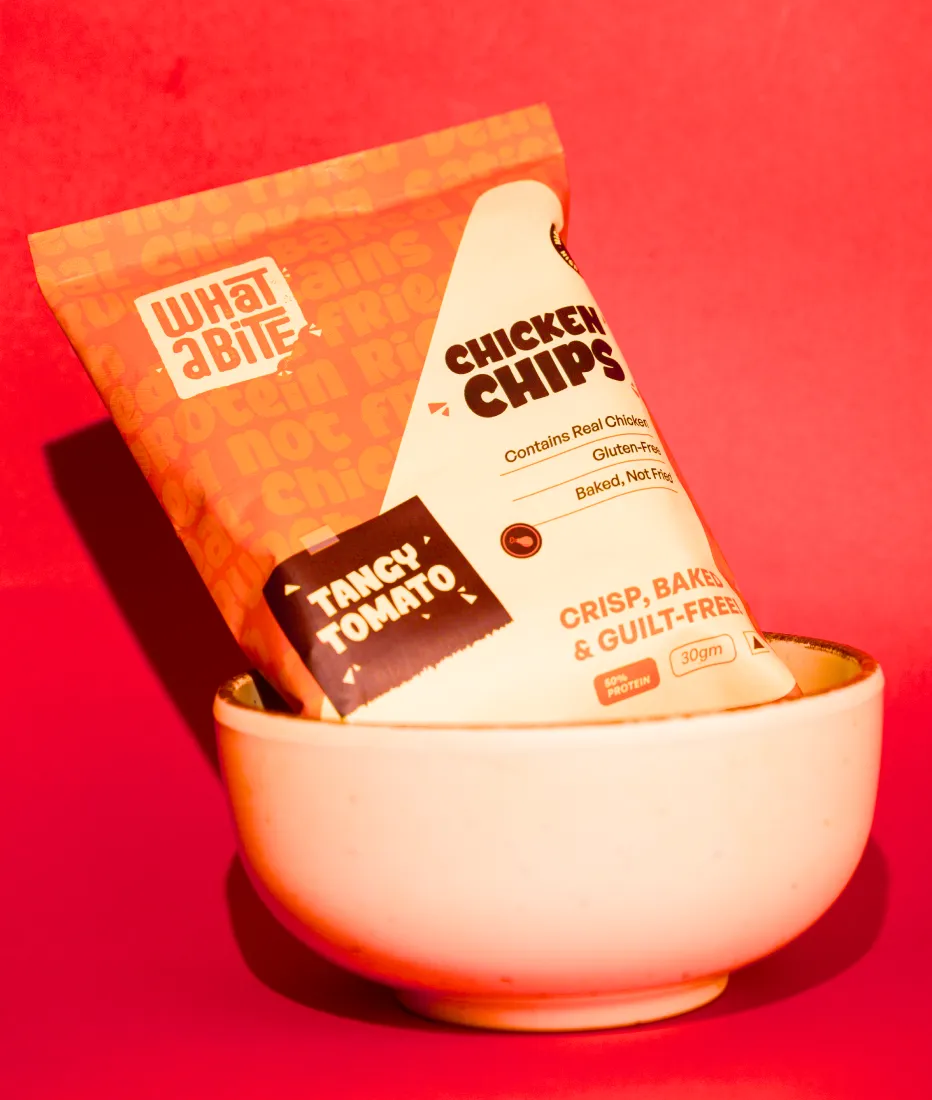
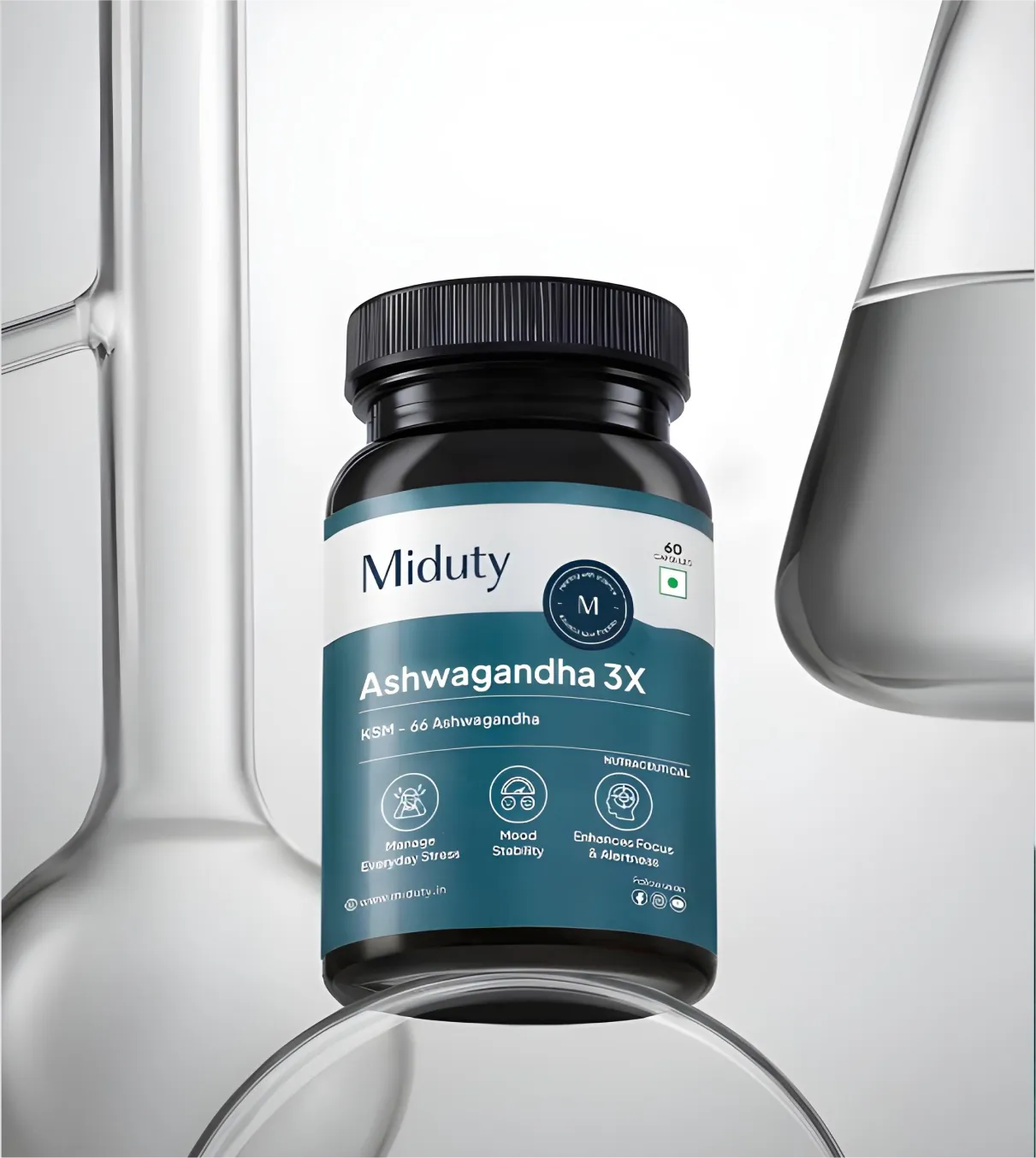
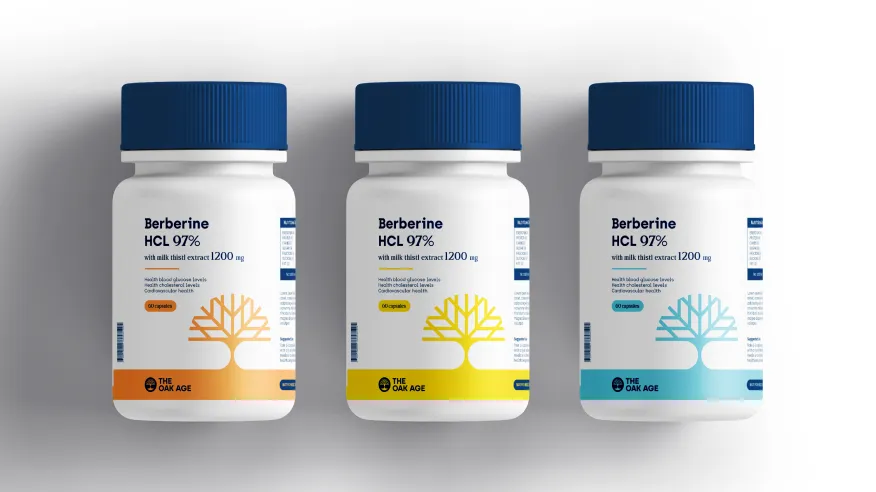
✔️A few startups have navigated this well by building around channel logic rather than just listing existing products:
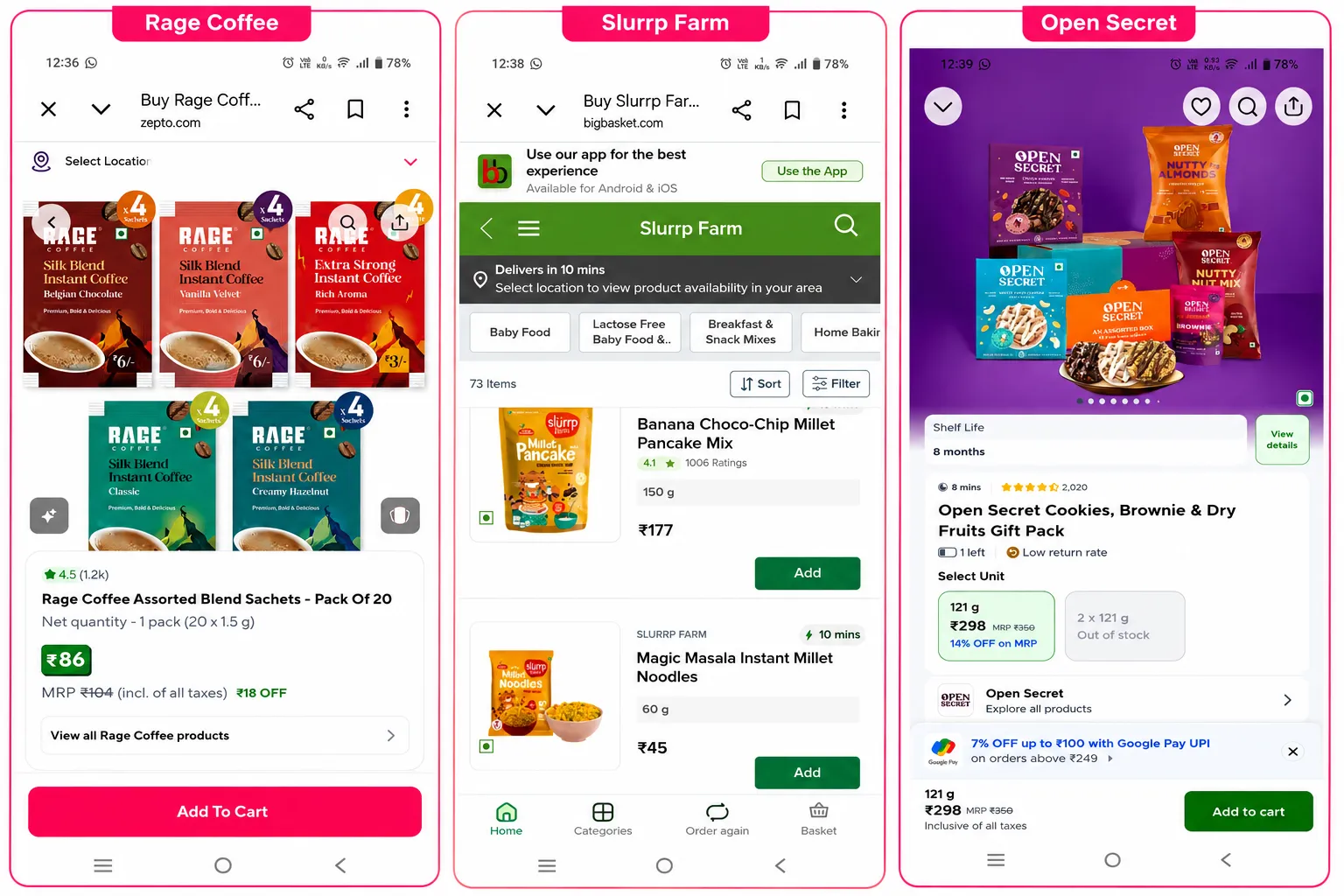
You can have the right product and still not get listed or get listed and fail within 60 days because of supply chain gaps.
Selling on Zepto requires brands to demonstrate 95%+ fill rates before preferred onboarding is considered.
Inconsistent supply directly affects your algorithmic ranking, and platforms have no patience for stockouts in a model built on 10-minute delivery promises.
Selling on Blinkit requires APOB (Additional Place of Business) registration for each state you want to operate in.
This is a GST compliance requirement. It involves registering your business address in each state with the GST authorities, which takes time, paperwork.
Dark store receiving windows are narrow, sometimes as short as 30 minutes. A truck that arrives late is rejected, not rescheduled. Platforms run on warehouse rhythms that don't accommodate supplier delays.
Before you apply, run through these honestly:
📌If you're answering “No” to more than two, you're not ready to list yet.
Established brands with modern trade history get faster Category Manager attention on Blinkit. That's not a written rule, but it's a consistent pattern.
A brand already on Big Basket or in D-Mart carries implicit supply chain proof and demand validation. Platforms prefer that.
If you don't have that history, it doesn't disqualify you but you need substitute signals.
Category Managers on these platforms respond to:
For brands with no prior distribution history, Zepto is the more practical first platform. They have shown more flexibility toward emerging brands in categories where their catalogue needs depth.
The three platforms have different audience profiles, different tolerance for new brands, different commission structures, and very different onboarding experiences.
Here's how to think about each.
Blinkit holds more than 40% of the quick commerce market in India, with 2,000+ dark stores concentrated in Tier-1 metros. It's the platform with the most consumer reach, which also makes it the most selective about who gets in.
Every brand goes through a Category Manager, and that relationship becomes your effective growth ceiling on the platform. Onboarding takes 4-8 weeks.
At onboarding, expect a commission range of 8–18% depending on category, plus an ad wallet deposit usually ₹25,00 per SKU.
💡Blinkit works best for: Brands with existing retail or D2C history that can show demand proof upfront, or those with at least ₹1 lakh allocated for platform marketing in the first 90 days.
📌A founder who launched on Blinkit and hit 50+ dark stores across multiple cities. This is the proof of how fast quick commerce can scale when the fundamentals are right.

Zepto holds 25–29% market share, operates 1000+ dark stores, and has consistently shown more openness to emerging and regional brands than Blinkit.
Onboarding runs 30–45 days. The seller analytics dashboard is genuinely useful for reading early performance signals.
Their user base skews younger: primarily 18–30, urban, and comfortable with premium pricing in categories like snacks, energy drinks, and personal care. If your product fits that demographic, Zepto is where you'll find the highest intent match.
Commission rates run 2–20% depending on the category.
💡Zepto works best for: Your first q-commerce experiment. Use it to build a fill rate track record, generate sales data, and stress-test your supply chain before taking those numbers to a Blinkit CM conversation.
Instamart commands roughly 23% market share across 500+ dark stores, with the operational advantage of Swiggy's existing logistics fleet.
That infrastructure matters for last-mile reliability, but it doesn't change the onboarding dynamic. Like Blinkit, Instamart is heavily CM-dependent and success varies by which category manager is assigned to your cluster.
Commission ranges from 3–18% by category, with ad wallet requirements starting at ₹25,000. The platform runs a discount-heavy model that drives volume but compresses margins.
That trade-off works for mass-market essentials where turnover justifies thin margins. It's harder to make work for premium D2C products where brand positioning is part of the value.
💡Instamart works best for: Brands in essential categories, packaged food staples, household care, personal hygiene that are prioritising reach and replenishment velocity over margin optimisation.

Get in touch with Confetti experts about getting marketplace-ready
Book A Call
The real cost of selling on quick commerce is a stack and if you haven't modelled the full picture before your first purchase order, you're going to discover your margin problem at the worst possible moment.
Here's what actually comes out of your revenue on quick commerce:
None of these are hidden fees in the deceptive sense. They're just never presented together. When you add them up against a usual startup margin, the picture changes considerably.
A product priced at ₹499 MRP on Blinkit:
On a ₹500 Blinkit listing, somewhere between ₹120 and ₹170 goes straight to the platform.
Quick commerce needs 50%+ gross margins at MRP to leave you anything after platform costs. Your D2C website margin might be 35% and work fine. The same number on q-commerce loses money per order.
Before applying to any platform, calculate three numbers:
1. Net realisable per unit: MRP minus commission, ad spend allocation, inwarding, and storage. This is your actual unit revenue, not your listed price.
2. Minimum gross margin to remain viable: Work backwards from net realisable. What does your COGS need to be for this channel to make sense? If you're not there yet, the channel will accelerate your losses, not your growth.
3. Months to break even on your ad wallet: You're putting ₹25,000–₹50,000 into an ad wallet at onboarding. At your projected sell-through rate and contribution margin, how many months before that investment returns? If the answer is beyond 4–5 months, your cash flow risk is significant.
📌One of the D2C founders has explained on the Linkedin that what is the actual cost of selling on Blinkit.

Small things cause delays in selling on quick commerce like: a barcode that doesn't scan, packaging that fails compliance review, or an APOB registration nobody mentioned.
Here's what you actually need.
Every platform requires the same baseline. See the detailed list of documents for Blinkit here.
Food, Beverage, and Supplements
✅FSSAI license (14-digit) prominently displayed on packaging
✅Batch or lot number on every unit for traceability
✅Date of manufacture and expiry/use-by date grouped together on the label
✅Minimum 60% shelf life remaining at time of inwarding. FSSAI requires at least 30% or 45 days before expiry at delivery dark stores enforce stricter standards at receipt
Personal Care and Cosmetics
✅Full ingredient list on packaging (INCI names where applicable)
✅Country of origin declaration
✅MRP clearly displayed
✅Manufacturing license number where required by category
Electronics and Accessories
✅BIS certification for applicable categories
✅Warranty details and service center information
✅Safety certifications where required
Packaging is not a compliance checkbox. On quick commerce, packaging is an operational asset and a conversion driver.
Packaging designed for retail shelves fails in dark stores for completely different reasons.
Brands that understand this before onboarding avoid costly redesigns and rejected inventory.
Products are stored in high-density racks, picked rapidly by warehouse staff working against a 10-minute fulfilment clock, and moved through multiple handling touchpoints before they reach a delivery bag.
Packaging designed for retail shelf presence is bold brand name dominating the front, barcode tucked on the base or a tapered side panel, shelf life date in 6pt font, fails this environment for operational reasons that have nothing to do with aesthetics.
Blinkit, Zepto, and Instamart all run inwarding quality checks before stock enters the dark store. Rejections happen on:
Every rejected unit comes back at your cost and counts against your fill rate metrics.
Q-commerce packaging has three simultaneous jobs:
🔵Operational Compliance
This is the baseline. Barcodes on flat, scannable surfaces. Batch codes and shelf life dates in legible font sizes.
Tamper-evident seals. MRP printed clearly on the front panel. Without this, you don't get through inwarding.
🔵Dark Store Physical Efficiency
Compact dimensions that fit standard dark store rack configurations. Structural integrity that survives rapid, repeated handling without seal failure or label damage.
Transit-safe and retail-shelf-safe are not the same specification. A product that looks pristine after six months on a supermarket shelf may not survive six days of dark store picking cycles.
🔵Micro-Moment Conversion
On the app, your packaging is a thumbnail, roughly 200x200 pixels on a mobile screen, competing against 8–12 other results in the same search.
A customer makes a decision in 1–2 seconds. That thumbnail is your primary salesperson on the platform.
Each platform has distinct listing image requirements that your packaging needs to physically support:
The brands leading visibility on Blinkit and Zepto right now are not the ones with the longest retail history.
Open Blinkit's personal care or wellness category and the dominant names: Mamaearth, Wow Skin Science, MCaffeine are digital-native brands that built their distribution logic around platform behaviour, not legacy trade relationships.
Dabur, Himalaya, and Vicco have the demand. They appear inconsistently not because consumers aren't searching for them, but because they've been slower to adapt operationally and invest in platform visibility.
Quick commerce rewards platform investment, not brand heritage.
D2C brands winning on quick commerce treat it as a media channel first, a sales channel second. They invest in sponsored listings, optimise product thumbnails for search conversion, and track platform analytics the way they'd track a performance marketing dashboard.
The numbers reflect this shift. Quick commerce ad spend in India grew from ₹1,325 crore to ₹4,000 crore in 2025, a 202% increase in a single year. Brands have committed to q-commerce as a primary acquisition and retention channel.
Organic reach on these platforms for a new brand is close to zero. Visibility is bought, then sustained through sell-through performance and fill rate consistency.
Brands that understand this budget for platform ad spend before they go live, not after they realise nobody is finding their listing.
Start with 5–10 hero SKUs: your best-selling, most recognisable products within their category, with margin structures that remain viable after platform costs.
Quick commerce is not the channel for introducing new products, it's the channel for getting your proven products in front of high-intent buyers who've already decided to purchase in your category.
The winning channel split looks like this:
Quick commerce success is pincode-dependent. A brand can perform in Bengaluru and fail in Lucknow with the same product, same pricing, same packaging.
The reason is operational and behavioral. Dark store density varies by city. Delivery times vary by pincode. Consumer willingness to try new brands varies by neighborhood.
Start where you already have brand awareness. Not where the platform has the most dark stores. Awareness first, then distribution.
Recommended first markets by platform and category:
At Confetti, we help startups and brands solve this quick commerce problem: hyperlocal, pincode-first growth.
Signs you're not ready:
⛔Gross margins below 50%
After platform commission, ad spend, inwarding charges, and storage fees, your net realisable per unit is lower than your MRP suggests.
At margins below 50%, the math rarely works, you're not building a sustainable channel, you're subsidising platform growth with your own working capital.
⛔No supply chain capable of weekly replenishment
One stockout damages your algorithmic ranking. Rebuilding it takes months of consistent performance, not days.
If your manufacturing or procurement cycles can't support weekly replenishment to dark store clusters, you'll spend more time recovering ranking than building it.
⛔Your product requires explanation to convert
Quick commerce is grab-and-go. There's no shelf card, no sales person, no product demo. If a customer needs to understand what your product does before they want it, this is not the right channel yet.
Build awareness through D2C or content first, then list once your product has enough recall to convert on a thumbnail.
⛔Average order value above ₹2,000
Impulse behaviour drops sharply above this price point. High-consideration purchases anything that makes a customer pause and think, don't fit the 10-minute delivery context.
Customers shopping on Blinkit at 11pm are not in research mode.
⛔Packaging isn't dark store-ready
Rejection at inwarding costs you logistics spend before a single unit sells. If your current packaging has barcodes on curved surfaces, shelf life dates in 6pt font, or structural integrity built for retail shelves rather than rapid handling, fix that before you apply.
It's a far cheaper problem to solve at the design stage than after you've shipped a pallet to a regional warehouse.
When it comes to quick commerce and startups, we at Confetti can help you in two ways:
We've designed packaging for ITC, Dabur, Sunfeast, The Indus Valley, Bingo, and over 200 other brands: across retail, modern trade, and quick commerce.
That breadth of work across channels has made one thing clear: q-commerce packaging is a fundamentally different packaging brief from retail, and most brands find that out after their first inwarding rejection..
Our approach when a brand enters quick commerce:
We start with a packaging audit against the specific inwarding requirements of whichever platform they're targeting first, not a generic compliance checklist, but Blinkit's requirements, or Zepto's, or Instamart's, depending on where they're going live.
From there, the work takes one of two directions:
➡️For brands adapting existing packaging
We identify what needs structural change and what can be resolved at the print or dieline stage. Not every adaptation requires a full redesign. Some changes are precise and fast.
But they need to happen before onboarding, not after a shipment has been rejected at a regional warehouse.
➡️For brands designing from scratch
We built the q-commerce brief in from day one. Thumbnail visual hierarchy, barcode surface placement, dark store physical spec, platform listing image requirements, these inform the design from the initial brief, not the final review.
The cost of getting this right at the brief stage is a fraction of what a post-onboarding redesign costs in time, logistics, and lost ranking.
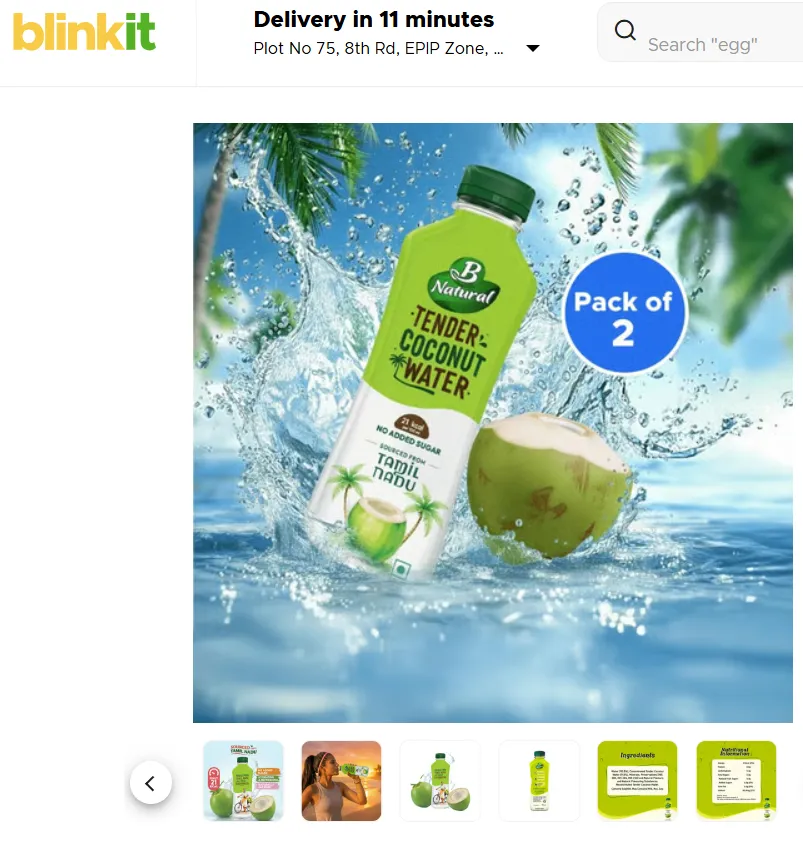
📌At Confetti, we have worked multiple brands including with B-Natural coconut water which is now available on quick commerce platforms.
➡️Confetti helps startups identify which pincodes to launch in first, instead of wasting spend on broad city-wide rollouts.
➡️We optimize quick commerce visibility across dark stores, search rankings, and platform merchandising to improve discoverability.
➡️Confetti builds hyperlocal growth strategies based on how different neighborhoods actually shop, not just city-level trends.
➡️Confetti enables startups to scale quick commerce market-by-market with data-backed expansion instead of guesswork.
➡️We help brands avoid common q-commerce mistakes like overexpansion, poor inventory placement, and low-velocity SKU launches.
Quick commerce onboarding is a five-step sequence:
and compressing or skipping any stage creates problems that compound, rejected inventory, weak fill rates, or a listing that goes live with zero visibility because the ad wallet wasn't ready.
Here's the sequence that works.
Step 1: Qualify Your Product (Week 1)
Run the Q-Commerce Margin Test. Calculate net realisable after commission + ad spend + logistics. Confirm product fits the impulse/high-frequency model. Identify 5–10 hero SKUs for launch.
Step 2: Get Compliant (Weeks 2–4)
GSTIN, FSSAI (food/supplements), PAN, business registration, EAN barcodes per SKU. Audit packaging against dark store requirements before submitting.
Step 3: Build Supply Chain Readiness (Weeks 3–5)
Identify fulfillment partners or set up regional stock points. Plan 3–4 weeks buffer per dark store. Set a weekly replenishment cycle before going live, not after.
Step 4: Apply and Build the Category Manager Relationship (Weeks 4–8)
Apply via Zepto Vendor Hub or Blinkit Partner Registration. For Instamart: identify Category Manager for your city/category on LinkedIn and pitch your velocity plan. Negotiate commercial terms: margins, RTV policies, launch cities.
Step 5: Go Live and Invest in Visibility (Month 2 onward)
Plan ₹25,000–₹50,000 ad wallet. Budget 10–15% of projected revenue for sponsored listings. Monitor sell-through rate weekly, if inventory sits beyond 30 days, revisit pricing or listing quality.
Which quick commerce platform is profitable in India for sellers?
Profitability depends on your category and margins, not the platform. Blinkit is the market leader with the highest volume but also the highest operational demands. Zepto tends to be more accessible for emerging brands and has better seller analytics.
For most startups, Zepto offers the best path to early profitability, lower friction onboarding, faster timeline, and a youth-oriented audience that indexes well for newer brands.
How to sell on quick commerce in India as a startup?
Start by qualifying your product against the margin and fit requirements. Get compliant: GSTIN, FSSAI (for food), EAN barcodes, and dark store-ready packaging. Apply via the Zepto Vendor Hub or Blinkit Partner Registration.
Budget ₹2–3 lakh for onboarding, initial inventory, and first-month advertising. Launch in one city first.
What are Zepto's commission fees for sellers?
Zepto charges 2–20% commission depending on the product category. Beyond commission, budget for inwarding charges (₹2–4 per unit), storage fees (₹0.50–2 per unit per day), and 10–15% of projected revenue for in-app advertising.
Commission is not your only cost, the advertising requirement is often equally important.
How much does Blinkit charge sellers?
Blinkit's commission ranges from 2–18% by category, with food and grocery usually at the lower end and personal care or home goods toward the higher end.
In addition to commission: inwarding charges, storage fees, and a usual ad wallet deposit of ₹25,000–₹50,000 at onboarding. New brands are expected to invest in sponsored listings to build initial sales velocity.
What is the most sold item on quick commerce in India?
Groceries and daily essentials drive the highest volume: dairy, packaged snacks, beverages, and fresh produce. Within impulse categories, snacks, chocolates, energy drinks, and personal care products (moisturisers, face wash, deodorants) are the strongest performers.
For startup brands, the highest conversion rates tend to be in snacks, beverages, and personal care, categories where impulse behaviour is strong and brand switching is frequent.
How do I sell my products on Zepto?
Visit the Zepto Vendor Hub, fill in your business details, upload required documents (GSTIN, FSSAI for food, cancelled cheque), and submit. Zepto's team reviews and reaches out within 7–14 days.
Approval is faster for brands that can demonstrate supply chain readiness and a high expected fill rate. Onboarding to going live usually takes 30–45 days.
Is ONDC a better option than Blinkit or Zepto for startups?
ONDC (Open Network for Digital Commerce) is a government-backed open commerce protocol, not a platform itself, but a network that connects brands to multiple buyer apps. It has lower entry friction and no single-platform dependency, which makes it worth considering for startups with thin margins or limited supply chain.
However, it lacks the hyperlocal speed and consumer reach of Blinkit or Zepto in top metro markets. Many startups use ONDC as a test channel before committing to the full q-commerce onboarding process.
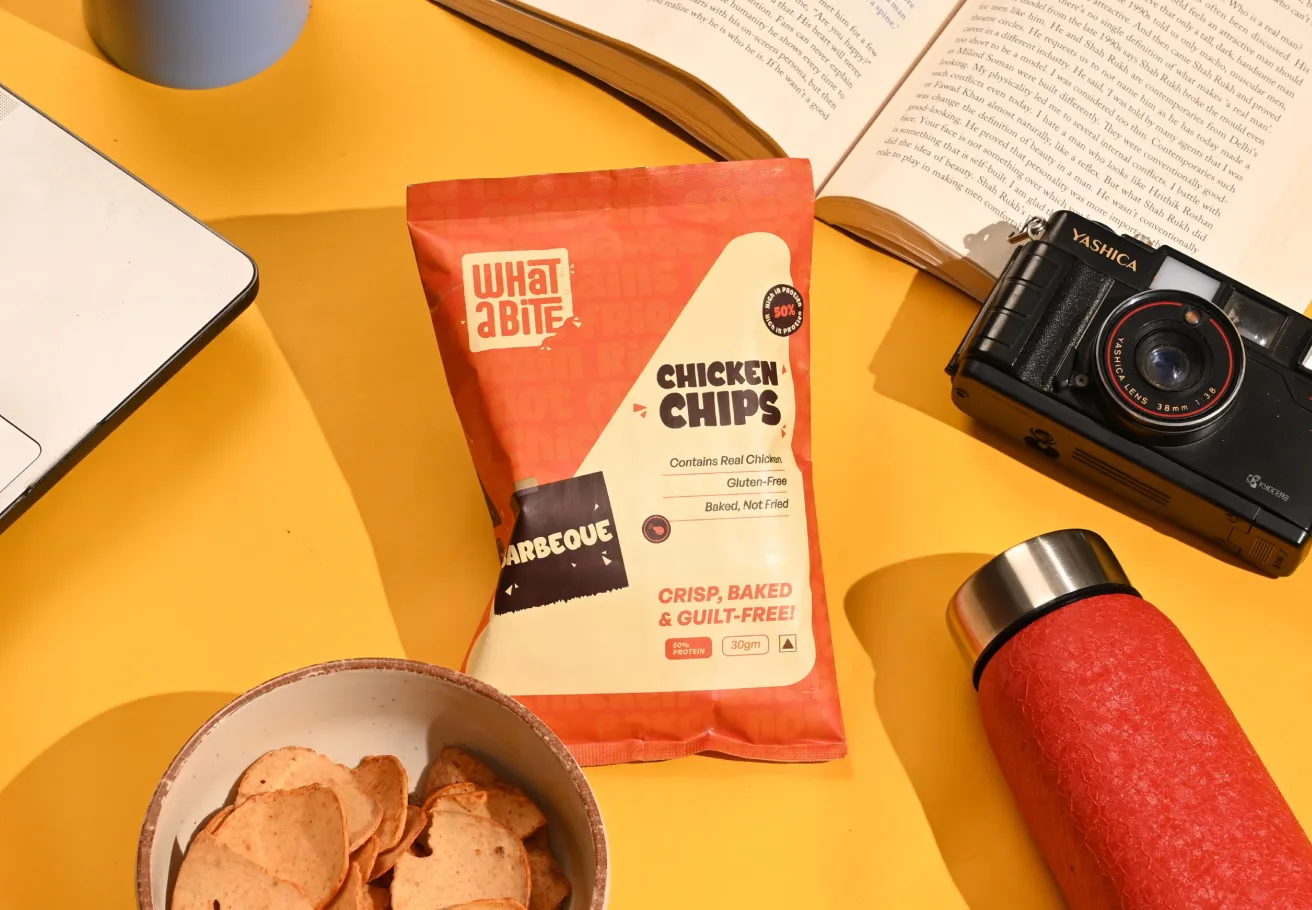
Want strategic branding and packaging like this for your business?





.webp)
.webp)

.webp)
.webp)
.webp)
.webp)
.webp)







.svg)
.webp)