%201.webp)
02
AI Snaps
.svg)
.svg)
01
Our Work
03
About Us
04
Brand Audit
05
Contact Us
06
Client Success
12
07
Blogs
08
Careers
Book A Call
.svg)



.svg)
Need Help In Building Your Brand?
Click the button below & book a call with our founder directly.

Rishabh Jain
Managing Director
Yes, Blinkit can work really well for new FMCG brands. Blinkit now has 1,000+ dark stores, delivers in 10 minutes, and sees millions of daily transactions.
Being listed offers explosive reach and discovery. But mismanage inventory, pricing, or operations, and you’ll burn cash on low-margin units, face delisting for poor fulfillment, or get buried by private labels.
This blog will work like a checklist for you to know if your brand is ready for Blinkit.
Blinkit accepts five types of brand entities.
Each brand type enters through a different route and has to fulfill its own set of requirements, costs, and approval criteria.
What Kind of Brands Does Blinkit Accept?
Blinkit accepts brands through five different routes, each with its own requirements and costs. Here’s what they look for:
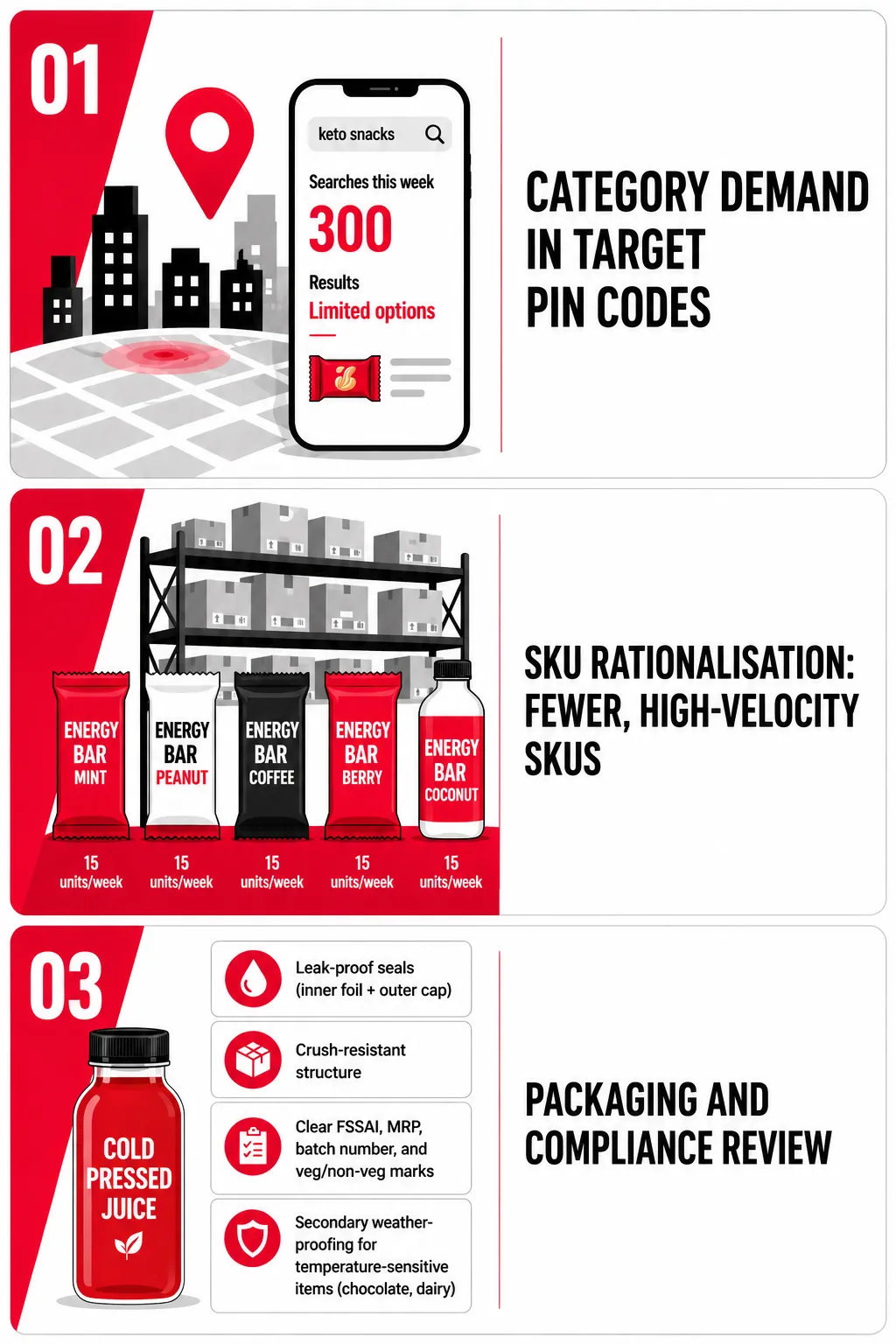
1. Category Demand by Pin Code: Blinkit thinks in terms of individual pin codes (dark store catchments), not cities.
They prioritise brands in categories where search and purchase data already show demand in those specific areas.
2. Fewer, High-Velocity SKUs: Dark stores have limited space.
Blinkit prefers 3–8 SKUs that sell 2–3 times per week per store over large catalogs with slow movers. Products should be compact and easy to pick.
3. Packaging & Compliance: Products must survive fast handling without damage.
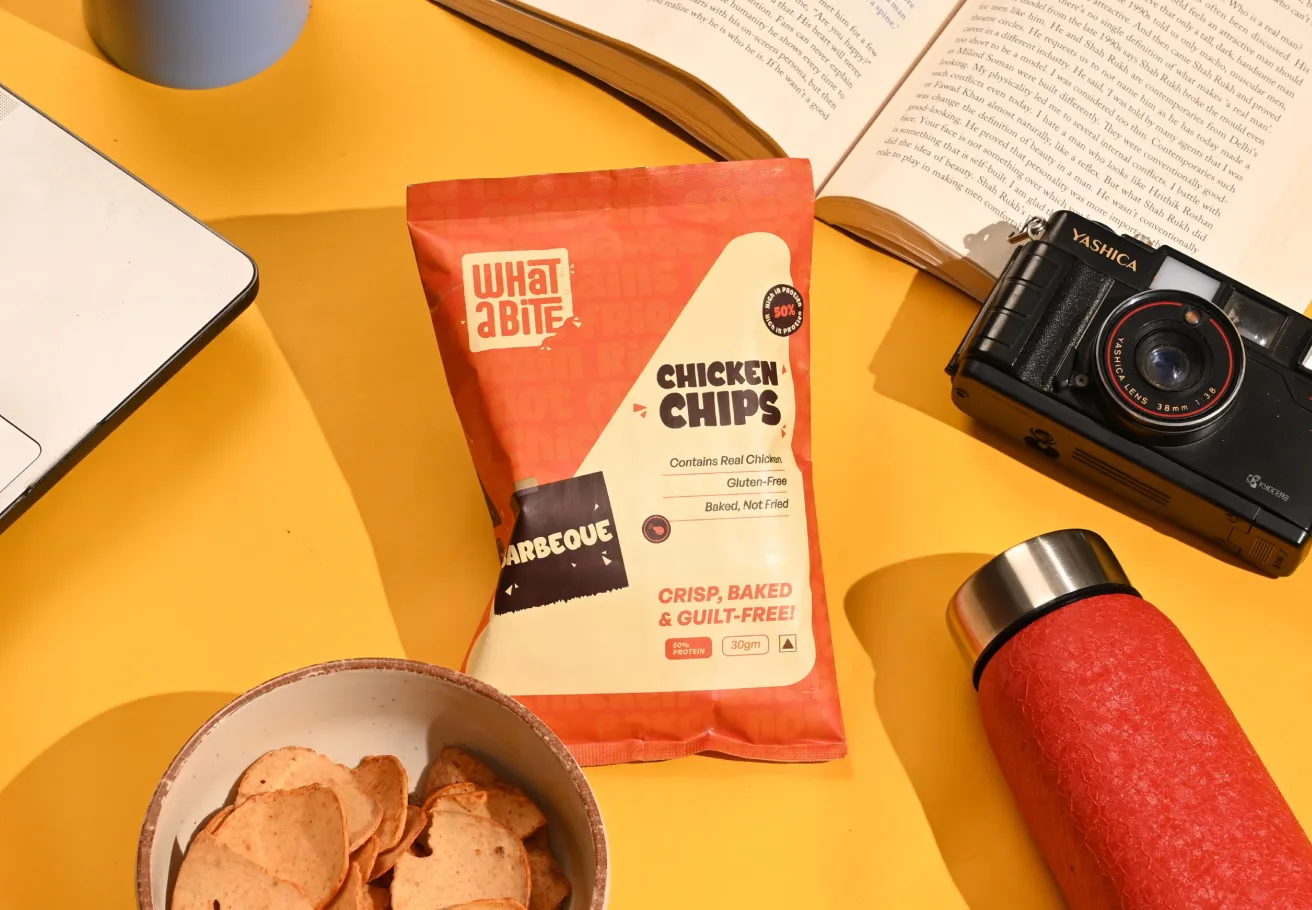
Key requirements: leak-proof seals for liquids, crush-resistant structure for snacks, clear FSSAI/MRP/batch labels, and weather-proofing for temperature-sensitive items (chocolate, dairy).
Categories That Perform Best
Brands that solve a right‑now problem or impulsive craving with compact, durable packaging win on Blinkit.
Here are the reasons that make Blinkit one of the top choices for new FMCG brands:
1. Immediate Sales Volume (If You Get It Right)
Blinkit processes millions of daily transactions across 1,000+ dark stores. For a new brand, this means instant access to footfall that would take years to build via owned D2C channels.
A sexual wellness brand onboarded in July was spending on ads but getting almost no returns 70–75% of spends leaked into non-performing campaigns with barely 1x ROI.
Within two months of fixing inventory placement and city selection, they achieved 3x overall growth and ROI improved from 1x to more than 3x .
2. Massive Reach Without Marketing Spend
Blinkit's dark store network now extends beyond metros to Tier 2 cities including Jammu (Trikuta Nagar, Roop Nagar, Akhnoor Road), Kochi, Bathinda, Haridwar, and Vijayawada .
When listed on Blinkit, a new brand gets immediate presence in these pin codes.
When Blinkit extended services to Jammu, any brand already listed was automatically available to thousands of new households.
No incremental logistics cost. No distributor negotiation. Just instant reach.
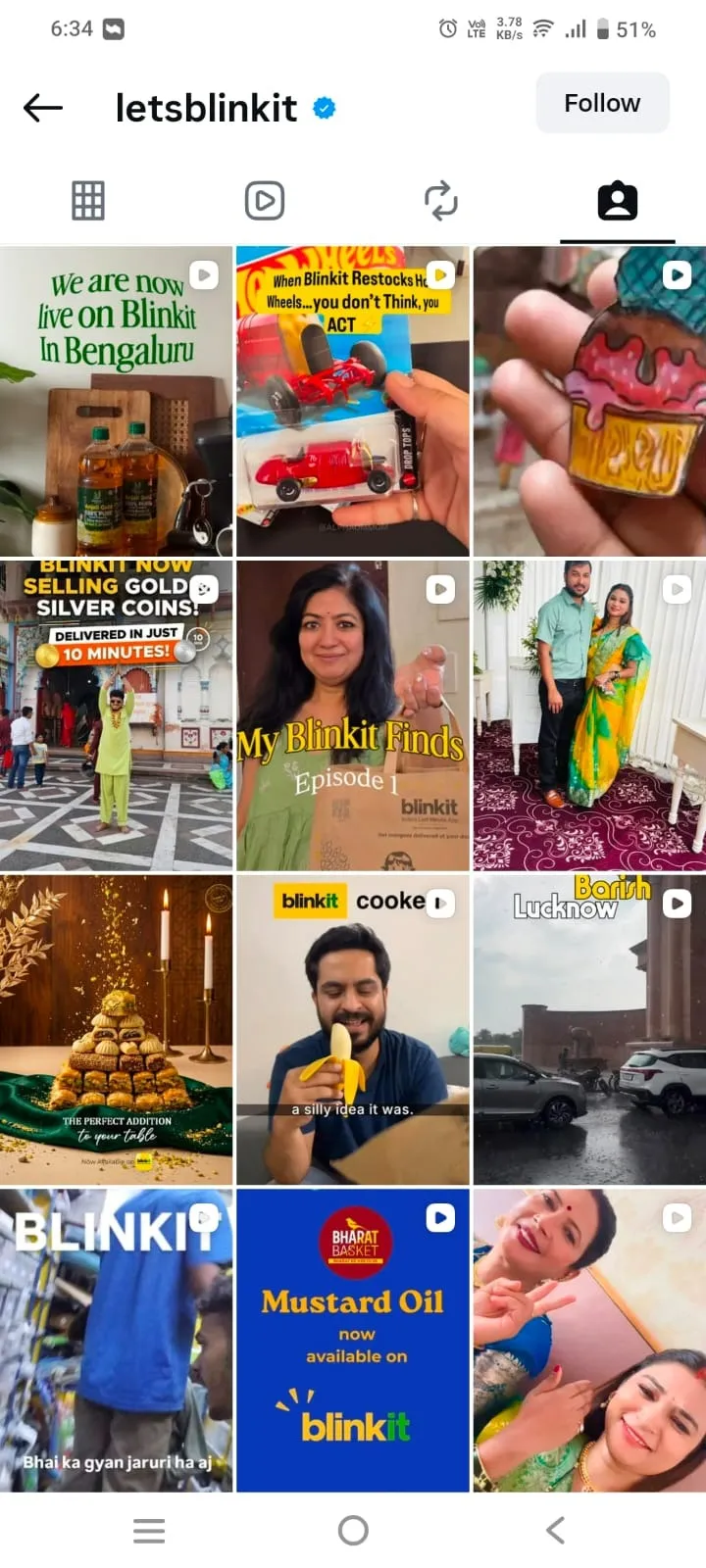
3. Social Media Awareness and Viral Moments
Being on Blinkit creates organic social proof that new brands cannot buy.
Customers share their quick commerce discoveries constantly and Blinkit itself amplifies brand mentions through its famously witty social media presence.
Imagine your product being the answer a customer gives when asked "where did you buy this?" That organic word-of-mouth, amplified by Blinkit's social team, is marketing money cannot buy.
4. Platform-Level Campaign Visibility
Blinkit runs its own high-impact marketing campaigns and featured brands benefit directly.
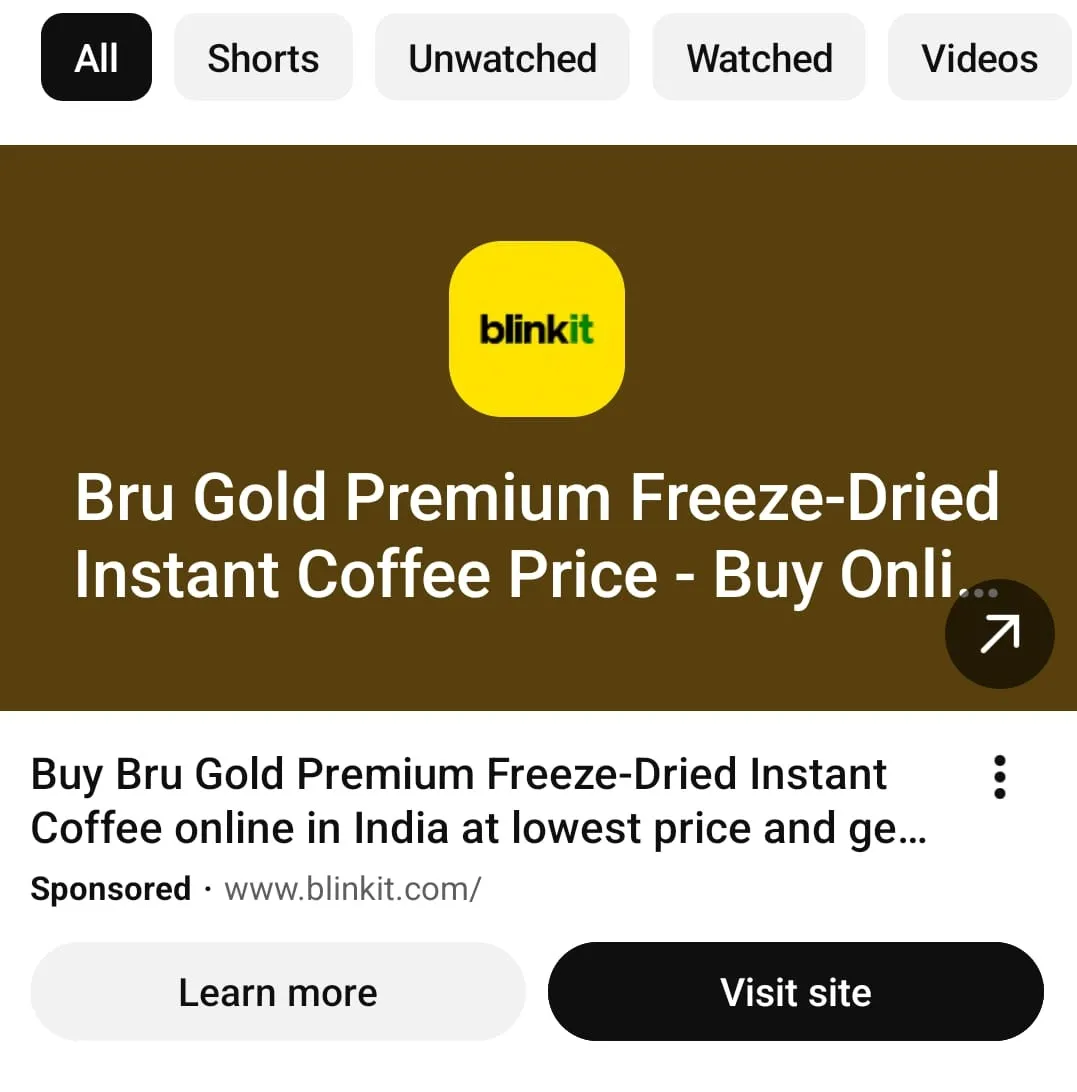
For example, BRU Gold Coffee partnered with Google and Blinkit on a "Brewing Success" campaign using YouTube ads, deep-linked app campaigns, and shopping ads. The result: millions of users reached, and sales increased.
You cannot afford a YouTube campaign targeting millions of coffee drinkers. But if Blinkit runs a category campaign and your brand is the recommended choice in that category, you ride that wave for free.
5. First-Party Data and Hyperlocal Insights
Blinkit provides brands with dark-store-level sales data. You learn exactly which pin codes buy your product, at what time of day, and which other products customers buy alongside yours.
You can identify your hero SKUs and double down on them. In the sexual wellness brand example, the team "identified and promoted only hero SKUs that had real demand and worked on inventory only to those SKUs" .
This precision is not possible on Amazon or Flipkart.
You can use this data to plan offline expansion. If your electrolyte tablets sell 40 units weekly from a dark store in Bandra, you know exactly which local gyms and chemist shops to target for retail distribution.
6. Credibility by Association
Being listed on Blinkit signals to investors, distributors, and modern trade buyers that your brand is legitimate.
Quick commerce platforms vet brands for compliance, packaging quality, and delivery readiness. Passing that vetting is a credential.
Founders announce "Now live on Blinkit" posts that generate thousands of impressions . Distributors who ignored your calls suddenly respond. Modern trade buyers take your pitch seriously.
7. Organic Discovery Without Advertising
Unlike Amazon where you pay for every click, Blinkit's search algorithm surfaces products based on relevance, not ad spend though sponsored options exist.
For a new brand, simply being available when a customer searches for your category can generate first sales without any ad budget.
Listing on Blinkit looks like a shortcut to scale. For most new brands, it becomes a slow leak of margins, inventory, and morale.
Below are the real challenges the ones Blinkit will not warn you about during onboarding.
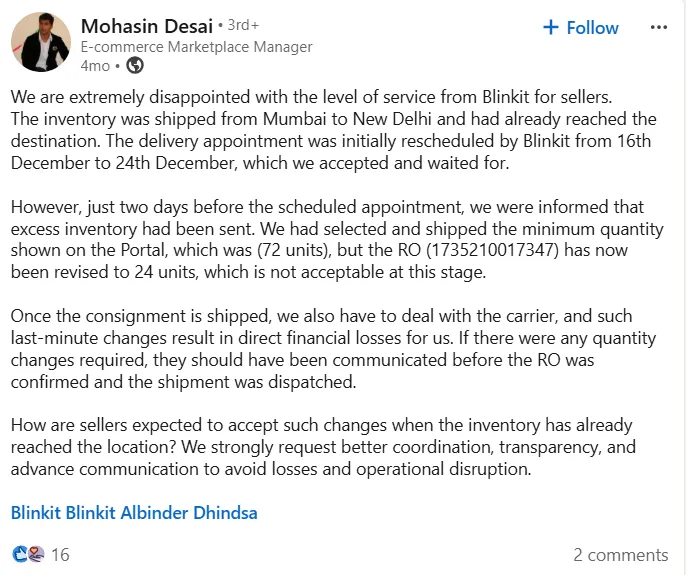
New brands often underestimate logistics complexity and unit economics at low MOQs (Minimum Order Quantity). On Blinkit, you cannot send 500 units to one warehouse and call it done.
You must parcel out 20 units here, 30 units there, across 10 or 20 dark stores. Your shipping cost per unit triples. Your team spends hours on split shipments. And if a dark store runs out of your product for three consecutive days, Blinkit's algorithm flags you as unreliable and reduces your visibility.
Blinkit dark stores handle rapid pick-and-pack. A picker grabs your product, scans it, tosses it into a bag with other items, sometimes heavy bottles, sometimes sharp-edged boxes and it travels by bike over potholed roads.
Your packaging does not just need to look good on a shelf. It needs to survive being crushed, shaken, and rushed.
Mandatory requirements:
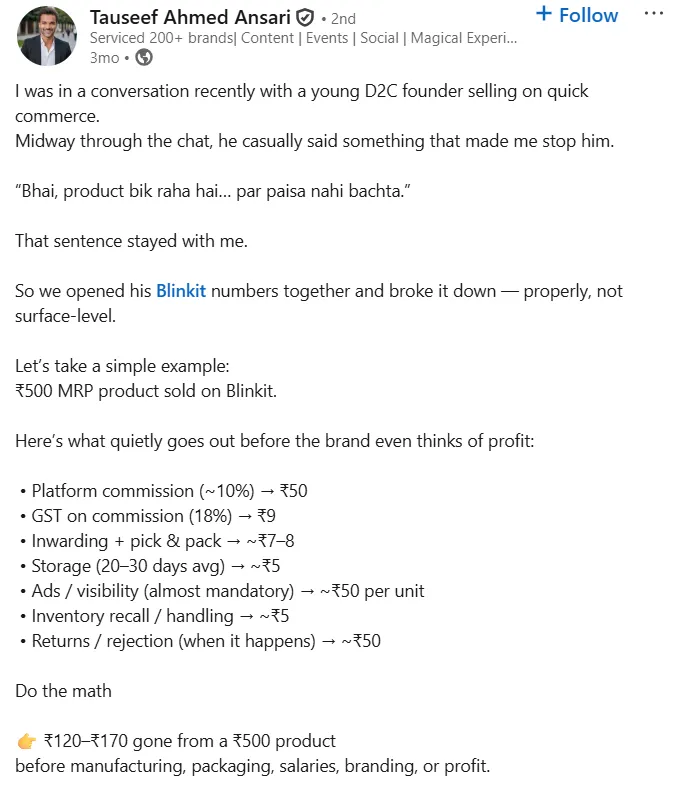
Blinkit charges commissions usually in the range of 8–15%, depending on the category.
You cannot simply add 15% to your D2C price. Blinkit customers compare prices with local kirana stores and other quick commerce platforms. If the price is too high, and you do not sell. Price at parity, and your margin evaporates after commissions.
Plus, some categories also attract fulfillment charges and listing fees. New brands with thin margins get squeezed fast.
Blinkit Ads: You'll Likely Need Them
New brands with no Blinkit search history need sponsored placement to get visibility. Blinkit's search algorithm prioritises products that already sell.
It is a classic chicken-and-egg problem: you cannot get sales without visibility, and you cannot get visibility without sales.
The platform operates on a CPM (cost per thousand impressions) or CPC (cost per click) model, separate from seller fees. You bid for placement when a customer searches for a category keyword like "protein bar" or "face wash."
Blinkit is not for every new brand. But for some, it is exactly the right move at the right time. Here is when to say yes.
Blinkit works best as a fulfillment accelerator, not a discovery engine.
Too many new brands treat Blinkit as a place to find customers. That is backwards. The brands that win on Blinkit bring customers with them.
If you have validated demand via D2C, offline retail, or social commerce, Blinkit can scale that demand fast. A brand with 500 loyal customers in Bengaluru can convert that into consistent Blinkit orders.
How? Those customers already buy from you. They already trust you. When they run out at 8 PM and see your product available in 10 minutes, they choose you over an unfamiliar brand.
Quick commerce thrives on reorder behaviour: snacks, beverages, baby products, supplements.
Blinkit's entire business model depends on customers coming back multiple times per week. Your brand must fit into that rhythm.
If your product is bought once and forgotten, think of a specialty spice blend for a specific holiday dish, or a one-time use event product, Blinkit's unit economics will not work in your favour.
Why? Because dark stores lose money storing slow-moving inventory. Blinkit's algorithm detects low reorder rates and buries your product in search results.
Blinkit's replenishment cycles are aggressive. Dark stores expect inventory updates every 2–3 days for fast-moving SKUs. Out-of-stock for three consecutive days means an immediate ranking drop, sometimes permanent.
New brands need a reliable supply chain to at least 2–3 cities at launch. You cannot start with one dark store in one city and expect to learn slowly.
Minimum viable setup: Consistent supply to 5–10 dark stores per city. That means:
Brands that come to Blinkit with packaging designed for quick commerce get listed faster. Dark store operators process hundreds of SKUs daily.
They do not have time to figure out your packaging. If your barcode is hard to scan, your seal is ambiguous, or your MRP is hidden your onboarding gets delayed or rejected.
What "shelf-ready" means for Blinkit:
At Confetti Design Studio, we don't just design attractive packages, we build brands that actually sell.
With over 200 projects delivered for leading Indian retail brands including ITC, Dabur, Sunfeast, The Indus Valley, and Bingo, we've learned exactly what works on Blinkit and what gets rejected.
We understand that packaging for dark stores needs barcode placement on flat, scannable surfaces, tamper-evident seals, and product recognition at a glance, not just retail shelf appeal.
Our entire approach is tested for FMCG products and Indian retail channels, including the fast-growing quick commerce space.
Most new FMCG brands design packaging for retail shelves where a customer stands and stares for 10 seconds or D2C unboxing, where presentation matters more than durability.
Quick commerce is a completely different environment.
Confetti designs packaging with Blinkit's operational realities in mind: fast handling, clear product recognition at a glance, strategic barcode placement, and MRP compliance.
We know that a picker needs to scan your product in under three seconds. We know your package will be tossed into a bag next to heavy items. We know the customer decides to buy based on a thumbnail visible on a phone’s screen.
On quick commerce apps, your product image and your product name are all you have.
There is no detailed description. No lifestyle video. No carousel of images. A customer scrolls through a grid of 20 products and decides in roughly 10 seconds.
Confetti's branding work focuses on high-contrast, category-distinctive design that stands out in Blinkit's visual grid.
Clear flavour differentiation through colour coding, not tiny text. Logo placement that works even when cropped to a circle because Blinkit's thumbnail grid crops aggressively.
Beyond design, Confetti helps new FMCG brands navigate the Blinkit onboarding process.
Confetti addresses specific friction points: seller portal setup (completing forms correctly the first time), category manager coordination (existing relationships that move applications through review faster), and NPI documentation (preparing product specs, compliance certificates, and FSSAI filings required for approval).
These are the exact steps where most new brands stall. A missing barcode specification. An unclear packaging test result. A compliance form submitted to the wrong category manager. Each error adds weeks.
We at Confetti have helped brands like B Natural get the packaging design right for quick commerce platforms, so they stand out where it matters most.
We handle compliance and thumbnail performance together, not as separate afterthoughts. As a result your product is ready before it ever reaches the dark store.
Blinkit vs Instamart vs Zepto. Which one is better for sellers?
For new FMCG sellers, Blinkit is often the better choice because it has the largest dark store network (1,000+ stores) and the highest daily transaction volume among quick commerce platforms in India, which means faster inventory turnover if your product gains traction.
However, this advantage only holds if your packaging, margins, and operational readiness are fully prepared otherwise, the same volume will amplify losses faster.
Should I register my Brand on Blinkit?
Yes, you should register your brand on Blinkit provided your brand falls under the FMCG category and there is existing demand for your products.
Also, make sure that your brand is ready for the Blinkit’s review as they check legal compliance, product eligibility, documentation accuracy, packaging standards, geographic serviceability, barcode integrity, and operational readiness.
Blinkit is asking 25k per listing, Is it worth it?
25k converts entirely into ad credit that you can spend on Blinkit's in-app advertising. However, it does require upfront cash readiness per SKU you want to list.
Yes, very small new brands may feel this is more of a financial burden. So, you must plan your budget and as per your budget decide the SKU on Blinkit.
Can I sell on Blinkit without prior experience on other e-commerce platforms?
Yes. Prior listings on different platforms like Amazon or Flipkart are not a requirement. However, having product links from other platforms strengthens your application as it provides the Category Manager with demand and pricing reference points.
New brands with no prior online presence can still get approved on Blinkit, but should prepare a stronger catalog and documentation package.
Can a small D2C brand sell on Blinkit?
Yes. Blinkit’s seller model is explicitly designed to support D2C brands. The core requirements include a valid GSTIN, a registered business entity, compliant packaging, and inventory located within a Blinkit-serviceable area.
For D2C brands, quick commerce offers a key advantage: it taps into high-intent, impulse buying behavior, a pattern that works especially well for newer brands looking to build awareness.
Want strategic branding and packaging like this for your business?





.webp)
.webp)

.webp)
.webp)
.webp)
.webp)
.webp)






.svg)
.webp)