%201.webp)
02
AI Snaps
.svg)
.svg)
01
Our Work
03
About Us
04
Brand Audit
05
Contact Us
06
Client Success
12
07
Blogs
08
Careers
Book A Call
.svg)



.svg)
Need Help In Building Your Brand?
Click the button below & book a call with our founder directly.

Rishabh Jain
Managing Director
Blinkit accepts different kinds of brands including FMCG giants, registered D2C brands, trademark-holding brand owners, and authorized distributors of established labels.
This, provided their products fall into high-velocity categories like groceries, snacks, personal care, home essentials, and beverages. This guide walks you through the entire journey of what types of brands Blinkit accepts in India.
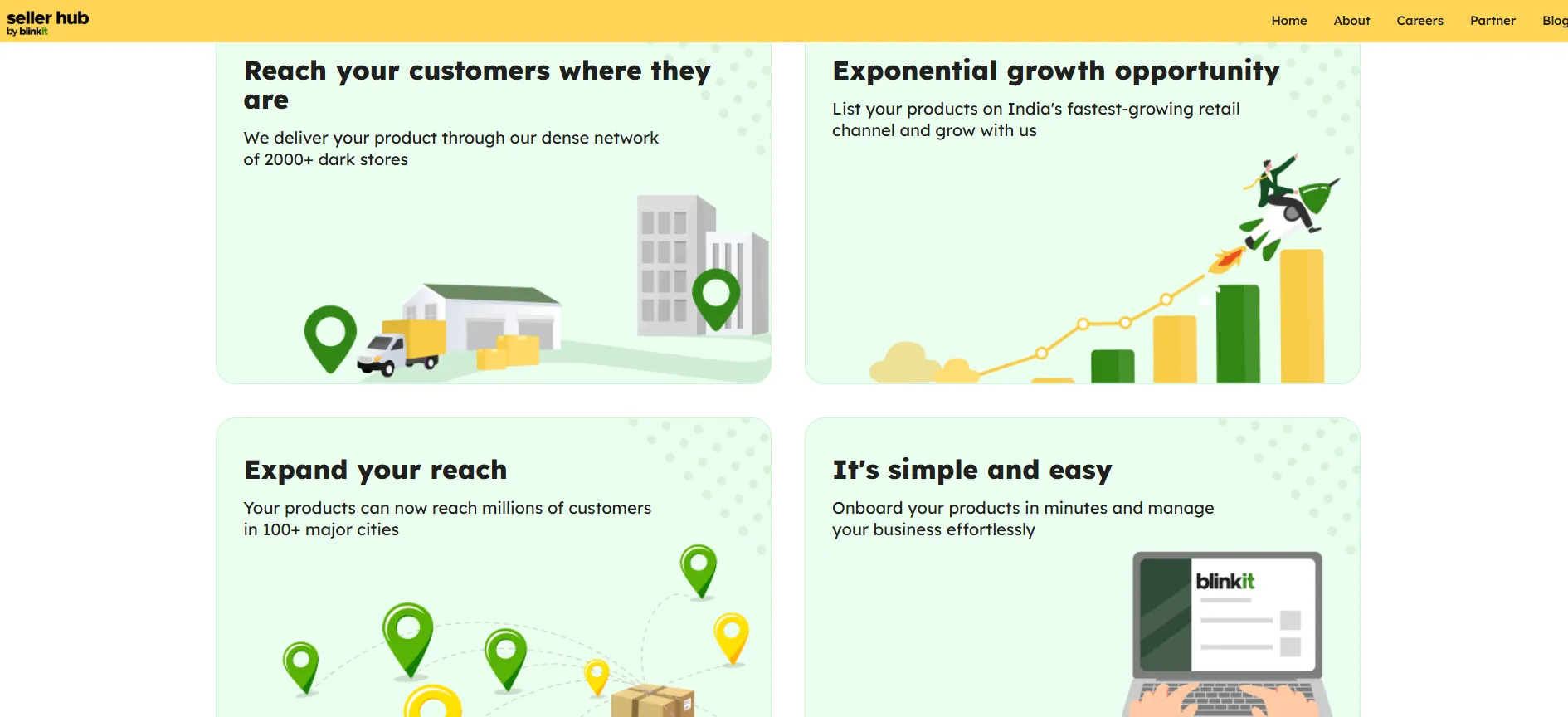
Blinkit is India's leading quick-commerce platform with more than 40% of market share.
Unlike traditional e-commerce marketplaces, Blinkit doesn't list everything, it curates.
Blinkit is selective and prioritizes hyperlocal demand signals, fast-moving SKUs, and your ability to fulfill from a dark store within 10 minutes.
The platform’s operational model relies on fast-moving inventory, making the brand fit a genuine selection criterion.
.webp)
Blinkit runs through a network of dark stores and small hyperlocal micro-warehouses positioned across city neighbourhoods.
Each dark store has limited SKU slots, meaning only the fastest-moving products earn shelf space per location.
Blinkit evaluates potential listings based on category demand, inventory velocity, packaging compliance, and pricing competitiveness.
Blinkit curates and their 10-minute SLA (Service Level Agreement) means they only list products that fit quick-commerce buying behaviour: impulse, essentials, and repeat-use.
Your product must fit one of these categories to list on Blinkit.
Note:
📌Clothing is NOT a core Blinkit category despite being an online marketplace.
📌Blinkit does NOT list every product within these categories, demand-per-pincode determines availability
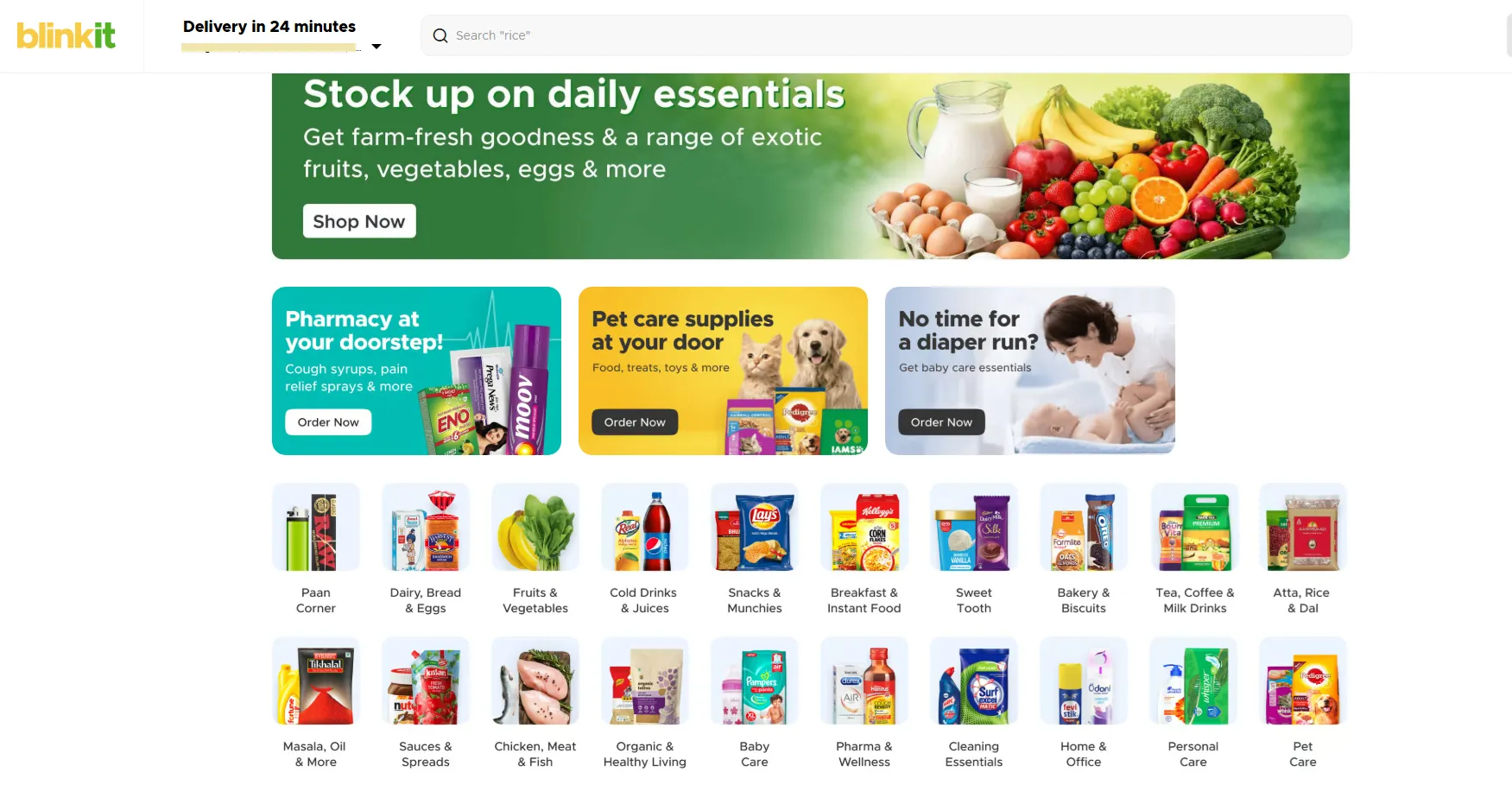
Blinkit operates on a curated, demand-driven model. Only product categories that move fast and fit the 10-minute delivery window make it onto the platform.
Before you apply, know exactly where your brand fits.
This is Blinkit's core category and its highest-volume one.
Rice, atta, pulses, cooking oils, spices, sugar, salt, and packaged dry goods consistently rank among the most reordered items on the platform.
If your brand operates in this space, demand is already there. The challenge is competing on price, packaging, and brand recall at thumbnail size.
Branded staples with strong regional recognition, premium organic variants, and private-label alternatives at competitive price points will help your brand to perform well.
This is a high-frequency, high-repeat category. Consumers reorder milk, curd, butter, paneer, cheese, and eggs almost weekly.
Bread, buns, and packaged bakery items also fall here.
Brands in this category need cold-chain-ready packaging and very short shelf lives, which means your supply chain must be hyperlocal and reliable.
Blinkit has expanded aggressively into fresh produce. Seasonal fruits, leafy greens, herbs, and cut vegetables are now standard inventory across most dark stores in Tier 1 cities.
This category is harder for branded players; it's largely unbranded.
The opportunity here is in value-added fresh produce: ready-to-cook kits, washed and packed salads, or branded organic produce lines.
This is one of Blinkit's strongest impulse-purchase categories. According to Shiprocket's 2026 quick commerce data, snacks and beverages consistently rank in the top three selling categories on Blinkit.
Packaged chips, namkeen, biscuits, chocolates, energy bars, instant noodles, carbonated drinks, juices, packaged water, health drinks, and RTD (ready-to-drink) beverages all perform strongly.
This is where D2C snack and beverage brands have found the most traction on quick commerce.
The impulse buying behaviour on Blinkit favours new-to-market brands if your packaging stands out and your price point is right, you can build a customer base fast.
Shampoos, conditioners, body wash, face wash, deodorants, sanitary pads, razors, toothpaste, and hand sanitisers are stocked across most Blinkit dark stores.
This is a competitive shelf. National FMCG players dominate by default. D2C personal care brands need a clear differentiation either a unique formulation, a niche audience (sensitive skin, men's grooming, natural/clean beauty), or a price advantage.
Packaging design clarity is very important here. At app-thumbnail scale, your label needs to communicate the product, variant, and benefit in under two seconds.
A high-trust, high-spend category. Parents reorder baby products frequently and with low price sensitivity.
Diapers, wet wipes, baby food, infant formula, baby wash, and rash creams are consistently in stock.
Blinkit's approval bar is higher for baby care products. FSSAI compliance (for food products), dermatological testing claims, and packaging accuracy are closely scrutinised.
Foundations, lipsticks, serums, sunscreens, moisturisers, toners, and kajal are increasingly stocked, driven by Blinkit's push into the beauty segment.
The category has grown significantly post-2024 as quick commerce positioned itself as a faster alternative to beauty e-commerce platforms.
D2C beauty brands have a real opening here. Blinkit's beauty customer skews urban and millennial exactly the audience that buys serums and SPF products on impulse.
Detergent, floor cleaner, toilet cleaner, dishwash liquid/bar, glass cleaner, and fabric softener are standard quick commerce inventory.
This is an FMCG-dominated category. Breaking through requires either a significant price advantage or a strong "natural/non-toxic" positioning that appeals to the urban household segment.
Fresh chicken, eggs, fish, and mutton are available in select cities primarily metros with cold-chain dark store infrastructure.
This is not a pan-India category on Blinkit. Availability depends on pin code. Brands in this space need city-specific fulfilment capability, not a national distribution model.
Mobile accessories (chargers, cables, earphones, cases), small electronics (power banks, LED bulbs, smart plugs), and basic tech accessories fall within Blinkit's accepted product list.
Blinkit now positions itself as a "last-minute electronics store" for high-urgency purchases, a dead cable, a forgotten charger before a flight.
Pet food (dry and wet), grooming products, cat litter, and pet hygiene essentials are listed on Blinkit.
It's a niche but growing category. D2C pet care brands especially those focused on premium or breed-specific nutrition have found quick commerce to be a useful supplementary channel.
OTC (over-the-counter) medicines, vitamins, protein supplements, immunity boosters, and health monitors are stocked across most stores.
Prescription medicines are NOT available on Blinkit. Only OTC-approved products are listed.
This matters as much as what's on the list.
Getting into an accepted category doesn't guarantee listing. Blinkit evaluates each SKU against demand data per pin code.
A product that sells well in South Delhi may not get stocked in Pune because hyperlocal demand signals differ.
Three factors drive their selection:
Start with 2–3 high-velocity hero SKUs rather than your full product range.
A focused, fast-moving catalogue has a far better shot at approval and retention than a bloated listing with slow-moving variants.
Blinkit accepts five types of brand entities: established FMCG brands, D2C brands, brand owners with a registered or pending trademark, authorised distributors, and new or first-time brands.
Each brand type enters through a different route and each comes with its own set of requirements, costs, and approval criteria.
Here is exactly what each type means for you.
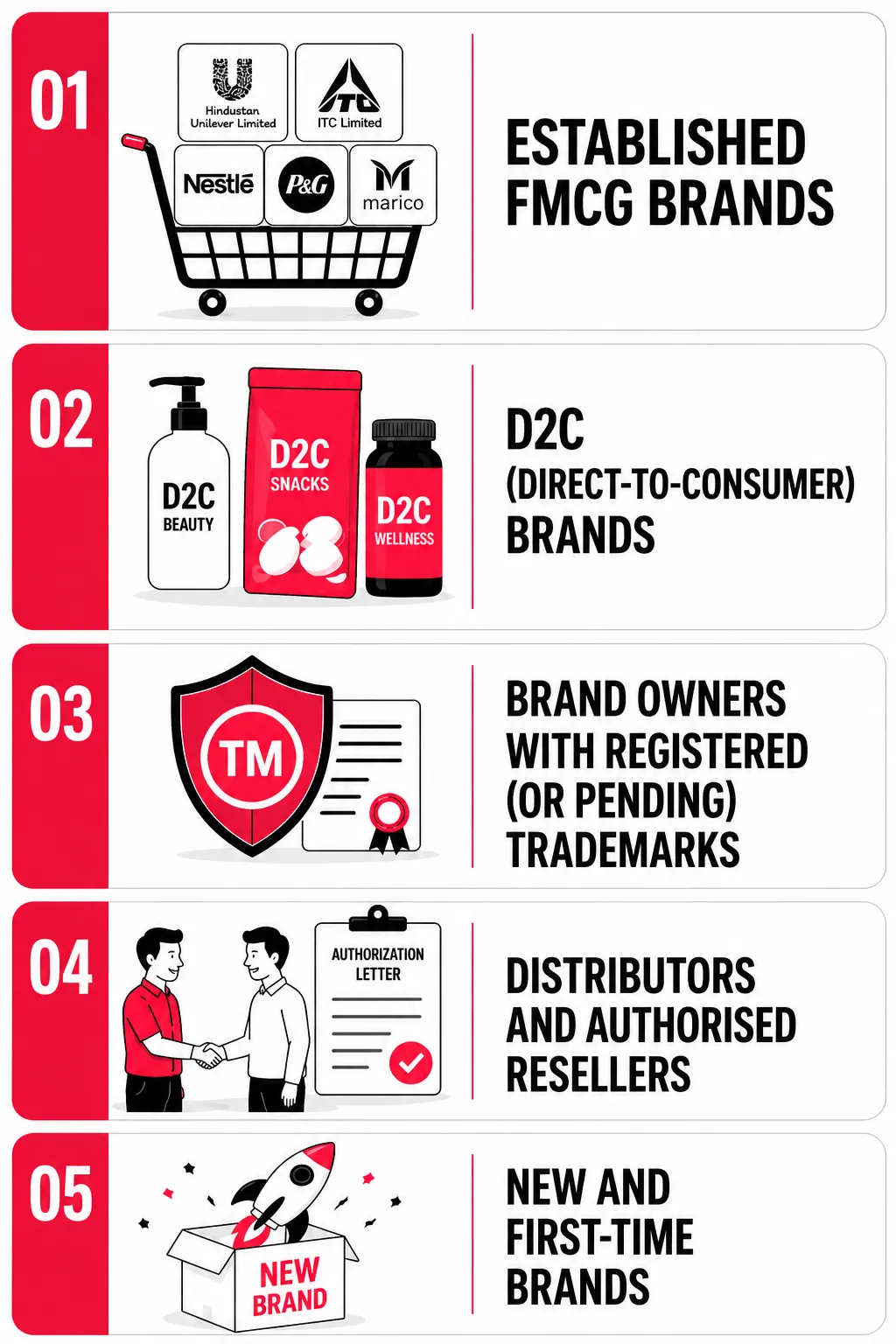
If your brand already has national or regional distribution, think the scale of a Marico, a Haldiram's, or a regional dairy brand with strong pin-code demand Blinkit will actively want you on the platform.
These brands usually list through authorised distributors. A direct trademark or brand verification process is not required because the brand's market presence speaks for itself.
FMCG brands don't get preferential placement by default. You still compete for shelf visibility within the app. Sponsored listings and Blinkit Ads become the lever for driving discovery.
This applies to packaged food brands, beverage companies, personal care majors, household cleaning brands, and any FMCG player with existing retail distribution in urban India.
D2C brands are one of the fastest-growing segments on Blinkit and for good reason.
Quick commerce suits the D2C buying pattern. Purchases are often impulse-driven, the customer is urban and digitally native, and the repeat-buy cycle is short. If your brand sells protein bars, cold-pressed juices, clean beauty products, or specialty pet food Blinkit's user base is your audience.
D2C brands apply directly through seller.blinkit.com without needing a distributor. You retain full control over your listings, pricing decisions, inventory planning, and marketing.
D2C brands that get traction on Blinkit early build a compounding advantage: repeat purchase data, review volume, and algorithm visibility all accumulate over time.
After launching on Blinkit, a founder noted that they rapidly expanded to multiple cities and how quickly quick commerce can drive growth.
This is Blinkit's most direct entry route for independent brand owners who don't have a distributor network.
If you own a registered trademark or have filed an application and are awaiting approval you qualify to list as a brand owner on Blinkit. You don't need to go through a third party.
This matters because it gives you direct authority over every decision: how your product is listed, what images are used, how pricing is set, and how inventory is managed.
A pending trademark is sufficient. You don't need the certificate in hand before applying the application number is acceptable during the registration process.
This applies to founders of emerging consumer brands, indie food and beverage startups, specialty wellness brands, and any business that has built a product line under a proprietary brand name.
Distributors of established brands can list products on Blinkit on the brand's behalf without the brand owner needing to set up a direct seller account.
This is a common route for regional brands that have strong offline distribution but haven't yet set up a direct-to-platform e-commerce presence.
What you need as a distributor:
Note: you cannot list a brand's products without written authorisation. Blinkit enforces this to prevent grey-market listings and counterfeit product issues on the platform.
Yes, first-time brands can sell on Blinkit. But the platform is selective and the entry cost is real.
Blinkit evaluates new brand applications against three criteria:
Product-market fit signals: Does your product solve a real, specific need?
Your application is stronger when your product solves a clear, specific need and its formulation, size, and pricing match what consumers in your category already buy on quick commerce.
Packaging quality: Your product must photograph well at thumbnail size, and its label must include all mandatory information (MRP, FSSAI number, nutritional data, manufacturing details) in a clear, compliant layout.
Packaging is assessed for both visual appeal and regulatory compliance before any unit reaches a dark store.
Category demand: Category managers review platform data on existing search and purchase behavior.
If your product type has low demand in your target cities, approval will be difficult no matter how strong your product is.
Margin viability: Blinkit’s commission is 8–15% plus 18% GST on that commission. Your MRP must cover these costs, your cost of goods, and logistics to the dark store, while staying competitively priced.
Not every business qualifies for Blinkit and knowing this saves you time.
If your product falls outside Blinkit's accepted categories no amount of documentation will get you listed. Check the category fit first, then build the compliance stack around it.
Whether you're an FMCG giant or a founder launching your first SKU, Blinkit evaluates every product at the packaging level.
Your label is the first thing the platform reviews for compliance. It's also the first thing a customer sees on the app, rendered at roughly 200x200 pixels on a mobile screen.
Weak packaging kills listings before they launch. It also kills conversions after they do.
This is where most brands, especially D2C and first-time sellers lose ground they didn't expect to lose.

Talk to Confetti experts about getting marketplace-ready
Book A Call
Getting listed on Blinkit involves meeting a strict set of documentation and operational standards.
The platform prioritizes compliance, quality, and speed, so sellers must have all their paperwork and processes in order before applying.
Below is a breakdown of what’s required:
Mandatory Documents:
✅A GST registration certificate is mandatory for all brands applying to sell on Blinkit.
✅A cancelled cheque or bank account details are needed for seller payout registration.
✅The business PAN of the selling entity is a compulsory document for verification.
✅Valid product barcodes (EAN or UPC) must be assigned to every SKU.
✅Product images must meet Blinkit's specific photography standards for listing approval.
Category-Specific Documents:
✅Food, beverages, and groceries require an FSSAI License (State or Central, based on turnover).
✅Skincare products require a COS-8 or COS-9 license for manufacturers and CDSCO registration for imports.
✅Branded products require a Trademark Certificate or TM application number.
✅Imported goods require an Import Expport Code (IEC).
Operational Requirements:
✅Ability to fulfil hyperlocal inventory replenishment (Blinkit's dark stores require frequent restocking)
✅Packaging must meet Legal Metrology Act requirements - MRP, net weight, manufacturer details, batch number
✅Minimum viable packaging quality: labels must be clean, accurate, and print-ready at the right specifications
📌Note: Fee structures can change and always verify the latest directly on Blinkit’s official site before applying.
Blinkit uses a two-stage review: first, your seller account and brand are assessed; then each product/SKU goes through its own approval.
A dedicated Category Manager (CM) is assigned after your account is approved and plays a separate gating role before any product goes live.
Both stages run independent checks, one is about who you are as a business, the other is about what you're selling and whether it's ready for quick commerce.
Blinkit does not think in terms of “cities” but in terms of individual pin codes (dark store catchments).
Before onboarding a brand, they check whether there is already proven demand for that category within the specific pin codes you want to serve.
👁️What they look for:
Existing search and purchase data for similar products in that area.
For example, if users in a South Mumbai pin code search for “keto snacks” 300 times a week but find limited options, Blinkit will prioritize onboarding a keto brand for that store.
Blinkit’s dark stores have limited physical storage. They cannot afford to stock slow-moving inventory.
Therefore, they strongly prefer a small number of SKUs that sell frequently over a large catalog where most items sell once a month.
👁️What they look for:
A brand proposing 3–8 SKUs, each projected to turn over (sell) at least 2–3 times per week per dark store. Products should be compact, standard-sized, and easy to pick.
For Example, A new energy bar brand offers five flavours (mint, peanut, coffee, berry, coconut). Each sells 15 units weekly per store. That works. But a brand offering 25 SKUs of herbal teas, where 20 sell once a month, will be rejected or silently de-prioritised.
Because delivery happens within 10 minutes, products are rushed, stacked, and often handed over multiple times.
Blinkit rigorously tests whether your packaging can survive this environment without damage, leakage, or customer complaints.
👁️What they look for:
Leak-proof seals (inner foil + outer cap) for liquids
Crush-resistant structure for biscuits, chips, or bread
Clear FSSAI, MRP, batch number, and veg/non-veg marks
Secondary weather-proofing for temperature-sensitive items (chocolate, dairy)
📌 For example: A cold-pressed juice brand uses a plastic bottle with a foil seal under the cap. That passes. Another juice brand uses only screw cap juice leaks during rush delivery. Blinkit de-lists them after three customer complaints.
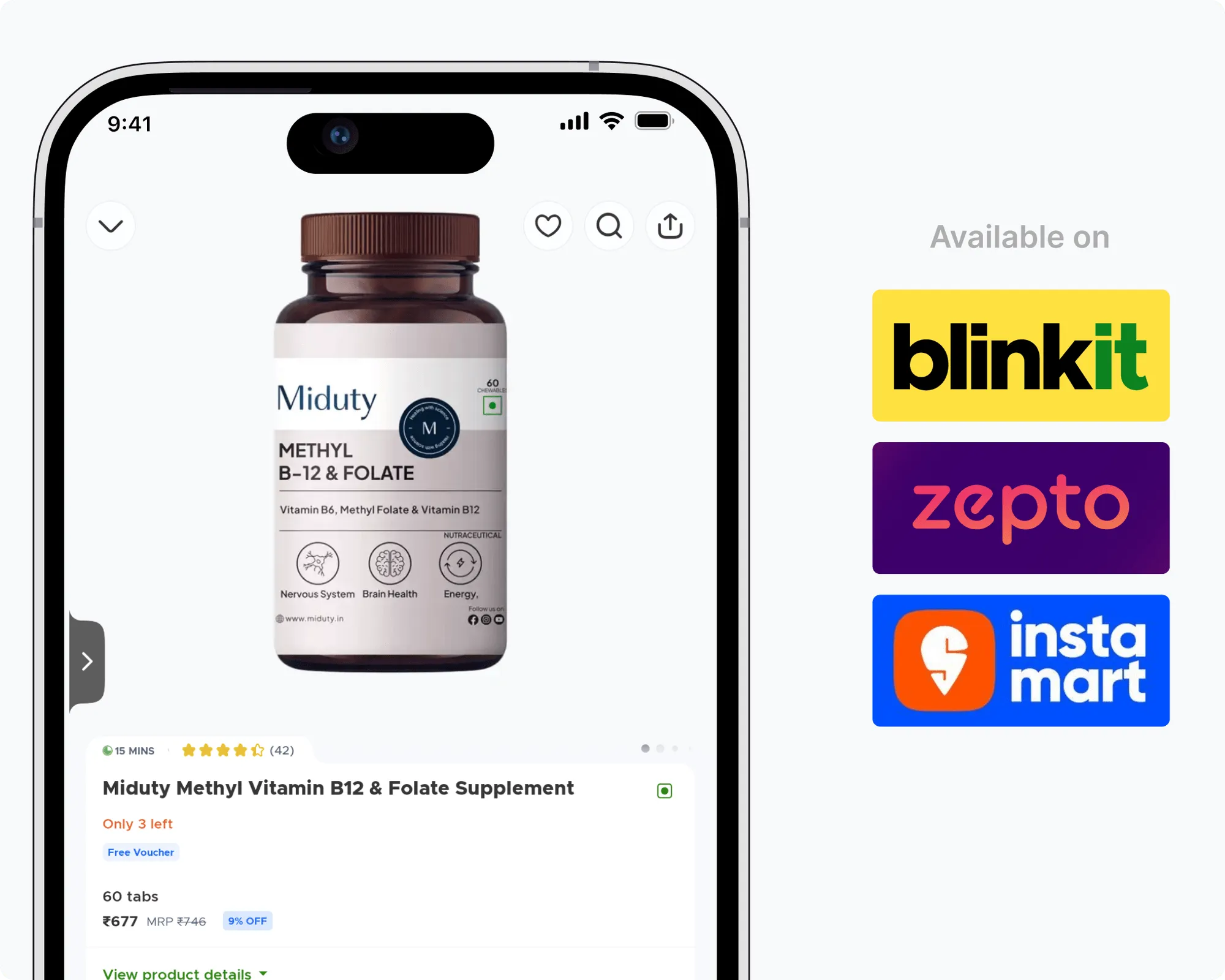
At Confetti Design Studio, we design packaging that meets the specific demands of quick commerce platforms like Blinkit.
With 200+ projects delivered for leading Indian retail brands such as ITC, Dabur, Sunfeast, and The Indus Valley, we understand what gets approved and what gets rejected.
Our approach is built specifically for FMCG products across Indian retail and the rapidly growing quick commerce ecosystem.
👉Confetti supports brands through the Blinkit onboarding process
Confetti assists brands in organizing and verifying all required legal and tax documents before submission, then facilitates communication with platform Category Managers to align on pricing, margins, and catalog requirements.
👉Helps brands avoid the most common rejection triggers before submission
By pre-checking documentation for mismatches, missing FSSAI details, or incorrect GST information, Confetti prevents the top causes of application rejection such as incomplete proofs or formatting errors before they reach platform reviewers.
👉Works across platforms: Blinkit, Zepto, Swiggy Instamart
Confetti applies the same structured onboarding approach to Blinkit, Zepto, and Swiggy Instamart, adapting documentation and catalog requirements to each platform's specific seller portals and category manager processes.
Does Blinkit accept D2C brands?
Yes. D2C brands that meet Blinkit's legal and operational requirements valid GST, FSSAI, barcode labelling, and Legal Metrology-compliant packaging can apply directly as sellers. D2C brands retain full control over their listings, pricing, and inventory.
Do I need a trademark to sell on Blinkit?
Having a registered trademark (or a pending application) allows you to list as a brand owner without needing a distributor. Without trademark documentation, you usually need to apply through an authorised distributor of your products.
Can I sell clothes on Blinkit?
Clothing is not a core Blinkit category. Blinkit focuses on groceries, personal care, baby care, electronics accessories, and household essentials. Fashion and apparel brands are better suited for platforms like Myntra, Flipkart, or Meesho.
What is the fastest-selling category on Blinkit?
Dairy products, fresh fruits and vegetables, packaged snacks, household cleaning products, and personal care essentials are consistently the highest-selling categories on Blinkit. Products that solve an immediate need or drive impulse purchase perform best in the quick commerce model.
Can distributors sell on Blinkit without brand ownership?
Yes. Authorised distributors of established brands can list products on Blinkit on behalf of those brands. They must provide a valid authorisation letter from the brand and meet all standard seller registration requirements.
Want strategic branding and packaging like this for your business?





.webp)
.webp)

.webp)
.webp)
.webp)
.webp)
.webp)






.svg)
.webp)