02
AI Snaps


01
Our Work
03
About Us
04
Brand Audit
05
Contact Us
06
Client Success
12
07
Blogs
08
Careers
Book A Call




Need Help In Building Your Brand?
Click the button below & book a call with our founder directly.

Rishabh Jain
Managing Director
A strong perfume branding strategy starts long before the bottle is designed. A beautiful scent alone cannot build a successful brand; positioning, olfactive storytelling, naming, sampling, and packaging must work as one cohesive system.
These five strategic decisions can determine whether your fragrance becomes a distinctive, market-ready brand or just another beautiful bottle on the shelf, especially across global markets.
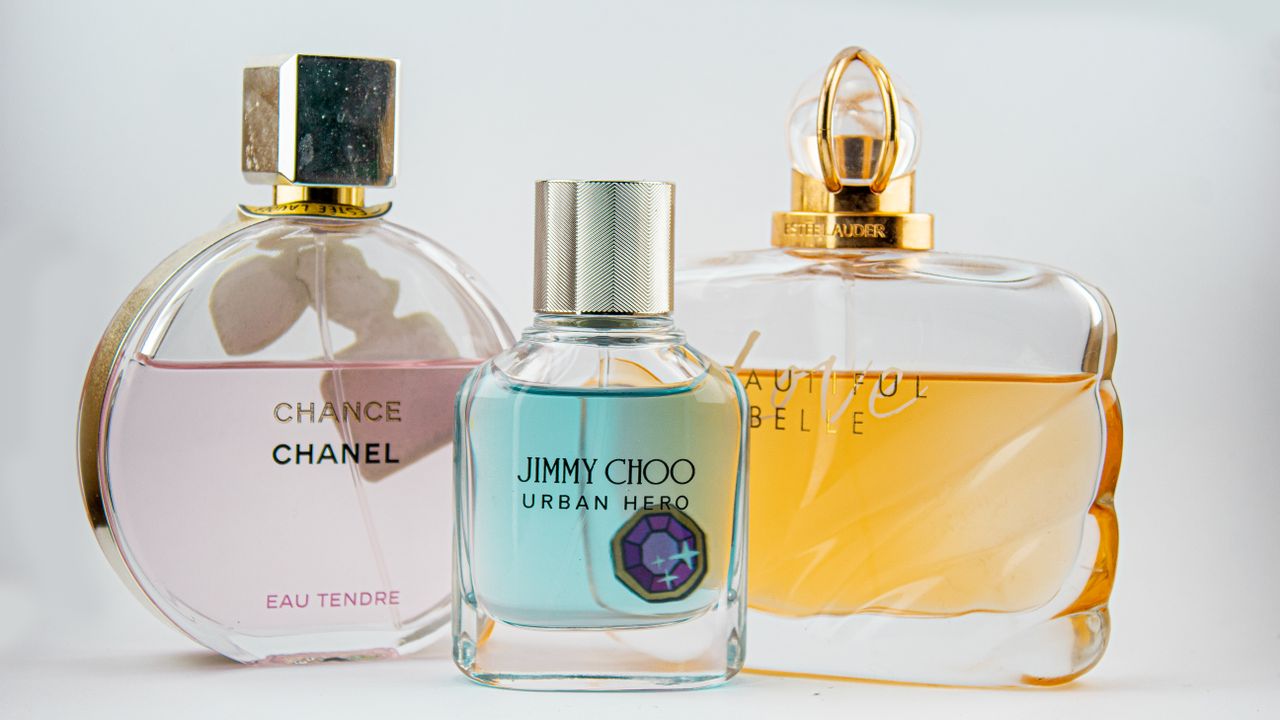
A skincare product can explain its value through ingredients, texture and results. Perfume is harder to sell, especially online, because customers cannot smell it through a screen. They must judge the scent before experiencing it.
That makes branding central to the buying decision.
Your name, story, bottle, packaging and price must help customers understand what the fragrance might smell like, who it is for and whether it is worth trying.
Many perfume branding projects begin with bottle shapes, colours and finishes. Gold foil, black cartons, script typography and sculpted glass can signal luxury, but they do little to distinguish one fragrance from another.
Without a clear positioning strategy, the result can be a bottle that looks premium but attracts the wrong audience, a mid-priced fragrance that feels overpriced, or a collection that becomes difficult to expand consistently.
The solution is to decide what the brand stands for before choosing how it looks. Here are the five decisions that shape a perfume branding:
Once these decisions are clear, the bottle and packaging can express the strategy rather than substitute for it.
Perfume branding therefore requires more than an attractive flacon. It needs a connected system that makes an invisible product easier to understand, desire, try and buy.
Price tier is the first decision because it determines crucial decisions such as bottle weight, carton construction, cap material, distribution channel, naming conventions, and the amount of education the brand must do at the point of sale.
▶️What Each Price Tier Requires:
At the everyday tier, the brand has to work fast: clear shelf and thumbnail recognition, a range that is easy to navigate, and naming that tells a buyer the scent family in a word or two.
At the masstige tier, buyers want reassurance that the price is justified, so brands borrow credibility from origin, a named perfumer or a retail partner. SKINN's "crafted in France" line does that job.
At the niche tier, the brand needs a point of view and restraint. Byredo and Le Labo show how far a niche house can go with plain bottles and typographic labels, because the story and the scent carry the weight.
Designer and luxury houses own assets built over decades, such as the Chanel No. 5 bottle, which a new brand can't buy.
▶️The UAE & Gulf adds its own tiers. Examples:
However, a positioning strategy that works for a regional fragrance house may not translate directly to a niche label or an everyday perfume sold primarily online.
▶️Be Careful With the Middle
Mid-priced fragrances face competition from accessible brands below them and established designer or niche brands above them. That means the brand needs a clear reason to exist.
A distinctive scent profile, credible perfumer, strong local identity or well-defined audience can justify the price. Without such a reason, the brand risks relying on discounts or comparisons with better-known names.
▶️The Decision: Choose a Tier You Can Defend & Deliver
Before finalising your perfume branding strategy, ask:
One further decision is crucial if your brand uses an “inspired-by” positioning. Referencing a familiar designer scent can help customers understand the fragrance quickly, but it can also make your brand dependent on someone else's reputation.
If you choose this route, define what customers should eventually value about your own brand beyond the comparison.

Talk to our team about positioning, naming and pack strategy.
The scent is the product, the olfactive story is the meaning your customers attach to it. A strong perfume brand needs both.
An olfactive story explains why a fragrance exists, what world it evokes and who might identify with it. This isn’t just the notes that explain how a perfume smells like “fresh, woody and amber”.
Parfums de Marly, for example, draws on the world of 18th-century Versailles and royal horses. Its historical references give the collection a recognisable narrative that extends beyond the fragrances themselves.
▶️Choose a Distinctive Sensory Territory
Start with one clear idea: a garden after dark, coastal mornings, temple incense or desert air at dusk. This territory should guide the colour palette, typography, materials, imagery and product descriptions.
It should also accommodate future launches. If every new fragrance requires an entirely different brand world, the collection can quickly lose coherence.
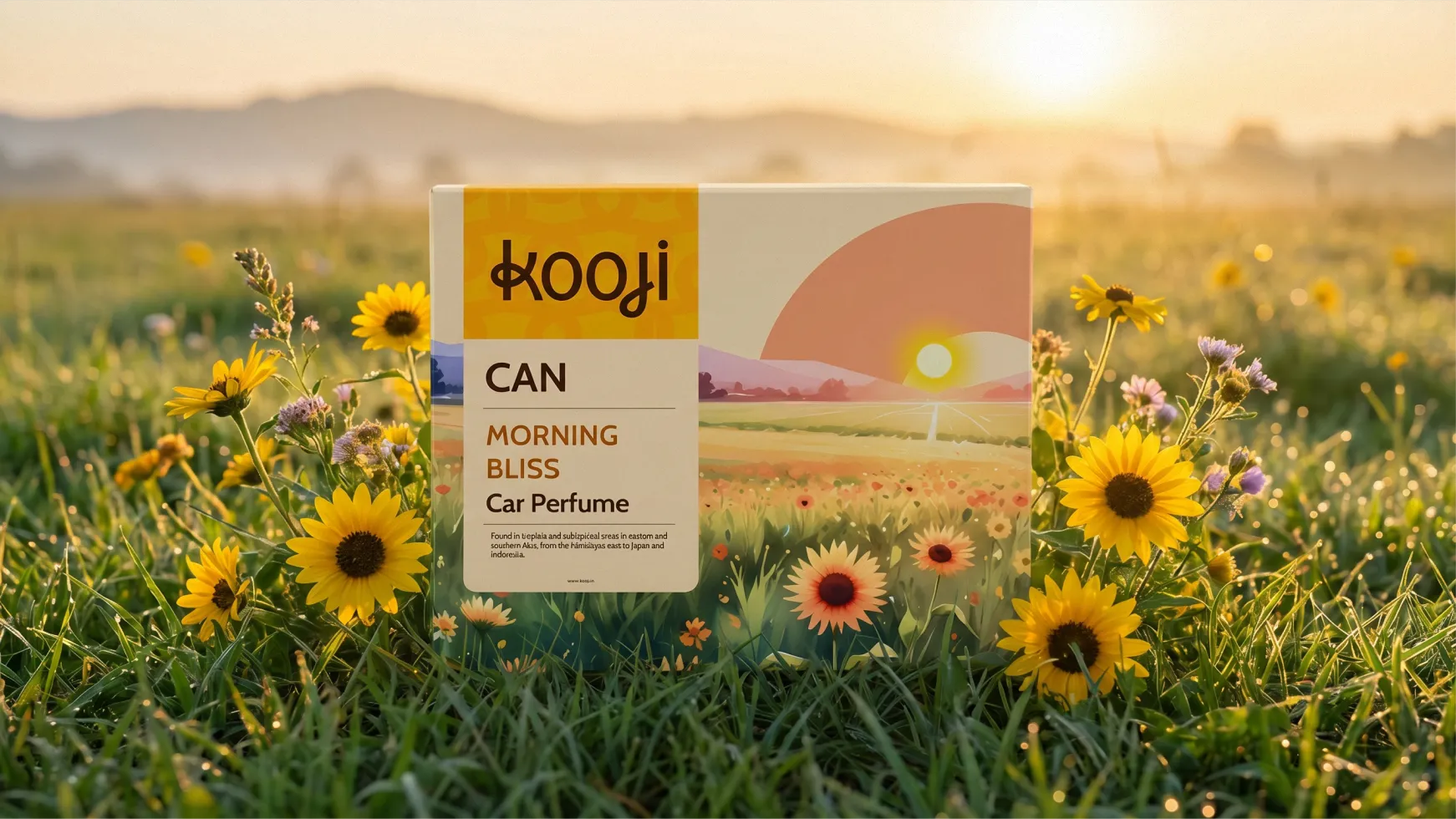
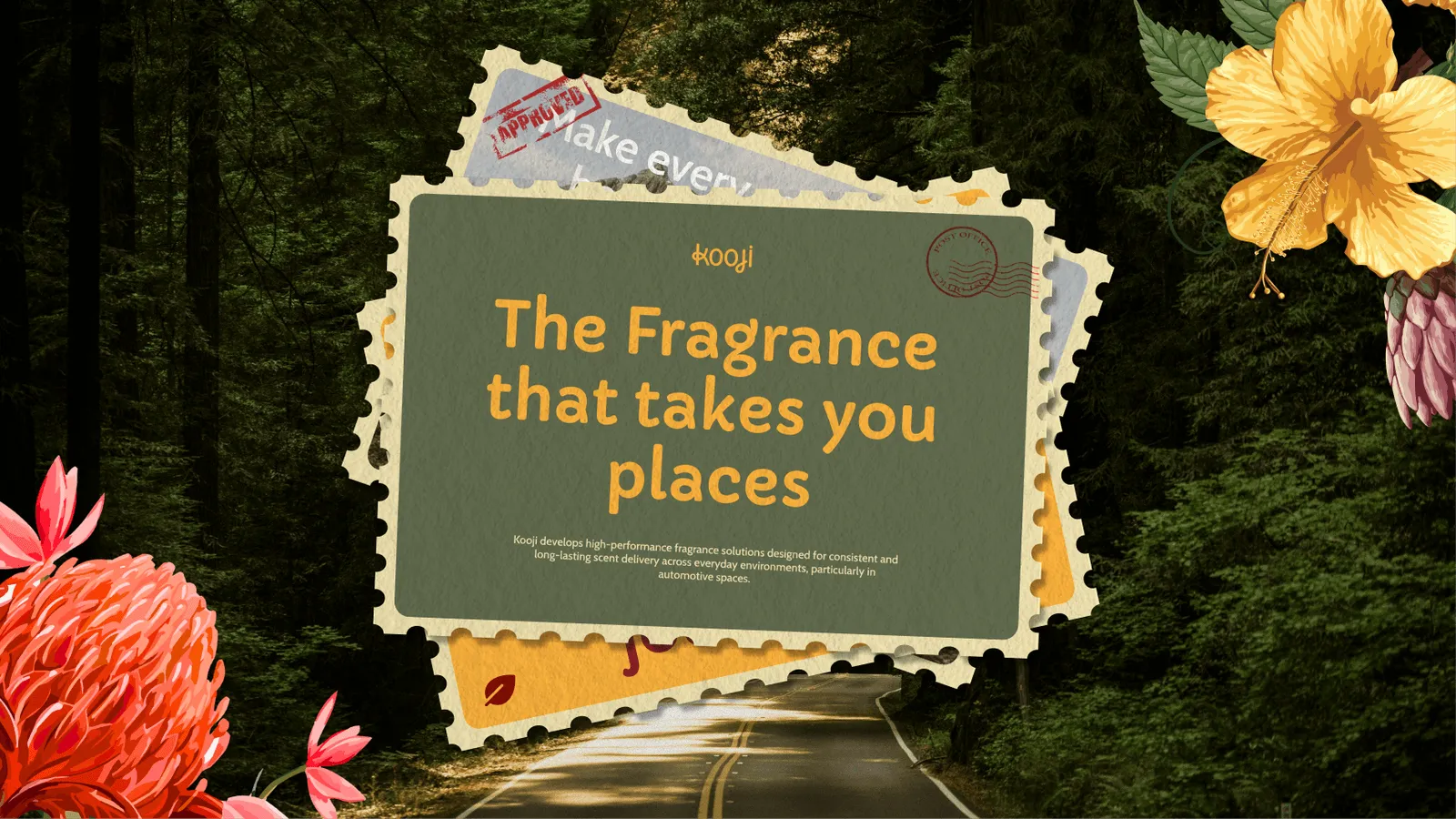
Confetti's work with Kooji, used scent-specific worlds such as Midnight Garden, Ocean Breeze and Old Musk to make each fragrance's character understandable before the bottle was opened.
▶️Use Origin as Part of the Story
Geography and heritage can give a fragrance brand a distinctive position, when claims are genuine.
For UAE and Gulf brands, the opportunity may lie in balancing heritage with modernity. The same principle applies when introducing regional fragrance traditions to customers in India, Europe or other markets.
▶️Turn the Story Into a Visual Identity
The visual system should express the fragrance's world rather than imitate familiar perfume clichés.
A scent inspired by coastal mornings might call for light materials and open compositions; a fragrance rooted in oud and incense might require a different palette, texture and visual language.
CHECK: Can you describe the world of your fragrance without listing its notes? If you cannot, the story needs more work. The notes explain the scent; the olfactive story gives customers a reason to remember it.
Most perfume brands launch with more than one scent, and the way those scents are named and grouped becomes part of the brand.
▶️Choose a range architecture
Different naming systems create different brand experiences:
Examples show how these systems work.
▶️Create a naming logic for the range
Every fragrance needs a reason to belong in the collection. The organising idea could be memories, cities, rituals or a particular olfactive family. It should be simple enough for customers to understand and flexible enough to support future launches.
For Kooji, we applied consistent structural logic across 24 SKUs and three product lines. Each scent has its own visual world, while the shared architecture keeps the collection recognisable as one brand.
Decide how many scents to launch with. Every additional fragrance increases the cost of bottles, labels, cartons, sampling and inventory. A focused launch range is easier to explain and helps customers choose. Expand when sales and customer feedback show where demand exists.
▶️Check that names can travel
A name must work beyond the first launch. Before approving it, check that it is:
Run trademark checks before committing to packaging design. For bilingual markets, also decide whether fragrance names will be transliterated or translated.
The key decision is how each scent relates to the house name. Get that architecture right early, and future launches can expand the range without weakening brand recognition.
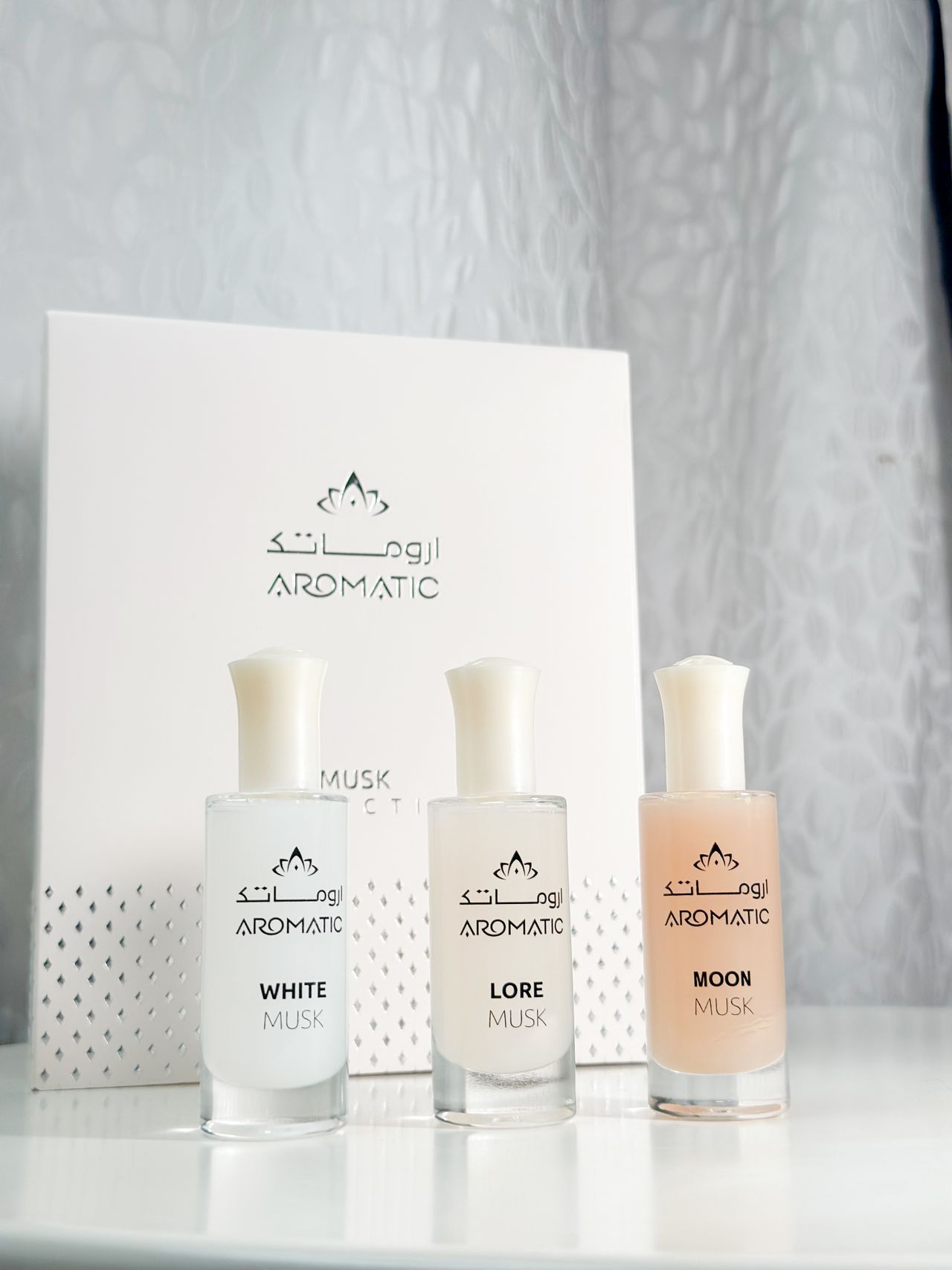
Customers cannot smell a perfume before buying, so the trial path helps them move from curiosity to a full-size purchase. It also determines which formats you need, how they are packaged and how customers discover the range.
▶️Choose the right trial formats & its packaging implication
Smaller formats have commercial potential. Circana data shows that, in the US, mini and travel-size fragrances grew 12% in units, while mini and discovery sets grew 41% between January and September 2025.
Start with a focused trial range rather than producing every format.
The trial path determines what the packaging must do. A discovery set needs a carton that presents multiple vials without looking cheap. A travel size needs a format that feels like the brand, not a sample.
A full bottle needs an unboxing moment that justifies the price. If the packaging is designed before the trial path is defined, one of those touchpoints will fail.
▶️Design for each sales channel
The trial experience should match how customers shop.
For e-commerce, use clear scent descriptions, consistent top, heart and base notes, and imagery that accurately represents the bottle and liquid.
A guided quiz can help customers narrow their options, while samples or discovery sets let them test their choices before committing.
For the Gulf market, consider both online convenience and in-store discovery. Ajmal Perfumes has reported that spray fragrances are increasingly purchased online, particularly for repeat purchases, while customers still prefer to buy agarwood chips and Dahn Al Oud oils in person.
Brands selling across these categories may need different trial experiences for each.
Travel retail also makes smaller formats worth planning early. Requirements vary by route and airport, so check the relevant rules before finalising formats.
▶️Measure whether trial leads to purchase
Track discovery-set sales, sample-to-full-size conversion, repeat purchases and the scents customers choose after sampling. Where possible, allow the discovery-set price to be redeemed against a full bottle.
Connect trial with purchase, not simply distribute more samples. Define that journey before finalising packaging so every format has a clear commercial role.
The bottle, cap and carton should work as a single brand system. Each has a distinct role, but their shape, materials, typography and finishes must feel connected across the range.
▶️Make the bottle recognisable
Some fragrance brands build recognition around a distinctive physical detail.
Penhaligon’s Portraits line uses animal-head caps, while Jo Malone London’s cream carton and black ribbon create a recognisable presentation beyond the bottle itself.
For a new brand, start by deciding which element will carry the strongest visual signature: the bottle silhouette, cap, label, colour or carton.
Trying to make every element elaborate can increase costs without making the product more memorable.
▶️Choose stock glass or a custom mould
Custom glass gives a brand greater control over its bottle shape, but tooling, minimum order quantities and lead times can tie up capital before demand is proven.
Stock glass with a distinctive cap, label or carton can be a more practical launch option. Once sales data identifies a successful fragrance, a custom bottle may become a worthwhile investment.
Whatever route you choose, assess the complete pack. Check that the bottle, sprayer, collar and cap fit together properly, that decorations survive handling, and that the carton protects the product during storage and shipping.
▶️Keep the system consistent across sizes
Your identity must work on everything from a 2 ml sample vial to a 100 ml bottle. Test the brand name, fragrance name and essential information at the smallest size first.
If the label becomes unreadable on a vial or travel spray, customers may struggle to distinguish scents in a discovery set.
The same design system should also extend to gift sets, outer shipping boxes and the online unboxing experience.
▶️Plan regulatory information before artwork approval
The carton’s back panel needs space for mandatory information, not just branding.
Requirements vary by market, so confirm the necessary ingredients, allergen disclosures, warnings, product details and languages before approving the artwork.
👉Remove the brand name from the bottle, the cap, and the carton. Would a customer still recognise them as belonging together? If not, the system is not unified. If yes, the system is working. That is the standard the brand must meet.
A perfume branding strategy must translate business goals into clear design and commercial decisions. Before briefing a branding studio, prepare the following.
What to include in the brief
Gather your scent briefs or finished formulas, target retail prices, intended price tier, launch markets, sales channels, number of fragrances and sizes, existing bottle decisions and target launch date.
Your strategy should define the olfactive story, naming system, range structure, trial formats, and how the bottle, cap and carton work together. Include market-specific labelling and compliance requirements, plus success measures.
For UAE launches, clarify who is responsible for import, product registration and regulatory approval before artwork is finalised.
What affects the budget?
The biggest cost drivers are custom glass versus stock bottles, the number of scents and sizes, discovery sets and minis, packaging materials, and the number of markets requiring separate label versions.
Custom tooling and multiple production formats can increase costs and lead times.
Set the scope before comparing proposals. A low initial quote may exclude sampling formats, production artwork, supplier coordination or additional label adaptations.
Questions to ask a branding partner
Ask whether the studio will help define brand positioning, naming and range architecture or expects these decisions to be made already.
Confirm its experience with glass, caps, carton finishes, print proofs and packaging suppliers. Establish who handles bilingual artwork, market-specific compliance checks and future product extensions.
A partner that presents bottle concepts before understanding your price tier, sales channels and trial strategy may be starting too late in the process.
Freelancer or branding studio?
A freelancer may suit a single fragrance using stock packaging, sold in one market with production and compliance handled internally.
A studio becomes more valuable when a brand has multiple scents and formats, custom packaging, international markets or retail and travel-retail ambitions.
Choose based on project complexity and coordination needs, not design fees alone. Branding can help customers understand and choose a scent, but it cannot compensate for a product that fails to deliver.
Perfume branding is a system problem before it is a design problem. Here is how we approach it.
✅We start with the price tier, not the bottle. The tier determines the material, the construction, the distribution, and the naming. We define it before we design anything.
✅We build the olfactive story as narrative architecture. Not a note pyramid. A world the customer can hold onto before they smell the product.
✅We design the range logic before the first scent. The architecture must accommodate the next five launches, not just the current one.
✅We define the trial path before the packaging. Discovery sets, minis, and full-size unboxing are designed as one conversion system, not three separate projects.
✅We treat bottle, cap, and carton as one object. The system test is whether the three components are recognisable as one brand when the name is removed.
✅We design for the channels the brand actually sells through. Masstige brands need display-worthy bottles that photograph well on TikTok Shop and Amazon. Niche brands need selective distribution packaging that protects perceived value.
✅We build compliance into the pack, not onto it. Arabic labelling, ingredient disclosure, and market-specific requirements are integrated into the design system, not retrofitted.
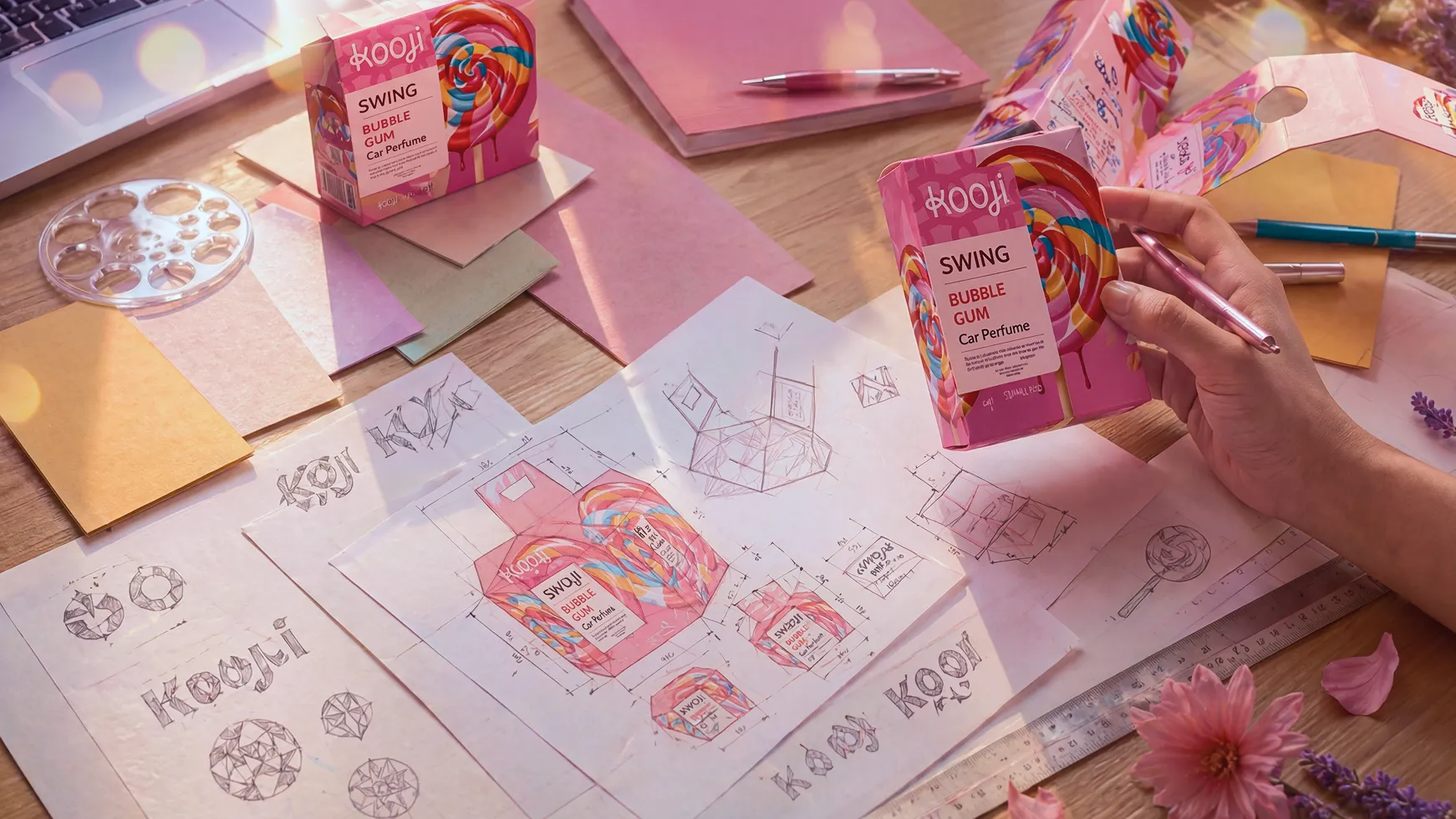
✅We have built perfume brands across tiers and markets. Kooji, a heritage house from Kannauj, needed a 24-SKU system that could compete on digital shelves. Different brand, same discipline: the system holds, and the scent is the variable.
✅We scope the project around the decisions, not the deliverables. The deliverables follow from the decisions. If the decisions are clear, the design has a brief. If they are not, no amount of design will fix it.
Planning a perfume brand? Get in touch with our tea, and we will help you make the five decisions before you commit to the bottle.
What is a perfume branding strategy?
perfume branding strategy defines who a fragrance brand is for, which price tier it competes in, what story its scents tell, how the range is named and organised, and how buyers get to smell it before committing. The visual identity, bottle and packaging then express those decisions. Without them, design choices default to category clichés such as gold foil and script fonts.
How do you brand a perfume?
Start with the tier and the buyer, then the olfactive story, then the range and naming system, then the trial path: testers, minis or discovery sets. Only then design the logo, bottle, cap and carton. Branding a perfume in the reverse order, starting with the bottle, often produces a pack that signals a price or audience the scent cannot support.
How can a small perfume brand compete with big fragrance houses?
By choosing a narrow position and a clear trial path. Large houses win on advertising and retail space. A smaller brand can win on a specific story, a tighter range, honest pricing and easy sampling through minis or discovery sets.
What makes a good perfume name?
A good perfume name is easy to say in your key markets, hints at the scent or the mood, and fits a naming system that works for future launches. Check pronunciation and meaning in every language you sell in, and run a trademark search before design starts. Naming systems such as ingredient plus number make range expansion easier.
Want strategic branding and packaging like this for your business?