%201.webp)
02
AI Snaps
.svg)
.svg)
01
Our Work
03
About Us
04
Brand Audit
05
Contact Us
06
Client Success
12
07
Blogs
08
Careers
Book A Call
.svg)



.svg)
Need Help In Building Your Brand?
Click the button below & book a call with our founder directly.

Rishabh Jain
Managing Director
The Swiggy Instamart onboarding process has 5 distinct stages, each with its own requirements, decision-makers, and failure points. The timeline ranges from 6 weeks for a prepared brand to 4 months for one that isn't.
This Confetti guide covers the entire onboarding process. We guide you through the B2B supply model, every stage from application to go-live, what actually causes delays, and what the first 60 days post-live demand from you.
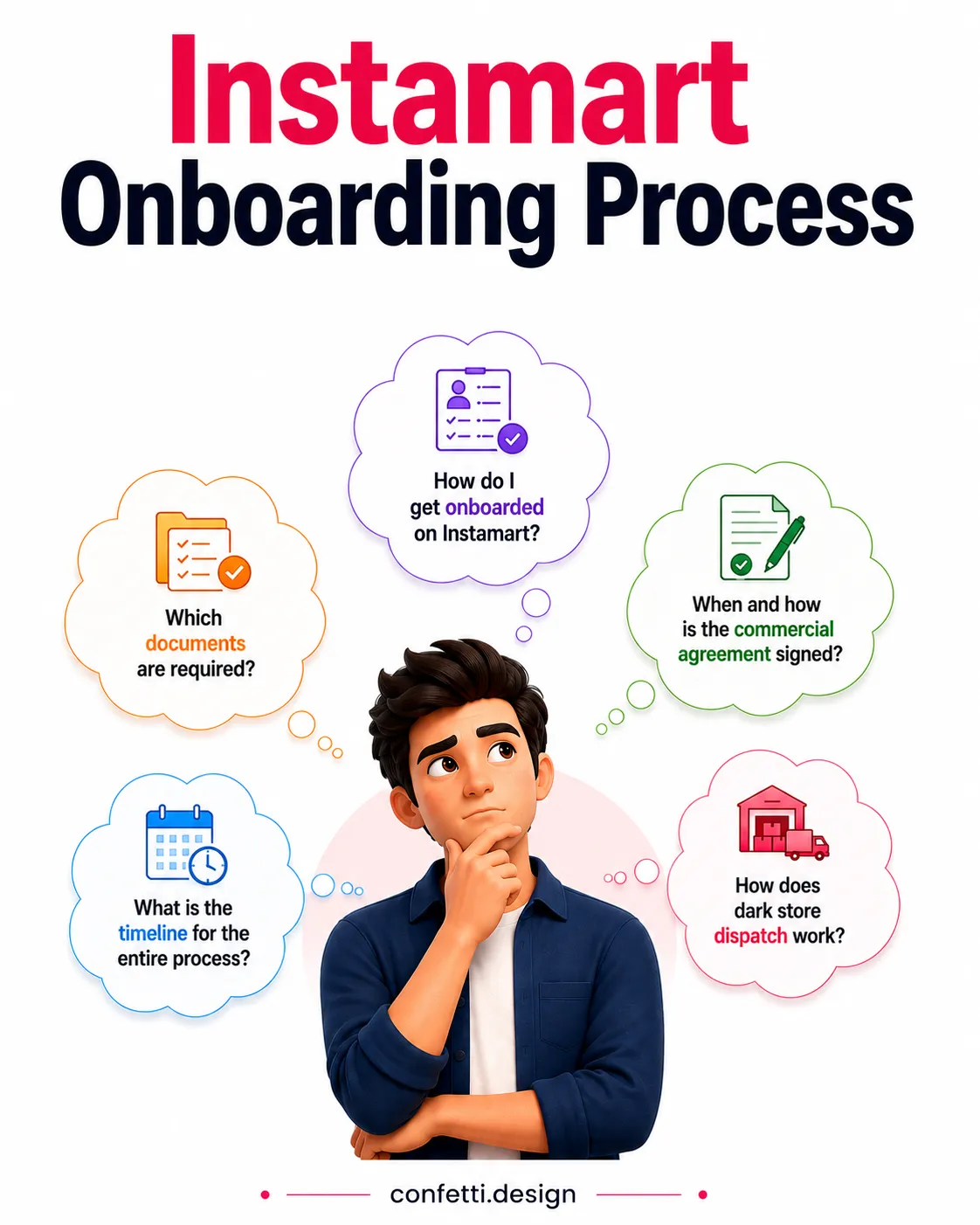
Most brands approach Instamart the way they'd approach Amazon, gather documents, list products, run ads, wait for sales. That framing will cost you time.
Instamart is a B2B supply channel and the entire onboarding process revolves on this.
When you onboard to Instamart, you are entering a wholesale supply arrangement with Swiggy. You supply inventory to their dark stores.
Swiggy then retails those products to end customers, at a price they control, through a fulfillment network they operate.
You are selling to Swiggy.
🟤Your commercial relationship is with a Category Manager
Unlike Amazon or Flipkart Quick, where your listing visibility is largely determined by ad spend and ranking signals, your Instamart onboarding lives or dies on a human decision.
A category management team evaluates your brand against category fit, supply chain reliability, and margin compatibility. Document compliance is the baseline.
🟤Your products physically live in Instamart's dark stores
Once listed, your inventory is warehoused by Swiggy. You dispatch bulk stock on a replenishment cycle; Swiggy's pickers, packers, and delivery fleet handle everything after that.
You cannot fulfill individual customer orders yourself. This means your packaging, labeling, and carton configuration need to meet dark store warehousing requirements before you go live.
🟤Expansion is performance-led
Instamart is not an open system where you can choose to list in 30 cities from day one.
New cities and additional SKUs come when your existing dark store coverage demonstrates the velocity and supply reliability the platform needs.
There are two ways to get on Instamart and understanding which applies to you changes your preparation strategy.
🟤Pathway 1: Direct vendor empanelment via partner portal
The standard path for new entrants. You apply through their official online portal, submit documents, and go through Swiggy's verification and category review process.
🟤Pathway 2: Inbound outreach through category management teams
More common for established FMCG brands with strong offline presence, existing retail distribution, and nationally recognised brand equity. Swiggy's category teams proactively reach out to brands they want on the platform.
If you receive this kind of outreach, the commercial discussion moves faster but the documentation and New Product Information (NPI) requirements are identical.

The full journey from application to first sale takes 6–8 weeks for a prepared brand.
For brands that arrive without documentation in order, catalogue assets ready, or unit economics modelled, that stretches to 3–4 months.
📅Total realistic timeline from application to first sale:
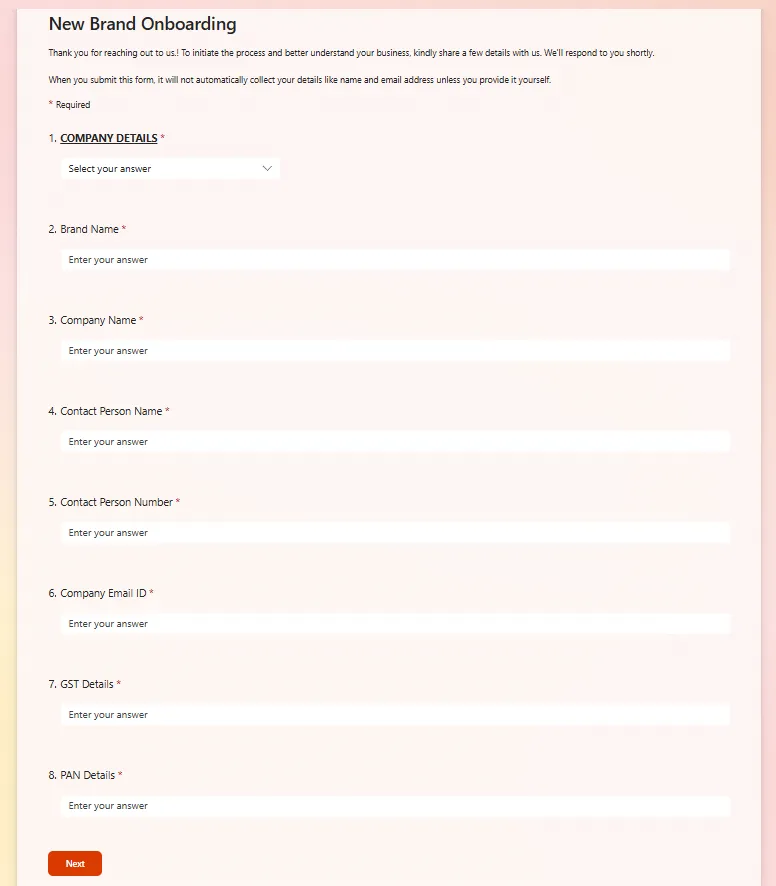
You submit your brand application through Swiggy's Instamart partner portal. The form asks for basic business details, product category and sub-category, an initial SKU overview, target cities, and some context on turnover or existing sales volume.
Swiggy's category team runs a pre-screen based on category fit and city-level demand.
Not every application proceeds to full onboarding, Instamart curates its vendor base to maintain category balance and supply reliability. That is a human editorial decision.
📋At this stage, the category team is evaluating five things:
🕑Realistic timing: 3–7 days from submission to initial response. Faster for brands in high-demand categories. Slower during peak application periods such as Diwali and New Year intake is slower to clear.
Once your application clears the initial screen, you're invited to upload complete business documentation through the partner portal.
Swiggy's compliance team reviews every document for accuracy, completeness, and consistency across the full set.
📋Documents required for all brands:
📋Additional requirements for food and beverage brands:
A valid FSSAI licence in the selling entity's name, correct licence category (State FSSAI for ₹1.5 crore–₹50 crore turnover; Central FSSAI for above ₹50 crore), with a minimum of 6–12 months validity remaining beyond the application date.
An expired FSSAI licence is the single most common compliance blocker for food brands at this stage.
📋Additional requirements for specific situations:
A trademark certificate or brand authorization letter is required if you're reselling another brand's products, or if your brand name is registered to a different entity than the selling entity.
APOB (Additional Place of Business) GST registration is required if you intend to supply dark stores across multiple states.
📋Avoid making these common mistakes:
Name inconsistency between documents is the most common trigger for manual review. "ABC Foods Private Limited" on your GST and "ABC Foods Pvt. Ltd." on your bank account, that abbreviation mismatch alone adds days.
Low-resolution document photographs (instead of clean PDF scans) cause automated system failures. Missing trademark documents for third-party brand resellers consistently create holds that could have been avoided.
Each correction round adds 5–7 working days. Brands with document issues can spend 3-4 weeks in this stage alone.
🕑Realistic timing: 7–15 working days from complete document submission, if everything is accurate at first upload.
Once document verification clears, Swiggy assigns a Category Manager to your account.
This person is your primary Instamart contact from this point forward. They determine your commercial terms, your initial dark store coverage, and your expansion pathway.
Commercial discussions cover commission rate by category, operational fees, city-specific launch plan, initial SKU range, and performance expectations.
📋The cost structure brands consistently underestimate:
There is no registration fee. But you must consider operational costs beyond commission.
Inwarding, storage, logistics, promotional spend, and write-offs can collectively add another 15–20% of selling price to your cost model.
🕑Realistic timing: 5–10 working days from category manager assignment to signed agreement, for a brand that's done the preparation.
📌Instamart's seller dashboard calculates ROAS using MRP, not the actual transaction price after platform discounts.
If your MRP is ₹500 but the real transaction value after discounts is ₹340, your dashboard ROAS is approximately 47% higher than your actual return.
Always recalculate ROAS manually using net transaction value before deciding to scale spend.
NPI is Instamart's formal product approval process, the stage where every SKU you intend to list is individually reviewed and approved by the catalogue team before it can go live.
Every SKU is reviewed individually.
The NPI upload requires:
📋Product title structure
Format: Brand Name | Product Name | Key Variant or Claim | Pack Size/Weight.
Example: "Brand X Almond Butter | Crunchy | No Added Sugar | 200g."
Titles that use marketing language instead of search-parsed format lose organic visibility from the moment they go live.
📋Product images: minimum 3 per SKU
📋Compliance documentation per SKU
📋Shelf life declaration
A minimum of 60% of shelf life must remain at the point of dark store inwarding. A product with a 180-day shelf life needs at least 108 days remaining when it arrives at the dark store.
🟣Avoid making these common mistakes for NPI :
Wrong HSN codes cause catalogue rejection and require full resubmission. Low-resolution images or products that aren't clearly centred against a white background fail automated quality checks.
MRP discrepancies between packaging and catalogue upload trigger compliance flags. FSSAI numbers that aren't visible on the physical product fail the catalogue team's cross-verification against uploaded documentation.
Non-GS1 barcodes cannot be processed by dark store scanning systems.
🟣The packaging design factor most brands discover too late:
NPI is where decisions made at the packaging design stage become commercial consequences.
A product image built for a retail shelf: detailed, text-heavy, designed for close inspection, often fails both the technical resolution requirements and the performance test at mobile thumbnail scale.
A product image designed for Q-commerce earns faster NPI approval and better click-through from day one. These are not the same image.
🕑Realistic timing: 7–15 working days for a complete and accurate catalogue submitted at first pass. Each correction round adds 5–7 working days.
After NPI approval, Swiggy generates Purchase Orders for your approved SKUs. Your products are technically cleared and ready to stock.
Go-live depends entirely on this first inward, nothing activates before inventory is physically shelved.
Swiggy assigns dark stores based on your target cities and category demand. Swiggy assigns them based on where your category is under-stocked or where demand has been identified.
📋The inwarding process:
Dispatch inventory from your warehouse to the assigned dark stores or regional inward facility. Start with 2–4 weeks of projected demand per dark store.
Instamart's dark store team inspects every incoming shipment, checking for packaging damage, expiry compliance (minimum 60% shelf life remaining), barcode readability in shelf-stacked orientation, and label accuracy. Stock that fails inspection is returned at the brand's cost.
Once inventory passes the quality check and is shelved, your products appear in the Instamart app within 24–48 hours. That is go-live.
🕑Realistic timing: 7–15 working days from PO generation to first go-live, assuming clean inwarding.

Talk to Confetti experts about building high-converting Instamart assets
Book A Call
Most delays are caused by brands arriving underprepared at stages they didn't fully understand. Here is where timelines actually slip, and what to do before each one.
Document Name Inconsistency
Your GST certificate, PAN card, bank account, and business registration must carry the exact same legal entity name across every document.
👁️Open all four documents side by side. Compare legal names character by character. If there are any differences, correct the outlier document before submitting.
FSSAI Licence Issues
The licence is the wrong type for your actual production or distribution scale, Basic FSSAI Registration when your turnover qualifies for State or Central Licence or the licence is technically valid but has fewer than six months of remaining validity, Instamart's compliance team expects at least 6–12 months remaining beyond the application date.
Any of these sends your application into a hold that has nothing to do with Swiggy's internal process speed.
👁️Check your FSSAI licence expiry date, licence category, and remaining validity before you touch the partner portal. If any of these need correction, address them first.
Catalogue Submitted Without Proper Preparation
Brands that go through three rounds of NPI corrections add three weeks to their timeline. Three weeks that were entirely avoidable with 2–3 days of proper catalogue preparation before the first upload.
👁️Before you touch the partner portal, audit every SKU's physical packaging against Instamart's NPI requirements.
Capture new product photography specifically for Q-commerce, white background, minimum 1000x1000px, centred, no text overlay. Verify MRP consistency across every unit. Confirm GS1 registration for every barcode.
At Confetti, we help brands in Q-commerce preparation and onboarding.
Brands that commit to supplying dark stores across 8–10 cities spread inventory thin, generate low velocity per dark store, and can't maintain consistent replenishment.
👁️Launch in one or two cities where you already have brand awareness or where your category has documented demand.
Concentrate inventory to build local velocity. Performance-led expansion to additional cities follows from that foundation.
Roughly 80% of Instamart conversions come from products in the first two rows of search results.
A new brand with no sales history and no promotional investment starts in the lowest organic positions, invisible to most users browsing the category.
Without sponsored placement in the first 30 days, new listings generate minimal impressions. Minimal impressions produce minimal orders. Minimal orders produce no algorithmic velocity.
👁️Budget 5–15% of projected monthly revenue in promotional investment from day one. It is the cost of visibility before organic ranking has time to develop.
The first 60 days on Instamart determine whether your brand builds organic momentum or flatlines.
The ranking algorithm, your advertising approach, inventory discipline, and early review volume all interact during this window in ways that compound.
Our team at Confetti, helps brands in optimisation, launch, and performance of Q-commerce.
Instamart's organic ranking is real-time and hyperlocal. The algorithm weights five signals:
A new brand has none of these signals at go-live.
Use paid placement to generate enough orders that the algorithm has data to respond to. The goal is to build sufficient velocity in weeks 1–4 so that organic impressions start developing in weeks 5–8.
Once organic visibility begins, you can start pulling back paid spend selectively.
Instamart's self-serve ads portal offers four formats.
🔶Sponsored product listings (Item Boost / Search Ads)
This is the highest-performing format for new brands because it places your product directly in front of purchase intent. CPC model, ₹3–12 per click depending on category competition. For most new brands, this should absorb the majority of initial ad spend.
🔶Banner ads
Better suited for brand awareness and major launches than direct conversion. Cost per acquisition is higher for new brands without existing recognition.
🔶Browse Boost
Surfaces your product within relevant category pages, reorder suggestions, and last-minute cart recommendations. Effective for repeat-purchase categories and impulse-buy SKUs once you have some initial order history to work with.
🔶Inline Search Banner (SILB)
A graphic-format banner appearing mid-scroll within search results for specific keywords. Larger visual format than standard listings, with stronger brand presence.
📌One advertising surface that most brands haven't fully explored: Swiggy's cross-platform ad integration enables unified campaigns across food delivery and grocery.
A user who orders dinner at 8 pm can see your protein bar ad in the same session. For snack, beverage, and health brands, it is structurally specific to Swiggy's integrated ecosystem.
Every stockout removes your product from search results in the affected dark store zone.
🔷Practical standards for the first 60 days:
Stockouts during your first 60 days are particularly damaging because they interrupt velocity at the exact window when the algorithm is building its demand model for your SKU.
Review volume and average rating build slowly, but they are among the most durable ranking and conversion signals on the platform.
A product with 100 reviews at 4.2 stars converts better than one with 10 reviews at 4.7 stars, because volume creates purchase confidence in a 3-second mobile decision window. Customers don't scrutinise; they scan.
To seed initial reviews, run a launch promotion, a 10–15% introductory discount combined with sponsored search placement in weeks 1 and 2. Of the first 50–100 orders, a percentage will generate reviews organically.
Respond to every review during the first 90 days, positive and negative. Platform responsiveness is a signal in some placement algorithms, and visible responses to negative reviews reduce the conversion damage they cause.
🚫Do not attempt to directly incentivise reviews. Instamart's terms prohibit it and the platform acts on violations.

Confetti is a branding and packaging design studio that works with D2C and FMCG brands across India.
Quick commerce onboarding and optimisation across Instamart, Zepto, and Blinkit is also where we help our clients. Here’s how we support you through each stage:
🎯Onboarding and Channel Setup
Getting listed on Instamart involves
We at Confetti build the brand brief and pitch materials that category managers actually want to see. We help structure pin code strategy so early dark store coverage is in the right geographies.
We also plan ad spend and keyword strategy ahead of go-live so visibility doesn't have to be retrofitted after the fact.
We have worked with the brands in various categories to boost their revenue growth ROAS.
📌For example, our team helped to achieve 10x revenue of a brand in the gifting niche during a peak season with the right strategy.
For a health and sexual wellness brand, we helped to scale revenue from 4.7L to 17.7L on Q-commerce.
🎯Packaging built for Q-commerce
The NPI stage is where retail packaging decisions either hold up or don't.
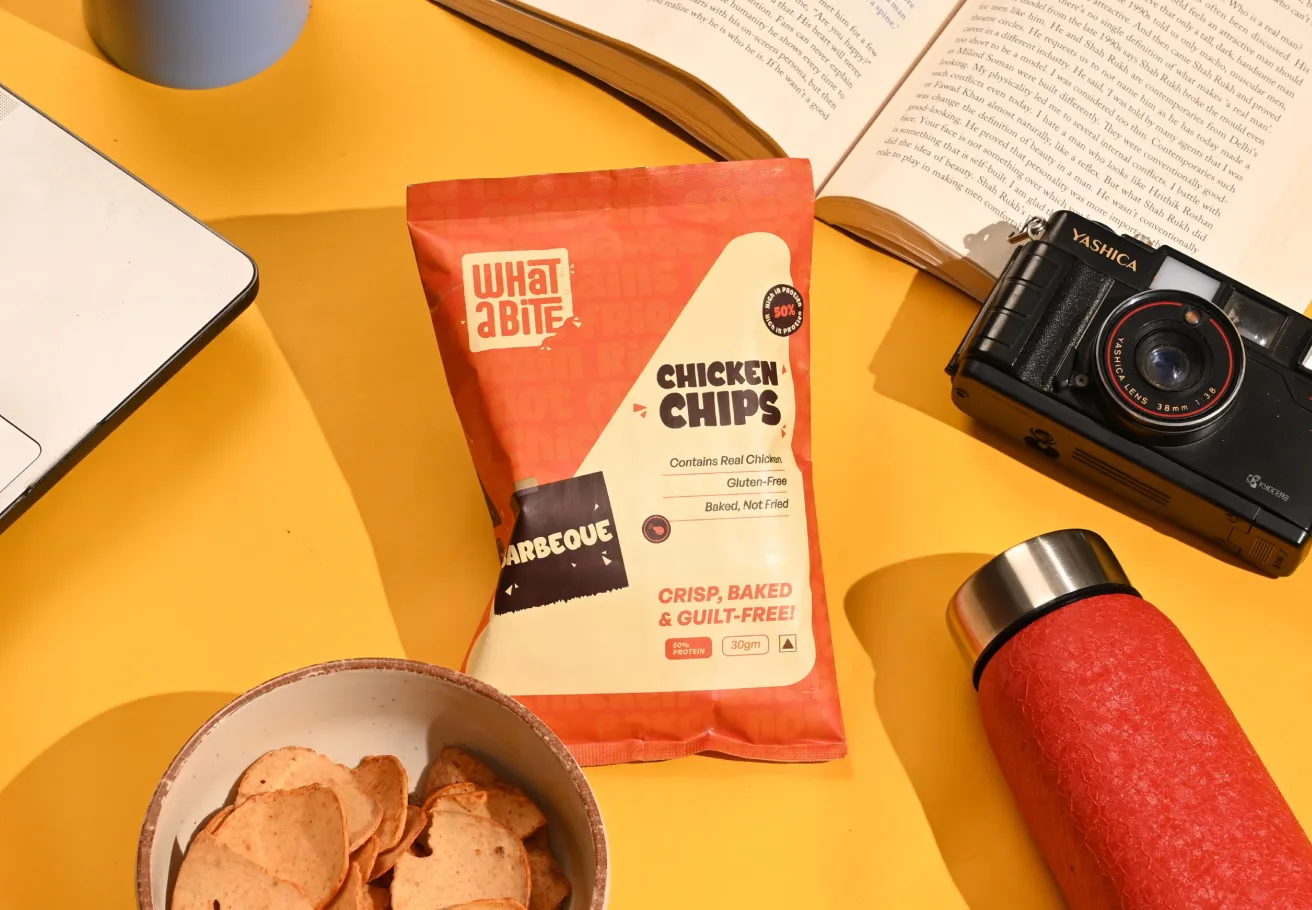
Product images that were designed for shelf display frequently fail Instamart's automated quality checks and those that pass technically still underperform at the 200×200px thumbnail scale where purchase decisions happen.
Confetti designs packaging for quick commerce environments.
We test in real platform mock screens, placed against actual competing SKUs in live category grids, evaluated for brand readability and click signal before final artwork is locked.
That process is designed to prevent the NPI correction cycles that add weeks to timelines.
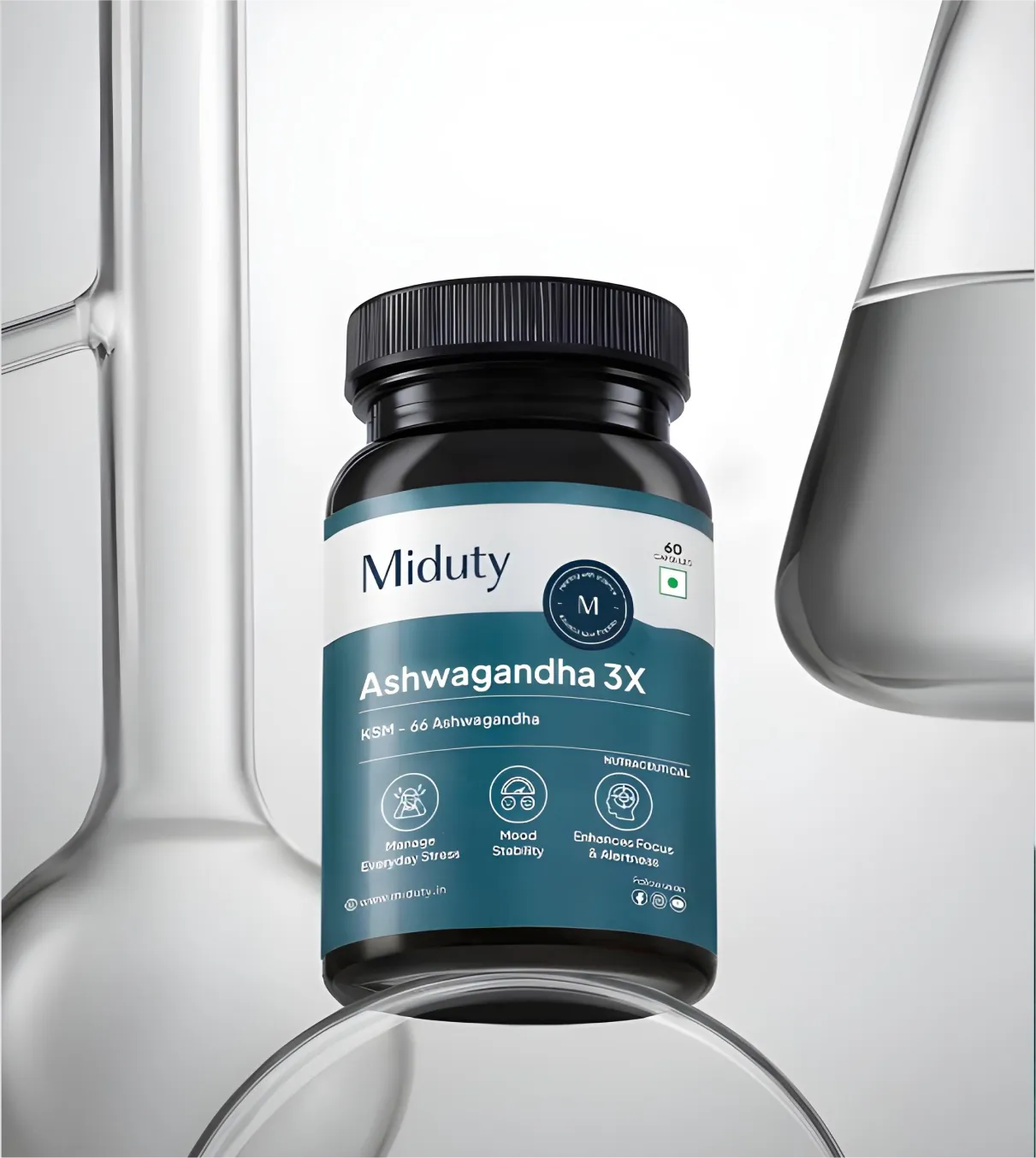
📌When Miduty approached Confetti, we covered the full brand system: brand strategy, visual identity, verbal identity, and packaging design by considering quick commerce success.
Now Miduty is listed on Instamart, Blinkit and Zepto: competing against established names with more brand recognition and review volume.
How long does Swiggy Instamart onboarding take for new brands?
Instamart's official partner documentation states the process takes 7–15 days. In reality, brands managing the process independently should expect 6–8 weeks from application to first sale if all documents are correctly prepared.
Brands with document issues, FSSAI complications, or poorly prepared catalogues usually experience 2–4 months. The timeline shortens when preparation happens before the application is submitted.
What documents are required for Swiggy Instamart onboarding?
Core documents: GST Registration Certificate, PAN Card, cancelled cheque or bank account details, business registration proof, and authorised signatory documentation. Food and beverage brands additionally require a valid FSSAI licence (minimum 6–12 months remaining validity).
Brands reselling third-party products need a brand authorisation letter. Multi-city brands need APOB GST registrations for each state. All documents must show the identical legal entity name.
Is there an onboarding fee for Swiggy Instamart?
No. There is no upfront registration or onboarding fee. Instamart earns through commission on each sale (15%–25% depending on category), plus 18% GST on that commission, inwarding charges (₹2–4 per unit), storage fees (₹0.50–₹2 per unit/day), and operational fees.
Brands should additionally budget for inbound logistics to dark stores and promotional investment (5–15% of projected monthly revenue) in the first 60–90 days.
What is the NPI process in Instamart onboarding?
NPI (New Product Introduction) is Instamart's formal product approval process, the stage where every SKU is reviewed and approved by the catalogue team before going live.
It requires uploading product titles (following a specific format structure), a minimum of 3 product images per SKU (front, back, and lifestyle/picker view), GS1-registered barcodes, correct HSN codes, MRP matching the physical packaging, and FSSAI number visible on the product.
NPI approval is required for every SKU individually before inventory can be dispatched to dark stores.
How many SKUs should a new brand list on Instamart initially?
5–10 SKUs is the recommended starting range. Agencies managing Instamart onboarding across multiple brands consistently report that launching with a focused range of best-selling, high-demand SKUs builds stronger velocity and algorithmic ranking than spreading inventory and promotional budget across a large catalogue.
Expand SKU range after your initial products have established sales history and positive reviews.
What is the commission structure on Swiggy Instamart?
Commission ranges from 15%–25% of the selling price, varying by category and the terms negotiated with your Category Manager. GST at 18% is applied on top of the commission. Grocery staples and daily essentials range at the lower end. Packaged foods, personal care, and premium products trend toward the higher end.
The rate is fixed in the commercial agreement: model your unit economics at multiple commission rates before the negotiation meeting.
What causes delays in Swiggy Instamart onboarding?
The most common delay causes in order of frequency: document name inconsistency across GST, PAN, and bank account details; expired or incorrectly categorised FSSAI licence; poorly prepared catalogue assets requiring multiple NPI correction rounds; no promotional budget resulting in invisible listings post-go-live; and over-ambitious multi-city launch plans that spread inventory too thin to build velocity.
Want strategic branding and packaging like this for your business?





.webp)
.webp)

.webp)
.webp)
.webp)
.webp)
.webp)







.svg)
.webp)