%201.webp)
02
AI Snaps
.svg)
.svg)
01
Our Work
03
About Us
04
Brand Audit
05
Contact Us
06
Client Success
12
07
Blogs
08
Careers
Book A Call
.svg)



.svg)
Need Help In Building Your Brand?
Click the button below & book a call with our founder directly.

Rishabh Jain
Managing Director
Before launch, Blinkit runs 6–7 checks covering legal compliance, product eligibility, documentation, packaging, serviceability, barcodes, and operational readiness.
Each step ensures the product you have listed meets platform requirements.
If you're an FMCG founder, brand manager, or product marketing lead at a new or first-time brand looking to start selling on Blinkit, this guide is for you.
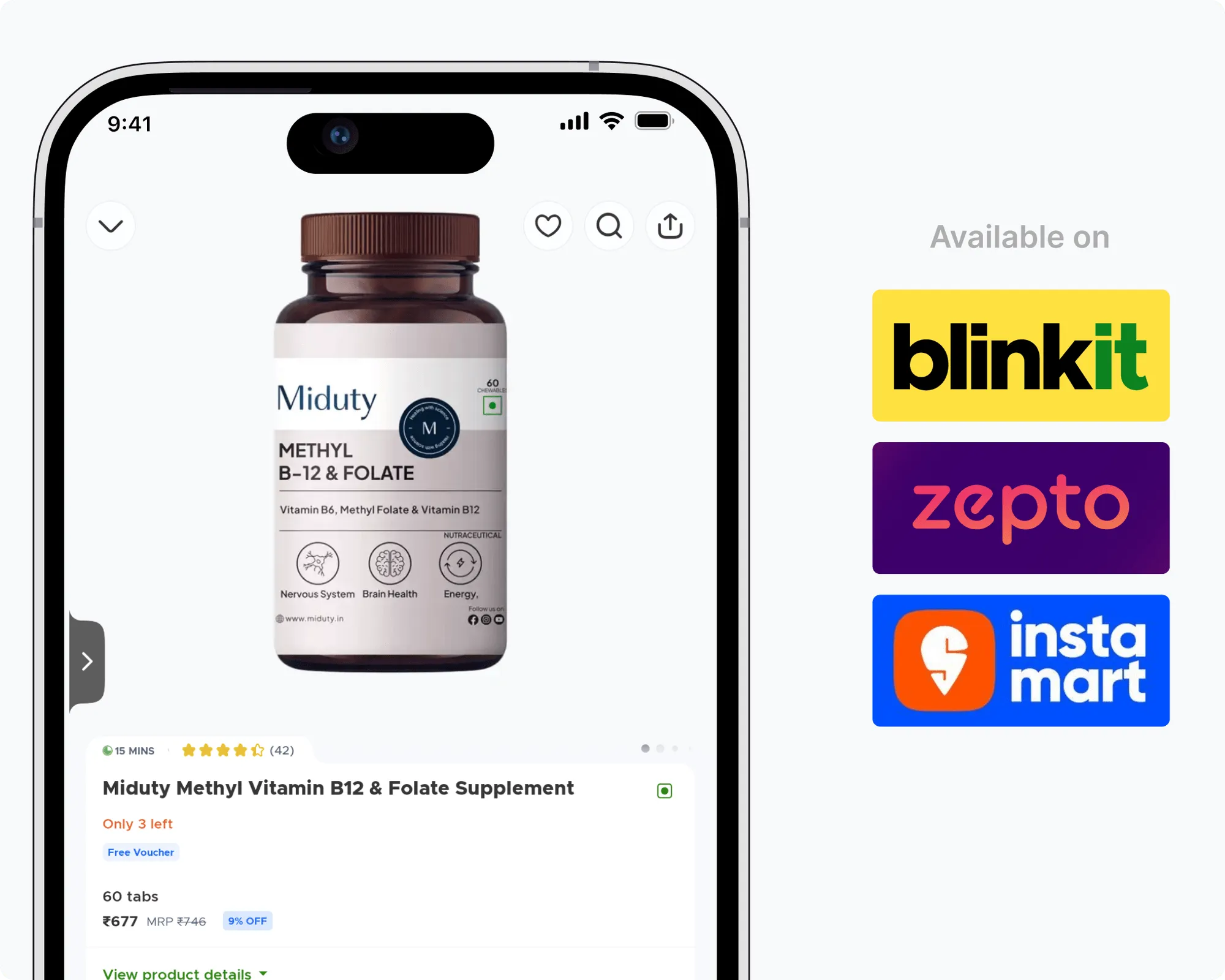
Blinkit uses a two-stage review:
A dedicated Category Manager (CM) is assigned after your account is approved and plays a separate gating role before any product goes live.
Both stages run independent checks, one is about who you are as a business, the other is about what you're selling and whether it's ready for quick commerce.
So, Blinkit mainly checks-
✅Business registration and legal identity
✅GST and tax compliance
✅Category-specific licenses (FSSAI, Drug License)
✅Brand ownership proof (trademark)
✅Packaging compliance and labelling
✅Barcode/UPC standards
✅Product shelf life and operational readiness
Blinkit's approval process starts with one fundamental question: is your business real, registered, and recognizable under Indian law?
The platform runs every single application through the Ministry of Corporate Affairs (MCA) database. If your business doesn't exist there in the exact form you claim, your application stops immediately.
Here's where first-time applicants stumble most often. Blinkit is not a marketplace where an individual can list products with a personal PAN card and a prayer. You need a registered business entity.
Blinkit accepts a range of business structures: Proprietorship, Partnership, LLP, Private Limited, importers, and authorised distributors.
Each comes with its own document requirements. Each structure also carries different approval weight with their onboarding team.
Proprietorship is accepted but Blinkit's onboarding team prefers incorporated structures. If you apply as a proprietorship, expect more scrutiny and maybelonger verification times.
Private Limited is the gold standard for Blinkit. Your CIN gets cross-checked directly against MCA records. Any discrepancy in your registered address, director names, or business activity code can trigger rejection.
Authorised signatories must be listed as directors on the MCA portal (not just on internal company documents).
Partnerships need a registered Partnership Deed. Unregistered partnerships aren't accepted. All partners listed in the deed must provide individual KYC, and the bank account linked to the partnership must match exactly.
Importers and authorised distributors face the highest documentation bar.
You need your standard business registration plus a brand authorisation letter from the parent company on their official letterhead, complete with their GST details and a clear statement of permitted territories and product categories.
LLPs (Limited Liability Partnerships) are treated similarly to Private Limited companies for verification but require their specific incorporation certificate from MCA.
⚠️ Name/address mismatch across documents, and submission of personal documents instead of official business entity documents. This leads to rejection of your application.
An active GSTIN is mandatory.
Blinkit is a GST-compliant marketplace that generates e-invoices on your behalf, so your GSTIN must be active and correctly mapped to the states where you want to sell.
Blinkit also checks IRN (Invoice Reference Number) credentials for e-invoicing compliance.
The GST state must align with your APOB (Additional Place of Business) zones where you want to sell.
Blinkit requires e-invoices with a valid IRN for every single transaction:
If your annual turnover exceeds ₹5 crore, you must generate an IRN for every business-to-business invoice you raise.
The government's Invoice Registration Portal (IRP) assigns this unique hash to your invoice after validating the details.
An invoice without an IRN is not considered a legal GST invoice where e-invoicing applies.
Even if your turnover falls below ₹5 crore, Blinkit may still require IRN submission to maintain uniform compliance across their entire vendor base.
The platform's systems are built to expect IRN for all invoices. Do not assume the lower threshold exempts you. Check with your Blinkit category manager.
In GST, your Principal Place of Business (PPOB) is your headquarters or main office where you handle core management.
An Additional Place of Business (APOB) is any other location where you carry out taxable activities (storage, sales, administration, etc.).
Blinkit operates through dark stores across multiple cities. To supply inventory to those locations, you need to register each state-specific warehouse as an APOB under your GST.
The cost structure differs based on whether your warehouse is in the same state as your principal business or a different state.
The quantity required per warehouse will be visible in your Blinkit brand dashboard after approval.
For example, if your main business is in Bengaluru and you have registered GST by providing your main office address. But now you want to sell your products in Bengaluru, Mysuru and Tumakur cities through Blinkit. So, you should apply for APOB for Mysuru and Tumakur.
Note: In mid-2025, Blinkit announced a simplified model where some sellers could operate with a single GST registration without needing multiple APOBs or additional FSSAI licenses for different Blinkit locations. However, this is not universally applied.
Confirm your specific arrangement with Blinkit before assuming you are exempt.
REMEMBER:
📝APOB approval takes 7–14 days via the GST portal
📝GST state registration must align with each APOB zone you supply to
📝Selling in multiple cities requires separate GSTIN or APOB per state, linked to the same PAN
⚠️ APOB delays are one of the most common bottlenecks after initial brand approval.
Blinkit checks your GST return filing history before approving your application. A business with pending returns or mismatched filings will face delays.
Blinkit's onboarding team can request your GSTR-1 and GSTR-3B filing history for the past six months.
Consistent late filings or mismatched figures between returns raise red flags. They are verifying that you run a compliant operation, not just a registered one.
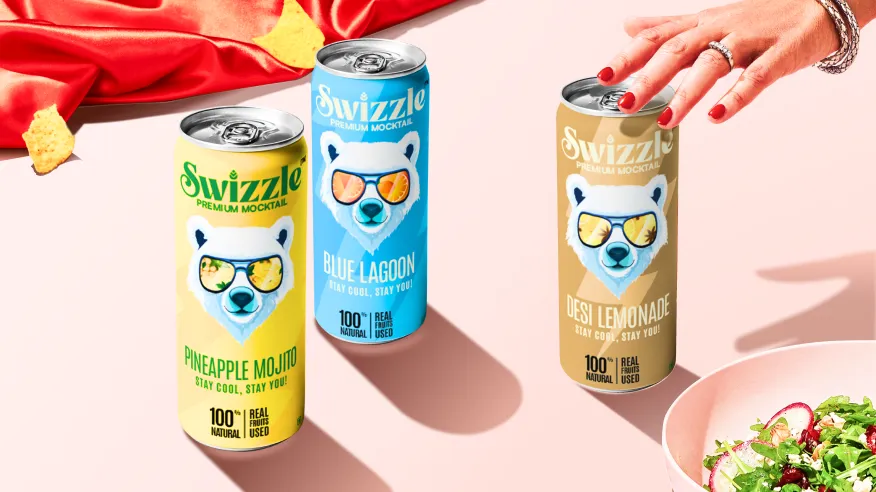
For food items, cosmetics, personal care products, and imported brands, you must submit all category-specific regulatory documents applicable to each product type.
FSSAI (Food Safety and Standards Authority of India) is the statutory body governing food safety and regulation in India.
FSSAI license is mandatory for any business involved in the manufacturing, processing, packaging, storage, distribution, or sale of food products.
📌Applies to packaged food, snacks, beverages, dairy, supplements, health drinks, cooking oils
Once you have the license, you must display it correctly. Blinkit checks that the 14-digit license number and the FSSAI logo are prominently displayed on the label.
If you are importing food, you need specific FSSAI import approval, and the country of origin must be clearly visible on the packaging
Drug and Cosmetics License (issued under the Drugs and Cosmetics Act) regulates the import, manufacture, distribution, and sale of drugs, cosmetics, and medical devices in India.
Any brand selling these products through any channel including quick commerce platforms like Blinkit must hold the appropriate license.
For Blinkit, all cosmetic‑category sellers must show valid COS‑8/COS‑9 or CDSCO cosmetic‑import registration matching the brand and product list.
Incomplete or mismatched registrations will block approval or lead to listing deactivation.
For Indian manufacturers, obtaining a Form COS-8 license has a government fee of approximately ₹10,000, which usually covers ten items per category.
For cosmetics importers, getting that central CDSCO approval is a prerequisite; you cannot legally stock or import without it. Blinkit expects to see this certificate early in the catalog review.
Listing an international brand is the most document-heavy path. You are viewed as a high-risk vendor until you prove operational maturity.
Without proper documentation including customs clearance, food/safety approvals, and importer registration, goods cannot legally enter Indian territory or be listed on platforms like Blinkit.
A registered trademark is not mandatory at the point of Blinkit application but it is strongly recommended.
A registered trademark on quick commerce platforms helps:
Blinkit checks Brand Authorization Letters if you are a reseller or distributor (not the brand owner).
A Brand Authorization Letter proves you have the original brand owner's permission to list and sell their products on Blinkit specifically.
Missing or incorrectly formatting this letter is one of the most common causes for application rejection.
Blinkit's Requirements for a Valid Authorization Letter
For Blinkit to accept it, the letter must include:
A brand owner (with their own factory and brand name) submitting a generic purchase order as proof of ownership will likely see their application rejected for lack of formal IP documentation.
Blinkit operates via dark stores where pickers scan products at high speed and customers see only a small thumbnail image in the app.
Packaging that fails visual clarity, barcode legibility, or statutory disclosure gets the SKU rejected at catalog review before it ever reaches a shelf.
Legal Metrology Requirements are governed by the Legal Metrology Act, 2009 and the Legal Metrology (Packaged Commodities) Rules, 2011.
These rules apply to all packaged goods sold in India
📝MRP must be clearly printed (no stickers over stickers)
📝Unit Sale Price (USP) display is mandatory from 2026 onwards
📝Manufacturing date, best-before/expiry date must be legible
📝Net weight or volume in metric units
📝Manufacturer name, address, and customer care contact
📝Country of origin should be mentioned
📝FSSAI logo and license number (food items)
"Digital-Ready" Packaging means packaging optimized for quick commerce speed. Easy to photograph, instantly recognizable on a small phone screen, and durable enough to survive bike delivery.
Unlike retail shelf appeal, it prioritizes rapid picker recognition and transit toughness. In quick commerce visibility becomes branding.
📝Product must be photographable against a clean background (white preferred)
📝Brand name and key descriptor must be readable at thumbnail size (approx. 200x200px)
📝Packaging must withstand transit on a bike poorly sealed or fragile packs get returned
📝If your packaging fails Blinkit's picker-facing view check, the SKU does not go live
The barcode is the final meeting point between your brand and their logistics system.
It is the only piece of data their warehouse staff rely on to confirm identity, track inventory, and move your product out the door, and they refuse to do it manually.
Your packaging could be beautiful, your product could be perfect, but if that barcode fails, nothing matters.
Blinkit uses GS1-standard barcodes across its warehouse scanning system.
GS1 barcodes are recognized globally and are a prerequisite for selling not just on Blinkit, but in any modern retail or e-commerce environment.
Self-generated barcodes, duplicate UPCs, or missing barcodes trigger automatic SKU rejection; there is no manual override for this check.
Blinkit's warehouse scanning systems are automated. Here is exactly what the system validates:
Your product should be eligible to sell on Blinkit along with shelf life requirements.
Blinkit restricts certain categories outright:
📝Blinkit restricts certain categories: alcohol, tobacco, unlicensed supplements, products banned by FSSAI or BIS
📝Product must fall within Blinkit's active category list (7,000+ categories)
📝Geographic pin-code coverage: if your target city isn't served by a Blinkit dark store, the application stalls
For brands, this means you cannot assume a category is open just because you see similar products listed.
Blinkit's catalog team flags SKUs that violate government-prescribed specifications. If your product falls into a restricted or highly regulated category, you need explicit confirmation from your category manager before you invest in packaging.
You want to sell in a specific city. Blinkit needs a dark store already operating in that pin code.
Before you apply, open the Blinkit app and check whether your target pin codes show delivery availability.
If the app says "not serviceable" for a particular area, your application for that zone will stall. Blinkit's approval team won't onboard you for locations where they cannot fulfill the delivery promise.
📝Blinkit requires a minimum of 90–120 days of remaining shelf life at the time of inward
📝Near-expiry products are rejected at the warehouse brands face RTV (Return to Vendor) penalties
📝High-velocity categories (snacks, beverages) have stricter checks due to fast inventory turnover
Unlike Amazon or Flipkart, you cannot self-list on Blinkit.
A Category Manager (CM) must approve your catalog and their review covers far more than documentation.
This is the final human gate standing between your application and a live product listing.
📝Trading margins and your pricing vs. competitor benchmarks in the category
The CM calculates your reverse break-even before you do. They compare your MRP and expected selling price against established brands and direct competitors in the same aisle.
The CM asks the blunt question: after all costs, does your unit economics leave enough room for a viable, long-term presence?
📝NPI (New Product Introduction) data and SKU viability for specific cities
The CM uses internal NPI data to assess whether your particular SKU will actually move in a specific geographic cluster.
They are not just thinking about the city. They are thinking about the specific dark store.
Does your premium dark chocolate sell in a high-income neighborhood but sit on the shelf in a value zone?
If your NPI data suggests potential cannibalization of their existing top sellers, or if the expected sales velocity is too low to justify the shelf space, approval is unlikely.
📝Promotional Budget and The Mandatory Ad Wallet
Blinkit is an advertising-driven platform. The Category Manager is also a revenue manager.
To activate a new product, you must deposit a non-refundable ₹25,000 per SKU into an "Ad Wallet". This money is loaded as advertising credit and has a strict expiry date of 12 months.
If you fail to spend it within that window, the money is gone. For large catalogs, new brands are often asked to deposit between ₹25,000 to ₹50,000 to get started.
📝Launch City Selection and Inventory Commitment
The CM will ask you to select a specific launch city and commit to a minimum inventory commitment per dark store location.
You also need to align your APOB and GST registration for that specific geographic zone. The CM also evaluates your willingness to accept Blinkit's Return to Vendor (RTV) policy.
If a product is returned by a customer, expect a return fee of approximately ₹50 deducted from your account. The CM views your understanding and acceptance of these fees as a key indicator of your professionalism.
A smooth review requires you to shift your mindset from 'seller' to 'partner'. Here is how to prepare.
📝Prepare a product deck: SKU specs, MRP, competitive pricing data, shelf life, and available sales history
📝Have APOB applications already in progress before the CM meeting takes place
📝Demonstrate that packaging is shelf-ready, transit-durable, and photographable
📝Be ready to discuss launch city preference and initial inventory commitment
📝 Understand the timeline. The entire onboarding process, from initial application to final catalog approval, typically takes 45 to 60 days. Use the time to prepare your packaging, your inventory, and your ad wallet funds.
Blinkit onboarding takes time depending on your readiness, documentation, and product category.
However, knowing the usual timeline helps you plan inventory, cash flow, and your launch more effectively.
Realistic timeline breakdown:
At Confetti Design Studio, we go beyond aesthetics. We design packaging that meets the specific demands of quick commerce platforms like Blinkit.
With 200+ projects delivered for leading Indian retail brands such as ITC, Dabur, Sunfeast, and The Indus Valley, we understand what gets approved and what gets rejected.
Our approach is built specifically for FMCG products across Indian retail and the rapidly growing quick commerce ecosystem.
For brands entering quick commerce, at Confetti we handle the end-to-end design requirements that directly affect Blinkit onboarding outcomes:
📍Packaging design that meets Blinkit's label compliance standards MRP placement, FSSAI number visibility, nutritional information layout, shelf-life legibility
📍Visual identity optimized for the thumbnail experience on the Blinkit app brand name readability, color contrast, product photography direction
📍EAN barcode integration into packaging design (a step most designers miss until the dark store rejects the stock)
👉Confetti supports brands through the Blinkit onboarding process
Confetti assists brands in organizing and verifying all required legal and tax documents before submission, then facilitates communication with platform Category Managers to align on pricing, margins, and catalog requirements.
👉Helps brands avoid the most common rejection triggers before submission
By pre-checking documentation for mismatches, missing FSSAI details, or incorrect GST information, Confetti prevents the top causes of application rejection such as incomplete proofs or formatting errors before they reach platform reviewers.
👉Works across platforms: Blinkit, Zepto, Swiggy Instamart
Confetti applies the same structured onboarding approach to Blinkit, Zepto, and Swiggy Instamart, adapting documentation and catalog requirements to each platform's specific seller portals and category manager processes.
First-time brands on Blinkit face a steep learning curve. Quick-commerce platforms follow different rules, from strict packaging dimensions to tight margins, catching many new sellers off guard. As a result, applications are often incomplete, non-compliant, or poorly priced, leading to rejection or delays.
Getting packaging right from the start reduces back-and-forth and speeds up approval. For new brands, every delay means lost revenue and visibility.
Confetti helps first-time sellers launch with compliant packaging, accurate FSSAI labeling, and a clear category pitch.
Blinkit enforces strict quality, legal, and operational compliance standards to ensure fast, reliable delivery and customer trust.
This can lead to rejection of brand applications that fail to meet these criteria.
🚫 Trademark missing or mismatched with brand name on packaging
🚫 APOB registration not completed for the target delivery state
🚫 Ad wallet deposit (₹25,000 per SKU) not funded before catalog review
🚫 Minimum inventory commitment per dark store not offered or too low
🚫 Product images blurry, angled poorly, or do not match the actual SKU
🚫 Missing Import Export Code (IEC) for internationally sourced products
🚫 No brand authorization letter from parent company for distributors/importers
🚫 Shelf life remaining below 90 days at time of warehouse inward
🚫 Inconsistent shelf life data across packaging label and GS1 barcode record
🚫 Category Manager NPI data shows low velocity potential for the specific city cluster
🚫 Return To Vendor (RTV) policy not accepted or restocking fee ignored in cost planning
🚫 Packaging not transit-durable (tears, leaks, crushed corners in test shipment)
🚫 Legal declarations (FSSAI logo, vegetarian mark, country of origin) missing or illegible
🚫 Product category does not match Blinkit’s active category tree (e.g., health supplement marked as food)
🚫 Invoice does not include IRN (Invoice Reference Number) for e-invoicing compliance
Does Blinkit approve every brand that applies?
No. Blinkit runs a curated marketplace model and selectively approves brands. Your application is reviewed on multiple criteria: legal compliance, category eligibility, geographic serviceability, packaging standards, and product viability.
Brands with complete documentation and compliant packaging move through faster. Rejections are common, but most can be resolved by correcting the specific issue flagged.
Is GST mandatory to sell on Blinkit?
Yes, GST registration is mandatory without exception. Blinkit is a GST-compliant platform and uses your GSTIN for invoicing, settlements, and tax reporting.
If you plan to sell in multiple cities, you will also need APOB (Additional Place of Business) registrations aligned with each state's GST rules. Without active GST, your application will not proceed.
Does Blinkit require a trademark?
A registered trademark is not mandatory to apply, but it is strongly recommended. Without trademark protection, other sellers can list competing products under your brand name within the same delivery zone.
A trademark certificate or application acknowledgement also signals brand credibility during the Category Manager review phase.
How long does Blinkit take to approve a new brand?
The end-to-end approval process from application to first purchase order usually takes 3 to 8 weeks. The initial document review takes 7–15 working days. SKU approval takes 3–7 days per product.
APOB approval via the GST portal adds another 7–14 days. Delays are most often caused by incomplete documents or packaging that does not meet Blinkit's standards.
What packaging does Blinkit require for product approval?
Blinkit requires packaging that is legally compliant under the Legal Metrology (Packaged Commodities) Rules clear MRP, manufacturing/expiry dates, manufacturer address, and net weight. For food products, the FSSAI logo and license number must be visible.
Beyond legal compliance, Blinkit also checks that packaging is durable enough for bike transit and legible enough for warehouse scanning and app thumbnail display.
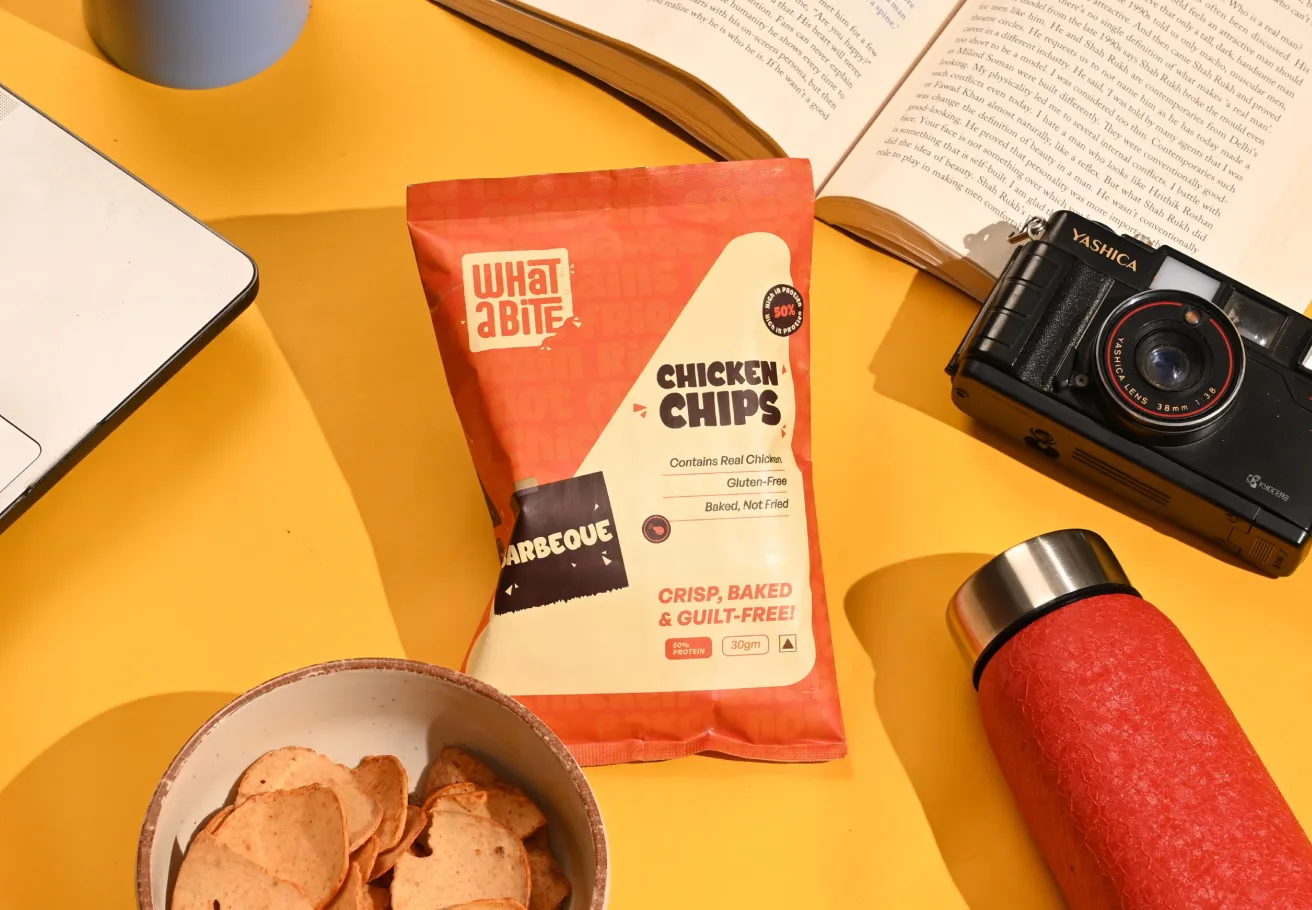
Want strategic branding and packaging like this for your business?





.webp)
.webp)

.webp)
.webp)
.webp)
.webp)
.webp)







.svg)
.webp)