%201.webp)
02
AI Snaps
.svg)
.svg)
01
Our Work
03
About Us
04
Brand Audit
05
Contact Us
06
Client Success
12
07
Blogs
08
Careers
Book A Call
.svg)



.svg)
Need Help In Building Your Brand?
Click the button below & book a call with our founder directly.

Rishabh Jain
Managing Director
Branding for Indian brands expanding to the UAE needs to be addressed before your trade license is approved, distributor conversations turn into commitments, and your launch date is locked in.
This post breaks down how to get your branding right for the UAE and GCC market. We look at what should change, what should stay, and what your brand needs before launch.
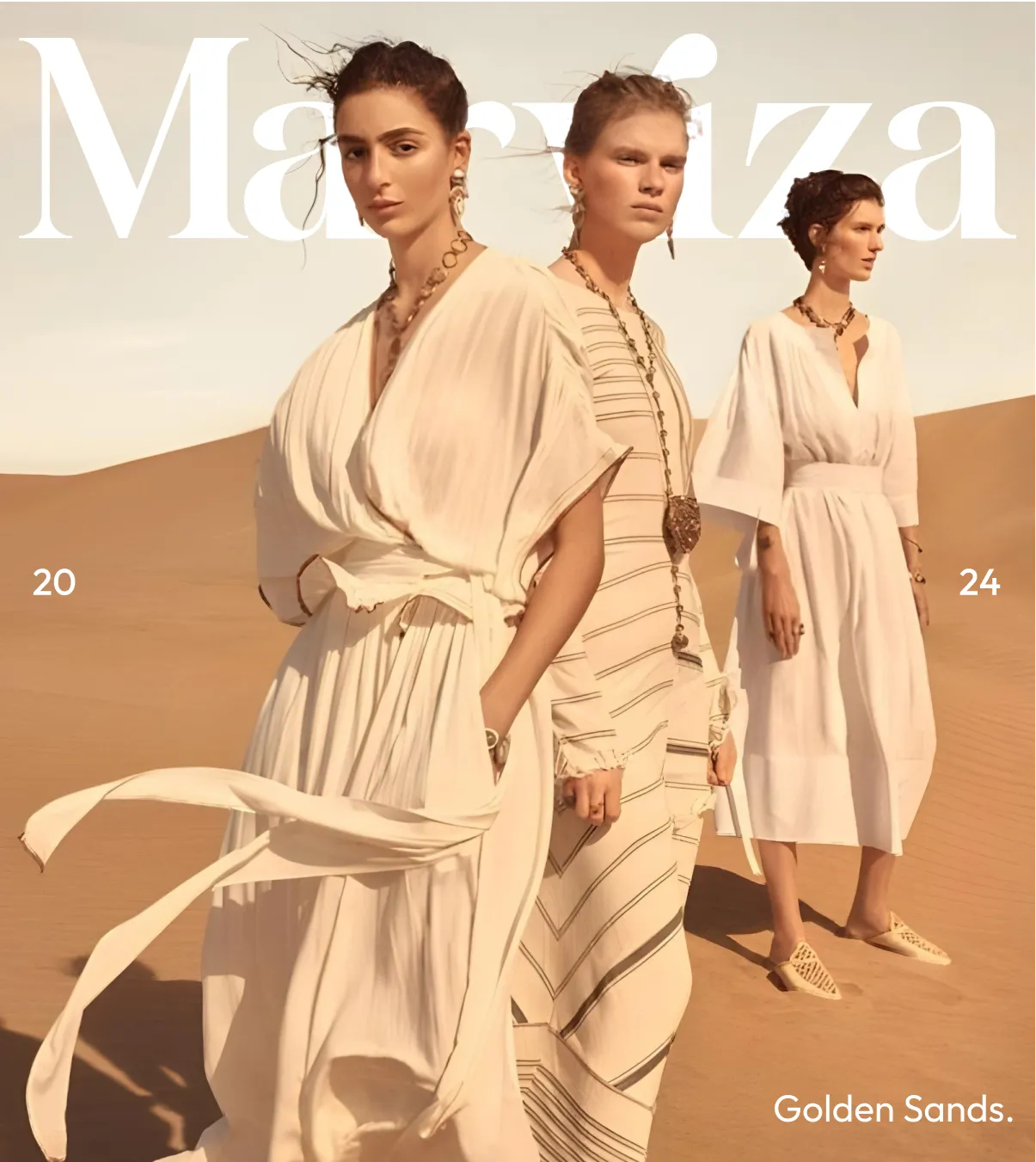
The India-UAE Comprehensive Economic Partnership Agreement (CEPA) has opened doors for Indian brands to rapidly expand into the UAE market. Amul’s footprint is rising in the UAE, Reliance launched Campa, Indian D2C brand MyFitness is entering the UAE's ₹2,000 crore peanut butter market.
The opportunity is real and so is the risk.
Many Indian brands that succeed in the UAE, learn the hard way that what works in India does not automatically work in the Gulf.
The market changes the design, compliance, positioning, and retail requirements your brand has to meet.
Here’s what is different:
▶️Consumer is different
UAE shoppers are exposed to global brands and expect strong visual presentation. NielsenIQ data shows that over 70% of UAE shoppers are willing to pay more for quality. At the same time, value products are also growing, putting pressure on brands that are unclear in their positioning.
The UAE is also highly diverse, with consumers from multiple nationalities. Your packaging therefore needs to communicate quickly across cultures while still feeling relevant to the region.
▶️Retail environment is sophisticated
In UAE retailers such as Lulu and Carrefour operate at a scale and sophistication very different from traditional Indian retail. Your packaging has to work within planograms, compete visually with established international brands, and stand alongside sophisticated private-label products.
That means your branding partner needs to think beyond the front of pack. Packaging should work across physical shelves, e-commerce listings, delivery environments, and different product sizes without losing its hierarchy or recognition.
▶️Regulation has to be designed in
UAE food labelling requirements affect the actual packaging system. Mandatory information needs to be available in Arabic, production and expiry dates need to meet local requirements, and country-of-origin information must be correctly stated. Depending on the category, halal requirements may also apply.
This is why “we'll translate it later” is a poor workflow. Arabic changes layout, hierarchy, typography, and sometimes even how much space the pack needs. A branding partner should account for Arabic from the first design stage.
▶️Climate is challenging
UAE heat and humidity can affect adhesives, labels, inks, materials, and packaging structures. A packaging system developed for Indian conditions should be tested for Gulf conditions before production at scale.
▶️Price expectations
UAE retail doesn't read Indian mass-market pricing as good value. It reads it as a quality signal, and not a favorable one.
A price point that worked in India, converted at the exchange rate and left alone, tells a UAE shopper something about your brand you probably didn't intend to say.
Finally, brand protection needs to happen alongside design. Your Indian trademark registration does not automatically protect the brand in the UAE. Name availability, trademark registration, and Arabic naming or transliteration should be considered before major market investment.
As a founder, you are not looking for a branding agency that can simply redesign a label. You need a partner that can connect brand strategy, Arabic-first packaging, cultural relevance, regulatory requirements, production realities, and UAE retail positioning into one system.
Localisation does not mean translation. So, the approach "We'll just translate the label into Arabic and keep everything else the same." fails because translation is the smallest part of what actually needs to change.
👉Translation changes the language, not the brand experience.
Localisation Should Change the Brand's Expression, Not Its Identity
Good localisation does not mean making an Indian brand look vaguely “Arab” or adding generic luxury cues.
It means understanding what should remain distinctive about the brand and what needs to change for the new market.
That could affect the visual language, typography, colour use, imagery, messaging, product hierarchy, or even how the brand tells its story. The objective is not to erase the brand's Indian identity but to make that identity relevant and legible to a UAE audience.
Tanishq is a useful example here. Titan’s jewellery brand didn’t just translate its way into the UAE, it localized its offer (festive and heritage-led collections, UAE-inspired design narratives) and leaned into experiential, trust-led positioning rather than price.
💡The lesson is not to copy its design, but to recognise that localisation is fundamentally a brand positioning decision.
Multiple Vendors Can Still Produce One Weak Brand
A common UAE expansion workflow involves different people handling different pieces. A lawyer handles trademarks, a compliance consultant checks requirements, a translator handles Arabic, and a printer produces the final packaging.
Each person may do their job correctly. Yet nobody may be responsible for whether the finished brand feels coherent.
That is where the branding partner becomes important.
The agency should be able to bring the strategic and visual decisions together rather than simply receiving translated copy and placing it into an existing layout.
When choosing a branding partner, ask whether they can take ownership of the larger localisation problem: what stays, what changes, why it changes, and how the entire brand continues to feel like one system.
A UAE expansion does not mean rebuilding your brand from scratch.
Not everything needs to change. Your brand's core identity: the positioning, the values, the emotional territory it owns, should travel. But how that identity is expressed needs to adapt to the UAE market.
Unnecessary changes can dilute recognition, while failing to adapt the right elements can make a strong Indian brand feel out of place in the UAE.
A useful way to evaluate each element is to ask three questions:
Does it depend on cultural context that may not travel?
A Hindi pun, regional reference, festival association, or messaging built around a specifically Indian occasion may need to change or be supplemented with something that works without that context.
Does it create legal or regulatory exposure?
Arabic naming, labelling, and mandatory information need to be addressed as part of the UAE launch. These requirements can influence the actual packaging architecture, not just the final copy.
Does it communicate the right market position?
This is especially important when an Indian mass or mid-market brand is entering a more premium retail environment. Simply converting an Indian price into dirhams can unintentionally position the product below the competitors you actually want to compete with.
If comparable UAE products sell for AED 35–45 and your converted Indian price puts you at AED 15, the difference is not just commercial. It affects how consumers interpret the product.
The same principle applies to packaging and visual identity.
You may need to reconsider information density, typography, materials, pack formats, imagery, bilingual hierarchy, and how quality is communicated.
Messaging may also need to shift from India-specific emotional triggers toward qualities that travel more effectively, such as craftsmanship, provenance, quality, convenience, or product experience.
When Indian brands enter a new market, there can be a strong temptation to make everything look more “Gulf” or more conventionally premium.
The founder story gets shortened, Indian provenance disappears, distinctive visual elements are replaced, the packaging becomes safer, more polished, and ultimately less recognisable.
That can leave you with a bigger problem: a brand that now looks like everyone else.
Your core brand identity should be the anchor. Its purpose, values, personality, distinctive story, and the reason customers choose it should not change simply because the geography does.
If craftsmanship is central to the brand, keep it. If provenance is part of its value, keep it. If a distinctive visual mark has already built recognition, protect it unless there is a compelling strategic reason to change it.
The opportunity is to express those assets differently, not erase them.
Our work on the Kooji rebrand illustrates this distinction. Kooji originates from Vedashree, a fragrance company from Kannauj, a city known for its perfume-making heritage. The rebrand did not discard that provenance. Instead, the brand changed how that heritage was communicated, using illustrated worlds to express where each fragrance could take the customer.
The same principle applies to UAE expansion.
Your brand story can remain, while the way it is presented can evolve. Your provenance can remain, while the visual language around it becomes more relevant to the market. Your logo can remain, while the packaging system surrounding it becomes more suitable for UAE retail.
📌The elements with more freedom to change are packaging hierarchy, information density, typography, imagery, colour, format, messaging, and price presentation.
That’s the judgment a branding partner should bring: not making the brand look more “UAE,” but identifying what makes it worth bringing to the UAE and making those strengths relevant to the market.
Change what creates friction in the new market. Protect what creates recognition and differentiation.
The Decision Framework
This should also influence how you evaluate a branding partner. Ask an agency to show you what it would change, what it would preserve, and why.
A strong partner should diagnose the existing brand before proposing a redesign rather than applying a generic localisation checklist.
📌A brand that adapts too much loses its identity. A brand that adapts too little loses its relevance. The brands that win in the UAE find the balance, protecting the brand equity that got them here while making the changes required to compete in a new market.

A UAE-only studio will get your compliance and localization right but it won’t know which parts of your brand are load-bearing. Without your original Indian customer context, it risks localizing what should stay untouched.
An India-only studio has the opposite problem. It understands your brand's equity deeply. It's guessing at UAE compliance, Arabic typography needs, and what "premium" looks like to a GCC shopper.
✅We operate in both India and Dubai.
That's the reason this isn't a translation exercise for us. We've done the work of understanding what a brand like yours is built on before we start deciding what changes for this market.
That means the person reviewing your Arabic transliteration for how it actually sounds and reads is the same team that understood why your founder's story mattered enough to protect in the first place.
It means the packaging file that goes to your UAE printer has already been checked against GSO layout requirements by someone who's done that check before, not someone learning the standard for the first time on your project.
And it means when a retail buyer in Dubai asks a question about positioning, we're answering from direct market experience, not relaying a guess back to India and waiting for a response.
✅Our Process
We start by identifying what's actually load-bearing in your existing brand versus what's genuinely safe or necessary to adapt. From there, compliance and creative work run in parallel.
This is important because a compliance constraint can change a design decision, and a design decision can change how compliance gets solved. Handle them one after another and you end up redoing work once the two collide.
We hand off production-ready files your UAE manufacturing and packaging partners can use directly, no second translation layer needed on their end. And we stay engaged through your first retail listing cycle, not just through file delivery, because that's usually when the gaps actually surface.
If you are preparing to launch your brand in the UAE, here is what a complete project looks like:
Before changing the visuals, we assess where the existing brand fits in the UAE market and what needs to change.
This can include:
Not every brand needs a new logo. The question is whether the existing identity can support the new market. Depending on the diagnosis, this can include:
This is where strategy becomes physical. The scope can include:
The final files should not require a UAE printer or packaging vendor to reinterpret the design.
Not every brand needs a full rebrand.
A lighter adaptation may be appropriate if your positioning is already strong, your category has limited competition, and the existing identity has substantial equity.
A broader engagement makes more sense when your current positioning, price point, packaging, or visual identity conflicts with where you need to compete in the UAE.
A UAE-ready project can range from $10,000 to $30,000+, depending on the number of strategic and design layers involved, SKU count, packaging complexity, and production requirements.
A full engagement takes around 8–16 weeks. That assumes timely feedback, clear decision-making, and a defined approval process.
Make sure to match your scope to the problem, not the cost.
Before you compare branding proposals, compare what each partner is actually taking responsibility for. If one proposal only translates and redraws your existing packaging while another addresses positioning, Arabic identity, packaging architecture, and production, you are not comparing two versions of the same service.
You are comparing two different levels of UAE market readiness.
Ready to make your brand UAE-ready? Schedule a consultation.
Does an Indian brand need to change its name for the UAE market?
Not necessarily, but it needs an Arabic transliteration registered before major commercial disclosure, under UAE trademark law. That transliteration should be designed deliberately as part of the visual identity, not added late purely to satisfy a legal filing.
How much does UAE-ready rebranding cost for an Indian brand?
Costs scale with scope. A light localization pass on existing packaging sits at the entry level, while a full positioning-level rebrand with new visual systems and multi-market flexibility costs significantly more. Skipping straight to light localization when positioning actually needs to change often means paying for a second redesign later.
Does packaging need halal certification to sell in the UAE?
For applicable food, beverage, and consumable categories, yes. Certification must come from a UAE-recognized certification body. This is a genuine trust signal to UAE consumers, not just a compliance requirement, and should be planned for early in the process.
We already have a design team in India, why bring in someone else for the UAE?
Most Indian design teams are genuinely strong at what they were hired for: building for the Indian market. UAE compliance and positioning is a different problem, and adding it onto a team without direct UAE experience is how compliance-driven redesigns happen after a rejected submission.
Can't we just hire a local Dubai agency for the localization work?
You can, and it will likely clear compliance. What it often won't do is know which parts of your Indian brand equity are worth protecting versus safe to change — that judgment call needs someone who's worked with the original brand, not only the target market.
What's the biggest branding mistake Indian brands make when expanding to the UAE?
Treating UAE entry as a translation and compliance task instead of a brand decision. Either porting the Indian identity unchanged (missing the market entirely) or over-localizing to the point of losing the heritage story that made the brand worth choosing in the first place.
Want strategic branding and packaging like this for your business?




.webp)
.webp)

.webp)
.webp)
.webp)
.webp)
.webp)







.svg)
.webp)