%201.webp)
02
AI Snaps
.svg)
.svg)
01
Our Work
03
About Us
04
Brand Audit
05
Contact Us
06
Client Success
12
07
Blogs
08
Careers
Book A Call
.svg)



.svg)
Need Help In Building Your Brand?
Click the button below & book a call with our founder directly.

Rishabh Jain
Managing Director
Export packaging design labeling requirements can ease or block your product's entry into a new market.
A non-compliant label means customs holds, port rejections, or costly reprints before your product ever reaches a shelf.
This guide covers what's mandatory, what changes by market, how compliance shapes design decisions, and how to build a packaging system that scales across borders without losing your brand identity.
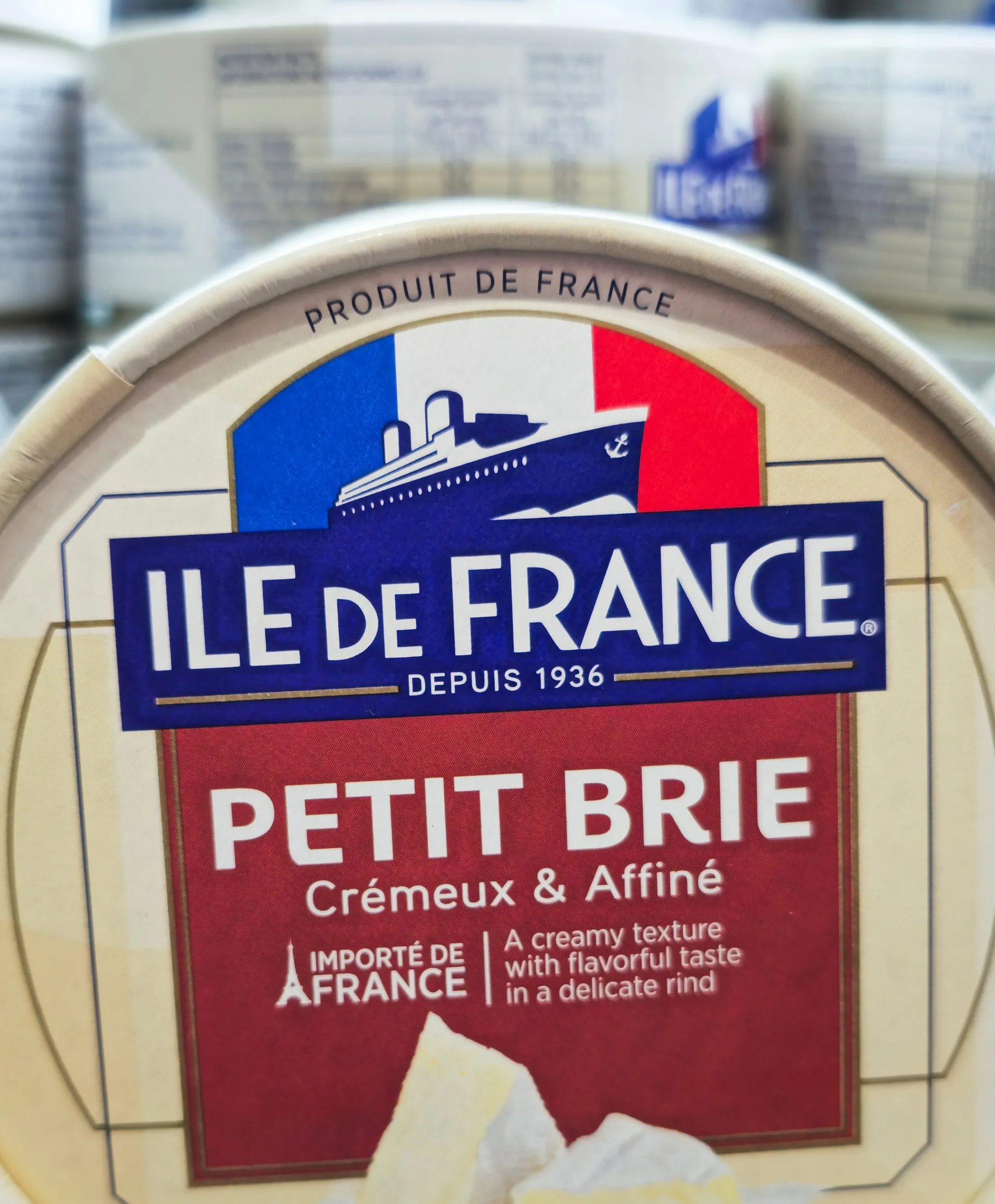
Export labeling requirements are the rules that determine what information must appear on your product package and how, for it to legally enter and be sold in a foreign market.
These rules cover everything from font sizes and languages to specific declarations about ingredients, safety, and origin.
They exist to protect consumers, enable customs classification, support product traceability, and enforce safety standards.
There is no single global standard. Every country the product enters has its own rules, enforced by its own regulatory bodies. What qualifies as a complete label in the United States may be incomplete in Canada, non-compliant in the EU, or outright rejected in China.
The main regulatory bodies you'll encounter:
Understanding which body governs your product category in each target market is the starting point. Everything else, design, materials, print specs, flows from there.
While the specifics vary by destination, most export labels share a common baseline. You’ll almost always need to include:
From our work experience at Confetti, this is where packaging design meets law. The label can't just be correct, it has to fit your packaging's real estate without sacrificing visual appeal.
You're balancing legal compliance with brand integrity.
Get it right, and your product clears customs without a hitch. Get it wrong, and you’re looking at storage fees, return shipping costs, or destroyed goods.
Let’s take a look at some of the main export labelling regulations across markets:
The GCC is rapidly harmonizing its labeling standards. Key points across the region:
Saudi Arabia (SFDA):
The SFDA enforces strict food registration via the Ghad platform. Every imported food product must be registered before shipment. Currently, any label claiming a “quality grade” must be backed by a Shipment Certificate of Conformity.
For cosmetics, a 2025 circular bans any phrasing suggesting a product is made exclusively for any market outside Saudi Arabia. Halal certification is mandatory under GSO 2055-1.
SASO has product-specific marking requirements.
UAE (ESMA/MoIAT):
New ECAS logos rolled out in late 2024. Regulated products need an ECAS/EQM certificate before import.
For food: mandatory “Nutri-Mark” front-of-pack color label (A to E, green to red) for most packaged foods.
For electronics and appliances: energy efficiency labeling (EESL) with 1–5 stars. Non-compliance means no customs release.
The Fair Packaging and Labeling Act (FPLA) sets the baseline for most consumer products sold in the U.S.
For food products, the FDA requires a Nutrition Facts panel, a complete ingredient list in descending order by weight, and declaration of the 9 major allergens (milk, eggs, fish, shellfish, tree nuts, peanuts, wheat, soybean, sesame.
The FTC's "Made in USA" standard is strict: to use the unqualified claim, the product must be "all or virtually all" made in the U.S.
For chemicals and hazardous materials, OSHA's Hazard Communication Standard (HCS 2012, aligned with GHS) applies. Labels must carry a product identifier, signal word, hazard statements, precautionary statements, and GHS pictograms.
For wood packaging materials (pallets, crates), ISPM 15 compliance is mandatory. Wood must be treated and marked with the IPPC stamp. Non-compliant wood packaging results in shipment refusal or mandatory treatment at the border, at the shipper's cost.
A useful starting reference: the U.S. CBP Marking Requirements covers origin marking rules across product categories.
The EU operates on regulation-level law, meaning rules are directly binding across all 27 member states.
For food: EU Regulation 1169/2011 mandates 14 allergens to be highlighted in the ingredient list (bold or underlined), minimum x-height of 1.2mm for mandatory text. Language must be easily understood by consumers in the relevant member state, with national rules often specifying the language..
For electronics and machinery: CE marking is a legal requirement, not a quality mark. It signals conformity with EU health, safety, and environmental standards.
For chemicals: REACH regulation controls the registration, evaluation, and restriction of chemical substances.
For packaging sustainability: Packaging rules are also tightening under the EU Packaging and Packaging Waste Regulation (PPWR, with recyclability and design-for-recycling requirements phased in over time.
The full legislative text of EU Regulation 1169/2011 is publicly available and is the definitive reference for food labeling in the EU.
China
China Compulsory Certification (CCC) applies to product categories including electronics, toys, and automotive parts. Labels must be in simplified Chinese.
The GB standard system governs food, cosmetics, and most consumer goods. Pre-market registration is required for imported food, cosmetics, and infant formula.
India
FSSAI certification and labeling is mandatory for food.
The Legal Metrology (Packaged Commodities) Rules require the MRP (Maximum Retail Price), net quantity, manufacturer details, and month/year of manufacture on every pack.
BIS certification applies to electronics. Labels must be in English or Hindi.
Canada
Bilingual labeling, English and French, is required under the Consumer Packaging and Labelling Act for most consumer products.
Net quantity must appear in metric units. Both languages must be presented with equal prominence where required.
Navigating multi-market packaging compliance is exactly the kind of challenge our packaging design team handles as part of every export project.
Export labeling has a major impact on how your packaging looks, feels, and functions.
Most brands approach packaging backwards. They design a beautiful primary pack and then try to shoehorn the legally required label onto whatever space is left.
That never works.
You end up with an allergen declaration crammed inside a fold, or a GHS pictogram that violates contrast rules because your background is dark green.
Here’s how labeling requirements reshape your packaging design, from the inside out:
Regulations specify minimum font sizes. The EU demands an x-height of 1.2 mm for most information.
The U.S. FDA requires Nutrition Facts labels to maintain specific type sizes for serving size and nutrient amounts. Add to this mandatory icons, and maybe a barcode.
Your package must have enough contiguous, flat, readable surface to hold all that content. Curved containers, flexible pouches, and oddly shaped boxes become design challenges.
Multilingual labels require a clear hierarchy. The destination language must be the primary language. In markets with multiple official languages (Switzerland: German, French, Italian, Romansh), this multiplies the design challenge significantly.
RTL (right-to-left) languages like Arabic, Hebrew, Urdu, change the entire compositional logic of the label. Navigation, reading flow, and visual hierarchy all work differently.
Design solution: modular label architecture. Build your label as a system with locked compliance zones (legally required content) and flexible brand zones.
Nearly every market has implied or explicit contrast rules. Black text on white is safe. Metallic silver type on a kraft paper background? Customs might reject it.
The CLP regulation in the EU expects hazard pictograms to appear on a contrasting background.
Some markets require the country of origin to be in a font color that’s different from the surrounding text. You lose creative freedom here. That’s the trade-off.
Some symbols are legally mandated in specific colors and cannot be altered.
GHS hazard pictograms must appear in black on white with a red diamond border. Using a different color to match your brand palette is a compliance violation.
The "Green Dot" recycling symbol has different meanings in different EU countries. Example: In Germany, it indicates participation in the Duales System Deutschland (DSD), if you haven't paid into the system, using the symbol is illegal.
USDA Organic, EU Organic Leaf, and Fairtrade logos all have strict size, color, and placement rules defined by their respective certification bodies. Non-compliance with logo usage can result in certification withdrawal.
California's Proposition 65 warning must meet specific contrast, font size, and placement requirements, and the warning language itself was updated in 2018. Brands still using old Prop 65 language on their California-bound products are out of compliance.
Certain label information must remain permanent and legible for the product’s entire shelf life. Thermal paper labels fade. Uncoated paper absorbs moisture.
Some inks smear on recycled board. You might want a minimalist no-label look, but a directly printed-on-glass bottle can’t accommodate a 12-line ingredient declaration in two languages.
You’ll need a shrink sleeve or a pressure-sensitive label. That adds material and cost.
The label placement area, minimum surface dimensions, and material texture must be specified before dielines are finalized.
A curved surface, embossed texture, or high-gloss finish can all prevent labels from adhering correctly or make mandatory text unreadable.
Pallet labels, carton marks, and shipper marks are separate from product labels. Each has its own standard.
Some markets require tamper-evident packaging that physically affects outer label placement. Japan's market, in particular, has strong consumer expectations around packaging integrity that translate into structural requirements.
This is where brands most commonly get stuck.
Compliance is non-negotiable. But giving up brand equity to meet it is also unnecessary, if the design system was built with export in mind from the start.
Common mistakes brands make:
The alternative is building compliance into the design brief.
Treating mandatory content zones as fixed design elements: sized, placed, and styled deliberately, rather than constraints applied after the fact.
A brand that enters 8 markets with a modular, compliance-ready label system spends a fraction of what a brand spends that redesigns its packaging for each market individually.
Practical Packaging + Compliance Check For Brands:
🚫 Missing country of origin: "Made in China," "Product of Vietnam," or similar must appear on every unit. No exceptions. Customs needs origin for tariff assessment. Without it, shipment is unclassified and unenterable.
🚫 Incorrect or missing language: Selling into Quebec without French? EU without the destination member state's official language? Rejection is automatic. Bilingual labels require equal prominence, not a tiny translated sticker on the back.
🚫 Wrong font size on mandatory text: EU requires 1.2 mm x-height for most food information. US FDA has specific type sizes for Nutrition Facts. Print too small and customs considers the label non-compliant, even if content is accurate.
🚫 GHS pictogram errors: Wrong hazard symbol, incorrect background color, missing red diamond border, or placing pictograms in the wrong sequence. Dangerous goods shipments get flagged immediately. One mistake stops the entire pallet.
🚫 Expiration date formatting mismatch: Using MM/DD/YYYY for a GCC-bound shipment. Japan expects year-month-day. EU uses DD/MM/YYYY. Wrong format equals wrong label. Customs won't reinterpret for you.
🚫 Missing batch or lot number: Traceability is mandatory for food, cosmetics, and medical devices. No batch code means no recall path. Regulators reject the shipment because they cannot verify production history.
🚫 Over-sticking original labels incorrectly: Covering critical original information with a new sticker violates rules in China and the EU. The underlying label must remain visible or fully removed. Partial covering triggers rejection.
🚫Incorrect net quantity units: Using only imperial measurements for EU markets (which require metric) or only metric for U.S. markets, triggers rejection.
🚫Label material failure in transit: Labels peeling in humidity, cold chain, or high-vibration shipping conditions is both a regulatory and a design failure. If mandatory information isn't legible at point of inspection, the shipment fails.
Export compliance isn’t guesswork. It’s a repeatable process.
Don't design for the home market and adapt. Build a compliance matrix before any design work begins.
List every destination country. For each, map: applicable regulatory bodies, mandatory label elements, language requirements, and prohibited claims. This matrix becomes the creative brief for your packaging designer.
Build flexibility into your timeline. Regulatory review in some markets (China CNCA, India FSSAI) can take 3–6 months for new product registration.
Before any graphics work starts, the structural packaging design must specify:
Structural and graphic design should be developed in parallell.
Create a master label template with:
Use standardized dieline formats compatible with print vendors across your key manufacturing and packaging markets. This reduces production errors when you're printing in multiple countries.
Select substrates and inks that survive shipping, humidity, and handling. Thermal paper fails in heat. Uncoated stock smears.
Some label adhesives don’t bond to recycled board.
Match your material to the worst-case transit conditions.
Submit label artwork for regulatory review 6–8 weeks before final art approval.
For food, pharma, and chemicals, pre-clearance submissions to regulatory bodies are often mandatory before shipment is permitted.
Work with a local regulatory consultant in each key market.
What reads as compliant from the outside often isn't, local consultants catch nuances that general compliance guides miss.
Run ISTA (International Safe Transit Association) or ASTM D4169 packaging performance tests appropriate to your shipping mode (air, sea, road, cold chain).
Test label adhesion specifically at the temperature extremes of your supply chain. A label that performs perfectly at room temperature may fail in refrigerated sea freight or on an unheated cargo aircraft.
See how we apply this process across client projects: our featured packaging work.
For export products, our packaging design briefs start with where the product is going. We design packaging with global readiness built into the brief.
We've worked with brands entering markets across the EU, GCC, and Southeast Asia. Every project begins with a compliance matrix that maps destination market requirements directly to design decisions: font sizes, label zones, symbol placements, language hierarchies.
Here’s a quick look at our process:
✔️Safety and sustainability: Good packaging protects the product and the brand’s reputation. Before we draw anything, we confirm your materials and structure meet the destination market’s requirements. That means verifying substrates, coatings, and adhesives won’t trigger customs holds or environmental penalties.
✔️Integrate compliance: We treat every panel of the pack as functional real estate. Our layout phase maps every mandatory element onto precise dielines. We calculate exact surface area needs, measure font legibility, and ensure each component meets local regulations before we add brand typography or colour.
✔️Validate: We test packaging in real platform mock-ups for each target market, ensuring clarity and hierarchy survive translation, resizing, or last-mile handling.
For clients entering competitive global spaces, we’ve designed foundational packaging systems that work across borders. With AIM Nutrition, we built a US-ready unboxing experience that launched successfully in a crowded market.
Use this before any international packaging project goes to final art or print.
It is organized by stage. Not everything applies to every product, but every item here has caused a shipment failure for someone.
What are the mandatory elements on an export label?
Every export label must include: country of origin, product name/identity, net quantity, manufacturer name and address, batch or lot number, and expiry date (for applicable goods). Most destination markets also require the label to appear in the local language. Regulated categories have additional mandatory elements.
Do export labels need to be in the destination country's language?
Yes, in most markets. The EU requires labels in the official language(s) of the member state where the product is sold. Canada mandates both English and French. GCC countries require Arabic. China requires simplified Chinese. English-only labels are only compliant in English-speaking markets.
What happens if export packaging doesn't meet labeling requirements?
Non-compliant packaging can result in customs holds, import refusals, mandatory relabeling at port (at the exporter's expense), product destruction, regulatory fines, and market bans. In regulated sectors like food and pharma, non-compliance can also trigger product recalls.
How does packaging design need to change for export markets?
Export packaging design must accommodate mandatory local language text, required symbols and certifications, minimum font sizes, and compliant material marking. Structurally, packaging must survive the transit conditions of the specific trade route. Design-wise, the challenge is preserving brand consistency while adapting layout, hierarchy, and sometimes color systems for each market's legal requirements.
Can the same packaging design be used across all export markets?
Not really, Even if the structural packaging remains the same, labels almost always need to change and mandatory information differs by market. Smart export packaging uses a modular label system: a fixed structural design with swappable label zones for each market. This minimizes redesign costs while maintaining compliance and brand consistency.
Want strategic branding and packaging like this for your business?





.webp)
.webp)

.webp)
.webp)
.webp)
.webp)
.webp)







.svg)
.webp)


