%201.webp)
02
AI Snaps
.svg)
.svg)
01
Our Work
03
About Us
04
Brand Audit
05
Contact Us
06
Client Success
12
07
Blogs
08
Careers
Book A Call
.svg)



.svg)
Need Help In Building Your Brand?
Click the button below & book a call with our founder directly.

Rishabh Jain
Managing Director
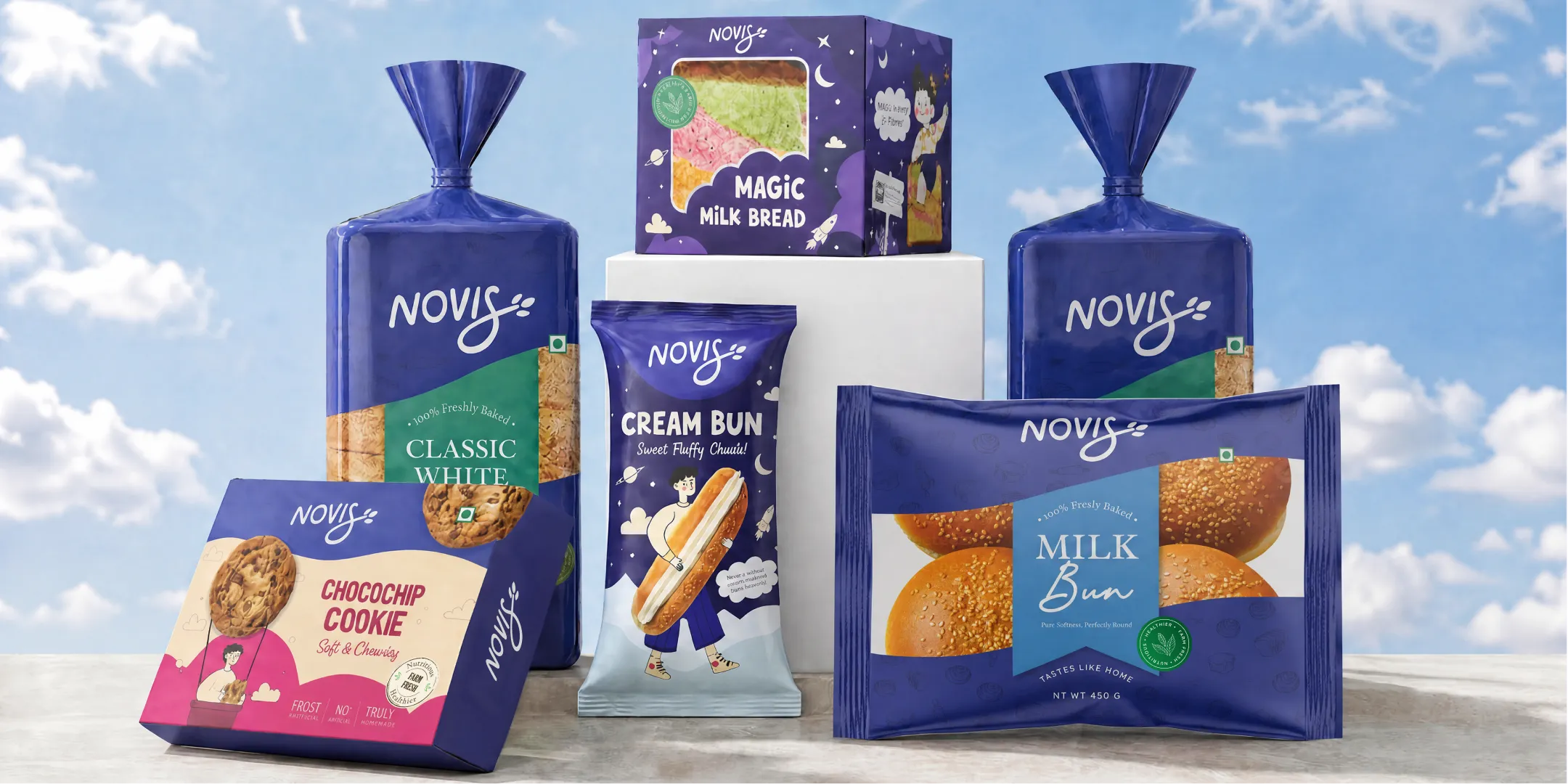
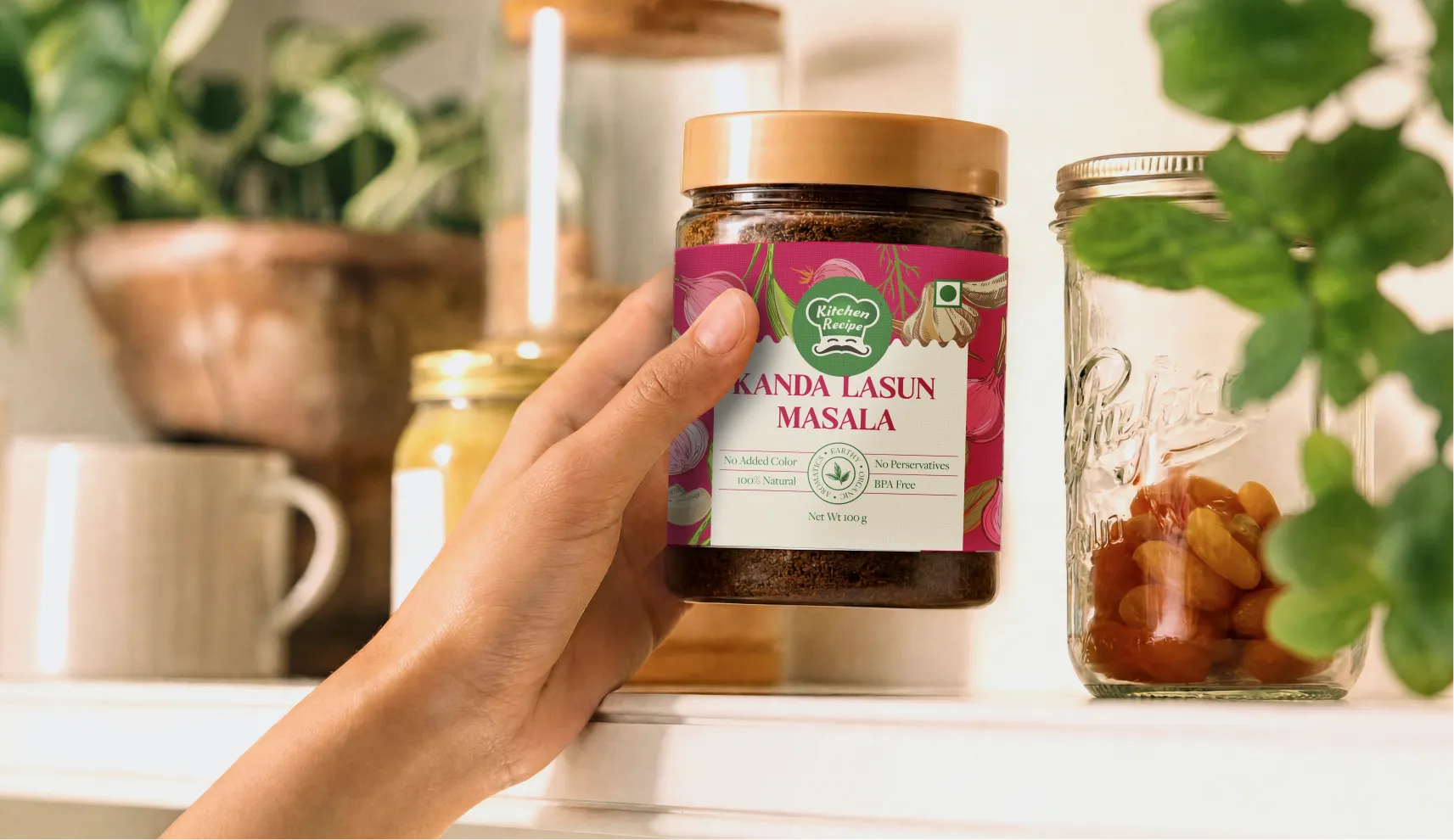
Brand storytelling in branding and packaging means giving that pack an actual narrative. This blog explains what a real brand story requires and how it differs from a mission statement.
You also understand how branding narrative decisions translate into physical packaging choices, with examples across mainstream and luxury categories.
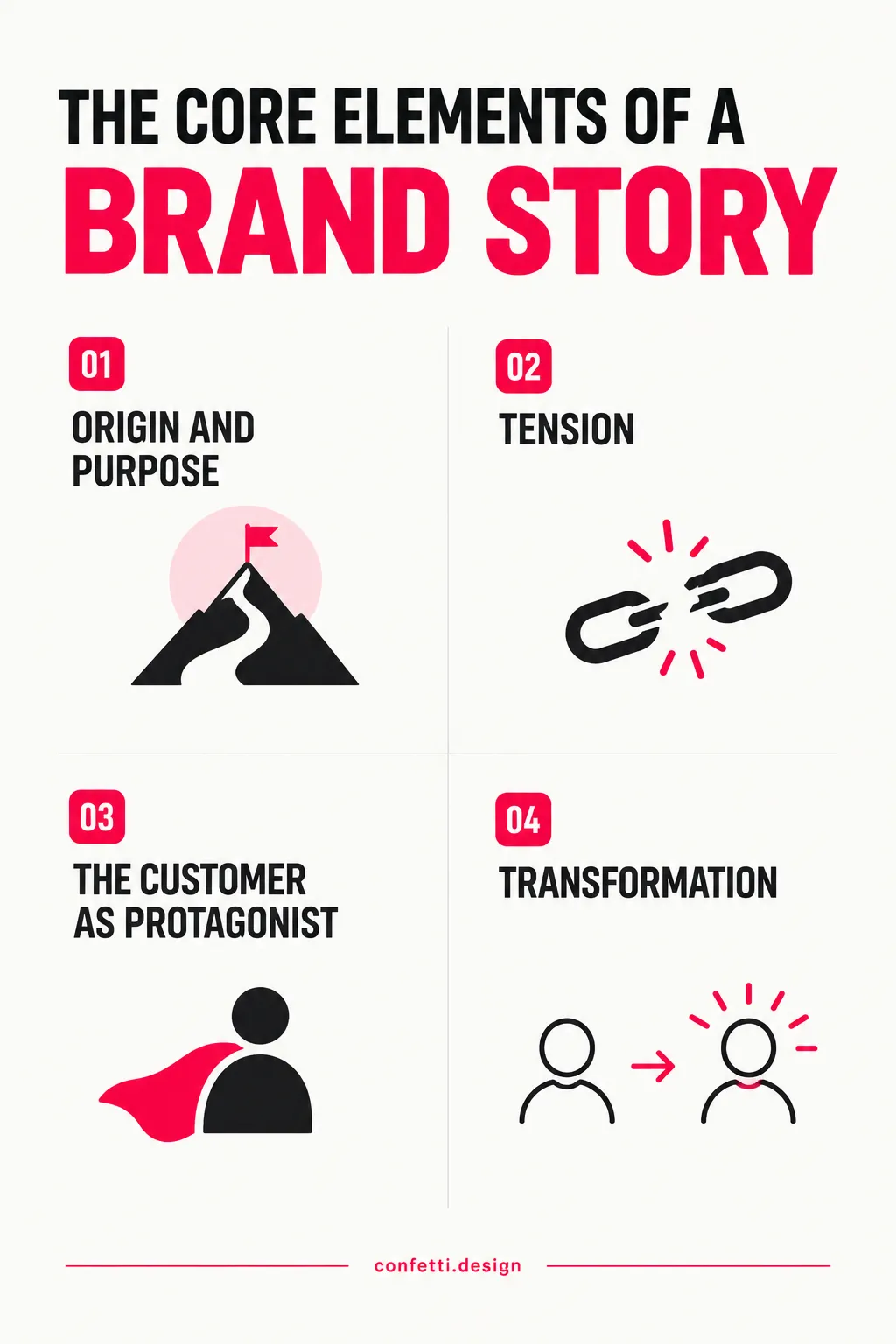
Brand storytelling is the deliberate use of narrative: origin, purpose, tension, and transformation to give customers a reason to care about your product beyond its specifications.
The story is a decision-making tool.
It shapes what you make, how you package it, and what a customer feels when the box lands on their doorstep.
That difference is more important because "storytelling" has become a catch-all term for anything with a bit of personality.
Example:
A skincare brand's messaging might read: "Clean ingredients, dermatologist-tested, cruelty-free." True but forgettable and interchangeable with other competitors.
The same brand's storytelling might frame it as: you spent years cycling through products that irritated your skin, and the industry kept selling you more of the same. Here is what happens when someone finally builds for reactive skin instead.
Same product, different reasons to care.
A working brand story has fouru parts:
1. Origin and purpose
Where the brand came from and the specific problem that triggered its existence. The actual friction someone hit and decided to fix.
2. Tension
The conflict the brand exists to resolve. Good stories need an obstacle: an outdated category norm, a broken supply chain, a customer getting a raw deal. Tension is what makes the resolution mean something.
3. Customer as protagonist
Your customer is the hero. Your brand is the guide, the tool, the mentor, the enabler. The story is about their transformation.
4. Transformation
The concrete changes the customer experiences. Clear skin, morning routine that doesn't feel like a chore, a gift that makes someone cry.
Vague "empowerment" language fails here because it describes nothing measurable.
📌Remember: Founder-story branding only lands when the founder's struggle mirrors the customer's and that mirror is made explicit, otherwise it's just a memoir. The stories that endure keep the customer's transformation, rather than the founder's biography, at the center.
For branding and packaging, the goal of a story is to connect with the customer on an emotional level, create a memorable experience, and differentiate the brand from its competitors. A brand story is a narrative that conveys the brand’s purpose, values, and personality.
The purpose of a brand story is to create a connection with the customer. The story should be authentic and should convey the brand’s values, personality, and unique selling proposition.
A brand story can help to build trust and create a long-term relationship with the customer. It can also help to differentiate the brand from its competitors and create a memorable experience for the customer.
Two protein bars can share the same macros, the same manufacturer, even the same shelf. What separates them is which one a customer can explain to a friend in one sentence. A story does that.
This is also a memory problem. People don't recall attribute lists. They recall scenes, conflicts, and resolutions, because that's the shape human memory is built to hold.
"Made with 20g protein and zero added sugar" evaporates within a day. "Built by an ex-athlete who couldn't find a bar that didn't spike his blood sugar mid-training" sticks, because it's a story.
That recall advantage builds up into pricing power. A well-told story gives a customer a reason a product costs more, one that doesn't depend on ingredient cost alone.
This is why founder-led skincare brands like Hyphen can charge a premium over near-identical private-label formulations. The buyer isn't just paying for the cream, they're paying to be part of the narrative the brand has built around it.

Talk to our team about building your story into the pack.
Book A Call
Packaging is the only brand touchpoint guaranteed to reach 100% of buyers.
Your Instagram post might never reach a customer's feed. Your pack does not have that problem, every single buyer holds it, opens it, and reads it, whether they saw your marketing or not.
Packaging carries story in more than one way, and each layer can be designed deliberately:
📌A recycled kraft mailer with visible fibre tells a sustainability story. Foil stamping and soft-touch lamination tell a luxury story the same way. They're narrative decisions executed in material form, and they land on every buyer without needing a media budget.
.webp)
A practical 4 steps model:
1. Identify the real tension your customer feels
Start with the customer's problem. A supplement brand doesn't sell "clinically-dosed ashwagandha." It sells relief from a customer who's tired of feeling wired and exhausted at the same time. Find the tension first. The product comes later, as the resolution.
2. Define the brand's role in resolving it
Your brand is the guide. Your job is to hand your customers the tool, the confidence, or the shortcut that gets them there. Brands that cast themselves as the hero end up talking about their own achievements. Brands that cast themselves as the guide end up talking about the customer's outcome.
3. Choose the narrative thread that stays consistent across every touchpoint
Pick one thread. A skincare brand built around "your skin barrier deserves patience, not speed" needs that same idea showing up in the ad headline, the website copy, and the instructions printed inside the box. Consistency is what turns a good line into a recognisable voice.
4. Translate that thread into physical and visual decisions
The thread has to show up in structure, copy, unboxing sequence, and colour. If your thread is "patience over speed," your unboxing shouldn't rush the customer to the product either.
A slower reveal, a printed note that asks the customer to wait before their first use, a muted palette instead of a loud one. Every physical decision either reinforces the thread or quietly contradicts it.
The thread stays constant. The expression changes by where the customer is.
Awareness Stage
Storytelling here leans on origin and purpose. Who built this, why, and what problem triggered it. The job is to make the customer recognise their own tension in your framing. Channels: social, PR, founder content, product page top-fold.
Purchase Stage
Storytelling here is an on-pack copy and unboxing sequence. The customer has already decided to consider you. The job is to confirm the decision feels right. The outer panel carries the hook; the interior carries the payoff. Sequence is more important than volume, what appears first, what's held back, when the product is revealed.
Retention Stage
Storytelling here lives in inserts, refill messaging, and reorder flows. The job is to extend the narrative past the first purchase. A thank-you card that restates your purpose is wasted space. A card that advances the story, what to try next, why the refill exists, how the product evolves with use, keeps the thread alive and gives the customer a reason to stay in it.
📌Map your touchpoints against these three stages. Most brands overinvest in awareness storytelling and underinvest in purchase and retention, where the story has already earned the right to be specific.
Let’s see a few great examples:
🔵Dr. Bronner's
Emanuel Bronner, a German-Jewish soapmaker who lost his family in the Holocaust, spent his life preaching a philosophy he called "All-One," the belief that humanity must unite across religious and ethnic lines.
When people kept leaving his lectures early, he started printing the entire sermon on his soap bottles instead. That dense, all-caps label, still unchanged in spirit since the 1960s, is now the brand's single most recognisable asset.
🔵Who Gives A Crap
Who Gives A Crap donates 50% of profits to sanitation projects, a cause many brands would state once in a footer and move on from. Instead, every roll of toilet paper is individually wrapped in bold, colourful patterned paper, designed deliberately so customers display it in the bathroom instead of hiding it under the sink.
Limited-edition wrappers have even hidden illustrated toilets inside global city scenes, turning the packaging into a game tied directly to the cause.
🔵Tony's Chocolonely
Each Tony's Chocolonely bar is divided into unequal, oddly-shaped pieces instead of the neat, even squares every other chocolate bar uses. That's deliberate, the brand's mission is to end exploitation in cocoa farming, and the uneven pieces are a physical metaphor for the inequality still present in the industry.
No copy is needed to explain the cause; the shape of the product does it before a customer reads a single word. When a structural choice can literally embody your message, it will always out-communicate a paragraph of a mission statement.
🔵Aesop
Aesop's products are in tinted brown apothecary bottles with plain, ingredient-forward labelling and almost no promotional language on the pack. It borrows the visual credibility of a chemist's dispensary, quietly claiming a scientific, no-nonsense authority most beauty brands try to manufacture through claims instead.
The brand runs almost no traditional advertising, letting the pack and the in-store experience carry the entire narrative. Takeaway here is refusing to oversell on-pack can itself become the story, provided the product and formulation can back the confidence.
🔵Absolut Vodka
Absolut's clear, apothecary-shaped bottle, modelled on an 18th-century Swedish medicine bottle, has stayed recognisable since 1979.
Rather than changing the story over time, Absolut turned the bottle's outline into a blank canvas, running an ad campaign built almost entirely around that one silhouette. Eventually spanning close to two thousand executions and collaborations with artists from Andy Warhol to Louise Bourgeois.
The story was never really about vodka. It was about how many ways one consistent shape could be reimagined without ever losing recognisability. A genuinely distinctive structural silhouette can become a storytelling asset on its own, reused indefinitely instead of reinvented each cycle.
🔵Innocent Drinks
Innocent built its smoothie and juice packaging around a distinctly conversational, self-deprecating tone, addressing customers directly on the bottle with playful, almost diary-like copy instead of standard nutritional marketing language.
The voice makes the brand feel like a person talking to you rather than a company selling to you, and it's consistent enough that customers recognise an Innocent bottle by its tone alone, even from a distance.
🔵Paper Boat
Paper Boat, the Indian beverage brand, built its entire identity around a shared cultural memory: floating paper boats in monsoon puddles. Instead of product photography, its packaging uses hand-drawn illustrations, pastel colours, and short handwritten-style stories printed on the back of each pouch, each one tied to a specific childhood memory.
The doypack structure itself mimics the act of sucking juice straight from a fruit. From this we can understand that the illustration can carry a nostalgia-driven story more effectively than photography, because it evokes memory instead of documenting a product.
📌Look across all these examples, the pattern is consistent. None of them explain their story in a paragraph of copy. Each one encodes it into one specific, repeatable device, a material, a phrase, a stitch pattern, an illustration style, that shows up on every unit sold.
Luxury storytelling runs on a different set of rules than mainstream branding, and applying mass-market storytelling logic to a premium brand does not work well.
Three shifts define the difference:
Let’s see a few example here:
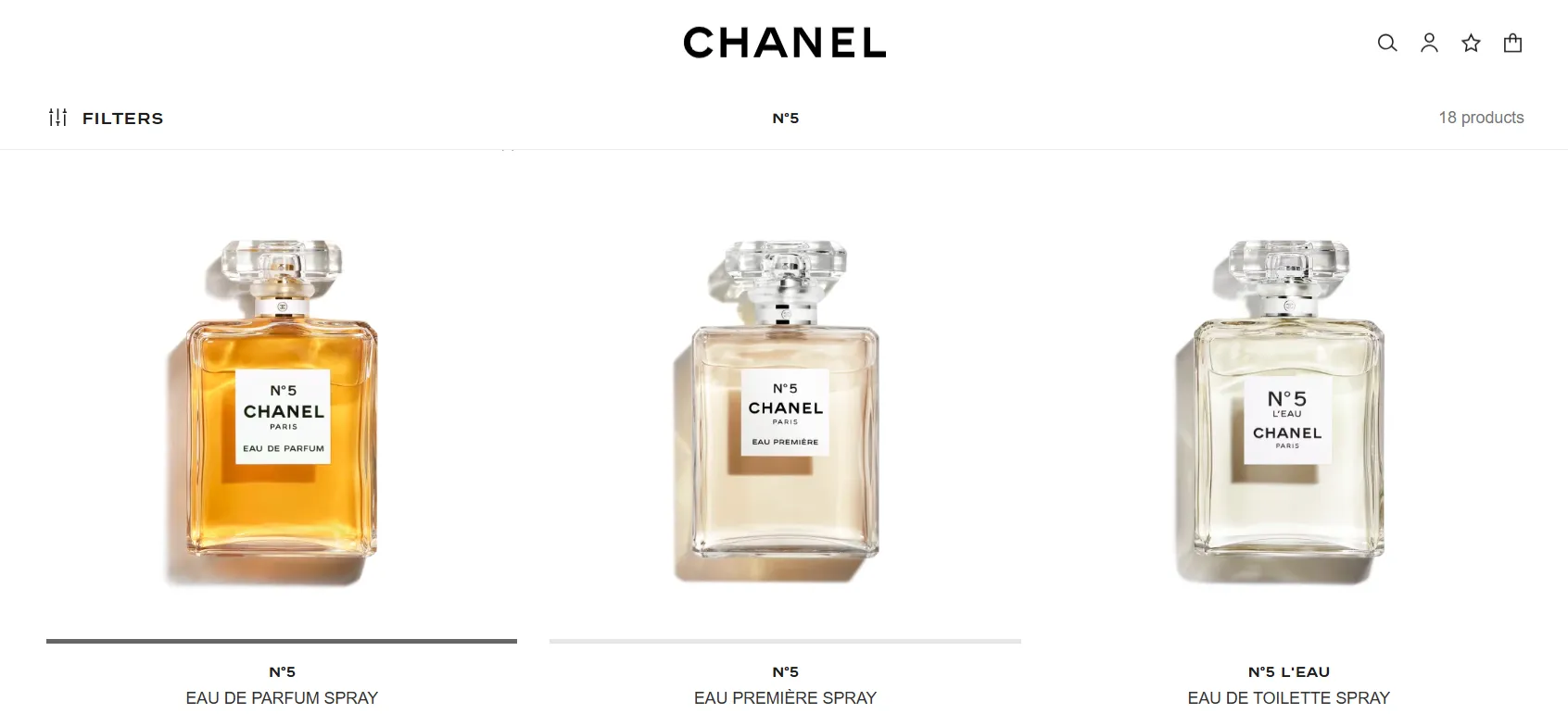
🔵Chanel (heritage and provenance)
Let’s understand the brand and packaging story of a luxurious perfume.
The Chanel No. 5 bottle has kept its rectangular silhouette and faceted stopper since 1924, with only cosmetic refinements since.
That's over a century of the exact same packaging decision, repeated deliberately rather than updated for trend cycles. The story here is told through the refusal to change a design that already works.
Coco Chanel asked perfumer Ernest Beaux to create something different from what was on the market at the time. Most women's fragrances then fell into two narrow categories: single-note florals (rose, violet, jasmine, worn alone) or heavy, ornate scents built to mimic natural bouquets.
She wanted neither. So, she asked Beaux for a "woman's fragrance that smells like a woman," something abstract and modern.
Beaux presented her with several sample formulas, numbered for reference during testing. Sample number five used aldehydes, synthetic compounds that add a sharp, almost sparkling quality that doesn't exist in nature. That was unusual for the time.
Chanel chose the fifth sample and simply kept its lab number as the name. No florid title, no reference to a flower or a place, just "No. 5."
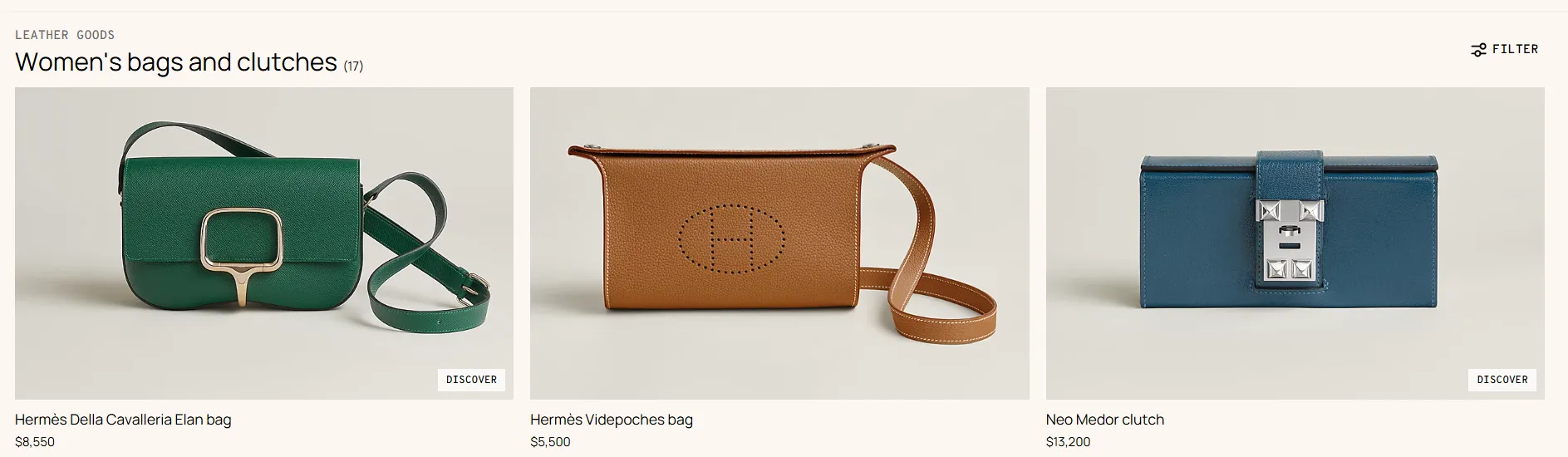
🔵Hermès (Craftsmanship narrative)
A single Hermès artisan builds a Birkin or Kelly bag from start to finish, by hand, over roughly 15 to 40 hours depending on the model and leather, a process that requires years of training before an artisan works unsupervised.
That craftsmanship story extends into the packaging itself: the house's signature orange box, introduced after a wartime shortage of the original cream-coloured material, is now as recognisable as the bags inside it.
The narrative here isn't stated on a tag. It's proven through hours nobody can shortcut.
Hermès never needs a paragraph explaining "master craftsmanship" because the production method itself is the proof.
One artisan cuts the leather, stitches every seam by hand using the traditional saddle stitch, assembles the whole bag, and often signs or stamps it internally. No assembly line, no division of labour across a dozen workers.
That single-artisan structure means the story is baked into how the object physically comes to exist.
When a customer learns a Kelly bag takes up to 20 hours of one person's undivided attention, and a Birkin can take up to 40, no further argument is needed. The number is the story.
The lesson for any brand trying to borrow this mechanic: craftsmanship storytelling only works if the process is genuinely slow, specific, and hard to replicate.
🔵Tiffany & Co. (the box as the storytelling device)
The Tiffany Blue box, introduced in the 1800s and trademarked as a specific shade of robin's-egg blue, is arguably more recognisable than most of what's sold inside it. Tiffany doesn't need to state "luxury" or "special occasion" anywhere on the packaging.
The colour and the white ribbon do that work on sight, before the box is even opened, and receiving one has become its own cultural shorthand for a significant moment. When packaging becomes symbolic enough, it stops supporting the story and starts being the story customers actually remember.

At Confetti, storytelling is the layer that decides the design in the first place. Our process to bring storytelling into branding and packaging:
Start with the tension: Before any design work, we map the exact customer problem the brand resolves.
Define the brand's role as guide: We position the brand as the tool or shortcut, and keep the customer as the protagonist in every piece of copy that follows.
Lock one narrative thread: We choose a single line the story runs on and stress-test it against every touchpoint before design starts, so it doesn't fracture across ads, pack, and website.
Translate the thread into material choice: Kraft vs. laminate, glass vs. pouch, matte vs. foil, each decided by what the story needs to signal.
Design the unboxing sequence deliberately: We decide what the customer sees first, second, and last, so the reveal paces the story instead of just protecting the product.
Write on-pack copy that proves the story: Replacing generic claims ("clean ingredients," "made with love") with specific language tied to the brand's actual tension and resolution.
Choose illustration or photography based on the narrative: Illustration for nostalgia or craft-driven stories, photography for realism-driven or ingredient-led ones.
Check every claim against the physical object: A sustainability story gets tested against the actual tape, seal, and mailer used.
Keep branding and packaging under one team: So the thread defined at the strategy stage doesn't get diluted or reinterpreted in a handoff to a separate packaging vendor.
Adapt execution by category: Mass-market FMCG, D2C, and premium/luxury each get different material and tone decisions.
We work across FMCG, D2C, and premium and luxury packaging, and the translation work looks different in each.
A mass-market beverage brand needs its story to survive shelf competition and a two-second glance. A premium skincare or wellness brand needs restraint and material quality to carry a story that would feel forced if it leaned on loud copy. A luxury-adjacent brand needs unboxing built as a repeatable ritual.
📌When the US based AIM nutrition brand reached out to us, we began by sitting down with AIM's leadership and researching its audience to understand the brand's vision and its time-starved customers.
From there we built the story around a single idea, that wellness should fit into one minute a day, and turned it into a positioning built on convenience, trust, empowerment and simplicity.
We then carried that story through a friendly, energetic verbal identity and an approachable logo, palette and playful illustrations, so the Sleep, Beauty and Energy MeltinStrips all feel like part of one brand.
What is brand storytelling in simple terms?
Brand storytelling is the deliberate narrative a business builds around why it exists and what changes for the customer who buys from it. It has an origin, a tension, and a resolution, unlike a mission statement, which only states a belief without a plot.
How is storytelling different in packaging versus advertising?
Advertising tells a story to whoever sees the ad, which isn't every buyer. Packaging tells it to every single customer who holds the product, through copy, structure, material, and unboxing sequence rather than a headline and a visual. It's proven physically.
Do small or new brands need a brand story, or is that only for established brands?
New brands need it more. Without decades of heritage to lean on, a clear narrative is often the only differentiator against near-identical competitors on a crowded shelf. Waiting until a brand is "big enough" for storytelling usually means losing customers to one that started sooner.
What's the difference between a brand story and a brand mission statement?
A mission statement declares a belief: "we exist to make sustainable snacking accessible." A brand story shows that belief in action, through a specific origin, a customer's problem, and how the brand resolves it. One is a sentence. The other has characters, tension, and change.
How do you tell a brand story without words, just through packaging design?
Through material choice, structural form, and unboxing pace. Recycled kraft signals sustainability before a customer reads a word. Foil and soft-touch lamination signal premium positioning. A slow, sequenced unboxing signals ritual. These are silent narrative devices, and they often carry more weight than copy.
Can storytelling work for commodity or functional products (not just lifestyle brands)?
Yes, and it is more important where products are functionally identical. Salt, batteries, and cleaning supplies rarely differ on formulation, so the brand that gives customers a specific reason to remember it, not just a feature list, wins repeat purchases in categories where nothing else separates competitors.
How often should a brand's story or narrative be revisited or updated?
The core thread should rarely change; heritage brands like Chanel prove restraint outlasts reinvention. What needs periodic review is how that thread shows up physically, materials, copy tone, unboxing, especially after a rebrand, a new category entry, or a shift in what the target customer actually values.
Want strategic branding and packaging like this for your business?





.webp)
.webp)

.webp)
.webp)
.webp)
.webp)
.webp)






.svg)
.webp)