%201.webp)
02
AI Snaps
.svg)
.svg)
01
Our Work
03
About Us
04
Brand Audit
05
Contact Us
06
Client Success
12
07
Blogs
08
Careers
Book A Call
.svg)



Need Help In Building Your Brand?
Click the button below & book a call with our founder directly.

Rishabh Jain
Managing Director
Hyphen | Confetti's Verdict ⭐⭐⭐½
Confetti Design Studio has analysed Hyphen, the skincare brand actor Kriti Sanon co-founded alongside the team behind mCaffeine. She joined not as a paid face but by messaging the mCaffeine founders directly with a detailed brand vision, and now holds an operating title as Chief Customer Officer with a real remit over product and customer experience. The brand was built inside an existing operator rather than launched as a standalone celebrity side project, which is the single fact that explains almost everything else about how fast it has grown. This audit asks what happens once a genuinely well-built brand keeps reaching for a louder story than its real numbers need. This audit is as per August, 2026.
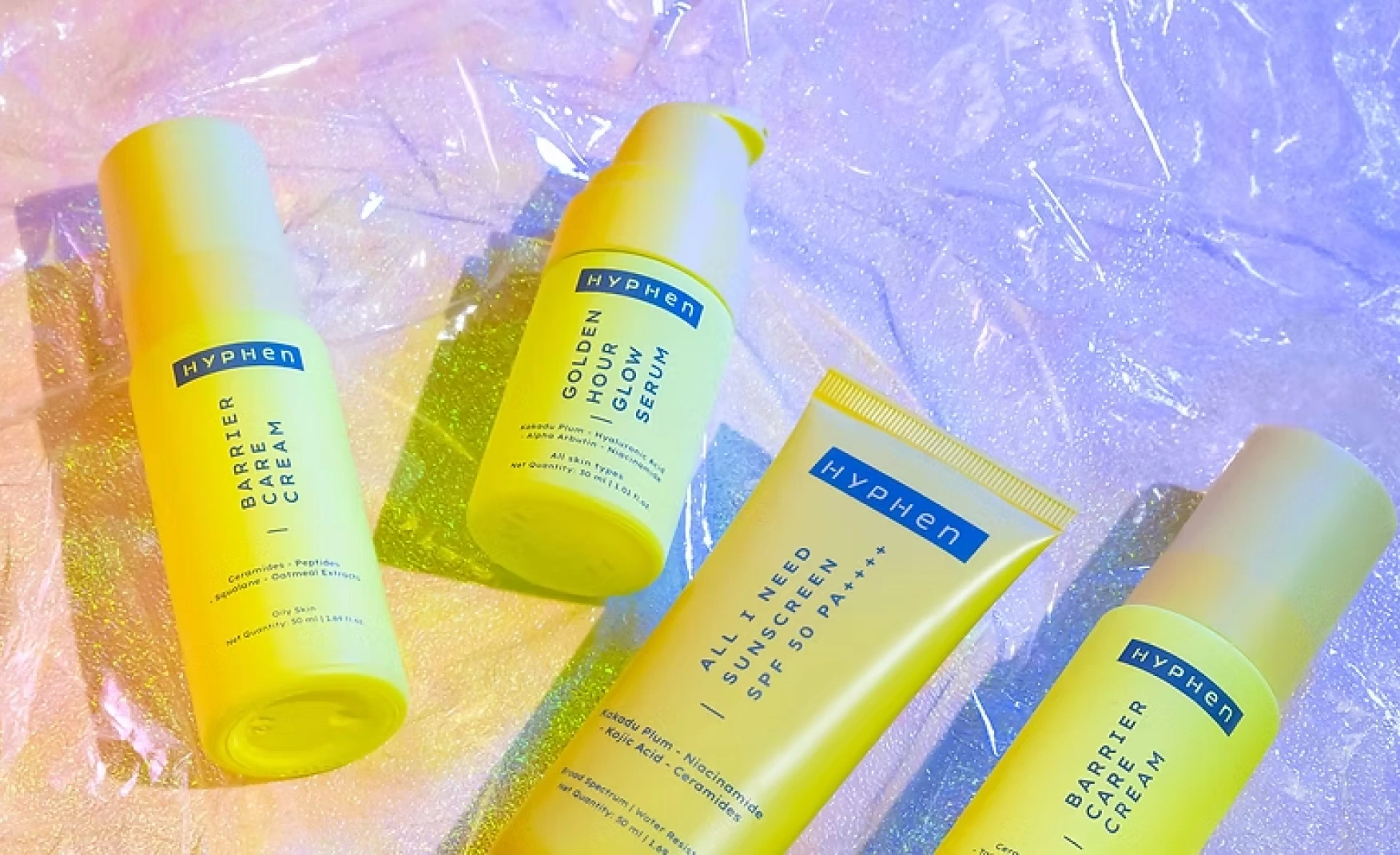
Most skincare brands in India name themselves after a benefit or a vaguely clinical coinage, then spend years explaining what they actually stand for.
Hyphen chose a name that carries its entire product philosophy inside a single punctuation mark, describing its formulations as ones that "hyphenate" multiple active ingredients into one multi-benefit solution. That idea maps cleanly onto a genuine consumer frustration, the exhausting complexity of a ten-step routine, and gives the brand a built-in reason to exist that a purely aspirational name never could.
The tagline "Have It All" extends the same thought, positioning Hyphen against regimen fatigue and promising completeness instead of another bottle to add to an already crowded shelf.
The strategic payoff is that the name creates a frame every future product can launch into. A multi-ingredient cleanser, a multi-benefit sunscreen and a concern-specific anti-acne range all reinforce the same central promise without the brand having to reintroduce itself each time.
For a brand entering one of the most crowded categories in the country, starting with a name this short, ownable and conceptually loaded is a meaningful head start that keeps paying off long after the launch campaign ends.
The default celebrity beauty play in India is an endorsement dressed up as a partnership, where a star lends a face and a fee for a percentage of nothing that matters.
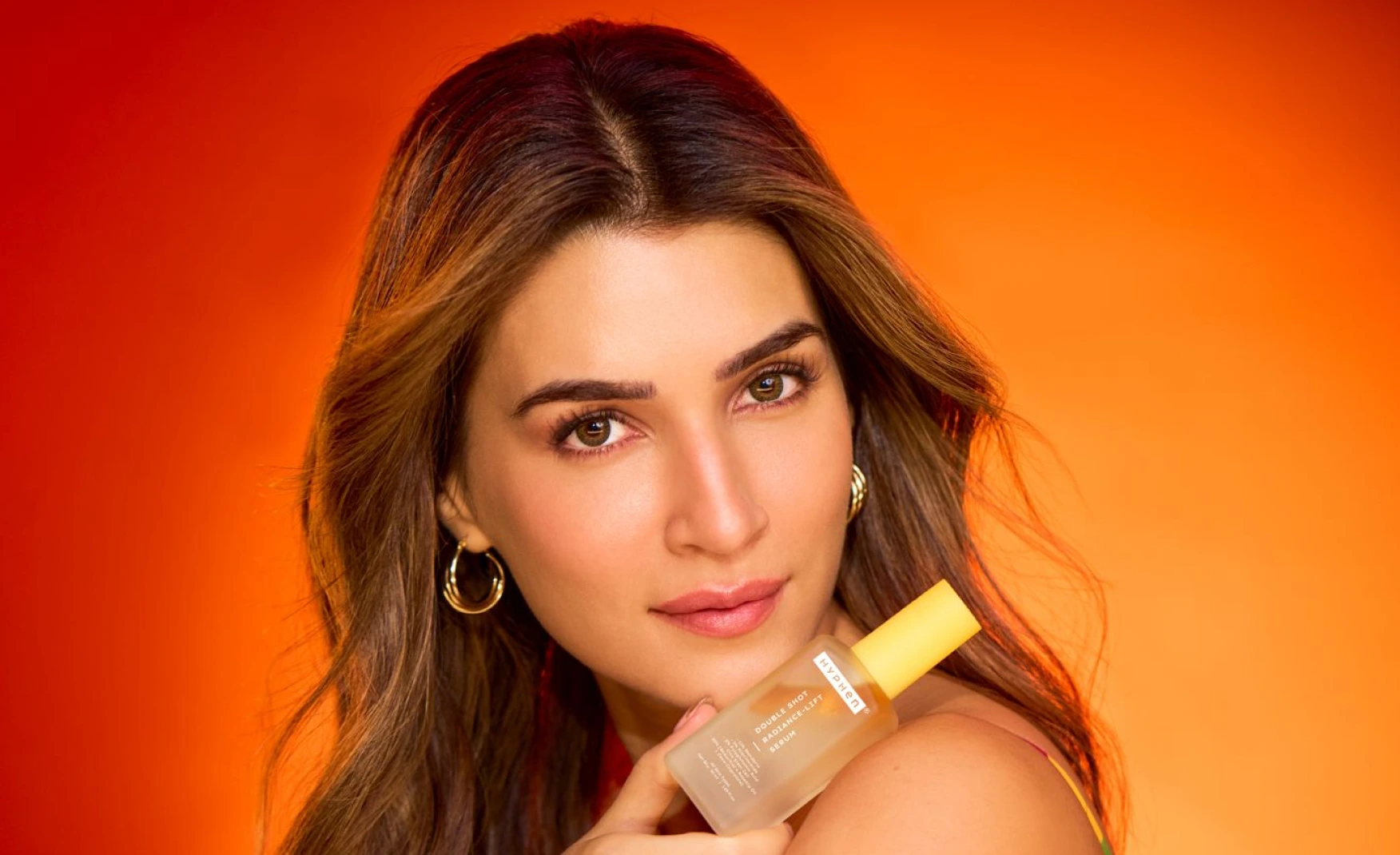
Hyphen is structured differently, since Kriti Sanon is a genuine co-founder who initiated the project herself and holds an operating title as Chief Customer Officer. The company states she interacts with around 40 to 50 consumers a month to gather feedback that actually shapes product iterations, not just campaign moments.
A celebrity who is contractually a co-owner has a reason to keep showing up long after the launch buzz fades, and Hyphen has been deliberate about presenting her as an owner and originator rather than an occasional visitor.
The founding pairing itself is well designed, joining a mainstream celebrity with real reach to an operating team that had already built and scaled mCaffeine. That combination solves the two hardest problems a new beauty brand faces at once, getting noticed and being able to actually make, ship and sell product at quality.
It is a large part of why the brand went from launch to a real, audited business inside two financial years, and a model more Indian celebrity brands should study rather than imitate the surface of.
A celebrity name opens the door, but it does not formulate a stable sunscreen, negotiate quick-commerce shelf space or run a supply chain.
Hyphen never had to learn any of that from scratch, since it launched inside PEP Technologies, the company that already owns and operates mCaffeine, a personal care brand doing roughly ₹187.5 Cr a year. It plugged into an existing engine of formulation capability, manufacturing relationships and D2C infrastructure on day one.
Building a beauty brand to fifty crore in revenue normally takes years of painful trial and error on the operational side, and Hyphen compressed that timeline by inheriting a playbook already proven once.
The parent company's own numbers tell the story clearly, with PEP Technologies growing operating revenue to ₹237.5 Cr in FY25 while cutting net losses by 81% to ₹18 Cr. Hyphen was singled out as the group's fastest-growing engine after mCaffeine's own growth flattened, effectively becoming the momentum story for its more established sibling.
For a founder deciding whether to build alone or build inside a capable house, Hyphen is a genuinely useful case study in how much runway an operating partner can buy.
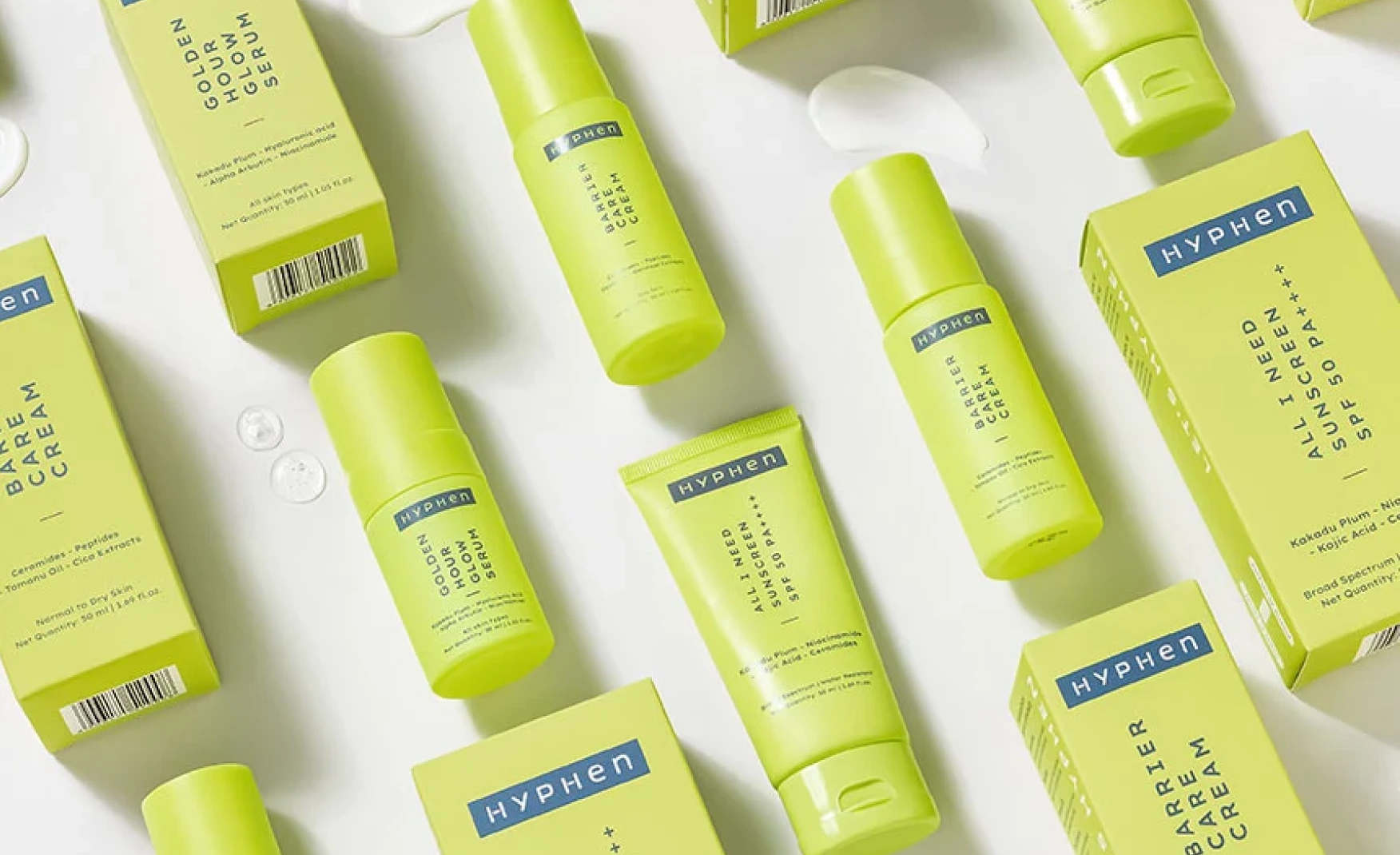
Indian mass skincare has a strong pull toward loud packaging, clinical blues and shouty claims stamped across every surface.
Hyphen resists that gravity, leaning on soft neutral tones, generous white space and clean typographic layouts that look closer to a quiet-luxury lifestyle brand than a drugstore active. For a product priced to be accessible, looking this considered is a genuine perceived-value advantage, since the packaging signals a premium the price tag does not demand.
This restraint suits the audience Hyphen is chasing, a young, digitally native consumer who has grown up on international minimalist beauty and reads clean design as a marker of seriousness and safety.
The strength here is systemic rather than surface-level, since a consistent identity means the sunscreen, the serum, the cleanser and the anti-acne range all read as one family, compounding recognition every time the consumer sees a Hyphen product on a shelf or a feed.
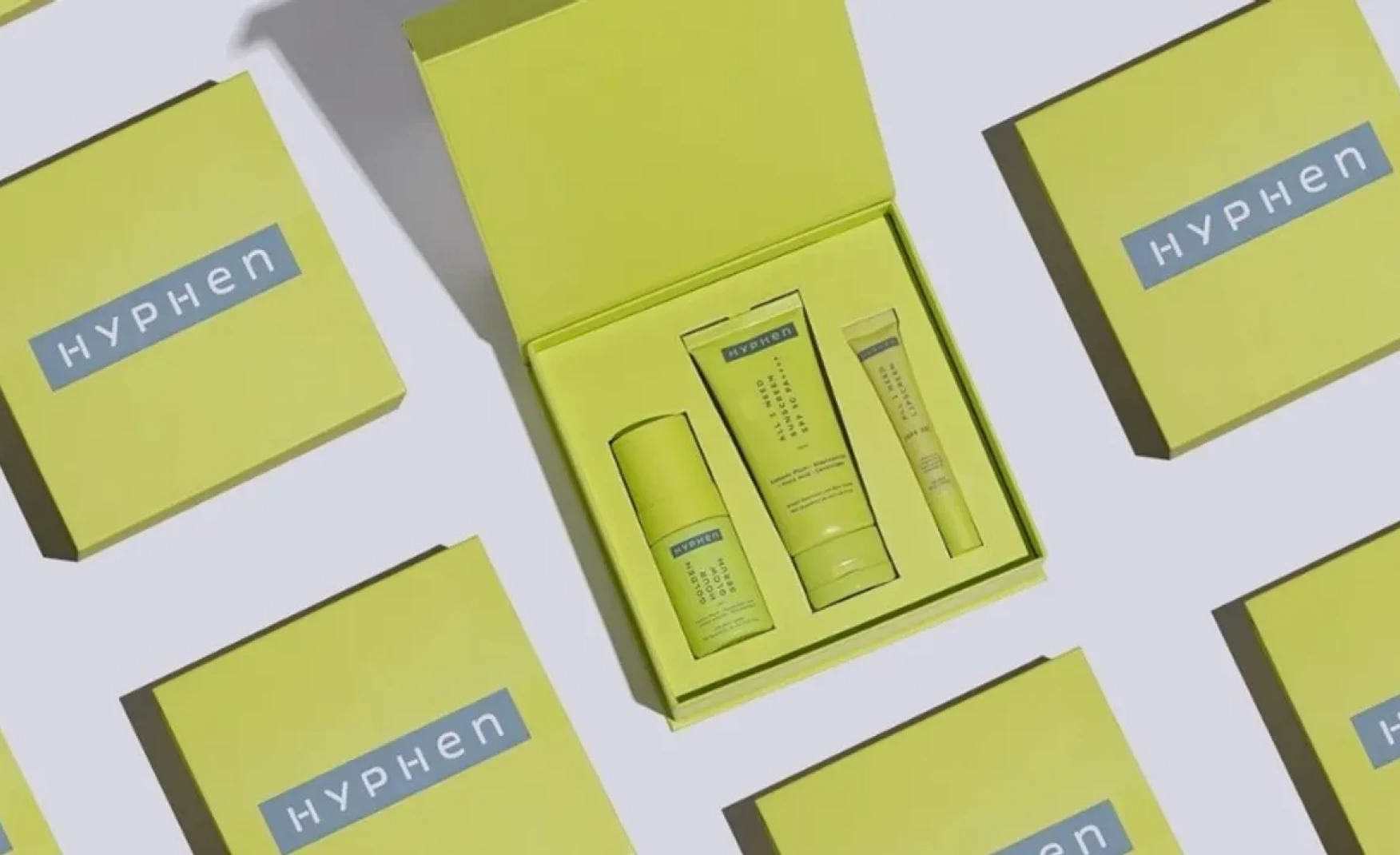
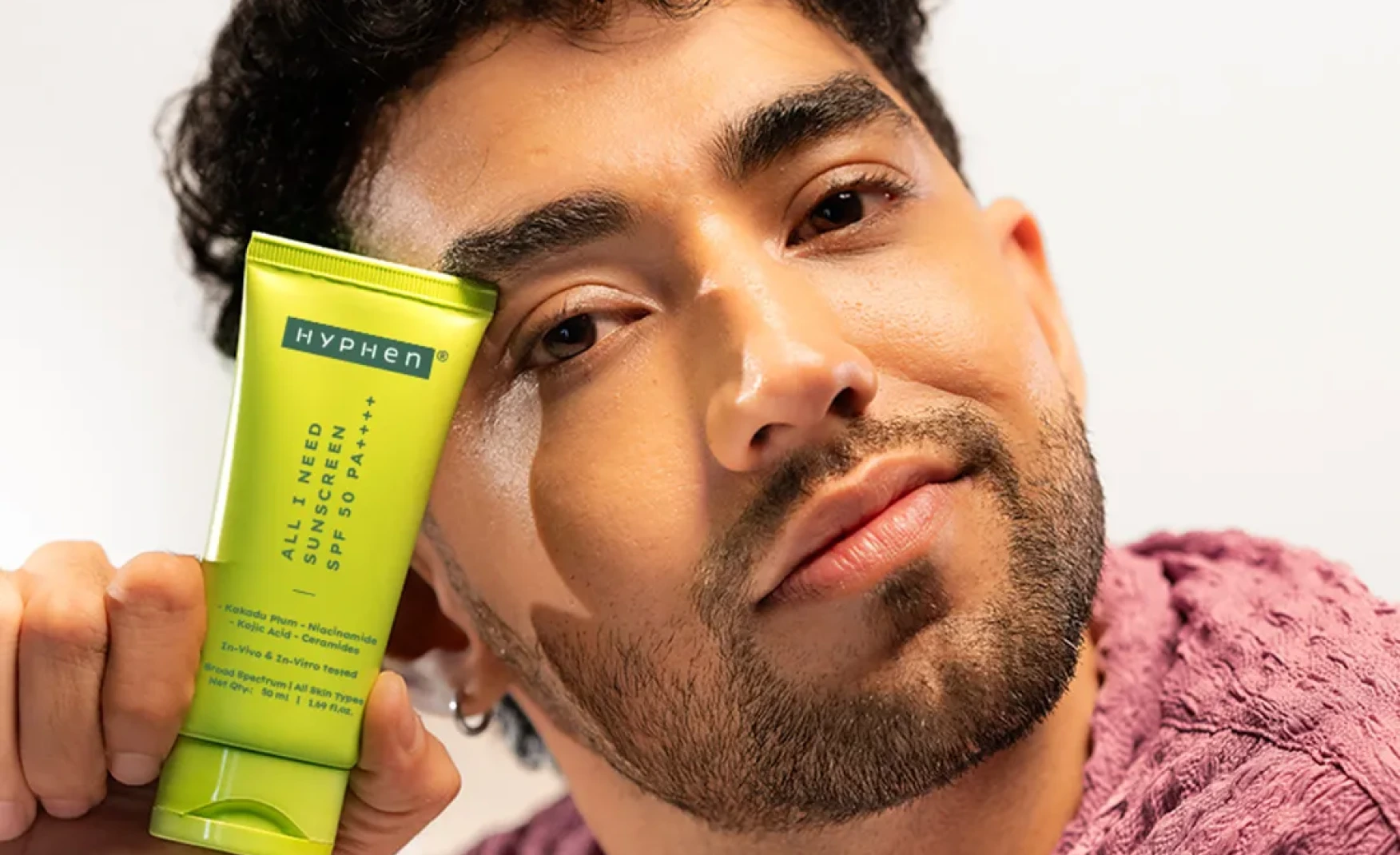
Hyphen made a shrewd category bet with its most recognisable product, the All I Need Sunscreen SPF 50 PA++++, pitched on UVA, UVB and blue-light protection with niacinamide and kojic acid folded in.
Sunscreen is one of the smartest wedge products a new Indian skincare brand can choose, since it is a fast-growing, high-repeat, low-controversy category that consumers are already being educated to adopt. A strong sun-care hero gives a sceptical first-time buyer an easy, low-risk reason to try the brand.
Just as important is where Hyphen chose to sell, running a deliberately omnichannel model where roughly half of sales come through its own website and the rest flow across seventeen-plus marketplace and quick-commerce partners including Amazon, Nykaa, Flipkart and Blinkit.
Placing an impulse-friendly hero like sunscreen inside quick commerce, where beauty is one of the fastest-rising categories, is a well-judged distribution call. The brand is riding a structural shift in how India buys beauty rather than fighting it, and layering the celebrity discovery engine on top gives it unusually little friction between attention and trial.
The single biggest risk Hyphen has created for itself is a credibility gap of its own making.
The brand has publicly celebrated a ₹400 Cr annual run-rate and a fastest-to-₹100-Cr narrative, framed in gross and run-rate terms, while its audited FY25 revenue came in at ₹50.4 Cr with a widened net loss of ₹12.9 Cr. Those two ways of describing the same business are far enough apart that the gap became a story in itself, with a widely shared social critique calculating an implausible-sounding jump from the roughly ₹7.6 Cr the brand reported the year before.
This matters more for Hyphen than it would for most brands, because Hyphen sells trust, and a skincare brand built on the promise of science and honesty cannot afford a running argument about whether its headline claims are real.
Unverified figures like a four million customer base and a 60% repeat rate only widen the opening for sceptics, even though the underlying business is genuinely strong and genuinely fast-growing enough that it did not need the extra framing.
Kriti Sanon is Hyphen's greatest asset and, in the same breath, its most concentrated risk.
A brand whose discovery engine is a single film star inherits her trajectory, her public standing and her attention, none of which the brand controls. The celebrity-founder model has bought Hyphen extraordinary speed, but the harder question is what it becomes once the novelty of a Kriti Sanon skincare line is no longer new.
The cautionary context is the celebrity beauty graveyard, full of brands that mistook a founder's fame for a durable business.
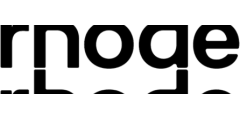
The counter-examples that endure, such as Rhode, which Hailey Bieber built into a business later acquired by e.l.f. Beauty succeeded by making the product and the brand system strong enough to outlast the founder's direct involvement. Hyphen has the operator backbone to do this, but it has not yet proven a product wins on the shelf when the customer is not thinking about the person on the label.
Hyphen is competing in what is arguably the most contested category in Indian consumer goods right now, and the competition is both well-funded and further along.
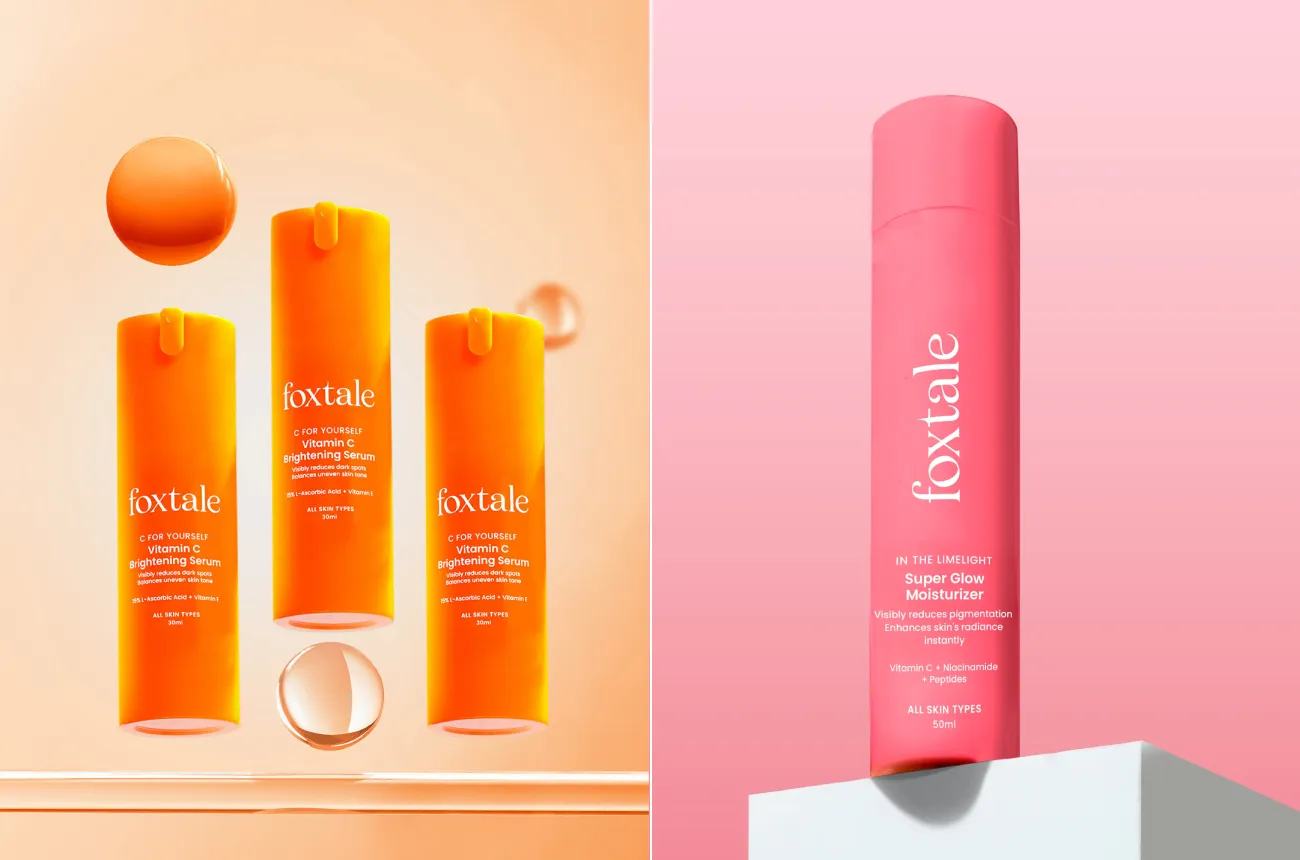
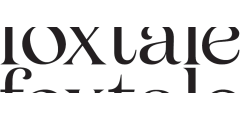
Minimalist was acquired by HUL for ₹2,955 Cr on the strength of an actives-led science story, and Foxtale has raised over fifty million dollars and pushed past ₹700 Cr in GMV with a KOSÉ partnership behind it. Against that field, Hyphen's fifty-crore base is a strong two-year start but still a modest position in a category consolidating around deep scientific credibility or major strategic backing.
Compounding the crowding is a differentiation question about the brand's own look, since Hyphen's muted, minimal aesthetic has drawn repeated public comparison to Rhode.
The name and the multi-ingredient positioning are distinctive, but the packaging and art direction do not yet feel unmistakably Hyphen's own, and in a category this saturated, looking like everyone's favourite reference is not the same as being memorable.
Hyphen's fastest route to durable equity is to stop treating All I Need Sunscreen as one product and start treating it as a franchise the whole brand can be known for.
The most valuable beauty brands are anchored by a category they visibly own, and sun care is the most natural territory for Hyphen given the strength and repeat behaviour of its existing hero. Owning "the sunscreen people" would give the brand a defensible position that neither the celebrity story nor the crowded serum shelf can provide on their own.
The work is to build outward with intent, extending into formats and finishes that all ladder back to the same recognisable hero rather than scattering attention across every trending active.
The credibility gap Hyphen created with its run-rate messaging is a symptom of a deeper opportunity, since the brand talks about science far more than it shows it.
Confetti's general experience with actives-led beauty brands shows that designing proof into the brand, concentration percentages presented clearly, visible formulation logic, and genuine dermatological validation, converts a science narrative from assertion into demonstration. This is as much an information-architecture challenge as a scientific one, since the goal is to make trust something the consumer can see on the pack itself.
Get this right, and the audited numbers stop being a vulnerability and start being the least interesting thing about the brand.
Hyphen's long-term value depends on becoming a brand people trust independently of the celebrity who launched it.
The direction is not to abandon the restraint that already reads as premium, but to give it a point of view only Hyphen could own, a proprietary type treatment or a recurring structural motif built around the hyphen itself. The hyphen is a gift of a visual device, and the brand has barely begun to exploit it as an ownable graphic system.
The brands that survive the celebrity-beauty cull are the ones that made themselves memorable on their own terms, and Hyphen has everything it needs to be one of them if it chooses distinctiveness over familiarity.
Hyphen is one of the most impressive brand launches Indian beauty has seen in years, and the reasons are structural rather than accidental.
It pairs a name that does genuine strategic work with a celebrity who behaves like a builder, an operating backbone borrowed from a proven D2C parent, and a hero product placed exactly where beauty demand is growing fastest.
The tension is that the brand keeps reaching for a greater story than its already-strong reality requires, and that instinct is its biggest risk. A ₹400 Cr run-rate headline sitting atop ₹50.4 Cr of audited revenue invites exactly the credibility fight a trust-based skincare brand cannot afford.
If you are building a beauty or skincare brand and want your name, packaging and story to carry as much weight as your product, get in touch with Confetti Design Studio.
Want strategic branding and packaging like this for your business?




.webp)
.webp)

.webp)
.webp)
.webp)
.webp)
.webp)







.svg)
.webp)


.svg)
.svg)














































.webp)




.webp)

.svg)