%201.webp)
02
AI Snaps
.svg)
.svg)
01
Our Work
03
About Us
04
Brand Audit
05
Contact Us
06
Client Success
12
07
Blogs
08
Careers
Book A Call
.svg)



.svg)
Need Help In Building Your Brand?
Click the button below & book a call with our founder directly.

Rishabh Jain
Managing Director
The products that work best on quick commerce in India fall into 7 categories: groceries and staples, dairy, snacks, beverages, personal care, household supplies, and health/ OTC products.
If you are evaluating whether your product belongs on quick commerce platforms, this blog is for you. Learn which categories dominate, how to test your product's fitness, where to list platform-by-platform, and how packaging redesign drives visibility and repeat orders.
Quick commerce in India is not ecommerce with faster delivery. It’s a fundamentally different retail model. It runs through a network of dark stores and small hyperlocal micro-warehouses positioned across city neighbourhoods.
The products that win on quick commerce platforms are not necessarily the ones with the best reviews or the widest range. They are the ones that fit quick-commerce buying behaviour:
✅Impulse
✅Essentials
✅Repeat-use
Q-commerce runs on dark stores, small, hyper-local fulfillment centres that are closed to the public and built purely for rapid picking and dispatch.
A usual dark store is 1,500–3,000 sq ft, positioned within 2–4 km of a dense residential or commercial cluster, and optimised to get an order out the door in under 10 minutes.
Blinkit currently operates 2,000+ dark stores across India. Zepto has crossed 1,000.
Both are expanding aggressively into Tier-2 cities like Jaipur, Lucknow, Indore, and Coimbatore, not just the metro markets where q-commerce first took hold.
Dark stores stock 3,000–8,000 SKUs at most. A large supermarket carries 30,000+. Every square foot and every SKU slot has to earn its place through velocity. Slow-moving products get delisted.
When delivery takes 8 to 20 minutes, customers don’t browse and think about what to buy.
They open the app already knowing what they need or what they want right now. The use case is urgent replenishment or instant gratification, not discovery.
When someone realises mid-week that they have run out of soap or detergent, they are not opening quick commerce apps to explore alternatives. They are typing the exact name of what they need and expect delivery in 10 minutes.
Data from Instamart’s 2025 analysis shows the pattern clearly:
📊One user in Kochi ordered curry leaves 368 separate times
📊A Kolkata user placed 1,197 orders across the year
Milk, eggs, bread, bananas, dahi, etc are outselling in many cities.
Not every FMCG product belongs to q-commerce. The ones that consistently perform share three traits:
💡Needed frequently
💡Needed now
💡Easy to pick, pack, and deliver fast
The seven categories below have proven this across platforms and cities.
Atta, rice, dal, cooking oil, spices, and packaged grains are the backbone of every Indian kitchen and the highest-volume category on q-commerce by order count.
These products are consumed daily and have no real substitute.
When someone runs out of toor dal or groundnut oil mid-cooking, waiting until tomorrow is not an option. The purchase frequency is also exceptionally high which means repeat order velocity is built in.
Blinkit and BigBasket BB Now lead here. BB Now in particular has invested in staples depth, carrying regional variants and pack size options that other platforms don't.
📌One of the few categories where regional and private label brands are genuinely competing with national players.
Milk, curd, paneer, butter, eggs, fresh fruits and vegetables, packaged coconut water. Categories that move every single day across every dark store in the country.
Perishability creates urgency on both ends. The consumer cannot wait, fresh produce and dairy are needed today. And the supply chain cannot afford to let stock sit.
Swiggy Instamart and BigBasket BB Now lead in fresh. Zepto is investing heavily but faces supply chain gaps in some cities.
📌If you are a dairy or fresh brand, your q-commerce viability depends as much on your supply chain integration as your product. Dark stores need consistent, scheduled restocking, often twice daily. Brands that cannot meet that cadence get delisted regardless of demand.
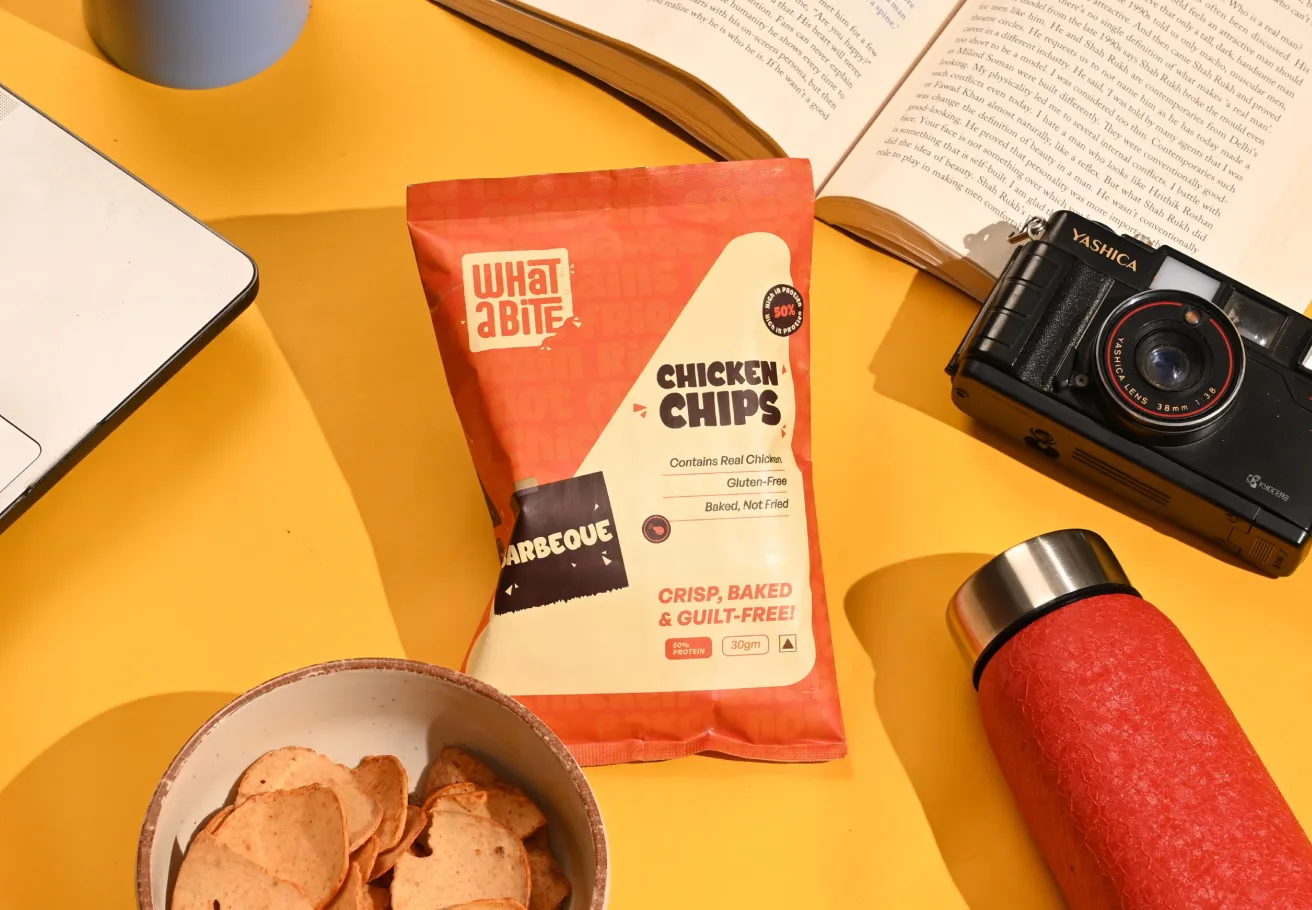
Chips, biscuits, namkeen, instant noodles, ready-to-eat meals, frozen snacks.
The category that arguably benefits most from q-commerce's impulse-friendly environment.
Long shelf life makes inventory management simple. High reorder frequency makes algorithmic visibility easier to build. And the impulse trigger is real.
A 10 PM snack craving is exactly the kind of demand that q-commerce was built to capture. Lay's, Maggi, and Haldiram's are perennial top-sellers across platforms for this reason.
Blinkit and Zepto both carry aggressive snack SKU depth. Zepto in particular has used snacks as a customer acquisition category, frequent discounting and bundling to drive first orders.
📌D2C snack brands are the fastest-growing sub-segment here. Healthy snacks (millet-based, high-protein, low-sugar), regional specialties, and premium namkeen are all finding real traction. ₹50–₹120 price band with single-serve or small multipack formats tends to perform best.
Cold drinks, juices, energy drinks, packaged water, health drinks, nimbu pani, coconut water.
A category with built-in seasonality and some of the strongest basket attachment behaviour on the platform.
Beverages are consumed immediately. They are also frequently ordered alongside food delivery.
Someone ordering biryani on Swiggy often opens Instamart in the same session to add cold drinks. That co-purchase behaviour inflates beverage volumes beyond what standalone demand would suggest.
Blinkit leads in beverages largely because a significant portion of its dark stores have chilled storage, allowing it to deliver cold products.
Beverage orders across platforms spike 3–4x during peak summer months (April–June), making this one of the most seasonally volatile categories to plan inventory for.
📌Energy drinks, functional beverages like flavored low calorie or drinks with health benefits, and premium packaged water (electrolyte drinks, infused water) are growing fast.
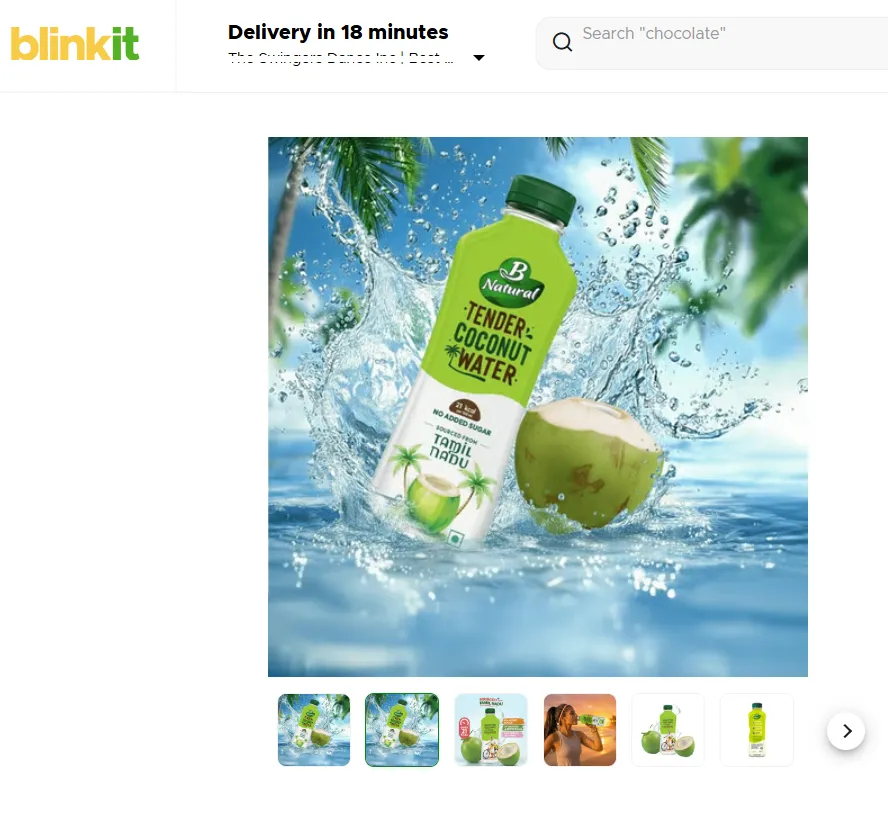
At Confetti, we have worked with beverage brands such as ITC B Natural and designed their packaging for quickcommerce.
Face wash, moisturisers, shampoo, toothpaste, razors, sanitary products, deodorants.
High-urgency, high-frequency, and for D2C brands one of the most competitively interesting categories on the platform.
The run-out moment is the dominant purchase trigger. Running out of toothpaste or a razor blade at 7 AM is not something most people want to solve with a supermarket trip. Q-commerce resolves it in 15 minutes. The urgency is real and consistent.
Zepto and Blinkit lead in personal care SKU depth and order volume. This category has grown significantly post-2024 as quick commerce positioned itself as a faster alternative to beauty e-commerce platforms.
Clean beauty, ayurvedic skincare, and wellness-led personal care brands are gaining meaningful traction. Minimalist, Mamaearth, and The Derma Co. are all active on q-commerce.
📌If you are a D2C brand in this space, packaging clarity is super important. Customers are selecting your product from a thumbnail. Your key benefit needs to be readable at that size.
Detergent, dish soap, toilet cleaner, floor cleaner, room fresheners, garbage bags, dishwasher pods. Unglamorous, essential, and consistently high-volume.
These products run out without warning and are needed immediately when they do. And unlike, say, a specialty food item, there is no workaround. The replacement need is direct and urgent.
Blinkit and BigBasket BB now carry the deepest catalogue here. BB Now's strength in staples extends into household supplies, with strong private label options.
📌Private labels dominate this category more than almost any other on q-commerce. HUL, Reckitt, and platform-own brands command most of the volume. For an independent brand to compete, packaging differentiation is a must.
Paracetamol, antacids, vitamins, protein supplements, baby care essentials, oral rehydration salts. The highest-urgency category on the entire platform.
Nobody waits 24 hours for medicine. A fever at midnight, a child with an upset stomach, a gym session that depleted the last scoop of protein powder, these are not deferrable needs. Q-commerce is the only channel that resolves them without a pharmacy visit.
Zepto has invested most aggressively in pharma SKUs, partnering with pharmacy chains and building dedicated health sections.
All major platforms now carry OTC medicines, but depth and availability vary significantly by city and dark store.
The health and wellness category growing year-on-year on q-commerce platforms. Protein supplements, immunity boosters, and baby nutrition are the standout sub-categories.
📌Sexual wellness is another fast-growing sub-category, products like condoms and personal lubricants have seen 40%+ year-on-year growth on q-commerce platforms, driven largely by the privacy and discretion that home delivery offers compared to a pharmacy counter. Emerging Quick Commerce Categories to Watch in 2026–27
These categories are not yet driving the volume that staples or snacks do, but the growth trajectories are hard to ignore.
If your brand plays in any of these spaces, early listing gives you a visibility advantage before competition densifies.
➡️Pet Care
Food, treats, grooming supplies, and hygiene products for pets are among the fastest-growing non-food categories on both Blinkit and Zepto.
Both of which significantly expanded their pet SKU count.
➡️Baby Products
Diapers, wipes, formula, and rash creams carry some of the highest urgency of any category on the platform.
Running out of diapers at 2 AM is not a problem anyone solves with a scheduled delivery.
➡️Ready-to-Eat & Frozen Meals
Cloud kitchen brands are increasingly using q-commerce as a distribution channel rather than just food delivery apps.
Frozen snacks, parathas, momos, and meal kits are all seeing rapid growth helped by improving freezer infrastructure in dark stores.
➡️Electronics Accessories
Phone cables, earphones, power banks, and screen protectors are now mainstream q-commerce SKUs.
Immediate need, a charging cable that just broke before a flight makes this a natural q-commerce fit.
➡️Gifting SKUs
Chocolates, flowers, dry fruit boxes, and occasion-specific gift packs spike sharply around Diwali, Raksha Bandhan, Valentine's Day, and birthdays.
Brands that build q-commerce-ready gift packs compact, well-presented, priced between ₹299–₹999 are well-positioned to capture last-minute gifting demand.
Not every product belongs on quick commerce.
Dark stores have physics. Algorithms have preferences. And your product either fits or it doesn't.
Run your SKU through this five-point checklist before you approach a single platform manager:
1. Does it have a shelf life of 7+ days❓
Dark store cold chain is limited. Most ambient storage runs at room temperature. Products that expire in under 7 days such as fresh chapatis, cut fruits, unpackaged dairy, which add wastage risk that platforms don’t like.
The safe zone for ambient products is 30+ days.
For chilled, 7–14 days absolute minimum.
Ask yourself: if your product sits in a dark store for 10 days before someone orders it, can you still deliver quality? If not, redesign the shelf life or stay off q-commerce.
2. Is it under 5 kg and compact enough to fit a delivery bag❓
Q-commerce delivery happens on two-wheelers. The standard delivery bag is roughly 18" x 14" x 12". Your product must fit inside, often alongside two or three other orders.
Heavy SKUs (above 5 kg) or bulky shapes (mop handles, large storage containers, odd-sized boxes) get deprioritized by platform algorithms. Delivery partners reject them.
The platform's fill rate metric suffers. Your listing gets buried.
3. Do customers need it urgently or repeatedly not just “nice to have”)❓
Q-commerce behaviour has two drivers. "I ran out" (replenishment). Or "I need it right now" (immediate consumption).
Check your category. Does a normal person ever think "I need this delivered in 10 minutes"? If the honest answer is no, you're forcing urgency.
Replenishment frequency must be at least once a month. Ideally weekly or daily.
4. Does it have a strong visual identity in a thumbnail❓
On Blinkit, Zepto, or Instamart, your product appears as a 200x200 pixel image. No shelf context. No 3D shelf-talkers. No customer picking it up and reading the back label.
Screenshot your product thumbnail from a q-commerce app. Shrink your browser to 200px. Can you still read the brand name?
Does the product stand out from competitors on the same search results page? If not, redesign before you list.
5. Can your supply chain reliably serve dark stores in 24–48 hours❓
This is where most brands fail. Platforms penalise stockouts aggressively. A product that goes out of stock for 48 hours drops in search ranking.
Two stockouts in a month and your listing is effectively dead.
You need to ship small quantities (often 10–50 units per SKU per store) to 50+ dark store locations across multiple cities. Every 3 to 4 days. Without fail.
If your distribution runs on monthly truckloads to central warehouses, you're not ready. Build a dark store fulfilment layer first.
That means: smaller carton sizes, faster order-to-dispatch windows, and inventory visibility systems that talk directly to platform APIs.
6. Does it have a healthy per-unit margin (ideally 20–30%+ after all QC costs)❓
Quick commerce platforms charge high commissions (15–25%), plus you’ll incur dark store fees, last-mile delivery costs, and frequent promotions.
Low-margin items (e.g., single bananas, ₹5 biscuits) lose money unless bundled.
A strong unit margin ensures you can absorb discounts, surge orders, and still turn a profit.
7. Is it durable enough to survive multiple touches and fast handling❓
Unlike e-commerce, QC dark stores are chaotic.
Items get picked, dropped, bagged, and bounced on a scooter. Brittle glass jars, thin plastic containers, or easily crushed chips lead to high damage returns (which you pay for).
Products with sturdy packaging (e.g., PET bottles, laminated pouches, boxes) reduce claims and keep customers happy.
8. Is it easy to store and rotate in a dark store without special handling❓
Dark stores are small, high-density racks.
Bulky items (e.g., 12-roll toilet paper), odd shapes (e.g., mops), or temperature-sensitive goods that don’t fit the existing cold chain will either be rejected or cost you extra storage fees.
If your product needs refrigeration below 4°C or a separate hazardous shelf, you’ll need platform approval, and may lose the speed advantage.
9. Can you handle sporadic demand spikes without breaking your shipping SLA❓
QC orders follow sharp peaks: evenings, weekends, cricket matches, or after a competitor’s stock-out.
Your supply chain must replenish dark stores within 24–48 hours reliably, but also scale up on 2-hour notice.
If you batch-ship weekly or use slow couriers, dark stores will delist you for chronic OOS (out-of-stock).
Test your ability to ship partial pallets same-day to 3–4 zip codes before partnering.
10. Is your product safe from “order clubbing” returns❓
Return rates in QC can hit 8–12% because customers over-order then reject at door (e.g., buy Coke and Thums Up, return the one that arrives second).
If your product is perishable, fragile, or single-use, you may not get it back – platforms will write it off and deduct from your settlement.
Ensure your packaging and return policy account for this (e.g., low-cost COGS, or a “no return” category fit).
11. Can your product be cross-sold with a top-10 dark store item❓
Platforms actively bundle your product with bestsellers (milk, bread, eggs, cola).
If your SKU naturally pairs with one of these e.g., peanut butter with bread, cat treats with cat litter, you get algorithmic promotion.
If it’s unrelated (e.g., a phone charger with bananas), you’ll pay for your own discovery. Map your product to a high-frequency “anchor” item before listing.
12. Is your product searchable by a generic, high-intent keyword (not just your brand)❓
Customers don’t search “Em Artisanal Kombucha.” they search “probiotic drink” or “gut health drink.”
Ensure your product title and backend tags include the category root word that a stressed buyer types at 9 PM.
If your brand isn’t already a top-of-mind generic term (like “Maggi” or “Nike”), you must optimize for the problem, not the label.
You have four viable quick commerce channels in India today. Each operates differently - distinct personality, onboarding process, and commercial model.
Blinkit is the market leader with 40%+ market share and 2,200+ dark stores across India.
Onboarding is the most accessible. Brands can self-register through the Blinkit Seller Portal without needing an invite or a distributor relationship.
The Blinkit team evaluates your application before giving approval.
Blinkit is best for snacks, beverages, personal care, household supplies, electronics accessories.
Zepto has grown faster than any other platform in the last two years. 1,100+ dark stores, an 8–10 minute average delivery window, and an increasingly aggressive push into Tier-2 cities.
What sets it apart operationally is its curated approach to SKU selection.
Where Blinkit will list broadly, Zepto is more selective. Getting in is harder, onboarding is largely invite-driven and requires either a distributor relationship or a direct conversation with their category team.
But once you are listed, you are in a less cluttered catalogue, which translates to better organic visibility per SKU.
Zepto is best for Health and wellness products, beverages, personal care, D2C challenger brands looking for less competitive shelf space.
Instamart runs a tighter catalogue than Blinkit, fewer SKUs per category, which means less competition per listing. It also benefits from Swiggy's food ordering user base, creating genuine cross-sell opportunities.
A customer ordering dinner on Swiggy is a warm audience for an Instamart add-on particularly for beverages, desserts, and packaged snacks.
Swiggy Instamart is best for food brands, dairy, fresh produce, packaged foods that complement meal occasions.
These two sit in a different position from the three above, less about speed-first q-commerce and more about leveraging existing grocery and e-commerce relationships.
BB Now is strongest for staples, dairy, and household supplies in Tier-1 cities. It carries the deepest catalogue in these categories and benefits from BigBasket's decade-long supply chain infrastructure.
For FMCG brands already supplying BigBasket's scheduled delivery, getting listed on BB Now is a relatively low-friction extension.
Flipkart Minutes is still expanding its footprint but holds a clear advantage for brands already active in Flipkart's seller ecosystem.
Cross-listing is straightforward, and Flipkart's existing logistics and warehousing relationships reduce the supply chain lift for established sellers.
These are best for established FMCG brands with existing modern trade or e-commerce distribution who want q-commerce presence without building a new supply chain from scratch.
Let’s understand what makes packaging design so important for quick commerce in India:
On q-commerce your product appears as a thumbnail, usually 200×200 to 400×400 pixels on a mobile screen, in a scrollable list alongside 20 or more competitor SKUs.
The entire visual communication has to work at that size, in that context, in under two seconds.
What actually works:
✅High contrast between background and product: The eye needs something to land on immediately
✅A dominant, readable brand mark: Not decorative, not fine-lined, not dependent on colour to be legible
✅Minimal text on the front face: One product descriptor, clearly sized, nothing else competing for attention
✅Distinct colour blocking: Particularly important in crowded categories like snacks or personal care, where your thumbnail needs to stand out from a wall of similar products.
Q-commerce delivery runs on two-wheelers, often at speed, with delivery executives handling multiple orders per run.
The journey from dark store to doorstep is faster and rougher than anything a product experiences in traditional retail logistics.
Products without adequate secondary packaging such as inner cartons, tamper-evident seals, protective inserts, or at minimum a robust outer wrap, generate higher return rates and a disproportionate share of negative reviews.
Those reviews rarely blame the delivery. They blame the brand.
Secondary packaging for q-commerce does not need to be over-engineered. It needs to be honest about the handling conditions the product will actually face and designed accordingly.
Dark stores allocate shelf space by velocity.
A bulk pack that sells 10 units a week occupies the same space as a single-serve SKU that sells 80. Platforms do the math quickly, and slower-moving pack sizes get delisted or deprioritised in favour of formats that turn over faster.
For example, your general trade pack sizes may not be your best q-commerce pack sizes. A 5 kg atta bag that moves well in a kirana store is a difficult SKU on a two-wheeler delivery platform.
A 1 kg or 2 kg pack of the same product is a far better fit, faster to sell, easier to deliver, more likely to earn a reorder.
We work with consumer brands across the spectrum; early-stage D2C founders building from scratch, and established FMCG brands that are entering q-commerce for the first time or rethinking how their existing packaging performs on the channel.
The work is not generic brand design. It is packaging and brand identity built for the visual and operational demands of quick commerce specifically. That includes
👉Brand Identity
A brand identity built only for print will fail on screen. We design systems that work in both directions, packaging that reads on a shelf and converts as a thumbnail.
👉Packaging Design for Q-Commerce
We approach quick commerce packaging as a screen-first problem: label hierarchy, colour contrast, brand mark legibility, and front-face clarity, all optimised for how a customer actually encounters your product on Blinkit or Zepto.
👉SKU Strategy
Before we design anything, we look at your current pack sizes and formats relative to what dark stores actually stock and what converts on the platform. We advise on format, sizing, and product presentation before you commit to print and production.
👉Q-Commerce Onboarding Support
Getting listed is a process with real friction; document requirements, catalogue formatting, margin negotiation, dark store coverage decisions, and listing. We support brands end-to-end through seller registration, catalogue creation, and q-commerce platform negotiation.
Every design decision was made with the q-commerce in mind.
Getting listed on a q-commerce platform requires preparation. Here is what the process actually looks like.
Although every platform has its own onboarding process, some of the requirements are similar:
Have these ready before you initiate onboarding on any platform. Missing even one can delay go-live by 2-3 weeks.
Each platform has its own onboarding workflow, and the process usually takes two to six weeks from application to going live.
Knowing what to expect at each stage helps you prep the right documents, set realistic timelines, and avoid the back-and-forth that delays most first-time sellers.
1. Register on the platform's seller portal
Blinkit lets you self-register, while Zepto and Instamart require you to submit a brand onboarding request and wait for approval before proceeding.
2. Submit product catalogue and compliance documents
Prepare your FSSAI licence, GST registration, product certifications, and full catalogue in advance, missing any one document is the most common reason onboarding stalls.
3. Negotiate margin structure
Platforms take 30–50% of MRP depending on category, and first-time sellers have limited room to negotiate unless they're bringing a proven high-velocity SKU.
4. Confirm dark store coverage
Agree upfront on which dark stores will stock your product, keeping coverage realistic against what your supply chain can actually replenish consistently.
5. Agree on inventory replenishment SLA (Service Level Agreement)
Platforms expect restocking within 24–48 hours of a replenishment request, so make sure your warehouse or 3PL is operationally ready before you sign off on this.
6. Complete product listing review
The platform reviews your images and label copy before going live, so use their specified templates and ensure your label is fully FSSAI-compliant to avoid rejection.
7. Go live and set up in-app advertising for initial visibility
Organic reach at launch is negligible, so budget for in-app ads on day one, it's effectively the cost of being seen on the platform.
What happens in the first 90 days determines whether your listing builds momentum or stalls.
👁️Fill rate is the metric that matters most
Platforms monitor how consistently you fulfil orders without stockouts. A fill rate below 85% usually triggers algorithmic suppression of your listing. Keep your top SKUs well-stocked even if it means carrying more inventory than feels comfortable early on.
👁️Invest in sponsored listings for at least the first 60 days
Organic ranking on q-commerce is built through order history and reorder rate both of which take time to accumulate. Paid visibility bridges that gap. Pull back on ad spend only once your organic rank is strong enough to sustain click-through without it.
👁️Track sell-through by dark store location
Not all dark stores perform equally for your product. Identify which locations are working, concentrate inventory there, and use that data when negotiating wider coverage with the platform.
👁️Monitor reviews actively in the first 30 days
A product that gets three or four poor reviews in its first two weeks such as damaged packaging, wrong item, quantity mismatch, needs immediate intervention. Raise it with your category manager and fix the root cause before the review score compounds into a ranking problem.
What is the most sold item on quick commerce in India?
Dairy products, fresh fruits and vegetables, packaged snacks, and beverages are consistently the highest-volume categories. Among individual SKUs, milk, eggs, chips, cold drinks, and instant noodles rank at the top.
These products share common traits: daily or near-daily consumption, urgency, and no viable substitute available at home.
Which quick commerce platform is best for new brands?
Blinkit is the easiest entry point, it has open self-registration and the largest dark store network. Zepto is more curated but offers less SKU competition once you're listed.
For food and grocery brands, Swiggy Instamart is worth prioritising. Most brands with sufficient production capacity should target all three simultaneously.
What are the categories that perform best on quick commerce in India?
The top-performing categories are FMCG staples, snacks and packaged foods, beverages, personal care, dairy, household supplies, and health and OTC products. Emerging categories with strong growth include pet care, baby products, ready-to-eat meals, and gifting SKUs.
How much margin do quick commerce platforms take from brands?
Platforms usually retain 30–50% of the MRP as their margin, depending on category and platform. Blinkit and Zepto tend to be in the 35–45% range for most FMCG categories.
Additional costs include listing fees, in-app advertising spend, and logistics for dark store replenishment. Brands need to build these into their pricing from day one.
What makes a product unsuitable for quick commerce?
Products that are heavy (above 5–10 kg), fragile without special packaging, extremely low-margin, or require customer education before purchase tend to underperform.
Items with very short shelf life (under 7 days) or complex cold chain needs are also harder to manage across multiple dark stores.
How long does it take to get listed on Blinkit or Zepto?
The timeline varies. Blinkit's open seller portal can get you a listing review within 2–4 weeks if documents are ready. Zepto and Instamart's curated onboarding can take 4–10 weeks.
Having a complete catalogue, compliance documents, high-quality product images, and pricing, ready before you apply significantly speeds up the process.
Does packaging matter on quick commerce platforms?
On q-commerce apps, your product appears as a small thumbnail on a mobile screen. Packaging with bold branding, clear text hierarchy, and strong visual contrast performs measurably better than packaging designed for physical retail shelves.
Thumbnail-first packaging is one of the highest-ROI improvements a brand entering q-commerce can make.
Want strategic branding and packaging like this for your business?





.webp)
.webp)

.webp)
.webp)
.webp)
.webp)
.webp)






.svg)
.webp)