%201.webp)
02
AI Snaps
.svg)
.svg)
01
Our Work
03
About Us
04
Brand Audit
05
Contact Us
06
Client Success
12
07
Blogs
08
Careers
Book A Call
.svg)



.svg)
Need Help In Building Your Brand?
Click the button below & book a call with our founder directly.

Rishabh Jain
Managing Director
A packaging redesign business case turns your creative intuition into a financial forecast, the CFO will approve. This document determines if your investment gets funded or rejected.
This guide covers the real cost of inaction, commercial triggers, a step‑by‑step case‑building framework, and how we approach redesign at Confetti. You will learn to distinguish a refresh from a full redesign and avoid common approval‑killing mistakes.

A packaging redesign business case is a structured financial and strategic document that moves a packaging redesign from a wish list to an approved budget line.
The business case quantifies three things:
Packaging redesign business case is needed because packaging has a significant impact on sales. Changing it without a commercial thesis is risky. A business case makes it a deliberate investment decision.
A packaging design business case that justifies a capital allocation decision, similar in structure to any other investment pitch within your company.
Who needs to approve a packaging redesign depends on your organisation
Providing each of these stakeholders the right information in the right format helps moves things in the right direction.
Not redesigning packaging when needed is never free. The cost simply shifts from an invoice to erosion. Most brand owners calculate only the redesign expense.
Brands rarely attribute these compounding costs to packaging failure:
1. Lost shelf impact
The most visible cost is declining shelf impact. A chocolate package design that looked premium five years ago now blends into a crowded category. Competitors refresh every 24 to 36 months in FMCG.
If you don’t, your share of shelf attention drops by an estimated 2–5% per year, according to category studies from IRI and Nielsen. That lost attention becomes a lost trial. Lost trial becomes lost household penetration.
2. Brand perception lag
Then there is the cost of consumer perception drift. Your brand’s packaging encodes promises: quality, freshness, indulgence.
When those visual codes age, consumers subconsciously downgrade your product. They may not complain. They just buy something else. You cannot see this cost on a P&L, but it shows up as declining same-store sales and lower repeat rates.
3. The competitive gap
When a key competitor redesigns and yours does not, the visual delta on shelf widens. Your product does not look the same as it did before, it looks worse by comparison.
That gap has a compounding character: every month you delay is another month the competitor's new design becomes familiar and trustworthy to your shared consumer.
4. Operational costs rise
Old packaging often uses inefficient materials or legacy print processes.
A redesign can reduce material weight by 15–25% or consolidate multiple SKUs into common substrates. Not redesigning means you keep paying for waste that competitors have eliminated.
We see a clear pattern at Confetti. Brands that postpone redesign for cost reasons almost always spend more within two years.
They run emergency redesigns under compressed timelines, pay rush fees, and launch with avoidable mistakes.
"Our packaging looks outdated" is a feeling, not a business case. A packaging redesign needs evidence-backed triggers:
1. Flat or Declining Shelf SalesL If same-store sales are stagnant while competitors grow, packaging is a prime suspect.
A fresh design can re-engage lapsed buyers and attract new ones.
2. New Channel or Retail Format: Packaging built for one context rarely performs in another. A D2C brand entering Blinkit or Nykaa faces an entirely different visibility challenge.
Channel entry like selling on quick commerce as compared to retail is one of the highest-ROI moments to redesign, you're building for a new context, not correcting a failure.
3. Brand Repositioning or Portfolio Expansion: If positioning has shifted but packaging hasn't, there's a structural misalignment.
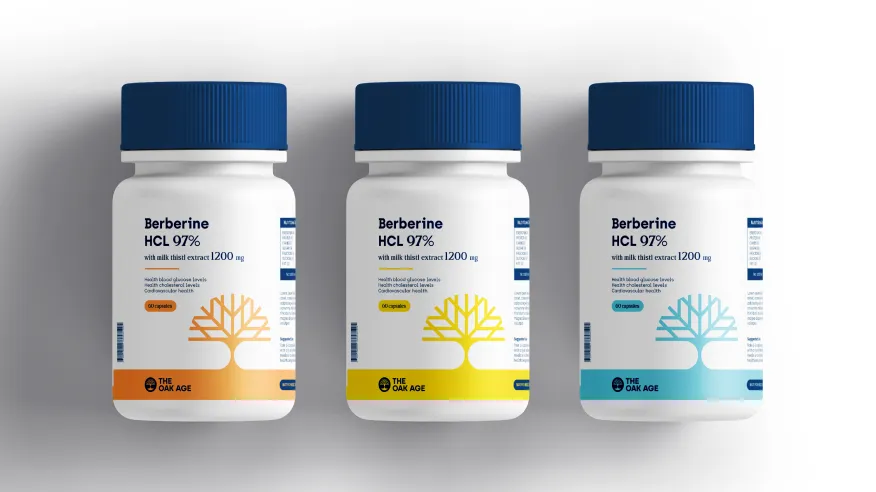
We saw this with Miduty's redesign, a brand moving from crowded supplements into science-backed nutrition couldn't carry its old visual identity forward.
4. Regulatory or Material Change: FSSAI packaging compliance, BIS mandates, or a shift to recyclable materials forces a packaging change anyway.
That's the moment to rebuild the visual system intentionally, not patch the new spec onto the old design.
5. Significant Competitor Activity: When a category leader redesigns, the shelf dynamic shifts overnight. Conduct a shelf audit.
The visual evidence alone builds the business case.
6. Shifting Category Aesthetics: Beverage packaging that looked premium in 2018 reads as discount today.
When your visual vocabulary drifts outside the category's current language, it signals the wrong price point and quality, regardless of what's inside.
7. Operational Inefficiency: Right-sizing, better palletization, or lighter materials can yield direct, measurable ROI on packaging redesign.
The business case does not need to be a 40-page document. For most FMCG and D2C brands, a concise 6–10 slide presentation or a structured one-page memo, backed by clear data, is sufficient to move from conversation to approval.
Here is the framework we recommend.
This is where most internal redesign proposals lose credibility before they start.
The problem statement formula:
[Specific metric] has changed by [amount] over [time period], which we estimate is costing [approximate revenue impact]. Internal and external evidence points to [specific factor — e.g., packaging shelf impact, communication clarity] as a primary driver.
❌"Our packaging looks outdated and we need a refresh."
✅"Shelf velocity in modern trade has declined 18% over 2 years. Retailer feedback from three category reviews this year cited packaging as a factor in facing allocation decisions. Consumer research conducted in Q2 identified clarity and premium perception as weak points relative to the top two competitors."
The first version is a creative opinion. The second is a business problem statement with evidence. Only one of them earns a CFO's attention.
Start here. Everything else builds on this.
You need data from at least three independent sources before the proposal goes into a presentation.
Internal sources:
External sources:
A business case demands data, and all decisions must be based on it.
The business case must contain two cost estimates:
The cost of the redesign:
The design fee is usually the smallest line item. Build the complete picture upfront.
The estimated return:
Use conservative estimates. Show three scenarios: base case, upside, and downside. This shows analytical rigour, not optimism.
This is the step most business cases omit entirely. It is also the most persuasive element of the document.
Show leadership a projection: if you maintain current packaging through the next planning cycle, another 12–18 months, what does the trajectory look like, based on existing velocity trends and competitive activity?
Making inaction a risk (rather than a safe default) changes the conversation from "do we need to spend?" to "can we afford not to?"
A simple table works:
Before the design brief is written, agree internally on what success looks like. This protects the investment, makes the outcome evaluable, and builds credibility for future design investment.
Recommended KPIs to set:

Packaging design is not the same as a packaging refresh. They are different projects. The business case for each is different. The stakeholders who need to approve each are different.
A refresh business case focuses on shelf impact and cost efficiency. A full redesign business case must include brand repositioning, channel readiness, and consumer validation. Mixing the two guarantees a rejected proposal.
In our experience, the question isn't always "refresh or redesign." It is often "what is the minimum change that solves the actual business problem?"
Starting with that question, rather than defaulting to a full overhaul, often leads to sharper, more defensible decisions.
Clarifying the scope upfront prevents the most common internal frustration in packaging projects: a refresh budget applied to a redesign problem, or a redesign budget allocated to a refresh execution.
If you are unsure which one applies to your brand, our comparison of packaging redesign costs versus a packaging audit lays out how to think through the decision.
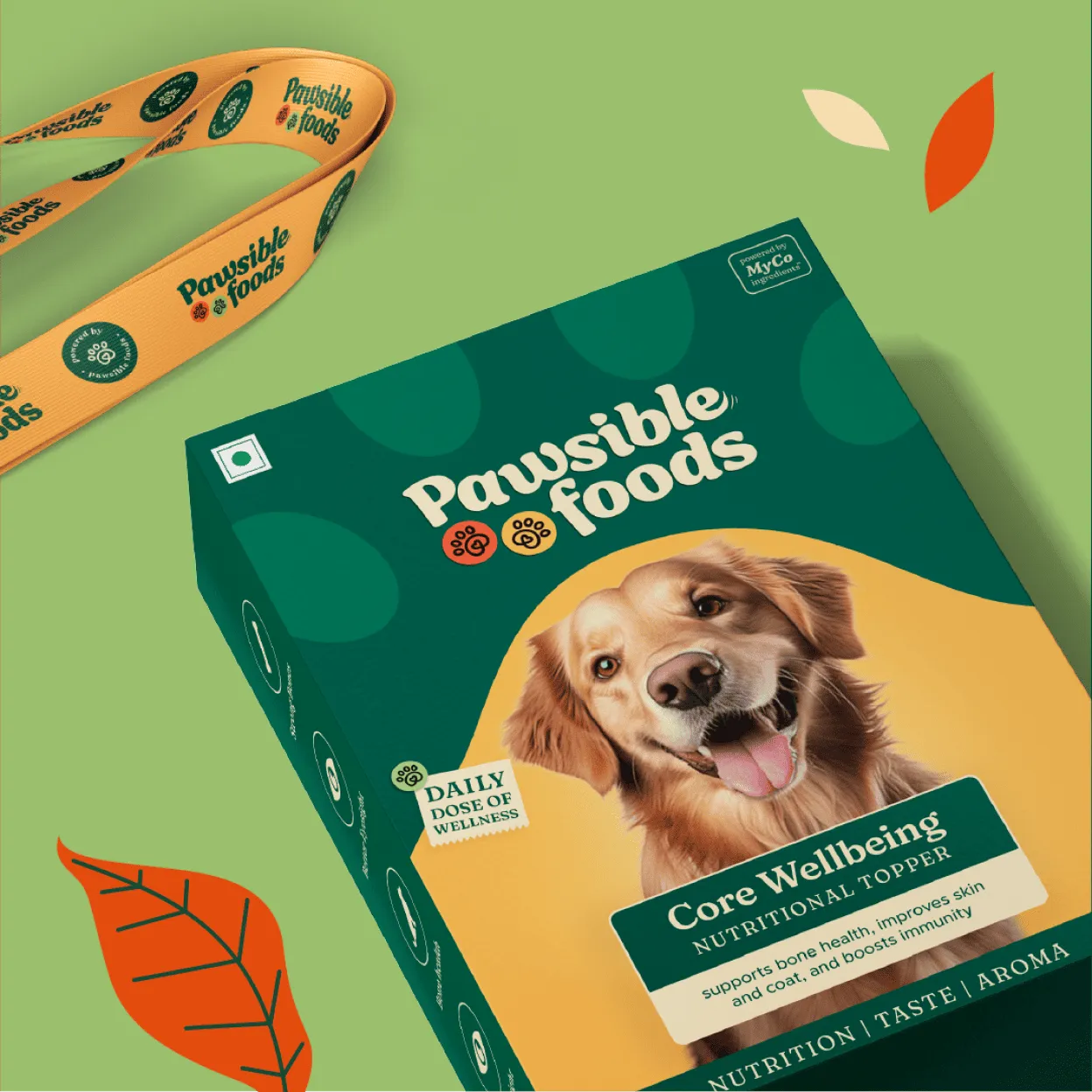
We are a branding and packaging design studio that has worked with brands across FMCG, D2C, beauty, health, and food and beverage.
Our clients include early-stage founders to established FMCG brands like ITC and Dabur.
✔️We start with the business problem, not the brief
Every packaging engagement at Confetti begins with understanding the brand's current shelf position, the competitive set, the channel dynamics, and the commercial objectives.
The packaging design brief is written downstream from that clarity.
A brief written without a commercial foundation produces packaging that may look good but fails to solve the actual problem.
✔️We help brands de-risk the redesign decision
For brands without existing consumer validation, we build lightweight shelf simulation exercises and comprehension checks into the process.
This gives leadership evidence before the production commitment and gives the design team feedback that shapes the final output.
This is not a large-scale research investment. A targeted shelf simulation or consumer comprehension check typically takes two to three weeks and costs a fraction of the production budget.
✔️We connect every design decision to a commercial rationale
Typography hierarchy. Colour choice. Material specification. Structural format. Every element in a packaging system has a commercial implication: for shelf standout, for production cost, for brand perception, for print feasibility.
We design with all of those constraints in play, not just the visual ones. Our packaging design services are built around shelf readiness and commercial performance.
✔️We have worked across the complexity spectrum
Single-SKU D2C launches. Multi-variant FMCG portfolios. Premium brand re-entries. Health and wellness brands entering modern trade for the first time.
Each context has a different set of constraints, a different risk profile, and a different definition of success.
Brands like The Chutney Labs, Butterful, and The Indus Valley are examples of brands at different stages of that journey, each requiring a packaging approach calibrated to where they are and where they are trying to go.
If you are building a business case internally and want a design partner who can speak both brand and business, we are happy to have that conversation📞
Even well-intentioned redesign proposals get derailed. These are the most consistent failure points:
❌Framing it as a creative project
The moment the business case leads with aesthetics, it loses the CFO's attention. Visual obsolescence is a symptom.
The business case must lead with the commercial consequence: declining velocity, distributor feedback, trial rate weakness, not the design problem.
❌Underestimating total project cost
The design fee is the smallest component of most packaging redesigns. The real budget includes printing tooling changes, old inventory write-off, internal resource time, and potential production delays.
Presenting an incomplete cost picture destroys credibility when the actual invoice arrives. Address the full cost range from the start, even if some line items are estimates.
❌Setting vague success criteria
"Better shelf presence" is not a KPI. "A 12% improvement in trial rate in modern trade within 6 months of launch" is.
Vague success criteria make it impossible to evaluate the outcome — and impossible to build a case for future design investment.
❌Skipping consumer validation
The data is unambiguous: a significant portion of packaging redesigns underperform their predecessors. Consumer validation before launch is material risk reduction, not a nice-to-have.
Even a lightweight comprehension test or shelf simulation exercise provides evidence that changes the internal conversation from "we hope this works" to "we tested it and here is what we know."
❌Committing to full production without a test phase
Approving a design and immediately committing to a full production run eliminates the ability to course-correct.
A controlled launch: one region, one retailer, one channel format, costs more time but significantly reduces the risk of a costly mass rollout built on unvalidated assumptions.
❌ Confusing a production problem with a design problem
Not every packaging issue is a design issue. Sometimes the problem is print quality, material inconsistency, or poor production specification.
Before commissioning a full redesign, understand whether the issue is upstream of design. Our analysis of why packaging causes reprints addresses this.
What is a packaging redesign business case?
A packaging redesign business case is a structured document or presentation that justifies the investment in redesigning a product's packaging.
It translates the commercial problem like declining shelf velocity, competitive pressure, channel expansion into financial language: estimated cost, projected return, risk of inaction, and measurable success criteria. Its purpose is to move a packaging redesign from internal discussion to approved budget allocation.
How long does a packaging redesign take?
A packaging refresh (minor visual update within an existing system) usually takes 6–10 weeks from brief to final artwork.
A full strategic redesign including brand strategy, concept development, consumer validation, and print-ready production artwork runs around 3–6 months. Timeline depends significantly on the number of SKUs, internal approval cycles, and whether research validation is built into the process.
What does a packaging redesign cost?
Total packaging redesign costs vary widely by scope. In India, a single-SKU brand refresh from a specialist agency typically starts at ₹2–5 lakhs. A full multi-SKU FMCG redesign including strategy, design, and artwork can range from ₹15 lakhs to several crores depending on portfolio complexity.
The design fee is almost always the smallest component. Production tooling, print setup, and inventory write-off often exceed it.
How do I convince my CFO to approve a packaging redesign?
Build the business case around the cost of inaction, not the cost of redesign. Use internal sales velocity data, retailer feedback, and consumer research to quantify the current underperformance.
Estimate the revenue recovery from improved shelf performance and set measurable KPIs for the post-redesign period. Show three financial scenarios: upside, base, and downside. A CFO responds to financial evidence and risk framing, not design rationale.
What is the difference between a packaging refresh and a redesign?
A refresh updates visual elements within an existing design framework, modernising colours, updating typography, or adjusting layout proportions.
A redesign reconceives the packaging system at a strategic level: changing the brand's visual language, communication hierarchy, material approach, or structural format.
The budget, timeline, approval process, and risk profile are substantially different for each. Understanding which one your brand actually needs is the first decision the business case should address.
Want strategic branding and packaging like this for your business?





.webp)
.webp)

.webp)
.webp)
.webp)
.webp)
.webp)







.svg)
.webp)