%201.webp)
02
AI Snaps
.svg)
.svg)
01
Our Work
03
About Us
04
Brand Audit
05
Contact Us
06
Client Success
12
07
Blogs
08
Careers
Book A Call
.svg)



.svg)
Need Help In Building Your Brand?
Click the button below & book a call with our founder directly.

Rishabh Jain
Managing Director
Quick commerce packaging in India is a four-layer problem: structural integrity, platform compliance, regulatory compliance, and digital shelf performance.
Miss any one layer and your listing gets delayed, your consignment gets rejected, or your product stays invisible on the app despite being technically live. Here’s your Confetti guide for everything you must know about FMCG packaging quick commerce.
In traditional retail, your packaging has to work in one context: a lit shelf, at eye level, next to competitors, for a consumer who is physically present and can pick it up.
In e-commerce, packaging works in two: a thumbnail on a product listing page, and an unboxing experience after delivery.
Q-commerce packaging has to work in three: simultaneously, without compromise.
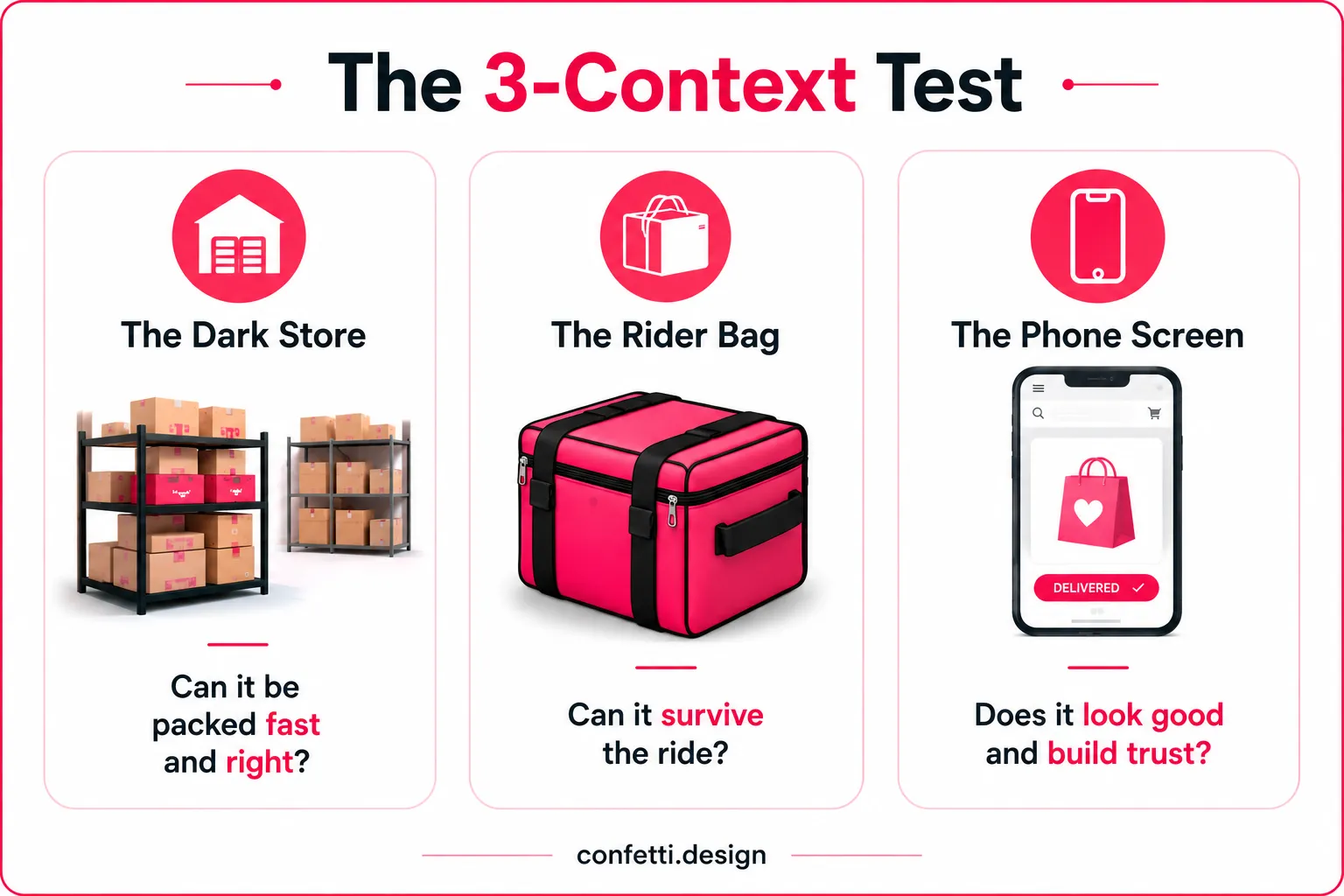
🟣The Dark Store
A warehouse picker needs to locate, identify, and pick your product in under 30 seconds. There is no browsing. There is no second look.
Your barcode must scan on the first pass, your SKU must be identifiable without reading the label, and the unit must be stackable without crushing what's below it.
Dark store bins are standardised, usually 400mm × 300mm × 200mm and if your packaging doesn't fit cleanly into that footprint, you either get odd placement or, more likely, a listing that underperforms on availability metrics.
🟣The Rider Bag
Once picked, your product goes into an insulated delivery bag with anywhere from 3 to 15 other items. Transit is 10–30 minutes, often on a two-wheeler, across variable road conditions.
There is no bubble wrap. No secondary protective layer. If your mono-carton dents, your flexible pack seals fail, or your bottle cap loosens under pressure, that's a damaged delivery and a return or a refund that comes out of your seller account health score.
🟣The Phone Screen
The consumer never sees your product in a store.
Their first impression is a 200×200 px thumbnail on a mobile app, usually while scrolling at speed. At that size, a busy label with eight visual elements reads as visual noise.
Your brand name, product name, and variant must be readable in a single glance, no decoding required.
📌A label that photographs beautifully but doesn't scan fails Context 1.
📌A premium rigid box that can't take stack pressure fails Context 2.
📌A design built for shelf standout at 300mm fails Context 3.
All three failures result in the same outcome: poor platform performance, regardless of product quality.
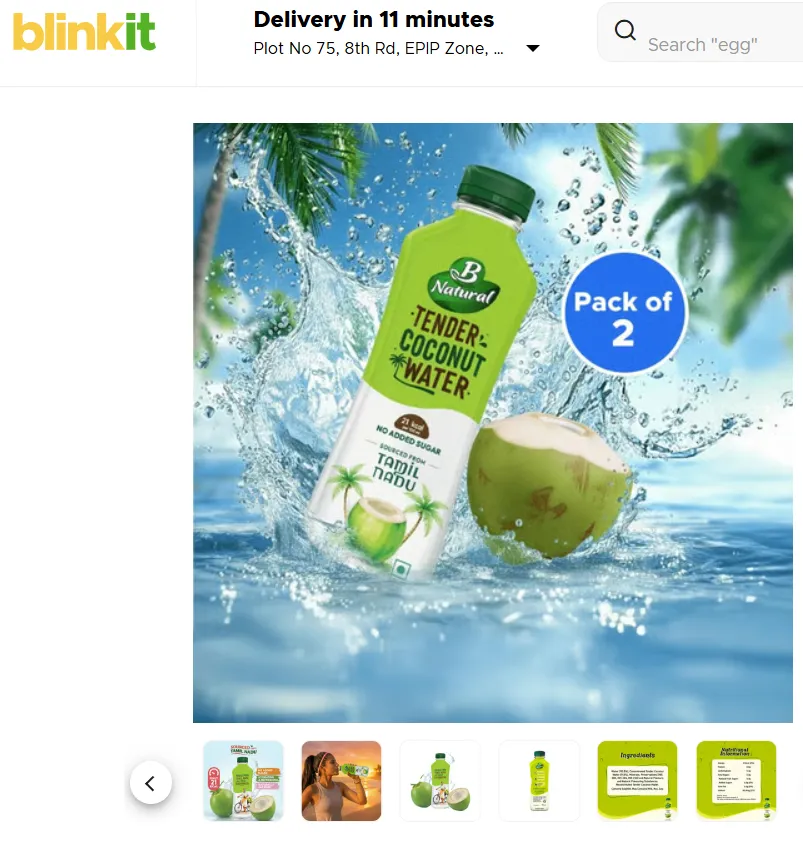
Before applying on any quick commerce platform you should understand platform-specific packaging requirements to avoid rejections.
Blinkit operates on a self-serve seller model through Blinkit Seller Hub, but self-serve doesn't mean lenient.
Dark store intake is where most first-time brands lose time, and the rejection triggers are consistent.
At intake, Blinkit evaluates the following:
📌At Confetti, the most common Blinkit onboarding failures we see come down to three things:
These are compliance errors that should be caught at the artwork approval stage, before the run goes to print, which is why we address this before designing a single artwork.
The Zepto's audience is more urban, Gen Z and millennial, impulse-driven. The sweet spot for price point is ₹100–₹500.
Below that, basket economics don't work well for Zepto's model. Above that, you're competing with considered purchases that the platform isn't optimised for.
What this means for packaging:
Instamart operates differently from both Blinkit and Zepto in one important respect: geographic coverage. With a presence across 500+ cities including Tier 2 and Tier 3 markets.
Your packaging needs to be legible and functional for a more diverse consumer base, not just urban buyers in metro neighbourhoods.
Key operational considerations:
Dark stores are not warehouses in the traditional sense.
They're small, high-velocity micro-fulfilment centres where picking speed, bin hygiene, and scan accuracy are the operational priorities.
Your packaging's physical format determines whether it fits this environment.
Standard dark store bins run approximately 400mm × 300mm × 200mm. That's your constraint.
Products exceeding 30cm in any single dimension create immediate problems, either they don't fit the bin cleanly, or they protrude and disrupt adjacent SKUs.
Both outcomes lead to picking errors and, eventually, stocking refusals at the dark store level.
Irregular form factors compound the problem.
Round tins, oversized gift boxes, and wide-base bottles are difficult to stack and harder to pick quickly in a high-velocity environment where a single operator handles hundreds of SKUs per hour.
The packaging formats that perform best operationally are flat-sided, stackable, and consistent in height across units.
Brick-form flexible pouches, straight-walled cartons, and uniform cylindrical containers with flat lids all work.
Tapered bottles, dome-lidded jars, and soft-sided pouches without a flat base do not, at least not without secondary structural support.
GS1-compliant barcodes are mandatory for listing on all three major platforms. The standard itself is not negotiable, but placement and print execution are where most brands fail.
The requirements:
📌From July 1, 2025, EPR Rule 11 mandates that plastic packaging carry a QR code or barcode with the PIBO name and CPCB registration number, meaning some packs now need two separate scannable elements, each with its own quiet zone.
If you're designing packaging for a dark store launch, both codes need to be scoped into the artwork brief from day one, not retrofitted at the end.
Tamper-evident packaging is a listing condition for food, beverage, and personal care categories across Blinkit, Zepto, and Swiggy Instamart.
It is also increasingly being inspected at the platform level as FSSAI scrutiny of dark store hygiene standards intensifies, brands whose packaging passes listing onboarding but fails a dark store hygiene inspection face platform action, not just a warning.
Accepted tamper-evidence formats:
What matters operationally is that the seal survives dark store handling and 10–30 minutes of transit before the consumer sees it.
The most common structural failure for early-stage D2C brands in dark stores is a mono-carton can’t take stack pressure.
☑️Single-wall cartons below 300gsm routinely fail often when 6–8 units are stacked in a bin. Corners compress, edges buckle, and the unit arrives at the consumer looking damaged even if the product inside is intact.
The fix: either move to 350–400gsm board, or add internal structure through a crash-lock base and tuck-top construction.
☑️Flexible pouches need reinforced triple-fin seals, not standard two-layer heat seals to survive dark store handling and transit without delamination. If your pouch supplier is running standard seals, ask specifically for triple-fin before your q-commerce run goes to print.
☑️Glass is restricted or category-specific across platforms due to breakage risk. If your product is currently in glass, assume you'll need an alternative format for q-commerce, PET, HDPE, or aluminium depending on category.
☑️Multi-layer plastic pouches (MLP) remain the dominant flexible packaging format in Indian FMCG, but EPR compliance pressure is increasing. Brands using MLP without active EPR registration with CPCB are accumulating liability with each consignment.
This is a compliance issue. EPR enforcement actions against FMCG brands have been increasing since 2023.
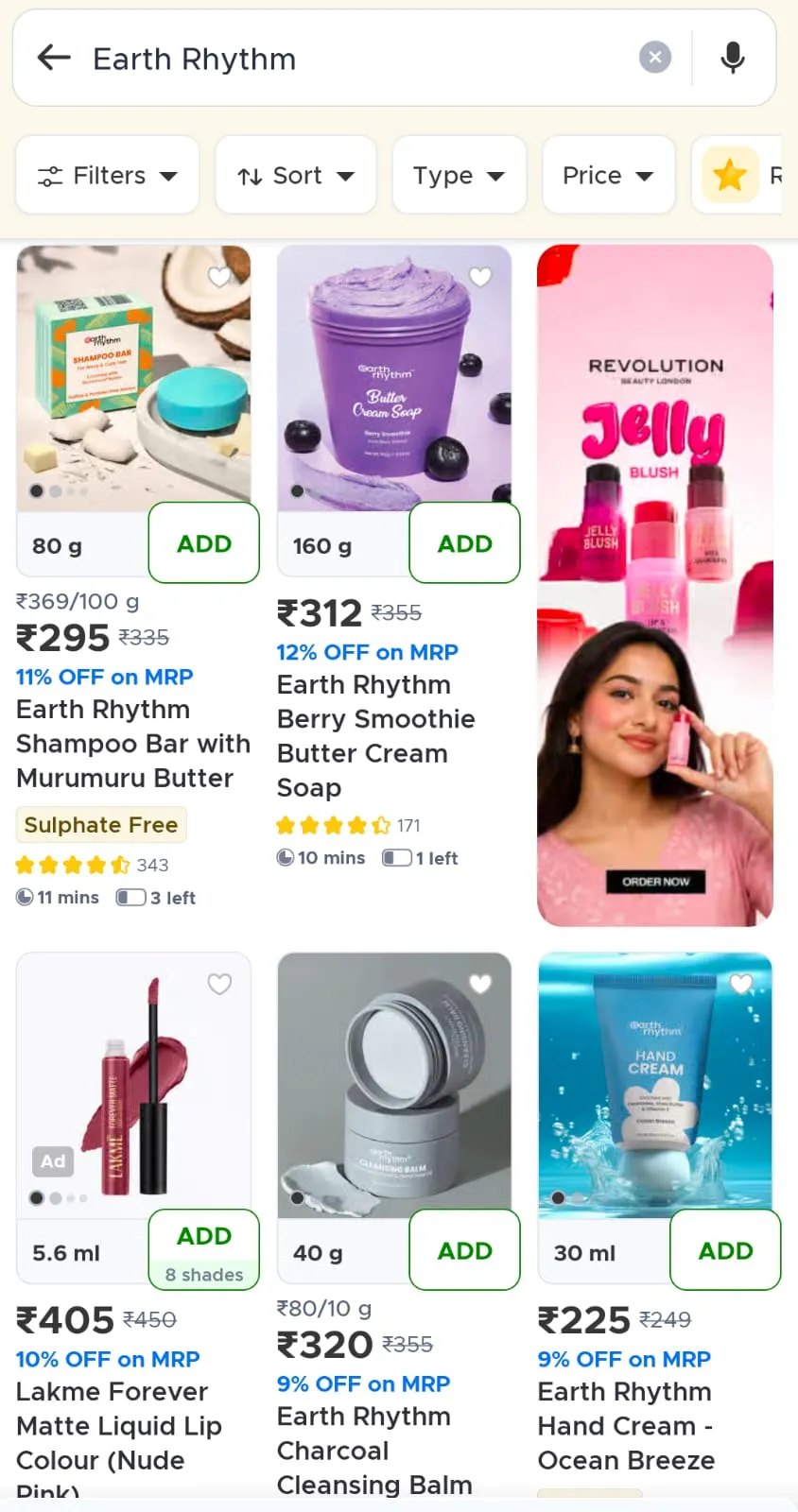
📌The brands that have figured this out structurally are worth noting. Earth Rhythm scaled from Rs 5 lakhs monthly to Rs 1.5 crore per month on Blinkit in 18 months, a significant part of that advantage came from packaging built for dark store handling and digital shelf performance from the start.
Platform compliance and regulatory compliance are two different systems, and passing one does not guarantee the other.
A brand can clear Blinkit's onboarding checklist and still be in violation of Legal Metrology rules.
FSSAI and FDA inspections of dark stores are increasing, regulators are now treating q-commerce platforms as an inspection category in their own right, not an extension of e-commerce.
Every packaged product sold through any q-commerce platform must carry the following on its physical label:
The 2023 amendment: effective April 23, 2023, added a unit price requirement for specific categories when pack weight falls below a defined threshold.
Affected categories include milk, tea, biscuits, edible oil, wheat flour, bottled water, baby food, cereals, bread, and detergents.
If your product falls in one of these categories and you're selling a compact, q-commerce-specific pack size, check whether your weight triggers the unit price declaration requirement.
The compliance gap most brands miss:
Q-commerce platforms are required to display all mandatory label declarations digitally on their product listing pages.
Your Blinkit or Zepto product page must mirror your physical label. Discrepancies between the two is a compliance risk as enforcement attention turns toward q-commerce channels.
If your listing page shows a different net weight, MRP, or manufacturer address than your physical label, that's a Legal Metrology violation.
For any food or beverage product listing on a q-commerce platform, the following things should be on the physical label:
Active FSSAI inspections of dark stores are uncovering more operational issues than most brands expect.
Common violations include missing or unclear expiry dates, mismatched label information, cosmetics stored next to food items, and food handlers not wearing required protective gear.
The last two are platform-level issues, not packaging issues but they affect all brands stocked in that dark store during an inspection, and platform action follows.
If your expiry date is printed near a fold, on a curved surface, or in a font below 2mm, it will fail a dark store inspection even if it's technically present. Placement and legibility matter as much as inclusion.
This is the fastest-moving compliance area in Indian packaging right now, and most brands entering q-commerce have not acted on it yet.
Rule 11 - effective July 1, 2025:
All plastic packaging must carry the PIBO (Producer, Importer, Brand Owner) name and CPCB registration number on-pack, via printed barcode or QR code. This is not a future requirement, it is current law.
Non-compliance constitutes a violation under the Environment (Protection) Act 1986, with fines ranging from ₹10 lakh to ₹50 lakh and escalating daily penalties.
EPR for Packaging Rules 2024- effective April 1, 2026:
Extended EPR obligations now cover paper, glass, metal, and sanitary products, not just plastics.
Every PIBO with packaging across these material categories needs a multi-material compliance plan, not just a plastic recycling strategy.
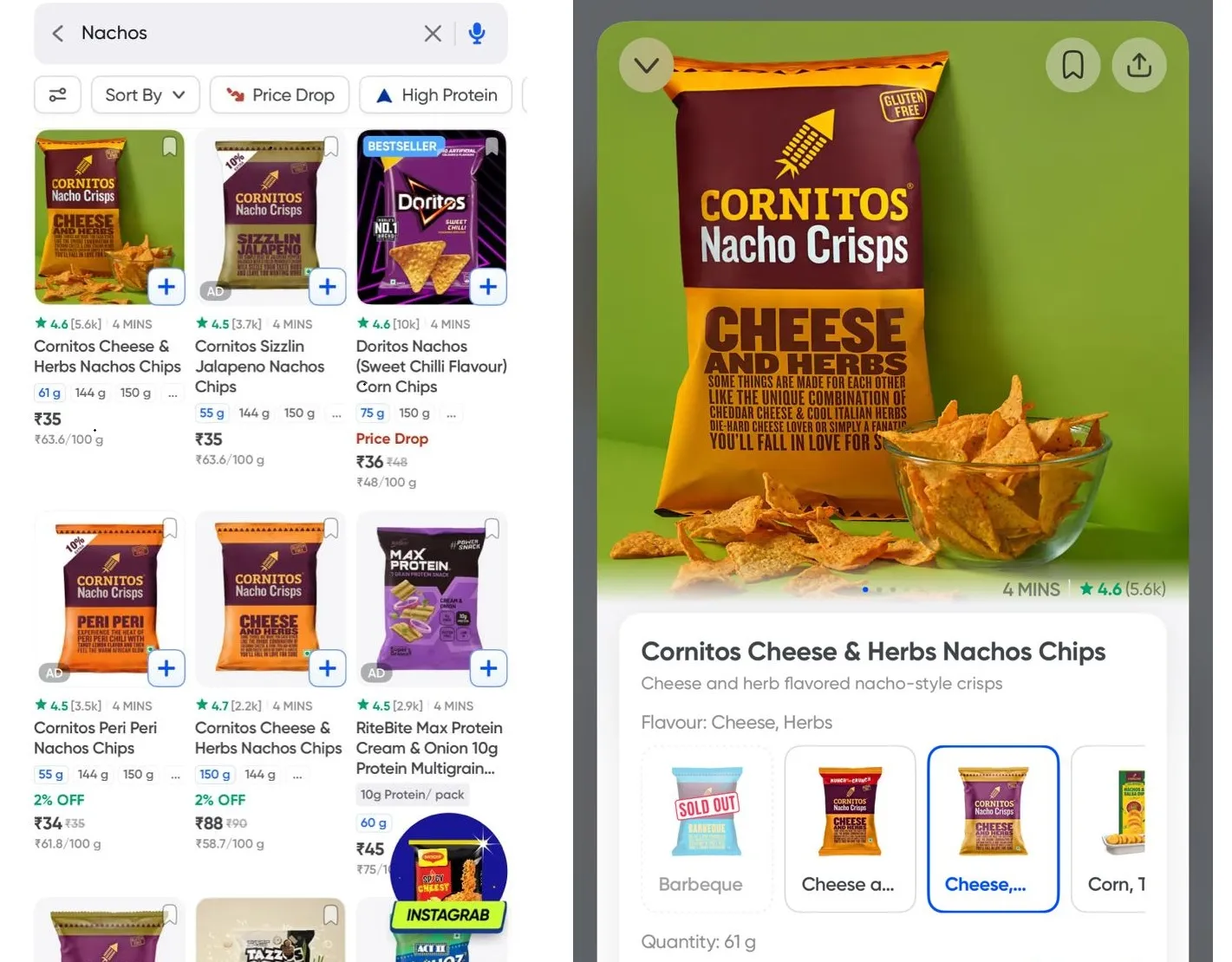
The q-commerce purchase decision happens on a phone screen, in a product grid, at thumbnail size.
A package that clears every compliance requirement and fits perfectly in a dark store bin is still commercially invisible if it doesn't work at 200×200 pixels.
In a dark store, a picker finds your product by barcode. On the app, a consumer finds it by thumbnail. These are different problems with different design solutions, and most packaging is optimised for neither.
The actual display size of a product thumbnail on Blinkit, Zepto, and Swiggy Instamart's mobile apps is approximately 200×200 pixels on a phone screen, surrounded by competing products.
At that size, most packaging designs fail in one of four ways:
📦Product name becomes illegible
Serif typefaces with thin strokes, condensed fonts, and any type set below a certain visual weight disappear entirely.
If your brand name requires reading rather than recognising, it won't be read.
📦Background-to-text contrast is insufficient
Warm white on cream, navy on black, pastels on pastels, these combinations look refined on a print proof and invisible on a thumbnail.
Contrast is not a stylistic preference at this scale; it is a visibility condition.
📦Too many visual elements compete for attention
A front face with a hero image, a product name, a tagline, three icons, a quality seal, and a flavour callout does not simplify at 200px, it collapses into visual noise.
Three elements maximum: brand mark, product name, key visual.
📦Variant differentiation is invisible.
If you have six SKUs and the only difference between them is a word, Mango, Strawberry, Chocolate, consumers cannot distinguish variants at thumbnail size while scrolling.
Colour-coded variant systems are not a nice-to-have; they are functionally necessary when your product line sits side by side in a platform grid.
Q-commerce platforms display products in a scroll grid.
Consumers move through that grid fast, buying on visual pattern recognition more than deliberate evaluation. This changes what "brand consistency" means.
Example: A brand whose five SKUs have five different background colours, five different label layouts, and five different typographic treatments does not read as one brand in a platform grid, it reads as five unrelated products. The visual compound effect that comes from a recognisable brand block is lost entirely.
Brands that get this right like Bingo's flavour colour-coding system is the best example, creating an immediately identifiable cluster in a category listing. This is the kind of color coding we did for Swizzle Cocktail Mixer
A consumer who has bought one SKU recognises the others without reading.
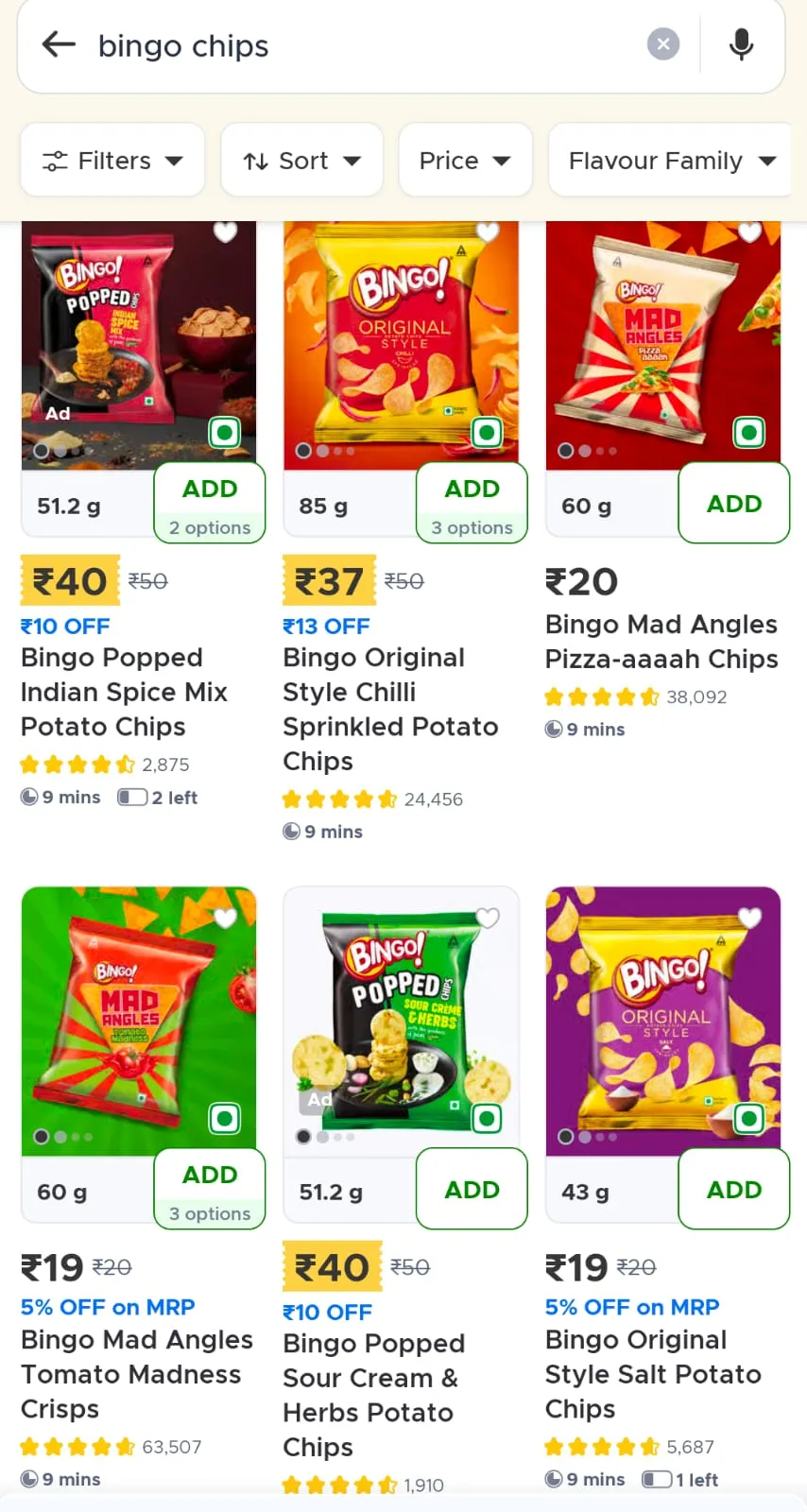
That recognition has a direct commercial effect: lower cost per conversion on sponsored placements, because the consumer already knows what they're looking at before the ad fully loads.
The Thumbnail Test
Before any packaging design is signed off for a q-commerce listing, run it through these 4 checks at 200×200px:

Talk to Confetti experts about onboarding, visibility, and optimisation.
Book A Call
Getting your packaging compliant and thumbnail-optimised for quick commerce is half the problem.
The other half is knowing what to put on the platform in the first place: which formats, which price points, and how many SKUs.
The structural economics of q-commerce make some packaging configurations work well and others consistently underperform, regardless of product quality.
Q-commerce average order values usually sit between ₹300–₹700. That's the basket your SKU needs to fit into, not lead, not anchor, but fit alongside 3–5 other items a consumer ordered in 90 seconds.
A ₹499 single-SKU purchase happens occasionally.
Single-serve, top-up, and trial formats consistently outperform bulk SKUs in dark store velocity. The reasons are specific: compact urban homes create genuine storage friction for 2kg bags and 5-litre bottles, consumers know they don't have space for bulk, so they don't order it for immediate delivery.
They'll buy bulk at a planned grocery run. On q-commerce, they're buying for today or this week.
Trial formats serve a secondary function beyond convenience. A ₹79 single-serve pack that performs well on Blinkit is also a discovery mechanism, it introduces consumers to a product they might not have paid ₹349 to try.
The conversion path from trial pack to full-size purchase is a documented behaviour on q-commerce platforms, and it's worth designing for explicitly.
An emerging and important trend: major FMCG brands now design packaging exclusively for q-commerce, not shared with general trade:
This is the direction the category is moving.
Brands that share packaging across all channels are structurally disadvantaged in q-commerce, their pack sizes, price points, and form factors are optimized for none of the channels specifically.
Formats with strong dark store and transit performance:
✅Resealable flexible pouches, 200–500g, flat, stackable, controlled weight
✅Compact mono-cartons with structural reinforcement (350gsm+ board, crash-lock base)
✅Single-serve sachets and trial units, high velocity, easy to bin and pick
✅Blister packs for pharma and personal care, rigid enough to survive co-packing pressure
✅Stackable cylindrical formats with flat label panels, provided the barcode is on a flat section, not the curve
Formats that consistently cause operational problems:
🚫Glass jars and bottles: Breakage risk during picking and transit; restricted or category-gated across platforms
🚫Oversized gift sets, exceed dark store bin capacity; stocking refusals are common
🚫Irregular shapes without flat barcode surfaces, intake failures, picking inefficiency
🚫Thin-walled cartons without compression resistance, visible damage on arrival, return triggers
🚫MLP pouches without active EPR registration, legally viable today, accumulating compliance liability with each consignment
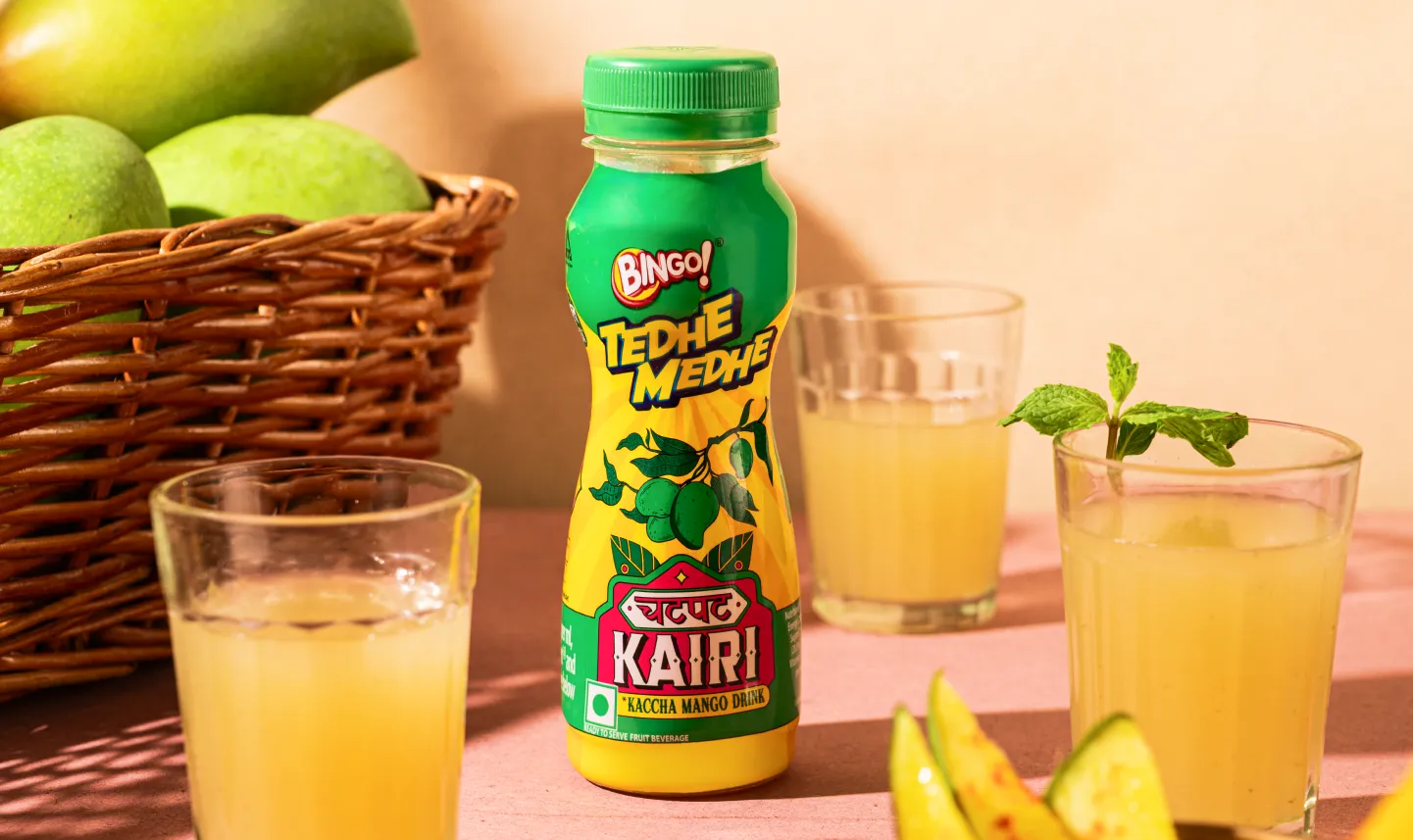
We've worked on packaging across some of India's most demanding FMCG briefs such as ITC, Dabur, Sunfeast, Bingo, The Indus Valley, B Natural, across modern trade, general trade, e-commerce, and q-commerce channels.
The World Brand Design Society Award we received for ITC Bingo: Chatpat Kairi is a marker of the kind of work we do: commercially precise, channel-aware, built to perform in the real world, not just in a design presentation.
When we design packaging for q-commerce, we work across four requirements simultaneously, not in sequence:
Beyond design, we help brands navigate Blinkit, Instamart and Zepto onboarding at the operational level: seller portal setup, NPI documentation, category manager coordination.
You need one document that tells you, in five minutes, whether your packaging is ready for Blinkit, Zepto, or Swiggy Instamart.
Here it is.
Missing any single item means your consignment gets rejected at the dark store gate.
✔️Legal Metrology declarations complete (name, MRP, net qty, manufacture date, country of origin)
✔️FSSAI license number printed on label (food/beverage/supplements)
✔️Veg/non-veg symbol present, correct colour and shape
✔️Nutritional information and ingredient list present
✔️Best Before / Expiry date clearly printed
✔️Unit price displayed for qualifying categories (post-April 2023 amendment)
✔️EPR registration on CPCB portal completed (plastic packaging brands)
✔️CPCB registration number present via on-pack barcode or QR (from July 2025)
✔️EPR annual return filed on time (deadline: June 30 each year)
These are the checks platform's inward team runs when your stock arrives at the dark store.
✔️GS1-compliant barcode on flat, non-curved surface
✔️Barcode quiet zone maintained on all four sides
✔️MRP printed, not stickered, not handwritten
✔️Tamper-evident seal present (food, beverage, personal care)
✔️GST e-invoice process confirmed for Blinkit dark store intake
✔️SKU count aligned with platform preference (3–8 high-velocity)
✔️Form factor fits standard dark store bin dimensions
✔️Product identifiable without reading the label (shape, colour, brand mark)
This layer does not get you rejected at intake. But it determines whether you sell or get scrolled past.
✔️Product name readable at 200×200px thumbnail size
✔️ Variant clearly differentiated by colour and/or text at thumbnail scale
✔️ Maximum 3 visual elements on primary display panel
✔️ Tested under outdoor and low-contrast screen conditions
✔️ Brand block consistent across all SKUs in range
What packaging is required to sell on Blinkit in India?
Blinkit requires a GS1-compliant barcode on a flat, scannable surface; a clearly printed MRP (not stickered or handwritten); tamper-evident seals for food, beverage, and personal care products; and a valid FSSAI license number for food categories.
A GST e-invoice is required before Blinkit accepts goods at dark store intake. Products must also carry all Legal Metrology mandatory declarations.
What are the Legal Metrology packaging requirements for q-commerce brands in India?
All pre-packaged commodities sold on q-commerce platforms must display: manufacturer name and address, generic product name, net quantity in standard units, month and year of manufacture, MRP inclusive of all taxes, and country of origin for imports.
E-commerce entities must also mirror these declarations on digital product listings. Discrepancies between physical label and digital listing are an emerging compliance risk.
Is EPR compliance mandatory for FMCG brands selling on quick commerce platforms?
Yes. Brands using plastic packaging with annual turnover above ₹50 crore must register on the CPCB EPR portal.
From July 2025, all plastic packaging must carry the PIBO name and CPCB registration number via barcode or QR code. Fines for non-compliance range from ₹10 lakh to ₹50 lakh with escalating daily penalties.
How should packaging be designed for quick commerce apps in India?
Q-commerce packaging must be thumbnail-optimised: brand, product name, and variant must be legible at 200×200px as displayed on Blinkit, Zepto, and Instamart.
Use high-contrast colours, restrict the primary display panel to three visual elements, and use colour coding for variant differentiation. Test all designs at actual thumbnail size before print-ready signoff.
What is the difference between retail packaging and quick commerce packaging in India?
Retail packaging is designed for shelf display and considered purchase. Quick commerce packaging must pass three contexts: dark store picking efficiency (barcode scan speed, stackability), rider bag transit integrity (tamper evidence, structural durability), and phone screen performance (thumbnail visibility at 200px).
These are fundamentally different physical and commercial environments requiring channel-specific packaging decisions.
What packaging formats work best on Blinkit and Zepto?
Compact flexible pouches (resealable, under 500g), reinforced mono-cartons, single-serve sachets, and trial-size formats perform best operationally.
Irregular shapes without flat barcode surfaces, glass packaging, oversized formats exceeding dark store bin dimensions, and thin-walled cartons without structural reinforcement consistently cause dark store intake issues.
Should D2C brands design separate packaging specifically for quick commerce?
Yes, increasingly. Major FMCG brands, including Parle Products, HUL, ITC, and Adani Wilmar, now design channel-exclusive packaging and pack sizes for q-commerce rather than sharing retail formats.
Q-commerce-specific packaging aligns form factor, price point, and compliance requirements to the channel's distinct economics, preventing channel conflict and improving dark store performance.
Want strategic branding and packaging like this for your business?





.webp)
.webp)

.webp)
.webp)
.webp)
.webp)
.webp)







.svg)
.webp)