02
AI Snaps


01
Our Work
03
About Us
04
Brand Audit
05
Contact Us
06
Client Success
07
07
Blogs
08
Careers
Book A Call




Need Help In Building Your Brand?
Click the button below & book a call with our founder directly.

Rishabh Jain
Managing Director
For founders preparing to raise or sell in the next 6–18 months, brand positioning can be a critical driver of valuation.
This guide explores how investors and strategic buyers assess brand value, pricing power, customer loyalty, category expansion and leadership independence.
It covers brand diligence, the evidence needed to support positioning claims, when repositioning adds value, and a practical 90-day plan to make your brand investment- or acquisition-ready.

Investors and acquirers look beyond products, revenue and market share.
They want to understand why customers choose a business, whether that demand will continue and how difficult it would be for competitors to replicate. Brand positioning helps answer these questions.
A strong brand can support repeat purchases, pricing power, customer loyalty and lower dependence on discounts.
These are commercially valuable signals because they help investors assess how sustainable the business's revenue and margins are.
1. Customer loyalty and repeat purchases
Investors look for evidence that customers return because they trust and prefer the brand, not simply because of a promotion or low price. Repeat purchase rates, retention and customer behaviour help support this case.
2. Defensible market position
A clear position helps explain what the brand owns in the customer's mind and why competitors cannot easily replace it. Access to a specific audience, a trusted reputation or a strong position in a category can make an acquisition more valuable.
3. Brand recognition and customer relationships
Distinctive brand assets, mental availability, direct customer relationships and consistent communication help reduce dependence on constant customer acquisition spending. An email database alone is not enough; buyers want evidence that customer relationships can support profitable growth.
4. Recognisable and protectable brand assets
Brand names, trademarks and other identifiable intangible assets can carry value in an acquisition. Under IFRS 3 and India's Ind AS 103, identifiable intangible assets such as trademarks and brand names may need to be recognised separately from goodwill during purchase price allocation.
In January 2025, Hindustan Unilever agreed to acquire a 90.5% stake in Uprising Science, the parent company of Minimalist, at a pre-money enterprise valuation of ₹2,955 crore. Minimalist’s science-led, ingredient-focused positioning gave HUL access to a distinct segment of India’s skincare and beauty market.
Tata Consumer Products’ acquisitions of Capital Foods, owner of Ching’s Secret and Smith & Jones and Organic India similarly demonstrate the value of established consumer brands with strong positions in specific categories.
📌If you cannot explain, with evidence, why a specific customer chooses you over the alternatives and why that choice repeats, the brand is a risk in diligence, not an asset.
The positioning work before a deal is the work of turning that explanation into something a buyer can verify.
A fundraise and an acquisition price different things, and the brand positioning narrative has to be built for the buyer in front of you.
Growth investors are betting on future potential. They want to know whether the brand can capture a larger market, reach new customer groups and expand into adjacent categories without losing its identity.
The positioning question is: Can this brand become a preferred choice for a clearly defined audience as the business grows?
Evidence includes customer acquisition, repeat purchases, retention trends, category growth and a credible expansion plan. The brand must also have enough flexibility to support future products and markets.
Acquirers are assessing existing value and how it fits their business. They want evidence that customer demand is durable, margins can be maintained and the brand can continue performing under new ownership.
Different buyers focus on different factors:
For strategic buyers, recognisable assets such as the brand name, identity, packaging and customer relationships can be particularly important. They may want to change operations while preserving the elements customers already trust.
Using the same pitch for every investor or acquirer can weaken your case. A growth investor needs to understand market opportunity and future potential. A PE firm wants predictable performance. A strategic acquirer wants to see how the brand strengthens its existing portfolio.
The underlying facts should remain consistent, but the emphasis should change to match the buyer's objectives.
👉A strong brand does not make a weak business sellable at a premium.
A consumer brand making losses at EBITDA level may still attract interest, but it will be harder to sell and less likely to achieve a premium valuation, because the buyer has to fund the losses until break-even.
Positioning is a multiplier on a sound commercial base, not its substitute.

Before a fundraise or acquisition, investors and buyers want to understand whether your brand is a defensible business asset or simply a name supported by marketing spend.
These questions help identify what they are likely to examine:
1. Who is the customer, and why do they choose you?
A buyer wants a specific answer, not a demographic. “Women aged 25–40” is a segment, not a positioning. The answer that survives diligence names the customer, the alternative they were considering, and the reason they switched or stayed.
Compare your positioning with three competing brands. If the same statement could describe all four, your differentiation needs work.
2. What is the evidence of repeat and loyalty?
Investors look beyond customer acquisition to understand whether people return. Be ready with repeat purchase rates, cohort retention, returning customer revenue and performance by acquisition channel.
Strong sales without repeat purchases may indicate that demand depends too heavily on promotions or paid advertising.
3. What makes the brand difficult to copy?
Defensibility may come from distinctive brand assets, product expertise, proprietary sourcing, a loyal customer community or a trusted position in a specific category.
Show what competitors cannot easily replicate and how that advantage supports pricing and retention.
4. Can the brand travel?
Investors want to know whether the brand can expand into new categories, markets and distribution channels without losing its identity.
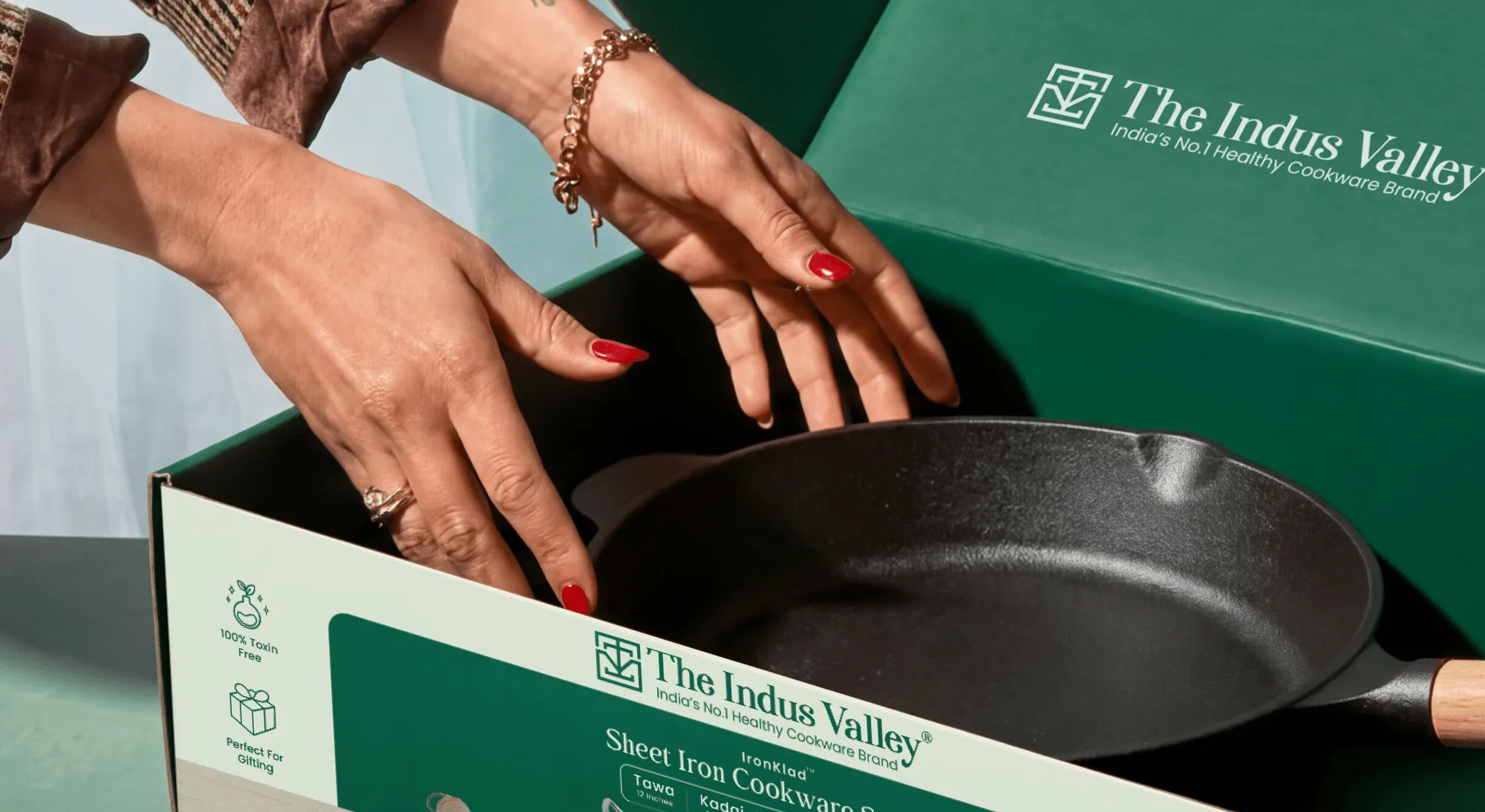
For The Indus Valley, Confetti rebuilt the packaging system around a clear product-first hierarchy, creating a structure that could accommodate new SKUs and geographic expansion.
A scalable identity and packaging system makes future growth easier to execute.
5. Can the business operate without the founder?
If the founder controls the brand's entire voice, customer relationships and creative direction, the business carries a dependency risk.
Document the brand story, tone of voice, identity rules, customer communication and decision-making processes so another team can manage them.
6. Is the brand asset documented and protected?
Check that trademarks, packaging artwork, design files, domains and social accounts are properly owned or assigned to the company.
Also review brand guidelines and consistency across your website, marketplaces, packaging and social channels. Inconsistent execution creates brand debt, while unclear ownership can complicate legal diligence and deal completion.
▶️Answer each question in one paragraph, with a number or a document attached.
Any question you cannot answer with evidence identifies a gap to address before entering investor or acquisition discussions.

Brand positioning is a claim about why customers choose your business.
During a fundraise or acquisition, investors want evidence that customers actually believe that claim. A strong brand story needs to be supported by commercial data, customer behaviour and documented brand assets.
Here are the four types of evidence investors look for:
1. Customer and behavioural evidence
Show repeat purchase rates, cohort retention, revenue from returning customers and realised pricing over time.
Investors want to know whether customers return because they value the brand or only because of discounts and promotions.
2. Brand recognition and demand
Use branded search trends from Google Search Console, direct website traffic and marketplace search data to show whether customers actively look for your brand.
You can also test distinctive brand assets by showing customers your colours, packaging or symbols without the name and measuring how many recognise them.
3. Customer feedback and third-party validation
Review marketplace feedback, testimonials and customer conversations. Look for language that supports your positioning.
If your brand promises premium quality but customers mainly mention low prices and fast delivery, there may be a gap between the intended position and the actual experience.
Retail listings, distribution agreements, credible press coverage and industry awards provide additional external validation.
For example, ITC Bingo Chatpat Kairi received a World Brand Design Society award in 2025, adding independent recognition to its design credentials.
4. Brand ownership and documentation
Prepare trademark registrations, domain ownership records, packaging artwork, design-file assignments, brand guidelines and identity specifications.
These documents help demonstrate that the brand is a transferable business asset rather than something dependent on the founder or an external agency.
Bring the evidence together in one concise document that an investor can review alongside the financial data. Include:
Our brand audits examine positioning, identity, packaging and digital presence to identify gaps between what a brand promises and what customers actually experience.
📌Make your positioning verifiable.
A short document (15-20 pages) with four sections: the positioning statement, the behavioural evidence, the recognition evidence, and the asset documentation.
It should be readable by a non-marketer in an hour and defensible in a data room. A buyer who can find the answer to the six questions in one place moves faster and argues less about the multiple.

A fundraise or acquisition can create pressure to make a brand look bigger or more established. But a full rebrand before a deal can reset customer recognition, consume valuable time and raise questions about why the change was necessary.
The right decision depends on whether the problem is strategic or simply executional.
If repositioning is necessary, start early. A period of 9–18 months before a deal gives the business more time to build recognition and demonstrate results.
For Kooji, Confetti renamed and repositioned a heritage fragrance business, developed a new identity and created a packaging system across three product lines and 24 SKUs. The change was made to support future growth, rather than as a last-minute response to a transaction.
A repositioning changes the brand's strategic direction. A refresh improves its execution. A packaging redesign rebuilds the product range's visual system.
📌Choose the smallest intervention that addresses the actual problem.
Confetti’s audit-first approach is built exactly on this principle: the diagnostic identifies whether the problem is strategic, verbal, visual, or systemic before a scope is proposed.
Ninety days is enough to diagnose, fix the highest-impact gaps, and build the evidence pack. It is not enough for a full rebrand, and it should not be used for one.
Use this period to make the existing brand easier to understand, evaluate and transfer.
Start with a structured brand and packaging audit.
Answer the six investor diligence questions, interview ten customers and five lost customers, and review cohort retention, repeat purchase rates, revenue concentration and price realisation.
List your brand assets, including logos, colours, typefaces, taglines, packaging structures and other distinctive elements. Assess which ones customers recognise and check consistency across packaging, the website, marketplace listings, quick-commerce platforms and social channels.
Also review ownership of trademarks, design files, domains and social handles. The output should be a clear diagnosis of what is working and where the gaps sit: strategy, verbal identity, visual identity, packaging or brand systems.
Identify two or three execution gaps that can be corrected without changing the brand's position.
These might include packaging that is hard to recognise at thumbnail size, inconsistent product pages, unclear SKU naming or a product range that does not look like one family.
Fix the most visible issues first, starting with the hero SKU, website homepage and leading marketplace listings. Make sure the positioning is consistent across the investor deck, website and packaging.
Review your SKU architecture where the range needs clearer structure. Address missing IP assignments and prepare trademark applications for gaps in important classes.
Write a clear positioning statement and support it with evidence.
Include branded search trends, repeat purchase rates, price realisation, customer feedback, review language and third-party validation. Attach data to each claim wherever possible.
Document ownership of trademarks, design files, guidelines, domains and social accounts.
If distinctive brand assets have weak recognition, decide whether they need more consistent use or a longer-term change. Avoid changing the assets and measuring their performance at the same time.
Share the evidence pack with someone outside the business, such as an advisor, non-executive director or investor.
Ask them to answer the six diligence questions using only the material provided.
If they cannot explain the positioning, its evidence or what makes it defensible, the pack needs more work. Revise it until someone without a marketing background can describe the brand clearly.
Organise four essentials:
The management story should also explain how the brand can operate beyond the founder. Identify the assets, rules and team members that will help a new owner maintain and build its value.
Avoid launching a new identity, changing the brand name or rebuilding the entire packaging system during a live deal process. These changes need time for implementation and customer recognition to develop.
If the audit shows that the positioning itself is weak, a rushed rebrand won’t solve the problem. Consider raising with the current brand and a credible repositioning plan, or delaying the transaction if the change is essential.

Not every brand needs an agency before a raise. A fair amount of this work is internal, and some of it can only be done internally.
Your team should own the evidence
Branded search data, cohort retention, price realisation, review analysis and the IP register all come from systems and documents the company already controls.
A founder or marketing head with a few weeks and access to Search Console, the marketplace dashboards and the legal files can build most of the evidence pack.
The positioning sentence should also start internally, because it has to be something the leadership team actually believes and can defend in a meeting.
A good freelancer can be enough when the brand is consistent and the job is execution:
Cleaning up a set of listings, producing a guidelines document from an existing identity, or updating the deck design.
If the system already exists and only needs documenting or applying, you don't need a strategic agency to do it.
Outside specialists are useful in a narrower set of situations
There's also a case for doing nothing visible. If your brand is consistent, the position is clear and the evidence is strong, the best preparation is documentation and restraint. Spending on a refresh just because a raise is coming can create more questions than it answers.
Confetti is a strategy-led branding and packaging design studio working with FMCG, F&B, beauty, wellness, fashion, and D2C brands.
With over 200+ projects and clients across India, the UAE, the UK, the USA, and Australia, we help with brand strategy and identity, packaging design for shelf and e-commerce, brand audits, and website design for consumer brands.
Here’s how we approach brands that are looking forward to fundraising and acquisition:
Audit before advising
Our structured brand and packaging audit examines the strategic core, the packaging system, and the digital presence, and identifies which layer is actually failing.
Separate the equity from the execution.
Name the distinctive assets worth protecting, and the execution that has stopped earning its place. This is the step that prevents a pre-deal repositioning from throwing away recognition the business has paid to build.
Build the evidence pack, not just the narrative
A positioning statement is only useful to a buyer if it is attached to behavioural, recognition, structural, and third-party evidence. The audit produces the diagnosis; the evidence pack produces the credibility.
Fix the execution gaps that diligence will notice
Thumbnail hierarchy, range coherence, warranty and returns signals, and asset documentation are the gaps that are cheap to close and expensive to explain.
Scope the change proportionately
A refresh, a redesign, or a repositioning are different interventions with different timelines and different recognition risks. The diagnosis determines the scope, not the deal calendar.
Most brand mistakes that hurt valuation are not design failures; they are failures of evidence, governance, and timing.
1. Confusing awareness with mental availability
Being recognised is not the same as coming to mind at the point of purchase. Buyers look for evidence that the brand is considered across key buying occasions, not just awareness scores.
2. Making unsupported claims
Statements like “loved by customers” carry little weight without repeat rates, cohort data, or price elasticity. Evidence-backed claims build credibility and support stronger valuations.
3. Fragmented brand architecture. A product range that looks like several unrelated brands signals weak governance. In FMCG, consistency across the range is part of the brand’s value.
4. Missing asset documentation
Unregistered trademarks, scattered design files, and unclear ownership of packaging or domains create legal and operational risks. Register, document, and consolidate all brand assets.
5. Founder-dependent branding
If the brand relies entirely on the founder’s personality, voice, or product judgement, buyers inherit key-person risk. A clear transfer plan, documented brand system, and accountable team are essential.
6. Repositioning too close to a deal.
Late-stage repositioning can disrupt recognition and weaken buyer confidence. Fix positioning issues early; otherwise, protect what works and focus on building the evidence needed for diligence.
Does branding affect startup valuation?
Indirectly but materially. Investors value what positioning makes possible: a price premium, repeat purchase, room to grow into new categories and a business that works without the founder. In acquisitions, brands and trademarks are valued as separate intangible assets when the purchase price is allocated, so a clear, owned brand gives buyers something specific to value.
Should I rebrand before raising funds?
Only if your current positioning caps the market you're pitching, and only with 9–18 months to show results. A full rebrand close to a raise resets recognition and invites questions. With less time, refine instead: tighten the positioning line, fix packaging and listing inconsistencies, and document your brand assets for the data room.
What do investors look for in a brand during due diligence?
Six things: clear positioning, defensibility against copycats, independence from the founder, a system that scales across SKUs and markets, consistency across touchpoints, and clean ownership of trademarks, design files and handles. They then look for evidence: branded search growth, repeat rate, a premium that holds, and reviews that repeat your positioning.
How long before an acquisition should I work on my brand?
Start 12–18 months out if positioning needs to change, and at least 90 days out for a readiness pass covering an audit, fixes and data-room documentation. Avoid visible brand changes between the LOI and closing, because acquirers expect to buy the brand they evaluated.
Want strategic branding and packaging like this for your business?