%201.webp)
02
AI Snaps
.svg)
.svg)
01
Our Work
03
About Us
04
Brand Audit
05
Contact Us
06
Client Success
12
07
Blogs
08
Careers
Book A Call
.svg)



.svg)
Need Help In Building Your Brand?
Click the button below & book a call with our founder directly.

Rishabh Jain
Managing Director
Writing a brand positioning statement is one of the most important decisions you will take as a brand and this Confetti guide delivers a step-by-step framework to help you define your unique market position.
We take you through the formula, the step-by-step process, real examples and how it gets translated into the packaging and shelf presence that actually reach your customer.

A brand positioning statement is a 1-2 sentence internal document that defines your target audience, the category you compete in, your point of difference, and the proof that backs it up.
A positioning statement is an internal document, not customer-facing. It functions as a guiding light to all your brand marketing strategies and messages.
Every packaging decision, every website headline, every retail pitch should trace back to this single sentence.
The statement usually includes five elements:
Some formulations break this into six components, "FOR," "BRAND," "IS THE," "THAT," "BECAUSE," and "SO THAT"but the underlying logic remains the same.
These four get confused constantly, including inside marketing teams that should know better. Here is the difference
A value proposition answers "why should I buy?"
A positioning statement goes one step further and adds the competitive frame and the proof, which is what makes it usable for design and packaging decisions, not just messaging.
D2C and FMCG brands need clear brand positioning for the following reasons:
☑️Strong brand positioning statement provides a strategic foundation
It guides every customer touchpoint, from packaging design and product listings to ads, retail, and customer experience. This is important even more in markets like India, where products are sold across multiple channels simultaneously.
A single SKU may appear on a retail store shelf, in modern trade, on Blinkit or Zepto, on Amazon, and on a Shopify store. Each channel gives customers different levels of information and only a few seconds to make a decision.
A positioning statement that only works on a product page or pitch deck isn't enough. If customers can't understand your value in a 10-second quick-commerce scroll or on a crowded shelf, it's not working.
Before investing in packaging, branding, advertising, or content, define your positioning first.
☑️Positioning supports brand discovery across platforms
Instead of relying only on retail shelves, consumers move between Instagram, influencer recommendations, Google Search, quick commerce platforms, marketplaces, and physical stores before making a purchase.
They expect the same promise, personality, and value proposition everywhere. When that message changes from one touchpoint to another, trust suffers.
Research supports this. Salsify's 2025 Consumer Research Report found that 54% of shoppers abandon purchases due to inconsistent product information, and 71% have returned products that didn't match online expectations.
Consistent positioning across packaging, websites, listings, and marketing helps prevent these disconnects.
☑️Positioning protects margins, not just branding
For most early-stage D2C brands, growth relies on digital marketing, not mass media. Without clear differentiation, they often compete on price instead of value.
Strong positioning changes the question from "Why is this cheaper?" to "Why choose this?"
Brands like The Whole Truth have built strong recognition by consistently owning a clear promise around transparent ingredients and honest food labels, rather than trying to appeal to everyone. Similarly, Apple continues to compete through design, ecosystem, and user experience instead of price.
☑️Positioning creates consistency across every touchpoint
A clear positioning statement acts as a strategic filter for business decisions. It guides:
When every customer touchpoint reinforces the same promise, brands become easier to recognise, remember, and trust.
Customers don't buy positioning statements, they experience them through consistent branding, packaging, messaging, and product delivery. A positioning statement simply keeps every part of the business telling the same story.
Every strong positioning statement is built from four parts. Miss one, and the statement stops being useful.
A positioning statement is not a creative exercise. It is a strategic document with defined components. Each component forces a decision. Skip any one of them and your positioning will be incomplete.
1. Target Audience (FOR)
Define your primary target segment with precision, including demographics (age, gender, income) and psychographics (attitudes, values, lifestyles, and unmet needs).
While many people may buy your product, one segment is the most valuable. Identify it through customer research and focus on that specific audience, not everyone who might buy.
2. Brand Name (BRAND)
Simply the name of your product, service, or company. Straightforward, but essential.
3. Frame of Reference (IS THE)
It defines the category in which your brand competes and establishes your competitive set, both direct and indirect competitors.
The more specific your frame of reference, the clearer you are about who you are competing against. "Cars" is too broad. "Luxury SUVs" or "Electric sedans" is clearer. Your frame of reference acknowledges your competition while positioning you within a defined space.
4. Point of Difference (THAT)
It reflects the unique functional or emotional benefit your brand delivers—and one that matters most to your target segment. If a benefit is unique but not important to your target, it does not belong here.
If another brand can make the same claim, it weakens your positioning. This section should capture the benefit, not the features that support it.
5. Reasons to Believe (BECAUSE)
These are the proof points or evidence that demonstrate how you deliver on your claims. Without reasons to believe, your positioning is just a promise. With them, it becomes a credible proposition.
6. (Optional) SO THAT
This component that articulates the ultimate outcome for the customer. This ties the benefit to a higher-order emotional or practical payoff.
These components work together: the target audience defines who, the frame of reference defines where, the point of difference defines what, and the reasons to believe define why.
Together, they answer every key question about your brand.
You will also see positioning explained through the 3 C's:
The six components above are really the output of working through these three lenses. Customer and Competition shape your frame of reference and target audience. Company shapes your point of difference and reasons to believe.
Here is the classic structure, most strategists build from:
📌For [target audience], [brand] is the [category] that [point of difference] because [reason to believe].
Once you have drafted your statement, test it against three criteria:
If your statement fails any of these tests, go back and refine.
Example:
Let’s take a hypothetical Indian ready-to-drink beverage brand:
For urban professionals who want a healthier alternative to sugary sodas, [Brand X] is the functional beverage that delivers real hydration without artificial sweeteners, because every batch is formulated with electrolyte ratios validated by a sports nutritionist.
Here:
The most common failure at this stage is a vague reason to believe. "Great quality" and "trusted by thousands" are not proof, they are filler. If a competitor could copy your reason to believe word for word and it would still sound true, it is not doing its job.
"A positioning statement that survives the boardroom but not the shelf has failed at its only job," says "We write positioning to be tested against a packaging mockup, not just a strategy deck."
Rishabh Jain, Founder at Confetti Design Studio
A strong brand positioning statement is research-based and defines what your brand stands for, who it serves, and why customers should choose it.
Here's a proven process that works for D2C, FMCG, and consumer brands:
If you are an existing brand, start with a brand audit.
Review every customer touchpoint, including your packaging, website, social media, product listings, advertising, and sales materials. Ask yourself:
This audit often reveals inconsistencies that need to be addressed before creating a new positioning statement. It also provides a realistic baseline against which future improvements can be measured.
Every positioning statement starts with a clear understanding of the customer. Build a picture of your ideal customer by understanding:
Where possible, validate assumptions through customer interviews, surveys, reviews, retailer feedback, and search behaviour instead of relying on internal opinions.
Positioning only exists in comparison to something else.
Conduct competitor analysis and identify both direct and indirect competitors. Then analyse how customers perceive them. Look at factors such as:
A perceptual map can help identify gaps in the market where your brand can establish a distinct position instead of competing on the same claims as everyone else.
Your frame of reference is also important. For example, positioning a supplement as a science-backed wellness solution creates a very different competitive landscape than positioning it as another pharmacy product.
Your differentiator should answer one simple question:
Why should someone choose your brand instead of the next best alternative?
You shouldn’t have generic claims like premium quality, innovative, trusted, or customer-first. These are expected, not differentiating.
Instead, focus on advantages that are:
For example:
Weak positioning: We use high-quality ingredients.
Stronger positioning: We source ingredients directly from certified farms and trace every batch back to its origin.
Specificity builds credibility.
Every positioning claim needs supporting evidence. Your Reasons to Believe provide proof that your promise is credible. They may include:
If your positioning cannot withstand customer research or fact-checking, it is unlikely to build long-term trust.
Now combine your research into one concise internal statement.
Use the framework:
👉For (target audience), our brand (brand name) is (frame of reference) that (key benefit or point of difference) because (reason to believe).
Keep the statement simple, specific, and focused. It should guide internal decision-making rather than function as a customer-facing marketing copy.
Before finalising your positioning statement, test it against a few critical questions:
Share the statement with team members, partners, or trusted customers to identify areas that need clarification.
A positioning statement only creates value when it influences decisions. Use it as the benchmark for every branding and marketing activity, including:
When every touchpoint consistently reinforces the same positioning, your brand becomes easier to recognise, easier to remember, and harder for competitors to imitate.

Examples are useful only when you understand why they work. Here are four evaluated examples.
"To environmentally conscious professionals, Tesla Model 3 is the only electric vehicle in the mid-size sedan category that delivers high performance, cutting-edge technology, and zero-emission driving because it is backed by Tesla's industry-leading battery innovation, Supercharger network, and track record of redefining sustainable mobility."
When we worked on the Miduty branding project, the brand needed to move from a generic "wellness supplement" identity to something more specific and defensible.
The repositioning centered on root-cause health science rather than symptom management, which meant every formulation decision, from ingredient selection to packaging language, needed to visibly support that claim.
The positioning that emerged was built around three pillars:
The positioning answers a specific customer problem: overwhelm and lack of trust in supplement choices, and provides a clear, defensible solution. Every element of the brand, from the verbal tone to the colour palette, reinforces that positioning.
“To Dubai’s diverse community of residents and visitors who need reliable, everyday mobility, Hala is the only homegrown e-hailing taxi brand that combines affordability, availability, and a deep understanding of the city’s rhythm, because it is embedded in Dubai’s transport infrastructure through its RTA partnership and operates at the scale and reliability that millions rely on every day.”
Hala, Dubai’s leading e-hailing service positioned as “affordable and available.” Its real strength is being Dubai’s ride-hailing app. By embodying the city’s ambition, resilience, and pace, Hala combines local pride with dependable, everyday reliability.
Hala’s positioning is both functional and emotional. Functionally, it promises affordability and availability. Emotionally, it promises belonging, a connection to the city itself. That combination is difficult for global competitors to replicate.
"Everyday goodness and national pride" turned a commodity—butter—into a cultural icon. The mascot and the "Utterly Butterly Delicious" tagline are creative expressions, but the underlying positioning is about owning a space that is simultaneously functional (everyday use) and emotional (national pride).
Amul does not compete on price or even on taste. It competes on cultural resonance. The positioning is not about what the product does but about what it represents. This is the difference between a commodity and a brand.
"To tech-savvy consumers who value simplicity and status, the iPhone is the only smartphone that combines intuitive design, premium hardware, and seamless integration with other devices because Apple controls the entire ecosystem of hardware, software, and services, ensuring a smooth, reliable user experience."
Here are the most common mistakes and how to avoid them.
Trying to Appeal to Everyone
One of the biggest positioning mistakes is trying to target everyone. Broad audiences are too generic to guide meaningful decisions.
Strong positioning starts with a clear ideal customer, making it easier to create messaging, products, and experiences that truly resonate. Great brands know they can't be everything to everyone.
Confusing a Positioning Statement with a Tagline
A positioning statement is an internal strategy, while a tagline is its customer-facing expression. A tagline inspires customers; a positioning statement guides decisions across product, branding, marketing, packaging, and customer experience.
For example, Nike's "Just Do It" is a memorable tagline, but its positioning is built around empowering athletes and helping people achieve their personal best.
Making Generic or Unprovable Claims
Words like premium, trusted, and innovative are overused and easy to copy. If competitors can make the same claim, or you can't prove it, your positioning needs more specificity.
Back your differentiation with evidence like proprietary technology, certifications, patents, unique expertise, or measurable customer outcomes.
Underpositioning or Overpositioning
Both extremes create problems.
The goal is clarity without unnecessary limitations.
Skipping Customer Research
Positioning is based on customer perception, not internal opinion.
A statement built around what founders or leadership teams want customers to believe often misses what customers actually value. Use interviews, customer reviews, surveys, retailer feedback, and market research to validate your assumptions before finalising your positioning.
Treating Positioning as a One-Time Exercise
Markets change, and so should your positioning when needed.
Keep it consistent enough to build recognition, but review it as your business, customers, products, or competition evolve to ensure it reflects today's reality, not yesterday's strategy.
Letting the Statement Stay in a Presentation
If it only exists in a strategy document, it has little value. A strong positioning statement should guide:
Positioning works when every customer touchpoint reinforces the same promise. Its success lies in helping people quickly understand who your brand is, what makes it different, and why it deserves their attention.
A brand positioning statement only creates value when customers can see and experience it. That translation happens through your visual identity, packaging, messaging, and every interaction people have with your brand.
The most effective sequence is simple:
Positioning → Verbal Identity → Visual Identity → Packaging → Digital & Retail Experience
When the strategy comes first, every design decision reinforces the same promise.
Positioning Comes Before Design
Before choosing colours, typography, or packaging, define what your brand should communicate. Ask:
These answers guide every creative decision.
Turn Strategy into Visual Identity
Your visual identity should reinforce your positioning.
Example: Swizzle broke away from the minimalist look common in non-alcoholic beverages. Its mascot and illustration-led packaging reinforced a playful, standout brand identity.
Build a Packaging System
Think beyond one attractive pack. Create a system that keeps every SKU recognisable through consistent:
A cohesive system improves recognition across retail, quick commerce, marketplaces, and D2C.
Test Against Positioning
Instead of asking "Does it look good?", ask:
If the answer is no, the issue is usually strategic—not visual.
Design for Every Channel
Your packaging should perform consistently across:
Strong branding, clear hierarchy, and consistent messaging ensure customers recognise—and remember, your brand wherever they see it.
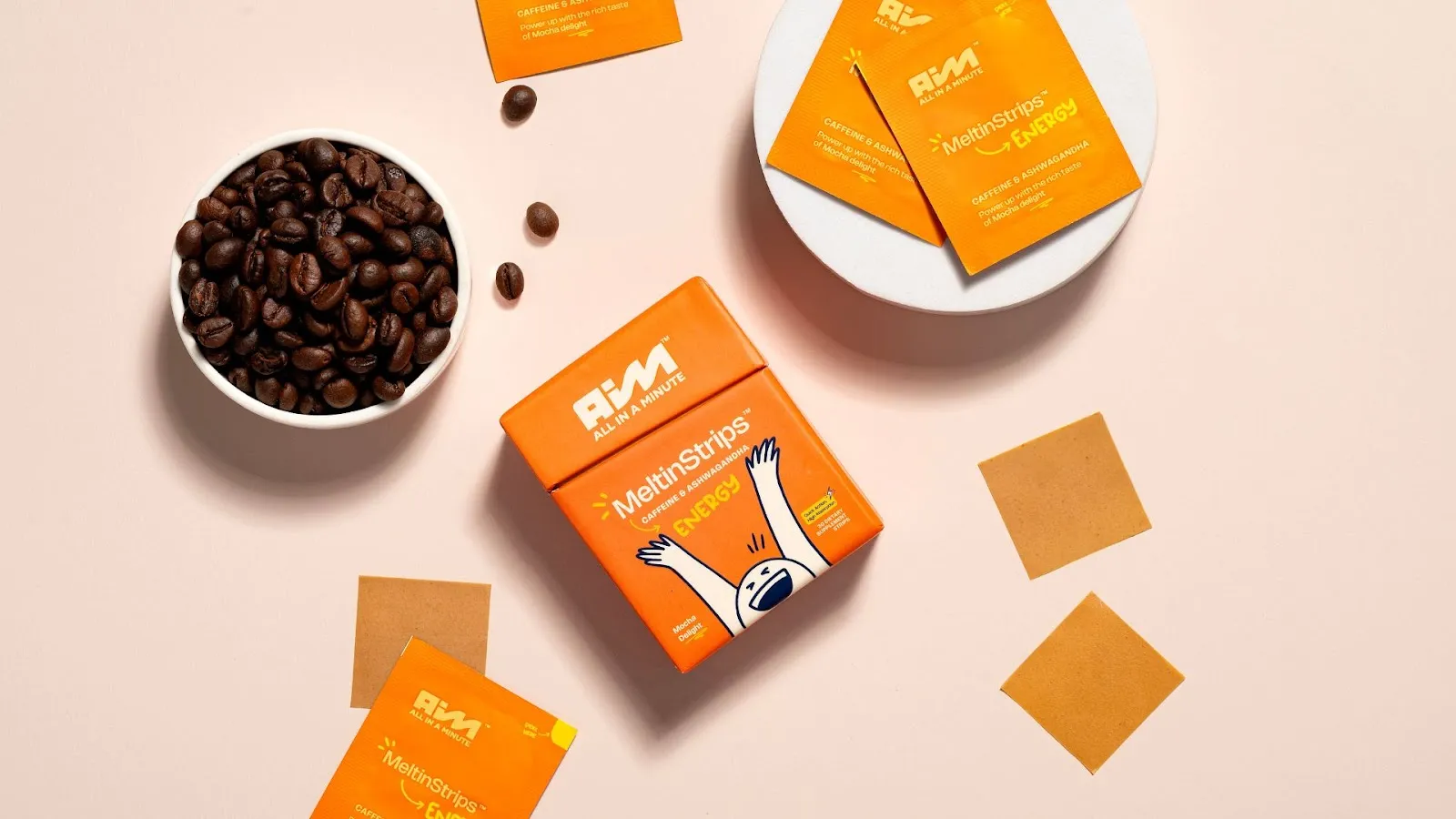
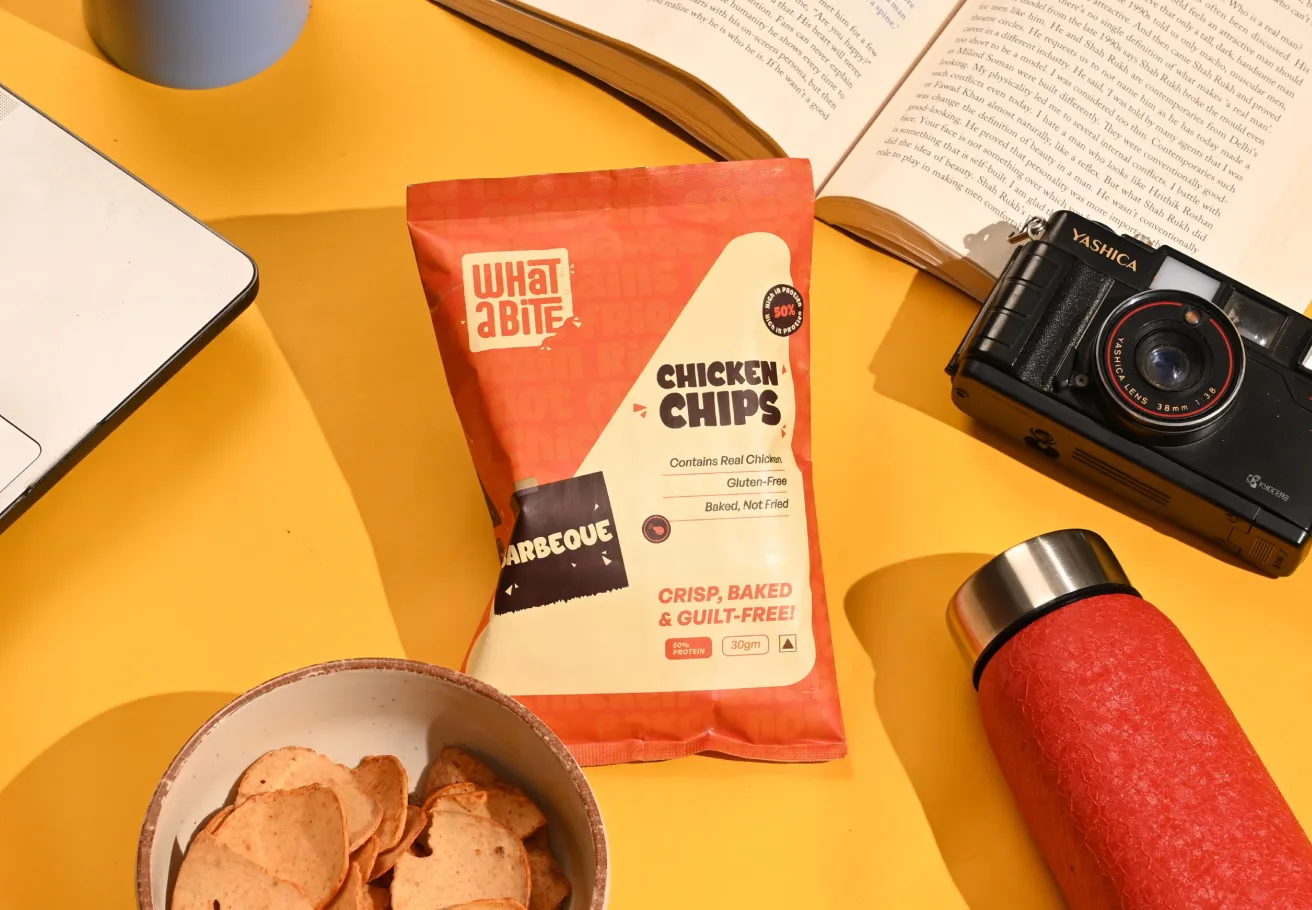
We have written and stress-tested positioning statements for FMCG and D2C brands across food and beverage, health and wellness, and beauty.
1. Brand Audit: We assess where your brand currently stands, in the market, in the minds of consumers, and on the shelf. We map your competitive landscape. We identify gaps and opportunities. This is not a surface-level review. We examine:
2. Strategic Positioning: We work with you to define a defensible, ownable position. Not a generic fill-in-the-blank exercise. We test it against the criteria that matter:
3. Visual Identity Translation: We do not start designing until the positioning is locked. Why? Because if the positioning has not been confirmed, the visual identity encodes uncertainty into the brand. Customers sense this uncertainty before they can name it.
Once the positioning is confirmed, we translate it into:
We create systems that translate brand positioning into a clear, recognisable, and shelf-consistent visual language. Systems that perform in the real world:
We partner with D2C and FMCG brands across India. Brands that need to stand out in crowded categories. Brands that need to win on shelf and on screen.
If your brand is ready to make that decision, we are ready to help you execute it.
What is an example of a brand positioning statement?
A working example: "For urban professionals who want a healthier alternative to sugary sodas, [Brand] is the functional beverage that delivers real hydration without artificial sweeteners, because every batch uses electrolyte ratios validated by a sports nutritionist." It names the audience, category, difference, and proof in one statement.
What are the 4 parts of a positioning statement?
Target audience, frame of reference (the category or competitive set), point of difference, and reasons to believe. Leaving out any one of these turns the statement into a vague claim rather than a usable strategic tool for design and messaging decisions.
What are the 3 C's of brand positioning?
Customer, Competition, and Company. Customer defines who you serve, Competition defines who else is fighting for that customer, and Company defines what you can credibly and sustainably deliver. Together they inform the four components of the statement itself.
How is a positioning statement different from a tagline?
A positioning statement is internal and strategic, used to guide design and messaging decisions. A tagline is public-facing and expressive, meant to be memorable to customers. A tagline is often inspired by the positioning statement, but it is never a direct copy of it.
How long should a brand positioning statement be?
One to two sentences is standard. If it takes a paragraph to explain your positioning, the statement has not been distilled enough yet, and it likely will not survive translation into packaging or campaign messaging.
Should a positioning statement be public-facing?
No. It is an internal reference document for your team, not customer-facing copy. Customers should experience your positioning through your product, packaging, and messaging, not read the statement itself.
How often should a brand revisit its positioning statement?
Whenever your market, competitive set, or product line shifts meaningfully, or roughly every few years even without a specific trigger. A full repositioning is different from a simple refresh, and knowing which one you need starts with an honest audit of what has actually changed.
Want strategic branding and packaging like this for your business?





.webp)
.webp)

.webp)
.webp)
.webp)
.webp)
.webp)







.svg)
.webp)