%201.webp)
02
AI Snaps
.svg)
.svg)
01
Our Work
03
About Us
04
Brand Audit
05
Contact Us
06
Client Success
12
07
Blogs
08
Careers
Book A Call
.svg)



Need Help In Building Your Brand?
Click the button below & book a call with our founder directly.

Rishabh Jain
Managing Director
The Good Bug | Confetti's Verdict ⭐⭐⭐⭐
Confetti Design Studio has analysed The Good Bug to understand how a gut health brand founded in 2022 grew revenue from Rs 2.79 crore in FY23 to Rs 89.7 crore in FY25, raised USD 20.6 million across four rounds including a Series B of Rs 100 crore led by Susquehanna Asia VC in May 2025, built an audience of over one million customers, and attracted investors including Fireside Ventures and Sharrp Ventures, the family office of Marico chairman Harsh Mariwala.
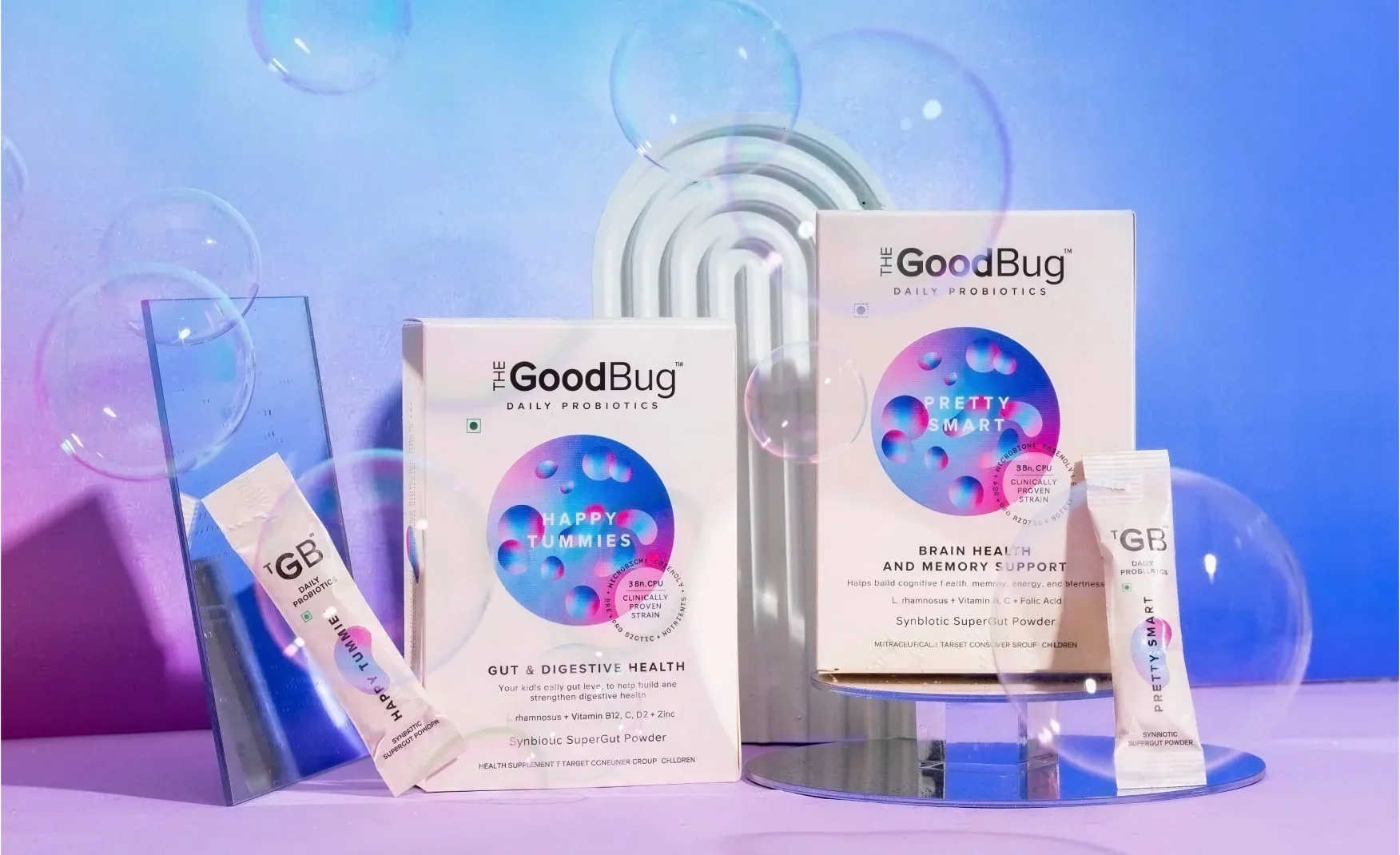
Naming a gut health brand is a genuinely difficult brief. The category is medically loaded. Words like probiotic, synbiotic, microbiome, and gut flora carry pharmaceutical associations that make a first-time buyer feel like they are entering a clinical environment rather than a wellness one. Most brands in the space either lean into the clinical language to signal credibility, or reach for Ayurvedic terminology to signal naturalness. Both choices carry baggage.
The Good Bug sidesteps this entirely. The name reframes the core scientific concept, beneficial gut bacteria, in everyday language that is immediately friendly and non-threatening. By using the word "bug" and placing "good" in front of it, the brand does something that most category education campaigns fail to do as it changes the consumer's default association with gut bacteria from something to be treated to something to be cultivated and celebrated
This naming decision has direct commercial consequences. A consumer who feels at ease with the brand's name is more likely to engage with its content, stay on its website, and convert on a first purchase. In a category that requires significant consumer education before purchase, reducing the psychological barrier at the first point of contact is not a small achievement. It is the foundation on which everything else the brand builds must rest.
The gut health and supplement category in India defaults to one of two visual languages. The pharmaceutical look, clinical white, medical blue, dense claims typography, and warning-label aesthetics. Or the wellness-Ayurveda look, earthy tones, hand-drawn botanicals, and heritage script. Both are category-appropriate. Neither of them builds the kind of brand that a 28-year-old urban professional wants to display on their kitchen counter.
The Good Bug chose a third visual register with contemporary minimal design with warm, approachable colour. Clean backgrounds, restrained typography, and a design system that feels considered rather than clinical. The result is packaging and digital presence that fits naturally into the lifestyle aesthetic of its target audience, the urban health-conscious consumer who buys from D2C brands, reads ingredient labels, and makes purchasing decisions based on ingredient quality rather than price.
The visual identity communicates that the brand understands its consumer's aesthetic values as clearly as it understands their health concerns. In a D2C category where the product arrives in a box and the first physical brand touchpoint is the packaging, this alignment between consumer taste and brand design is a meaningful commercial advantage.
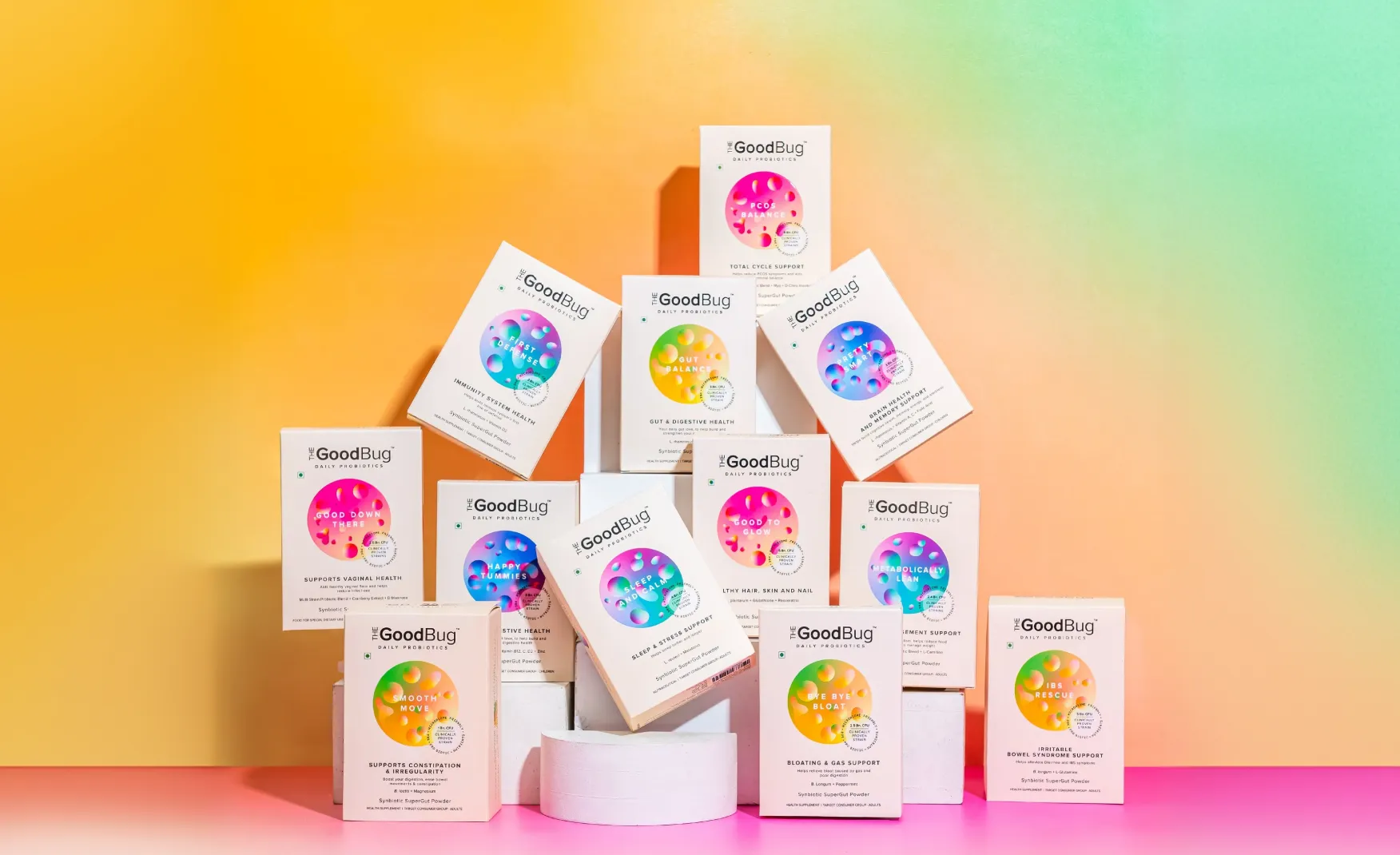
One of the most intelligent design decisions in The Good Bug's brand system is the use of abstract, organic blob shapes across its visual identity. These irregular, fluid forms appear across packaging details, website elements, and particularly in the brand's social media highlight covers on Instagram.
The shapes are a direct visual reference to gut bacteria and internal biological systems, but they communicate this without being literal or didactic. A diagram of gut bacteria is clinical. An abstract organic shape that evokes the same feeling is sensory and brand-building simultaneously. The consumer does not need to consciously decode the reference for it to work. The shapes simply make the brand feel like it belongs to the biological world it is trying to address, and they do this while staying visually friendly rather than medically intimidating. This kind of second-level design thinking, where a visual element carries conceptual meaning without requiring the consumer to work for it, is the difference between a design system that is merely attractive and one that is genuinely intelligent.
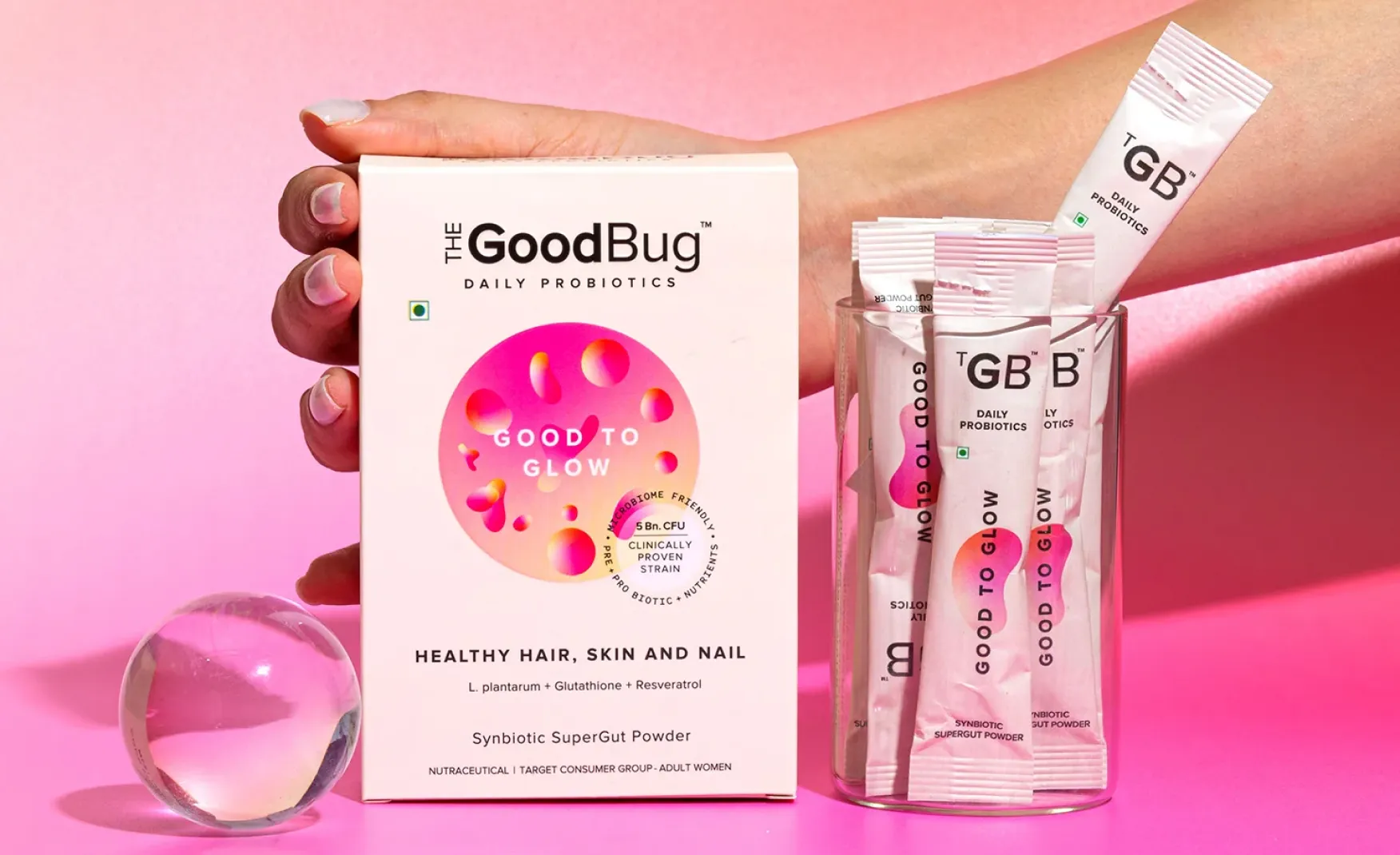
The Good Bug launched with daily probiotics and synbiotic formulas. The product range has since expanded with commercial and strategic intelligence into kombucha, water kefirs, fermented pickles, prebiotic fibres, detox shots, and most significantly, the Advanced Metabolic System, a GLP-1 based formulation positioned as a natural alternative to injectable weight-loss drugs like Ozempic and Mounjaro.
Each of these expansions follows a coherent logic. Kombucha and kefir extend the fermented gut health positioning into everyday beverage occasions. The Advanced Metabolic System addresses what is currently one of the most discussed health conversations globally, the GLP-1 weight management space, with a natural, non-invasive formulation. The collaboration with HRX, Hrithik Roshan's fitness brand, for a weight management probiotic places The Good Bug in a celebrity fitness context that its direct competitors have not occupied.
What holds this range together is that every product can be anchored to the same founding promise of scientifically validated gut health solutions that address the real health concerns of India's urban population. The brand has expanded into weight management and metabolic health without losing the gut health positioning that makes each of those expansions credible..

Sixty percent of The Good Bug's revenue comes from its own website. In a D2C wellness category where marketplaces often dominate and customer relationships are mediated through third-party platforms, this is a structurally strong revenue composition.
A consumer who buys directly from thegoodbug.com has shared their data, accepted the brand's communication, and is accessible for follow-up, repeat purchase, and educational content. This is a fundamentally different relationship from a marketplace buyer who was served a product ad and clicked through. The 60% direct channel is not just a revenue source, it is a community development engine.
The brand has also made educational resources and expert consultations part of its product experience rather than a separate marketing layer. A consumer who can access a gut health consultation on the same platform where they purchase their probiotics has a reason to return that goes beyond the product itself. This kind of value-added service layer is what builds the retention that makes D2C unit economics work over time.
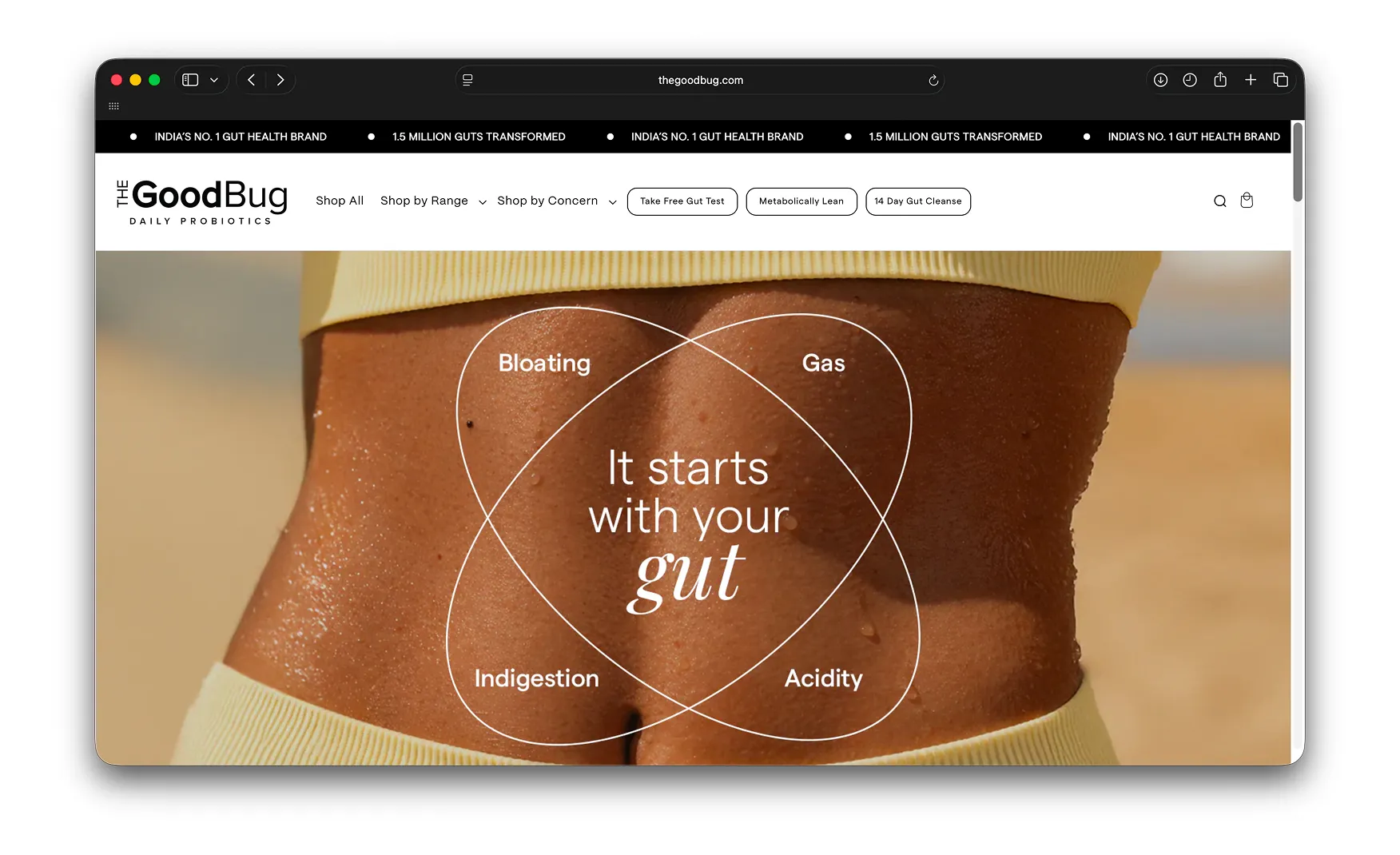
This is the most visible gap in The Good Bug's brand execution, and it is also the most commercially consequential one for a brand that relies on D2C channels where social media is often the first point of consumer contact.
The core brand identity is coherent and considered. The Instagram feed is not. Content swings between meme-led playfulness, clinical scientific claims, influencer-style testimonials, and educational infographics without a visual or tonal system that holds them together. A consumer who encounters the brand for the first time through Instagram is receiving a fragmented impression of the brand rather than a coherent one. In a category that requires consumer education and trust-building before purchase, a fractured first impression does disproportionate damage.
The highlight covers on Instagram, which maintain the organic shape language and the brand's minimal visual system, show that the design system is strong enough to hold social media content coherently. The problem is not the system. It is the discipline with which the system is being applied to day-to-day content production. That gap between brand identity quality and social media execution quality is the single most urgent issue for the brand to address.
Gut health in India is a category that most consumers are still learning to understand. Concepts like synbiotics, CFU counts, clinically validated strains, and GLP-1 activation are not in the everyday vocabulary of even the health-conscious Indian consumer. The Good Bug's commitment to science-backed formulations is a genuine product advantage. Communicating it to a mass audience without sounding pharmaceutical is a content and design challenge the brand will need to solve at increasing scale as it moves beyond the early adopter audience.
The Rs 100 crore Series B raised in May 2025 is earmarked partly for marketing and brand awareness. How that capital is deployed across content, community, and channel strategy will determine whether the brand can extend its current one million customer base into the tens of millions that the gut health market opportunity in India represents. The infrastructure for that education programme, a content system, a visual language for scientific communication, and a tone of voice that makes complex science feel accessible, needs to be built now, before the marketing spend scales.
The collaboration with HRX for a weight management probiotic and the launch of the Advanced Metabolic System place The Good Bug in a significantly different consumer conversation from its original gut health positioning. Weight management is a high-stakes, high-competition category with its own consumer psychology, its own set of clinical credibility requirements, and its own marketing norms.
The brand needs to make a deliberate architectural decision about how this new territory relates to its core positioning.
Is weight management a natural extension of gut health, communicated through the same brand system?
Is it a distinct product line with its own visual identity within the master brand?
Or does it require a sub-brand to avoid the credibility dilution that comes from one brand trying to own both digestive wellness and weight loss simultaneously?
Without a clear answer, the product launches risk confusing the consumer's understanding of what The Good Bug is for.

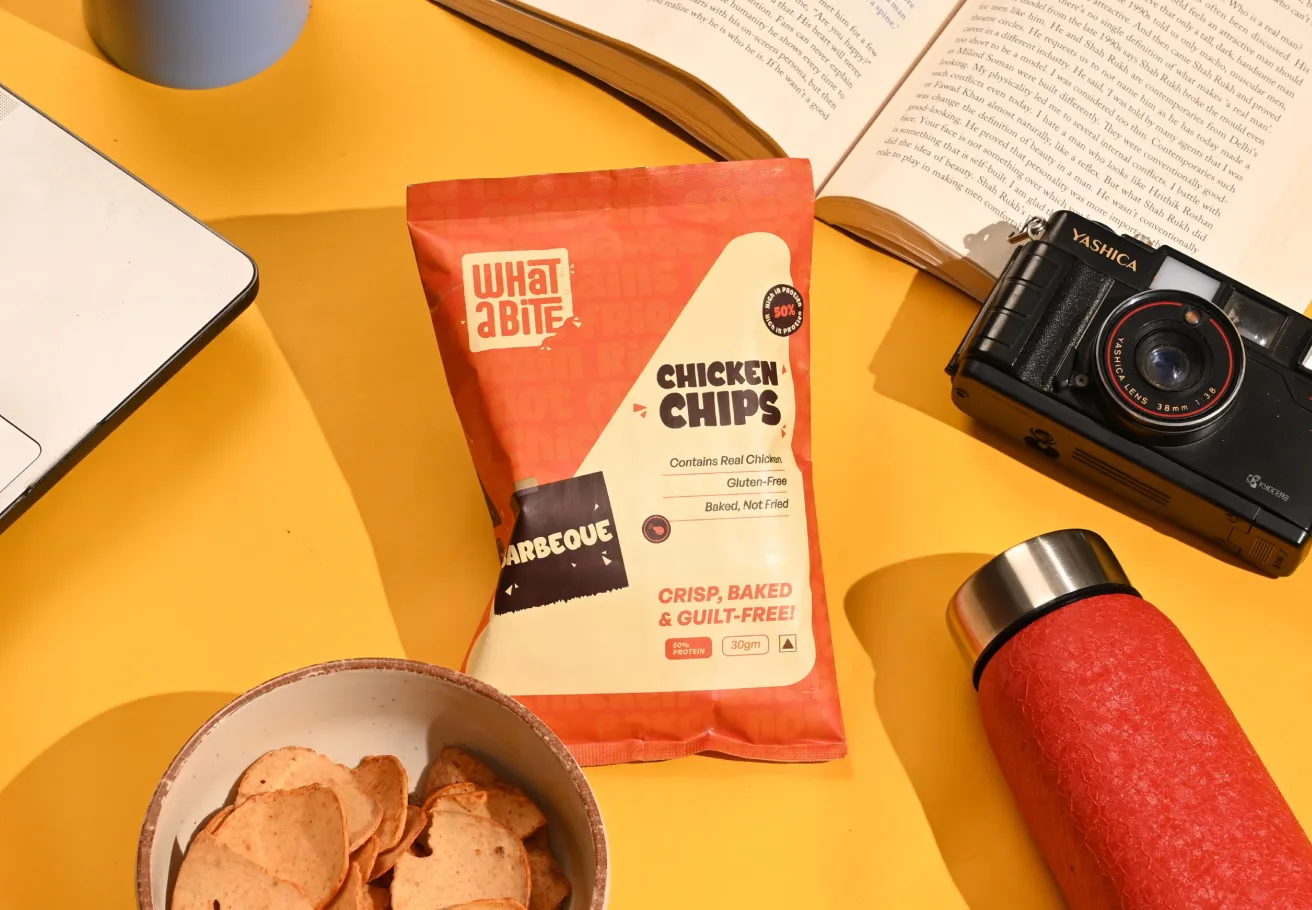
At Confetti, this is precisely the challenge we addressed with WhatABite, a meat-based chips brand operating in a category that required significant consumer education and had no established visual vocabulary to draw from. The breakthrough was not a louder marketing strategy. It was ensuring complete visual and verbal consistency across every touchpoint: packaging, website, social media, and campaign. Every piece of content produced by WhatABite felt unmistakably like the same brand, regardless of the format or platform. The consumer encountered a coherent world rather than a brand trying on different voices depending on the day.
The Good Bug already has the design language to do the same. The organic shapes, the minimal colour palette, the considered typography with all of these are strong enough to carry social media content if they are applied with the same discipline that the packaging and website show. What is needed is a documented content design system, with explicit rules for visual templates, typography usage, colour application, and tone of voice guidelines, that constrains day-to-day content production within the brand's existing vocabulary.
The Good Bug's products are clinically validated. Its formulations are evidence-based. These are genuine differentiators in a wellness category where most competitors make claims they cannot substantiate. The problem is that communicating scientific credibility without triggering pharmaceutical associations is a design problem as much as a copywriting one.
The brand needs a visual language specifically designed for science communication: a set of typographic treatments, illustration styles, and data presentation formats that feel grounded in evidence without feeling clinical. Infographics that use the brand's organic shape language to visualise bacterial strains. Typography hierarchies that make CFU counts and strain names feel like trusted specifications rather than warning labels. This kind of designed science communication is what allows a brand to educate its audience at scale without losing the friendly, lifestyle-led register that makes The Good Bug distinctive.
The Good Bug's product range is expanding rapidly: synbiotics, probiotics, prebiotic fibres, kombucha, kefir, detox shots, and now a GLP-1 weight management system. Each of these is a legitimate product. Together, they risk creating a portfolio that feels broader than the brand's positioning can credibly hold without a formal architecture to organise them.
A documented brand architecture, defining which products sit under the core The Good Bug identity, which require a distinct visual treatment within the master brand, and which might eventually warrant a sub-brand, would give the product team a principled framework for every future launch decision. It would also give the consumer a clearer map of what The Good Bug is and what each part of the range is for. In a category where purchase decisions are driven by trust and understanding, clarity of portfolio architecture is not a secondary design concern. It is a conversion driver.
The Good Bug has done something that most wellness brands spend years trying to achieve: entered a medically loaded category and made it feel like a lifestyle choice. The name is one of the strongest in Indian D2C wellness. The visual system is coherent and contemporary. The product range is grounded in genuine science. And the revenue trajectory, from Rs 2.79 crore in FY23 to Rs 89.7 crore in FY25, confirms that the market is responding.
The work ahead is about closing the gap between the quality of the brand system and the consistency of its execution. The Rs 100 crore Series B gives the brand the capital to build that consistency at scale. Whether the social media execution tightens to match the packaging, whether the science communication design language gets built before the audience broadens, and whether the portfolio architecture gets formalised before the product range outgrows informal brand management: these are the decisions that will determine whether The Good Bug becomes the category authority it has the foundations to be.
If you are building a gut health, nutraceutical, or wellness brand in an education-heavy category and want to create the kind of consistent, trustworthy brand system that converts curiosity into loyalty, Confetti can help you build that.
Want strategic branding and packaging like this for your business?





.webp)
.webp)

.webp)
.webp)
.webp)
.webp)
.webp)







.svg)
.webp)




.svg)
.svg)





















































































.webp)








.webp)


.svg)