%201.webp)
02
AI Snaps
.svg)
.svg)
01
Our Work
03
About Us
04
Brand Audit
05
Contact Us
06
Client Success
12
07
Blogs
08
Careers
Book A Call
.svg)



Need Help In Building Your Brand?
Click the button below & book a call with our founder directly.

Rishabh Jain
Managing Director
Keventers | Confetti's Verdict ⭐⭐⭐⭐½
Confetti Design Studio has analysed Keventers to understand how a milkshake brand founded in 1925 by Swedish dairy technologist Edward Keventer, left to decay when its Chanakyapuri factory was requisitioned for a diplomatic enclave in the 1970s, and relaunched commercially in 2015 by Agastya Dalmia, Aman Arora, and Sohrab Sitaram, became one of the most studied heritage brand revival stories in Indian F&B. With over 300 outlets across 40-plus cities in India and a presence in Nepal, the UAE, Oman, and Kenya.
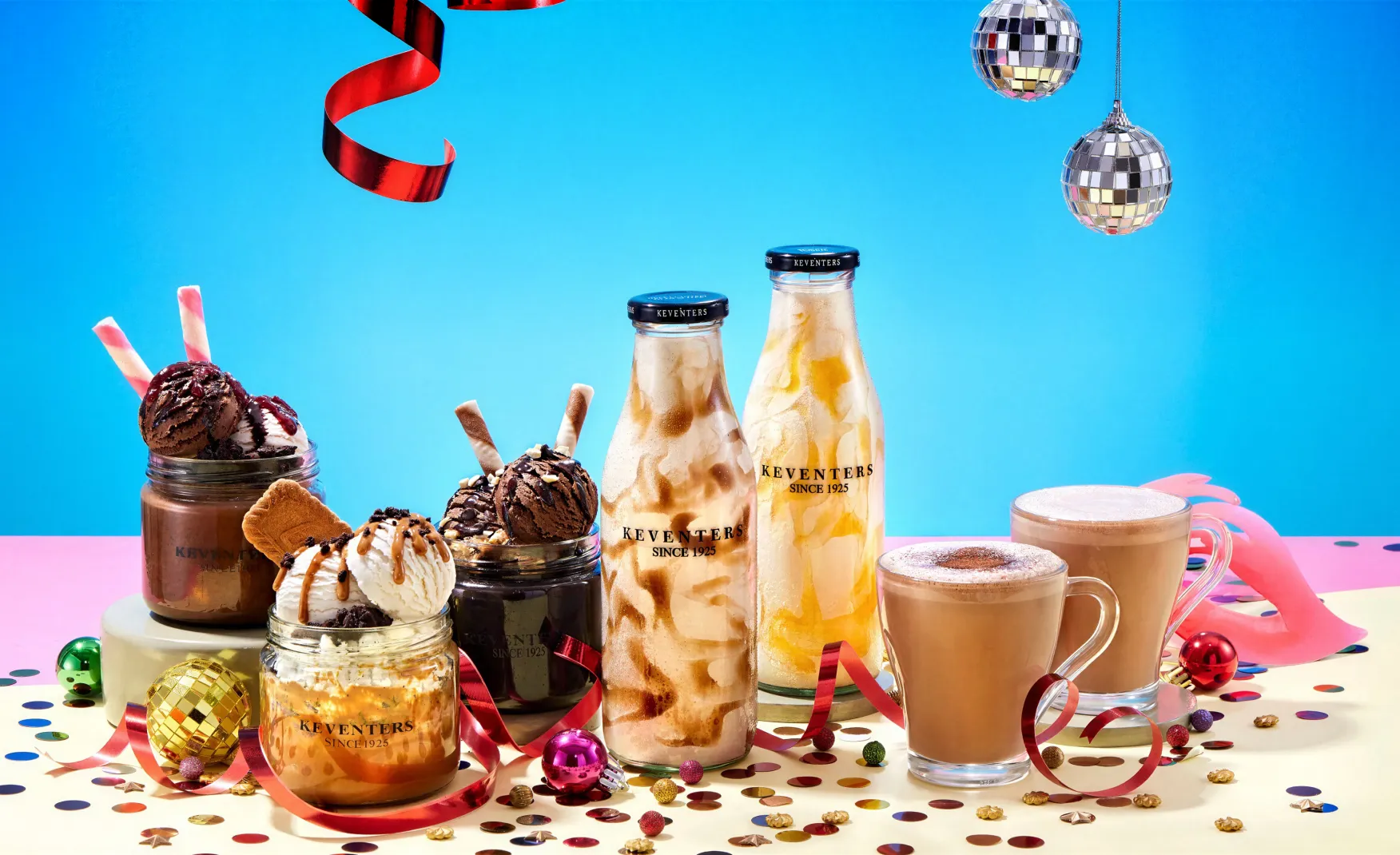
Most heritage brands in India make one of two mistakes when they attempt a revival. The first is freezing the visual identity exactly as it was, which produces a brand that looks like a museum exhibit rather than a live commercial property. The second is overcorrecting into modernity, stripping out the heritage cues that made the brand valuable in the first place and producing something that could have been built yesterday by anyone.
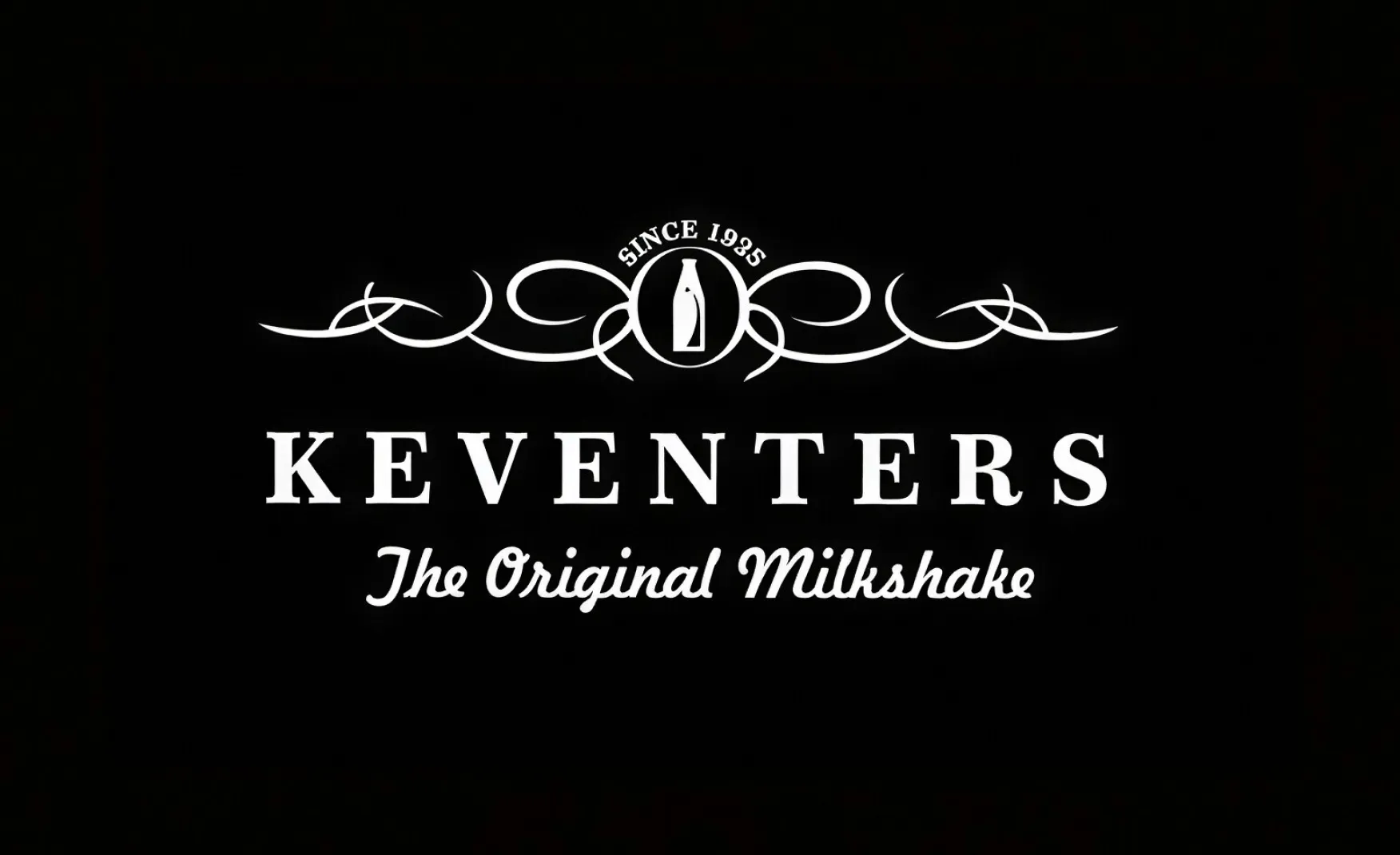
Keventers did neither. The 2015 revival built a visual identity that is classically American diner in its reference points but contemporary in its execution. Serif typography, white and orange as the primary colour combination, retro-inspired layout compositions, and restrained illustration work together to create an impression of timelessness rather than datedness. The brand does not look like it is from 1925. It looks like it was built by someone who understood 1925 and translated that understanding into a visual language that a 25-year-old in 2025 can find genuinely appealing.
Looking classic requires a precise understanding of which heritage cues to preserve, which to modernise, and which to discard entirely. The Keventers revival team made those judgments correctly, and the result is a brand that the grandparent generation recognises and the grandchild generation wants to Instagram. Very few Indian brands have managed to occupy both ends of that generational spectrum simultaneously.
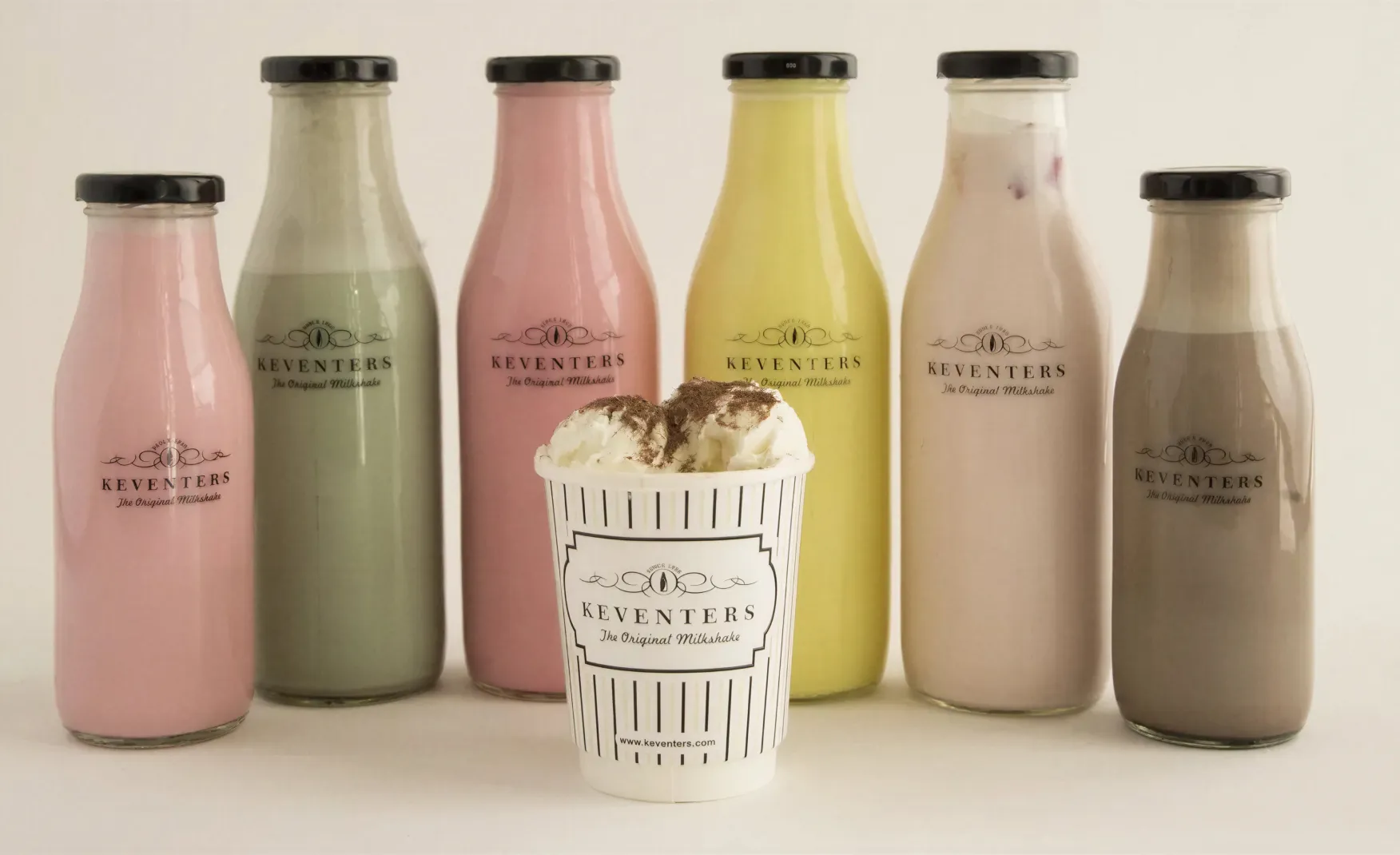
The single most important brand decision in the Keventers revival was not the menu, not the store design, and not the social media strategy. It was the insistence on serving milkshakes in glass bottles with foil-sealed tops, when the first failed relaunch attempt in 2014 had used plastic cups.
The glass bottle does several things simultaneously that no paper cup or plastic container can replicate. It signals quality and premium positioning at the point of purchase, because glass reads as more considered than disposable packaging. It creates a tactile brand experience that extends the moment of consumption. And critically, it outlives the product itself. Consumers keep Keventers bottles. They store them in refrigerators, repurpose them as drinking glasses, and display them on shelves. Every bottle that leaves a Keventers outlet continues to function as a brand touchpoint in a domestic environment for months or years after the milkshake was finished. This is passive brand advertising at zero marginal cost, and it is a form of brand presence that no digital campaign can replicate.
The city-specific landmark illustrations on the bottles add another layer of intelligence to this decision. A Keventers bottle in Delhi features Delhi landmarks. One from Mumbai features Mumbai. This localisation transforms what could have been a standardised piece of packaging into a piece of cultural identity. The consumer is not just buying a milkshake. They are buying a bottle that celebrates where they live. The bottle becomes collectible, shareable, and emotionally resonant in a way that generic packaging never can.
The parallel that comes to mind is Nutella, a product whose glass jar has lived on kitchen shelves long after the last scraping because the jar itself is worth keeping. Keventers has built an equivalent physical brand touchpoint in the beverage category, which is a rarer achievement than it sounds.
Scaling a beverage brand through franchising is one of the most difficult brand management challenges in F&B. The product quality, the store design, the customer experience, and the visual identity all need to be held to a consistent standard across dozens or hundreds of independently operated outlets. Most franchise brands either over-standardise and lose local relevance, or under-standardise and lose brand coherence.
Keventers' supplies all flavouring syrups and core raw materials centrally, ensuring that the product itself is consistent regardless of which outlet the consumer visits. The store design and visual identity are executed by Keventers' own team before handover to the franchisee, ensuring that the retro-diner aesthetic holds across formats. With over 300 outlets operating across more than 40 cities, the brand has achieved a level of visual and product consistency that many QSR brands with significantly larger budgets have failed to match.
The shift from a purely franchise model toward company-owned and company-operated outlets in key markets reflects a further maturation of this thinking. COCO outlets allow the brand to set the experience standard against which all franchise outlets are measured, and they give the brand team direct consumer feedback that is harder to aggregate from a distributed franchise network.
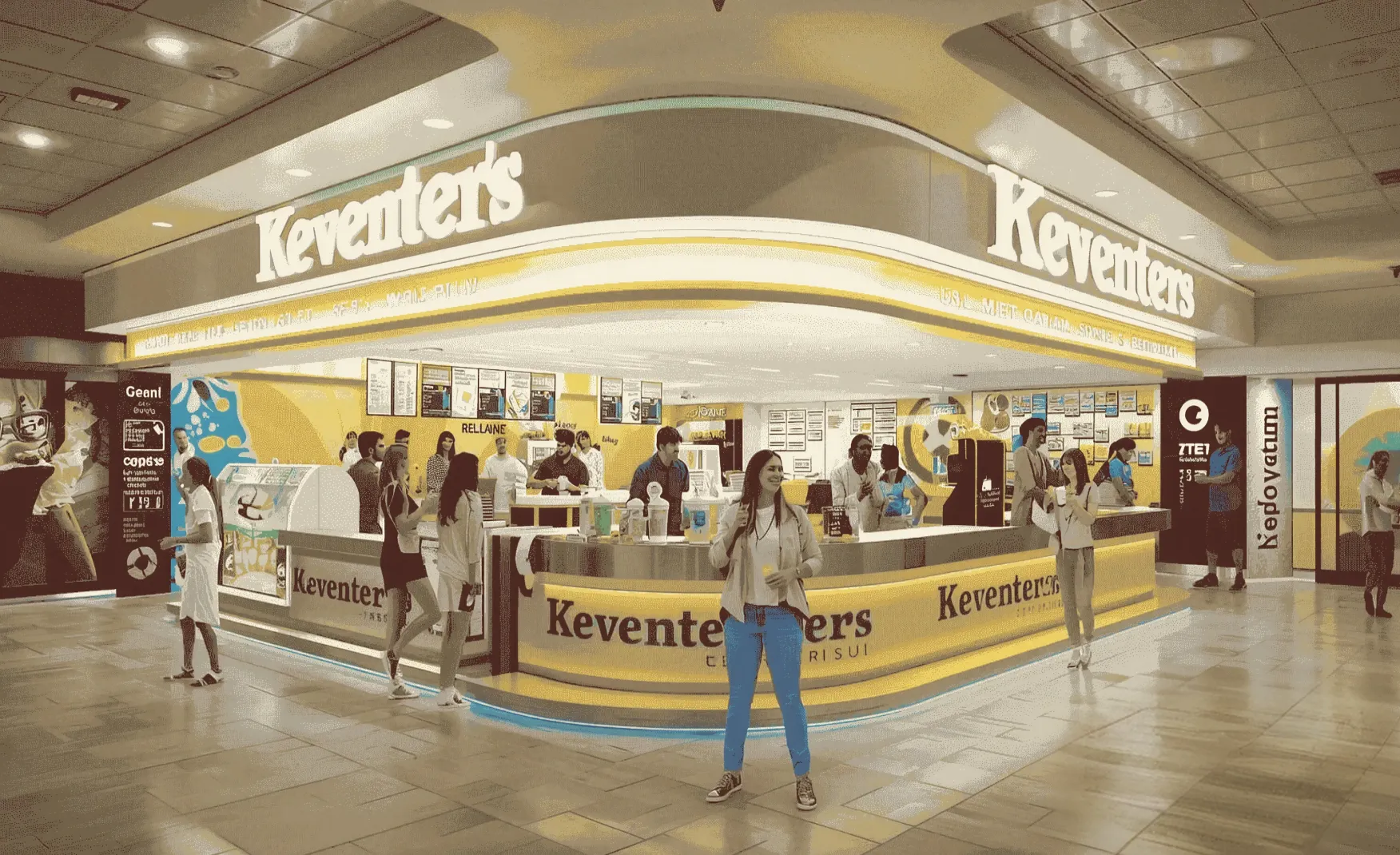
A brand that only sells milkshakes has a ceiling like the consumer who does not want a milkshake on a particular visit has no reason to enter the store. A brand that sells milkshakes, ice cream, sundaes, hot chocolate, and seasonal products has an occasion for every visit, every mood, and every time of year.
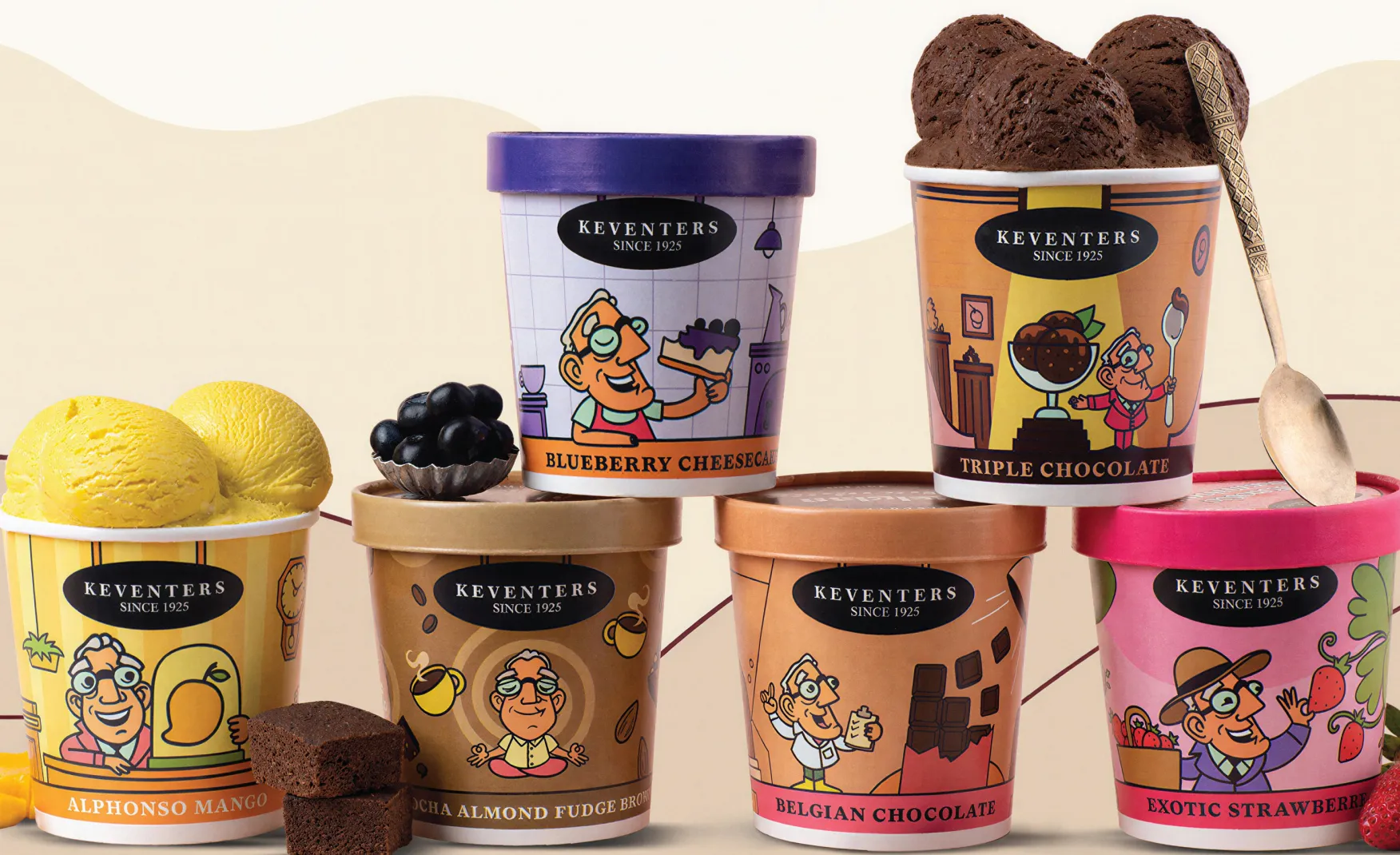
Keventers has made this expansion thoughtfully rather than reactively. The Keventers Ice Creamery sub-brand, serving gourmet ice creams including Belgian chocolate variants and Alphonso mango editions in glass bowls, extends the brand's premium dairy positioning into a category where the glass presentation and quality sourcing story translate naturally. The expansion into seasonal and festive products keeps the brand calendar active throughout the year rather than peaking only during milkshake occasions, which in India are concentrated in summer months.
What unites all of these extensions is that they remain within the brand's emotional territory of being a premium dairy indulgence delivered through a design-led experience. The brand has not ventured into categories where its visual identity and quality positioning would feel incongruous. This discipline, knowing what the brand is and is not, is one of the more difficult strategic skills a heritage brand needs as it grows, and Keventers has demonstrated it consistently.
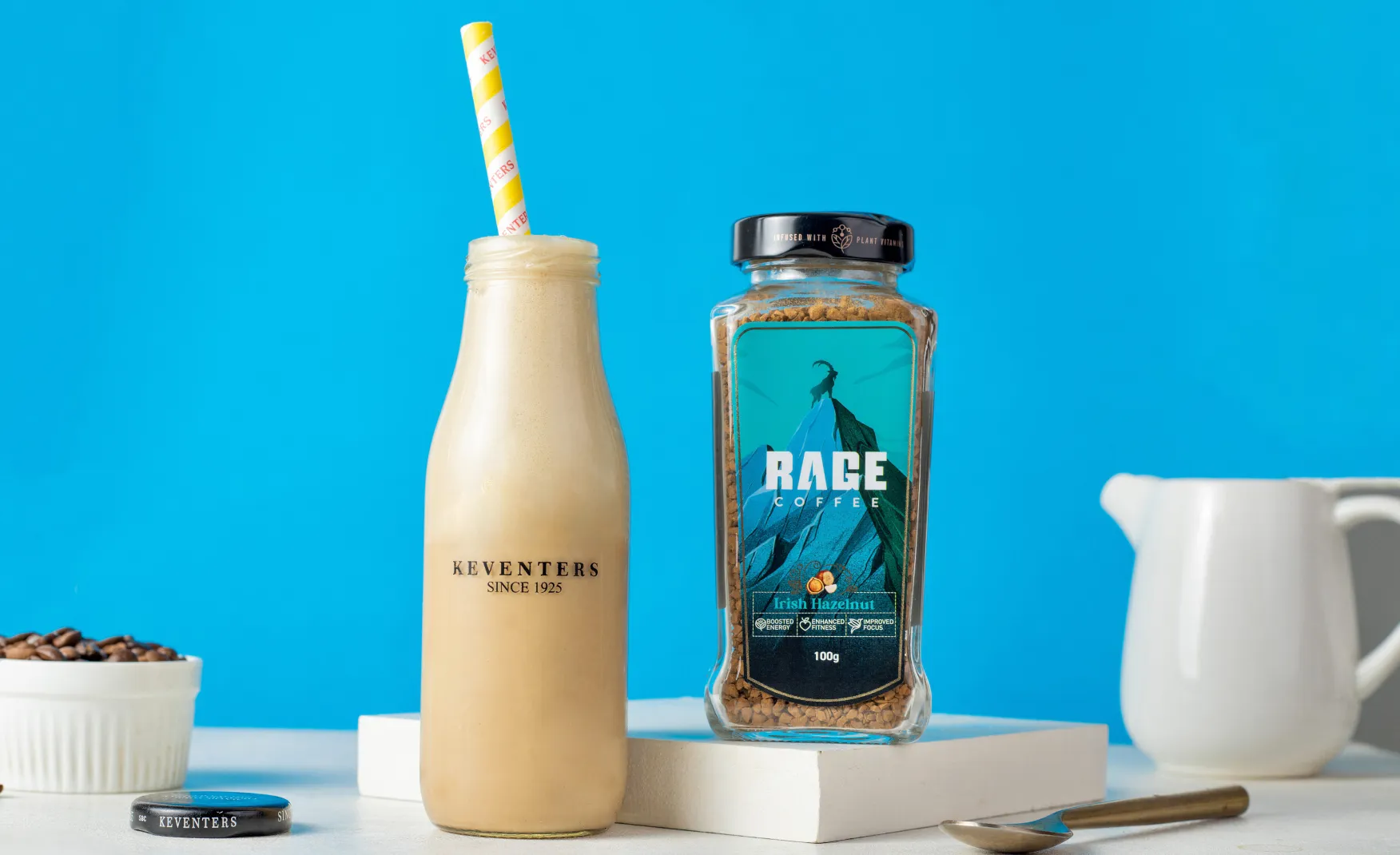
The Keventers core consumer memory belongs to an older generation. The milkshake drinkers who grew up with the brand in Delhi are now in their 50s and 60s. The generation that forms the brand's current commercial base, the 18 to 35 year old urban consumer, encountered Keventers through the revival rather than through childhood. Keeping this audience engaged requires the brand to participate in conversations they are already having.
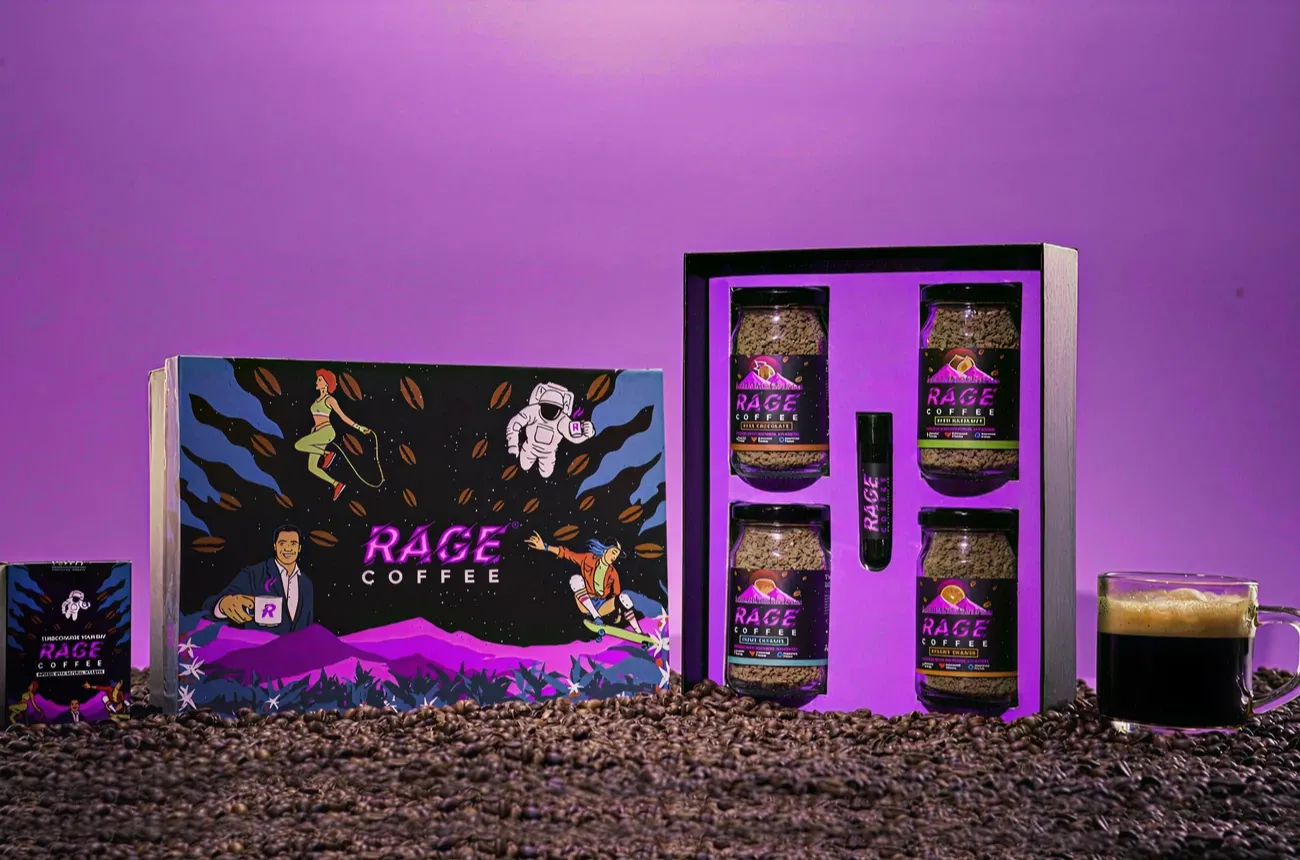
The collaboration with Rage Coffee for a coffee milkshake, the partnership with Myprotein for a Coffee Impact Whey Protein in Keventers flavour, and the tie-up with Orion Choco-Pie for a co-branded milkshake are all examples of a brand that understands which contemporary audiences it wants to connect with and has identified the right partners to make those connections credible. Each collaboration brings Keventers into proximity with a brand that already has the cultural currency the collaboration is designed to borrow, while giving the partner brand access to Keventers' 100-year heritage as a quality signal.
Crucially, none of these collaborations have required Keventers to compromise its visual identity or its product positioning. The glass bottle format, the retro-diner aesthetic, and the premium dairy quality have all remained intact across every collaboration. The brand has been additive rather than dilutive in how it approaches these partnerships, which is the correct approach for a heritage brand that has spent a decade rebuilding its credibility.
Keventers set a target of Rs 700 crore in system turnover by FY26. The company's own reported revenue through Super Milk Products Private Limited, which covers the company-owned operations, stood at Rs 96.5 crore in FY25. While system-level turnover across all franchise outlets will be a larger number than the entity-level revenue, the gap between the stated ambition and the reported scale raises a question worth examining: is the franchise network generating the volume that the brand's footprint expansion suggests it should?
The franchise model creates a structural reporting challenge for any brand: the franchisee's revenue does not appear on the parent company's books, making it difficult for outsiders to assess true system-level performance. But it also creates an operational challenge: the brand's commercial momentum is dependent on the health of hundreds of independently operated outlets whose financial performance the brand does not fully control. A franchise network that is not financially healthy at the outlet level is a brand health problem that can materialise faster than the parent company can identify and address it.
The visual coherence that defines Keventers in its best-executed outlets, the retro-diner aesthetic, the foil-topped glass bottle presented in the right environment, the white and orange palette applied consistently, is genuinely impressive at its peak. The challenge with a 300-plus outlet franchise network is that the peak is not the average.
An outlet in a prime Select Citywalk location in Delhi, where the store design was executed by the brand team to flagship standard, looks different from an outlet in a Tier 2 city where a franchisee has made independent decisions about elements the brand guide does not explicitly cover. These deviations are rarely dramatic enough to constitute a brand crisis. They are, however, the kind of cumulative drift that erodes the premium positioning the glass bottle and the retro design are supposed to communicate. For a brand whose entire commercial strategy is built on the quality signal of its packaging and environment, even modest visual inconsistency at the outlet level is a brand problem.

The collaborations Keventers has executed to date have been individually well-judged. Rage Coffee, Myprotein, and Orion Choco-Pie are all credible partners that bring relevant audiences without compromising the brand's identity. The risk as collaboration volumes increase is that the selection criteria become less rigorous rather than more so. A heritage brand's credibility is built on restraint. The same selectivity that Forest Essentials applies to collaborations, the same editorial discipline that protects a premium brand from appearing ubiquitous, needs to be formalised at Keventers before the pipeline of collaboration opportunities begins to outpace the brand team's capacity to evaluate them carefully. The collaborations that have happened are good. The framework for deciding which future collaborations to accept, and which to decline, is the more important piece of work.
The most commercially urgent brand investment Keventers can make is the development of a comprehensive design system document that covers not just the logo and colour palette but every visual decision that affects the consumer's experience of the brand: how the store lighting is specified, how the bottle is presented at the point of sale, how seasonal products are introduced without disrupting the master brand visual, and how franchise partners are trained to maintain the retro-diner aesthetic in markets where they do not have direct brand team support. A formal design system is what allows a brand to protect its premium positioning at scale without requiring a brand team member in every outlet.
At Confetti, we helped Dairy Don, an ice cream brand, design not just packaging but a complete brand experience system that held its identity consistently across every consumer touchpoint, from product to physical environment to digital presence. The discipline of thinking about brand coherence as a system rather than a collection of individual decisions is what allows a brand to scale without drift. For Keventers, the equivalent work on collaborations means developing an explicit framework: what a brand partner must share with Keventers in terms of values and audience, what the visual execution rules are for any co-branded product, and what the glass bottle's role is in any collaboration. If the bottle is non-negotiable, that is the first rule of the framework. Everything else flows from there.
Keventers has the most distinctive beverage packaging in India. The foil-sealed glass bottle is instantly recognisable and carries a century of heritage equity. That packaging has been used exclusively as an outlet-based serving format. The brand has spoken about expanding into D2C and FMCG channels, and the glass bottle is the most powerful asset it could bring to those channels.
A Keventers ready-to-drink milkshake in the glass bottle format, available through modern retail and quick commerce, would be a genuinely differentiated product in a category dominated by Tetra Pak cartons and plastic bottles. The packaging alone would earn it shelf attention that most new D2C beverages spend significant marketing budgets trying to generate. The category is growing, the distribution infrastructure exists, and the brand identity is already built. The D2C channel is the natural next chapter for a brand whose most powerful asset is a physical container that consumers already love.
Keventers has accomplished something that Indian brand history offers very few templates for: taking a dormant century-old brand with faded but genuine heritage equity, and translating it into a contemporary commercial identity that a new generation of consumers actively chooses and enthusiastically shares. The glass bottle, the retro-diner aesthetic, the city-specific illustrations, and the carefully selected collaboration strategy have all contributed to a brand that is simultaneously nostalgic and desirable, which is the hardest combination to sustain in any consumer category.
The work ahead is structural. The franchise network needs a more rigorous design system than informal brand guidance can provide at 300-plus outlets across 40-plus cities. The collaboration pipeline needs a framework before instinct alone is insufficient. And the D2C and FMCG channel opportunity, which the brand has identified but not yet fully activated, represents the most significant commercial and brand-building lever currently available. A Keventers glass bottle on a retail shelf or in a quick commerce delivery bag would be the most cost-effective brand-building investment the company could make.
If you are building a heritage, QSR, or indulgence brand and want to create the kind of design system and brand architecture that holds its identity coherently across hundreds of outlets and decades of growth, Confetti can help you build that.
Want strategic branding and packaging like this for your business?





.webp)
.webp)

.webp)
.webp)
.webp)
.webp)
.webp)







.svg)
.webp)




.svg)
.svg)



















































































.webp)








.webp)


.svg)