%201.webp)
02
AI Snaps
.svg)
.svg)
01
Our Work
03
About Us
04
Brand Audit
05
Contact Us
06
Client Success
12
07
Blogs
08
Careers
Book A Call
.svg)



Need Help In Building Your Brand?
Click the button below & book a call with our founder directly.

Rishabh Jain
Managing Director
Vahdam | Confetti's Verdict ⭐⭐⭐⭐⭐
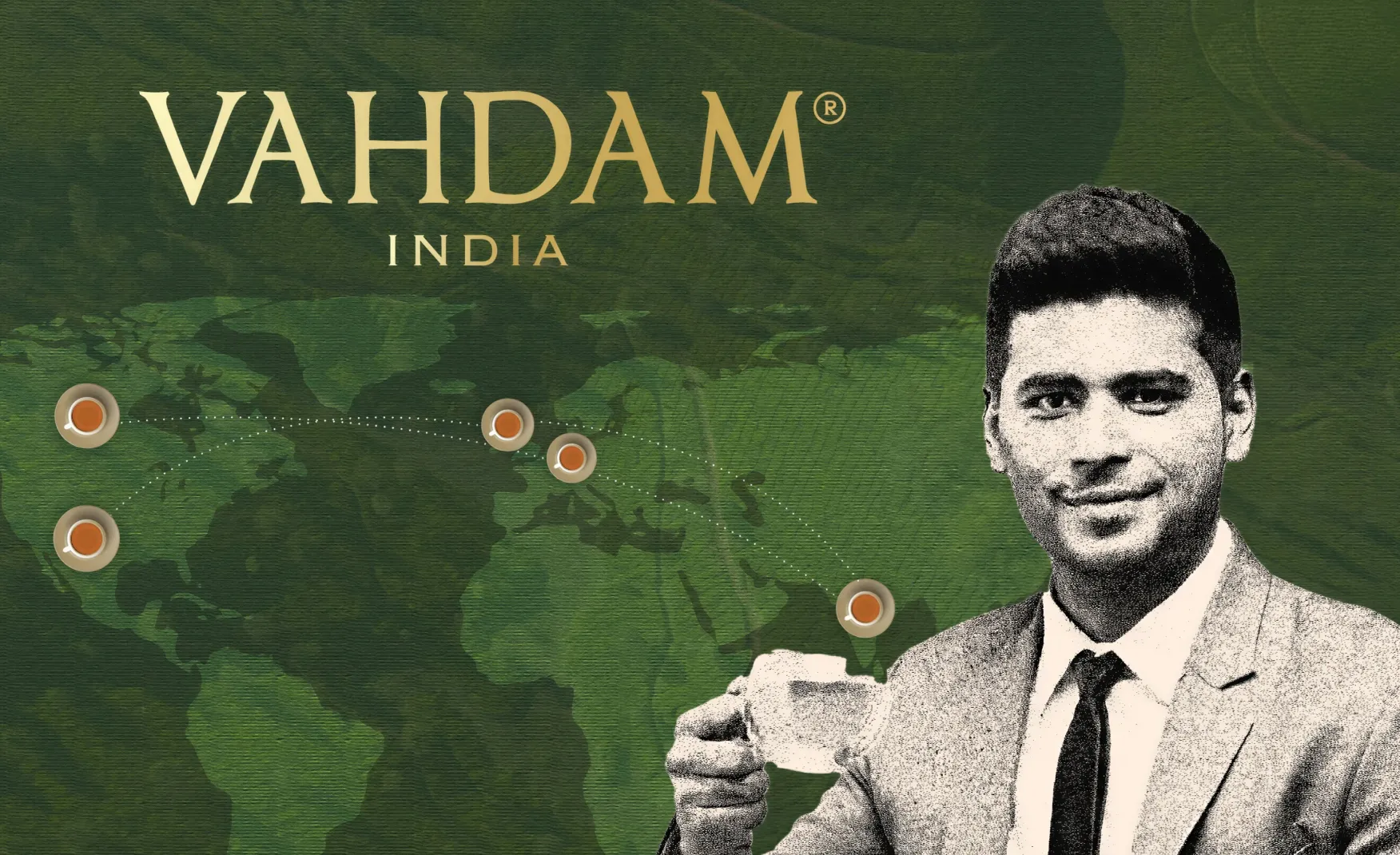
Confetti Design Studio has analysed Vahdam India to understand how a brand founded in 2015 with the singular ambition of taking Indian tea to the world became the country's most globally scaled D2C food brand, growing revenue 19% to Rs 267.5 crore in FY25 while turning profitable for the first time with a net profit of Rs 5.2 crore. The brand has raised USD 42.9 million across eight rounds from investors including Fireside Ventures, Sixth Sense Ventures, and IIFL, ships to 80 countries, is stocked in 2,000-plus Walmart stores in the US, and earns 95% of its revenue from international markets.
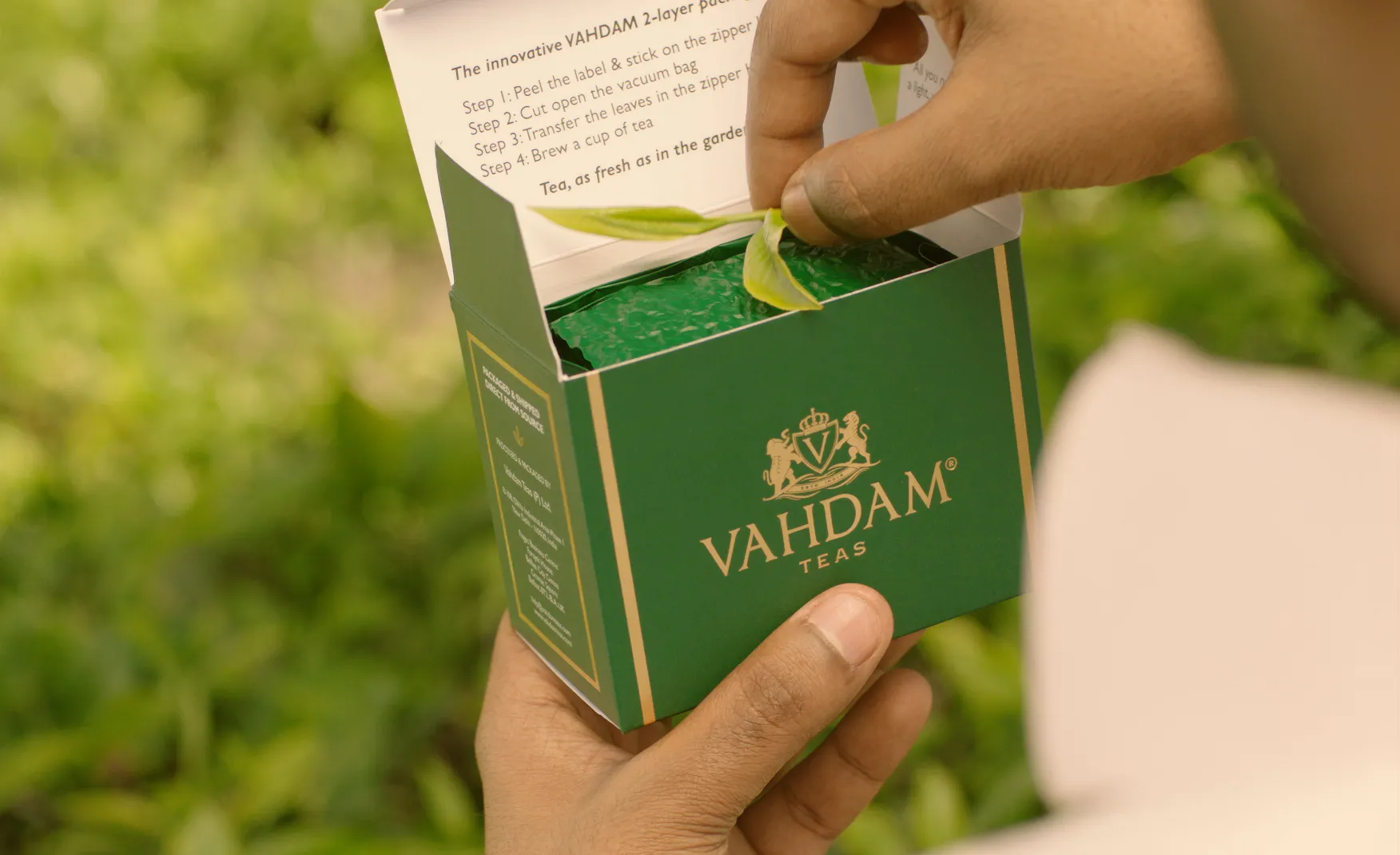
Most tea brands in India are aggregators, they just buy from auction houses, blend in facilities they do not own, and sell through intermediaries who take margin at each step. The tea that reaches the consumer has often spent months in transit and warehousing before it arrives. Vahdam built its business by rejecting this entirely.
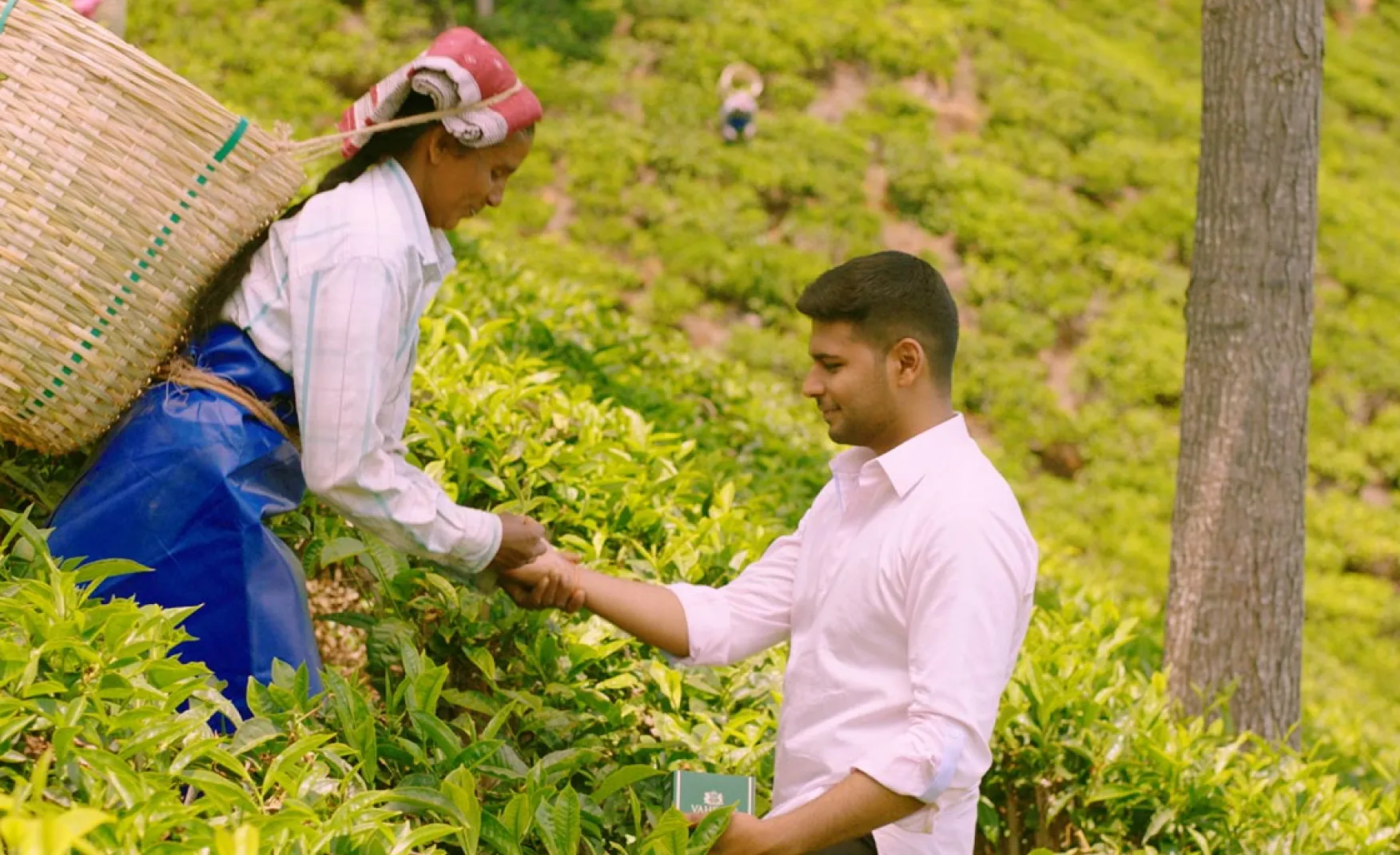
By sourcing directly from 150-plus tea plantations across India, manufacturing in its own 125,000 sq ft in-house facility in the NCR, and selling direct to consumers internationally through its own website and marketplace presence, Vahdam eliminated every middleman between the garden and the cup. The commercial consequence is fresher product, better margin capture, and full control over quality at every stage.
This supply chain architecture is also what makes the brand genuinely difficult to replicate. A competitor can copy a packaging aesthetic or a brand tone in weeks. Rebuilding a direct sourcing network across 150 plantations, a manufacturing facility, and a global distribution infrastructure takes years. The supply chain is not just the operational backbone of the business. It is the brand's deepest competitive moat.
The default approach for Indian food brands attempting international scale is one of two things. Either they lean so hard into Indian identity that they limit themselves to diaspora markets, or they dilute the Indian identity so thoroughly that the global consumer has no reason to choose them over a local premium tea brand. Vahdam has navigated between these two failure modes with unusual precision.
In the United States, which generates 68.5% of total revenue, the brand presents itself as an Indian brand that understands American consumers. The seasonal packaging for Christmas advent calendars and holiday gift sets is designed to feel native to the American gift-giving context, not like an Indian product trying to participate in an American occasion. The product storytelling leads with the US consumer's language with origin, wellness benefits, ethical sourcing, farm-fresh quality. The Indian identity serves as the proof point. The result is a brand that a US consumer encounters as a premium, trustworthy tea brand that happens to come from India, rather than as an Indian brand that is trying to sell them tea. That distinction is the difference between category participation and category leadership in a foreign market.
Tea buying behaviour varies more dramatically across cultures than almost any other food category. In India, tea is habitual, emotionally familiar, and deeply personal. In the US, premium tea often requires education about what does first flush Darjeeling mean, why does altitude affect flavour, how does the processing method change the cup. Vahdam's packaging system addresses this without creating two entirely different brand identities.
US-facing packs carry detailed origin information, brewing guides, flavour profiles, and wellness benefit communication because that is what a first-time premium tea buyer in America needs to justify a purchase. Indian-market packs lean into cultural familiarity and quality signals because that is what an Indian consumer already understands. The brand voice and visual identity remain consistent and just the information hierarchy shifts by market.
This market-aware packaging approach is significantly harder to execute than it looks. Most brands either over-explain in every market, which feels condescending to the informed consumer, or under-explain everywhere, which leaves the uninitiated consumer without a reason to buy. Vahdam has calibrated this correctly, and the consistency of its visual design across all markets means that the brand is recognisable globally even as the communication adapts locally.
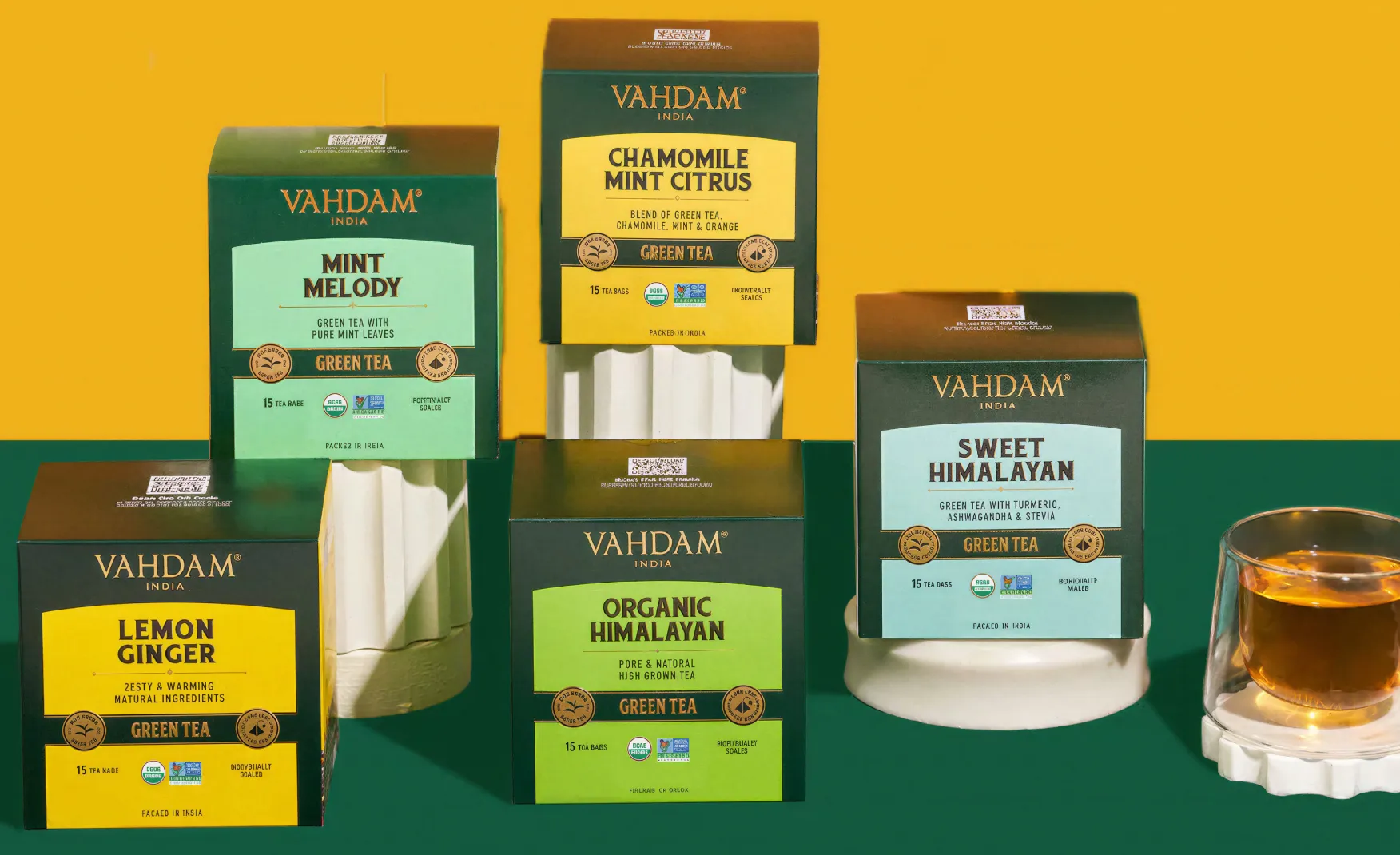
For a D2C brand that built its first decade almost entirely through online channels, the expansion into 2,000-plus Walmart stores across the US is more than a distribution milestone. It is a brand credibility event.
Walmart is the largest retail chain in the world. A product on a Walmart shelf has passed a vendor qualification process that filters for consistent quality, supply chain reliability, and market-proven demand. For Vahdam, achieving this listing means the brand is no longer a D2C challenger operating at the margins of the US grocery market. It is a mainstream shelf presence competing directly with Twinings, Celestial Seasonings, and Bigelow at the point of purchase where most Americans actually buy tea.
This offline distribution also validates the brand's supply chain at scale. Supplying 2,000-plus Walmart stores requires consistent volume, packaging standardisation, and logistics infrastructure that most Indian food brands have never had to build. The fact that Vahdam has done this while maintaining quality and growing revenue 19% in FY25 is a strong signal that the operational foundation is genuinely robust.
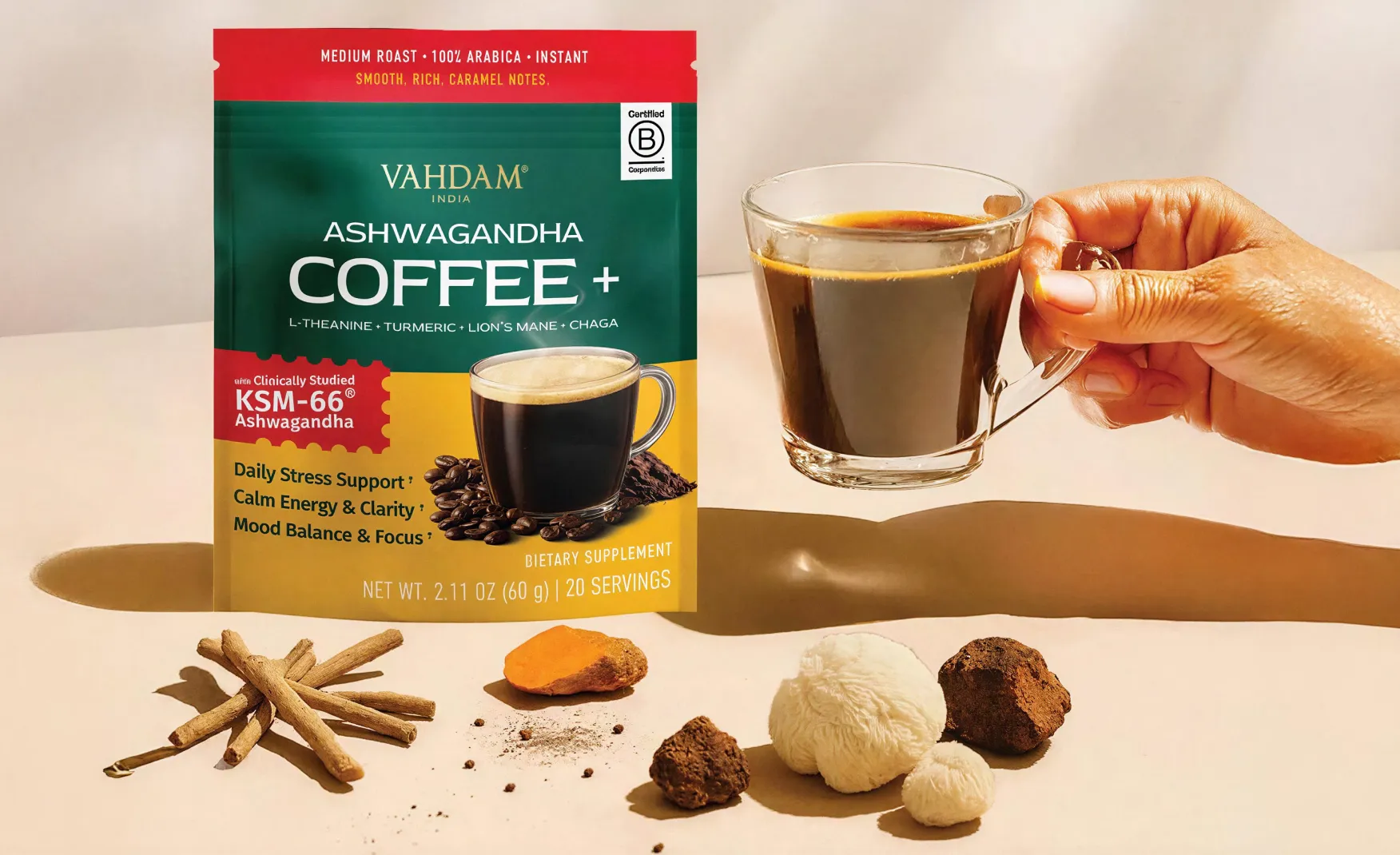
The wellness and functional beverage category evolves quickly. Ingredients like ashwagandha, matcha, and turmeric move from niche to mainstream rapidly, and the brands that benefit are those that can read the trajectory early enough to develop credible SKUs before the trend peaks.
Vahdam has demonstrated this instinct consistently. When ashwagandha entered mainstream wellness conversations in the US, Vahdam had ashwagandha tea and ashwagandha coffee already on the shelf. When matcha moved from specialty cafes into everyday wellness routines, Vahdam's matcha range was positioned as sourced-from-India rather than sourced-from-Japan, which is a meaningful differentiation in a category where Japanese origin has become a commodity claim. The brand currently offers over 250 SKUs spanning loose leaf teas, tea bags, turmeric lattes, matchas, gift sets, and accessories.
What holds this portfolio together is that every new product is anchored to the same founding supply chain proposition: sourced directly from Indian farms, manufactured in-house, and delivered to the consumer with provenance intact. The brand has expanded its range significantly without its product additions ever feeling disconnected from what Vahdam is and what it stands for.
Vahdam's global success is its most impressive commercial achievement. It is also, structurally, its most significant risk concentration. When 95% of revenue comes from international markets and 68.5% from the US alone, the business is materially exposed to any disruption in that single market, whether through policy change, competitive intensification, or the simply cyclical nature of premium food trend adoption.
India, the world's second-largest tea producer and among its largest consumers, generates just Rs 12 crore of Vahdam's Rs 267.5 crore in revenue. The brand is essentially absent from the domestic market of the crop it sources and celebrates. As the Indian premium tea and wellness beverage category grows, Vahdam is watching that opportunity from the outside. Building meaningful domestic revenue would both reduce concentration risk and create a brand presence in the country whose agricultural heritage is the brand's primary identity claim.
Tea is one of the most sensory-dependent food categories in existence. The aroma of a freshly opened tin, the colour of the liquor, the ritual of brewing: all of these dimensions of the product experience are invisible in an online purchase. For a consumer encountering Vahdam for the first time, the digital experience, however well-designed, cannot fully communicate what the physical product delivers.
Brands like TWG Tea, Mariage Frères, and Fortnum & Mason have built significant brand authority through immersive retail environments where the consumer can smell, taste, and engage with teas before purchasing. These touchpoints justify premium price points in a way that even the best product photography cannot. Vahdam's Walmart presence gets the product in front of consumers, but a Walmart shelf is a very different brand environment from a premium tea boutique. The gap between where Vahdam currently lives at retail and the kind of brand experience that would fully support its premium positioning is the next design problem to solve.

FY25's net profit of Rs 5.2 crore is a milestone worth celebrating. It is also a fragile one. The advertising spend alone was Rs 50 crore in FY24, down 18.9% from the prior year. Freight and forwarding costs ran at Rs 68 crore. In a business that is scaling globally through a direct supply chain and its own manufacturing infrastructure, the cost base is inherently high, and the margin for operational error is narrow.
The question for FY26 and beyond is whether the profitability achieved in FY25 is sustainable at the pace of reinvestment required to continue growing distribution, launching new SKUs, and building the offline presence the brand needs to move into its next phase. Profitability achieved through cost discipline alone is more fragile than profitability achieved through improving unit economics. Vahdam needs both.
Vahdam's international identity is well-established but its domestic identity is not. For a brand that sources from Indian farms and tells a story rooted in Indian agricultural heritage, being effectively absent from the Indian premium tea market is a brand credibility gap as much as a commercial one. The first step is not necessarily a mass-market domestic push. It is a deliberate premium positioning in India that gives the brand's international credibility a home market anchor. Indian consumers who discover that a brand present in Walmart in the US is also available to them are a naturally converted audience.
At Confetti, we think about brand experience as a layered design problem where every touchpoint, from packaging to retail environment to digital presence, needs to communicate the same emotional register. For Vahdam, the most significant design investment available right now is the development of a physical brand presence format, whether a standalone boutique, an airport lounge touchpoint, or a premium department store counter, that allows the consumer to experience the provenance story through all five senses rather than just through reading about it. The parallel is Vahdam's existing product philosophy: direct from garden to cup. The retail experience should feel the same way. Direct from the plantation story into the consumer's hands.
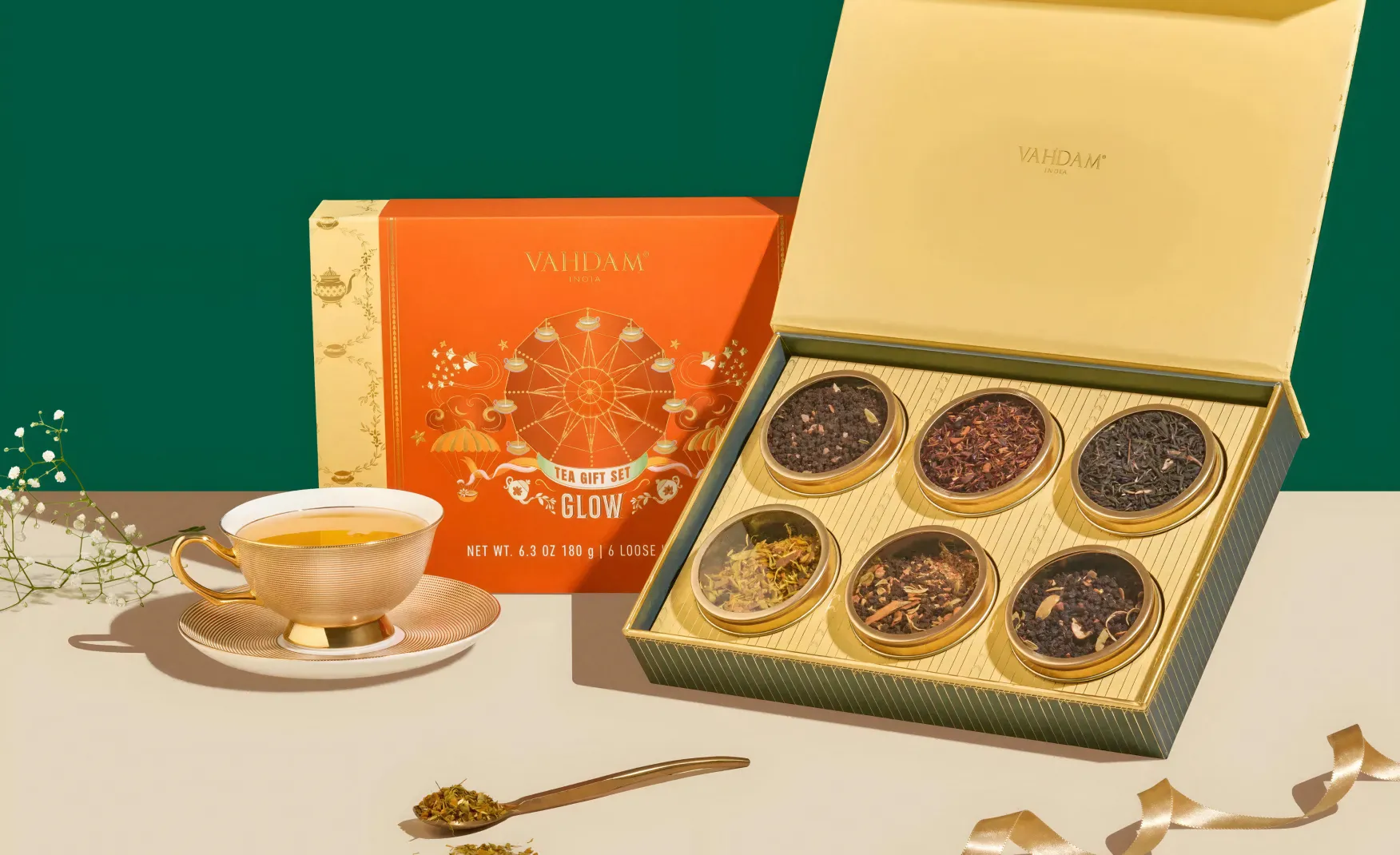
The seasonal and festive packaging Vahdam produces for Christmas in the US and Diwali in India is some of the strongest work in the brand's portfolio. These editions succeed because they are genuinely culturally calibrated to their market rather than generic "festive" packaging with a different colourway.
The opportunity is to formalise this as a structured annual programme rather than a campaign-by-campaign execution. A documented cultural moment calendar across key markets, with design principles for how the Vahdam brand adapts its packaging to each occasion without losing coherence, would allow the brand to produce this category of work at greater scale and consistency. Gift packaging at premium price points is one of the highest-margin, highest-visibility product categories available to Vahdam. It deserves to be managed as a system, not a project.
Vahdam has done something that India's food and beverage industry has attempted many times and rarely achieved: built a globally recognised premium brand from scratch, in a category dominated by legacy names with centuries of distribution muscle, by building the supply chain advantage directly into the brand story. The direct-from-plantation model is not just an operational choice. It is the brand's identity, its quality proof, and its commercial moat simultaneously.
Revenue of Rs 267.5 crore in FY25, a first net profit of Rs 5.2 crore, distribution across 2,000-plus Walmart stores in the US, and a global footprint spanning 80 countries: the commercial foundation is as strong as any Indian D2C brand has built in the food category. The next chapter is about building the offline brand experience and the domestic market presence that would elevate Vahdam from a globally successful brand to a genuinely iconic one.
If you are building a tea, wellness, or food brand that needs to scale globally while staying rooted in its cultural origin, Confetti can help you build that.
Want strategic branding and packaging like this for your business?




.webp)
.webp)

.webp)
.webp)
.webp)
.webp)
.webp)







.svg)
.webp)




.svg)
.svg)































































































.webp)









.webp)


.svg)