%201.webp)
02
AI Snaps
.svg)
.svg)
01
Our Work
03
About Us
04
Brand Audit
05
Contact Us
06
Client Success
12
07
Blogs
08
Careers
Book A Call
.svg)




Need Help In Building Your Brand?
Click the button below & book a call with our founder directly.

Rishabh Jain
Managing Director
Mokobara | Confetti's Verdict ⭐⭐⭐⭐½
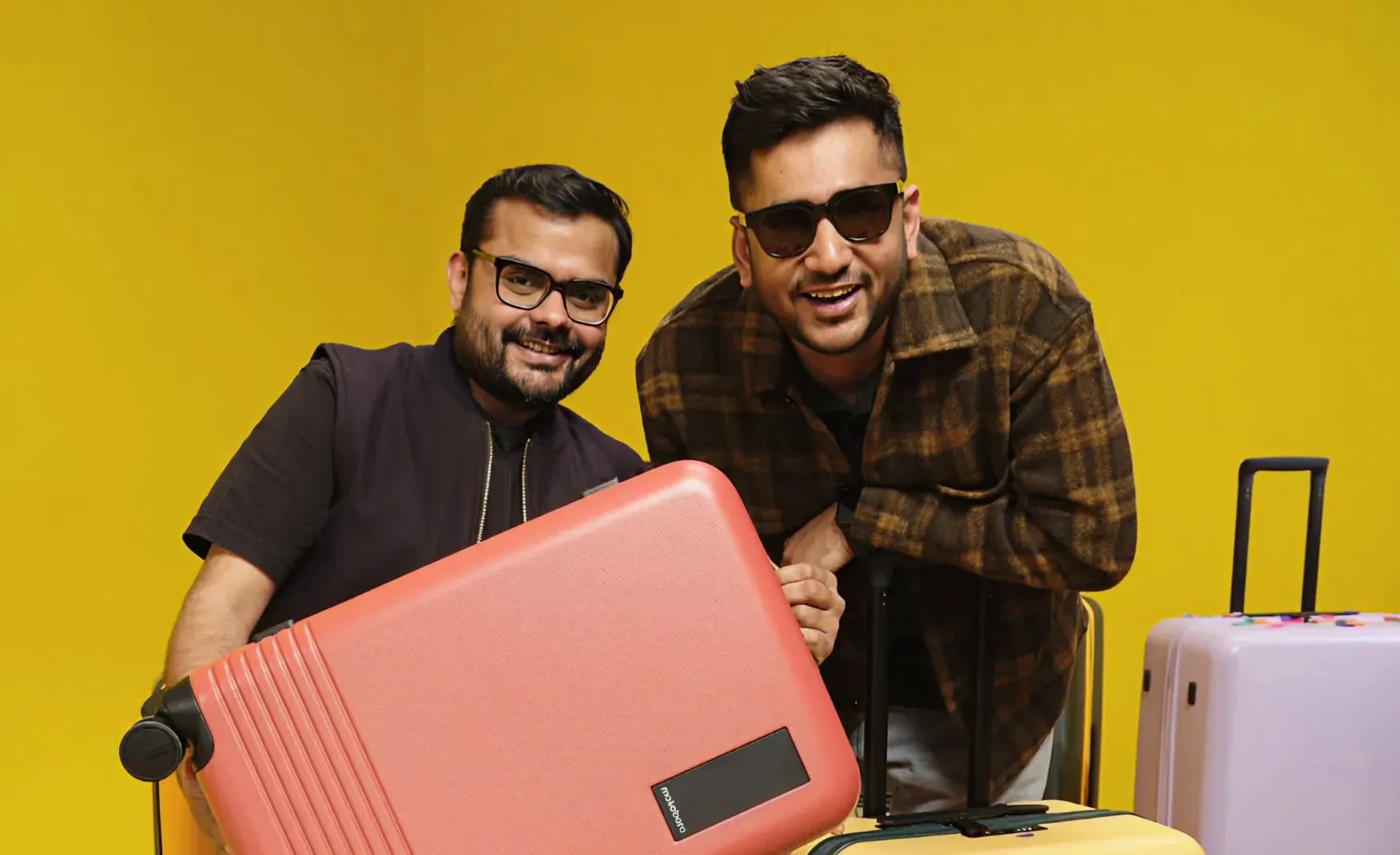
Confetti Design Studio has analysed Mokobara to understand how a brand rejected by 33 investors before securing its first cheque scaled to Rs 240 crore in revenue in FY25 from Rs 12 crore in FY22, raised USD 24.1 million across five funding rounds including a Series B led by Peak XV Partners at a valuation of Rs 700 crore, and built a design-led luggage identity that a generation of urban Indian travellers actually want to carry.
The Indian luggage market was, for most of its commercial history, effectively owned by three names: VIP, Safari, and American Tourister. These brands built their dominance over decades, earning trust through distribution scale, durability claims, and widespread availability. And they did exactly what dominant brands in any category tend to do over time: they stopped innovating visually and began coasting on name recognition.
This created a structural opportunity that Mokobara was built to fill. A predictable generational dynamic plays out in most consumer categories: the brand a parent trusts becomes the brand their child instinctively moves away from, not necessarily because the product is worse, but because brand loyalty does not transfer between generations the way brand awareness does. The child wants to define their own relationship with quality, style, and aspiration, not inherit their parents'. In luggage, the parent generation's answer was VIP. The next generation's answer, increasingly, is Mokobara.
Mokobara's founders identified this gap with precision. They launched in 2020 into the mid-premium segment, the exact space between the legacy mass-market brands that felt dated and the imported premium brands like Samsonite and TUMI that felt inaccessible. The positioning was deliberate, well-researched, and commercially correct. The Indian luggage industry was growing at roughly 15% year-on-year, and the fastest-growing cohort within it was urban millennial and Gen Z travellers who flew domestically, travelled frequently, and wanted their luggage to reflect how they saw themselves.
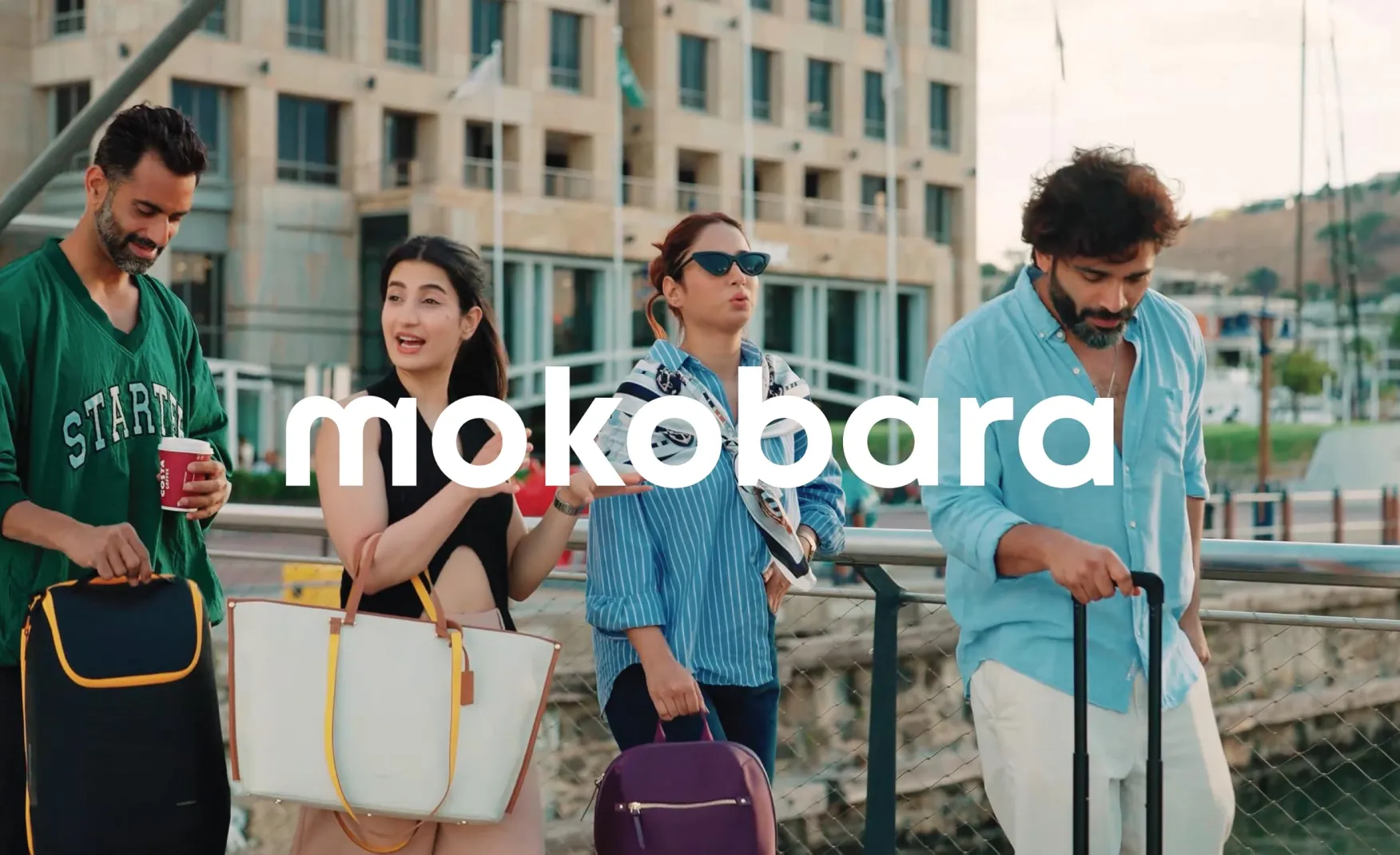
Many Indian D2C brands claim international ambitions that amount to little more than enabling international shipping and changing the currency symbol on the website. Mokobara has taken a materially different approach.
In markets like the UAE, the brand has invested in local influencer partnerships, Ramadan-specific campaigns, and culturally adapted content rather than simply pushing the same Indian marketing assets to a different geography. This distinction matters enormously. An Indian consumer in Dubai does not want to feel like they are shopping on an Indian website that happens to ship to them. They want a brand that acknowledges their context, their calendar, and their cultural reference points. The difference between surface-level international selling and genuinely localised market entry is the difference between export revenue and brand equity.
Opening a Dubai flagship store, partnering with local content creators, and calibrating campaign messaging to regional occasions is not inexpensive. It is, however, the approach that builds the kind of brand recognition in a new market that allows a company to charge premium prices rather than competing on delivery speed.
One of the most common mistakes that fast-growing D2C brands make is confusing revenue growth with brand growth. They expand into adjacent categories, launch new product lines in unrelated spaces, and end up with a portfolio that generates revenue but does not build a coherent brand identity. Mokobara has, for the most part, resisted this.
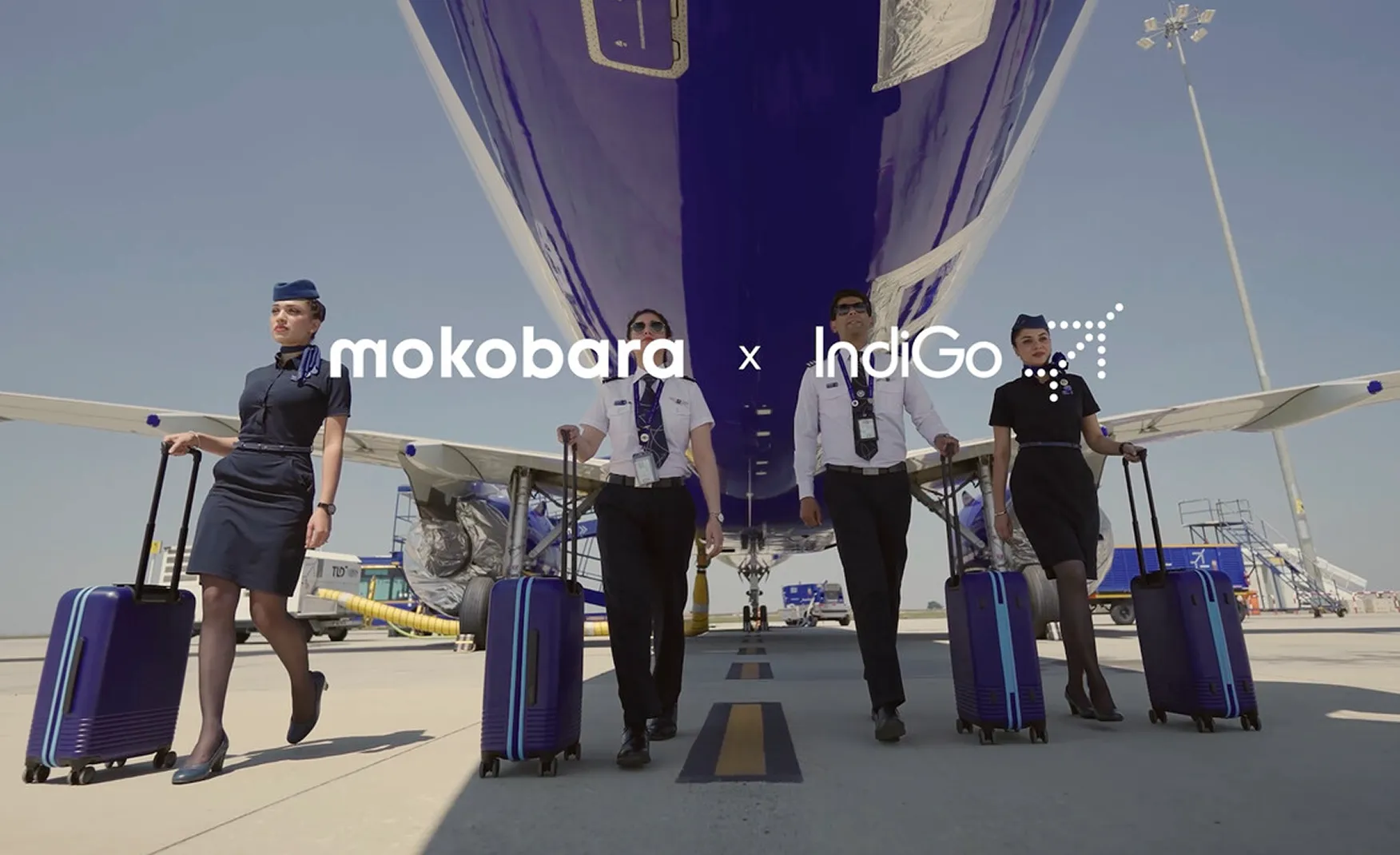
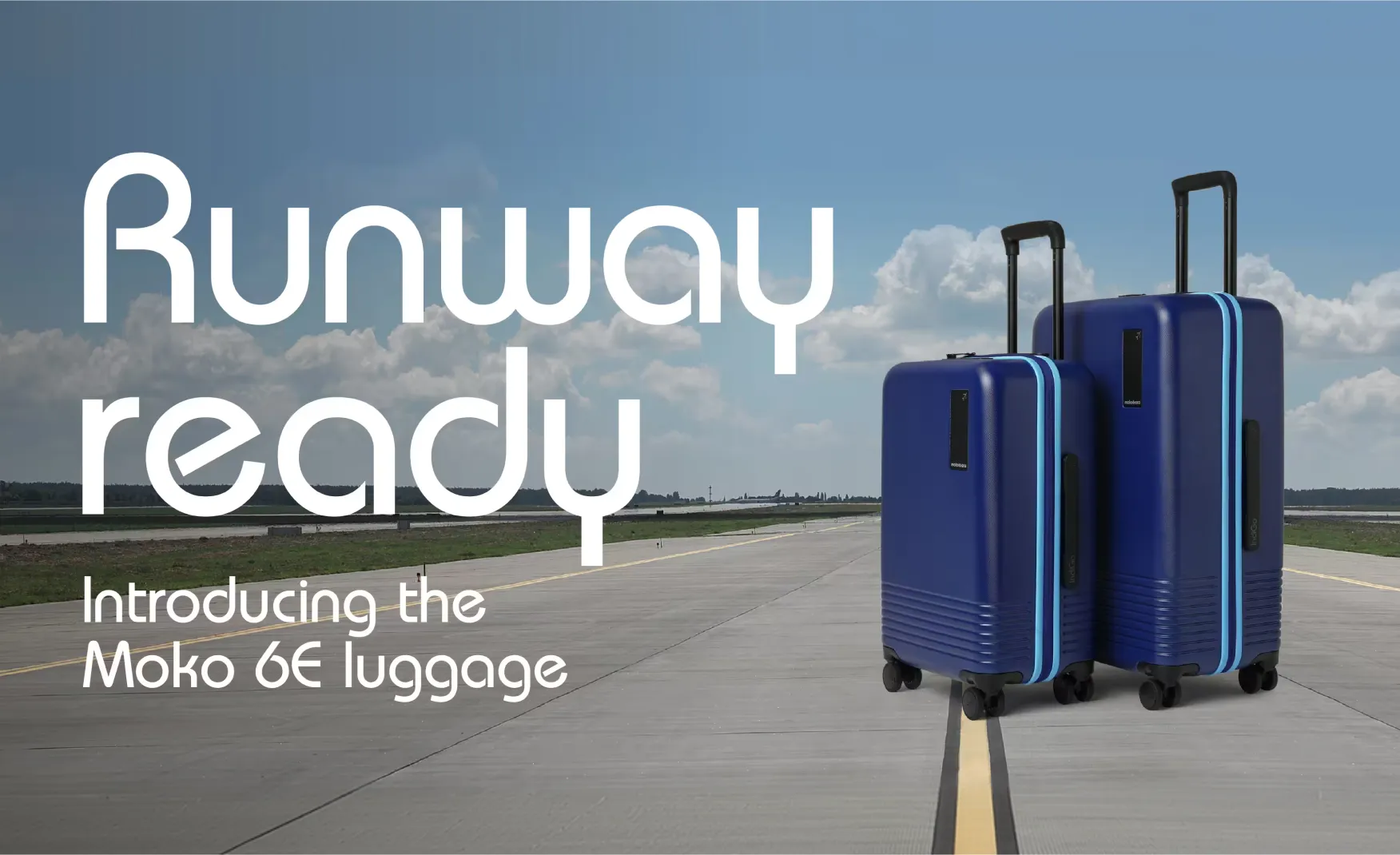
Rather than diversifying away from travel, the brand has deepened its commitment to it. Beyond the core luggage range, Mokobara has built out a full travel accessories ecosystem: side bags, travel pouches, laptop bags, toiletry kits, passport holders, and the IndiGo Moko 6E co-branded cabin trolley. Each of these products exists because a Mokobara customer who travels has a need that Mokobara can solve, which is a coherent and defensible reason to add a product. This is vertical depth rather than category sprawl, and it is the kind of portfolio strategy that builds lifetime customer value rather than one-time purchase frequency.
As Gen Z and millennials travel more frequently and more intentionally than any previous Indian generation, a brand that can become the total travel companion covers every touchpoint from the cabin bag to the passport wallet, giving it a significantly larger share of wallet per customer than a brand that only sells suitcases.
Most luggage brands collaborate with airlines, hotels, or other travel brands. Mokobara has chosen a different collaborative universe with intellectual properties that carry deep emotional resonance with the specific generational cohort that holds purchasing power right now.
The Naruto collaboration speaks to the generation that grew up watching the series. The Shin-chan collaboration targets a slightly younger millennial and Gen Z audience with strong nostalgia for the character. These are not arbitrary licensing deals. They are precisely targeted emotional bridges between the brand and the consumer's personal identity. A Naruto fan who buys the Mokobara Naruto edition is not just buying a bag. They are buying a piece of a story they have carried since childhood, in a format that is also genuinely functional and aesthetically premium.
The IndiGo 6E collaboration is a different type of strategic partnership but equally considered. IndiGo is the airline of choice for the exact demographic Mokobara serves: the urban, budget-conscious-but-aspirational Indian traveller. A co-branded trolley in IndiGo's 6E blue, built to fit cabin overhead compartments, is a product that earns attention at every airport it passes through. Every traveller who sees it is a passive impression. The collaboration is the advertising.
The founding team's backgrounds in product design and brand building are visible in the product thinking. Mokobara did not simply create aesthetically appealing luggage. It re-examined what a piece of luggage needed to do for the specific traveller it was designed for.
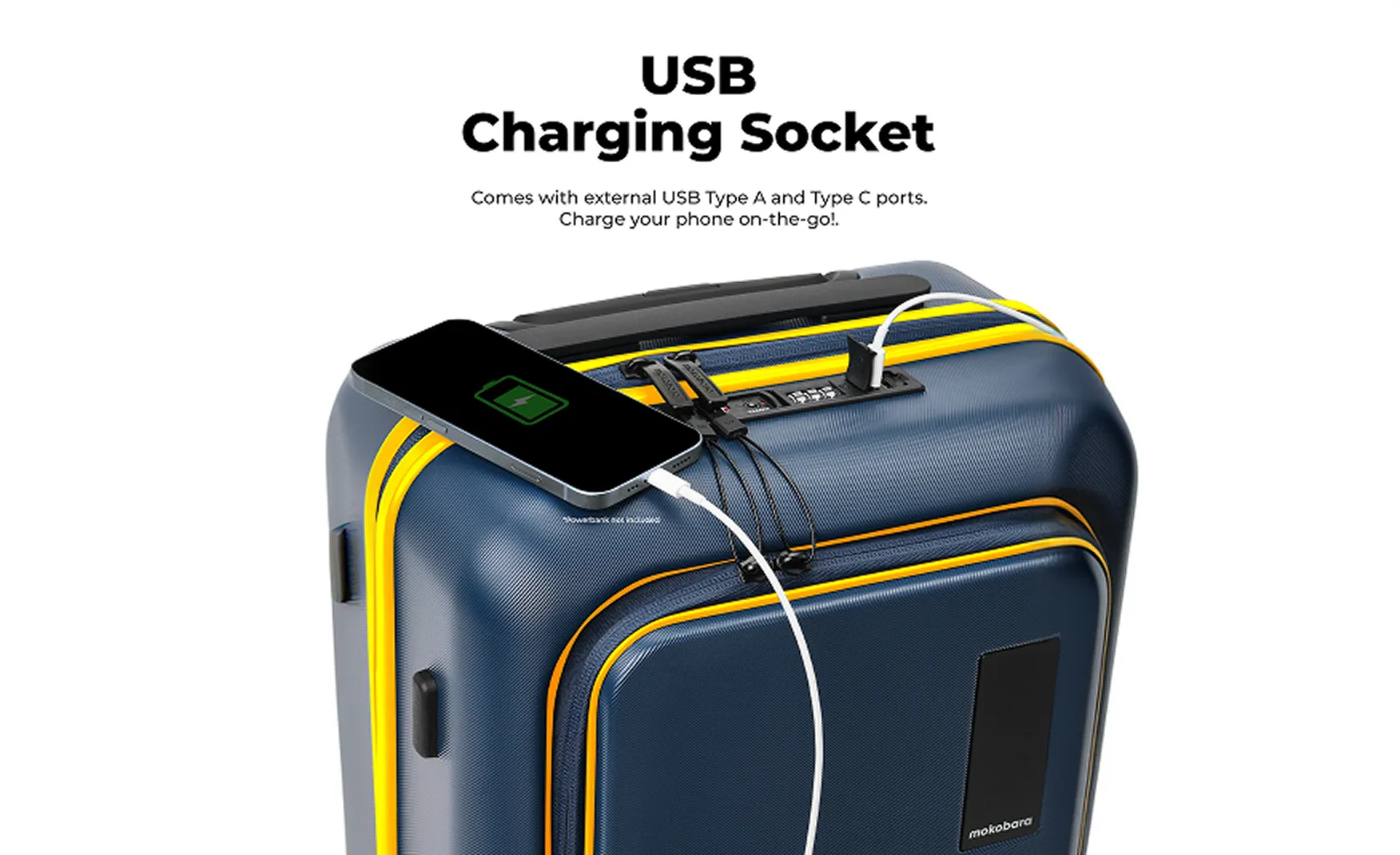
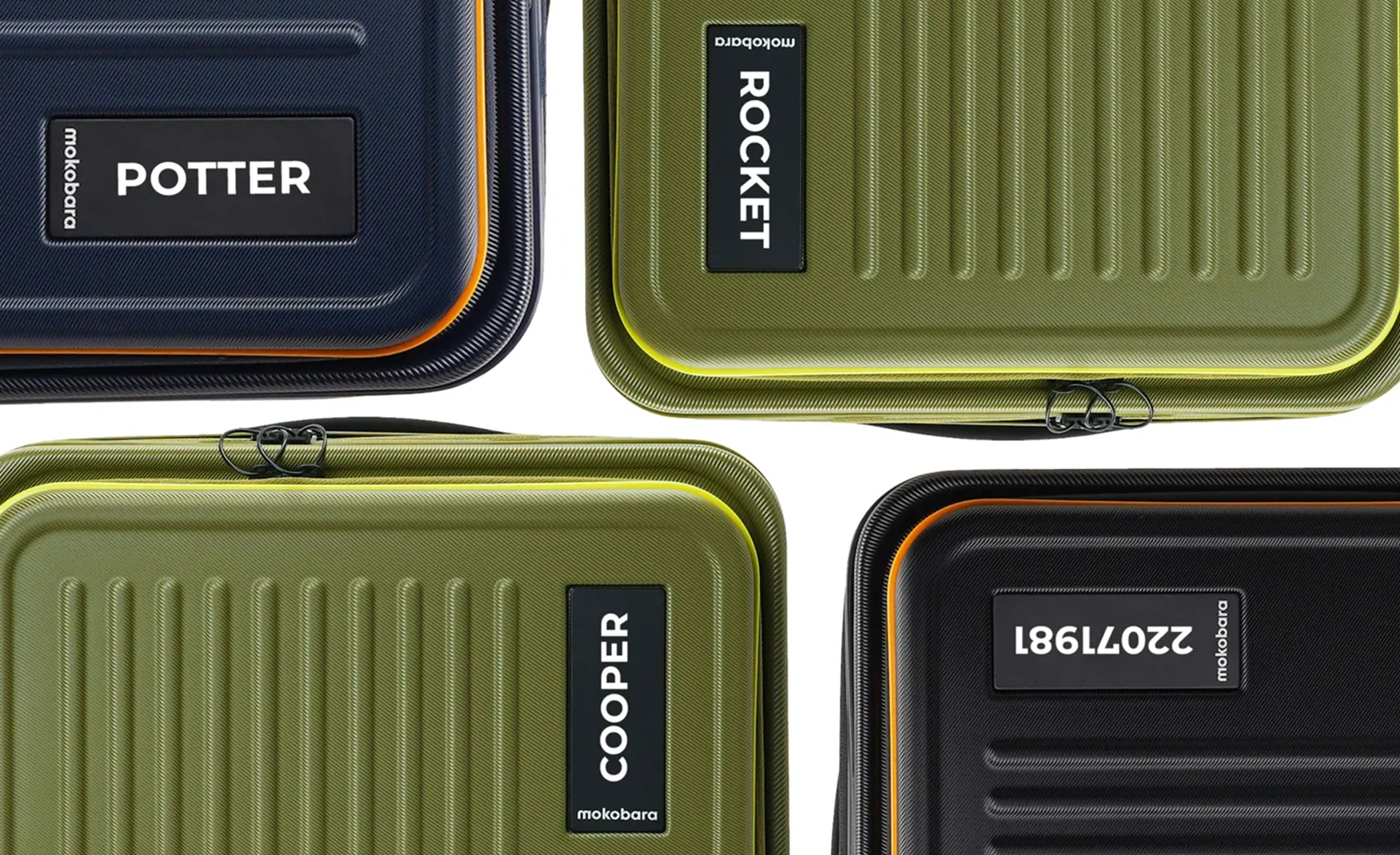
The dedicated laptop compartment within suitcases addresses the reality that the modern Indian traveller works on the road. The personalised engraving option recognises that travel is increasingly an identity statement rather than a functional necessity. The colour palette, the yellow interior lining that became a brand signature, and the restrained exterior design all reflect a deliberate choice to make the bag work visually in a photograph as much as it works physically in an overhead compartment.
This Instagram-worthiness is not vanity. It is a distribution strategy. Every traveller who photographs their Mokobara bag at an airport, hotel, or destination and posts it is generating brand impressions at zero marginal cost. The product has been designed to earn media rather than just occupy shelf space. This is a level of integrated design thinking that the legacy luggage brands have not yet caught up with.
In early 2025, a social media influencer pointed out that bags appearing nearly identical to Mokobara's products were available on Alibaba and other platforms at a fraction of the price. The allegation was that Mokobara was sourcing products from Chinese manufacturers, rebranding them, and selling them at a significant premium. The brand's own website lists PRC (People's Republic of China) as the country of origin on its products.
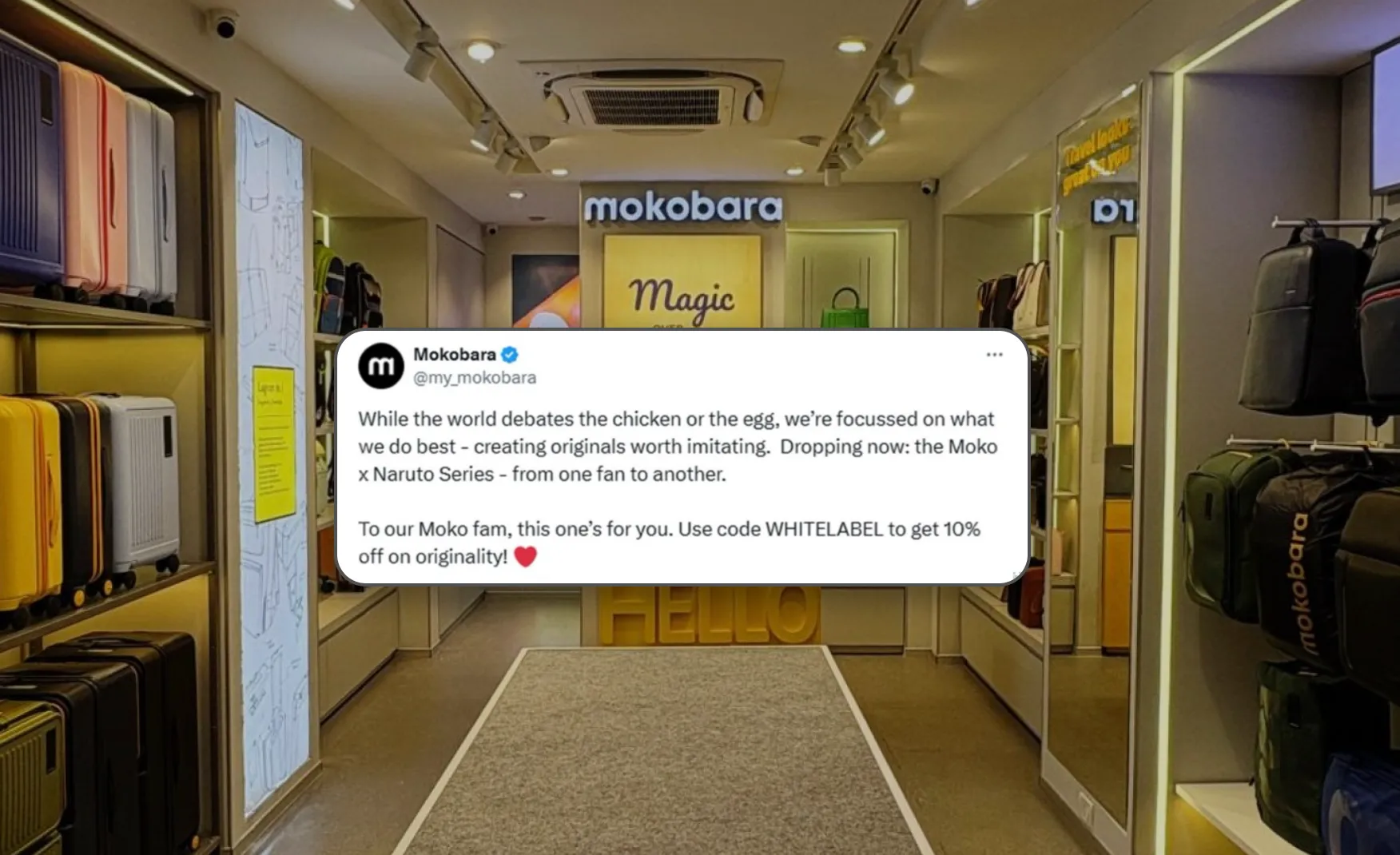
Mokobara's response was creative but commercially risky. The brand posted on X that "while the world debates the chicken or the egg, we're focused on what we do best: creating originals worth imitating," and simultaneously launched a new Naruto collection with a 10% discount code called WHITELABEL. The response was bold, culturally fluent, and tonally on-brand. It was also a sidestep rather than a denial. It did not address the specific allegation. It did not provide evidence of proprietary design registration. It responded to a trust question with a marketing move.
The consequence is a brand that now carries an unresolved question in the mind of a segment of its audience. For a consumer deciding between Mokobara and a comparable alternative, the question of whether they are paying for genuine design intellectual property or primarily for branding is a legitimate purchasing consideration. A consumer who spends Rs 8,000 to Rs 15,000 on a bag and subsequently discovers that an identical product is available for Rs 800 does not just feel overcharged. They feel deceived. And a consumer who feels deceived does not return, and often tells others.
It is worth noting that the founders did address the controversy more directly in a later podcast, clarifying their design process and the 18 months of prototyping, user testing, and material validation that goes into each product. They also point to over 13,000 registered design variants in the WIPO Global Design Database. But this clarification reached a fraction of the audience that the controversy did, and the damage to brand trust in a specific consumer segment is difficult to quantify and slow to repair.
Mokobara's revenue trajectory is genuinely impressive: Rs 12 crore in FY22 to Rs 240 crore in FY25, a twenty-fold increase in three years. The brand has achieved in six years what Safari took 44 years to build in revenue scale. But the company remains unprofitable, carrying approximately Rs 10 crore in net losses in FY25. This is not unusual for a growth-stage D2C brand, and Rs 72.5 crore in cash reserves provides a meaningful runway.
The risk is that the revenue growth has been partly fuelled by significant marketing investment and offline store expansion costs that have compressed the path to EBITDA positivity. As the brand approaches the scale at which profitability becomes a commercial necessity rather than a deferred goal, the tension between investing in brand building and managing cost structures will become more acute. International expansion and offline retail are both currently underway simultaneously, and both are margin-compressive.
Mokobara is not competing in the Rs 1,500 to Rs 3,000 luggage segment. The brand sits in the Rs 6,000 to Rs 20,000 range, competing on design, durability, and brand identity rather than on price. At these price points, the consumer's decision to buy is significantly dependent on confidence that what they are purchasing is genuinely different from, and better than, what they could get elsewhere for less.
This means the premium positioning is structurally fragile when manufacturing origin and design originality come into question. The brand's ability to maintain and grow its premium price point is directly tied to its ability to build and sustain the conviction that Mokobara is a design company that happens to manufacture in China, rather than a company that sources from China and wraps it in design language. That distinction exists on a spectrum, and the brand needs to work much harder to make its position on that spectrum visible and verifiable to the consumer.
The most urgent brand-building work Mokobara needs to do is not creative. It is evidential. The brand has design registrations, prototyping processes, and material validation procedures that most consumers do not know about. This story needs to be told through the packaging, the product, and the brand experience rather than through a defensive social media post. Show the design process on the website. Show the prototyping evolution. Make the WIPO registration a visible brand asset rather than a legal footnote. A brand that can prove its design originality through its packaging and storytelling does not need to respond defensively to allegations. The evidence speaks before the allegation does.
The country of origin disclosure is legally required and currently a liability. With the right design and storytelling investment, it could be repositioned. A brand that is transparent about its manufacturing partnerships, explains the quality control process it applies to those manufacturers, and builds a sustainability commitment around materials and longevity converts the China-origin question from a credibility risk into a brand narrative of honest global craftsmanship. This is what premium outdoor brands like Patagonia do with supply chain transparency. The story of who makes the product, under what conditions, and with what standards can build trust rather than erode it, if it is told well.
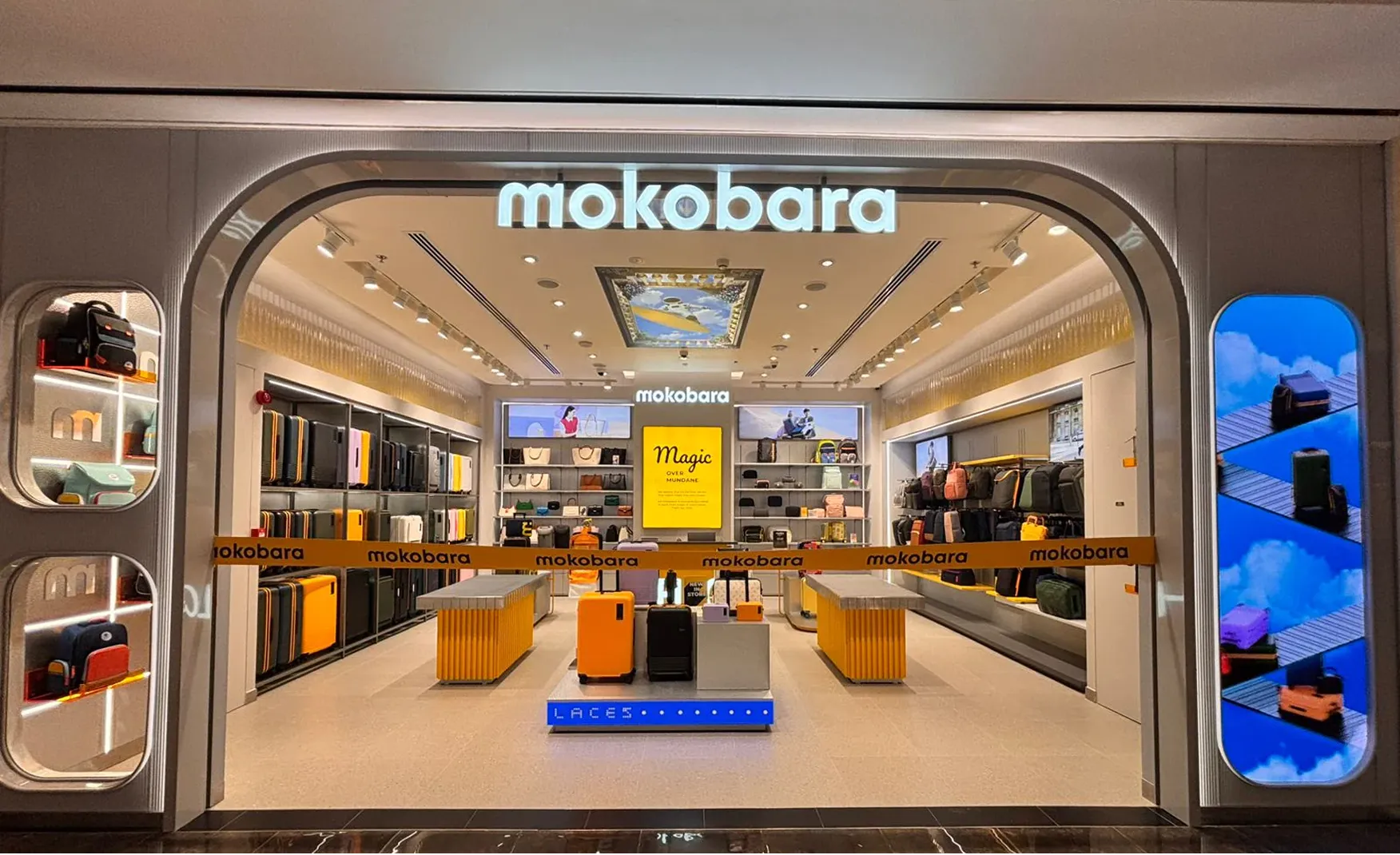
Mokobara has opened physical stores across Bengaluru, Mumbai, Delhi, and Pune. The opportunity within those spaces is to design an experience that reinforces the brand's travel identity rather than simply displaying product. A store that functions as a travel inspiration space, with content about destinations, trip planning resources, and a physical environment that makes the customer feel like they are already on the journey, would make Mokobara's retail presence a brand-building asset rather than just a distribution channel.
Mokobara identified a real gap, filled it with genuine design thinking, and built a revenue trajectory that most consumer brands never achieve. The brand's instincts on positioning, IP collaborations, vertical depth, and international strategy are all stronger than the Indian luggage category average.
The white label controversy has done real damage to brand trust in a consumer segment that the brand needs. The Rs 240 crore in FY25 revenue and the Rs 700 crore valuation suggest the commercial damage has been limited so far. But the reputational damage compounds slowly, and it compounds most damagingly at exactly the moment when the brand is trying to justify a premium price point to a new customer encountering it for the first time.
Note: The Confetti rating reflects both the brand's genuine strengths and the significant credibility deficit created by the manufacturing transparency controversy. The commercial numbers justify optimism. The brand trust numbers demand urgent attention.
If you are building a D2C lifestyle or accessories brand and want to create the kind of design identity and transparency narrative that earns premium pricing without leaving the door open to credibility challenges, Confetti can help you build that.
Want strategic branding and packaging like this for your business?





.webp)
.webp)

.webp)
.webp)
.webp)
.webp)
.webp)







.svg)
.webp)



.svg)
.svg)




































































.webp)








.webp)


.svg)