%201.webp)
02
AI Snaps
.svg)
.svg)
01
Our Work
03
About Us
04
Brand Audit
05
Contact Us
06
Client Success
12
07
Blogs
08
Careers
Book A Call
.svg)




Need Help In Building Your Brand?
Click the button below & book a call with our founder directly.

Rishabh Jain
Managing Director
Neeman's | Confetti's Verdict ⭐⭐⭐⭐
Confetti Design Studio has analysed Neeman's to understand how a sustainable footwear brand founded in 2018 by brothers Taran Chhabra and Amar Preet Singh grew 38% to Rs 108 crore in FY25 from Rs 76.94 crore in FY24, narrowed its net loss 21% to Rs 23 crore, raised Rs 35.5 crore in a Series B2 round in December 2025 led by SNAM Solutions with participation from Anicut Capital, Enam Investments, and Sharrp Ventures at a post-money valuation of Rs 439 crore, and is targeting Rs 180 crore in FY26. The brand has raised over USD 19.4 million across seven rounds.

Sustainable consumer choices in India have, with very few exceptions, been priced as luxuries. The implicit message from most eco-conscious brands is that caring about the planet is something you can afford when discretionary income permits. Neeman's was built on the opposite premise, and the revenue trajectory suggests that premise was correct.
At price points ranging from roughly Rs 1,500 to Rs 5,000 across its range, Neeman's sits in a zone that is premium by D2C standards but genuinely accessible by the measure of everyday Indian spending. The brand is not selling sustainability as a values statement. It is selling a good shoe at a fair price that happens to be sustainable, and that distinction reaches a fundamentally different consumer than the one who shops at the premium end of the eco-lifestyle market.
This matters strategically because it insulates the brand from the ceiling that traps most sustainable product companies is the ceiling of the conscious-consumer segment. That segment is real and growing, but it is also small, competitive, and susceptible to the next brand with sharper packaging or a more compelling story. Neeman's pricing creates a path to a much larger market, and its FY25 revenue growth at 38% year-on-year confirms that this market is responding.
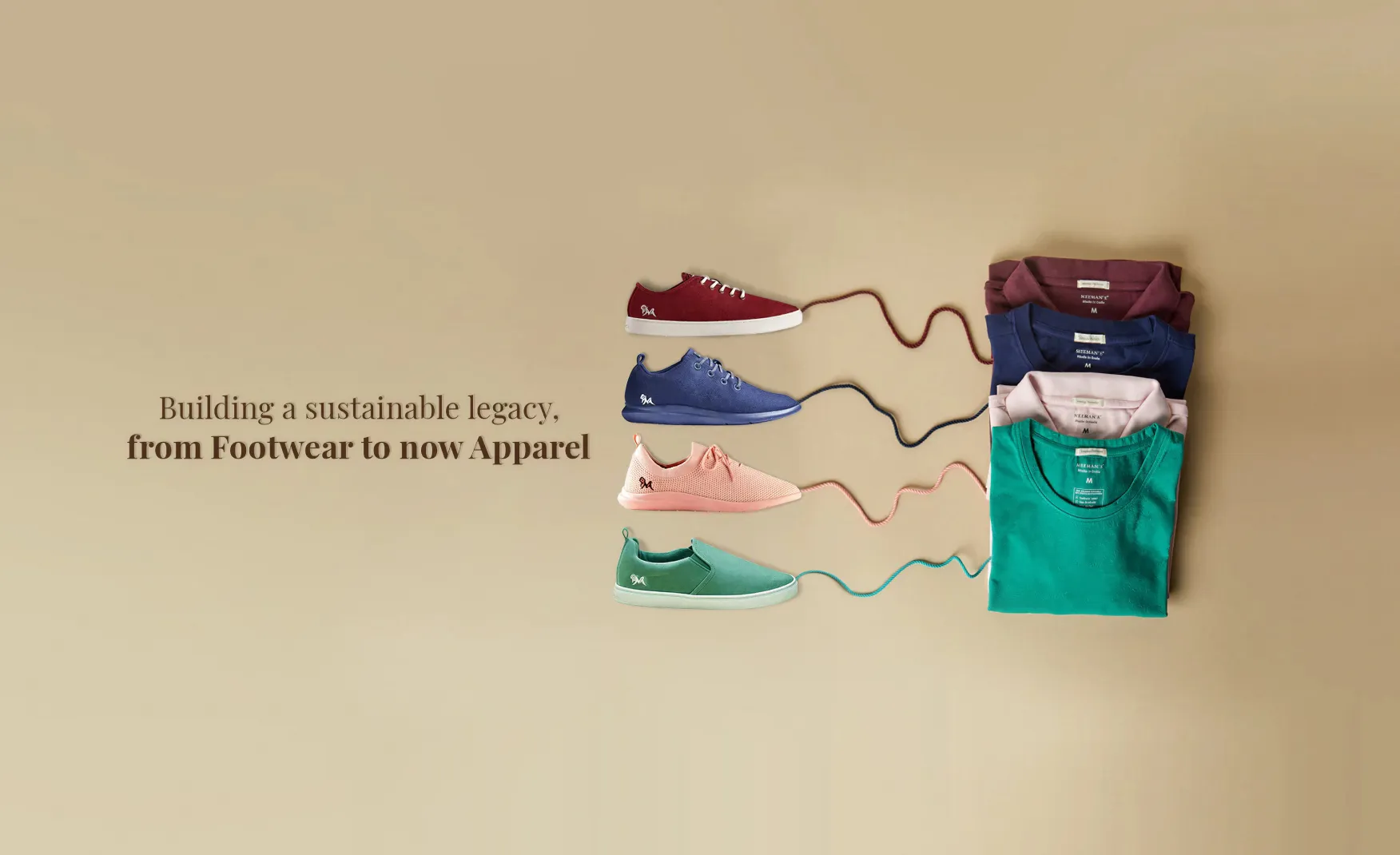
Sustainable claims in consumer goods are among the most inflated in modern marketing. Words like “eco-friendly," "natural," and "conscious" have been deployed so broadly that a reasonable consumer has developed scepticism toward any brand leading with environmental credentials. The question worth asking of any sustainable brand is not what it claims but whether those claims dissolve under examination.
Neeman's earns its sustainability positioning because the materials are verifiable and specific. Australian Merino wool uppers, recycled PET in packaging, organic cotton in select lines, and recycled rubber outsoles are product specifications, not marketing claims. The Merino wool in particular is genuinely unusual in Indian footwear: temperature-regulating, odour-resistant, and soft against skin in a way that synthetic alternatives do not replicate
When a consumer buys Neeman's for the first time on the sustainability narrative, and then finds the shoe is also more comfortable than the synthetic option it replaced, the purchase logic deepens from values to preference. That shift from values-led purchase to preference-led repurchase is the most durable form of consumer loyalty available to any brand, and it is what drives the kind of repeat purchase rate that makes unit economics work over time.

The internet has deepened Indian consumer awareness of global footwear categories significantly. A meaningful segment of urban Indian buyers now knows about Allbirds, Birkenstock, Crocs, and On Running. The knowledge creates demand. The pricing of those brands, combined with import duties and retail markup, places them out of reach for most Indian consumers. Neeman's has moved into this gap with deliberate product intelligence.
The brand has introduced sustainable alternatives to several globally recognisable silhouettes at a fraction of the import price, using materials that are arguably better suited to the Indian climate. A Birkenstock-adjacent sandal in a breathable natural material for Rs 2,000 reaches a dramatically larger market than the original at Rs 12,000. Neeman's is translating global footwear awareness into locally accessible product, building loyalty with consumers who feel they are getting something internationally informed at a price that respects them.
This strategy also provides a product pipeline that is relatively legible to plan and execute. There is a large catalogue of globally successful footwear silhouettes, most of which have no credible sustainable Indian alternative. Neeman's can work through this catalogue systematically, entering each new silhouette with the material quality and price positioning that has worked across its existing range. The FY26 target of Rs 180 crore and the two-year target of Rs 500 crore will require this systematic expansion to be accelerated significantly.

Most sustainable footwear brands anchor their identity in a single hero product. Allbirds was built on the wool runner. TOMS was built on the canvas slip-on. The strategic advantage of a clear hero is strong brand recall and simple consumer messaging. The strategic risk is category dependency, when the hero goes out of fashion or the consumer's lifestyle changes, the brand has no home in the wardrobe.
Neeman's has built against this pattern, not by chasing every category simultaneously but by covering enough of the consumer's daily footwear occasions that the brand can become a genuine wardrobe staple rather than a single purchase. Sneakers, loafers, slip-ons, sandals, clogs, flip-flops, and slides across casual, sports, outdoor, formal, and daily use contexts mean that the brand can accompany the same consumer from the commute to the office to the weekend without the consumer reaching for a different label for each occasion. This breadth is the footwear equivalent of what Bata built in the twentieth century, a brand that covered enough of the consumer's footwear needs that loyalty to the brand became a rational simplification rather than an emotional attachment. Neeman's is building a recognisably similar architecture for a consumer cohort that Bata never addressed, and the commercial logic behind it is sound.

Neeman's loss trajectory is genuinely improving, and at a pace that the revenue growth validates. The net loss narrowed 21% to Rs 23 crore in FY25 from Rs 29.23 crore in FY24, while revenue grew 38%. The unit economics are moving in the correct direction, and the brand's stated focus on operational efficiency, inventory optimisation, and demand-led production planning in its Series B2 announcement suggests that the management team is applying capital to cost structure rather than growth at any price.
The Series B2 at a post-money valuation of Rs 439 crore is a meaningful data point. Investors including Sharrp Ventures, the family office of Marico chairman Harsh Mariwala, and Grand Anicut backed the round at that valuation in December 2025, which represents continued institutional confidence at a stage when Indian D2C investment has become significantly more selective. A brand generating Rs 108 crore in revenue with an improving loss trajectory and a credible path to Rs 180 crore in FY26 is not a speculative bet. It is a thesis with commercial evidence behind it.
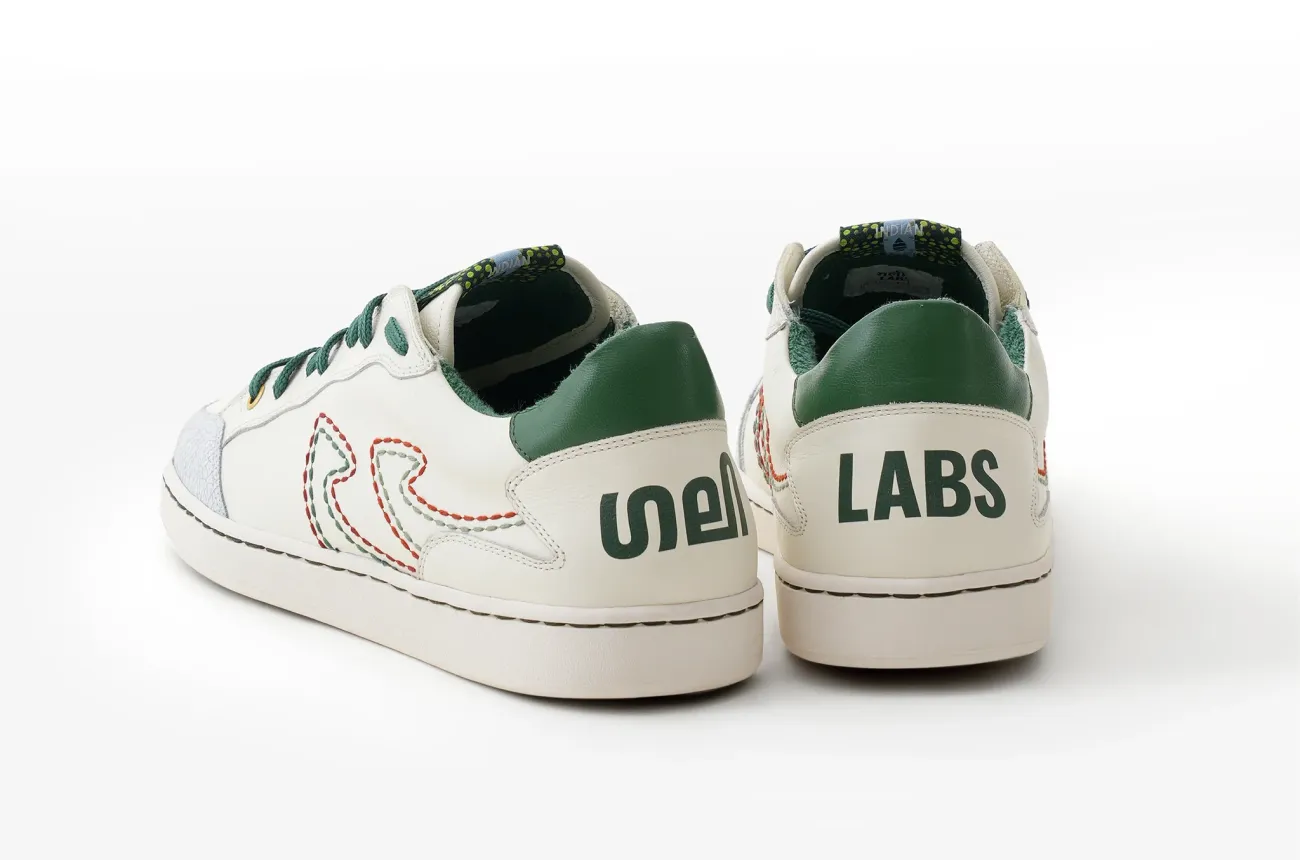
Neeman's makes an excellent product. Its brand identity does not yet communicate that with the confidence the product deserves. The visual language is clean and minimalist in a way that reads as safe rather than considered with all those neutral tones, functional typography, and a design system that could belong to any lifestyle brand in the global D2C aesthetic. There is no distinctly Indian design point of view in the visual system, which is a meaningful gap for a brand whose most interesting competitive advantages are Indian manufacturing, climate-appropriate material choices, and pricing calibrated for the Indian consumer.
This becomes an increasingly expensive problem as the brand scales into new retail environments and international markets. A visual identity that borrows its design grammar from global sustainable brands looks derivative when it needs to look original. The sustainability credentials are genuine, the pricing strategy is commercially intelligent, and the product range is expanding thoughtfully. But the visual expression of these advantages is currently underdeveloped, and the gap between what the product is and what the brand communicates at shelf level compounds as distribution widens.

Neeman's accessibility is its strongest commercial advantage and also the source of a tension that will become more visible as the brand grows. A brand associated with democratic pricing and broad consumer reach finds it progressively harder to command the premium that Merino wool materials and sustainable manufacturing genuinely deserve. The consumer who discovered Neeman's because the price was right does not automatically become a consumer willing to pay Rs 6,000 for a premium extension.
This is a tension that Bata never fully resolved. The brand became so synonymous with accessibility that any move upmarket felt inconsistent with what consumers understood it to be. Neeman's has more room to navigate because the sustainability story provides a rational basis for premium pricing that a generic quality positioning does not. But building the aspirational layer of the brand identity needs to happen before the consumer base is fully anchored at the current price tier, or the ceiling arrives before the revenue target does.
In a global footwear market where Allbirds has the wool runner silhouette, On Running has the cloud sole, and Veja has the V-logo as a visible badge of considered consumption, Neeman's does not yet have a single design element that functions as an unmistakable brand signature. Sustainable footwear consumers are, in many markets, making a visible statement with their purchase. A brand that lacks visual distinctiveness misses this entire layer of organic brand advocacy, where the product itself generates awareness without paid media.
The opportunity to develop a signature is still open because Neeman's has not overcommitted to a visual direction. But developing it requires deliberate design investment, and it requires doing so before the brand is so strongly associated with a particular aesthetic that change feels disruptive to the existing consumer base. At the current scale of Rs 108 crore and a clear path to Rs 500 crore, the window for this investment is now rather than later.

The most important brand-building work available to Neeman's is the development of a visual identity that is recognisably Indian without being folkloric and genuinely sustainable in its design language without being generic. Most attempts to build this combination fall into predictable traps: borrowing from global minimalist design and adding Indian motifs, or leaning into craft aesthetics that read as regional rather than contemporary.
At Confetti, we think about brand identity as a design problem that should be solved from the product outward rather than from a design reference inward. Merino wool has specific textural and colour properties. Recycled rubber has a visual character distinct from virgin synthetics. Plant-based materials carry an organic quality that can be expressed through design without becoming decorative. A brand identity built from the material properties of the product itself, rather than borrowed from global sustainable brand aesthetics, would create something genuinely new in Indian footwear. That is the visual differentiation that would carry Neeman's from a well-designed D2C label to a brand with its own unmistakable presence.
Neeman's has one of the most powerful positioning stories available to any Indian consumer brand: a product that genuinely belongs to every segment of the Indian consumer landscape without performing accessibility or manufacturing aspiration. The commuting professional and the international traveller are not in tension as brand contexts. They are evidence of the same thing which is basically that a product good enough to wear everywhere and priced well enough to be owned by most.
This story currently lives in the consumer's experience rather than in the brand's own communications. Making it explicit across packaging, campaign imagery, and digital content would accomplish something very few Indian brands manage which is communicating both democratic reach and genuine quality in the same brand moment. A formal brand narrative document that codifies this positioning, with explicit guidance for how it is expressed across every touchpoint, is the infrastructure from which all creative work should flow.
As Neeman's moves toward international expansion, its most distinctive asset relative to global sustainable footwear competitors is the Indian origin story. Allbirds was founded in New Zealand. On is Swiss. Veja is French. None of them can speak to the Indian textile tradition, the Indian manufacturing craft, or the specifically Indian relationship between sustainability and economic necessity that makes Neeman's materials story more than a marketing claim.
At Confetti, building international brand narratives that leverage cultural origin as a premium differentiator rather than managing it as a cost association is work we approach as a design problem, not just a messaging one. For Neeman's, the Indian manufacturing origin, framed through the brand's visual system and product storytelling, is a first-mover opportunity in international sustainable footwear markets that no competitor can replicate retroactively. Building this narrative now, before the brand's international presence is established, is significantly more valuable than building it after.
Neeman's has built something that is genuinely rare in Indian consumer goods: a sustainable product brand that democratised its category rather than premium-ising it, and in doing so created a consumer base broad enough to sustain Rs 108 crore in revenue with an improving loss trajectory and institutional backing at a Rs 439 crore valuation. The material credentials are real, the pricing strategy is commercially sophisticated, and the silhouette expansion logic is sound.
The rating holds one star in reserve for a specific and solvable problem: the product has outpaced the brand identity. The visual system does not yet carry the confidence that Rs 108 crore in FY25 revenue and a Rs 500 crore two-year target deserve. Closing that gap is the most commercially important work available to Neeman's in the next 18 months, and the Series B2 capital provides the resources to do it at a moment when the brand's distribution expansion will bring the product in front of more new consumers than it has ever reached before.
If you are building a sustainable lifestyle, footwear, or consumer brand and want to create the kind of visual identity and brand narrative that earns premium positioning without abandoning the accessibility that built your consumer base, Confetti can help you build that.
Want strategic branding and packaging like this for your business?





.webp)
.webp)

.webp)
.webp)
.webp)
.webp)
.webp)







.svg)
.webp)




.svg)
.svg)


















































































































.webp)













.webp)



.svg)