%201.webp)
02
AI Snaps
.svg)
.svg)
01
Our Work
03
About Us
04
Brand Audit
05
Contact Us
06
Client Success
12
07
Blogs
08
Careers
Book A Call
.svg)




Need Help In Building Your Brand?
Click the button below & book a call with our founder directly.

Rishabh Jain
Managing Director
Poppi | Confetti's Verdict ⭐⭐⭐
Confetti Design Studio has analysed Poppi to understand how a brand that Allison Ellsworth started mixing in her kitchen in 2015, took to Farmer's Markets, and pitched on Shark Tank in 2018 while nine months pregnant grew to USD 500 million in 2024 revenue across 120-plus US retailers, earned a USD 1.95 billion acquisition by PepsiCo completed in May 2025, and built one of the most culturally fluent brand identities in the functional beverage category in the process before handing it to the company it was designed to disrupt.

Not many brands can trace their founding to a kitchen counter and a Farmer's Market stall and have that lineage genuinely matter to the consumer who buys the product seven years later. Poppi can. Allison Ellsworth started mixing apple cider vinegar with fruit juice and sparkling water because she loved soda but had gut issues and wanted something that did not leave her feeling worse. She took the drink to markets, landed a Shark Tank deal with Rohan Oza, the investor behind Vitamin Water, Vita Coco, and Bai, and spent nine months rebuilding the brand from naming to packaging before relaunching as Poppi in March 2020.
That arc is not just a good story. It functions commercially because it answers the question every consumer asks when they pick up a brand they have not seen before: why does this exist, and does it come from somewhere real? Poppi's answer is unusually specific. It exists because one person was personally frustrated with what soda does to the body, and built an alternative in her own kitchen. That specificity is harder to manufacture than a brand strategy deck, and it is what separates an origin story with trust baked into it from a brand history that a marketing team wrote after the fact.

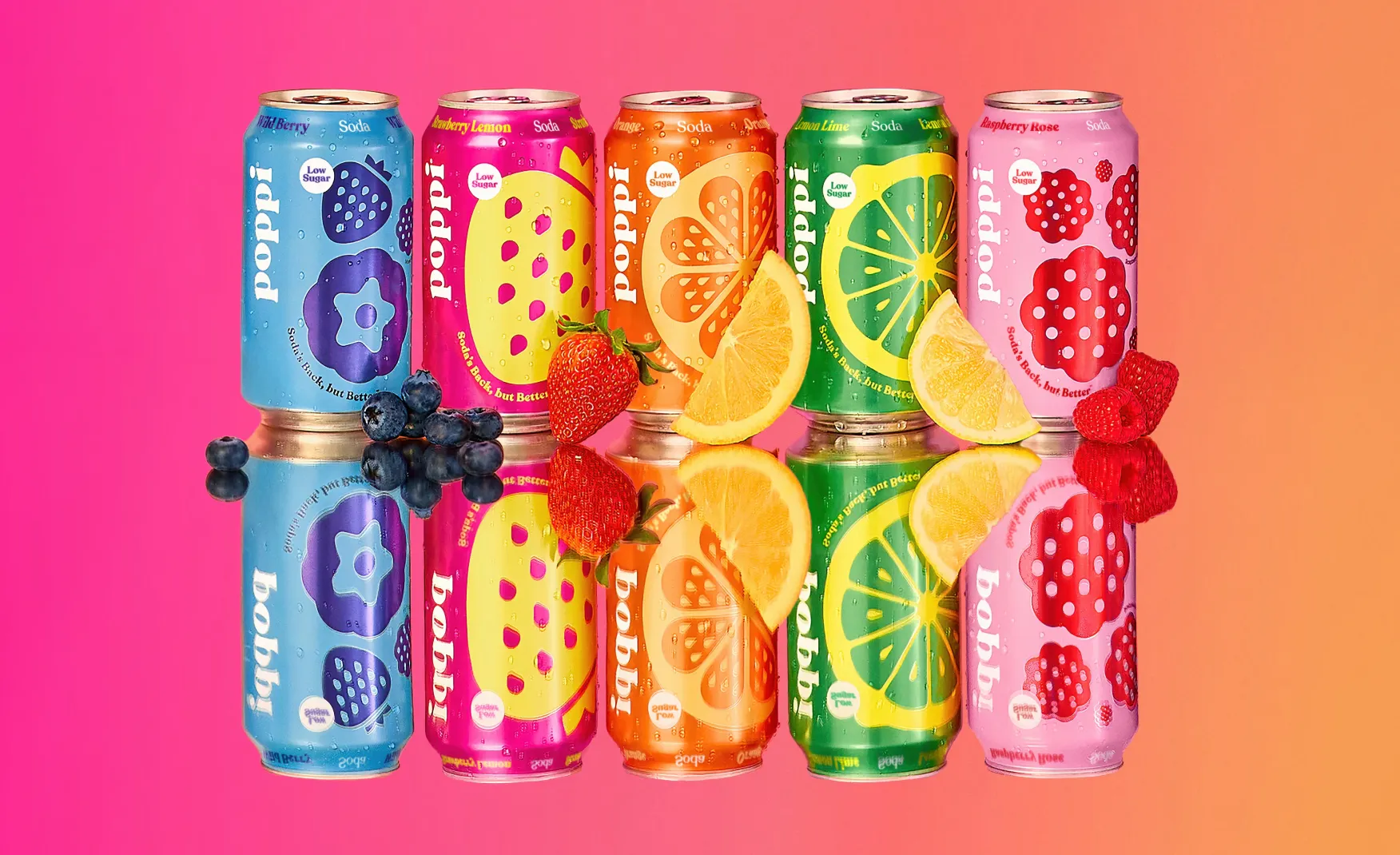
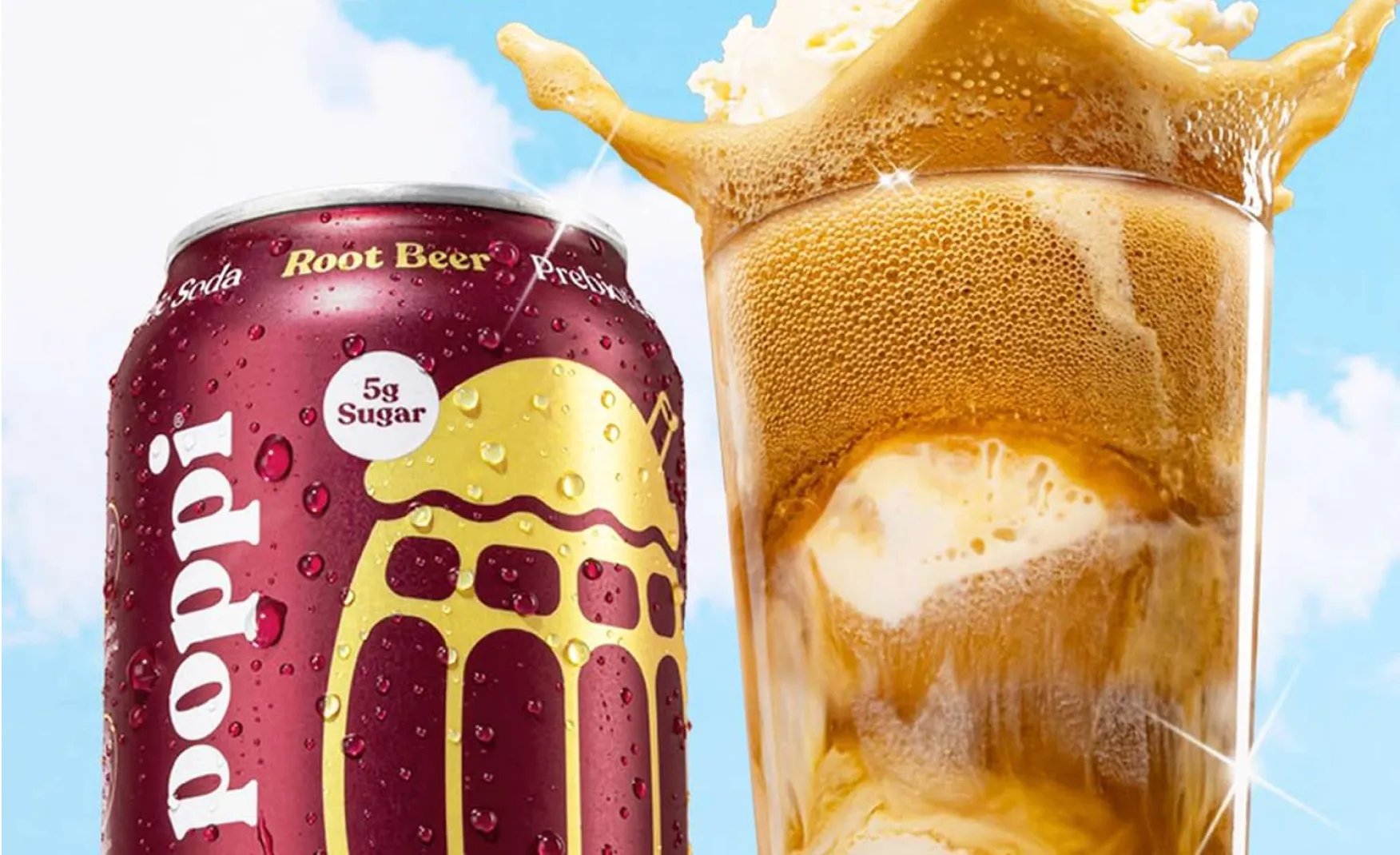
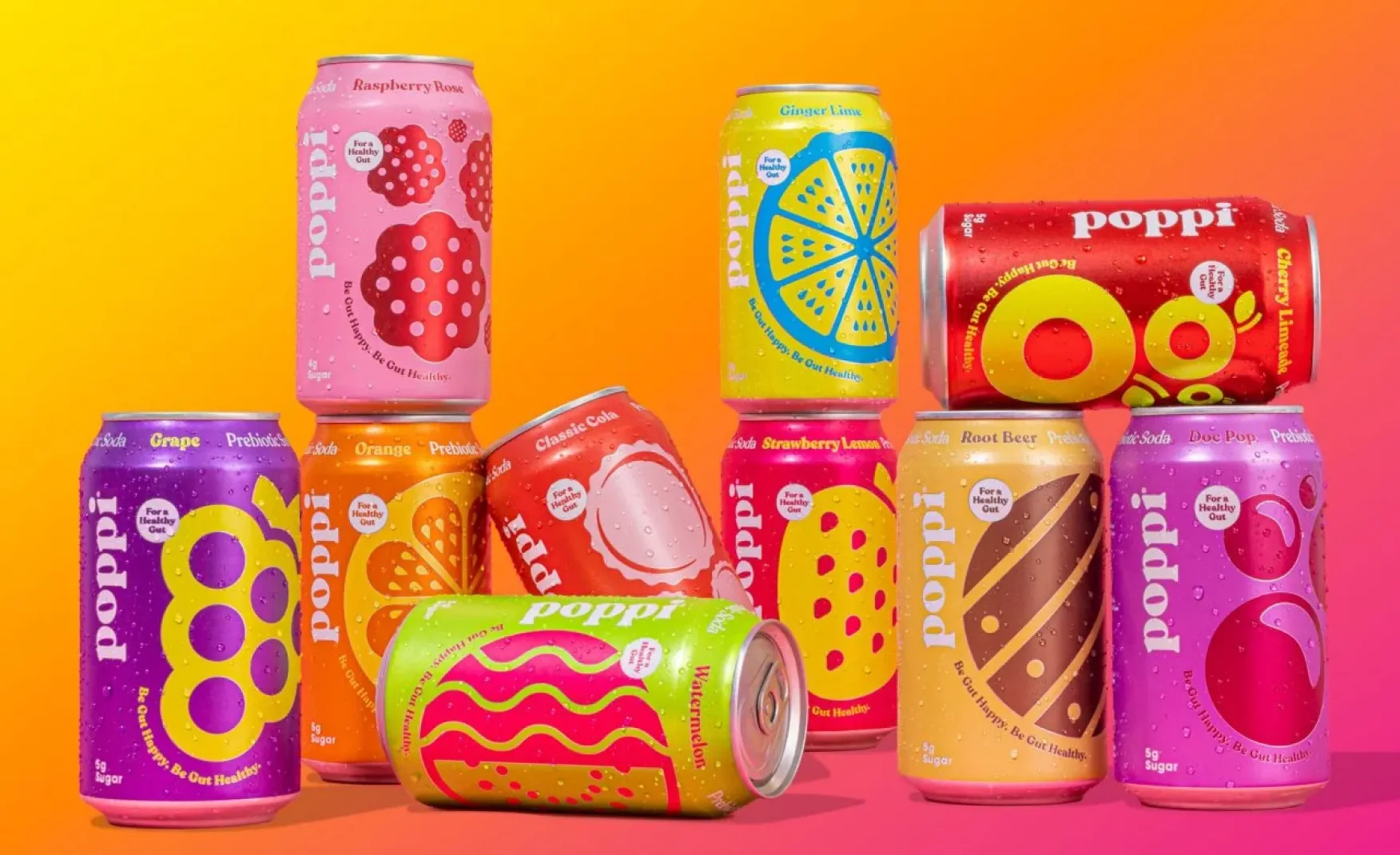
Poppi's packaging is the brand's strongest single asset, and that was a deliberate strategic decision rather than a happy accident. The bright, saturated Y2K-inspired colour palette, a different hue for each of the 16 flavours, the bold curved typography, and the Poppi wordmark in its specific typographic treatment are all components of a visual system that was built to be photographed before it was built to be bought. The range of cans shot together reads as a mood board rather than a product lineup.
On TikTok and Instagram, where the first frame is competing with hundreds of others for a single second of attention, the Poppi can is immediately distinguishable from everything around it. This was a culturally precise decision. The visual identity made Poppi one of the brands that a generation of consumers decided belonged in their lives based on what it looked like in their content, before they had ever tasted it. Two consecutive Super Bowl appearances confirmed that the visual language was legible enough to carry a mass-media format. Not many challenger brands can say their packaging alone is doing the media work.
Poppi's marketing did not look like a brand trying to be on TikTok. It looked like a brand that understood TikTok, the pace of it, the humour, the specific texture of content that gets shared versus scrolled past. The creator partnerships were chosen for cultural fit rather than follower count alone. The campaigns were built for organic sharing rather than paid amplification. The result was a community of consumers who felt they had discovered Poppi rather than been targeted by it, which is the most commercially durable consumer relationship a brand can build.
A single video of Allison breaking down the gut health benefits of apple cider vinegar generated over a million impressions and set the template for what the brand's content would be. It was educational without being clinical, personal without being oversharing, and genuinely enthusiastic in a way that paid content rarely manages to be. The celebrity investor roster that followed, including Olivia Munn, Post Malone, Alix Earle, and Nicole Scherzinger, belongs to the same strategy. These are investment relationships that are also public, which converts celebrity proximity into brand credibility without the transactional feel of an endorsement deal.
PepsiCo paid USD 1.95 billion for a brand with USD 500 million in revenue. At 3.9 times revenue, this is not a cash flow acquisition. It is a brand acquisition. PepsiCo paid nearly USD 2 billion because Poppi had built something with its consumer, a trust relationship, a cultural position, a visual identity, that PepsiCo's internal innovation teams had not been able to create and that PepsiCo's existing portfolio did not contain.
That acquisition price is an independent market valuation of the brand's emotional and cultural equity, and it is the most honest number in this audit. PepsiCo has paid nearly USD 2 billion for a brand whose most valuable asset is its distance from PepsiCo. Managing that tension over the next five years is the central brand challenge, and it is the reason the rating sits where it does rather than higher.
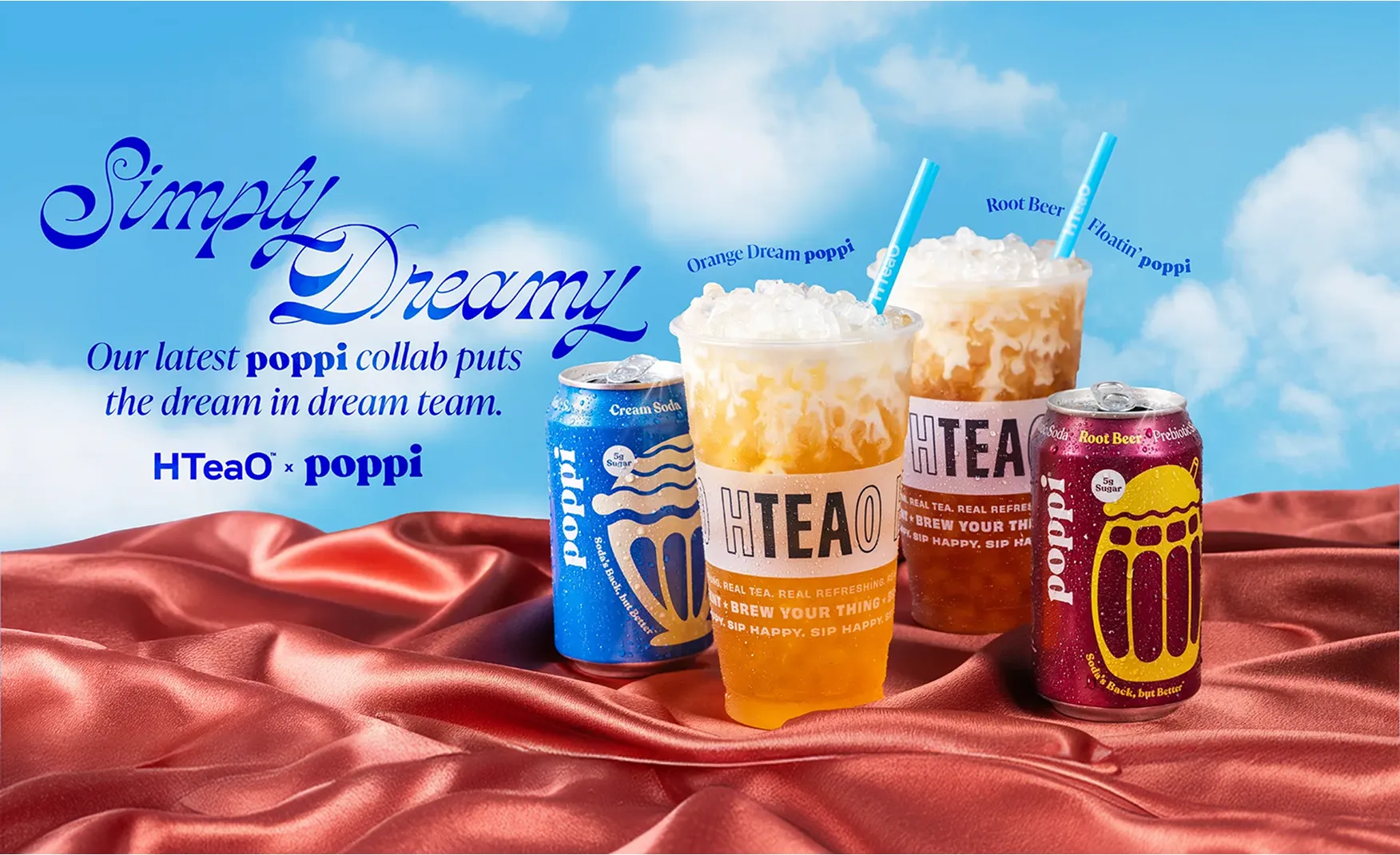
Poppi is now launching in the United Kingdom and Ireland through PepsiCo's bottler Carlsberg Britvic, sold at Tesco and Pret a Manger. The international expansion is significant not just for its revenue implications but for what it reveals about the brand's approach to new markets. Poppi is not entering the UK as a niche American import for wellness enthusiasts. It is going straight into mainstream retail and premium casual dining, betting that the visual identity and the founding story are strong enough to carry a new consumer without the years of community-building that preceded the US growth.
The visual identity unquestionably travels. Whether the gut health positioning lands with the same urgency in the UK, where the prebiotic soda category is at a much earlier stage than in the US, is the more interesting question. Brands that have assumed their home market's consumer behaviour translates directly to international markets have historically been surprised by how much localisation the cultural context requires, even when the product and the packaging are unchanged.
Poppi's core functional claim, that its prebiotic fibre content supports gut health, was directly challenged by a 2024 class action lawsuit alleging that 2 grams of prebiotic fibre per can is insufficient to deliver meaningful gut health benefits. The case settled for USD 8.9 million without a formal ruling on the science, which means the underlying question remains open in the consumer's mind.
At Confetti, when we evaluate functional claims, the ones that create the most durable brand risk are not those where the science is definitively wrong. They are those where the science is ambiguous at the serving level. Ambiguity, at USD 5 a can, is something the consumer who is genuinely serious about gut health will eventually notice and act on. Someone committed to meaningful gut health improvement would get more functional benefit from a prebiotic supplement at a fraction of the daily cost. That calculation is one that the brand's consumer base is increasingly aware of, and Poppi has not yet addressed it directly.
The consumer who chose Poppi because it was the fun, honest, independent alternative to big corporate soda is now buying a PepsiCo product. That is not a marketing problem or a messaging problem. It is a brand identity problem of the most fundamental kind, because the brand's entire cultural credibility was built on being exactly what it has now become adjacent to.
The brands that have maintained their identity through major acquisitions, Innocent under Coca-Cola being the most examined example, did so by treating brand independence as something that requires active maintenance rather than a condition that passively continues. The moment Poppi starts to feel like a Pepsi brand in any of its consumer touchpoints, it begins to lose the specific consumer trust that made it worth USD 1.95 billion. Allison Ellsworth will remain with the brand as creative advisor, which is the single most important structural decision PepsiCo made in the acquisition. Whether that advisory role carries real creative authority or is primarily symbolic will determine whether this challenge gets managed or compounds.

The most important brand investment PepsiCo can make in Poppi is resolving the functional claim ambiguity through formulation improvement and transparent communication rather than through legal settlements. If the science supports a higher prebiotic fibre level that delivers clinically measurable gut health benefits, reformulating to that level and communicating it clearly is the strongest single brand move available. It converts a liability into a competitive advantage, pre-empts the regulatory and litigation risk that the current ambiguity creates, and makes the USD 5 price point defensible on functional grounds rather than purely aesthetic ones.
PepsiCo's resources make this straightforwardly possible. The investment in independent clinical research and reformulation would be a rounding error at PepsiCo's scale. The brand equity that a genuinely credible gut health claim protects is worth billions of dollars. The maths strongly favour the investment.
Allison Ellsworth is the brand. Not in the celebrity founder sense where a charismatic person fronts an otherwise generic product, but in the deeper sense that the brand's origin story, its cultural credibility, and its consumer trust are all rooted in her specific personal journey and her specific public voice. The brand grew as a community at the intersection of wellness and creator culture because she built it that way deliberately, and because consumers believed her.
Under PepsiCo, the greatest risk is not to the can design or the distribution model. It is to that voice. If the marketing shifts to the broadcast register of a PepsiCo brand campaign rather than the TikTok-native content that built the community, the brand's most loyal consumers will notice immediately. Preserving Allison's creative authority and public presence is not a brand nicety. It is the structural condition under which the USD 1.95 billion acquisition justifies itself over time.
At Confetti, we think about price architecture as a brand design problem as much as a commercial one. Right now, Poppi retails at approximately USD 5 per can, which positions it as a considered purchase for the consumer who is specifically choosing wellness over default soda. At USD 2.50 through multipack pricing or a smaller format, it could be a daily habit. Those two consumer relationships produce very different brand trajectories over time.
PepsiCo's manufacturing and distribution infrastructure creates the margin opportunity to offer Poppi in formats that make the daily price point accessible without undermining the premium positioning of the flagship can. The visual identity is already built for mass retail. The origin story is already compelling to a broad consumer. What is missing is a format or price point that makes the daily habit viable for the consumer who is currently choosing Diet Coke, not because they prefer it, but because USD 5 per day is a cost that compounds.
Poppi built something genuinely impressive: a brand with real emotional resonance, a visual identity that functions as a marketing strategy in itself, and a growth trajectory that justified one of the largest functional beverage acquisitions in recent history. The founding story is the kind that money cannot manufacture. The packaging is the kind that earns attention before the product earns trust. The TikTok community was built before the playbook for building TikTok communities existed.
The rating sits at three stars for reasons that have nothing to do with what the brand built and everything to do with what it faces now. PepsiCo has paid USD 1.95 billion for a brand whose most valuable asset is its distance from PepsiCo. At USD 5 a can for 2 grams of prebiotic fibre, the product also needs to work harder to justify its functional premium as the category matures. The brand can address both of these things. Whether it is given the creative authority and the operational space to do so is the question that the next two years will answer.
If you are building a consumer brand that needs to hold its identity and creative voice through rapid growth or a major ownership change, Confetti can help you build the brand architecture that protects what matters most when external pressure is highest.
Want strategic branding and packaging like this for your business?





.webp)
.webp)

.webp)
.webp)
.webp)
.webp)
.webp)







.svg)
.webp)




.svg)
.svg)























































































.webp)









.webp)


.svg)