%201.webp)
02
AI Snaps
.svg)
.svg)
01
Our Work
03
About Us
04
Brand Audit
05
Contact Us
06
Client Success
12
07
Blogs
08
Careers
Book A Call
.svg)




Need Help In Building Your Brand?
Click the button below & book a call with our founder directly.

Rishabh Jain
Managing Director
Cumin Co | Confetti's Verdict ⭐⭐⭐⭐
Confetti Design Studio has analysed Cumin Co to understand how a health-first enamel cookware brand founded in February 2025 by ISB-Hyderabad alumni Niharika Joshi (former VP Enterprise at Noise) and Udit Lekhi (former Director of Growth Strategy and Transformation at Mastercard) after finding non-stick coating flakes in their infant daughter's food grew to Rs 1 crore in monthly revenue within months of launch, achieved 10x revenue growth in its first 8 months, reached over 7,000 Indian households with repeat purchase rates growing at 20% month-on-month, turned profitable within its first year, and raised USD 6.5 million across two rounds led by Fireside Ventures, with angel participation from the founders of Mokobara, Tracxn, and Zomato co-founder Pankaj Chaddah.
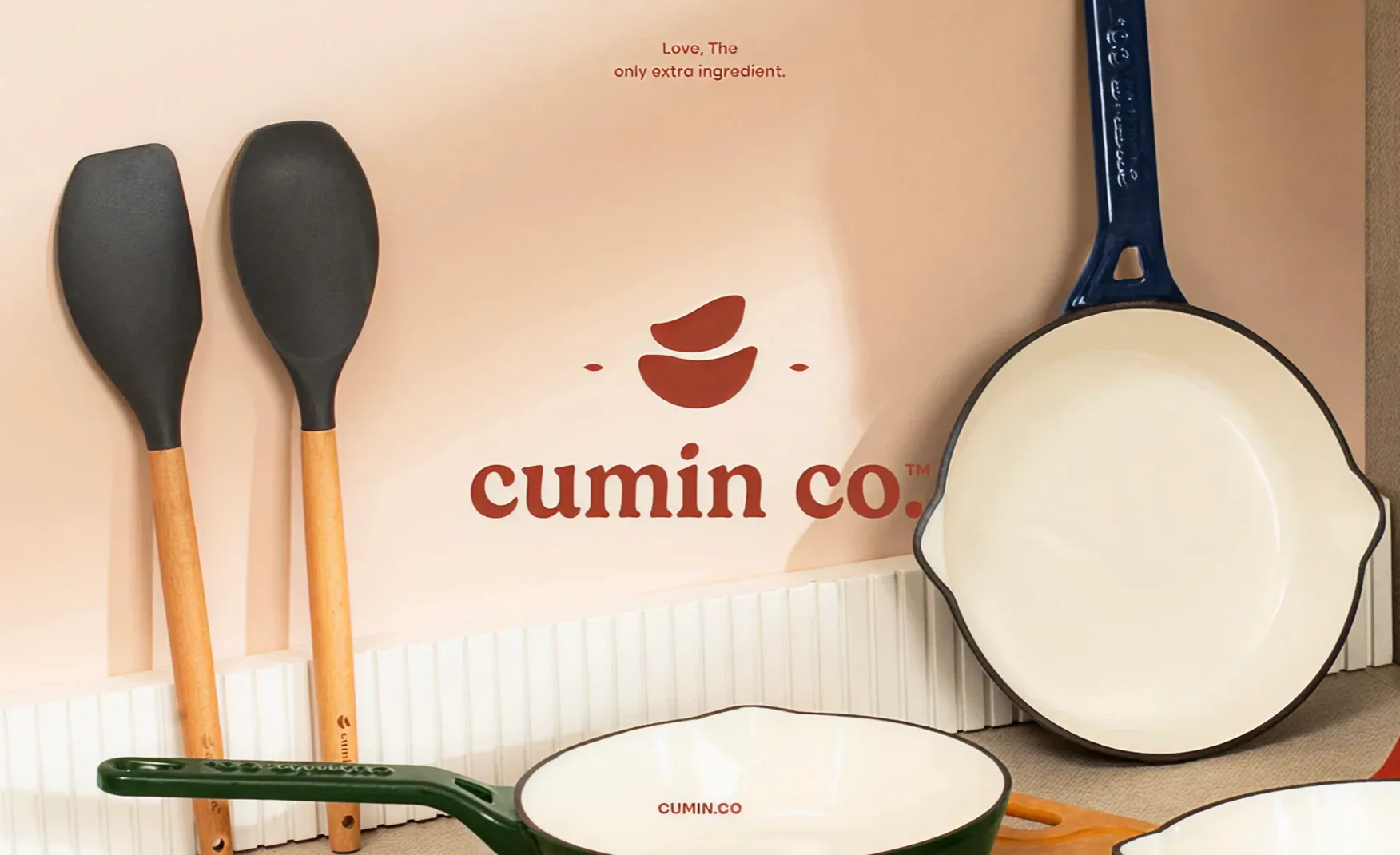
The strongest brand founding stories are the ones where the founder was their own first customer, where the product was built to solve a problem the founder understood from the inside at the most personal level. Cumin Co's origin is one of the most specific and emotionally resonant in the Indian D2C space.
Niharika Joshi and Udit Lekhi found non-stick coating flakes in the food they were preparing for their infant daughter. That moment, discovering that the cookware they used every day in a home where a small child was eating might be introducing harmful particles into food, is the kind of visceral personal discovery that does not produce a pivot or a product line. It produces a mission. 92% of Indian cookware in use relies on materials that have known health concerns at high heat or prolonged use. The founders built Cumin Co to address that gap from the inside of a problem rather than from the outside of a market opportunity, and that distinction is visible in every product decision the brand has made.

Every premium cookware brand in India claims to be chemical-free, non-toxic, healthy, and designed for Indian cooking. Most of these are marketing descriptors attached to commodity products sourced from the same factories. Cumin Co did something different and considerably harder: it engineered a proprietary 4-layer enamel coating material and patented the process.
Enviromax is a surface technology built specifically for the conditions of Indian cooking — sustained high heat, acidic ingredients like tamarind and tomato, and the heavy daily use of a household that actually cooks. The brand holds 3 granted patents on different types of cookware coatings with additional applications pending, backed by R&D advisor Dr. Dinesh Kumar Likhi in materials science. The product is certified against FDA, LFGB, and EC 1935/2004 standards. In a category where every brand makes identical claims, this IP stack is the difference between a positioning line and a technical reality. The question "why should I spend Rs 4,000 on this pan?" has a factual, patent-backed answer and brands with factual answers earn consumer trust significantly faster than brands with only emotional ones.
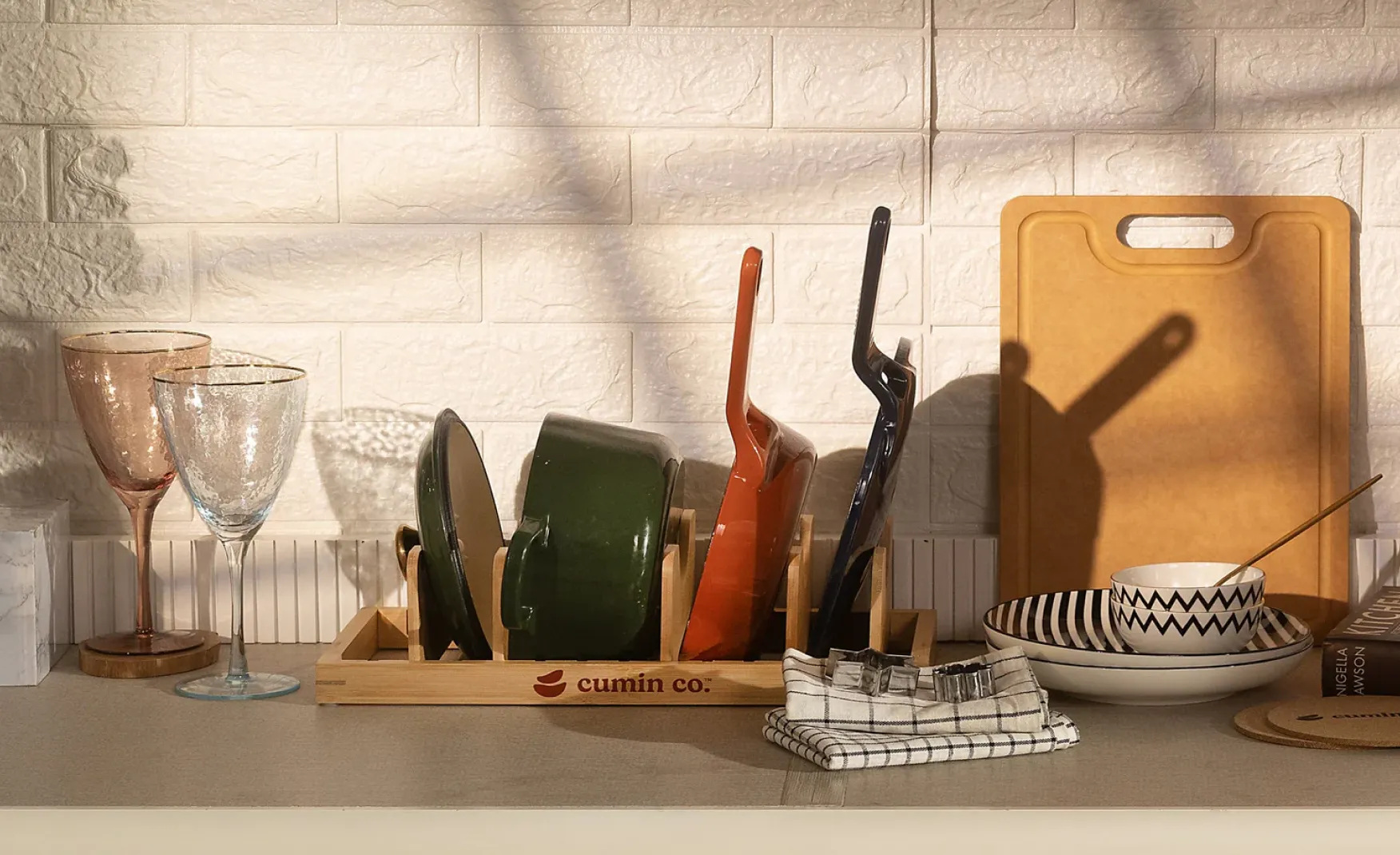
India's legacy cookware players, Hawkins, Prestige, Vinod, have never seriously prioritised aesthetics. Functionality, price, and distribution have been the competitive axes, and the resulting products look like what they are: functional objects designed for utility in a kitchen that nobody photographs. Cumin Co applied a level of aesthetic consideration to functional kitchen objects that the category had not seen, and the commercial consequence is one of the rarest forms of brand building: word of mouth driven entirely by product beauty.
Consumer testimonials describe the products as "fit and finish like a car," "unboxing like luxury," and "food tastes alive." The Dosa Tawa, the No. 10 Pan, and the Dutch Oven have become hero products not just because they perform well but because they look considered in a kitchen. Each Cumin Co piece sitting on a stovetop or hanging from a pot rack is a permanent brand asset, generating the "where did you get that?" question at zero ongoing acquisition cost. That kind of word-of-mouth is not a marketing strategy, in fact it is what happens when a product earns its own advocacy.
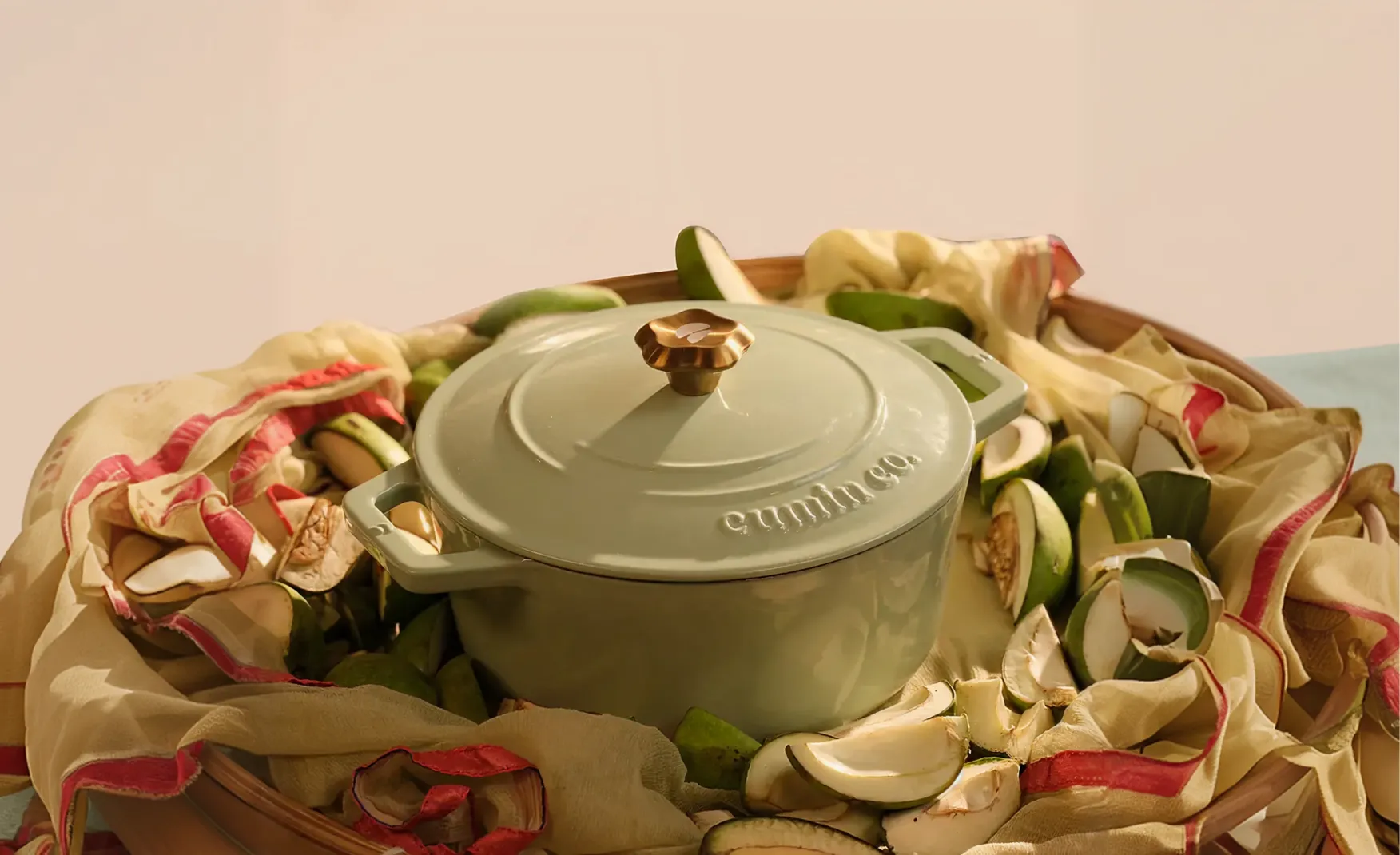
India's cookware market has been fragmented in a way that serves the health-conscious Indian consumer poorly. At the mass end, Hawkins and Prestige dominate on price and distribution, but neither has made a serious attempt at design, aspiration, or premium formulation. At the import premium end, Le Creuset and Staub sit at Rs 8,000 to Rs 25,000 per piece, technically excellent but priced for a narrow demographic.
Between these poles there was no organised, design-forward, health-first, India-made alternative. Indian households that now have the disposable income and the aesthetic awareness to want a kitchen that looks and cooks better had nowhere to go. Cumin Co entered this gap with a specific proposition of an enamel cast iron quality, toxin-free formulation, and a price that makes the premium feel earned rather than exploitative. The brand is India's first health-first enamel cast iron cookware brand, a specific enough position that the market had not yet named it before the product arrived.
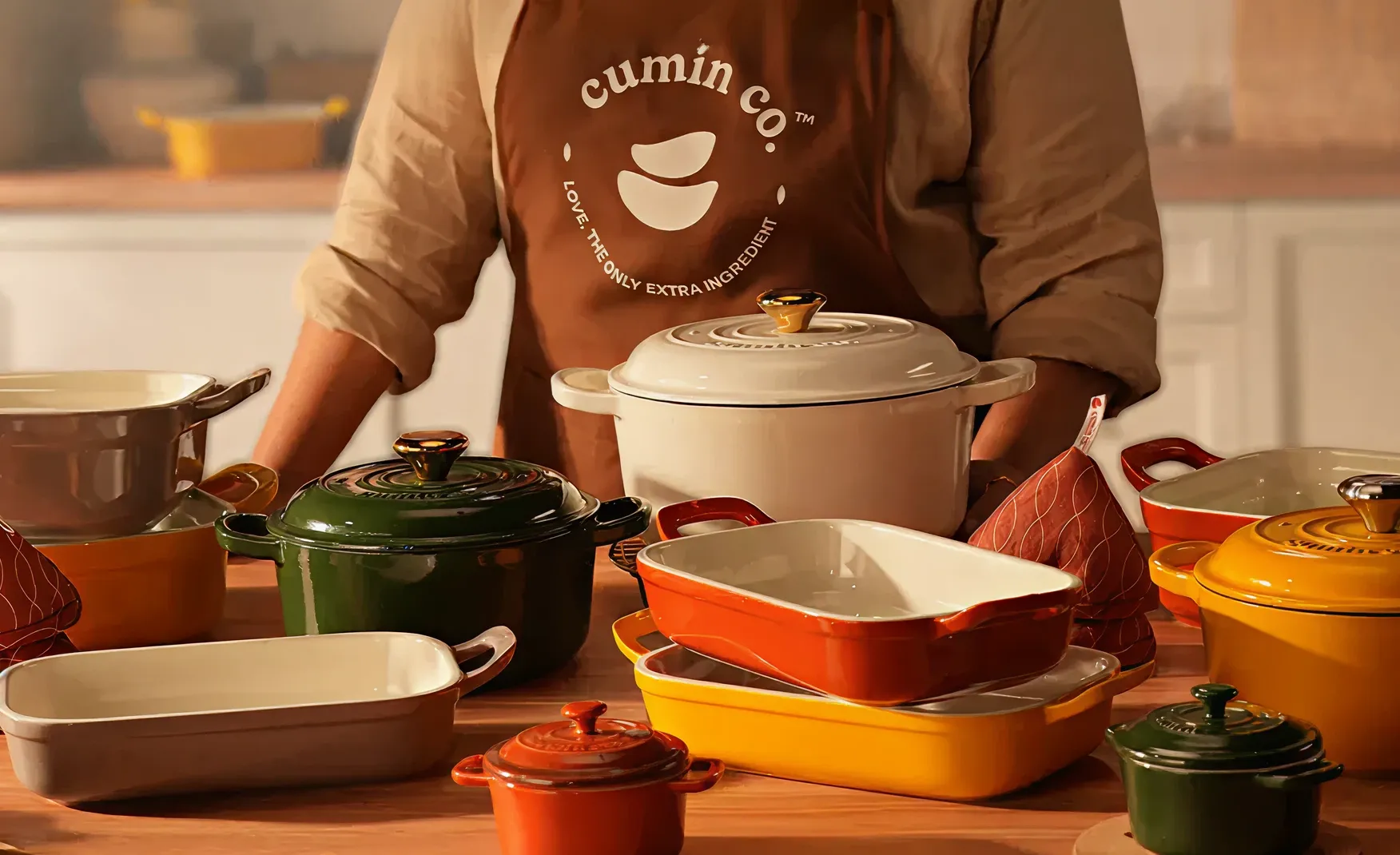
For a brand launched in February 2025, the operating metrics Cumin Co has published are unusual enough to warrant examining directly rather than summarising. The brand achieved profitability within its first year, which Fireside Ventures describes as uncommon for a young brand in its segment. Repeat purchase rates are growing at 20% month-on-month. The pre-Series A round in January 2026 attracted participation from founders of Mokobara, Tracxn, and Zomato co-founder Pankaj Chaddah, investor profiles that suggest the business data visible to them matched the public growth story.
The 10x revenue growth in 8 months was achieved through a brand with over 102 SKUs sold across its own website, Amazon, Blinkit, Zepto, and Swiggy Instamart, targeting 100,000 households within the next year from a base of 7,000. Fireside Ventures' Shuchi Pandya noted "strong repeat rates, healthy unit economics, and disciplined scaling" as the basis for their conviction. These are not the metrics of a brand growing through discounts and paid acquisition. They are the metrics of a product that people genuinely want, tell their friends about, and come back for.
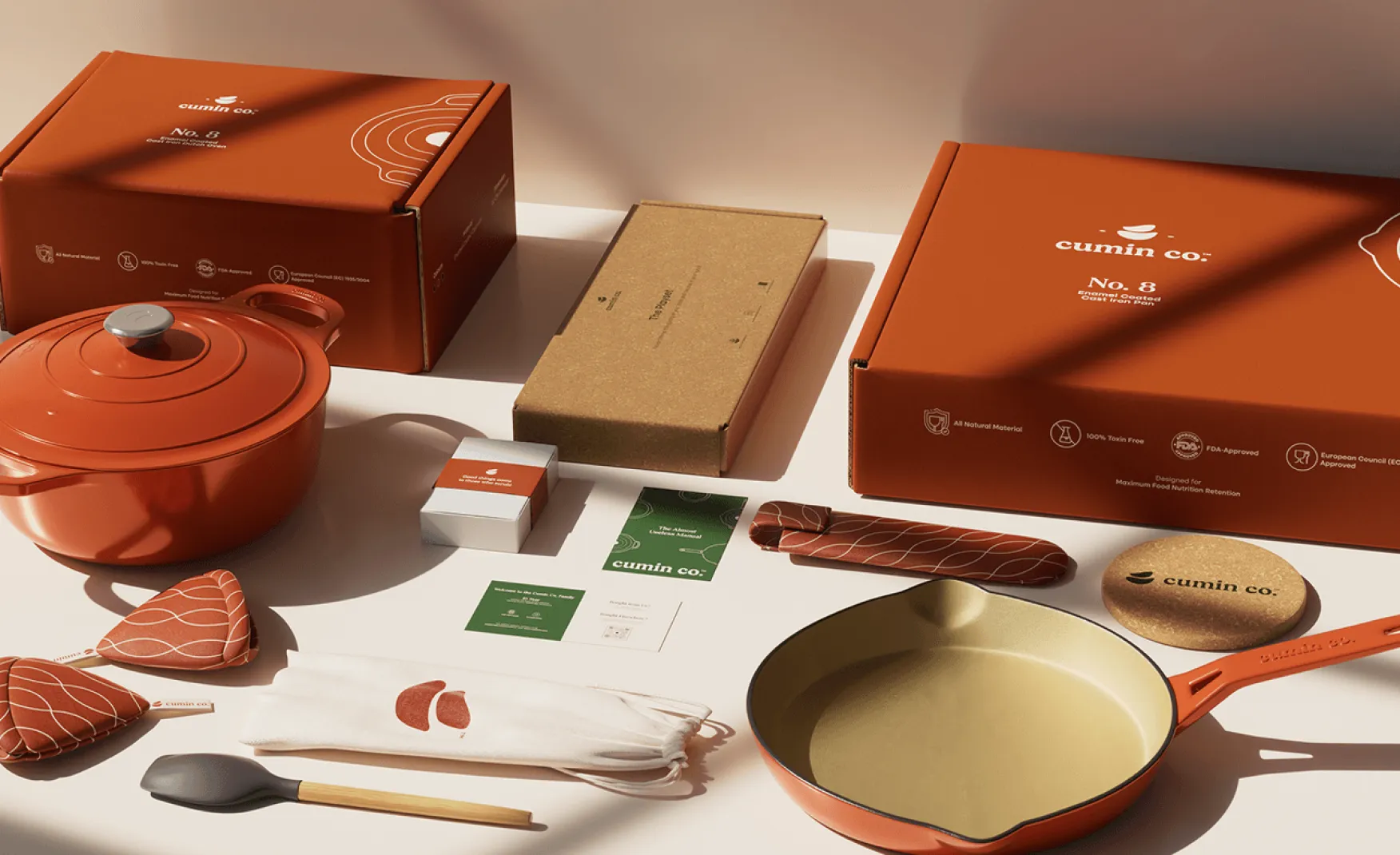
Cumin Co's products are visually and technically stronger than its brand identity at this stage, and that gap will become more visible as the business scales. The visual system, brand character, and tone of voice are still in early formation. The product is doing the heavy lifting that a more mature brand would distribute across every touchpoint, from packaging to digital presence to the experience of encountering the brand for the first time in an unfamiliar context.
The specific risk is this: the window to establish a distinctive, ownable brand identity before well-funded competitors arrive is narrowing quickly. The Indian cookware market is now attracting serious D2C investment, with Ember Cookware and EDT both raising in 2025. An established Indian company with design ambitions entering this category in the next 18 months would find a market that Cumin Co has educated but a brand position that is not yet fully consolidated. The product quality protects the business in the short term. The brand identity is what will protect the premium pricing over years.
The D2C model has been the right starting point. It gave Cumin Co the space to explain what Enviromax is, why enamel cast iron outperforms Teflon at sustained high heat, and why a Rs 4,000 pan makes more sense for a household than a Rs 500 non-stick that needs replacing every two years. That education worked on the early adopter segment, the digitally fluent, health-conscious urban buyer who was already searching for better options.
Scaling beyond that segment requires either a retail strategy that can carry brand education at the point of sale, or a content and media presence strong enough to bring a wider consumer to D2C with prior conviction. Neither is a small undertaking. The brand's ARR ambitions imply a growth rate that D2C alone, reaching the consumer who is already looking, may not comfortably deliver. The Rs 5 million pre-Series A capital is being directed partly toward consumer education, which is the right deployment. How that education is designed and delivered at scale is the most important strategic question the brand faces in 2026.
Cumin Co is in a position that very few 15-month-old brands reach: proven product, serious institutional backing, and consumer enthusiasm that the brand age would not predict. The next 12 months are the window in which the brand identity needs to be established with enough clarity and conviction that it becomes its own moat, something a competitor cannot simply replicate by launching a similar enamel cookware product at a similar price.
At Confetti, we have worked with Vaahe Spices, where the challenge was building a premium brand identity in a category dominated by generic packaging and commodity perception. The discipline of making every touchpoint, from the product box to the website to the way the brand speaks, feel unmistakably like the same considered brand, is what separates products that earn loyalty from products that earn a first purchase. For Cumin Co, that means a visual language that makes the brand instantly recognisable, a brand voice that carries the founding mission in every piece of content, and a packaging system that delivers the "unboxing like luxury" experience its consumers are already describing, by design rather than by accident.
Premium cookware in seasonal colour variants is one of the most effective gifting strategies in the category. It transforms a functional purchase into a considered gift, and it gives the brand a reason to re-engage existing customers who already own the standard range. The Rose collection is an early signal of this instinct.
Building this into a deliberate collection cadence, seasonal colour drops that give the brand a fashion-like rhythm of newness without requiring entirely new product development, would create a content moment, a gifting hook, and a reason for existing customers to return at each launch. A warm earth tone for Diwali, a limited forest green for the baking consumer, a muted blue for a summer gifting window: each drop is an event rather than a product update, and events are what brands become talked about through. The infrastructure for this is already in place. What is needed is the deliberate cadence and the marketing architecture to make each launch feel like something worth waiting for.
The D2C model has served Cumin Co well as a brand education engine. As the business scales toward its household penetration ambitions, a retail presence becomes necessary but it needs to be a retail presence that preserves the brand story rather than compressing it into a commodity shelf placement.
This means selective retail partnerships with home stores, kitchen concept stores, and design-led retailers where the brand can present its products in a context that tells the story. A Cumin Co section in a Good Earth or a premium kitchenware boutique, styled with the brand's own aesthetic logic, does brand-building work that a marketplace listing cannot replicate. The consumer who encounters Cumin Co in the right retail environment encounters the brand as it wants to be experienced, not as another product in a search result. Every retail placement should be one the brand is proud to be seen in before it is one that adds distribution volume.
Cumin Co is one of the most exciting young brands in India's consumer space right now, and the reasons have nothing to do with the growth rate, which is exceptional, and everything to do with the coherence of the founding thesis. A husband and wife who found a health problem in their own kitchen, built a patented material science solution to it, and launched a brand that achieved profitability, 10x revenue growth, and 20% month-on-month repeat purchase rate growth within its first year are doing something that is genuinely uncommon: building a product that consumers return to rather than one they buy and replace.
The work ahead is the brand work. The product is exceptional. The founding story is one of the best in Indian D2C. The technical IP is defensible. What is not yet fully built is the visual world, the brand character, and the market narrative that will hold everything together as the business scales beyond the early adopter segment and into the broader Indian household that Cumin Co is ultimately building for.
If you are building a consumer brand in a category that requires genuine technical differentiation and want an identity and packaging system that communicates that differentiation before the consumer has read a single line of copy, Confetti can help you build the brand your product deserves.
Want strategic branding and packaging like this for your business?





.webp)
.webp)

.webp)
.webp)
.webp)
.webp)
.webp)







.svg)
.webp)





.svg)
.svg)


























































































.webp)










.webp)


.svg)