%201.webp)
02
AI Snaps
.svg)
.svg)
01
Our Work
03
About Us
04
Brand Audit
05
Contact Us
06
Client Success
12
07
Blogs
08
Careers
Book A Call
.svg)



Need Help In Building Your Brand?
Click the button below & book a call with our founder directly.

Rishabh Jain
Managing Director
Jaipur Rugs | Confetti's Verdict ⭐⭐⭐⭐
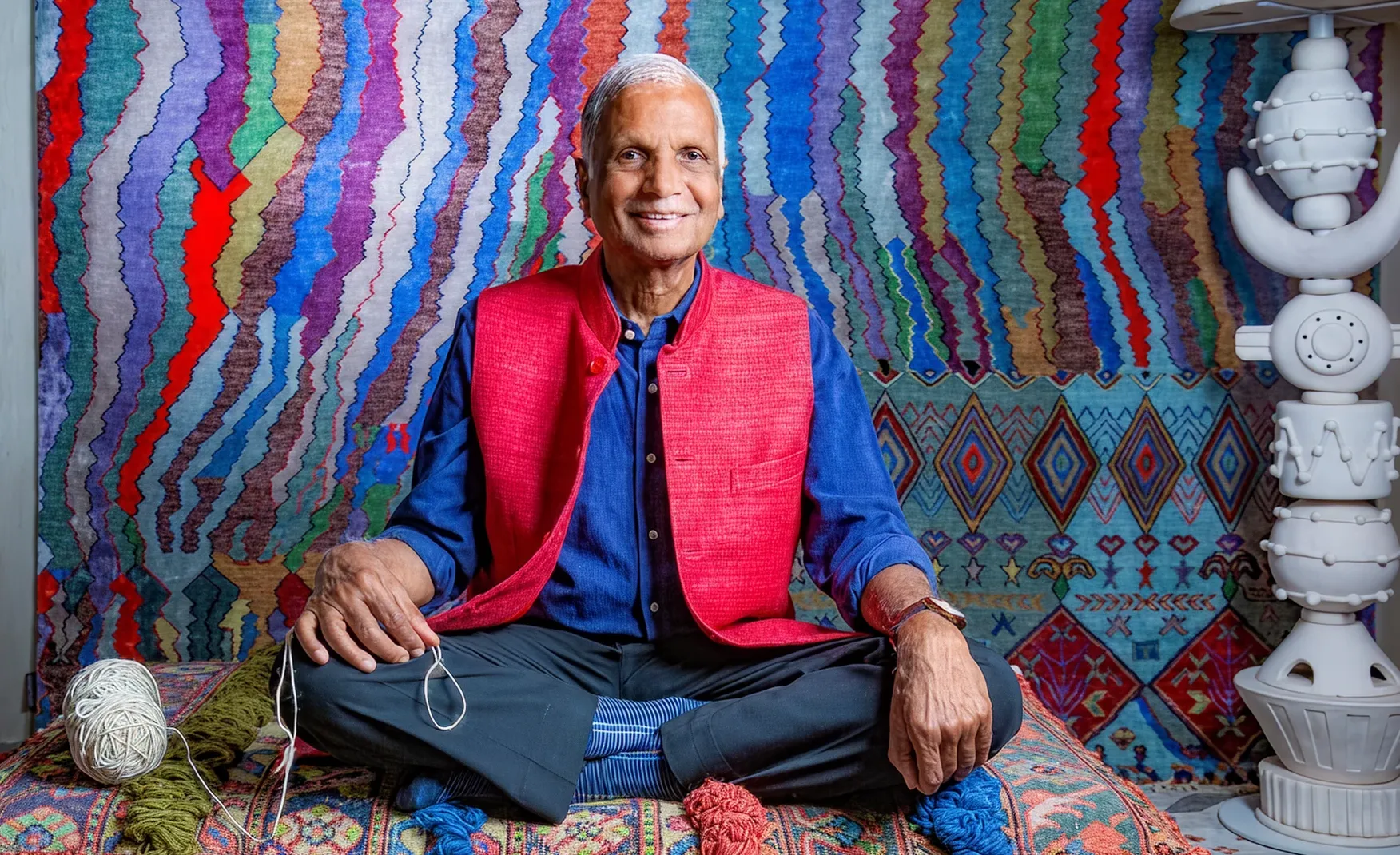
Confetti Design Studio has analysed Jaipur Rugs to understand how a business started in 1978 by Nand Kishore Chaudhary with a Rs 5,000 loan from his father, two looms, and nine weavers in Churu, Rajasthan, became a Rs 360 crore company in FY25 exporting to over 90 countries with stores in London, Milan, Dubai, and Singapore, sustaining the livelihoods of 40,000 artisans across 700-plus villages (85% of them women), acquiring the storied Indian luxury rug brand Shyam Ahuja in January 2025, presenting at Paris Fashion Week, and actively considering an IPO.
The carpet industry in India has historically operated on a chain of middlemen like the contractors, brokers, and traders who sit between the weaver and the market, extracting margin at every layer and ensuring that the person who makes the product almost never benefits from the premium it commands at retail. Nand Kishore Chaudhary built Jaipur Rugs by eliminating this structure entirely.
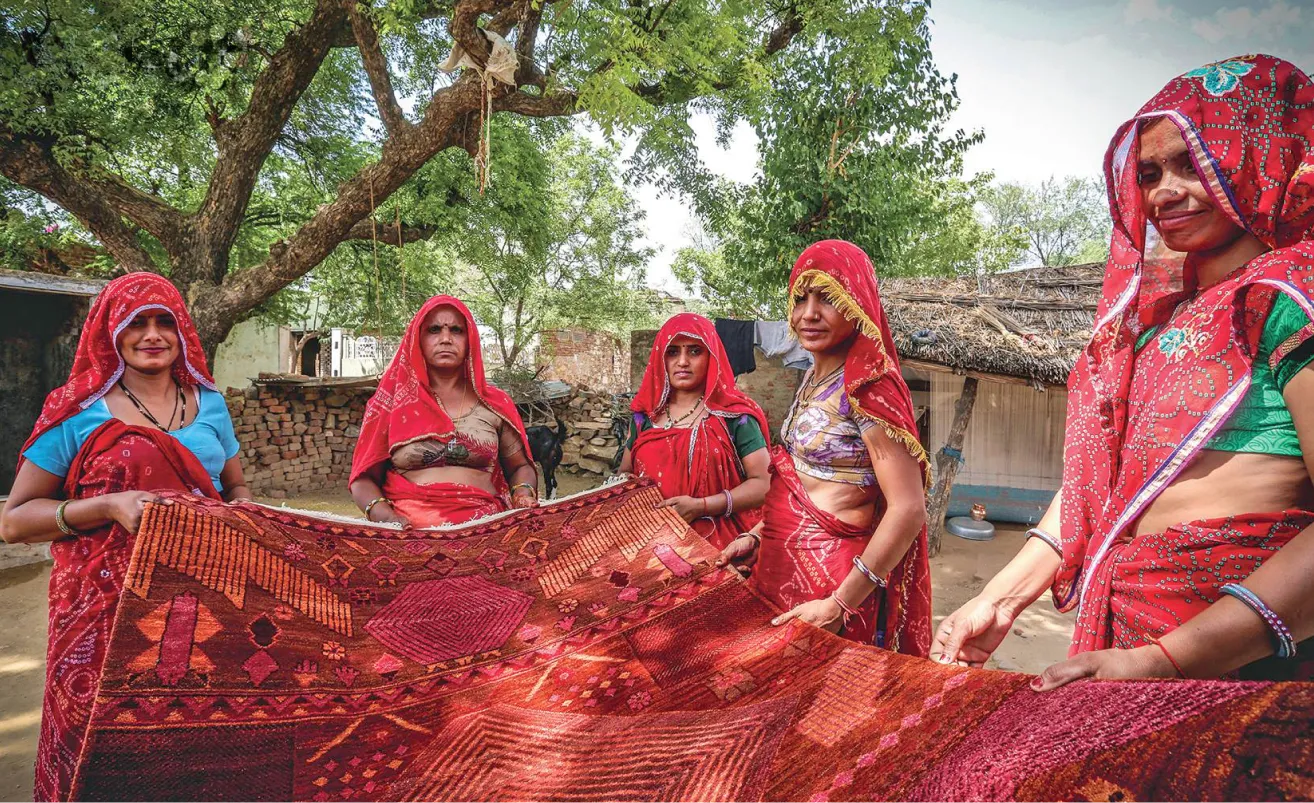
What NK Chaudhary built instead is what the company calls the Jaipur System with a direct connection between the weaver and the global market, with Jaipur Rugs managing design, quality control, logistics, and distribution itself. 40,000 artisans across 700-plus villages earn directly from the rugs they make, in a model where scale and craft quality are not in opposition. This is not a social responsibility layer placed on top of a commercial product, but it is very much in itself the commercial product. Without the direct relationship with the weaver, there is no way to maintain the production depth and consistency that a buyer in London or Dubai is paying Rs 4 to 5 lakh for.
The moat this model creates is generational rather than financial. Building trust with weavers across 700 villages in rural Rajasthan is not something a well-funded competitor can replicate in merely a matter of three years because it truly is a relationship that NK Chaudhary has been building since 1978. Any brand entering this market, Indian or international, would need decades to develop equivalent artisan depth. The Jaipur System is the brand's most durable competitive advantage precisely because it cannot be bought.
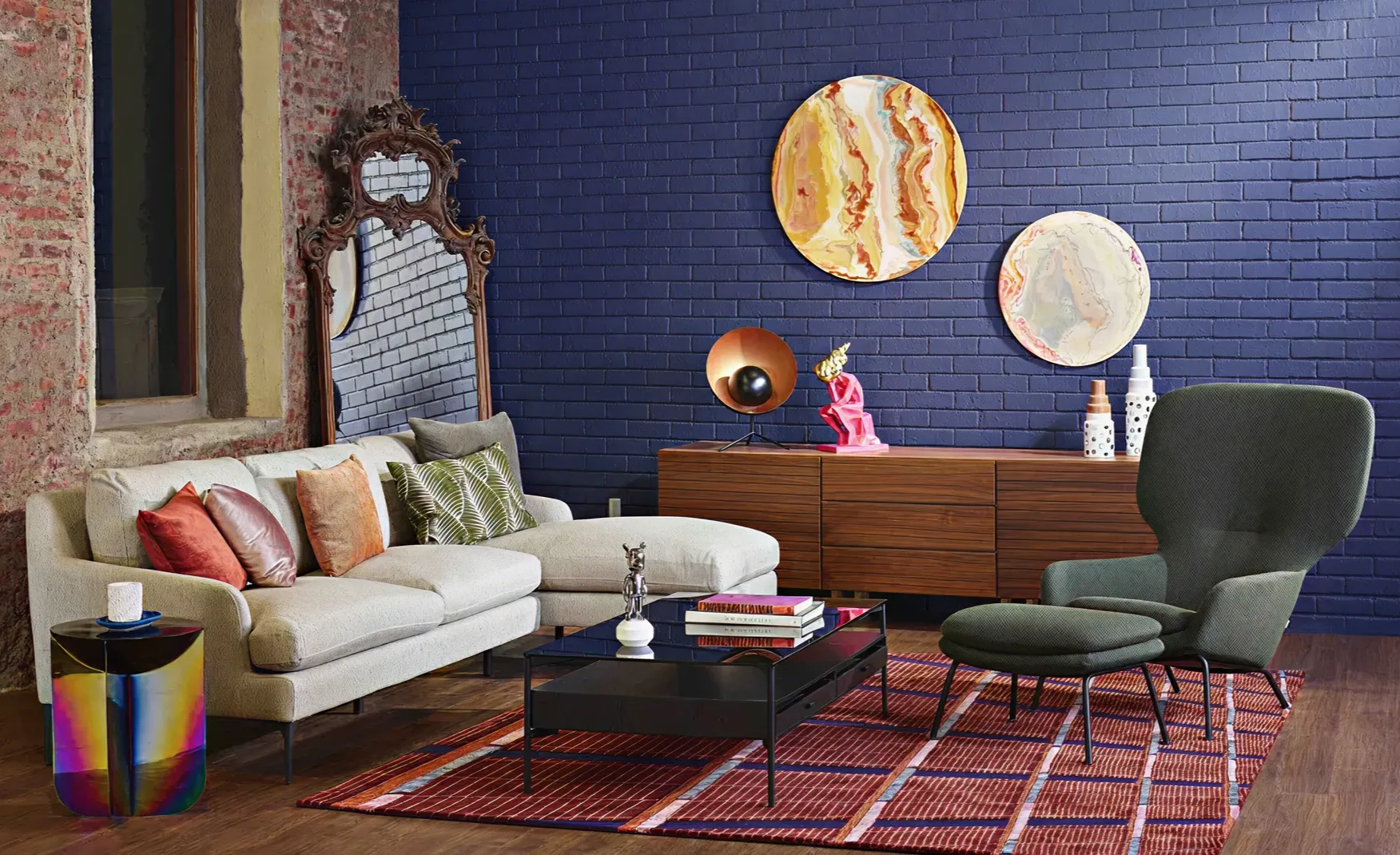
There is a specific moment that separates a product from a luxury object, the moment when the owner mentions it by name. Nobody announces the brand of their television. Very few people identify the brand of their dining table. But people say "this is my Hermès throw" and "this is my Jaipur Rugs carpet," because the brand name adds meaning to the object that the object alone does not carry.
At a gathering in the UAE, a host specifically named their Jaipur Rugs carpet, a purchase equivalent to approximately Rs 5 lakh, with the same quiet pride one reserves for a significant piece of art or a serious watch. Carpets, for most consumers in most markets, are anonymous surfaces. The fact that a Jaipur Rugs buyer in Dubai named the brand unprompted is evidence that the product has crossed into luxury object territory, where the provenance of the thing is part of its value and sharing that provenance is part of owning it.
When Confetti identifies this quality in a brand, the moment when a customer becomes a voluntary ambassador because ownership itself is a statement, we treat it as the most commercially valuable asset on the brand's balance sheet. It cannot be manufactured through advertising. It has to be earned through everything the brand is and does consistently over time & Jaipur Rugs has earned it.
Most brands in the luxury lifestyle category spend significant energy on influencer relationships like seeding products with creators, running gifting programmes, building social proof through visible endorsement. Jaipur Rugs does not do this, and the decision is not an oversight. It is a deliberate brand protection strategy rooted in a clear understanding of what influencer association does to luxury positioning.
Luxury is built on selectivity. A product that anyone with a following can promote, and that brands pay creators to feature, signals mass aspiration rather than genuine discernment. The moment a UGC creator films a home tour featuring a Jaipur Rugs carpet, the product migrates from luxury object to aspirational lifestyle purchase: a very different consumer relationship and a very different price conversation. The protection of the luxury positioning is worth more than the reach any influencer campaign could generate.
Instead of influencer seeding, the brand placed its handwoven carpets as the literal floor of the Paris Fashion Week runway, the surface on which the world's most prestigious fashion houses presented their collections. Every photograph, every video clip, and every magazine spread from that show has a Jaipur Rugs carpet underneath it. The brand is associated with the highest level of the global fashion industry without running a single ad or paying a single creator. The contrast with the influencer approach is a fundamentally different theory of what the brand is and who it belongs to.
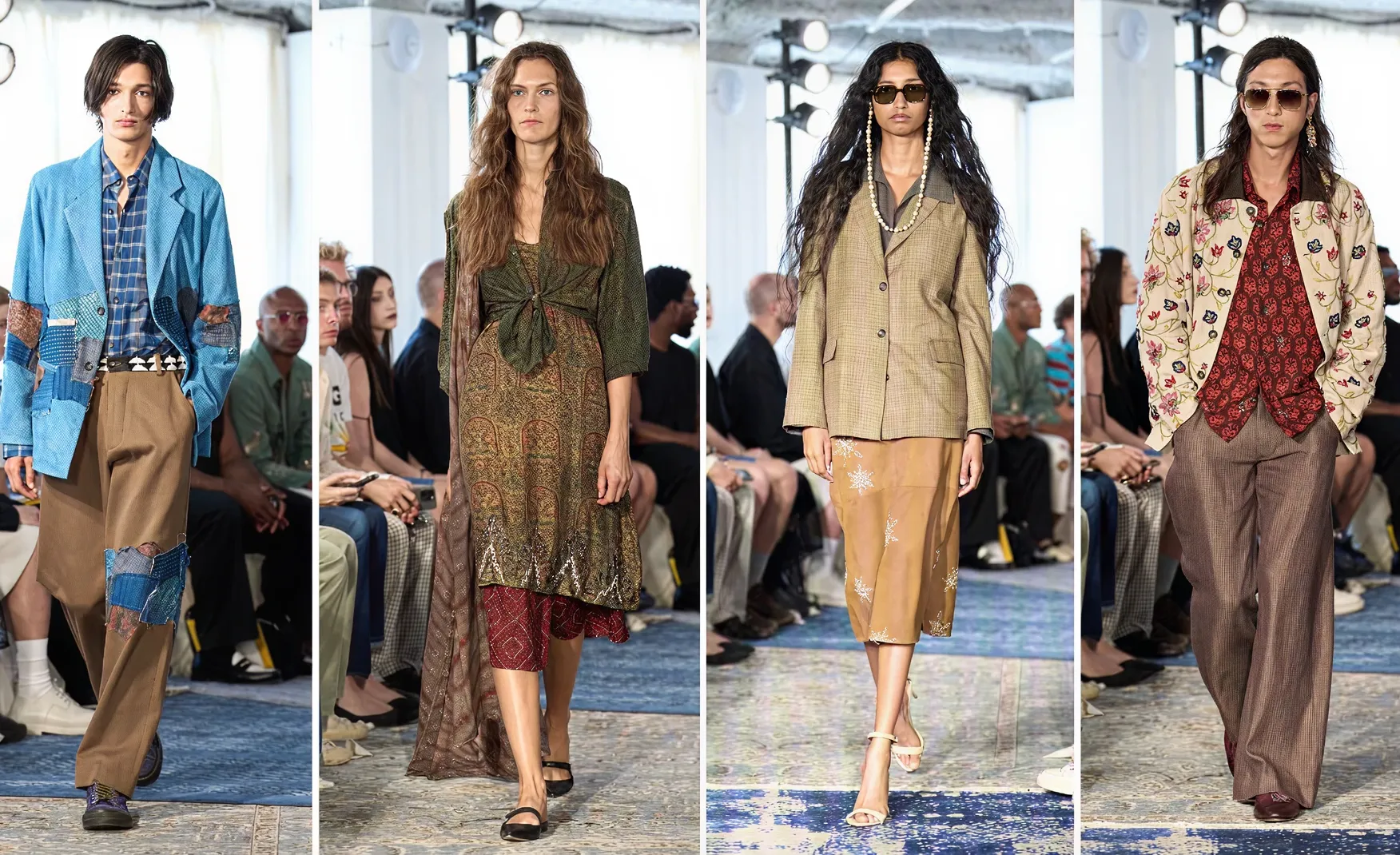
One of the most persistent challenges for Indian luxury brands is cracking the global retail environments that signal legitimacy to international buyers. A product sold in a concept store in Milan carries different weight from the same product sold at a trade fair. A showroom in London's design district communicates a seriousness about the brand that no amount of domestic press coverage can replicate.
Jaipur Rugs has built exactly this distribution, organically, through product quality and trade relationships rather than through a capital-intensive retail rollout. Stores in London, Milan, Dubai, Singapore, and across India. Exports to over 90 countries. A revenue mix where exports account for 54% of total revenue, with offline retail at 40% and e-commerce at 6%. The Shyam Ahuja acquisition in January 2025, bringing a brand with its own established collector base and international relationships, consolidates Jaipur Rugs' position as the dominant Indian luxury rug house globally. The Salone del Mobile collaboration with Dutch designer Richard Hutten in April 2025 reinforces the brand's standing in the international design community.
The IPO consideration, reported in February 2025, is the natural next step for a business with this commercial foundation. The distribution is already where Indian luxury brands aspire to be. The question Confetti asks is whether the brand communication is strong enough to support the premium the business is capable of commanding as it moves toward public markets.
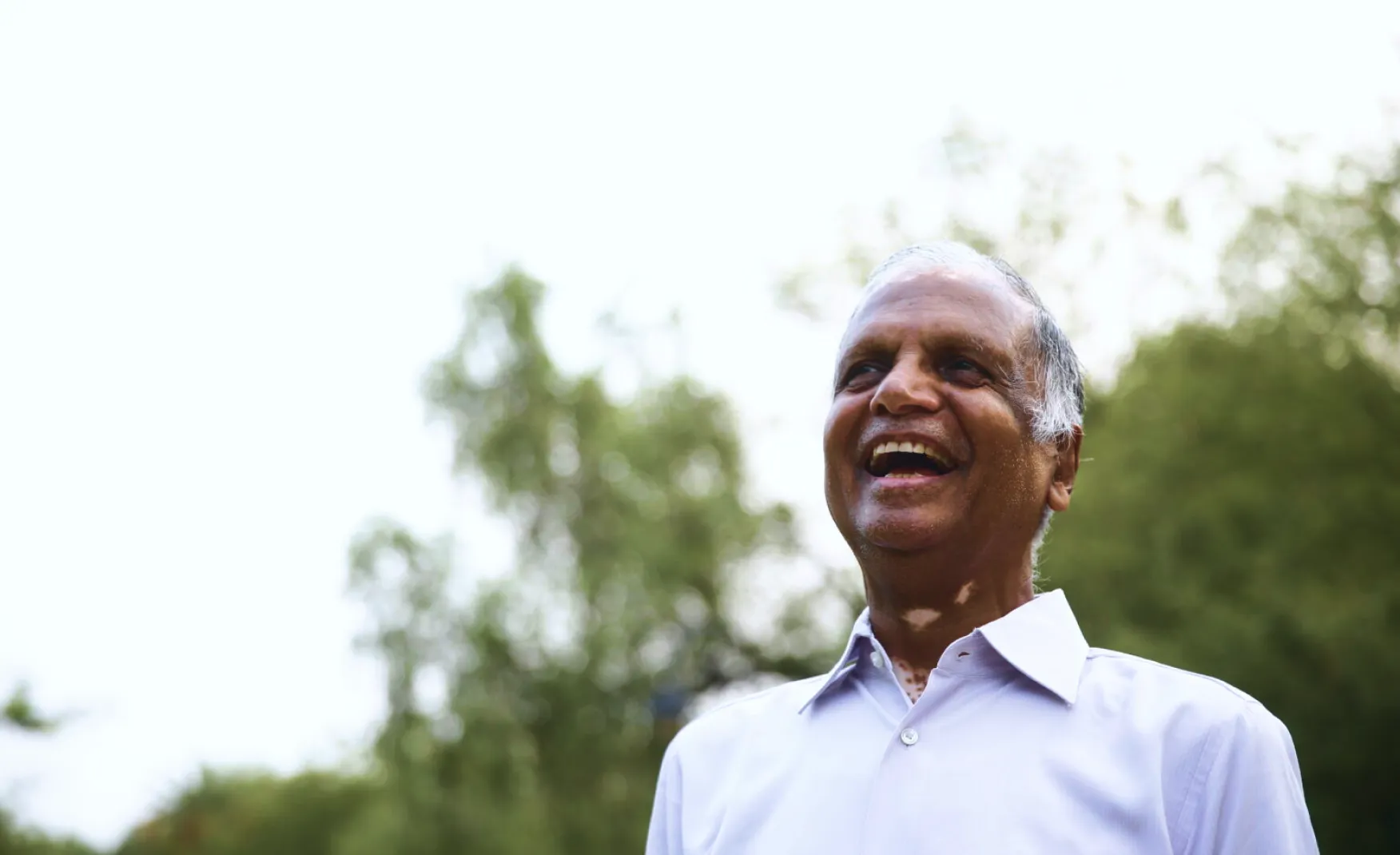
NK Chaudhary gave up a bank job and borrowed Rs 5,000 from his father to start a carpet business. He built, from a small town in Rajasthan, a globally exported luxury brand that now sustains the livelihoods of 40,000 artisans and their families. This is not a startup origin story. It is a generational human story of the kind that luxury houses in France and Italy have built entire brand identities around for centuries.
Hermès began as a harness-maker. LOEWE began as a leather workshop in Madrid. The craft origin story, told with conviction and depth over time, is how luxury brands establish the cultural weight that justifies their price points across generations. Jaipur Rugs has the equivalent story, and arguably a more powerful one where a founder who crossed caste boundaries in rural Rajasthan to sit and weave alongside Dalit and tribal artisans, dismantling a social order in the same act as building a business. That story carries moral weight, aesthetic weight, and commercial weight simultaneously and ideally no competitor can claim it.
The challenge, as we examine in the Challenges section, is that this mythology currently lives in the "About Us" section of the website rather than as the central language of every consumer-facing communication. The story exists. The brand has not yet chosen to use it as the luxury asset it is.
A Rs 5 lakh rug sold in a Milan showroom sits in the same commercial category as a Hermès throw or a Bottega Veneta leather object, a luxury purchase where the consumer is buying meaning, provenance, and craft as much as they are buying a product. The brand communication those consumers encounter when they engage with Jaipur Rugs, across the website, the in-store experience, and the digital presence, does not yet match that luxury conversation.
The visual identity reads as a premium craft company rather than a luxury house. The typography, the photography direction, and the content strategy communicate quality and authenticity, but not the full emotional weight of what the product actually is. This is commercially costly in a specific and measurable way. The consumer considering a Rs 5 lakh rug is not just evaluating the rug. They are evaluating the brand they will be buying from, because at that price point the brand is part of what they own. If the brand communication does not hold the weight of that transaction, some portion of those consumers will default to an international alternative whose brand language they find more convincing. The product is already good enough to justify the price. The brand communication needs to be too.

Jaipur Rugs has been built exceptionally well for a trade and specification audience: the interior designers, architects, and retail buyers who have been the primary route to market for decades. The 54% export revenue is evidence that these trade relationships are deep and productive. But the end consumer, the person who ultimately lives with the rug, shows it to guests, and names the brand at a housewarming, is significantly less aware of the brand than the product quality and price point would suggest.
Building direct consumer awareness without compromising the luxury positioning that the no-influencer policy protects requires a different kind of investment: editorial relationships with the publications that serious luxury consumers read, deeper partnerships with the architects and interior designers whose recommendations carry weight in the right rooms, and the kind of cultural placement that Paris Fashion Week represents but that needs to happen more consistently and be communicated more actively to end consumers. The brand has proven it can execute at this level. It has not yet done so at the scale and frequency the business is ready for.
In the global market for handmade objects at serious price points, provenance is the product. A consumer in London or Dubai paying Rs 5 lakh for a rug is not primarily paying for fibres and dye. They are paying for the knowledge that the object was made by specific hands, in a specific place, with a specific intention. Every major luxury house in the world charges a premium for exactly this kind of story.
Jaipur Rugs has a version of it that is more specific, more human, and more verifiable than almost any competitor can claim. The Manchaha programme, where artisans design their own rugs, is one of the most interesting things happening in global luxury right now: weavers from rural Rajasthan and prison cells across India creating commercially sold luxury objects based on their own artistic vision. This story is not told with the urgency and prominence it deserves. It lives in press features and documentary content rather than as the entry point to every consumer-facing encounter with the brand.
The most important brand-building work available to Jaipur Rugs is not a redesign of the logo or a refresh of the website. It is a restructuring of every consumer-facing touchpoint so that the craft origin is the first thing the consumer encounters rather than something they have to navigate to find. When someone encounters Jaipur Rugs for the first time, in a showroom, through a press piece, or through the Paris Fashion Week imagery, the first thing they should feel is the weight of the story behind the object.
The product detail page should do what a great wine label does, that is to make the provenance legible and desirable before the consumer has decided to buy. The rug's origin village, the weaver who made it, the design tradition it draws from, and the community it sustains should be as present in the purchase decision as the dimensions and the price. This is the brand architecture work that turns a premium craft purchase into a luxury object acquisition, and it is the work that Confetti would bring to the brand's communication strategy across every channel.
France has a visual language for luxury that the world recognises. Italy has one. Japan has one. India does not, at least not one that has been successfully exported as a globally legible luxury signal. Jaipur Rugs is the most qualified brand in India to build it, because the raw materials all present the craft depth, the founder mythology, the international distribution, the Paris Fashion Week association, and a product that is genuinely irreplaceable.
At Confetti, we think about Indian luxury brand identity as a design problem that should be solved from the product's material logic rather than from borrowed European conventions. The geometry of a Jaipur rug, the colour relationships that emerge from natural dyes and regional tradition, the structural principles that have governed the patterns for generations: these contain a visual intelligence that is both specifically Indian and universally beautiful. A brand identity built from these principles would create something genuinely new in the global luxury market, an Indian luxury brand that looks like itself rather than like an approximation of what luxury looks like in other cultures.
The acquisition of Shyam Ahuja in January 2025 is more than a revenue addition. It is the consolidation of Indian luxury rug heritage under a single group, with the opportunity to position Jaipur Rugs as the definitive Indian luxury rug house globally in the way that LVMH owns the definitive statement on French luxury across categories.
Shyam Ahuja brings decades of collector relationships, a distinct aesthetic vocabulary developed over more than six decades, and a heritage that is complementary rather than duplicative of what Jaipur Rugs has built. Managing this acquisition as a two-brand portfolio, maintaining Shyam Ahuja's distinct identity while building the group's overall authority in the Indian luxury rug category, is the architectural challenge ahead. Done well, it creates a position that covers both the contemporary and the heritage luxury rug consumer, making the group the unambiguous first conversation for any serious buyer of Indian handmade rugs globally. At Confetti, brand portfolio architecture of this kind is one of the most commercially consequential design problems we work on.
Jaipur Rugs is the most credible Indian luxury brand story that the world has not yet fully heard. The product is genuinely irreplaceable with 40,000 artisans and nearly five decades of craft depth cannot be replicated. The distribution is already where Indian luxury brands aspire to be. The founder mythology is one of the great business origin stories of modern India. And the brand has demonstrated, through Paris Fashion Week and the no-influencer policy, that it understands what luxury positioning requires at its most fundamental level.
The rating holds one star in reserve for a specific and solvable problem. The visual identity does not yet hold the weight of what the business actually is. The artisan story is treated as background when it should be the headline of every consumer encounter. And the brand needs to speak to the end consumer with the same conviction it has always brought to the trade. The work ahead is a communication problem, not a product or distribution problem. When Jaipur Rugs closes that gap, it will be recognised not just as India's most serious craft export at Rs 360 crore in FY25 revenue and growing, but as one of the world's genuinely significant luxury brands, which is what it already is.
If you are building an Indian luxury or craft brand and want a visual identity and brand narrative that communicates the full weight of your origin story to a global audience, Confetti can help you build that.
Want strategic branding and packaging like this for your business?




.webp)
.webp)

.webp)
.webp)
.webp)
.webp)
.webp)







.svg)
.webp)





.svg)
.svg)






















































































.webp)








.webp)



.svg)