%201.webp)
02
AI Snaps
.svg)
.svg)
01
Our Work
03
About Us
04
Brand Audit
05
Contact Us
06
Client Success
12
07
Blogs
08
Careers
Book A Call
.svg)




Need Help In Building Your Brand?
Click the button below & book a call with our founder directly.

Rishabh Jain
Managing Director
Country Bean | Confetti's Verdict ⭐⭐⭐
Confetti Design Studio has analysed Country Bean to understand how a flavoured coffee brand launched in 2017 by Aditi Somani Satnaliwala, who returned from the University of Warwick and missed her daily flavoured coffee, was turned down by international suppliers she tried to import from, and began experimenting with caramel and coconut additions to instant coffee in her own kitchen, grew to serve over 6 lakh customers while remaining fully bootstrapped, reported Rs 11.4 crore in FY25 revenue, was recognised in Inc42's Fast42 D2C list, and built India's most fun coffee brand before the specialty coffee wave made the category look serious, all without a rupee of external capital and with a 12-person team.
Country Bean understood something important about the Indian consumer's relationship with coffee before the rest of the category did, the path to specialty coffee is not through education. It is through pleasure. The consumer who has grown up with Nescafé instant does not arrive at a single-origin Ethiopian pour-over in one step. They arrive through hazelnut lattes, through caramel coffee, through formats that make coffee feel like a treat rather than a category upgrade.
Country Bean built that entry point deliberately and early. By offering flavours that the Indian palate recognises and enjoys, sweet, creamy, familiar, the brand brought a cohort of consumers into premium coffee who would never have bought a bag of unroasted beans or invested in a brewing method. That is genuine category expansion, not capturing existing specialty coffee consumers, but creating new ones. The brand that creates a category's entry point occupies a specific and defensible position in the consumer's journey, the one they remember as where it all started. Aditi started by experimenting in her own kitchen because the international brands she tried to import turned her down. That personal problem produced a genuine market insight.
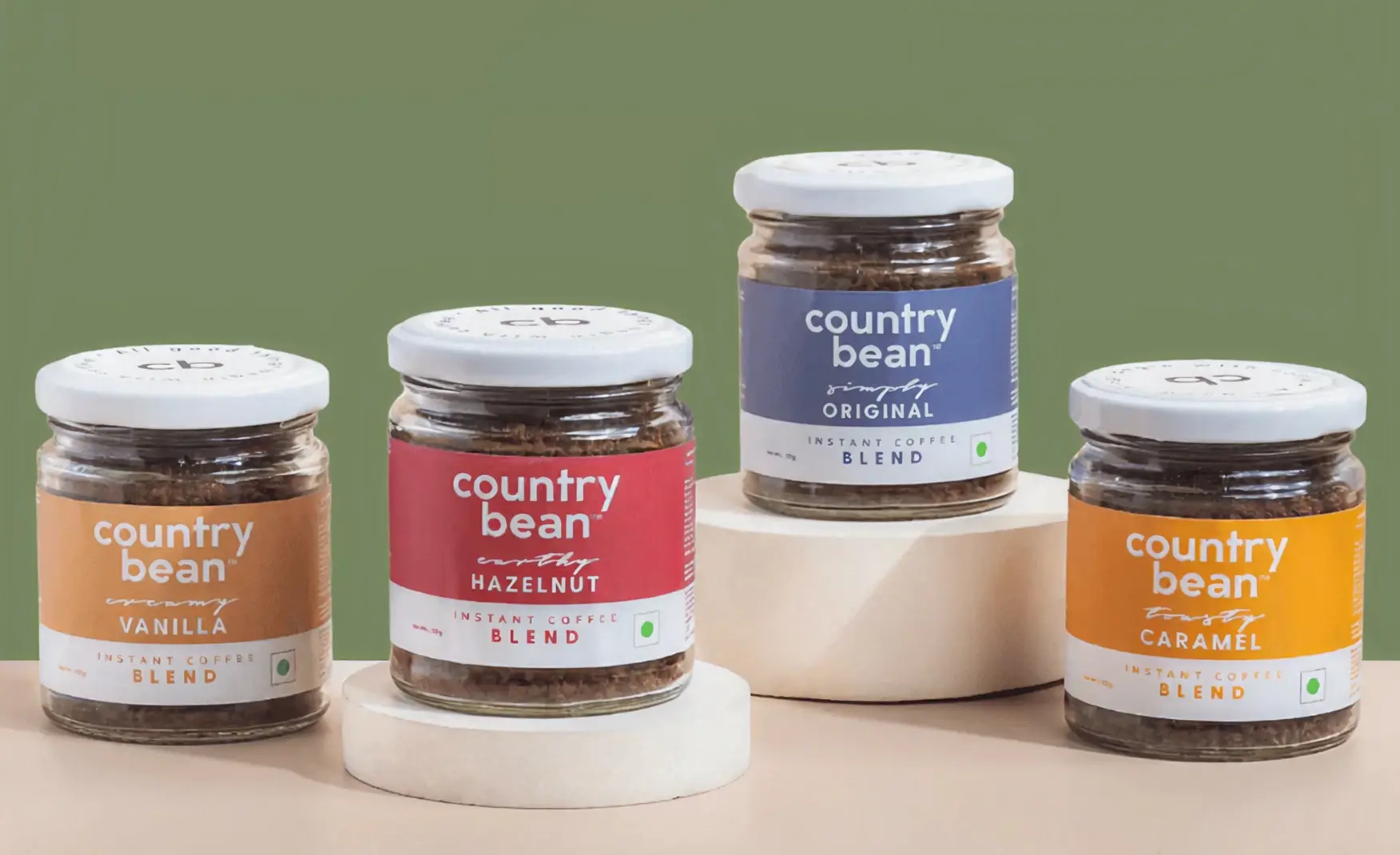
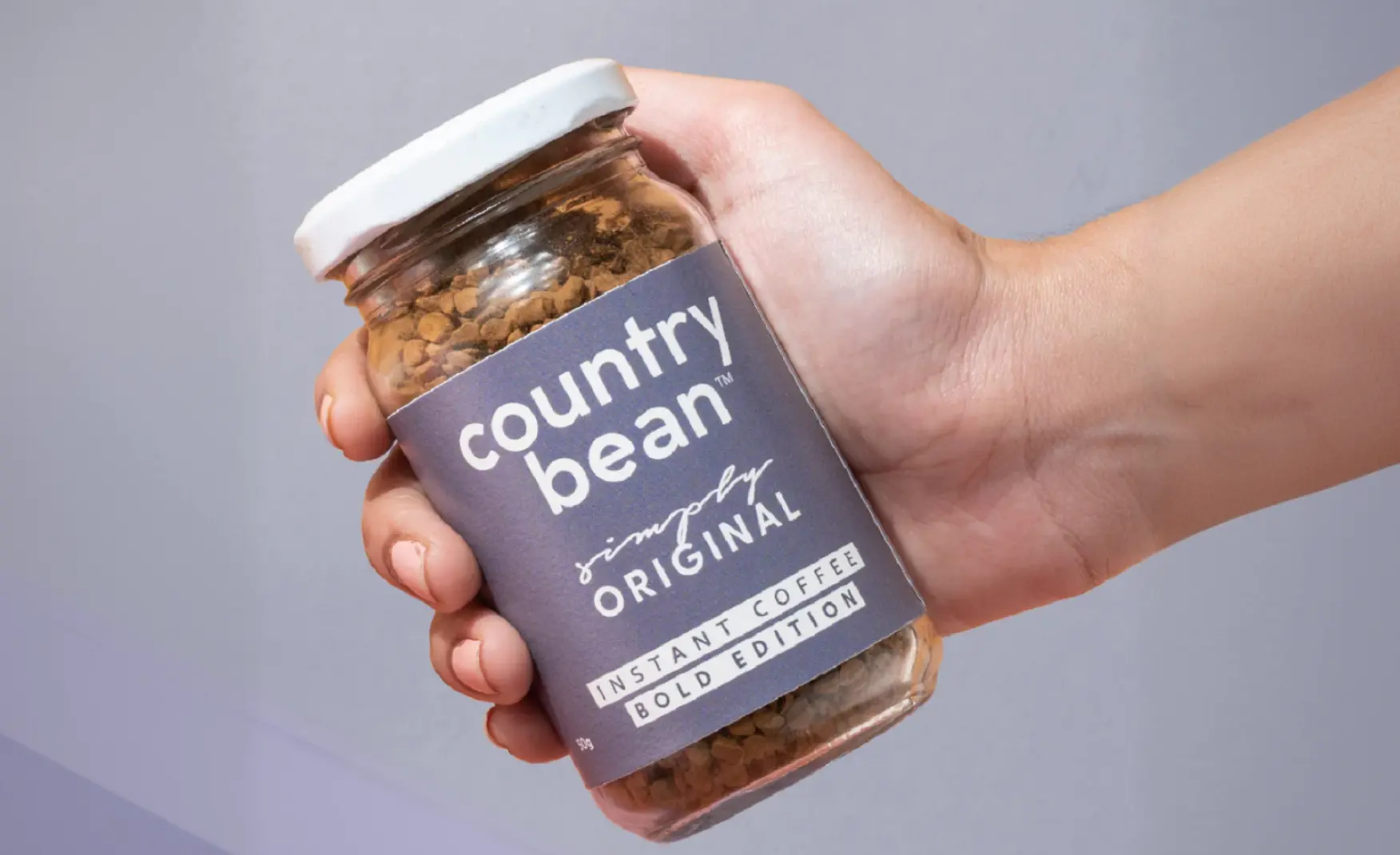
In a coffee category increasingly dominated by earnest quality-signalling, origin stories, altitude charts, processing method terminology, and the general aesthetic of a barista who wants you to know they studied in Copenhagen, Country Bean is irreverent and fun. The brand talks about coffee the way a friend recommends it, not the way a specialist instructs about it.
That personality is genuinely differentiated and has built real brand recognition among consumers who find the specialty coffee world slightly intimidating. Building a personality that makes a premium product feel approachable, fun without being cheap, distinctive without being exclusionary, is exactly what category-entry brands need to do. Country Bean has held this tone consistently across its product range and communications since launch, which is a harder discipline than it looks when the rest of the category is pulling toward seriousness.
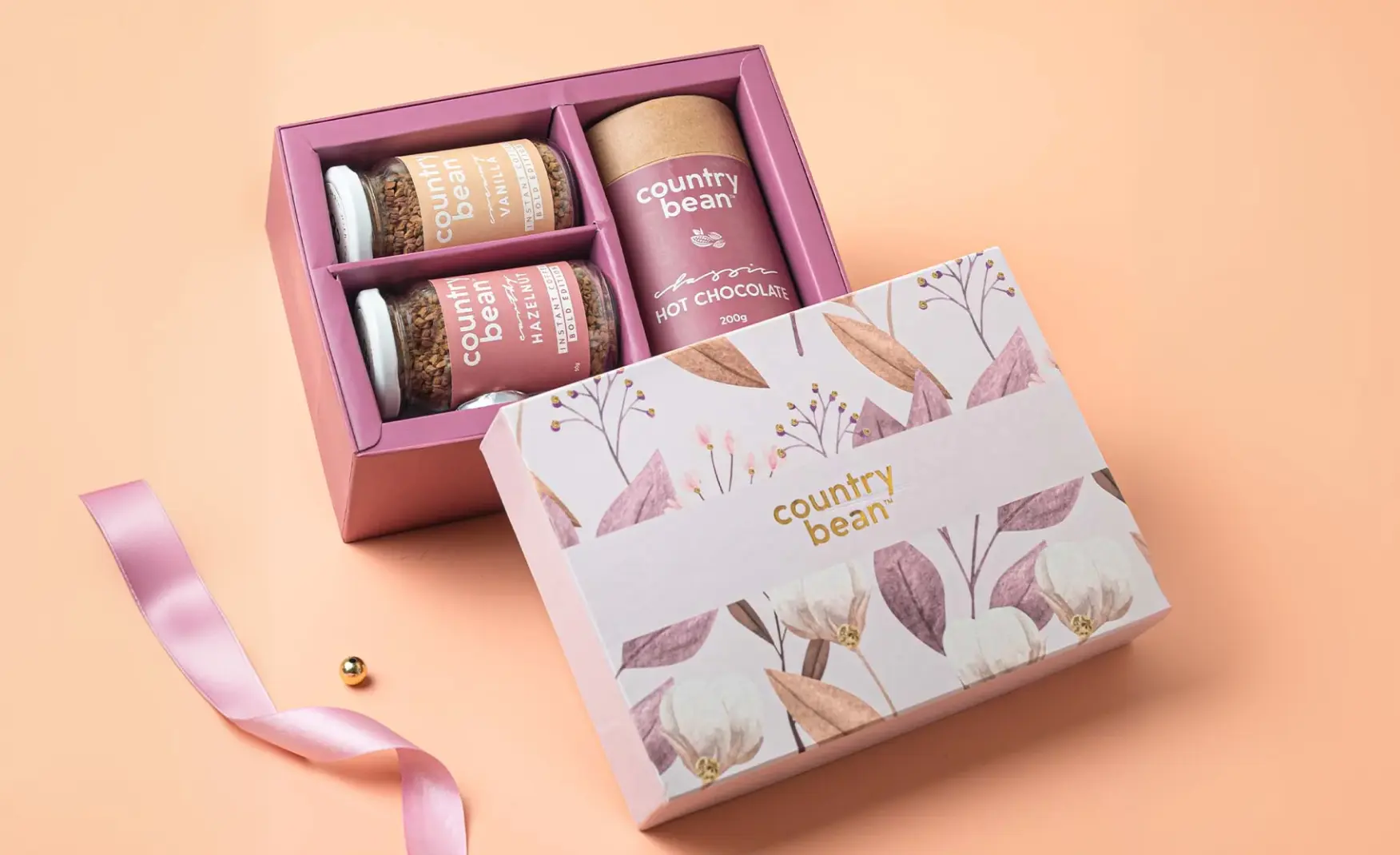
Country Bean travels particularly well through gifting. A product that is flavoured, attractively packaged, and positioned as fun and indulgent makes an easy, appreciated gift, and first encounters with Country Bean frequently happen through a gift rather than a direct purchase. That gift-based discovery is among the most efficient forms of brand building available to any D2C brand, the recipient finds the brand in the best possible context, with the implicit endorsement of the giver, without the brand having to pay for the introduction.
The gifting entry point also means Country Bean has built brand awareness in audiences the brand might not have reached through performance marketing. Recipients in different cities, different age groups, different stages of coffee preference. Every gifted Country Bean set is a brand trial the brand did not have to acquire. The question the audit asks is whether this gifting dynamic is being built upon deliberately or simply enjoyed as an organic benefit.
Country Bean has moved beyond its original coffee SKU set into cookies, hot chocolate, palm jaggery, nordic drinkware, and milk frothers, building toward what could eventually be a coffee lifestyle brand rather than simply a flavoured coffee product range. This expansion reflects strategic instinct that the brand recognises that its competitive advantage is personality and occasion, not coffee expertise, and that expanding the occasion range is more defensible than fighting for market share in a core coffee category where it would be outgunned by brands with deeper sourcing stories and larger budgets.
A Country Bean cookie alongside the coffee, a milk frother to make the at-home experience more complete: these deepen the relationship with the existing customer rather than requiring the brand to acquire a new one. The brand is building around the ritual of the coffee moment rather than around coffee as a commodity, and that is the correct instinct for a brand with its positioning.

Country Bean has served over 6 lakh customers while remaining entirely unfunded. No venture capital, no institutional backing, no marketing budget that comes from investor capital rather than revenue. The business has grown through product quality, word of mouth, gifting discovery, and the kind of organic community building that funded competitors with larger teams cannot always replicate.
Aneesh Satnaliwala, a former Goldman Sachs investment banking analyst who co-founded the brand after Aditi established it, has written candidly about the brand's approach to capital efficiency, the cash conversion cycle discipline, the logistics investment that took delivery rates from 79% to 95% plus, and the systems thinking required to scale without burning money that isn't there. 6 lakh customers built on 12 employees and no external funding is a genuinely uncommon achievement in Indian D2C. It is also what makes the revenue trajectory the most important question in the audit.

This is the most commercially significant fact in this audit and the one that the brand's future depends most directly on resolving. Country Bean reported Rs 11.4 crore in FY25, compared to Rs 12.5 crore in FY24. The draft this audit was based on cited Rs 15 crore in FY22 as the reference point. The verified trajectory is that revenue has been flat to declining over three years, in a coffee market that has grown significantly during the same period.
A bootstrapped brand with a 12-person team that serves 6 lakh customers at flat revenue means either the average order value is declining, purchase frequency is declining, or the customer base is not growing fast enough to offset natural churn. In a market where quick commerce has accelerated growth for every comparable brand that invested in it, and where the specialty coffee category has expanded the total addressable market significantly, staying flat is a signal worth examining with more care than the customer milestone numbers suggest.
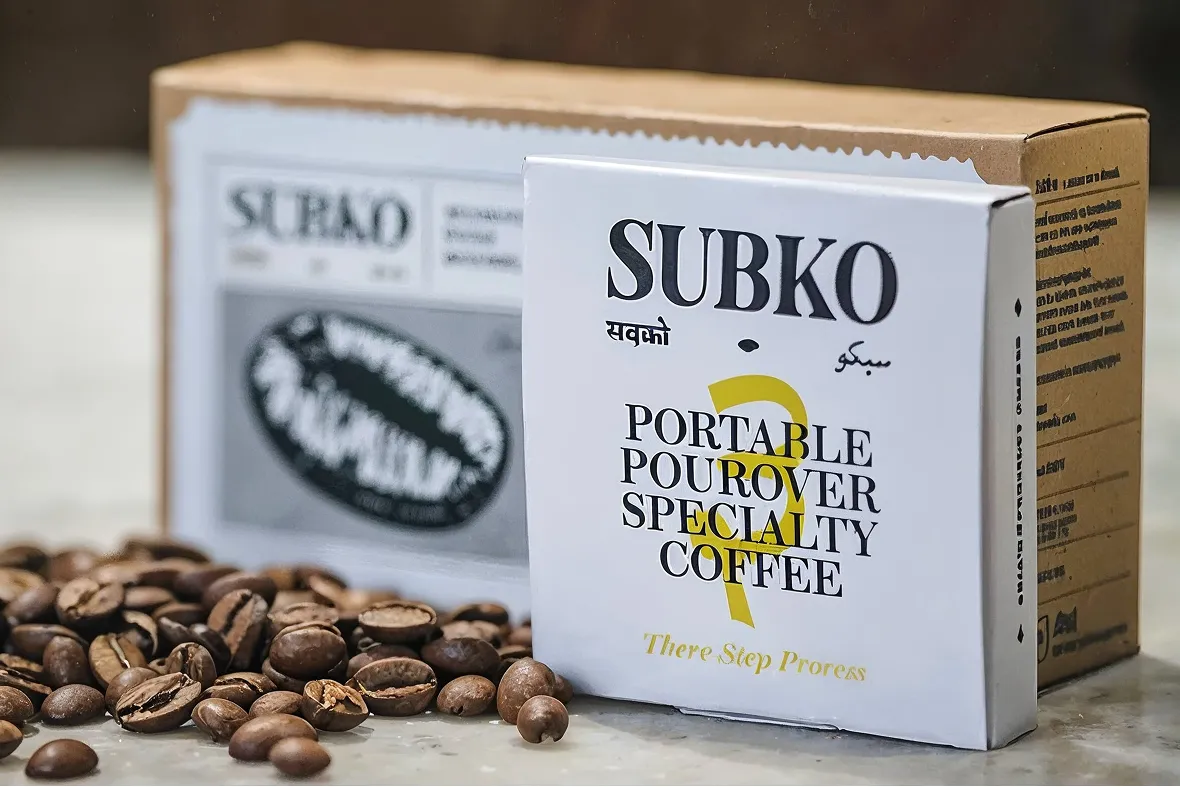
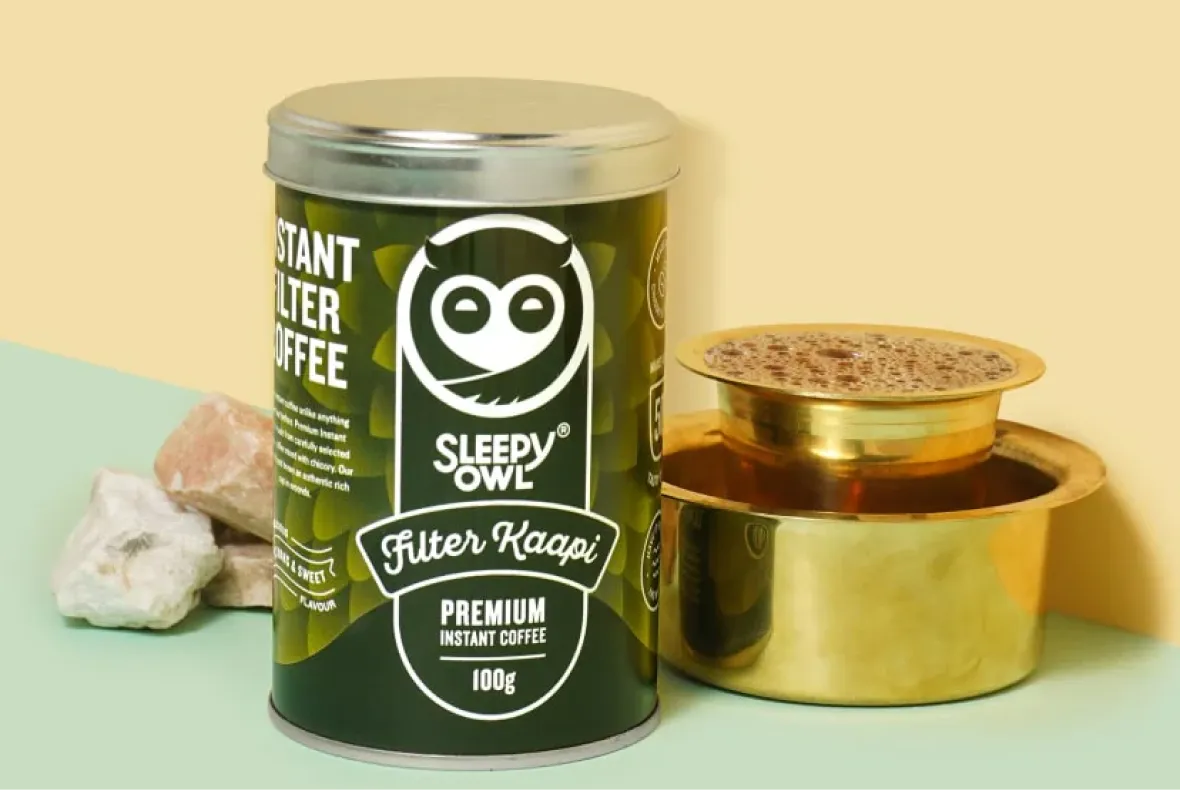
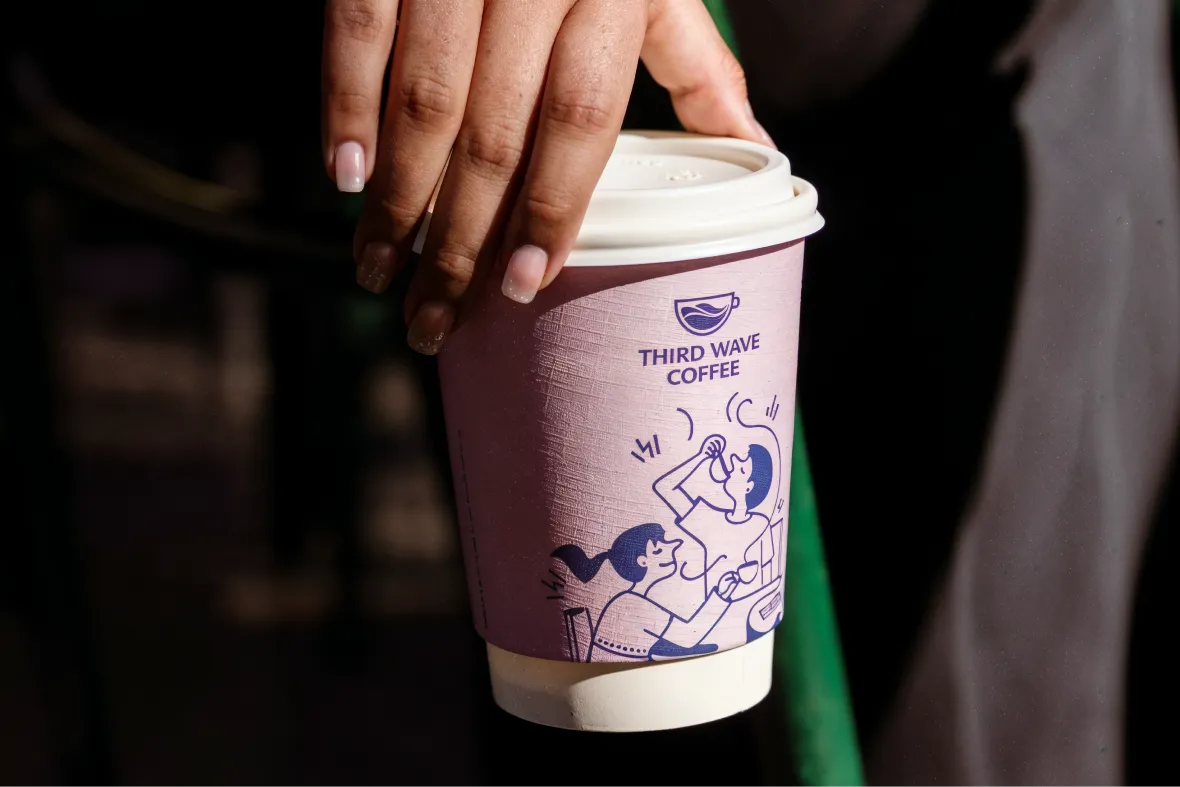
Country Bean's market position, more interesting than Nescafé and more accessible than specialty, made good sense in 2017. The market has developed in ways that make this middle position increasingly uncomfortable. At the bottom, Nescafé and Bru have launched flavoured variants and cold coffee products that compete with Country Bean's indulgent positioning at a lower price and with significantly larger distribution. At the top, Blue Tokai, Third Wave, Sleepy Owl, and Subko have developed brand identities with genuine depth, sourcing stories, community, café culture, that make Country Bean's fun positioning feel lightweight by comparison.
The consumer who started their premium coffee journey with Country Bean has options now that did not exist in 2017. The mass market below has moved up. The specialty market above has become more accessible. The gap Country Bean occupied is being compressed from both directions simultaneously, and the revenue trajectory suggests that compression is already a commercial reality.
The consumer who discovers specialty coffee through flavoured variants often graduates. Once someone has experienced a properly extracted espresso or a well-made pour-over, the flavoured coffee powder loses some of its appeal, because what they were originally seeking was the pleasure of coffee and they have now found a more authentic form of that pleasure. Country Bean's brand identity has not evolved fast enough to follow the consumer up this journey. It remains anchored to the entry point, and when the consumer is ready to move, there is no compelling reason to take Country Bean with them. The brand has not yet answered the question of what it offers the consumer who has graduated past vanilla latte powder. Until it does, every successful customer Country Bean creates is a customer it eventually loses to a more sophisticated brand.
The most important strategic question for Country Bean is whether "flavoured, fun coffee" remains a durable positioning as competition intensifies from both ends. The honest answer is… not on its own. The pivot that makes sense is not becoming a specialty coffee brand. Country Bean does not have the sourcing story or community credentials for that move, and trying to make it would be inauthentic in a way that the brand's current consumer would immediately recognise.
Instead, the brand's best move is to own the occasion rather than the product category. Country Bean is already a gifting brand, an indulgence brand, a coffee-for-people-who-love-treats brand. Leaning into specific occasions, morning rituals, birthday coffee, the coffee you make when friends come over, and building product and content around those occasions gives the brand a reason to exist that does not depend on being the best coffee or the most accessible. It depends on being the most delightful coffee for specific moments. That is a position larger brands cannot easily replicate and that specialty brands do not bother to compete for.
The gifting discovery mechanism is Country Bean's most efficient acquisition channel and arguably its most defensible one. Rather than treating it as an organic benefit, the brand should structure it as a deliberate growth engine: dedicated gifting product lines, corporate gifting partnerships, festival packs timed to Diwali, Holi, and Valentine's Day, and a gifting-first experience on the website that makes the decision easy and the packaging shareable.
At Confetti, we worked on Vaahe Spices, a premium food brand where the gifting positioning was part of the core identity and where the packaging system was designed specifically for the gifting context rather than treating it as an afterthought. The brands that own gifting occasions in India build remarkable revenue with low acquisition costs. Every gifted product is a free trial with social endorsement attached. Country Bean has been benefiting from this dynamic for years. The next step is to build deliberate infrastructure around it.
The one thing Country Bean currently lacks, and that would significantly elevate its competitive position against the speciality brands above it, is a story about where its coffee comes from. India's specialty coffee regions, Coorg, Chikmagalur, the Araku Valley, are globally recognised and genuinely interesting. Connecting Country Bean's flavoured coffee to a specific source region or a specific farming community would give the brand depth that its personality-first positioning currently lacks.
The story does not need to be as elaborate as Blue Tokai's single-origin proposition. Even a clear "our base coffee comes from this region, grown by these farmers, and we add flavours to make it the most enjoyable version of Indian coffee you've ever had" narrative gives the brand something to talk about beyond taste, and it gives the graduating consumer a reason to stay with Country Bean rather than move on. The fun brand and the sourcing story are not in tension. They are, if anything, more interesting together than either is alone.
Country Bean did something genuinely useful: it made specialty coffee approachable for 6 lakh Indian consumers who would not have arrived there through the more earnest, expertise-first route. The brand that created the entry point to India's flavoured coffee category deserves credit for the category expansion it enabled, and for doing it with a personality that has stayed consistently fun in a space that takes itself too seriously, while remaining entirely bootstrapped on a 12-person team.
The challenge is that entry points are not permanent positions. The revenue trajectory, flat to declining over three years in a growing category, suggests the compression is already happening. The pivot question is what does Country Bean become for the consumer who has graduated past flavoured coffee, and what does it offer the consumer below who now has a Nescafé flavoured variant at half the price? The brand's personality and its gifting equity are the two assets worth building the next chapter around.
If you are building a consumer food or beverage brand that needs to evolve its positioning without losing the personality that made it distinctive, Confetti can help you build the next act your brand deserves.
Want strategic branding and packaging like this for your business?





.webp)
.webp)

.webp)
.webp)
.webp)
.webp)
.webp)







.svg)
.webp)





.svg)
.svg)




























































































.webp)










.webp)



.svg)