%201.webp)
02
AI Snaps
.svg)
.svg)
01
Our Work
03
About Us
04
Brand Audit
05
Contact Us
06
Client Success
12
07
Blogs
08
Careers
Book A Call
.svg)




Need Help In Building Your Brand?
Click the button below & book a call with our founder directly.

Rishabh Jain
Managing Director
Editorial Note:
This audit is a design and brand strategy analysis only. Confetti Design Studio does not endorse ZYN, its parent company Philip Morris International, or nicotine products of any kind. We analyse this brand because it presents one of the most instructive and ethically complex case studies in how design is used to reframe product perception.
ZYN | Confetti's Verdict ⭐⭐⭐
Confetti Design Studio has analysed ZYN, a nicotine pouch brand owned by Philip Morris International through its Swedish Match subsidiary, to understand how a product launched in Colorado in 2016 grew to 794 million cans shipped globally in 2025 with 37% growth in US shipments year-on-year and 70% of the US nicotine pouch market, received formal FDA marketing authorisation for 20 products in January 2025.
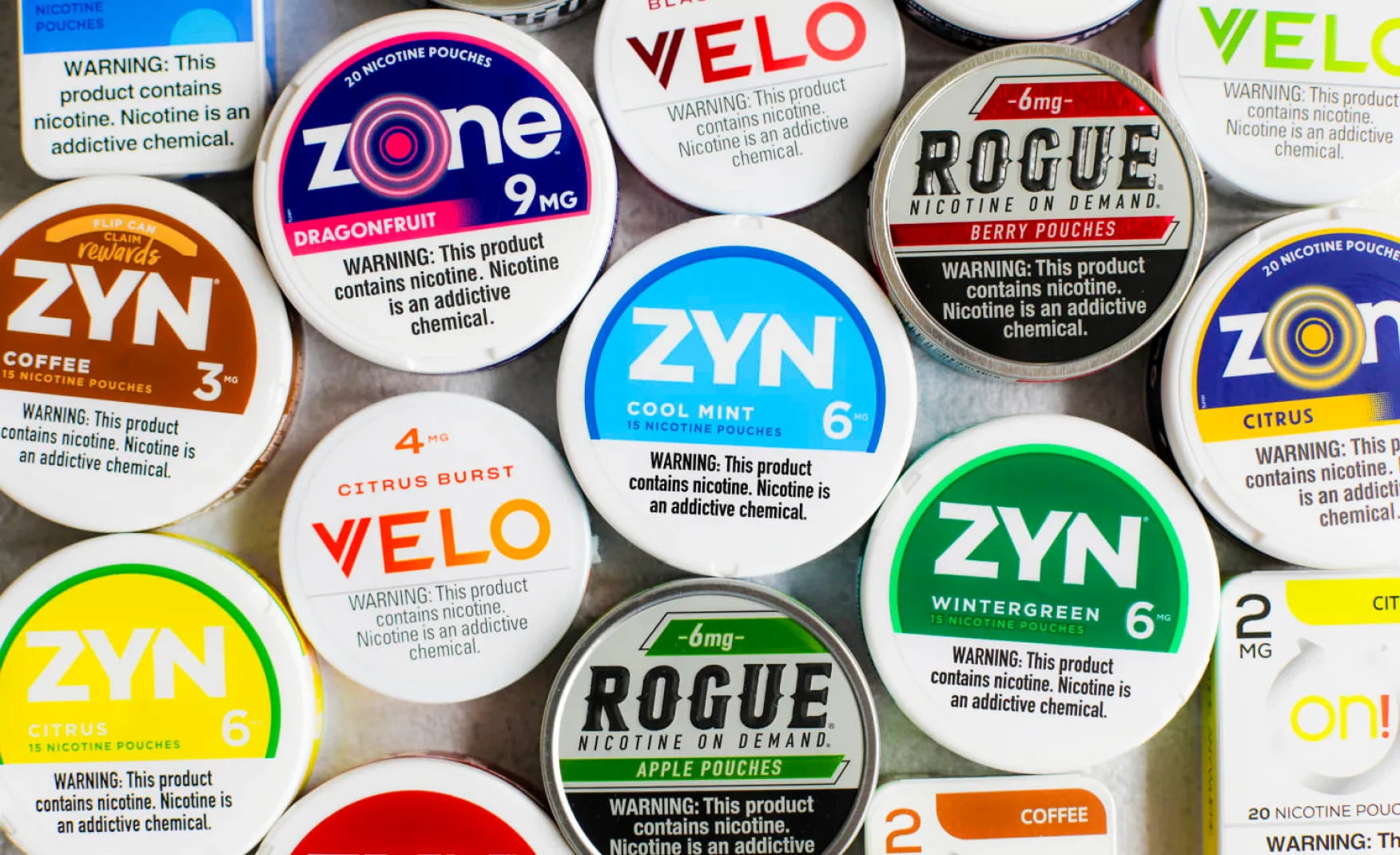
ZYN did not enter an existing nicotine pouch market in the United States. It created one. At launch, the dominant nicotine alternatives to cigarettes were vaping and traditional dip. Both came with significant social and sensory costs, vaping required a device and produced visible vapour; dip required spitting and carried strong demographic associations. ZYN's proposal was different with a small white pouch, placed discreetly under the upper lip, producing no smoke, no vapour, no odour, and no visible sign to anyone nearby that nicotine was being consumed.
That product insight, discreet, device-free, odourless nicotine, was genuinely new in the US market. 70% market share is not a number that comes from entering an existing category with a better product. It comes from defining the category and occupying it before anyone else has the distribution, the brand equity, or the regulatory approval to compete seriously.
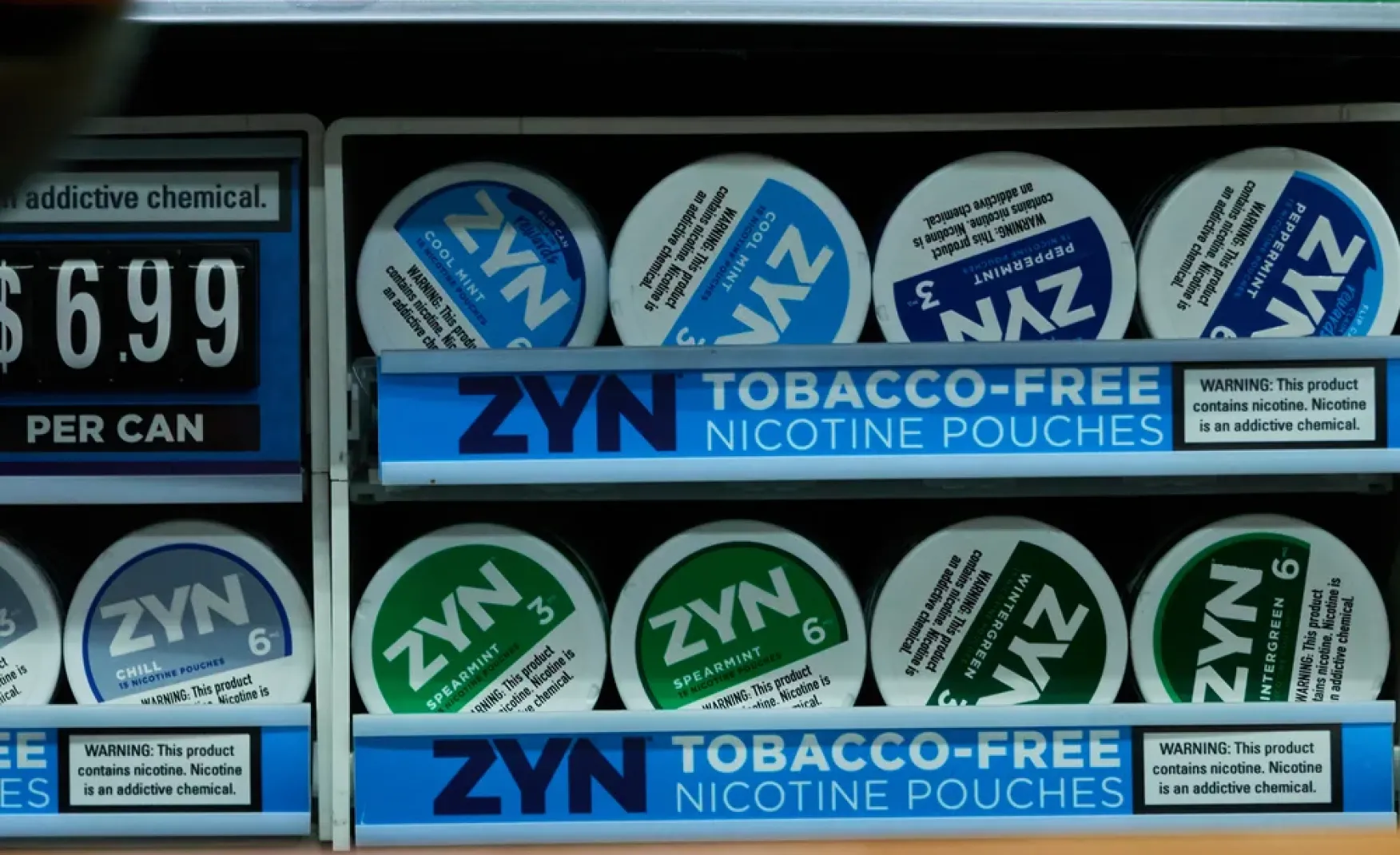
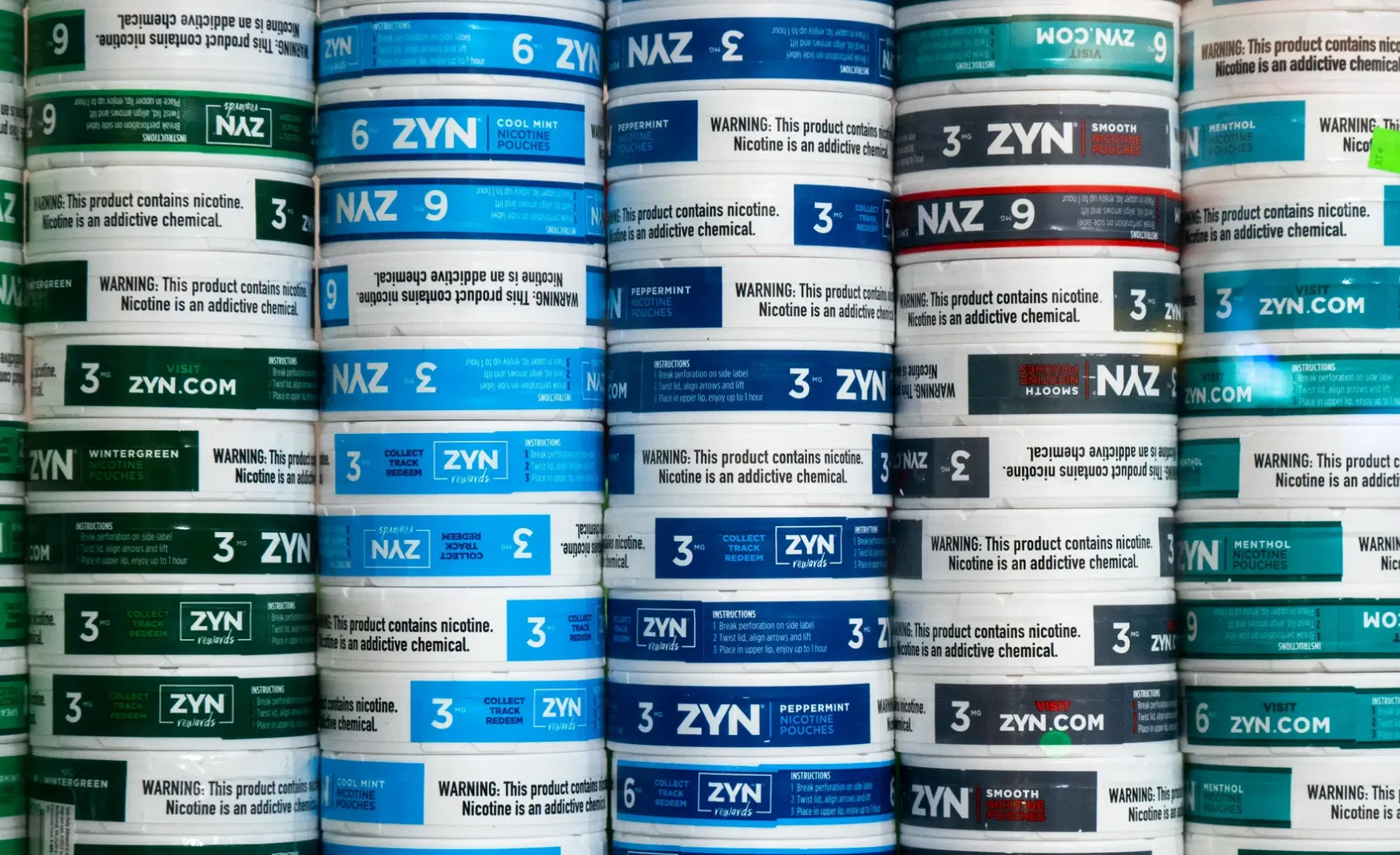
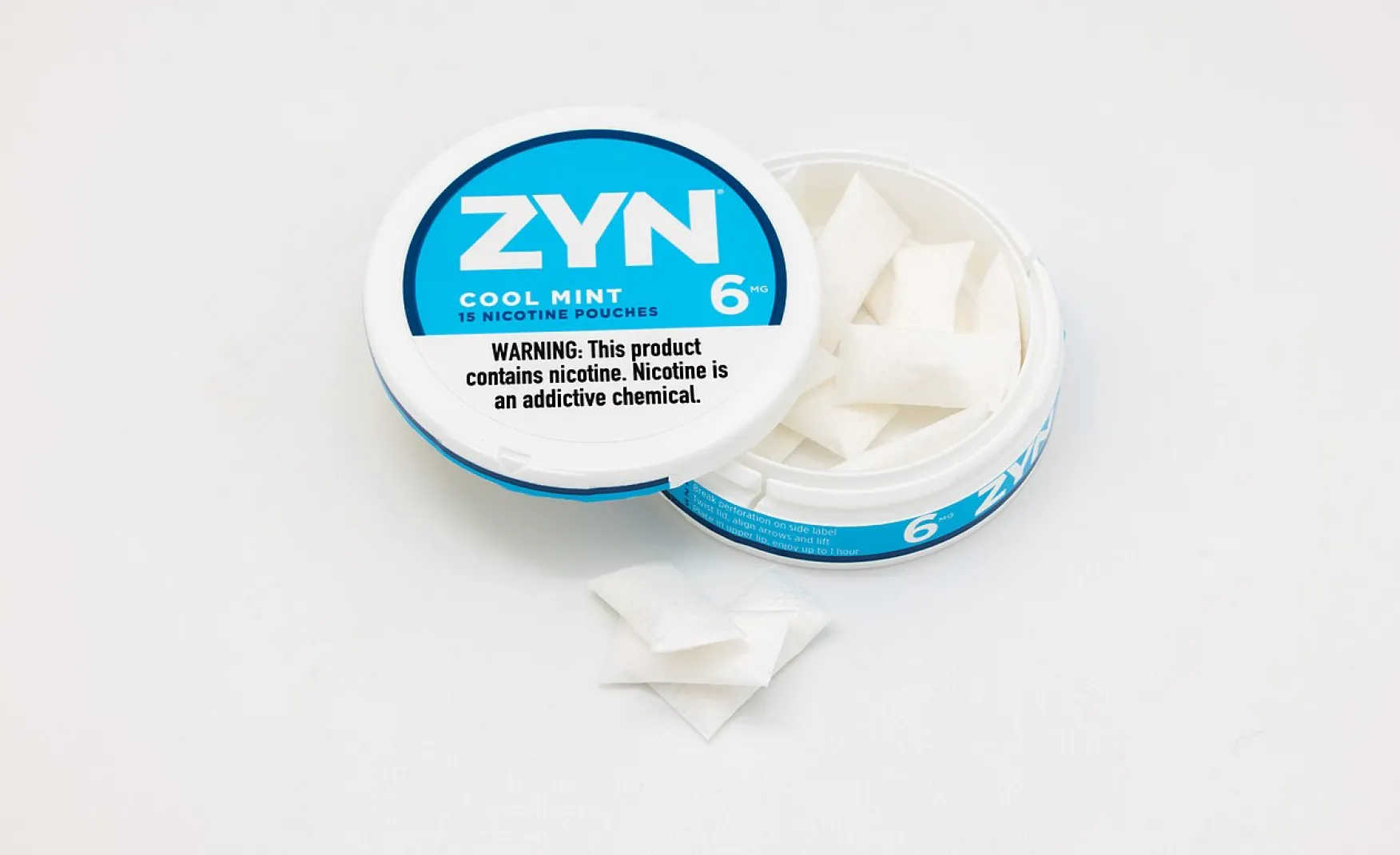
ZYN's brand identity is a sustained act of visual category distancing. Every design decision, the white and mint packaging, the restrained sans-serif typography, the colour-coded strength system using muted tones, the compact cylindrical tin with a clean snap closure, has been engineered to place as much visual distance as possible between ZYN and every product category it is functionally replacing. It does not look like a cigarette brand. It does not look like a vaping product, in fact it looks closer to a premium Scandinavian breath mint than to a nicotine delivery system.
That is not a coincidence as nicotine products carry associations with health risk, social unacceptability, visible habit, and low-status demographics. ZYN's design systematically addresses each, white packaging communicates purity; minimalist typography communicates Scandinavian premium over American mass market; the compact form factor communicates discretion; the restrained palette communicates restraint in general, including the implied restraint of choosing a "better" nicotine option. The product is the same nicotine it always was however, the design makes it feel like a choice rather than a compulsion.
One of the most strategically sophisticated elements of ZYN's brand building has received almost no analytical attention like the sports it chooses to sponsor, and the sports it deliberately does not. ZYN sponsors elevated, upper-class sports in each market it is trying to grow. Formula One and motor racing in the UAE. Horse racing and polo in the United Kingdom. What it does not sponsor is football, basketball, or any of the mass-participation sports that cigarettes and vaping brands have historically used for broad reach.
The logic is deliberate. ZYN's entire brand premise is that it is how a specific type of person, educated, image-conscious, and aware of the lifestyle implications of their choices, consumes nicotine. Choosing Formula One over the Premier League, polo over basketball, all these decisions say as much about who the brand thinks its consumer is as any campaign creative ever could. The sponsorship portfolio is not delivering reach. It is delivering cultural signal.

The FDA's formal marketing authorisation for 20 ZYN products in January 2025 was a regulatory event with significant brand implications. For most consumer products, regulatory approval is a baseline legal requirement the consumer never thinks about. For a nicotine product in the current US environment, it is a meaningful brand signal: this product has been vetted by a credible authority and determined to be appropriate for adult use.
The authorisation did not create ZYN's market. The brand had already built it. What it did was remove a category-level credibility barrier that had constrained certain distribution relationships and certain consumer segments. Distribution conversations with cautious retailers expanded. Brand communications could reference regulatory approval in a way that reinforced the legitimate, adult-oriented positioning ZYN had been building since launch. It arrived at exactly the right moment: a growth accelerant for a brand that was already dominant.
ZYN's ownership structure is its most significant brand liability and also one of its most effective brand management achievements. Philip Morris International is one of the world's most heavily litigated, most publicly scrutinised corporate entities. The reputational weight of that history is not easily detached from the brands that carry PMI's ownership. And yet, for the vast majority of ZYN consumers, the PMI connection is either unknown or functionally invisible in the purchase decision.
ZYN operates under the Swedish Match brand heritage, which carries neutral, Scandinavian product-quality associations, rather than under any PMI brand mark or identity. The packaging carries no Philip Morris signage. The marketing carries no group-company attribution. The brand communicates as an independent Scandinavian product with its own identity and its own consumer community. At Confetti, when we analyse brand architecture decisions, the deliberate separation of a subsidiary brand from a controversial parent is a well-understood strategy with a well-understood limit that it works until the media or regulatory environment makes it stop working.
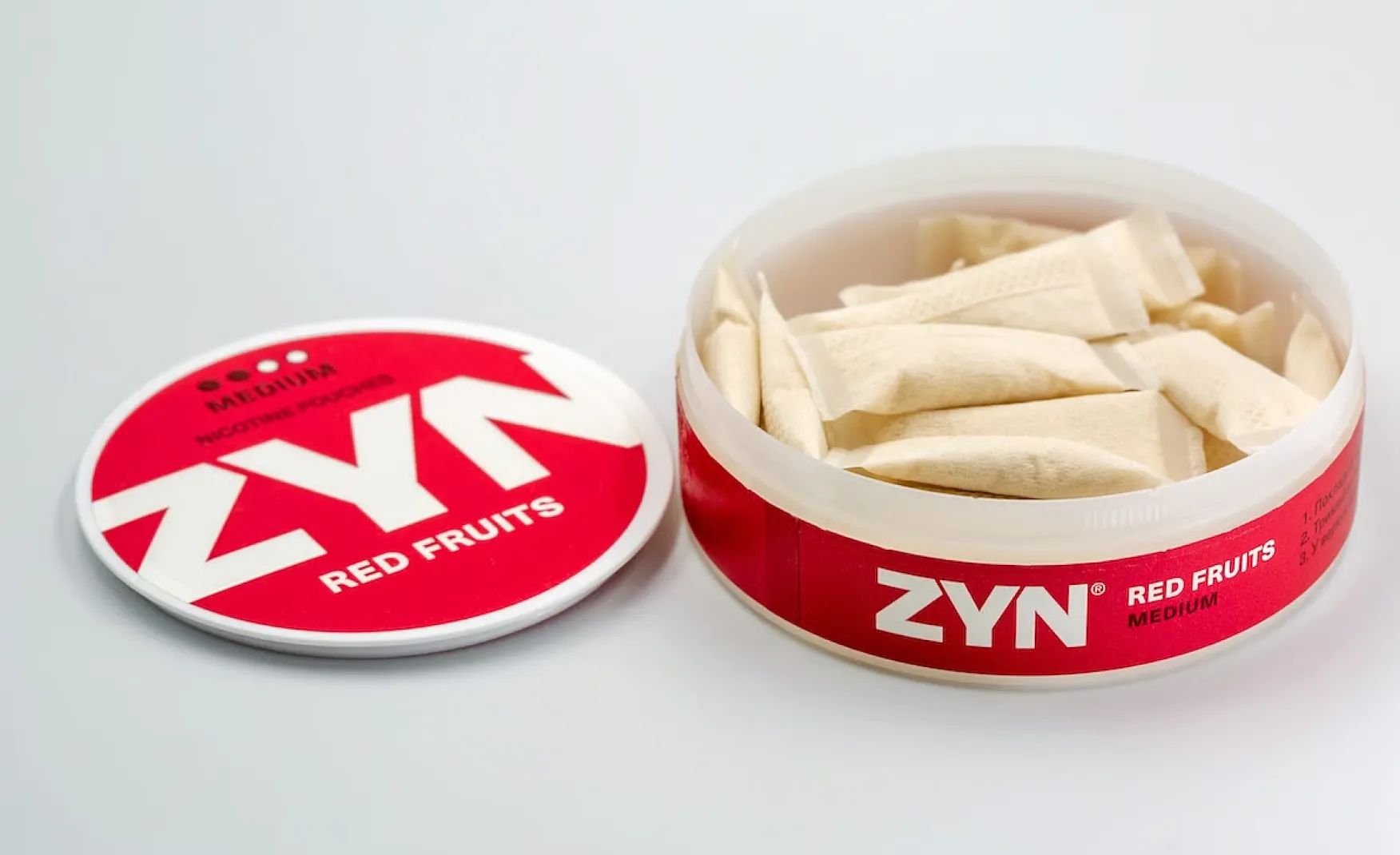
ZYN's flavour strategy, Cool Mint, Citrus, Wintergreen, Spearmint, is commercially effective and legally sanctioned for adult marketing. It is also the same flavour strategy that has historically driven uptake among underage consumers in every nicotine category it has been applied to. US data from 2025 found that 82.9% of youth nicotine pouch users reported using flavoured products, including the majority of high school users. Congressional attention, FDA scrutiny, and potential flavour restriction legislation are all following the same data.
The brand's growth has been built on the same design decisions, the appealing flavour profile, the discreet form factor, the aspirational brand positioning, that are most effective at reaching the consumer segment the brand legally cannot target. A flavour restriction or marketing limitation ruling would not eliminate ZYN's market, but it would materially constrain the product strategy and force a costly brand repositioning. The precedent from menthol cigarette regulation suggests this takes years but ultimately happens.
ZYN has used design to make a nicotine addiction product feel like a premium lifestyle accessory. The packaging is clean, the aesthetic is aspirational, the marketing is sophisticated. But design has a limit to what it can change, and the limit is the product itself. ZYN delivers nicotine, a chemically addictive substance, through a form factor engineered for discreet, high-frequency consumption.
The 82.9% youth flavoured-pouch usage statistic is not a brand problem or a marketing problem. It is a product accessibility problem that the brand's visual system actively makes more acute by reducing the social friction of use. No packaging redesign addresses that. The gap between what ZYN's brand projects and what ZYN's product does is structural, and it is growing as the product scales.

ZYN's current approach to the regulatory environment is largely reactive: seek authorisation, respond to scrutiny, manage the youth access narrative when it becomes unavoidable. The brand has the scale and resources to take a more proactive stance: establishing itself as the category leader on responsible adult marketing standards, setting a visible bar for age verification in digital channels, and being demonstrably more rigorous about restricting access than the law requires.
The brands that survive long regulatory cycles in contested categories are the ones that are ahead of the regulatory curve rather than behind it. ZYN has the commercial credibility to be that brand in the nicotine pouch category, and the window to establish that position proactively is narrower than the growth trajectory suggests.
The PMI ownership of ZYN through Swedish Match is currently invisible to most consumers. That invisibility is the result of deliberate brand architecture decisions that have worked so far. But the brand has no public answer to the ownership question when it gets asked directly because there is literally no narrative, commitment, or explicit acknowledgement of the tension between ZYN's "modern, clean alternative" positioning and its parent company's history in tobacco harm.
Brands that have addressed this kind of structural tension explicitly, acknowledging it, contextualising it, and committing publicly to specific operating standards, tend to handle media and regulatory scrutiny significantly better than brands that maintain the firewall through silence alone. ZYN has the platform, the consumer trust, and the cultural moment to make those commitments before a regulatory or media event requires it to.
Regulatory environments for nicotine products are moving toward greater label transparency: larger health warnings, clearer addiction disclosures, more explicit ingredient labelling. ZYN's visual identity is built around clean minimalism and will face pressure to accommodate more information on the same surface area without becoming visually chaotic.
At Confetti, we approach mandatory label changes as design constraints rather than design defeats. The brands that manage them well invest in a packaging system that can absorb greater disclosure requirements coherently, rather than retrofitting health warnings onto a design that was not built to carry them. For ZYN, that investment is both a practical compliance exercise and a brand design opportunity .
ZYN has built a market-dominant brand in a deeply contested category through two things: a product insight that was genuinely new, and a design language that systematically neutralises every stigma the category carries. The result is 70% US market share and 794 million cans shipped in a single year, numbers that represent one of the fastest-scaling CPG brands in recent history.
The rating reflects the brand strategy execution, which is sophisticated, intentional, and commercially effective. It does not reflect an endorsement of the product, the category, or the product's impact on public health. ZYN is a case study in what design can do, held alongside a clear-eyed view of what design cannot undo.
Note: Confetti Design Studio does not endorse ZYN or nicotine products of any kind. This audit is published as a brand strategy and design analysis only.
If you are building a brand that needs to reframe perception in a challenging category and want to do so with rigour, honesty, and genuine design thinking, Confetti can help you build an identity that earns trust rather than engineering it.
Want strategic branding and packaging like this for your business?





.webp)
.webp)

.webp)
.webp)
.webp)
.webp)
.webp)







.svg)
.webp)






.svg)
.svg)


































































































.webp)













.webp)



.svg)