%201.webp)
02
AI Snaps
.svg)
.svg)
01
Our Work
03
About Us
04
Brand Audit
05
Contact Us
06
Client Success
12
07
Blogs
08
Careers
Book A Call
.svg)




Need Help In Building Your Brand?
Click the button below & book a call with our founder directly.

Rishabh Jain
Managing Director
OLIPOP | Confetti's Verdict ⭐⭐⭐⭐
Confetti Design Studio has analysed OLIPOP to understand how a prebiotic soda brand founded in 2018 by Ben Goodwin and David Lester grew from USD 852,000 in its first year to over USD 400 million in 2024 revenue, raised a USD 50 million Series C at a USD 1.85 billion valuation led by JP Morgan Growth Equity in February 2025, turned profitable in early 2024, reached over 50,000 US retail locations including Walmart, Target, and Costco, controls 60% of the global prebiotic soda category.
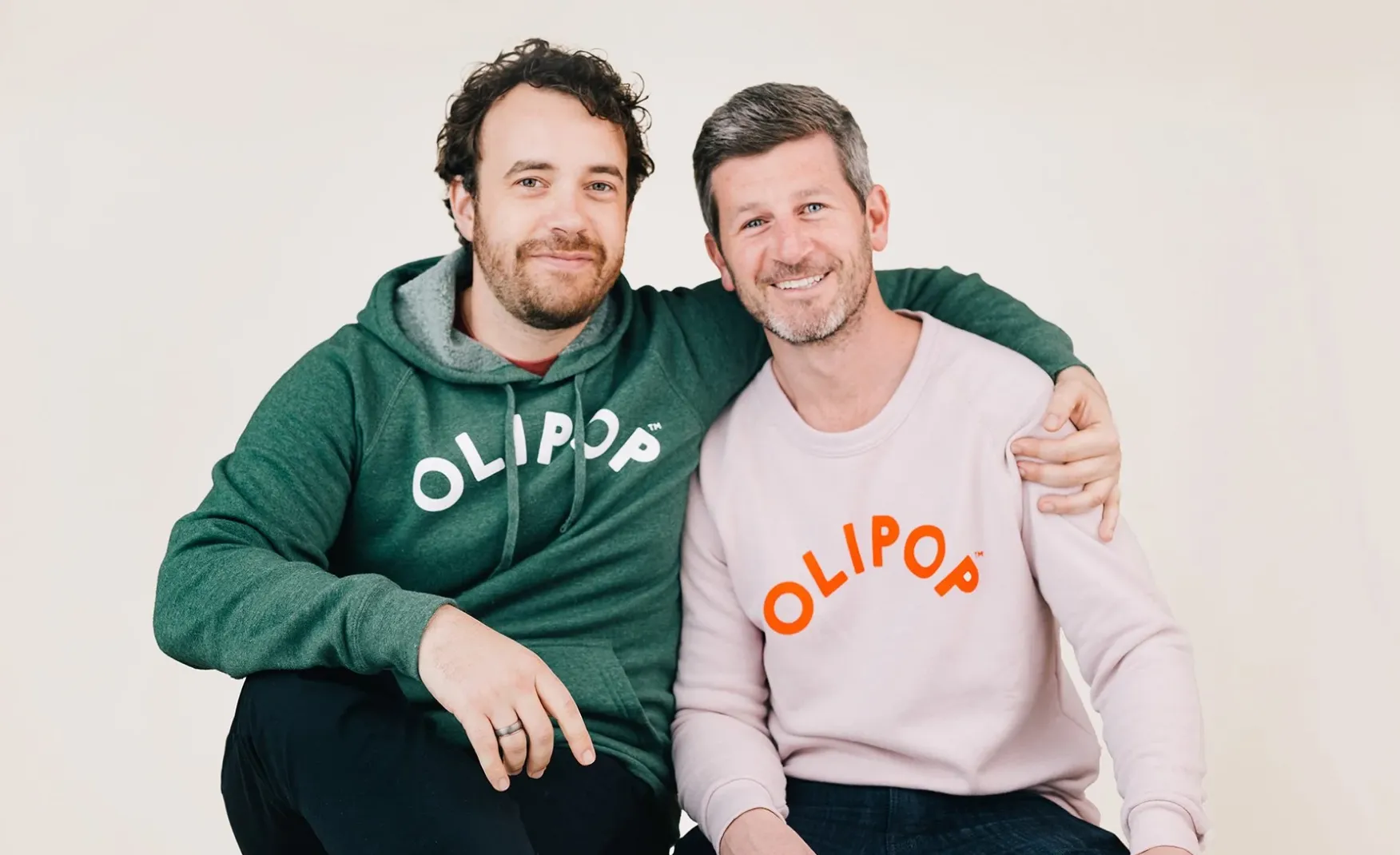
Most brands start with a product and look for a market. OLIPOP started with the largest beverage market in the world, the global soda category worth over USD 200 billion, and redesigned a product to enter it on health terms. That inversion changed everything downstream of it.
When Goodwin and Lester launched, the prebiotic and probiotic space was populated by brands trying to make a health drink that tasted acceptable. OLIPOP flipped the question: what if the product was a soda that happened to be genuinely good for you? A "prebiotic tonic" competes against kombucha and wellness waters on a specialty health shelf, where the consumer has already committed to a health-forward choice. A "new kind of soda" competes against Coke, Pepsi, and Diet Dr Pepper on the main refrigerator aisle, where the consumer is simply looking for something to drink and is open to persuasion. The TAM expansion was at minimum a tenfold move, but the more consequential strategic effect was that it repositioned every incumbent soda as the unhealthy default that OLIPOP was designed to replace.
What makes this one of the strongest brand repositioning moves in recent consumer history is that it required no trade-off. OLIPOP did not soften its functional claims to appeal to soda drinkers. It built a product, with 9 grams of prebiotic fibre per can drawn from cassava root, chicory root, and Jerusalem artichoke at clinically studied levels, that could legitimately claim both the health benefit and the taste experience. The repositioning holds because the product can carry the weight of the claim.
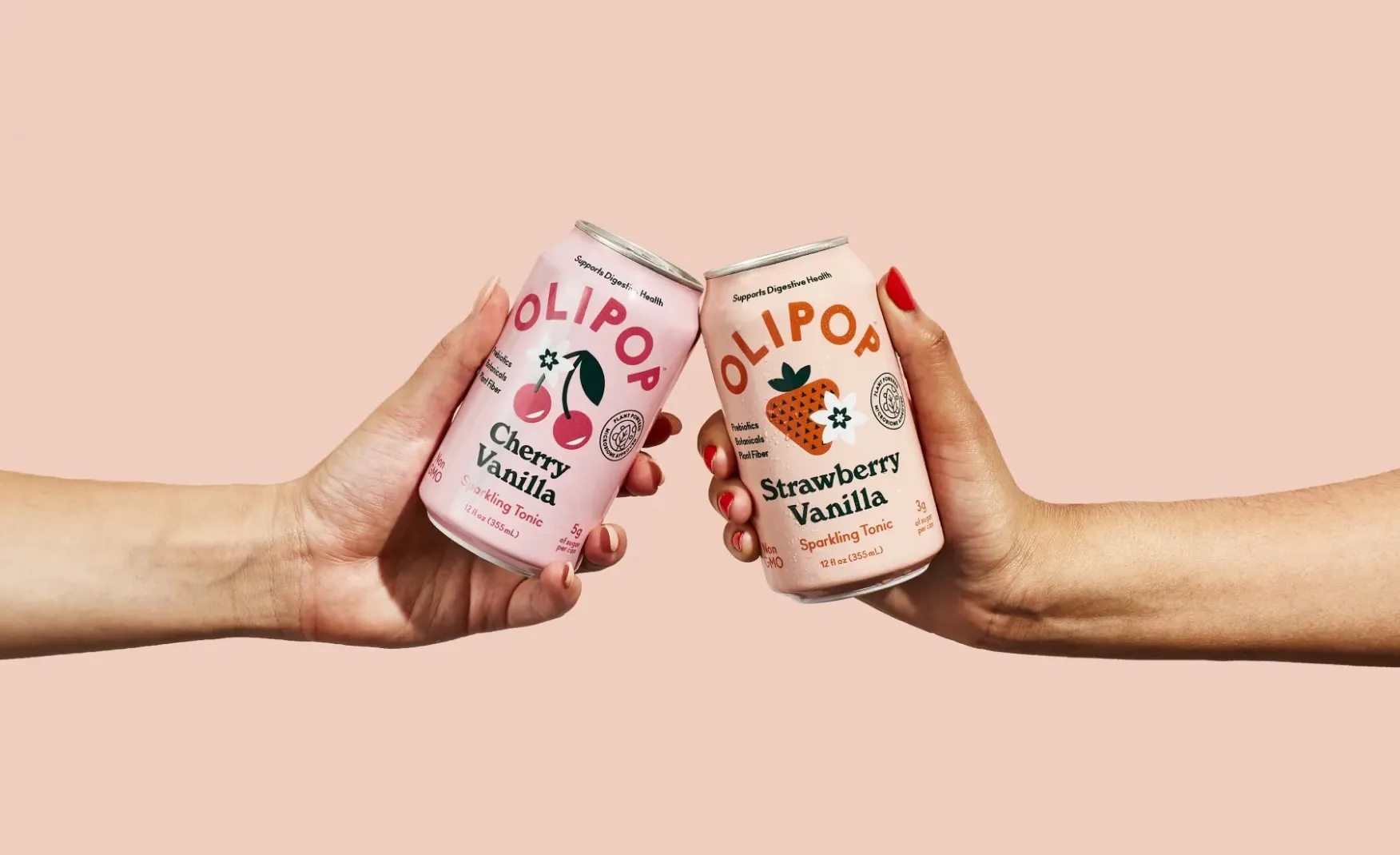
Before OLIPOP had a media budget worth discussing, it had a creator strategy worth studying closely as the brand's early growth was driven by micro-influencer content on TikTok that algorithmic platforms reward. The aggregate result is measurable at scale, with the brand achieving over 1.3 billion TikTok views at a cost per thousand impressions that makes most consumer brand media buyers uncomfortable. But the scale matters less than the nature of what was created. OLIPOP's TikTok did not look like branded content. It looked like people who genuinely liked the product talking about it in their own voice.
The celebrity investor roster, which includes Gwyneth Paltrow, Mindy Kaling, the Jonas Brothers, Camila Cabello, and Priyanka Chopra Jonas, belongs to the same strategy even if it appears different on the surface. These are investment relationships that are also public, converting celebrity proximity into brand credibility without the transactional feel of a paid endorsement. And the detail that most coverage misses entirely is that Indra Nooyi, the former CEO of PepsiCo, invested her own money in OLIPOP. The woman who ran the company OLIPOP is disrupting chose to back the disruptor personally. That is a brand credibility event, not a media buy.
What sustains the community is that the product delivers. From direct product experience in Dubai, one of our team members described OLIPOP as a genuine daily substitute for Diet Coke and not a health concession, but an actual preference. When creators genuinely prefer the product, the content registers in ways that paid partnerships never really replicate because the community holds because the taste holds.
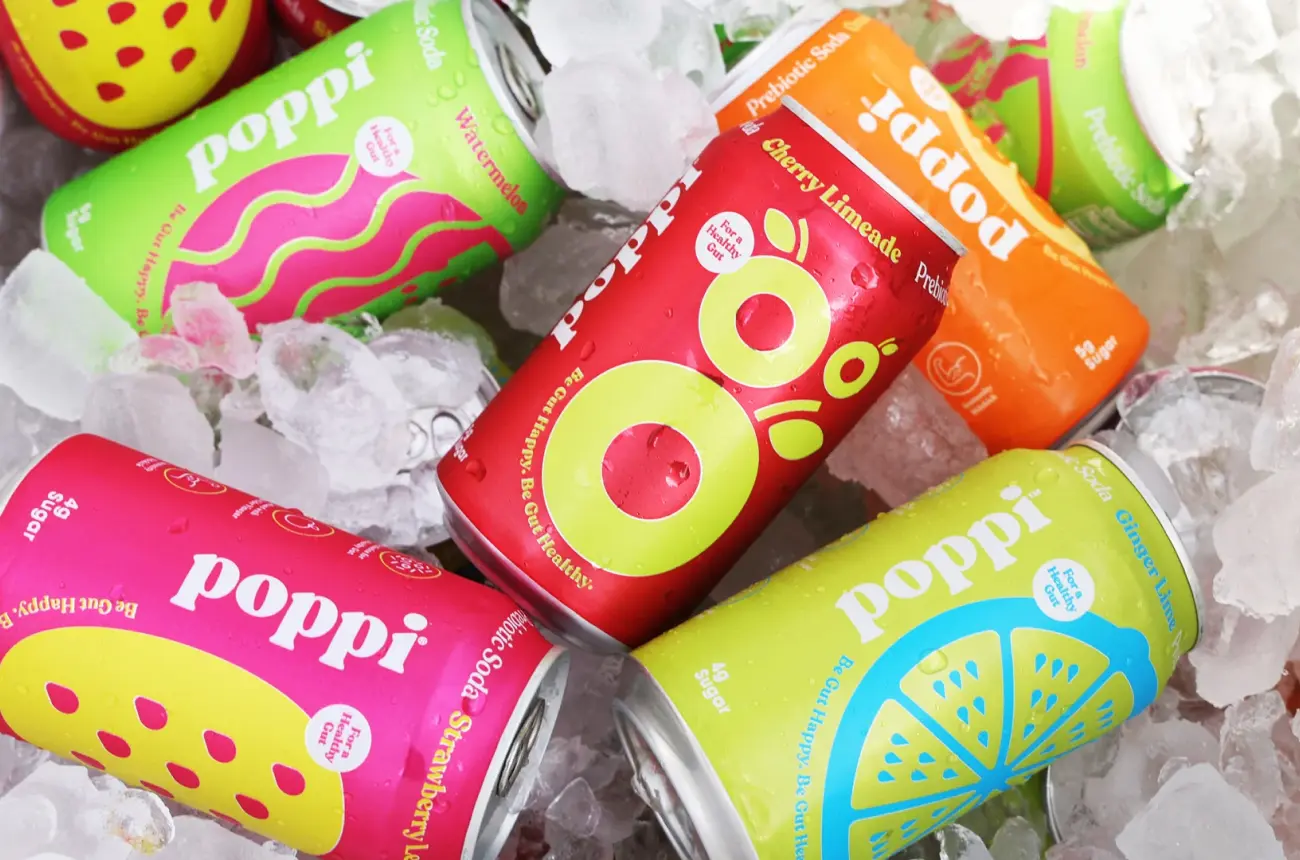
In 2023, both Coca-Cola and PepsiCo approached OLIPOP about a potential acquisition. The brand declined. PepsiCo then acquired rival Poppi for USD 1.95 billion in March 2025. Coca-Cola launched its own prebiotic soda line, Simply Pop, in February 2025. The two largest beverage companies in the world are now in the category that OLIPOP created, and OLIPOP is the only significant independent player left.
The brand's decision to decline those 2023 approaches, and its positioning of the 2025 Series C as its "final anticipated round of equity financing," tells a deliberate story: the founders believe they have more value to capture independently than any acquisition price currently on offer would reflect. That may be correct. It is also a statement that the brand's independence is itself a competitive asset in a category where the consumer is specifically choosing a product that the corporate soda giants do not own.
With Poppi now inside PepsiCo's portfolio, OLIPOP has inherited a positioning it did not have to build: the default authentic independent in a category that has just been consolidated around it. The consumer who wants a prebiotic soda but does not want to buy from the company that also owns Gatorade and Mountain Dew now has one serious option. That positioning arrived through a competitor's strategic decision, but the opportunity to use it is entirely OLIPOP's to take or leave.
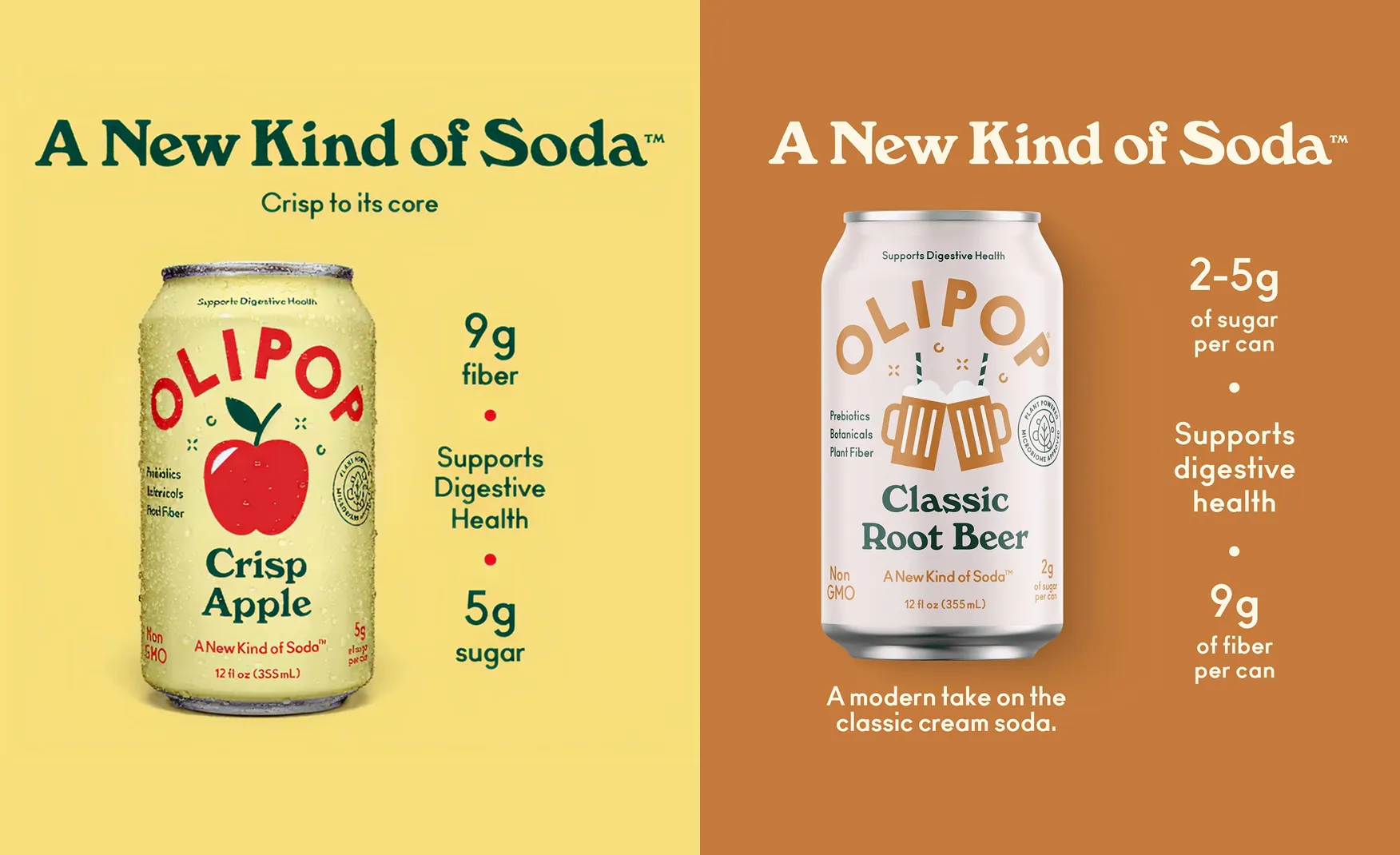
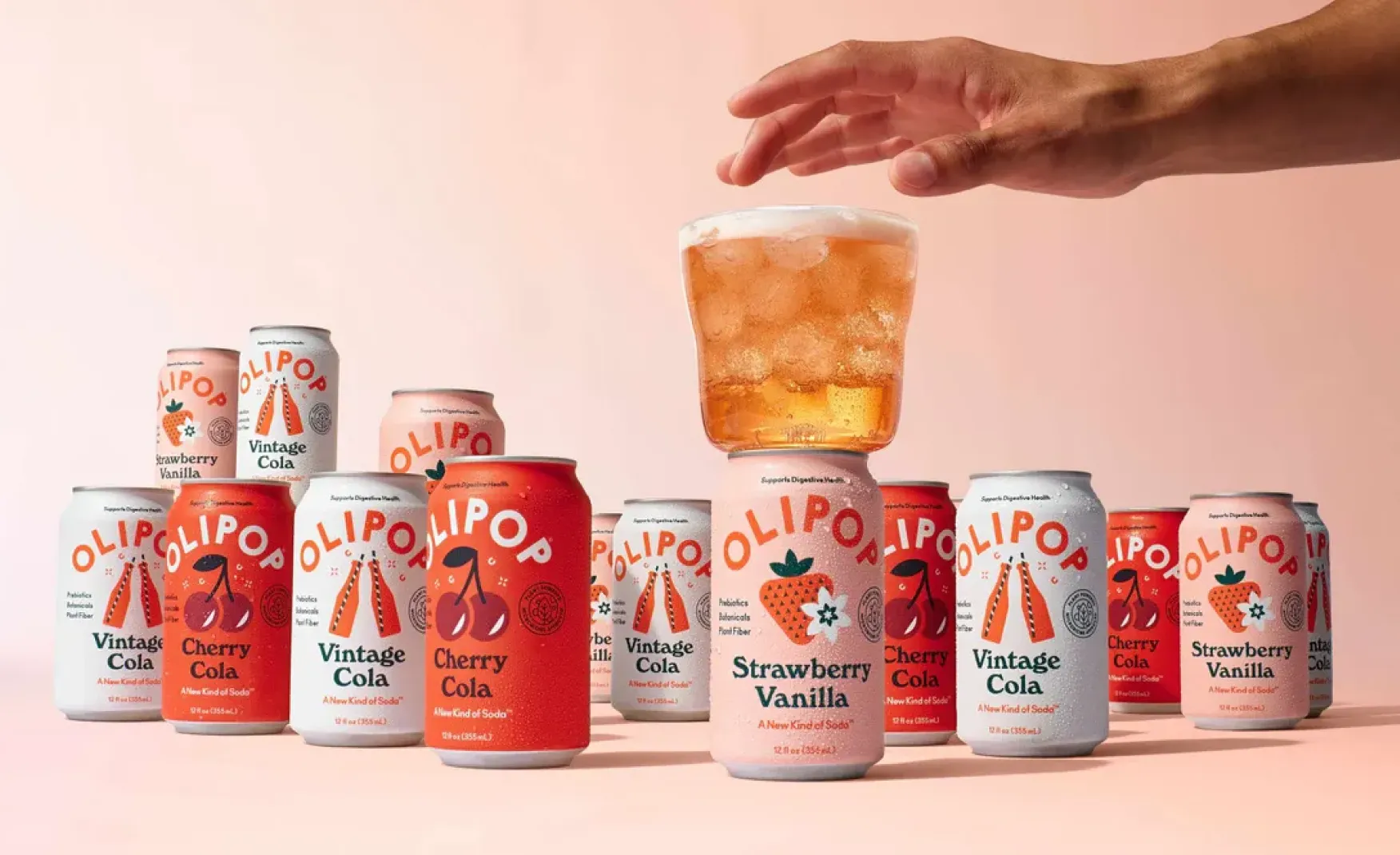
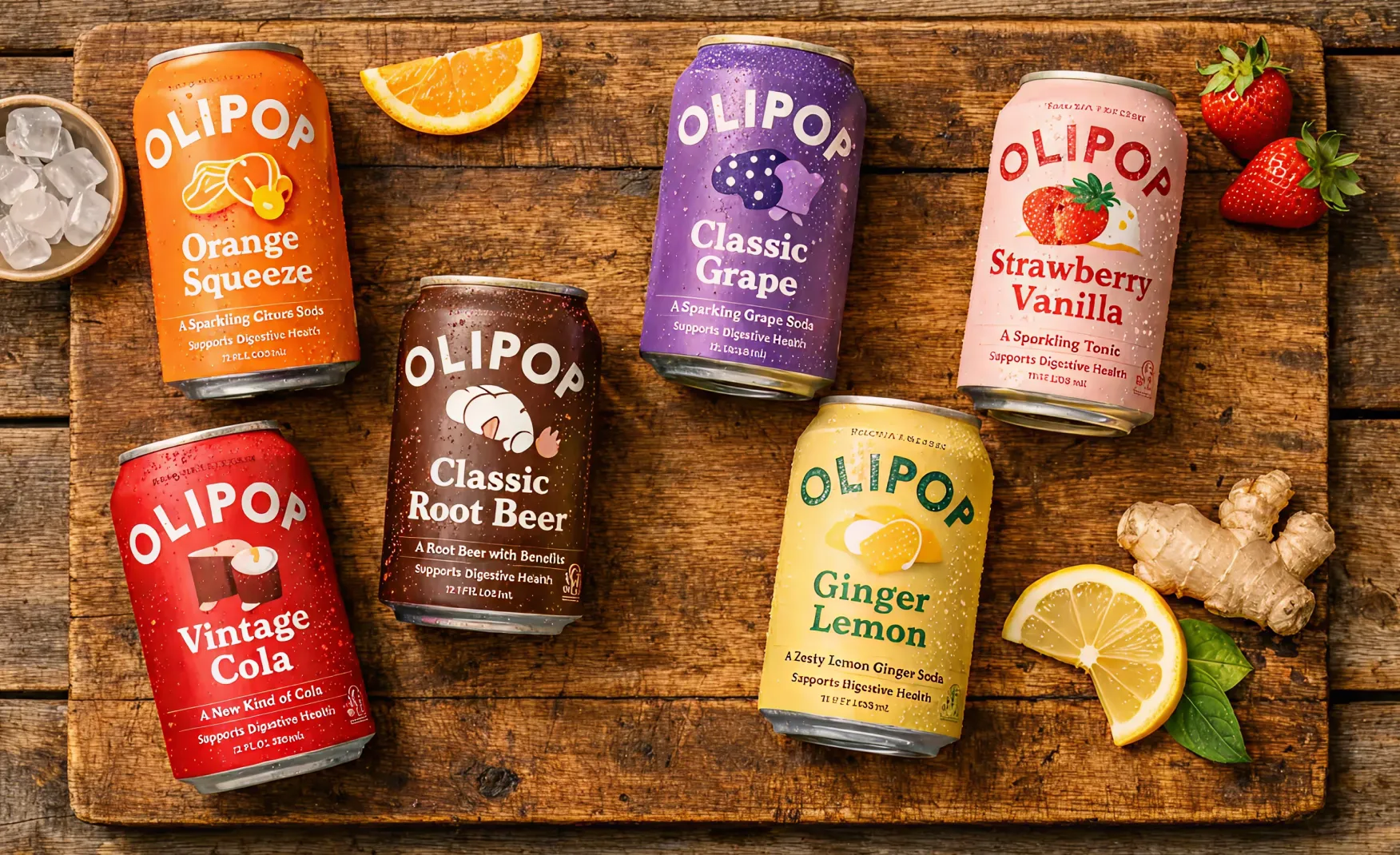
OLIPOP's packaging is among the most recognisable in the better-for-you beverage category, as the pastel palette, the nostalgic flavour names, Vintage Cola, Strawberry Vanilla, Classic Root Beer, Cherry Vanilla, and the typographic clarity on the can work together to signal the consumer reaching for it.
The design deliberately does not borrow the clinical vocabulary of a supplements category, the white backgrounds, the sans-serif health claims, the ingredient callouts in small print. It borrows the warm, flavour-forward vocabulary of soda nostalgia and places it in the context of a better decision. The can communicates that the consumer is getting something better than what they used to have, without requiring any copy to make that point.
When Confetti evaluates packaging systems for functional beverage brands, the most effective are those where the visual language does the positioning work independently of the label copy, where a consumer who has never seen the brand can infer the price point, the category, and the brand's general attitude from the design alone. OLIPOP's can does this. The question it now faces, addressed in the Challenges section, is whether that design was built for the specialty retail shelf it came from or for the mass retail shelf it is moving toward.
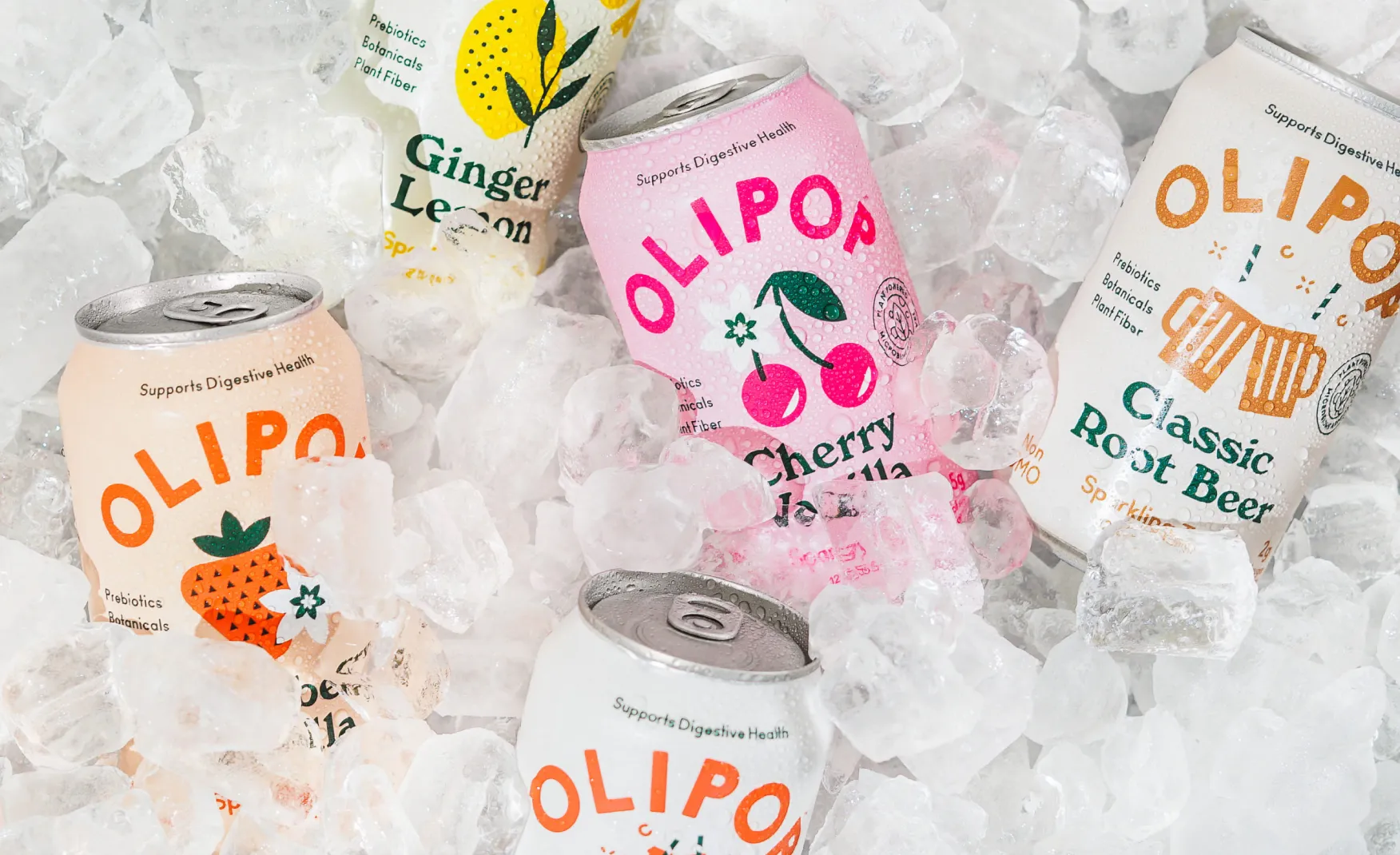
In the functional beverage category, the gap between marketing promise and product reality is frequently significant. Brands claim gut health benefits that clinical evidence does not support at the serving sizes they actually provide. The legal profession has noticed: Poppi settled a lawsuit in 2024 for USD 8.9 million over allegations that its 2 grams of prebiotic fibre per can was insufficient to deliver the gut health benefits it advertised. OLIPOP is not immune to scrutiny, but its position is substantially stronger.
9 grams of prebiotic fibre per can, drawn from multiple clinically studied ingredients at serving levels that independent research supports, is a formulation that can hold up to the examination that category growth will bring. OLIPOP's claim is credible and demonstrable, which is what makes every other element of the brand strategy work like the creator community, the wellness ecosystem positioning, the premium retail placement. If the claim were soft, the brand would be one regulatory action or one investigative piece away from an identity crisis that no amount of community content could resolve. It is not.
OLIPOP's growth to date was built through channels that reward brand specificity: specialty grocery, DTC subscription, and social commerce. The next phase, at the revenue scale required to justify a USD 1.85 billion valuation and likely exit, requires genuine mass distribution at the shelf where the majority of American soda is actually purchased, alongside Coke Zero and Diet Mountain Dew in the refrigerated section of a Walmart Supercenter.
These channels do not reward brand specificity the way Whole Foods does. They reward shelf presence, price points that casual consumers accept without deliberation, and the kind of brand recognition that comes from sustained mass media investment over years rather than months. The can design that built OLIPOP's identity was built for specialty retail and for social media, and it performs excellently in both contexts. On a mass retail shelf at eye level between two category incumbents, the visual weight reads differently than it does in a curated specialty environment. This is a context problem and context problems are solvable with intentional design decisions. But those decisions need to be made before the shelf test reveals the answer through declining trial rates.

With Poppi inside PepsiCo and Coca-Cola now in the category through Simply Pop, OLIPOP's investors need a liquidity event. The most natural liquidity events for a functional beverage brand at this scale are acquisitions by the large soda companies the brand has spent seven years positioning against. The moment OLIPOP sells to Coke, Nestlé, or Keurig Dr Pepper, it faces the same identity question that Poppi is currently navigating is that can a brand that built its credibility on being the alternative to corporate soda maintain that credibility while being owned by a corporate soda company?
The brands that have managed this transition credibly did so by establishing their values publicly and explicitly before the acquisition, not by asserting them nervously after it. Ben & Jerry's maintained brand credibility under Unilever for over two decades because its specific commitments were documented and public before the deal closed, making them significantly harder to unwind afterward. OLIPOP has the platform, the community, and the cultural moment to do the same. The window to define on the record what the brand will not compromise, in formulation, in marketing, and in community relationships, regardless of who the next owner is, is now rather than after the term sheet arrives.
OLIPOP's most durable competitive advantage is not the formula or the flavours, both of which are replicable, but its credibility as a genuine gut health brand among consumers who take that space seriously. That credibility was built through community: the creator partnerships, the wellness brand collaborations, the audience of people for whom gut health is an ongoing practice rather than a passing interest. As the brand scales into mass retail, there is a real risk that this ecosystem presence gets deprioritised in favour of the mass media investment that mass retail requires.
The consumer who discovered OLIPOP through a wellness creator and made it a daily habit is also the consumer who converts new buyers through word of mouth in a way that no paid campaign replicates. The mass retail consumer follows if the community consumer is vocal enough. But the community consumer stays vocal only if the brand continues to invest in the relationships that made them feel like insiders rather than targets. Protecting that ecosystem with the same resource commitment as the retail expansion is what keeps the premium signal alive in an aisle where OLIPOP will soon compete directly with the incumbents it was built to replace.
The packaging system that built OLIPOP's brand has to evolve for the mass retail context without abandoning the visual language that created the identity. The flavour-specific palette and the nostalgic naming system are worth preserving. The question is whether the overall visual weight of the can communicates clearly enough in a high-velocity retail environment where a new product gets approximately two seconds of attention before the consumer moves on.
At Confetti, our experience across FMCG packaging audits is that the difference between how a product performs in specialty retail and how it performs on a mass retail shelf is often not brand equity. It is legibility and visual hierarchy at viewing distance. Getting this right requires research in actual mass retail environments rather than design studio simulations. The brand has enough equity to commission that research and make the design decisions from evidence rather than instinct. Waiting until the shelf data reveals the gap through declining trial rates is the more expensive version of the same investment.
If OLIPOP is heading toward an exit, the most strategically valuable thing the brand can do before a corporate parent is involved is define publicly what it stands for and what it will not compromise. This is not damage control preparation. It is brand architecture. The brands that maintain credibility through acquisition are those that made their commitments specific, public, and verifiable before the deal was announced, so that an acquirer who wants to change them has to do so in the open rather than quietly.
The formulation commitment, 9 grams of prebiotic fibre at clinically validated ingredient levels, is the most important one. The creator community relationship is the second. The pricing accessibility that keeps the brand available to the consumer cohort that made it possible is the third. Publishing these commitments explicitly, in the brand's own voice and on the brand's own platforms, is the work that protects the community relationship regardless of what the corporate structure looks like in three years.
OLIPOP has done something genuinely difficult in consumer brand building: it created a brand that is simultaneously fun and credible, and backed both qualities with a product that actually delivers what the marketing promises. The USD 400 million revenue, the 60% category share, the profitable unit economics, and the courage to decline acquisition approaches from the two largest beverage companies in the world are the commercial and strategic confirmation of a brand strategy that was correct from the beginning.
The work ahead is a scale test, for the design system, for the distribution model, and for the community-first identity that made the brand worth acquiring in the first place. OLIPOP declined Coke and Pepsi in 2023 and raised at USD 1.85 billion in 2025. Whether it exits on its own terms through an IPO, holds out for a higher acquisition multiple, or accepts a corporate partner that preserves the formulation integrity the brand was built on, the outcome is determined by how well the brand protects what it built during the scale-up rather than by the growth chart alone.
If you are building a functional consumer brand and want an identity and packaging system that earns genuine premium credibility without losing the human voice that makes people choose you over the corporate alternative, Confetti can help you build that.
Want strategic branding and packaging like this for your business?





.webp)
.webp)

.webp)
.webp)
.webp)
.webp)
.webp)







.svg)
.webp)


.svg)
.svg)






























































.webp)







.webp)


.svg)