%201.webp)
02
AI Snaps
.svg)
.svg)
01
Our Work
03
About Us
04
Brand Audit
05
Contact Us
06
Client Success
12
07
Blogs
08
Careers
Book A Call
.svg)



Need Help In Building Your Brand?
Click the button below & book a call with our founder directly.

Rishabh Jain
Managing Director
Bira91 | Confetti's Verdict ⭐⭐⭐
Confetti Design Studio has analysed Bira91 to understand how a craft beer brand founded in 2015 by Ankur Jain created India's premium beer category, built to Rs 638 crore in FY24 revenue while raising over USD 449 million from Peak XV, Sofina, and Kirin Holdings, became the default drink at a decade of urban Indian cultural moments from concerts to campus life, built a visual identity that defined what Indian craft beer looks like, and arrived at FY25 in a state of acute financial distress: Rs 2,117 crore in accumulated losses, FY25 revenue declining to Rs 507 crore, production halted for most of the year, a workforce cut from 900 to 374, over 250 employees petitioning to remove the founder citing unpaid salaries, and Kirin Holdings taking collateral over The Beer Cafe assets in October 2025.
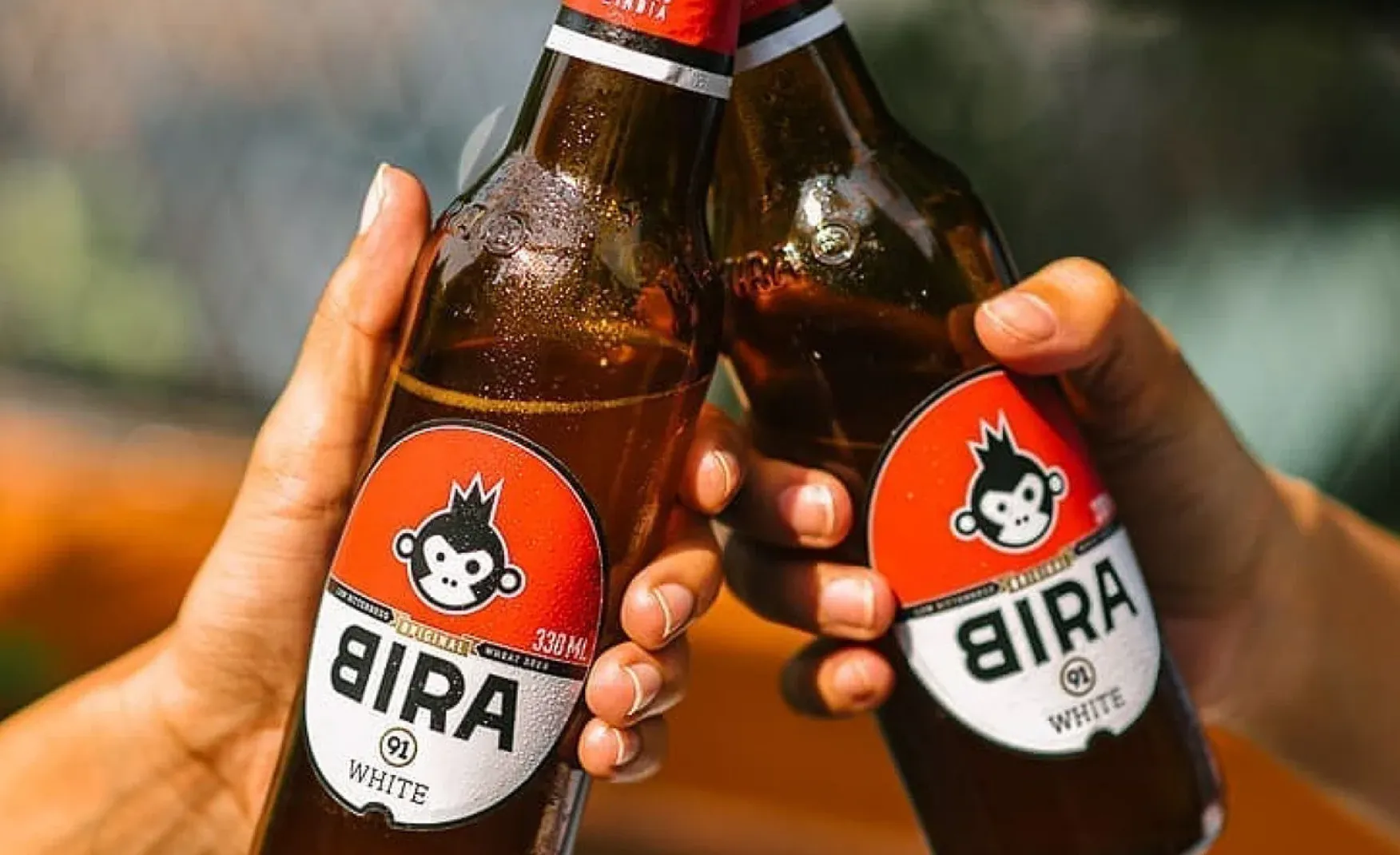
Before Bira91, Indian beer was fundamentally uninteresting as a brand category. Kingfisher, Tuborg, Fosters: functional, widely distributed, and completely generic in their identity. Nobody talked about their beer the way people talk about a brand they are proud to choose. Bira91 changed that conversation.
The founding bet was simple and correct: the urban Indian consumer was ready for a beer that felt designed, offered genuine variety, and signalled something about the person drinking it. The wheat beer, the rice beer, the orange-infused variant: at a time when India's beer aisle offered virtually no flavour experimentation, Bira91 was asking interesting questions that nobody else was asking. For a generation of consumers being introduced to craft culture through travel and changing palates, Bira91 was the accessible answer. That flavour innovation earned genuine consumer conversation that no advertising budget can easily manufacture, people discussed Bira91's variants the way they shared a restaurant recommendation, because the product gave them something worth talking about.
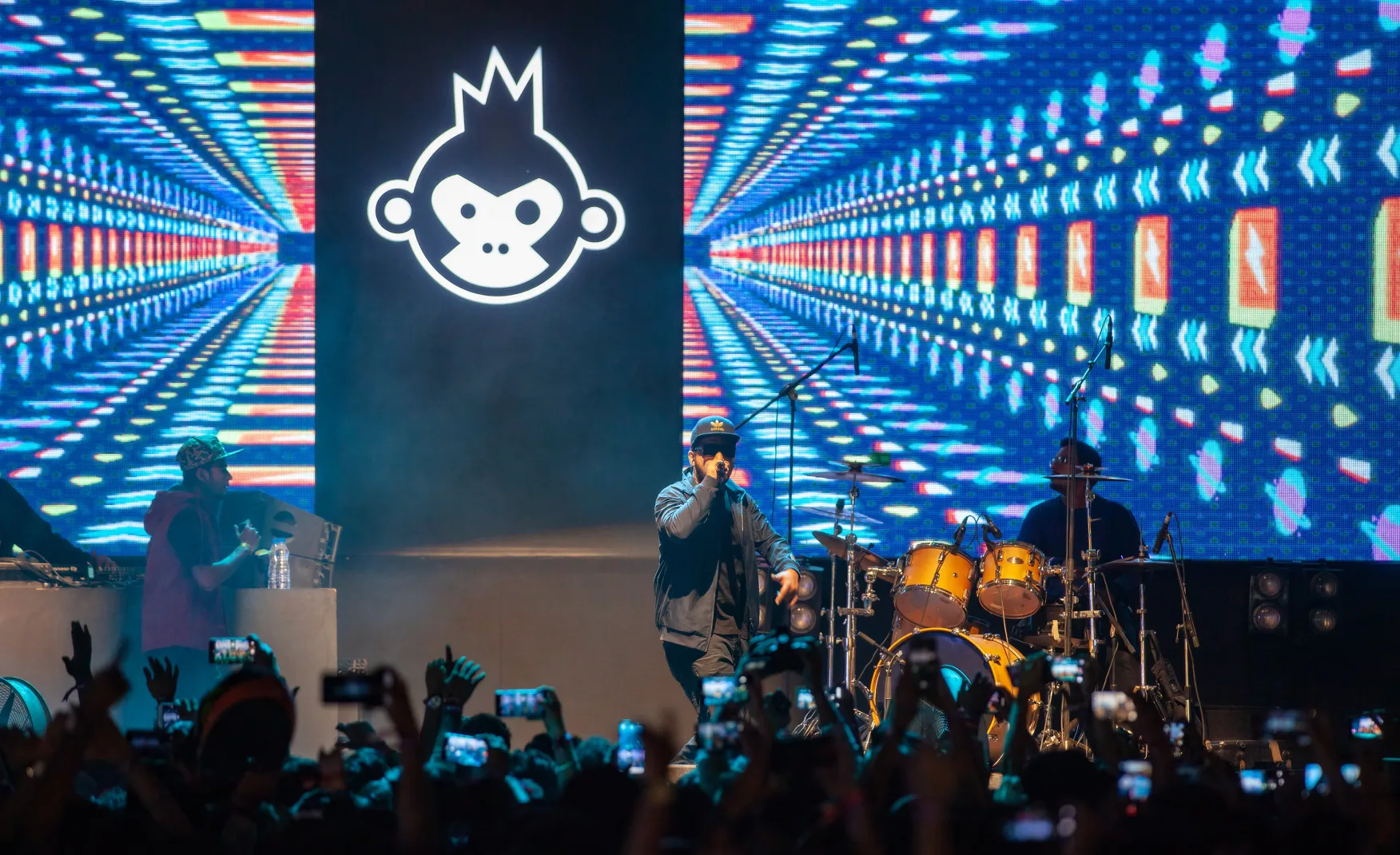
Bira91 did not simply advertise its way into cultural relevance. It showed up in the right places and let placement do the work. The brand was the beer at the music festival, the one in Instagram posts from rooftop parties, the one present at the occasions the urban Indian 20-something valued most. That omnipresence was a deliberate strategy to build association between product and experience rather than product and message.
The result is a brand with genuine cultural memory attached to it. For an entire cohort of Indians now in their late 20s and 30s, Bira91 is embedded in their most vivid social memories, which is a brand asset that no competitive campaign can replicate after the fact. Brand memories built through lived experience are structurally more durable than brand memories built through exposure. Bira91 built the former, at scale, for almost a decade.
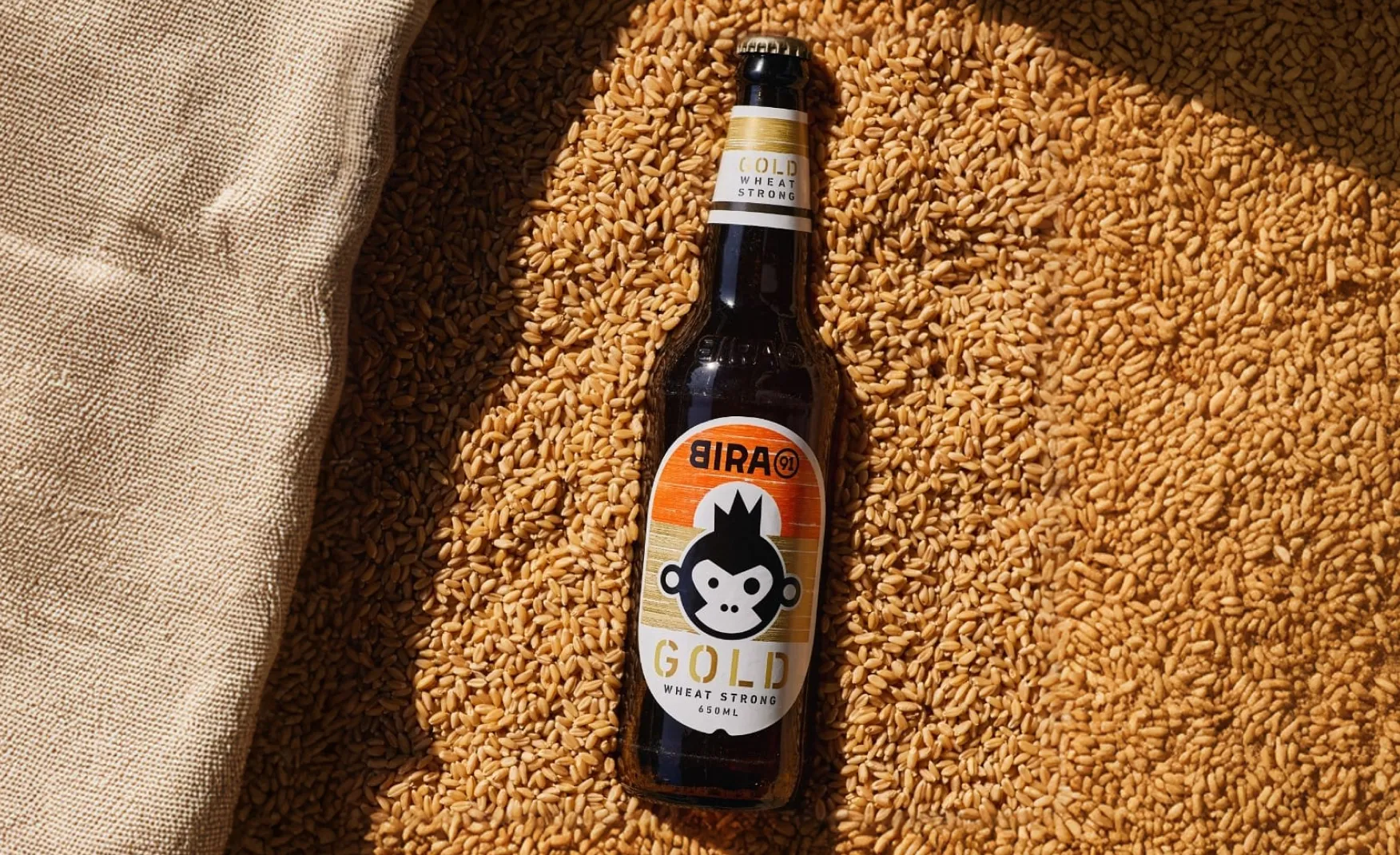
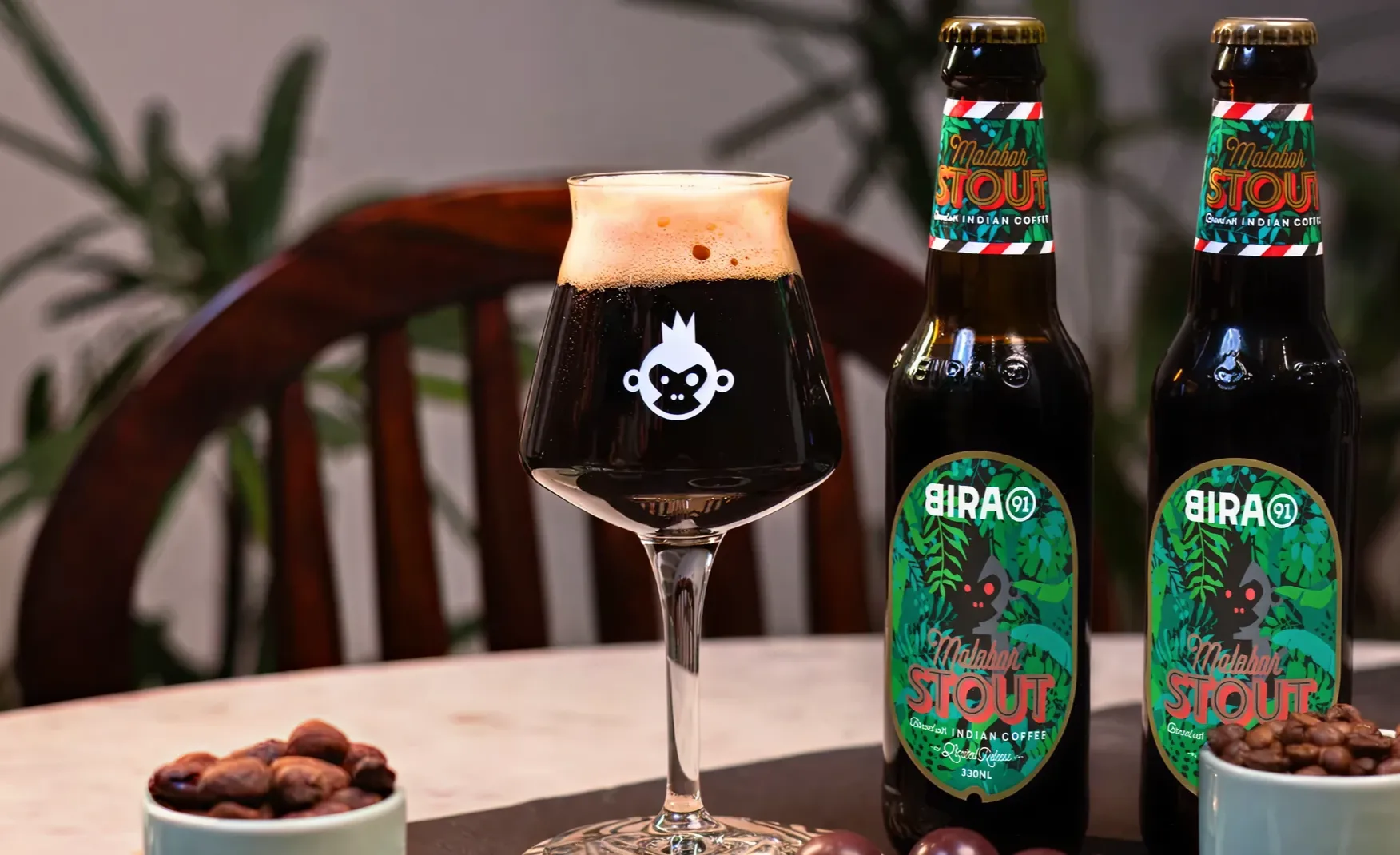
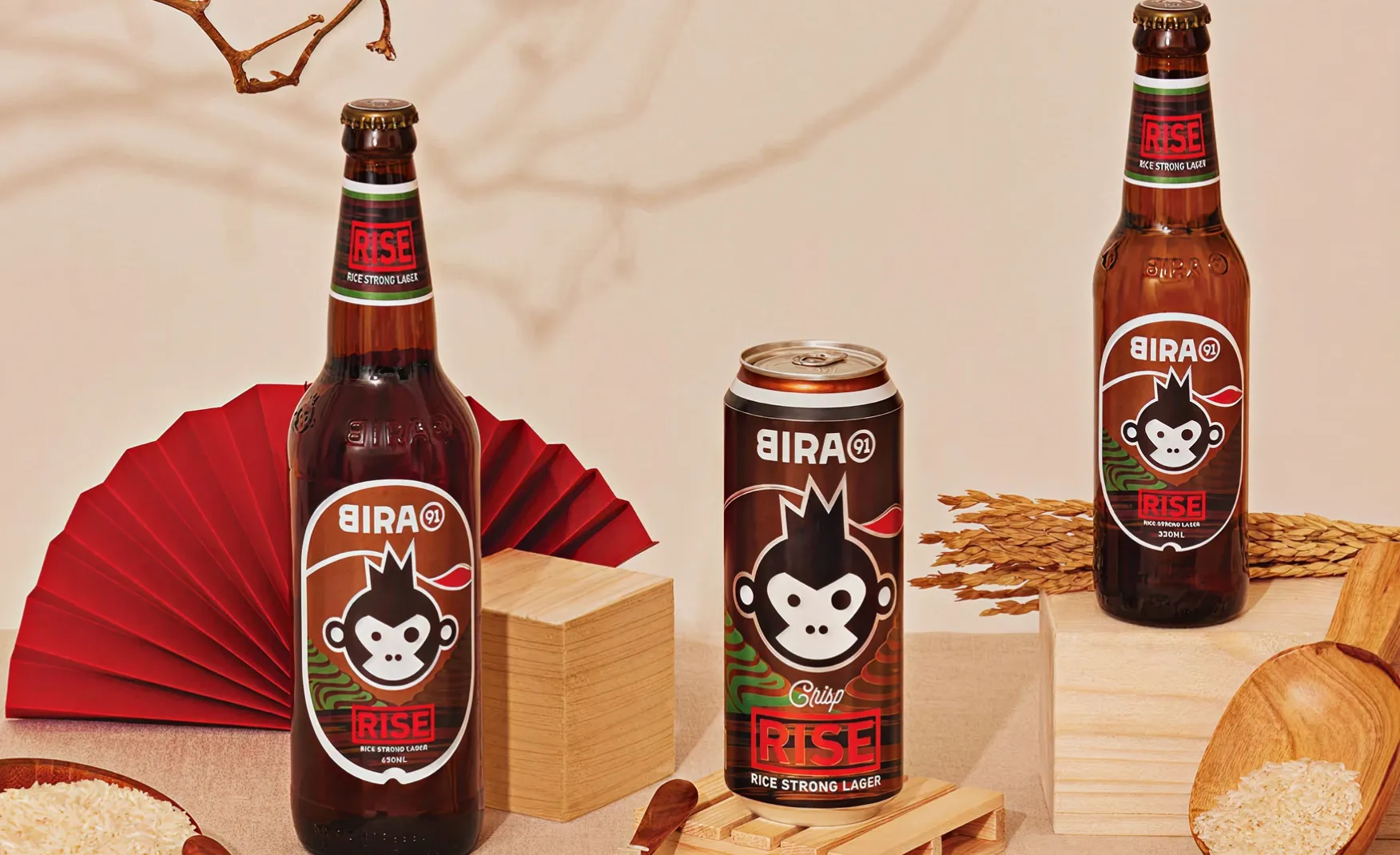
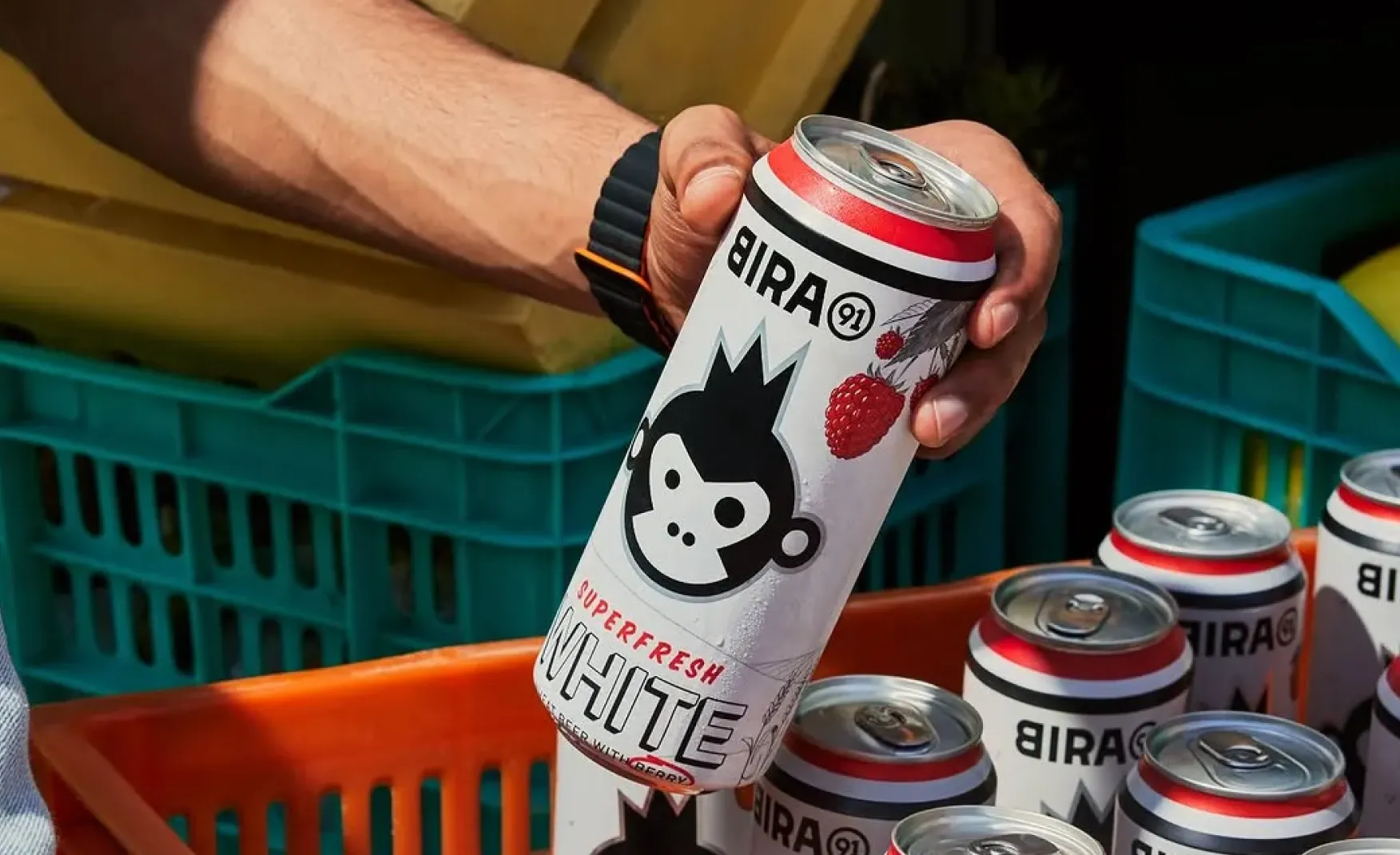
Bira91's design language is among the most coherent in Indian beverages. The wheat sheaf mark, the bold primary colour palette, the confident typography, these held across years and product extensions, and they defined what Indian craft beer looks like more than any other brand in the category.
On a shelf where most beer brands default to either generic European heritage codes or mass-market functional design, Bira91's bottles are unmistakably themselves. The colour-coding across variants communicates clearly without being clinical. The overall system feels contemporary, confident, and Indian without reaching for obvious cultural signifiers. It looks like a brand that has always known who it is, which is the hardest visual impression to create and the most valuable one to protect. That this visual identity has held while the business behind it deteriorated is a testament to how strong the original design thinking was. It is also the primary reason any acquirer or restructuring investor would see value in what remains.
Among Bira91's investors, Kirin Holdings of Japan stands apart in what it signals, or signalled. Kirin is Japan's largest brewer with deep expertise in scaling craft beer internationally. Its original investment in Bira91 was not simply a financial bet: it was strategic validation from a company that understands the global beverage industry at a depth that financial investors cannot replicate.
The relationship has since deteriorated. By October 2025, Kirin and lender Anicut Capital had taken possession of shares in BTB, the entity that operates The Beer Cafe chain, after those shares were pledged as collateral. Kirin is reportedly writing down its debt and equity and looking for an exit. The fact that a major Japanese brewer once believed Bira91 had genuine international potential is a signal that retains historical value, even if the current relationship reflects the consequences of the brand's financial crisis. Any restructuring scenario that preserves the brand and finds new capital would inherit both the equity Kirin helped validate and the lesson of why the partnership reached this point.
Bira91 is responsible for the existence of India's craft beer conversation. The brands that followed it, the tap rooms, the microbreweries, the imported craft offerings that found distribution in Indian cities, all of them entered a market that was already in conversation because Bira91 made the first and most sustained case that Indian consumers would pay more for beer that tasted different and came from a brand with a point of view.
That market-creation contribution does not evaporate with the business's financial difficulties. The consumer habit of considering beer a branded, differentiated category choice rather than a commodity purchase was not present before Bira91 and is now established. Any brand that emerges from a Bira91 restructuring, or any brand that acquires the Bira91 identity, inherits not just a logo and a label but the cultural permission structure for premium Indian craft beer that took a decade to build.
This audit cannot be written around this. Bira91's financial position as of the time of writing is one of the most severe in India's consumer brand history at this funding level. The company reported a net loss of Rs 748 crore on revenue of Rs 638 crore in FY24, spending Rs 2.17 for every rupee earned. Accumulated losses stand at Rs 2,117 crore. In FY25, revenue declined further to Rs 507 crore as production was halted for most of the year. Net worth is fully eroded, with liabilities exceeding assets by over Rs 619 crore as of March 2024.
The operational consequences are severe. The workforce was cut from 900 to 374 employees. Over 250 employees petitioned to remove the founder, citing salaries unpaid since July 2024 and provident fund contributions not made for over 15 months. Kirin Holdings and Anicut Capital took possession of Beer Cafe shares pledged as collateral. The company exited 11 states to focus on just five markets. A rights issue of Rs 84 crore in June 2025 was primarily used to repay debt rather than fund growth. FY25 financial statements had not been filed as of this audit's publication.
Bira91's original market position, premium over mass lager and accessible below imported craft, was well-chosen in 2015. The market has moved in ways that made it harder to hold even before the financial crisis accelerated the pressure. Kingfisher, Budweiser, and Tuborg introduced products competing more directly on the occasions Bira91 owned. International craft imports, Hoegaarden, Asahi, and Heineken craft variants, became more widely distributed and more price-accessible. And the Indian consumer who started with Bira91 has developed more sophisticated preferences than the brand's current portfolio fully addresses.
The brand's own strategic errors compounded this. Ankur Jain has acknowledged that Bira91 shifted from craft to mass-market beer positioning in pursuit of volume, losing the very differentiation that justified its premium. The ICC sponsorship at USD 5 to 6 million per year consumed capital that the business's unit economics could not support. The brand overextended into 10-plus countries before its domestic economics were sustainable. Each of these decisions was individually understandable and collectively terminal.
For a brand whose cultural position was built on being the honest, authentic, designed alternative to corporate beer, the governance narrative that has emerged around the business is particularly damaging. The excess remuneration paid to the founder and his family members during the years when employees went unpaid and the company reported going-concern doubts is a brand contradiction of the most fundamental kind: it undermines the authenticity that was the brand's primary identity claim.
Brand trust and business trust are not separate things for a consumer. The consumer who loved Bira91 because it felt like a brand that genuinely cared, about craft, about culture, about doing things differently from the incumbent, is encountering press coverage that directly challenges that feeling. How a restructuring or leadership change addresses this narrative is as important a brand question as any packaging or positioning decision. The brand equity that survives this period will be the equity that was earned deep enough in consumer memory that the business crisis cannot fully reach it.
Whether Bira91's next chapter is a restructuring under new leadership, an acquisition by a strategic buyer, or a revival under a new capital structure, the most commercially valuable asset in any of these scenarios is not the brewery equipment or the distribution agreements. It is the brand itself, the visual identity, the cultural memory, the first-mover position in India's craft beer category, and the consumer relationship that was built across a decade of genuine cultural presence.
At Confetti, when we think about brand value in turnaround scenarios, the question we ask is what the brand is worth to the right owner in the right strategic context. Bira91's identity, in the hands of an operator with the financial discipline the founder did not maintain, is genuinely worth significantly more than the current business valuation might suggest. The brand built the market. The operator who owns it in the restructured form inherits that creation without having had to pay for it through ten years of losses.

Rather than continuing to compete for volume in the mainstream beer market, where Kingfisher and Budweiser have structural distribution advantages, the brand's strongest long-term strategic path is decisive premiumisation. A smaller, more profitable business commanding genuine premium from a loyal consumer base is more defensible than a large volume business competing on price and distribution reach.
This means fewer SKUs at higher price points, tighter distribution in premium-appropriate channels, hospitality, fine dining, premium nightlife, and a brand story that leans into craft and discernment rather than accessibility and occasions. The consumers who remember Bira91 from their college years are now in their 30s with more money and more sophisticated taste. The brand has the cultural permission to serve that consumer. It requires the financial and operational discipline to do so profitably.
The decline in alcohol consumption among younger Indian consumers is a structural threat to beer volume. It is also a genuine opportunity for a brand with Bira91's flavour innovation heritage and cultural recognition. Non-alcoholic and low-ABV beverages are building real consumer bases in India, and the consumer who would have drunk Bira91 at a concert five years ago is now looking for something that gives them social participation without the alcohol.
Bira91's recognition, its distribution relationships in the channels that survive the restructuring, and its flavour development history make it better positioned than almost any other Indian brand to own this adjacent space. A Bira91 zero-alcohol line, launched under the right operator with the right communication strategy, is not a retreat from the brand's identity. It is the most natural extension of a brand built on "interesting beer choices" into the territory of "interesting choices for people who love great flavour."
Bira91 is one of India's most important consumer brand stories, and one of its most cautionary business cases simultaneously. The brand's achievement is genuinely significant: it created a cultural category, built a visual identity that defined what Indian craft beer looks like, and gave a generation of consumers a product they were proud to choose. That equity is real and it is not erased by the financial crisis that followed.
The rating of three stars reflects an honest assessment of where the brand sits at the time of this audit: exceptional brand equity, a severe financial position, an unresolved governance situation, and a business that has not yet found the structural form that allows it to survive, let alone grow. The most important question Bira91 faces is not a brand question. It is a survival question. The brand work, which is genuinely worth doing, can only follow if the business finds a path to that survival.
If you are building or rebuilding a consumer brand that needs its visual identity, cultural position, and brand equity preserved through a period of significant structural change, Confetti can help you protect what has been earned while building what comes next.
Want strategic branding and packaging like this for your business?




.webp)
.webp)

.webp)
.webp)
.webp)
.webp)
.webp)







.svg)
.webp)





.svg)
.svg)





















































































.webp)









.webp)



.svg)