%201.webp)
02
AI Snaps
.svg)
.svg)
01
Our Work
03
About Us
04
Brand Audit
05
Contact Us
06
Client Success
12
07
Blogs
08
Careers
Book A Call
.svg)




Need Help In Building Your Brand?
Click the button below & book a call with our founder directly.

Rishabh Jain
Managing Director
Yogabar | Confetti's Verdict ⭐⭐⭐⭐
Confetti Design Studio has analysed Yogabar to understand how a clean-label health snack brand founded in 2014 by sisters Suhasini Sampath and Anindita Sampath grew revenue 83% to Rs 201.66 crore in FY25 from Rs 110 crore in FY24, with marketing spend of Rs 49 crore representing a 90% increase year-on-year. ITC acquired a 39% stake for Rs 175 crore in May 2023, with the total acquisition value set at Rs 500 crore over three years, and its distribution infrastructure reaching approximately 6 million retail outlets across India.
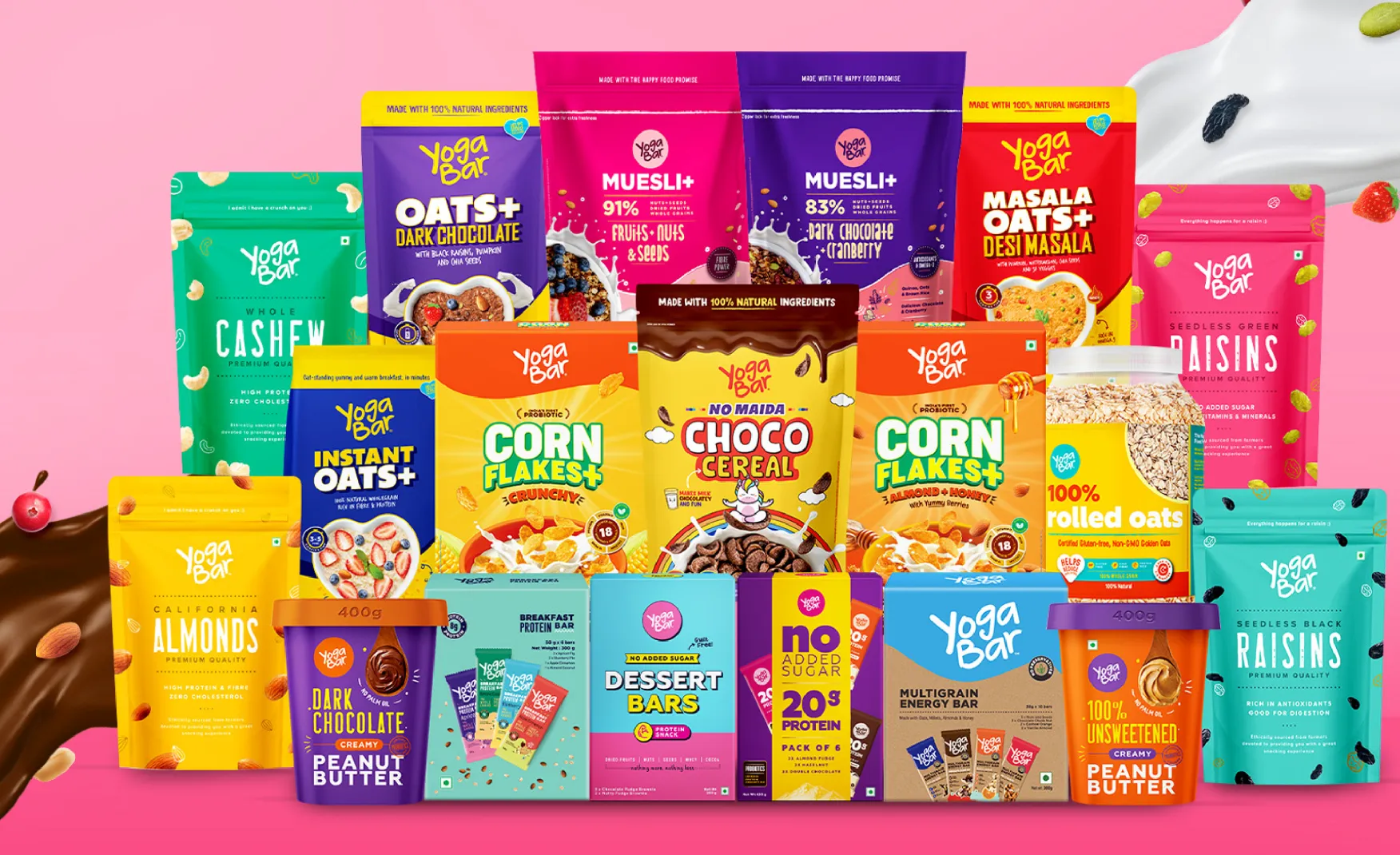
Most health snack brands in India treat "healthy" as a layer of messaging applied over a product that is in its formulation but Yogabar built the opposite from the beginning. The founding protein bar, and everything that has followed it across the range, is built around a commitment to clean formulations that the brand has not deviated from across a decade of commercial operation.
With no artificial colours, no high-fructose corn syrup, no ingredient list that requires a nutritionist to interpret. In a category where "made with real fruit" frequently means a 3% fruit extract in a syrup base, this consistency is commercially significant. When a consumer trusts one Yogabar SKU on the basis of what is actually in it, they extend that trust to every new launch by default.
This is how a brand that began with a single protein bar could credibly extend into breakfast (muesli, overnight oats, granola), fitness nutrition (whey, plant protein), and snacking without the consumer scepticism that follows most category extensions. The product integrity is not a values statement on a website. It is the structural foundation on which every other business decision the brand has made rests, and a decade of consistent delivery has made it genuinely difficult to displace.

The default influencer playbook in Indian health and wellness has become a race toward creator follower counts, with brands partnering with entertainment-first personalities whose audiences engage with content but rarely convert to purchase. The result is high impressions, low conversion, and a brand perception that fluctuates with whatever the creator did last week.
Yogabar operates on a fundamentally different logic, their collaborations lean consistently toward credibility over reach along with registered nutritionists, certified fitness coaches, and lifestyle creators whose audiences are actively invested in health as a practice. When a clinical nutritionist integrates a Yogabar product into a meal-planning post, the product lands differently from the same product appearing in a comedy creator's sponsored slot. Health is a considered-purchase category and the consumer evaluating a protein bar or overnight oats is reading ingredients, comparing options, and taking recommendations from people they trust for specific reasons. Yogabar's influencer ecosystem is built to reach that consumer in that mindset, which is the most commercially efficient use of creator spend available in the category.

There is a growing body of commercial evidence that moment marketing, even when it works, produces peaks followed by increasingly expensive maintenance costs. The brand built on a viral moment discovers that each subsequent campaign must outperform the last, and the marketing spend required to sustain cultural relevance grows faster than the revenue it generates.
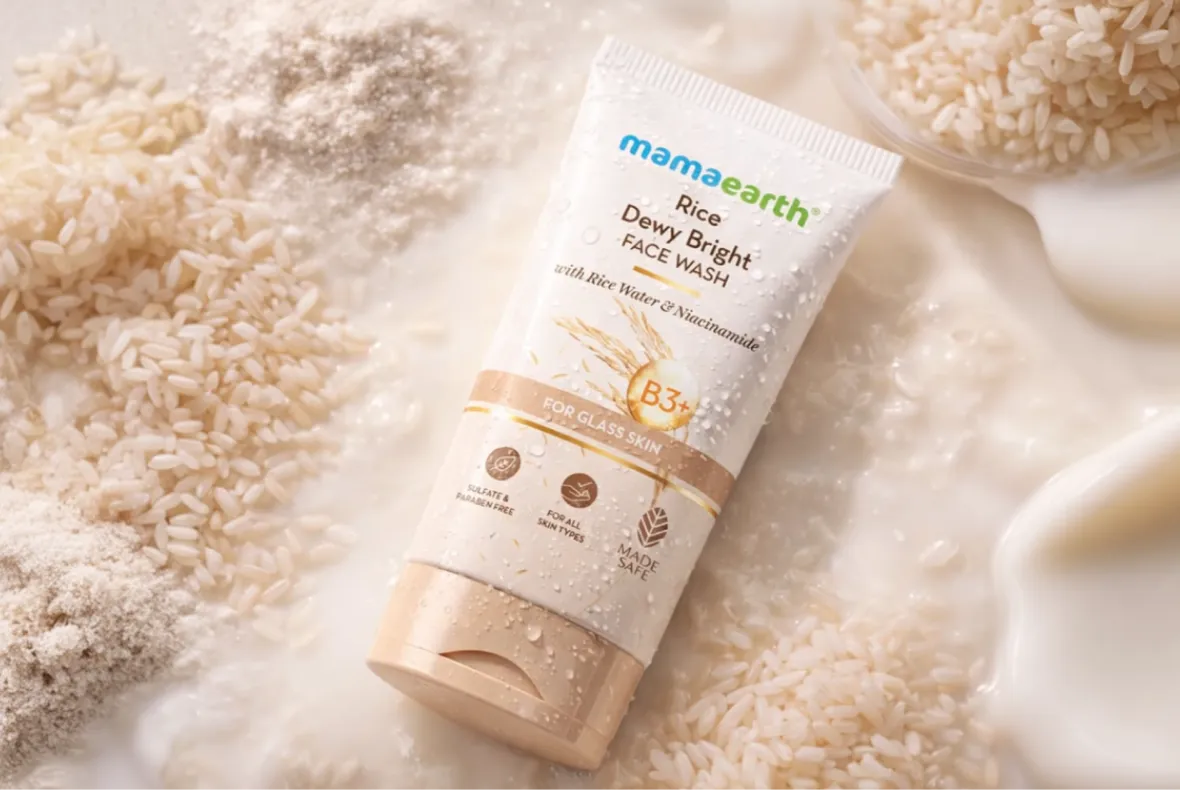
Yogabar has largely stayed outside this cycle. What stands out across its decade of commercial history is the absence of a single defining viral moment. The brand grew to Rs 200 crore without a packaging redesign that broke the internet and without a campaign that became a cultural reference. In a category that has produced The Whole Truth's radical transparency positioning, Mamaearth's influencer-led scale, and a wave of aesthetic-first D2C brands, Yogabar's quietness is a strategic differentiator. Repeat purchase behaviour, not campaign peaks, is what drives FMCG revenue at scale.
The 83% revenue jump in FY25 is not explained by a marketing spike, it is ITC's distribution reach amplifying a consumer base that was already loyal. A position built on steady product quality rather than manufactured virality is increasingly rare and increasingly difficult for well-funded competitors to replicate in the short term.
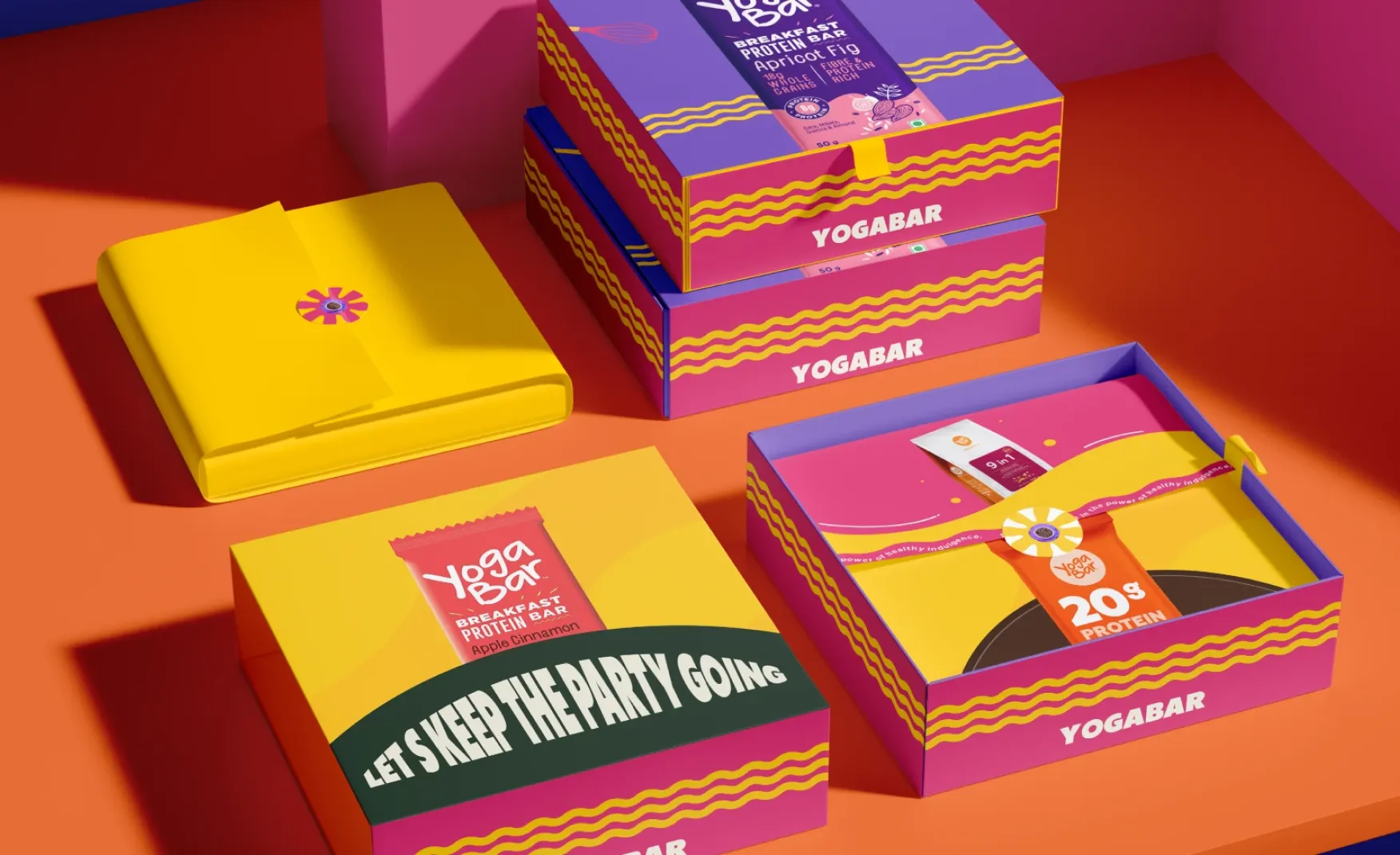
While the D2C health snack space has become crowded with protein bars, seed-based crackers, and millet puffs, the convenience breakfast category for health-aware urban adults has remained genuinely underserved. Yogabar's entry into overnight oats is the clearest example of a brand identifying a meaningful consumer need that more visible, better-funded competitors had not yet addressed.
The overnight oats range requires genuine product understanding and appeals to the health-conscious, time-poor consumer who wants a nutritionally serious breakfast without the preparation overhead of cooking. This category has seen almost no serious investment from brands dominating social media. Yogabar entered it on product merit rather than marketing spend, and the repeat purchase rates on the breakfast range reflect that the product is earning loyalty through use rather than through trial incentives.
Yogabar already owned the consumer's trust at breakfast-adjacent touchpoints through its granola and muesli range. Moving into overnight oats is not a brand stretch. It deepens the same morning routine for the same consumer. Each new breakfast SKU increases the number of occasions on which Yogabar is the product a consumer reaches for, without requiring re-evaluation of the brand from scratch. This is disciplined category expansion, not opportunistic proliferation.
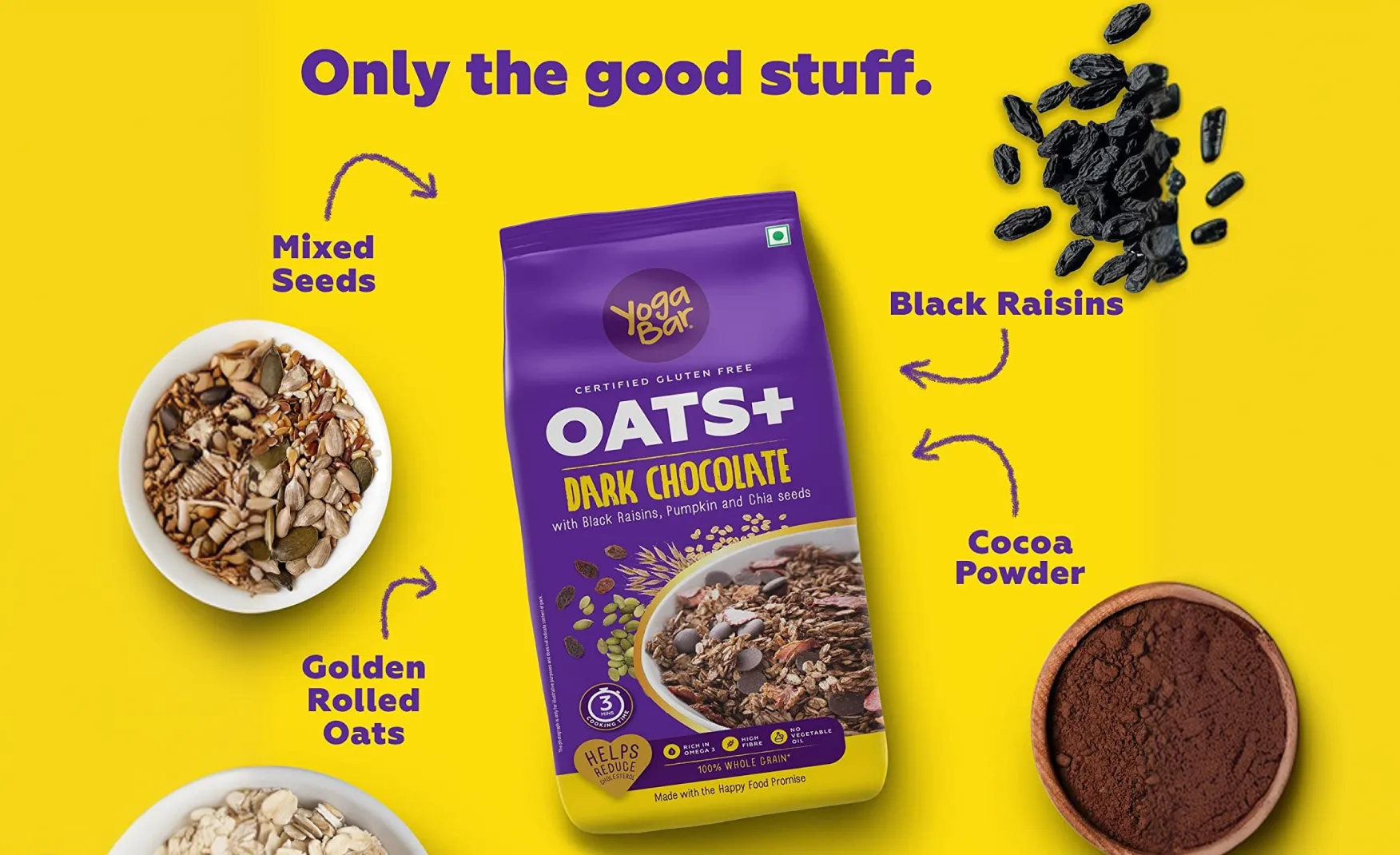
The ITC acquisition is regularly framed as the moment Yogabar stopped being independent. The more analytically useful framing is that it is the moment Yogabar gained access to distribution infrastructure that independent consumer brands typically spend decades trying to build. ITC's network reaches approximately 6 million retail outlets across India. For a brand that had built strong urban D2C and modern trade penetration, this is an operational unlock that no marketing budget could replicate.
The practical result is directly visible in the FY25 revenue number. The 83% growth from Rs 110 crore to Rs 201.66 crore is largely existing products reaching new retail environments, new cities, and new consumer cohorts that were geographically inaccessible through D2C channels. ITC's cold chain, warehousing, and sales force are doing the distribution work that would have taken Yogabar another decade to build independently.
What Confetti finds strategically significant is that ITC chose to maintain Yogabar as a distinct brand rather than folding it into an existing product line. This suggests ITC's management understands that the consumer trust embedded in the Yogabar brand has commercial value that is not transferable to an ITC-labelled equivalent. Protecting that trust while using ITC infrastructure for scale is the balancing act at the centre of Yogabar's next chapter.
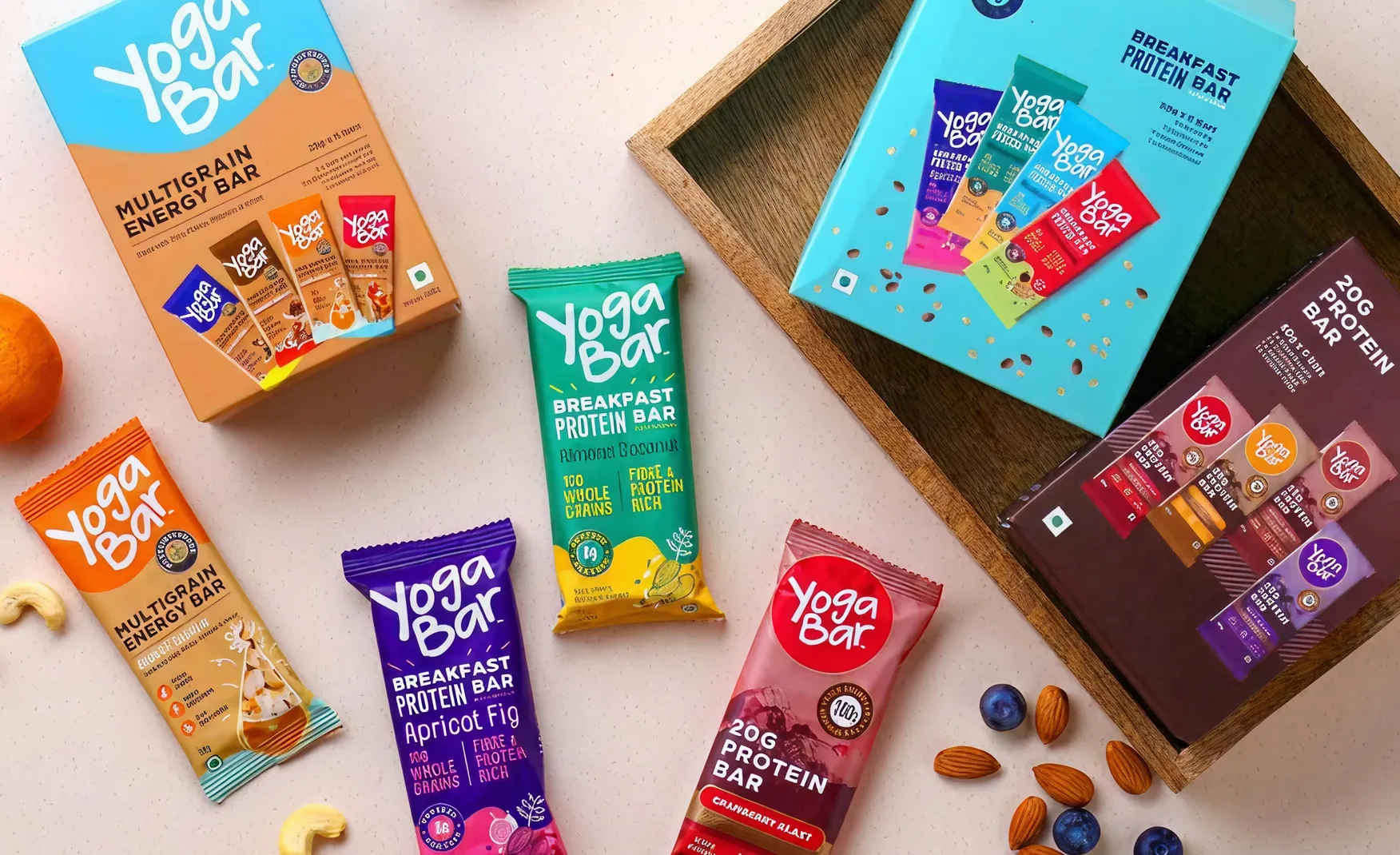
The revenue number is impressive, but it is to be noted that the cost structure behind it is the more important story. Total expenses reached Rs 271 crore in FY25 against revenue of Rs 201.66 crore, producing a net loss of Rs 69.5 crore and a unit economics ratio of Rs 1.35 spent per rupee earned. Material costs alone were Rs 149 crore, representing 55% of total expenses. Marketing spend grew 90% to Rs 49 crore.
The loss trajectory has not improved in line with the revenue growth. The brand spent Rs 1.58 per rupee earned in FY24 and Rs 1.35 in FY25, which represents improvement but not yet a path to profitability that the Rs 500 crore total acquisition price from ITC demands to be justified. For a brand backed by an FMCG conglomerate with access to scale economies in procurement, logistics, and distribution, the cost structure at this revenue level is a question that needs a clear answer in the next two financial years.
Yogabar's product quality is one of its genuine competitive advantages. Its packaging communicates that quality inadequately for the retail environments ITC's distribution is now placing it in. On shelf next to international health snack references or beside The Whole Truth's text-forward transparency design, the current Yogabar packaging reads as functional and earnest rather than premium and assured.
Colour-coding across SKUs is inconsistent and their brand mark does not anchor shelf presence at the scale the revenue suggests it should. Typography choices read as safe rather than intentional. The distance between what Yogabar is, a Rs 200 crore health platform with genuine product integrity and a decade of consumer trust, and what its packaging communicates at first glance, is a liability that compounds as ITC's distribution puts the product in front of consumers who have no prior relationship with the brand. In a modern trade environment, first impressions at shelf are built in under three seconds. The current packaging is not yet built to win that moment reliably.

Yogabar's founding premise rested on an implicit contrast with large FMCG companies: a brand that tells the truth about ingredients in a market where packaged food giants had spent years formulating for palatability and margin rather than nutrition. That premise worked because Yogabar was, structurally and culturally, not one of those companies.
ITC's ownership complicates this without destroying it. For a meaningful segment of Yogabar's original consumer base, the urban health-conscious early adopter who chose the brand as a statement of preference for founders over conglomerates, the acquisition creates a dissonance that the brand has not yet addressed publicly. Staying silent on this is the correct short-term tactic. It is insufficient as a three-to-five-year strategy because as and when Yogabar becomes more visibly integrated into ITC's operations, it needs a considered answer to the question of what it stands for now that it is no longer the underdog. The brand was built on transparency. Applying that same principle to its own strategic choices would be the most consistent response available.
The single highest-return brand intervention available to Yogabar right now is a comprehensive packaging redesign that treats the full range as a visual system rather than a collection of individual products. The opportunity is significant because the gap to close is wide. The current packaging works for consumers who already know the brand, however it fails for the much larger group now encountering it for the first time through ITC's distribution network in general trade and modern trade environments across India.
At Confetti, we worked with Pawsible Foods, a premium wellness brand where the challenge was building a packaging system that communicated both product quality and brand purpose with full clarity at the point of first encounter. The discipline of designing packaging for the consumer who has never heard of the brand, not the one who already trusts it, is the design work Yogabar needs most urgently. A redesigned system should establish clear visual navigation across a range that now spans breakfast, snacking, and fitness nutrition; communicate the product trust story through structural design choices rather than claim labels alone; and build a brand shelf presence strong enough that a Yogabar section reads as a coherent brand world rather than a health category shelf.
Yogabar is uniquely positioned to define a category that currently has no clear owner in India: the health-conscious modern breakfast. The overnight oats range is the strongest signal of this opportunity, and it should be developed as a strategic brand positioning rather than managed as a single product launch.
The Indian breakfast market is genuinely underserved by clean-label brands. Protein-focused products address post-workout nutrition rather than everyday morning fuel for the working adult. Yogabar already has the range to build this territory across overnight oats, muesli, granola, and protein additions that can be framed as a complete morning system. Communicating this as a coherent breakfast identity, rather than a set of separate SKUs competing in different sub-categories, is a brand architecture move that could deliver owned category positioning and organic search volume simultaneously.
A brand that was built on radical ingredient transparency has more creative material than most for narrating its own acquisition story. Rather than treating the ITC relationship as background fact to be neither confirmed nor denied, Yogabar has the opportunity to communicate it as evidence of the brand's durability: a brand whose product standards were strong enough that a major FMCG conglomerate chose to preserve its identity rather than absorb it.
This requires operational certainty that the formulation commitments are genuinely ring-fenced from ITC's commercial pressures. If they are, and the product history suggests they have been, communicating that clearly and confidently could convert the ITC association from a latent brand liability into a proof point for the brand's longevity. The brand that chose to be honest about its ingredients is the brand most credibly positioned to be honest about its ownership.
Yogabar has done something that most Indian D2C health brands have not managed, which is to built genuine consumer trust through product consistency across a decade, scaled that trust into a Rs 201 crore revenue base, and survived acquisition by a large conglomerate without a visible collapse of brand equity. The product integrity, the influencer restraint, and the disciplined category expansion all reflect a brand run with more strategic clarity than is common in this space.
The rating reserves one star for three specific gaps that the brand's current scale makes urgent. The packaging needs to grow to match the commercial ambition. The Rs 69.5 crore net loss in FY25 needs a credible path to resolution before the Rs 500 crore ITC acquisition price demands a return that the unit economics cannot yet support. And the ITC relationship requires a narrative that Yogabar tells on its own terms, because silence on the question of what it means to be a founder-built brand now backed by a tobacco-to-FMCG conglomerate is not a position that ages well.
If you are building a health snack, clean-label FMCG, or wellness brand and want to create packaging and brand strategy that converts genuine product quality into shelf presence and durable consumer preference, Confetti can help you build that.
Want strategic branding and packaging like this for your business?





.webp)
.webp)

.webp)
.webp)
.webp)
.webp)
.webp)







.svg)
.webp)





.svg)
.svg)









































































































.webp)











.webp)


.svg)