%201.webp)
02
AI Snaps
.svg)
.svg)
01
Our Work
03
About Us
04
Brand Audit
05
Contact Us
06
Client Success
12
07
Blogs
08
Careers
Book A Call
.svg)




Need Help In Building Your Brand?
Click the button below & book a call with our founder directly.

Rishabh Jain
Managing Director
Snitch | Confetti's Verdict ⭐⭐⭐⭐
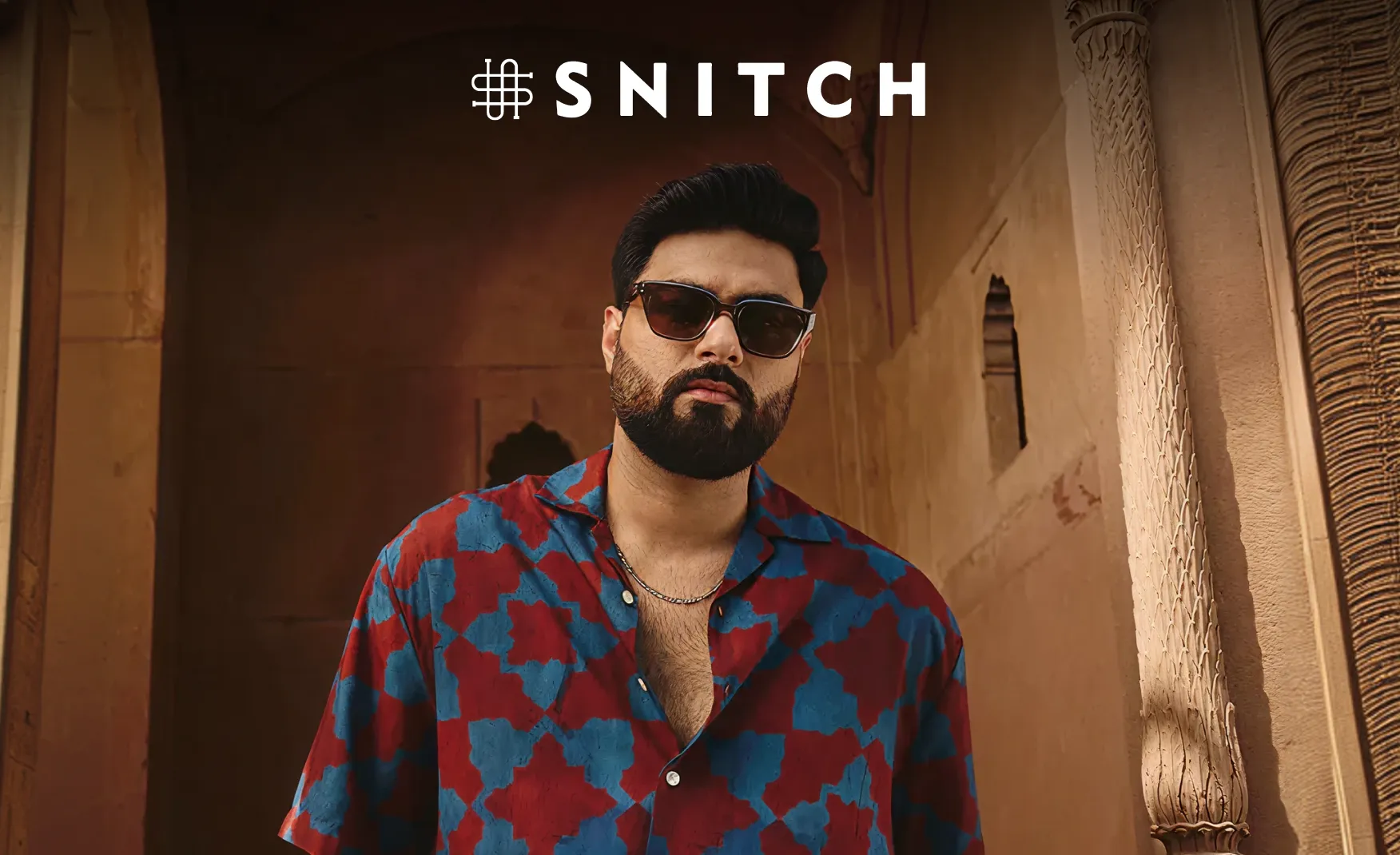
Confetti Design Studio has analysed Snitch to understand how a brand that Siddharth Dungarwal pivoted from B2B apparel manufacturing to D2C menswear during the 2020 lockdown grew from Rs 11 crore to Rs 900 crore in unaudited FY26 revenue, up 80% from Rs 498 crore in FY25, raised USD 53 million across two rounds including a Series B of Rs 338.4 crore led by 360 ONE Asset in June 2025 at a valuation of Rs 2,500 crore, turned EBITDA positive in FY26 at 2 to 3% margins, and operates 115 stores across India with 10% of online revenue already flowing through Snitch Quick, its 60-minute apparel delivery service.
Fast fashion is not a new idea, but executing it at quality and price points that the Indian middle-market consumer finds credible is genuinely difficult. The supply chain discipline required to go from trend identification to product delivery at sub-Rs 2,500 price points, at the velocity Snitch operates, is a capability that has taken years to build and that no Indian menswear competitor has matched at this scale.
Snitch's product pipeline is built on micro-trend tracking by identifying global fashion cycles, translating them into India-relevant silhouettes and colourways, and moving from design to delivery faster than the trend has peaked. Siddharth Dungarwal's 17 years in B2B apparel manufacturing before founding the brand gave him an unusually deep understanding of the supply side of this equation. The result is a pipeline that delivers newness at a cadence the consumer actively returns for, not because they planned to buy, but because the brand has consistently given them something worth buying when they checked.
At Rs 900 crore and 80% year-on-year growth, this machine is working. The revenue is not driven by a hero product or a campaign moment. It is driven by a relentless flow of trend-aligned product that keeps the brand in active mental rotation. Marketing costs dropped 50% in FY25 as the brand shifted 80% of sales to its own channels, reducing marketplace dependence to roughly 15% of total revenue.
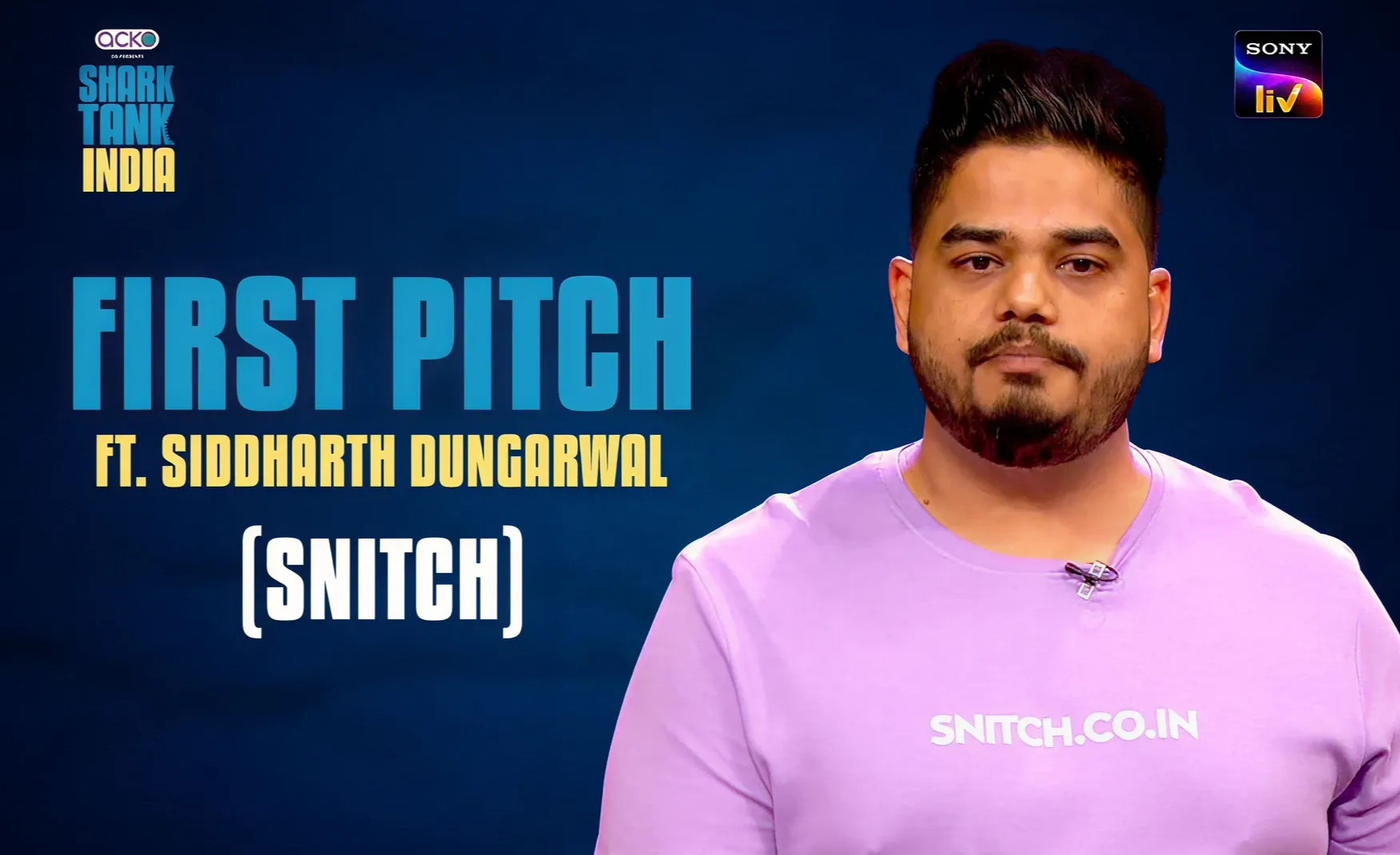
Snitch's appearance on Season 2 of Shark Tank India, where all six investors including Anupam Mittal, Aman Gupta, Namita Thapar, Vineeta Singh, Peyush Bansal, and Amit Jain backed the brand with Rs 1.5 crore for 1.5% equity at a Rs 100 crore valuation, did something that no marketing campaign could have engineered. It gave the brand national legitimacy in a single evening. For a four-year-old D2C menswear brand competing for trust against names with decades of retail history, the all-investor deal was a credibility transfer of extraordinary commercial value.
But the more durable outcome is what happened after Shark Tank: Snitch became one of the most actively discussed menswear brands on Indian Reddit. This matters in a specific and often underappreciated way. Reddit India communities focused on fashion, personal finance, and consumer product reviews are among the most trusted sources of peer opinion for the young Indian male consumer. The discourse is blunt, specific, and perceived as independent of brand influence. Being discussed extensively on Reddit is both a signal of genuine consumer penetration and a mirror that reflects the brand's real reputation without the filter of its own communications
The Reddit discourse on Snitch is complicated, which is itself a strength. A brand that generates strong, specific, sometimes contradictory opinions across multiple communities has achieved something most new brands never do which is genuine consumer investment in the question of whether the brand is worth it. That is a higher-quality problem than being ignored.
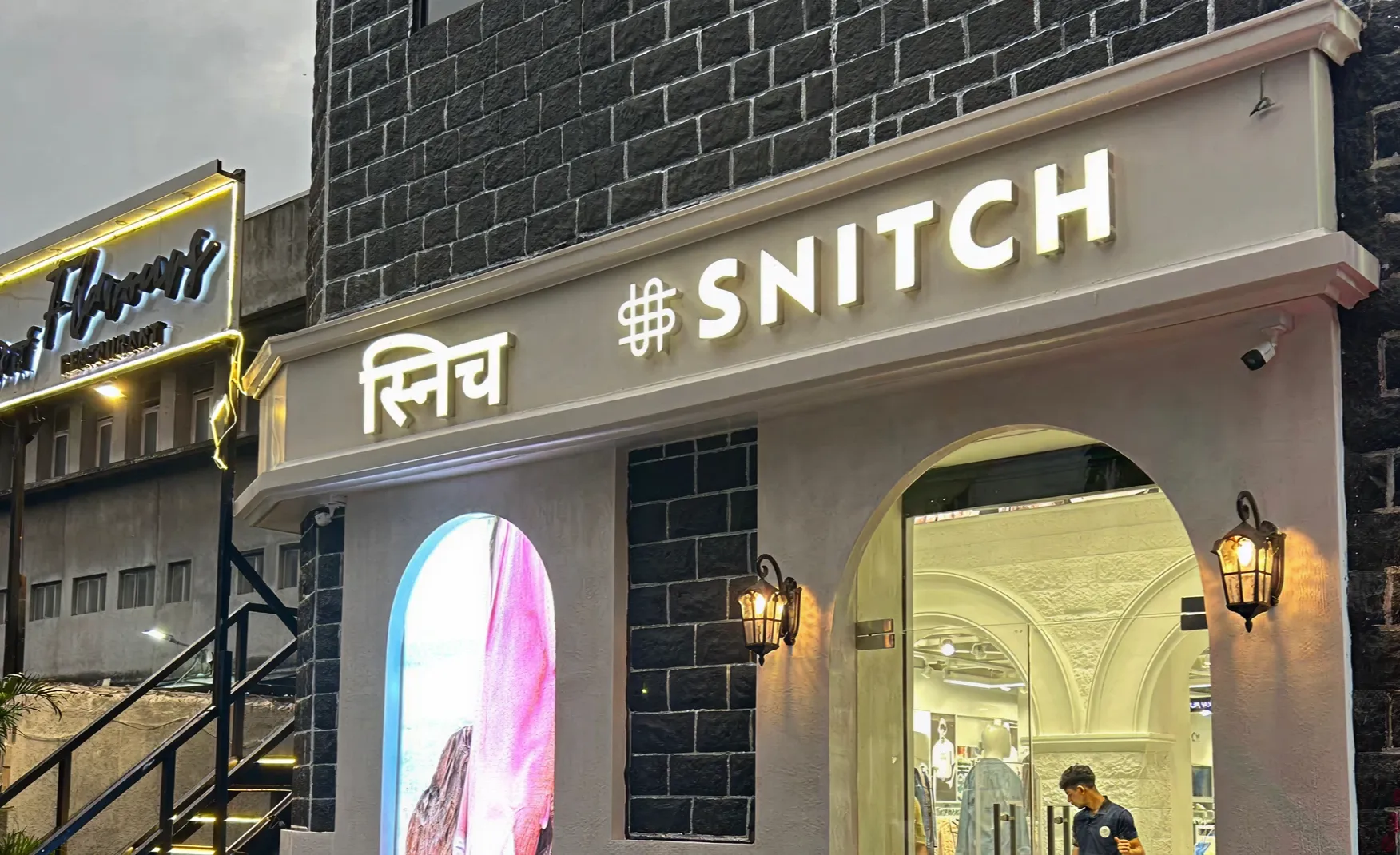
The received wisdom about D2C brands is that they start online and move offline gradually, opening one or two flagship stores as brand statements while keeping the majority of revenue digital. Snitch has not followed this playbook. With 115 stores currently operational and offline revenue growing 75% year-on-year in FY26, the brand is expanding physical retail at a pace that is genuinely unusual for a brand of its age and origin.
This matters for a reason specific to the Snitch consumer and the Snitch price point. The core tension in the purchase decision, the product looks right and the price is right, but is the quality right, cannot be resolved on a website. It can only be answered by touching the fabric and forming a view in person. The offline expansion is doing something strategically important: it is creating the physical experience through which Snitch earns the repeat purchase.
The customer who walks into a Snitch store, finds that the product meets expectations at the price point, and buys becomes a customer who then buys online. The store is not just a revenue channel. It is a trust-building channel. Offline contribution rose from 30% in FY24 to 40 to 45% in FY25, and the retention rate on offline-converted customers is, per the founder, growing at over 100% on both order and revenue measures. The machine and the store are compounding each other.
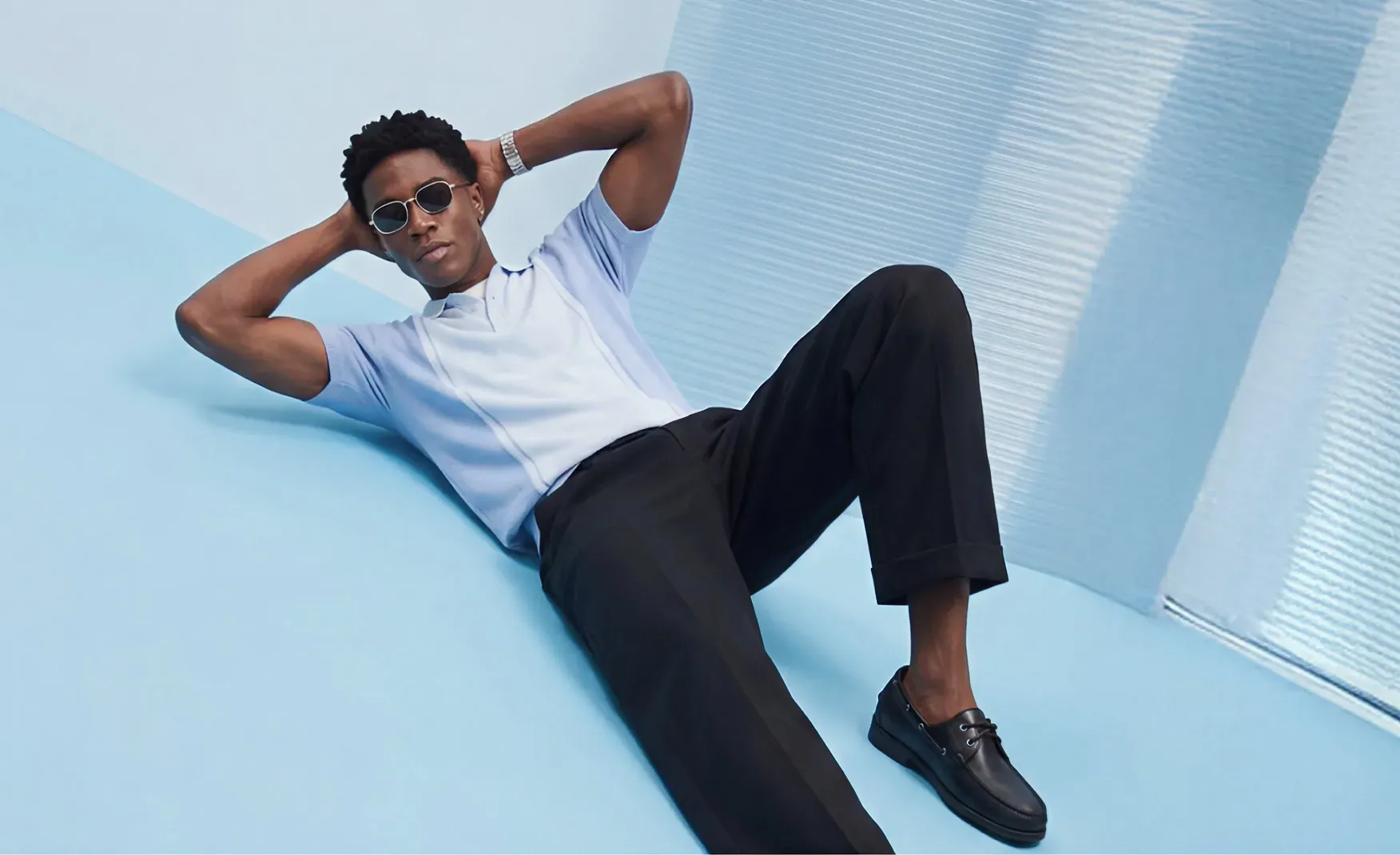
There is a consumer segment that most premium and mid-market fashion brands have not built for, because their economics do not allow it as the Gen Z buyer who wants to wear the trend, not own it. For this consumer, the fashion decision is not "do I want this in my wardrobe for three years?" It is "do I want to wear this for the next two months while this particular aesthetic is current?" The answer to the second question at Rs 800 per piece is almost always yes. The answer to the first question at Rs 3,000 per piece involves considerably more calculation.
Snitch's price architecture maps almost perfectly onto the disposable fashion decision. Gen Z consumers are drawn to the brand specifically because they do not want to invest heavily in a single piece when trends move as fast as they do on Instagram. This is not a criticism of the consumer. It is an accurate description of a new relationship with clothing that is generationally distinct and commercially significant. Snitch built its entire supply chain and product philosophy around serving this relationship, and the Rs 900 crore revenue is evidence that the relationship is the right product for the right consumer at the right moment.
The strategic implication worth noting is that Snitch's ceiling in this segment is not just determined by market size. It is determined by how well the brand holds the Gen Z consumer's attention as they age into slightly more considered purchasing habits, and whether the brand has built enough identity depth to age with them.

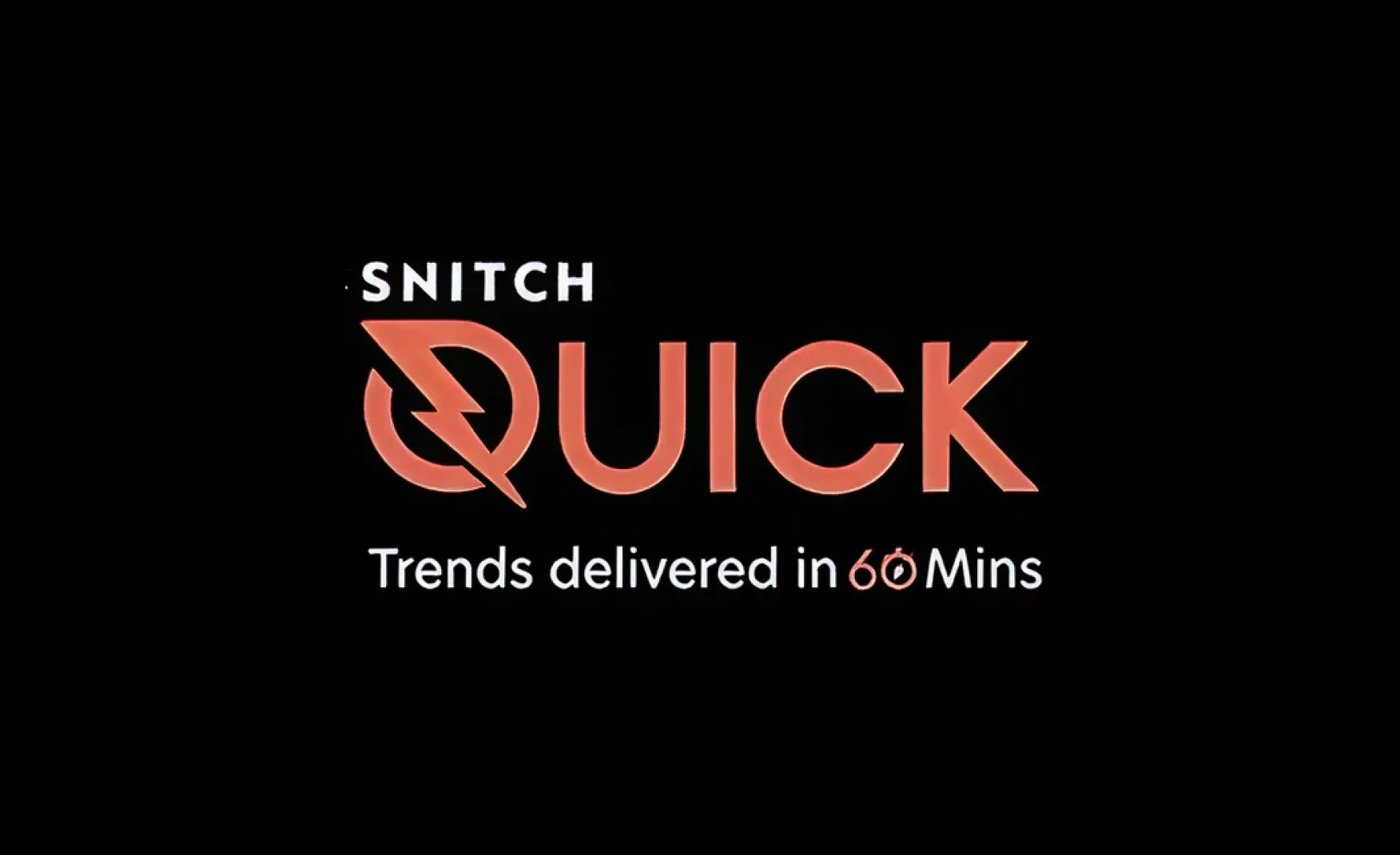
60-minute apparel delivery is not a logistics improvement. It is a brand idea made operational. The consumer who wants to wear the trend before the trend peaks is, by definition, a consumer for whom speed is the entire value proposition. Snitch Quick, launched in October 2025 in Bengaluru and now available across Delhi, Gurugram, and Ahmedabad, is the physical manifestation of what Snitch has always been faster than the trend, at a price that makes the immediacy feel justified.
Quick commerce already accounts for 10% of Snitch's online revenue with early traction the founder describes as very good. No other Indian fashion brand is doing this at scale. The channel is also commercially intelligent in a way that goes beyond the delivery time: quick commerce consumers are by definition high-intent buyers with lower price sensitivity, higher average order values, and a disposition toward impulse that maps well onto trend-driven fashion. The consumer who orders a shirt in 60 minutes is a different and more commercially valuable consumer than the one who takes three days to decide.
The most consistent signal in Snitch's Reddit discourse is a specific quality concern at a specific price point. Feedback on apparel is broadly mixed to positive: at Rs 800 to Rs 2,000 for a shirt or trouser, most consumers report that the quality meets the expectation the price sets. The feedback on Snitch's footwear is significantly more negative. The Reddit consensus across multiple threads is clear: at the price Snitch charges for shoes, the quality does not compete with dedicated footwear brands, and the recommendation is to buy shoes elsewhere.
This is structurally important as Snitch expands into accessories, perfumes, and footwear as part of its lifestyle brand ambition. Category extensions succeed when the core brand carries trust across the new category. If the footwear category has an established quality perception problem in the brand's most vocal consumer community, expanding the footwear range as a growth lever requires resolving that perception before it compounds into a broader quality narrative that attaches to the brand rather than just to the shoes. The offline store expansion helps. Touching the product resolves quality questions more efficiently than reviews. But the online discourse is a real-time brand signal that the footwear quality conversation needs to be addressed directly, not managed around.

Snitch is, at its core, a product velocity business. The proposition to the consumer is: we will always have something that looks current at a price you can justify. That is a commercially effective proposition and Rs 900 crore of revenue proves it. It is not, however, a brand idea, because it has no content when the product is removed from the equation. What does Snitch believe? What kind of man does Snitch dress? What is the Snitch point of view on how Indian men should look in 2026? These questions currently have no answer beyond the product itself.
This becomes a strategic liability as the brand approaches IPO conversations and competes for the long-term consumer relationship. Zara has a fashion identity, a specific European aesthetic intelligence that has remained consistent across decades of trend cycles. H&M has a brand idea about democratising fashion. Snitch has drops. The gap between the business Snitch has built and the brand it needs to sustain that business through a public markets process and competitive pressure from better-funded international fast fashion entrants is real, and it requires deliberate investment to close before the IPO conversation requires a brand story rather than just a growth chart.
The Snitch consumer is one of the most precisely defined in Indian fashion: the aspirational Indian man in 2026 who dresses for Instagram and the office on the same day, who knows what ASOS looks like but lives on quick commerce, who wants to look globally current without paying global prices. This consumer is real, he is a large and growing cohort, and no brand has been built explicitly for him. Snitch is closest to doing it but closest is not the same as having done it.
A Confetti approach to Snitch's brand identity would start by making this consumer the explicit centre of the brand world rather than the implicit target of the product pipeline. What does this man's city look like? What does a Snitch morning actually feel like? Building a brand world around this specific consumer rather than around trend categories and seasonal drops creates something that can survive the arrival of the next fast fashion competitor: emotional ownership of a consumer identity that no competitor can copy, because it is built from a precise understanding of a specific person rather than from a product development brief.
The quality perception gap in footwear needs to be addressed before Snitch's investor and consumer base internalises it as a brand characteristic rather than a product line problem. The most direct route is also the most honest one, either significantly improving the quality of the footwear range to match what the price point implies, or explicitly price it as the budget entry into the category and communicate it as such. The worst outcome is continuing to expand the footwear range while the Reddit consensus that the shoes are not worth it continues to compound into a story that travels beyond footwear.
The offline store expansion is the brand's best asset for managing quality perception at scale. A consumer who handles the product in person and forms a view that it meets expectations is a consumer who does not go to Reddit to form that view. Prioritising quality experience at the physical touchpoint, staff who can articulate the value proposition, product displays that present the quality credentials, and fitting rooms that allow the consumer to validate the purchase, is the most efficient way to manage this at the pace the brand is expanding.
Snitch Quick should not be a feature buried in the app, in fact it should be the centre of a campaign that makes explicit what the brand has always implicitly been about the Indian man who does not wait for the trend to pass before he wears it. No other fashion brand in India is making speed a brand statement at this level, and the consumer who is already choosing Snitch because the trend pipeline moves faster than any competitor's is a consumer who will respond to a brand that articulates that speed as a value rather than treating it as a logistics footnote.
The quick commerce channel is also, structurally, the best channel for building brand identity at point of purchase. A 60-minute delivery arrives in a moment of high consumer intent and low ambient distraction. The packaging, the presentation, and the communication that accompanies that delivery have the consumer's full attention in a way that a warehouse dispatch to a next-day delivery rarely does. Building the Snitch Quick experience as a brand moment rather than a logistics fulfilment is the most commercially efficient identity investment the brand can make right now.
Snitch has built something the Indian menswear market had no equivalent of five years ago, a Rs 900 crore fast fashion machine that correctly identified the aspirational middle-market gap, filled it with trend-aligned product at accessible prices, and expanded offline at a pace that most consumer brands spend a decade trying to match. The Shark Tank legitimacy, the Gen Z consumer relationship, the supply chain velocity, and Snitch Quick are all genuine commercial achievements.
The honest assessment is that the business is ahead of the brand. The machine works. EBITDA positive in FY26 at Rs 900 crore after a Rs 1.7 crore net loss in FY25 is commercial validation that the model has legs. What has not yet been built is the identity that makes the machine irreplaceable, that is a brand world that survives the arrival of the next fast fashion competitor, a quality reputation that holds across category extensions, and a consumer relationship built on something more durable than newness. The IPO conversation, when it comes, will require a brand story. The next 18 months are the window to write it.
If you are building a fashion brand that needs an identity as strong as its supply chain, Confetti can help you build the brand world your product velocity deserves.
Want strategic branding and packaging like this for your business?




.webp)
.webp)

.webp)
.webp)
.webp)
.webp)
.webp)







.svg)
.webp)





.svg)
.svg)

















































































.webp)









.webp)



.svg)