%201.webp)
02
AI Snaps
.svg)
.svg)
01
Our Work
03
About Us
04
Brand Audit
05
Contact Us
06
Client Success
12
07
Blogs
08
Careers
Book A Call
.svg)



Need Help In Building Your Brand?
Click the button below & book a call with our founder directly.

Rishabh Jain
Managing Director
D'you | Confetti's Verdict ⭐⭐⭐⭐⭐
Confetti Design Studio has analysed d'you, current as of July 2026, the Navi Mumbai skincare brand a former dispute-resolution lawyer built after booking a one-way ticket to South Korea to learn cosmetic science from scratch.
Shamika Haldipurkar founded the brand in 2020 and launched it in 2021 with a single product, the multi-active Hustle serum, and on roughly ₹35 lakh of her own capital and no outside investment, the brand broke even inside its seventh month.
It now sits in a wide ₹10 to 50 Cr revenue band, with Haldipurkar publicly targeting ₹100 Cr next, having grown a genuinely differentiated product into cult status without a single rupee of external funding. This audit asks what d'you needs to keep growing at the pace its formulation has already earned.

d'you starts with one of the sharpest naming decisions in Indian beauty.
Rendered in lowercase, the wordmark reads as "do you," an unfinished conversational question that pulls the consumer straight into the brand's voice. Most beauty names try to signal heritage or science through borrowed French and Latin, d'you signals intimacy through everyday spoken English instead.
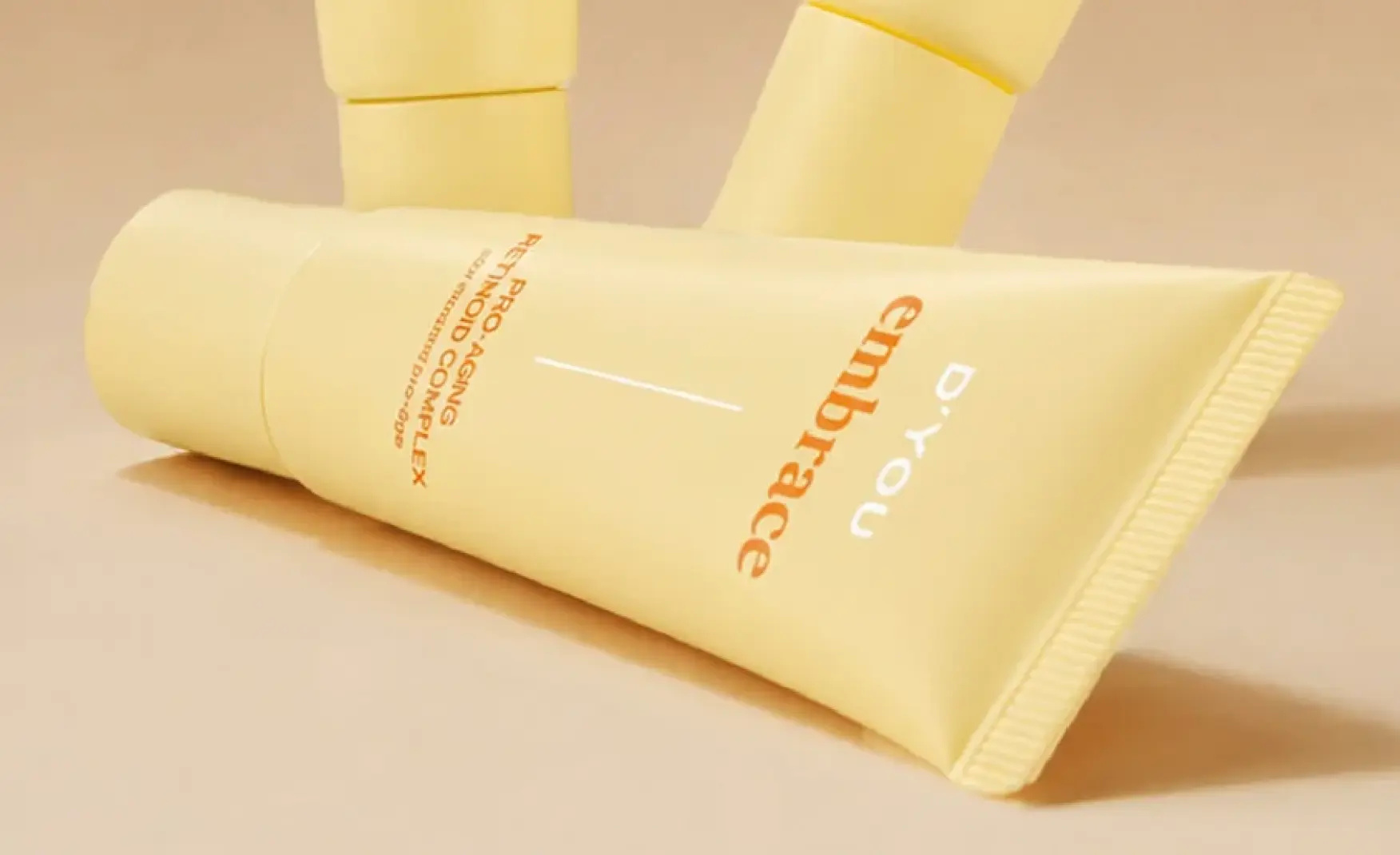
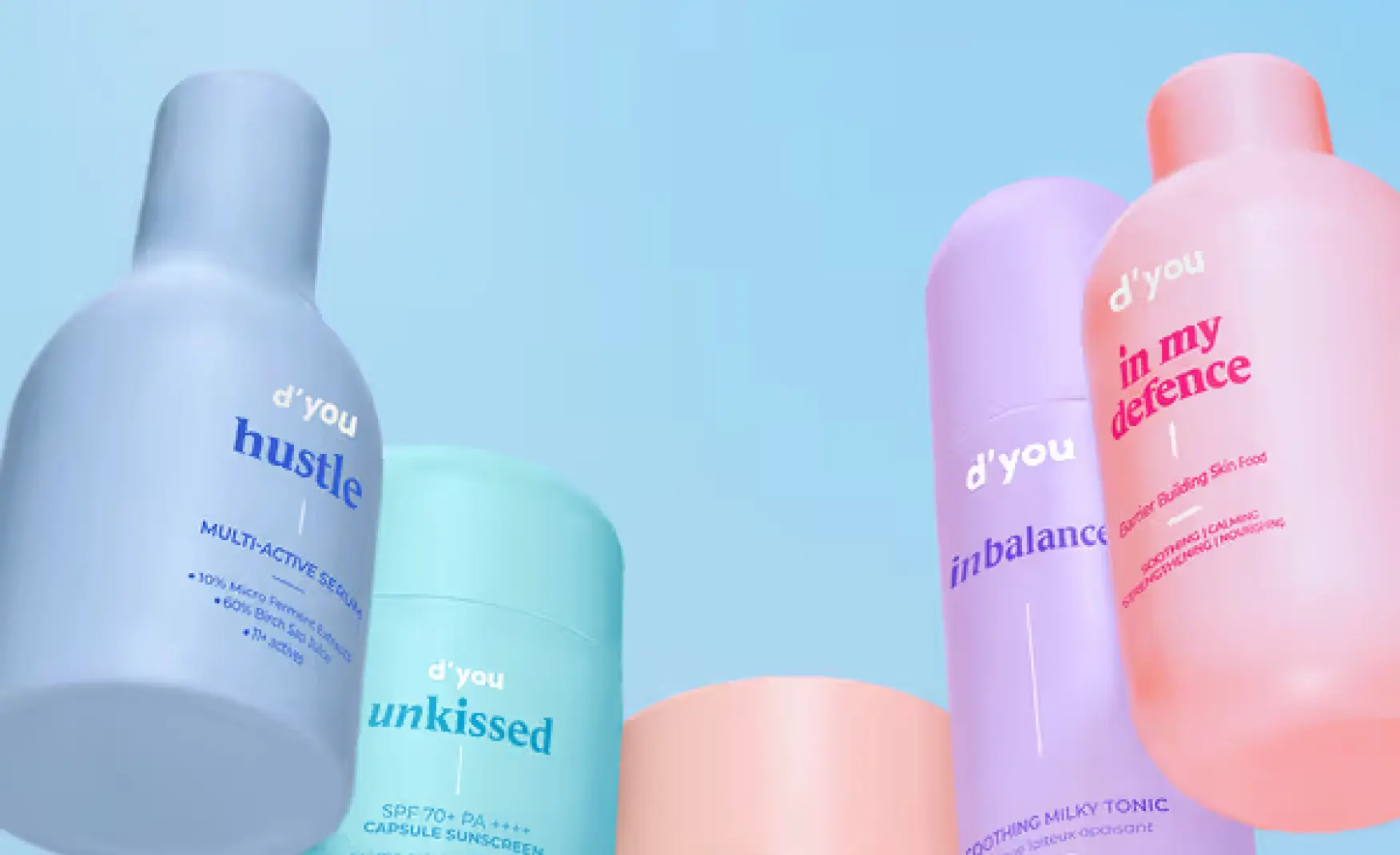
That wit carries all the way through the product architecture, where the serum is Hustle, the barrier moisturiser is In My Defence, the cleansing balm is Good Grease, the sunscreen is Unkissed and the retinoid is Embrace.

Most of India's ingredient-led skincare boom was built on subtraction, with brands teaching a generation of consumers to buy one active at a time and distrust long formulas.
d'you launched by betting against exactly that logic, putting more than eleven actives into a single bottle at a moment when the fashionable position said you should never do such a thing. The pitch was that most people do not actually want to build a seven-step routine, they want one considered product that works.
Framing a multi-active serum as the antidote to skincare overwhelm, rather than a shortcut, gives d'you a genuinely differentiated position on a shelf that had started to look identical.
The bet created a lane incumbents could not easily follow without contradicting themselves, since a brand built entirely on single-ingredient purity cannot suddenly launch an eleven-active hero without confusing its own customer.

d'you's founding principle, stated plainly on its own site, is that the formula is the brand, and unusually for a beauty company it behaves as if it means it.
Haldipurkar had no cosmetics background when she started. She spent over a year in research and development in South Korea and reformulated Hustle through more than 30 iterations before it ever went on sale.
The brand now designs proprietary formulations with labs across South Korea, Japan and Europe, rather than buying stock bases and rebranding them, which is the quiet shortcut a large share of the D2C category actually takes.
This formulation-first posture is the brand's whole marketing engine, not just an operational choice. Its In My Defence moisturiser, for instance, carries a ceramide load positioned at around 20 times the industry norm.

d'you keeps its minimalism intact without letting it fade into the beige sameness that plagues much of the category.
The palette runs through pastel yellow, pastel blue, pastel pink, pastel lavender and pastel peach, giving the brand an unusually strong colour recall for a minimalist range. The moment a customer sees those tones, she knows exactly which brand she is looking at.
That palette carries through a dreamy, calm visual language built around clouds, which shows up on the Eyes and Shine eye patches and across the site's photography and blue sky backgrounds.

d'you is one of the very few Indian D2C beauty brands to reach cult status while remaining entirely bootstrapped, and that fact shapes everything about how it behaves.
The brand has grown without a celebrity face fronting it, even though Alia Bhatt has spoken about the products unprompted, and without the aggressive markdown culture that trains beauty customers to only ever buy on sale. Hustle sits around the ₹2,200 to ₹3,200 mark for 30ml, defended with formulation and education rather than discount banners.
That restraint protects both margin and perceived value, which is precisely how a small brand stays premium while it scales.
Plenty of beauty brands launch with a dozen products and hope one of them sticks, d'you did the opposite.
It went to market with a single hero and refused to expand until that hero had genuinely proven itself, breaking even in its seventh month and building a 40% repeat-purchase base first. That gave the brand something most start-ups never secure, permission from the customer to launch the next thing.
Its expansion into a barrier moisturiser, cleansing balm, sunscreen, toner mist, retinoid and lip and eye care has followed the logic of a routine a real customer would actually build.
d'you's Instagram sits at roughly 99,500 followers and keeps the same pastel, cloud-led visual language alive in its content.
The feed mixes founder appearances, product content and reels from UGC creators, and the brand runs a second account (@indyoutime) dedicated to behind-the-scenes building, sharing what the founder is experiencing and how problems get solved in real time. That second layer of honesty is what turns followers into believers rather than just an audience.
The brand also runs its own merchandise drops, caps, hoodies and scarves, alongside trial-size minis kits that lower the barrier to a first purchase, and organises regular influencer events around new launches.

d'you's greatest strength and its clearest risk are the same trait.
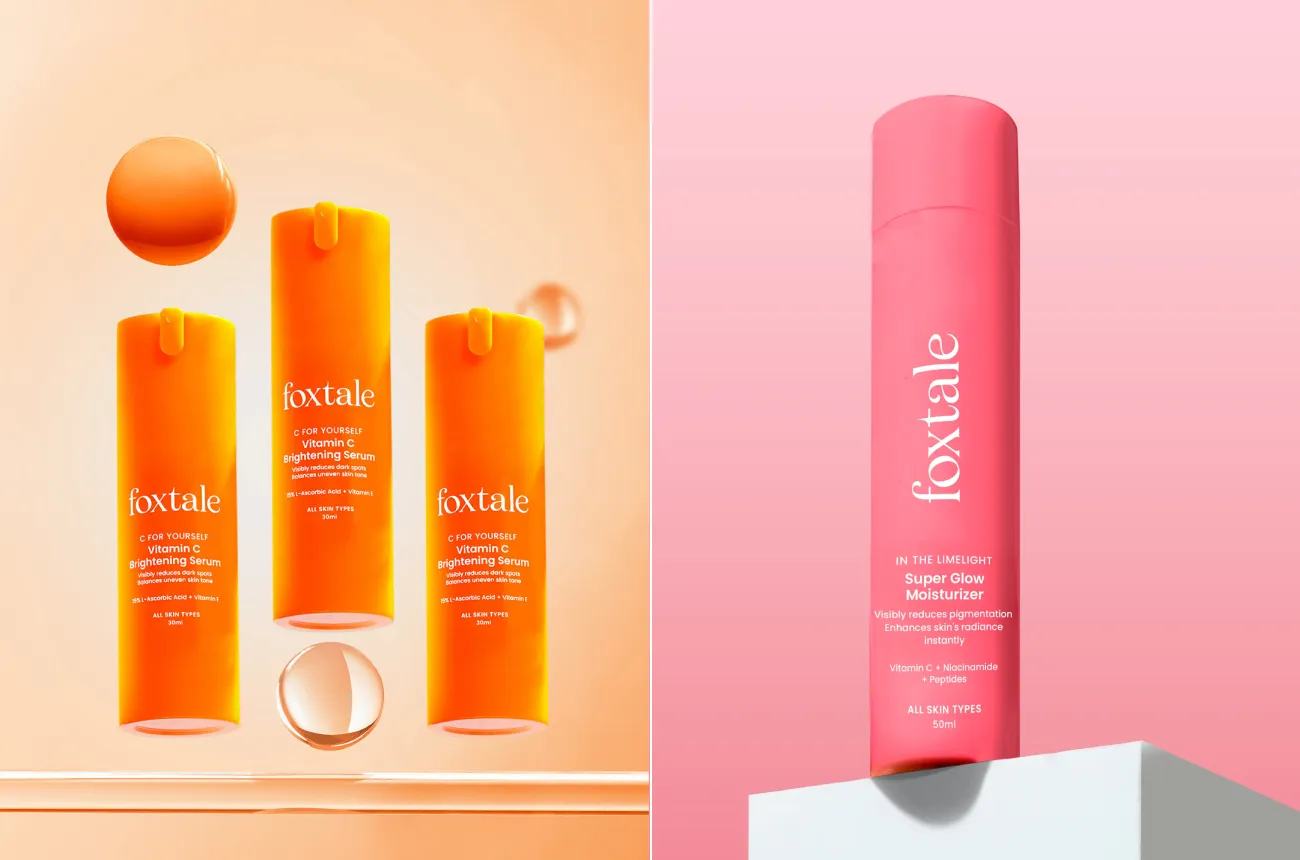
While d'you was carefully perfecting a range, The Minimalist grew into a several-hundred-crore business and was absorbed by HUL in a deal valuing it at roughly ₹2,955 Cr, and Foxtale raised large external rounds to buy shelf space and distribution outright. In beauty, distribution and mindshare can be bought faster than they can be earned.
d'you has proven it can build a profitable, loved brand without capital, but its next phase, retail expansion across Nykaa, Tira, Amazon and offline, is capital-intensive in exactly the ways bootstrapping makes it hardest.
d'you competes in what may be the most contested aisle in Indian beauty.
The Ordinary set the global template, The Minimalist and Deconstruct localised it, and Foxtale and a dozen newer entrants are fighting for the same ingredient-literate customer. "We do the science properly" is a claim every competitor now makes, and the consumer cannot easily verify whose R&D is real.
As the shelf fills, the risk is that d'you's substantive advantage gets flattened into the same undifferentiated language everyone else is using.
d'you built its reputation on one product, and that concentration is now a subtle liability as much as a strength.
For many consumers, d'you is Hustle and Hustle is d'you, and the strategic question is whether the newer products can accumulate hero-level equity of their own. A house that leans on one SKU is exposed to any shift in that product's relevance, formulation trends or a breakout competitor.
In My Defence and Embrace each have the formulation credibility to become heroes in their own right, but that requires the brand to invest narrative and design firepower in them close to the level Hustle received.

d'you's most under-exploited asset is that it can genuinely explain its products, in a category drowning in vague science-backed claims.
The brand should build a proprietary, ownable education layer, a consistent visual and editorial system for how it teaches skin, so that "d'you explained it" becomes a recognisable format rather than scattered posts.
Confetti's general experience with formulation-led beauty brands shows that this is how a small brand out-teaches larger ones, since that authority converts directly into premium pricing power and organic acquisition.
d'you is one of the most quietly impressive brands in Indian beauty, and it is impressive for reasons that have nothing to do with budget.
A first-time founder with no cosmetics background built a genuinely differentiated product, bet correctly against the prevailing minimalism of the category, and grew the whole thing to profitability on roughly ₹35 lakh of her own capital.
The tension is that the same discipline that made d'you excellent may cap how big it becomes, since its deliberate, bootstrapped pace is both its signature and its risk in a category where rivals are raising serious capital to buy distribution.
If you are building a premium beauty brand and want your identity and content to carry the same weight as your formulations, get in touch with Confetti Design Studio.
Want strategic branding and packaging like this for your business?




.webp)
.webp)

.webp)
.webp)
.webp)
.webp)
.webp)







.svg)
.webp)




.svg)
.svg)







































































.webp)









.webp)


.svg)