%201.webp)
02
AI Snaps
.svg)
.svg)
01
Our Work
03
About Us
04
Brand Audit
05
Contact Us
06
Client Success
12
07
Blogs
08
Careers
Book A Call
.svg)



Need Help In Building Your Brand?
Click the button below & book a call with our founder directly.

Rishabh Jain
Managing Director
Cosmix | Confetti's Verdict ⭐⭐⭐⭐
Confetti Design Studio has analysed Cosmix, current as of July 2026, to understand how a bootstrapped Bengaluru superfood brand turned a founder's own battle with PCOS into one of India's cleanest plant-based nutrition labels.
Vibha Harish and Soorya Jagadish founded the brand in 2019 from a rented apartment on roughly ₹20 lakh of personal savings, built on one unfashionable idea, that supplements should treat the root cause rather than the symptom.
The brand grew from about ₹24.3 Cr in FY24 to ₹51 Cr in FY25, stayed profitable throughout, and in February 2026 drew Marico into acquiring a 60% stake at a ₹375 Cr valuation. This audit asks what Cosmix's next chapter needs now that the product story has already won.

Most supplement brands in India sell symptoms back to the consumer.
There is a pill for hair fall, a gummy for glow and a scoop for energy, each marketed as a discrete fix for a discrete problem.
Cosmix made a harder and more interesting bet, deciding that acne, hormonal imbalance, poor sleep and thinning hair are usually downstream of the same few systems, the gut, the liver, stress and nutrient absorption. It built its entire catalogue around treating those systems rather than the surface complaint.
That single decision gives the brand its coherence, offering a connected map of the body rather than a shelf of unrelated SKUs chasing whatever concern is trending.
The Root Cause philosophy is therefore doing double duty, working as a genuine formulation principle and as the most effective cross-sell architecture a wellness brand can own.
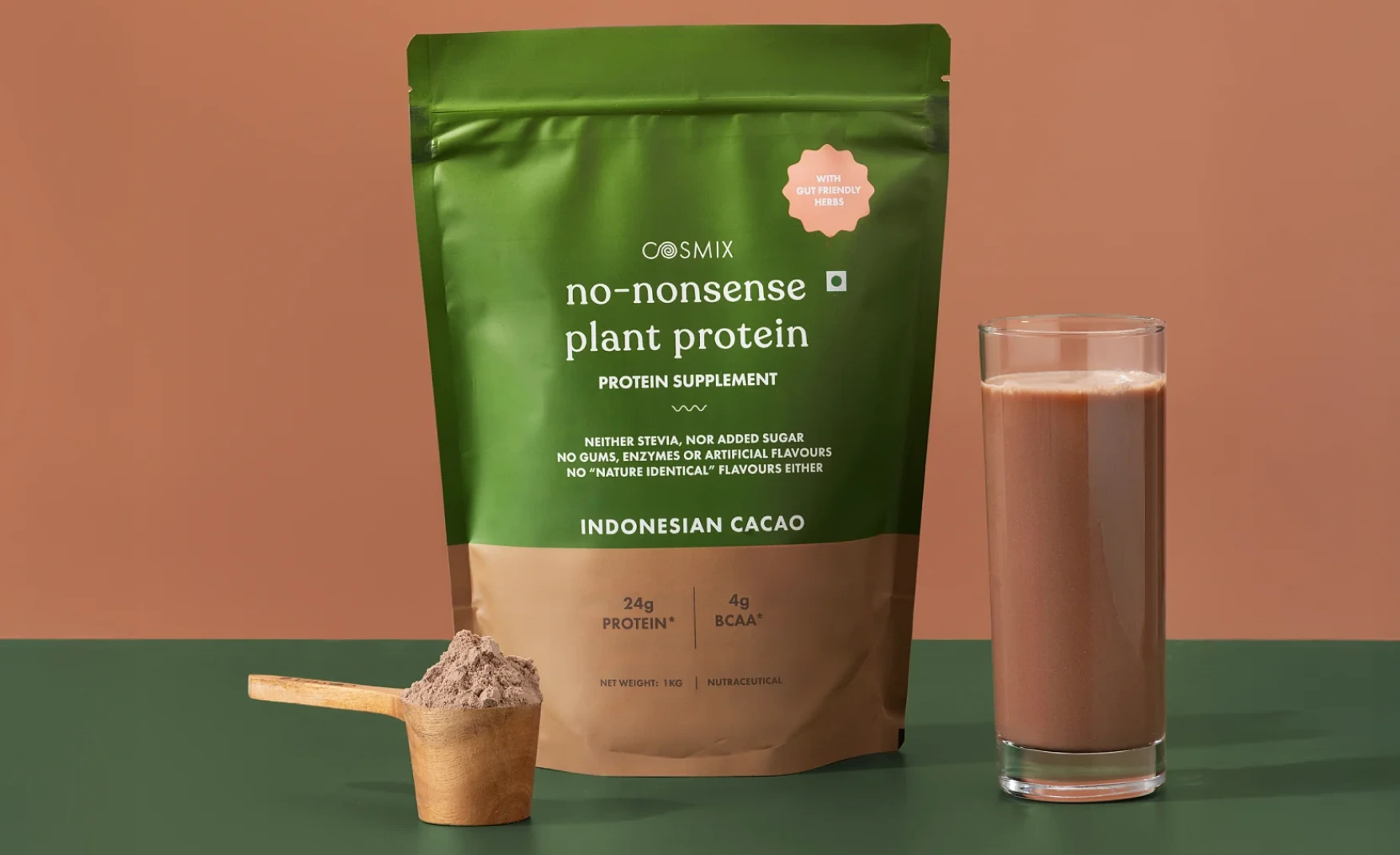
Where much of the wellness category hides behind proprietary blends and undisclosed percentages, Cosmix built its credibility on the opposite instinct.
Its flagship protein is called No-Nonsense Plant Protein, and the name is not a joke, with real ingredients like Kerala vanilla bean and Indonesian cacao doing the flavouring rather than a lab-built cocktail of sweeteners.
When the founders found that stevia caused digestive discomfort for some customers, they switched the entire range to monk fruit, a small decision that says a lot about where the brand's priorities sit.
The discipline runs deeper than the ingredient list, since Cosmix manufactures in-house in Bengaluru and controls sourcing through production end to end.
That vertical integration is a brand asset, not just an operational detail, because it lets Cosmix make transparency claims most D2C nutrition labels cannot back up.
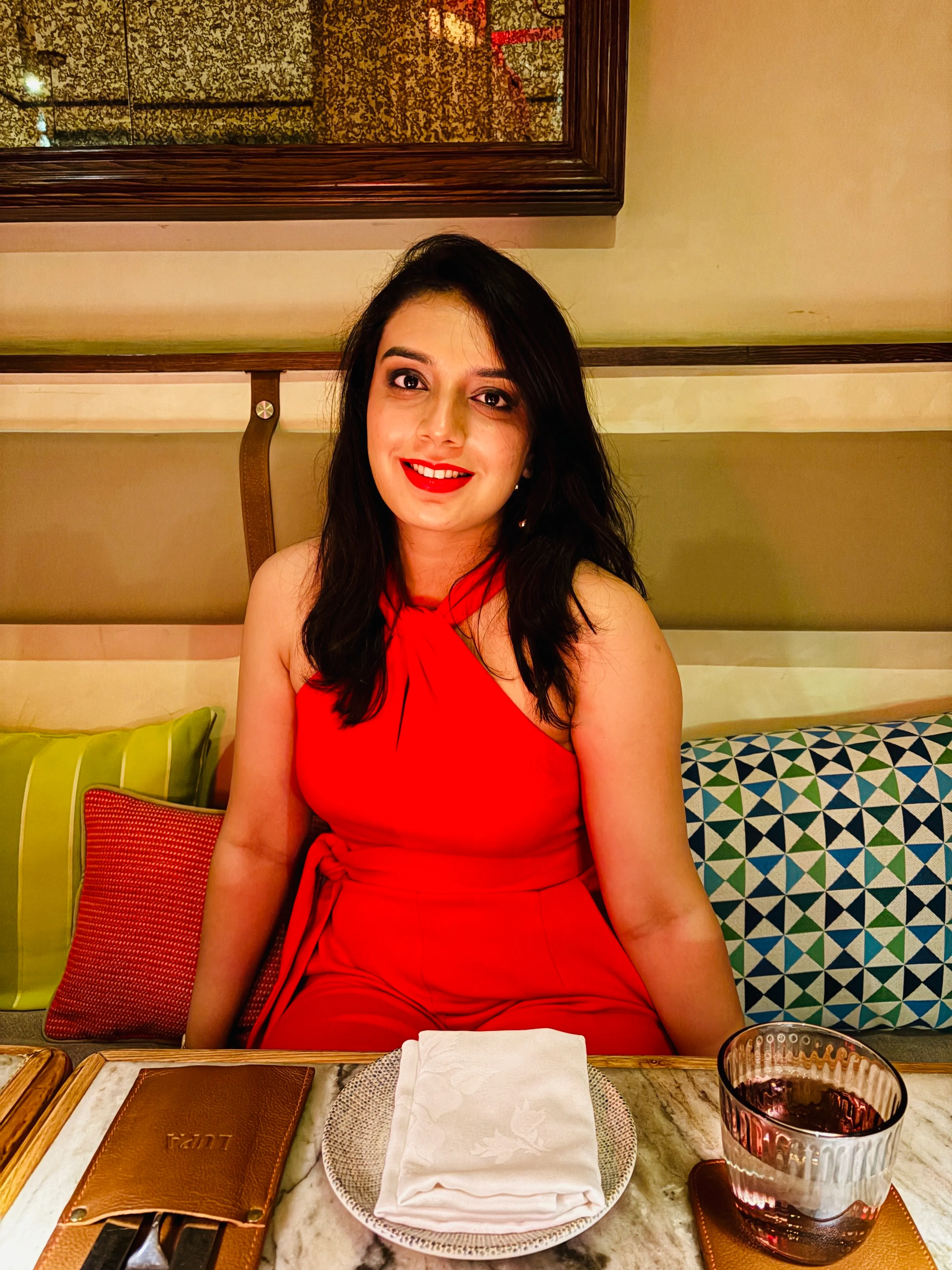
Vibha Harish was an industrial engineer, once on track at Rolls-Royce, when her own struggle with PCOS sent her looking for answers the mainstream supplement aisle could not give her.
She spent roughly five years studying herbalism before assembling a team of herbalists and doctors to formulate the first products, while her husband and co-founder Soorya Jagadish brought a former naval officer's operational discipline to the business side.
That is not a backstory bolted on for a campaign, it is the actual reason the company exists.
Authenticity is the one thing a wellness brand cannot fake for long, and Vibha's lived experience gives Cosmix an authority on hormonal and gut health that no marketing team can buy.
A credible founder is also a distribution channel in her own right, and this one anchored the brand's breakout moment on Shark Tank India and gives every product launch a built-in narrative.

A wellness brand with fifteen or more SKUs across gut, hormonal, skin, hair, sleep, immunity and energy has a design problem before it has a marketing one.
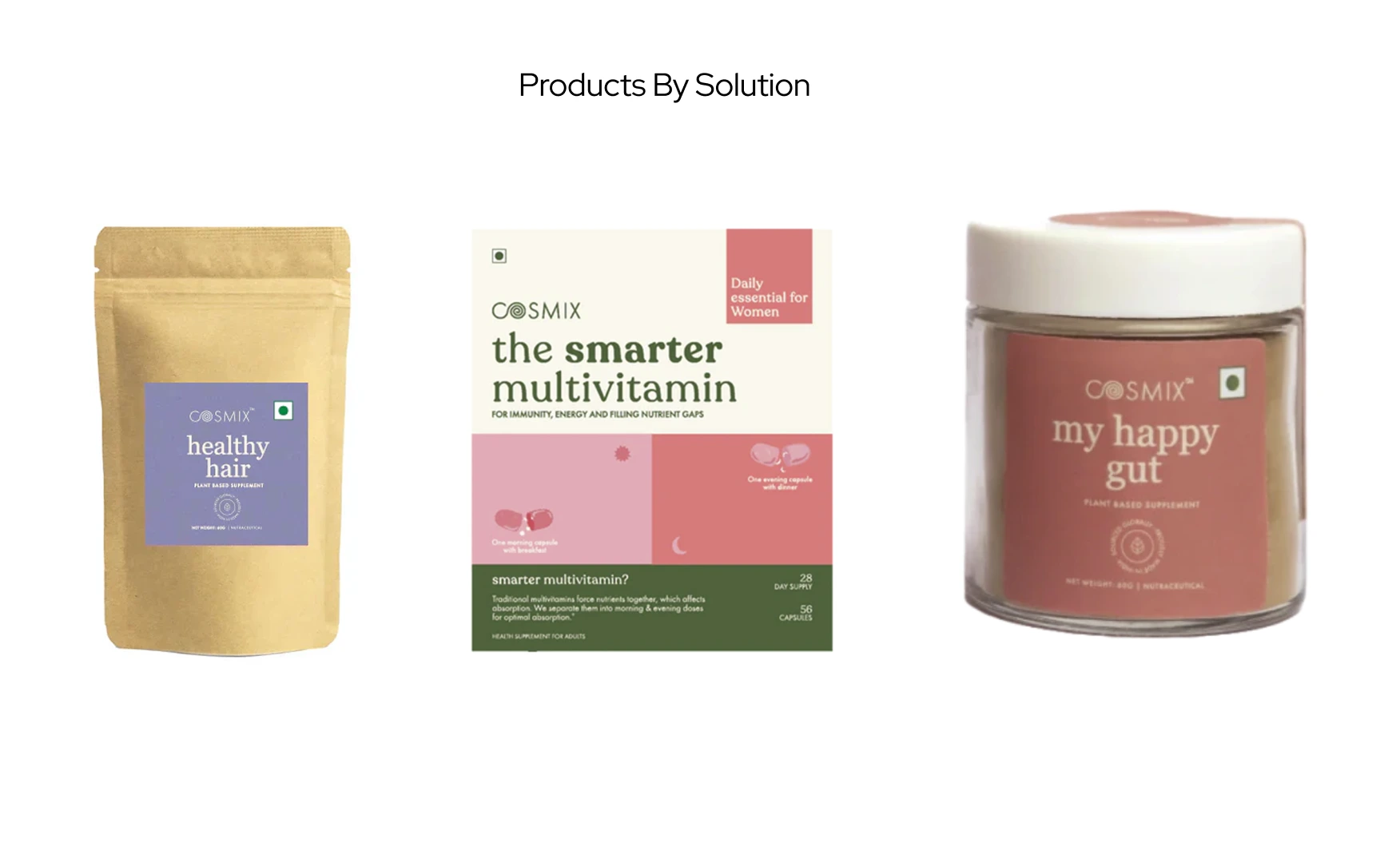
Cosmix avoided that trap by building a colour-coded visual system, where each health concern owns a colour and the packaging stays otherwise calm and consistent. That lets a wide and growing catalogue still read as one coherent brand rather than a shelf of unrelated tubs.
The palette is vibrant enough to feel energetic and health-forward, but the layouts stay clean and the typography stays legible.
That restraint is what keeps the range from tipping into the loud, over-designed look that plagues much of the supplement aisle.

Cosmix figured out early that the hardest part of selling clean nutrition in India is not price or product, it is belief.
Rather than fight consumer scepticism with louder claims, Cosmix chose to dismantle it with teaching, building an education-first Instagram presence at @cosmixwellness that explains how the body actually works before it ever asks for the sale.
The commercial payoff shows up in the numbers, with the brand now serving more than 2 lakh customers and reporting a repeat purchase rate in the 55 to 60 percent range, per coverage of the Marico deal.
A consumer who understands why she is taking a gut blend before her skin improves is a consumer who stays for the full protocol rather than churning after one disappointing month.
Education is a moat that deepens with time, and it is a real part of why a bootstrapped brand could grow this fast while staying profitable.

Cosmix built its lead in a window when clean, plant-based, root-cause wellness still felt novel, and that window is closing.
The brand now competes against a thickening field of well-funded challengers, including OZiva, Kapiva, Wellbeing Nutrition, The Whole Truth and Setu, several of which share large parts of Cosmix's own positioning around clean labels and transparency.
Above them sit the incumbents and the giants, from Herbalife and Amway to the FMCG majors now buying their way into wellness.
The risk is not that Cosmix loses on product, it is that the differentiators it pioneered become table stakes. Clean-label, no-filler and founder-led are increasingly the price of entry rather than a point of difference.
The Cosmix identity is clean, systematic and well executed, and that is exactly the point at which it could be pushed harder.
A colour-coded system is a smart organising principle, but it is a functional device more than an ownable one. Strip the colour coding and the name, and there is not yet a proprietary mark or recurring motif that would tell you this is Cosmix and nothing else.
This is a good problem rather than a bad one, since it is the difference between a brand that looks nice and a brand that is unmistakable.
The Whole Truth, one of Cosmix's own competitors, shows that functional clarity and iconic distinctiveness are not a trade-off once a brand turns its point of view into a full design language.

Marico's acquisition of a 60% stake for around ₹226 Cr, with an option to buy the remaining 40% after FY2029, is on paper the best thing that could happen to Cosmix.
Marico brings distribution reach, R&D depth and manufacturing scale that a bootstrapped brand cannot build alone, and the founders staying on as operational leads is the structure that should let the brand keep its voice while gaining an FMCG engine behind it.
The risk is the one every founder-led brand faces the moment a large corporate takes control.
Cosmix's entire value rests on things that are easy to erode under scale logic, the purity of its clean-label promise, the founder's voice and the education-first patience that big distribution targets rarely reward. The next two to three years will show whether Marico amplifies what makes Cosmix different or slowly sands it down into another line item in a wellness portfolio.
Cosmix has one of the clearest brand philosophies in Indian wellness, and it has not yet fully translated that philosophy into a design language only it could own.
The Root Cause worldview is distinctive on the page but generic on the shelf, expressed today mostly through colour and clean layouts that a dozen competitors could approximate. The opportunity is to give that idea a visual form, a proprietary system of marks, illustration or structure that makes the connected-body worldview something a consumer can recognise instantly.
Confetti's general experience with wellness and nutrition brands shows the strongest identities are legible and unmistakable at the same time.
Cosmix already has the harder half of that equation, a genuine point of view, and what it needs now is a design system with a memorable core.
The single most important task of the next chapter is protecting what made the brand acquirable while using the machine that acquired it.
The discipline is to expand the footprint without diluting the formulation purity, the founder voice or the clean-label promise the whole brand rests on, holding the line on ingredients even when volume targets tempt the business toward cheaper inputs.
Handled well, Cosmix becomes the credible, high-trust wellness brand inside a giant's portfolio.
Handled carelessly, it becomes a slightly cleaner version of everything else on Marico's shelf.
Cosmix's education-first approach is its most underrated asset and its biggest untapped opportunity.
The next move is to stop treating education as marketing and start treating it as a product in its own right, an owned platform that makes Cosmix the default place Indians go to understand gut health, hormonal health and women's wellness.
Whoever owns the education layer owns the top of the funnel for the entire category, and it is a moat no amount of Marico distribution alone could replicate.
Cosmix is one of the most impressive brand-building stories in Indian D2C wellness, and it earns that on fundamentals rather than hype.
It was built on a real founder problem, organised around a genuinely differentiated philosophy, and grown profitably from a rented apartment to a ₹375 Cr valuation without burning venture money to get there.
The tension is the one that comes with success, since the category Cosmix helped legitimise is now crowded with brands making the same promises, and its identity is cohesive without yet being iconic.
If you are building a wellness or nutrition brand and want your identity and packaging to carry the same weight as your formulation, get in touch with Confetti Design Studio.
Want strategic branding and packaging like this for your business?





.webp)
.webp)

.webp)
.webp)
.webp)
.webp)
.webp)







.svg)
.webp)






.svg)
.svg)
























































































.webp)










.webp)


.svg)