%201.webp)
02
AI Snaps
.svg)
.svg)
01
Our Work
03
About Us
04
Brand Audit
05
Contact Us
06
Client Success
12
07
Blogs
08
Careers
Book A Call
.svg)



Need Help In Building Your Brand?
Click the button below & book a call with our founder directly.

Rishabh Jain
Managing Director
Nicobar | Confetti's Verdict ⭐⭐⭐⭐
Confetti Design Studio has analysed Nicobar to understand how a lifestyle brand founded in 2015 by Simran Lal and Raul Rai, and opened to its first customers at Kala Ghoda, Mumbai in March 2016, has grown to Rs 200 crore in revenue in FY25 at 30% year-on-year growth with double-digit EBITDA margins, expanded to 31 stores across India with e-commerce contributing 40% of total revenue, all without raising a single rupee in external capital, without running a discount, and without borrowing a design language from anywhere outside the subcontinent it was built in.
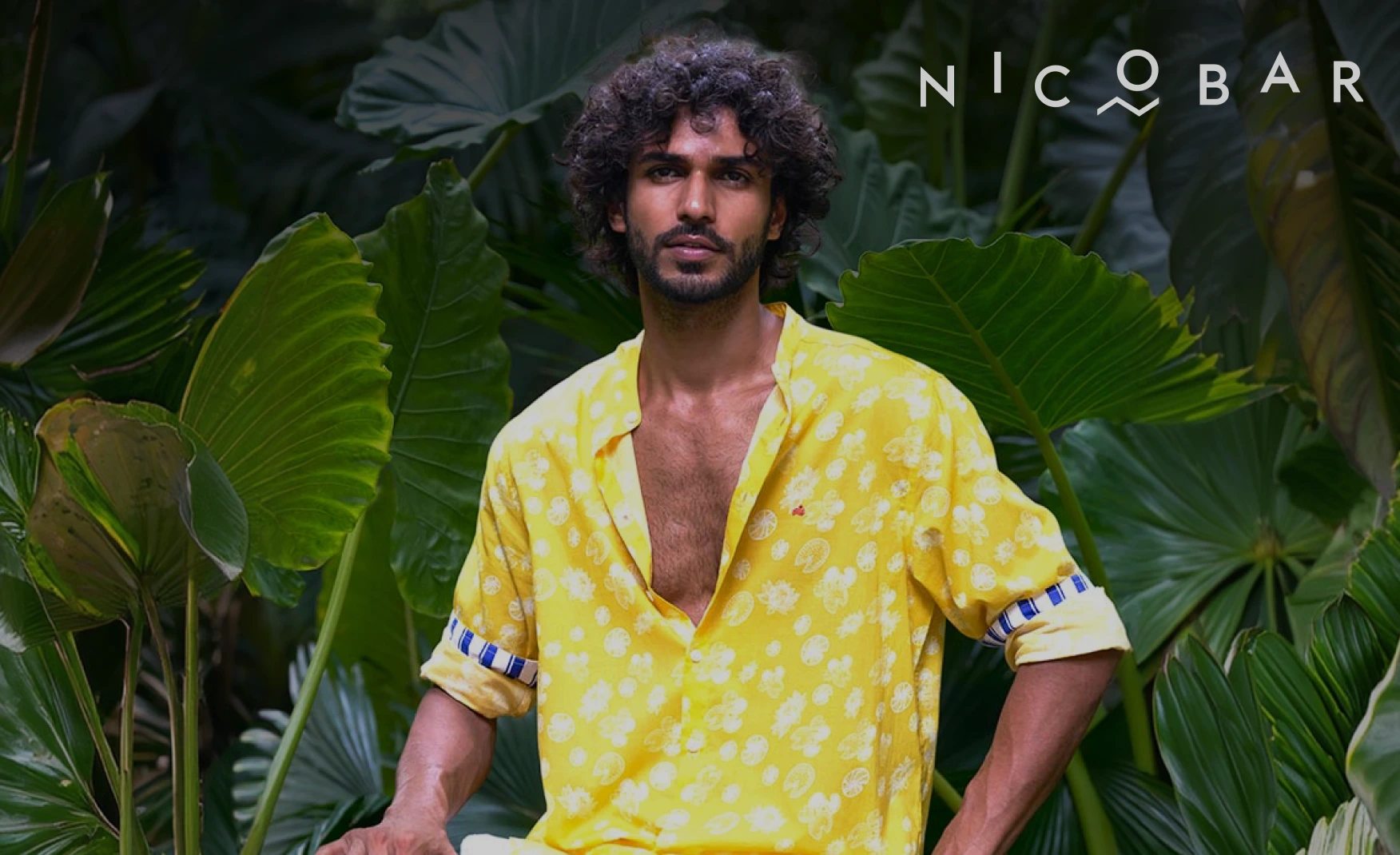
In the Indian D2C landscape, the dominant growth story involves raising venture capital, spending aggressively on customer acquisition, and treating profitability as a problem to solve later. Nicobar has spent a decade building the opposite of that. Every store in its 31-store network was funded by the revenue of the store that opened before it. The double-digit EBITDA margins and 30% annual revenue growth are the same achievement, which is that the brand has found a way to grow at a pace it can sustain without compromising the discipline that makes it worth growing.
What makes this more than a financial story is that the absence of external capital is functioning as a brand protection mechanism. Investor-backed brands face pressure that regularly conflicts with brand integrity. They discount to clear inventory, expand into new categories before the core business is ready and optimise for metrics that look good in a quarterly review rather than for the slower, harder work of building a consumer relationship that actually lasts. Nicobar has faced none of that pressure. When brands at Confetti describe where they want to go, the name Nicobar comes up more than any other Indian lifestyle label. That kind of reference-point status is earned through consistency over time, and it cannot be bought with a marketing budget or a PR campaign.
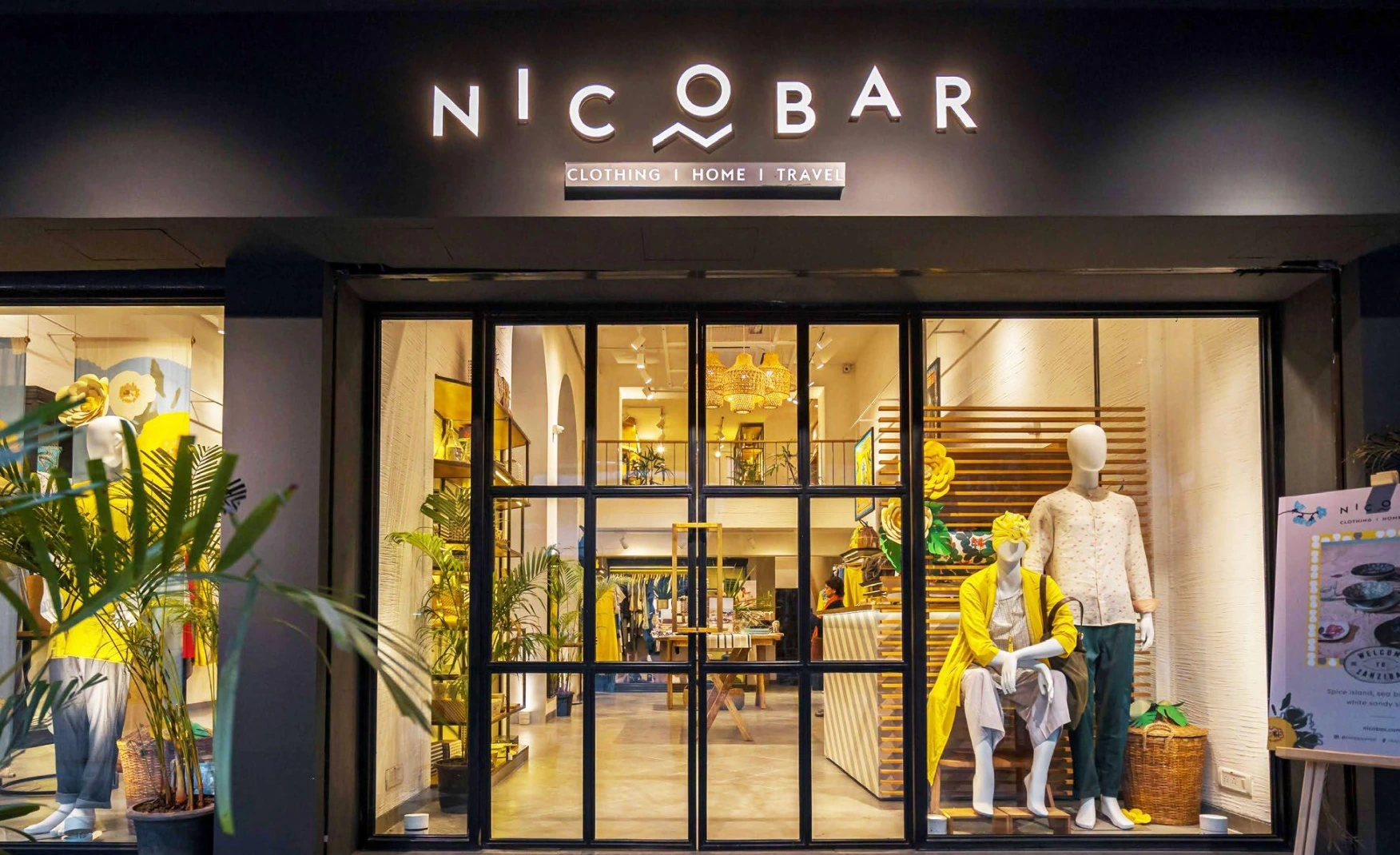
Nicobar does not run influencer campaigns as it does not have a celebrity face or a viral marketing moment in its history. Every visual communication the brand produces directs attention back to the object itself which is the fabric, the form, the print, the ceramic, the weave. This is one of the most difficult brand stances to hold in the attention economy, and it is the one that Nicobar has held consistently since the brand's first day. The conviction that the product is compelling enough that the person using it is beside the point.
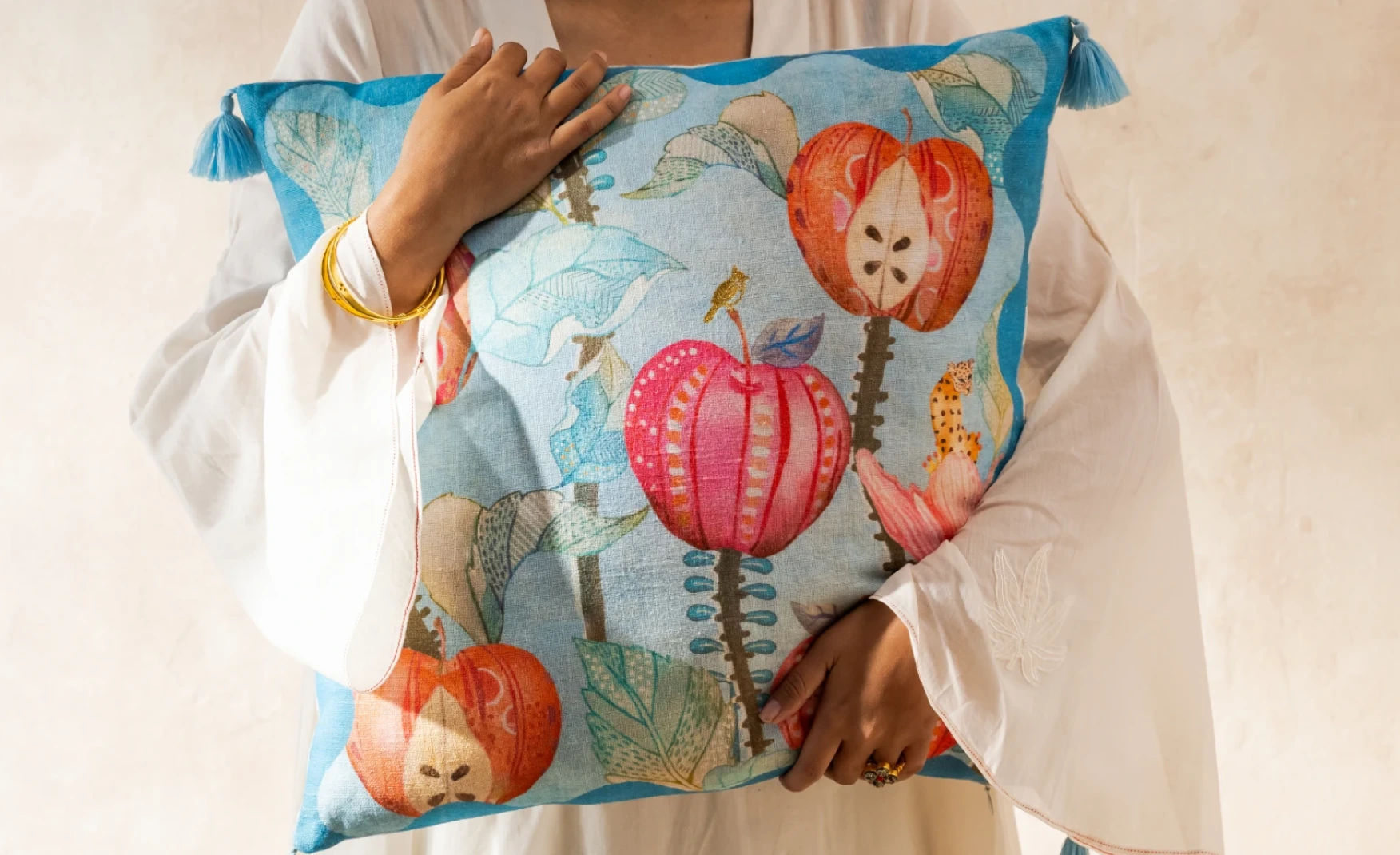
It works because the products genuinely support that level of visual attention. When the brand photographs a piece of handblock-printed linen against a clean background without a model, the consumer's eye goes directly to the object and forms a relationship with it on its own terms. That produces a different kind of desire from an influencer holding the product and telling them it is worth buying. The consumer feels as though they discovered something rather than were sold something. Rishabh, the founder of Confetti was gifted multiple Nicobar pieces at his own wedding last year, not because the brand ran a gifting campaign, but because people who know the brand trust it with significant occasions. Product-led brands earn that kind of endorsement, they just cannot manufacture it.

Most Indian lifestyle brands that claim an Indian aesthetic reach for one of a small set of visual vocabularies. Heritage craft motifs, spiritual iconography, Bollywood nostalgia. Nicobar does none of these. Its design language is contemporary, considered, and rooted in something harder to name and more genuinely Indian: the quality of light on the subcontinent, the intelligence of traditional material choices, the restraint that Indian craft at its best has always practised.
The result is a brand that reads as distinctly Indian without looking like a tourist's idea of India. The Indian consumer who buys Nicobar is buying something that reflects their own sophisticated aesthetic, not a product designed for an outside audience's version of their culture. The collaborations the brand pursues reinforce this: partnerships with designers who hold serious positions in the Indian fashion conversation, and a new interiors line developed with The House of Things in March 2025, signal that the design credentials are genuine and externally validated. A design philosophy that is original rather than derivative takes years of consistent decision-making to build, and it takes years of consistent decision-making to copy.

Nicobar has done something that most lifestyle brands attempt and very few achieve, it has built a coherent brand world that spans enough of a consumer's daily life that once they are inside it, the brand becomes genuinely difficult to step away from. Fashion, accessories, home decor, tableware, jewellery, gifting, and now wedding wear through the NicoBaraat collection launched in early 2026 with the range is wide enough that a committed Nicobar consumer can furnish significant portions of their daily aesthetic from a single design world. That breadth, held together by the same philosophy across every category, creates a compounding loyalty that single-category brands cannot replicate.
The WhatsApp gifting concierge is the most strategically interesting expression of this. It converts Nicobar from a product brand into a trusted advisor for significant personal purchases, a relationship that is meaningfully stickier than a transactional buyer-seller dynamic. The consumer who uses it once and receives a recommendation they can act on with confidence has integrated Nicobar into their decision-making in a way that goes beyond the purchase itself. The brand shows up reliably at weddings, housewarmings, and birthdays, which is not the result of a gifting campaign. It is the result of a decade of product quality that made trust the default.
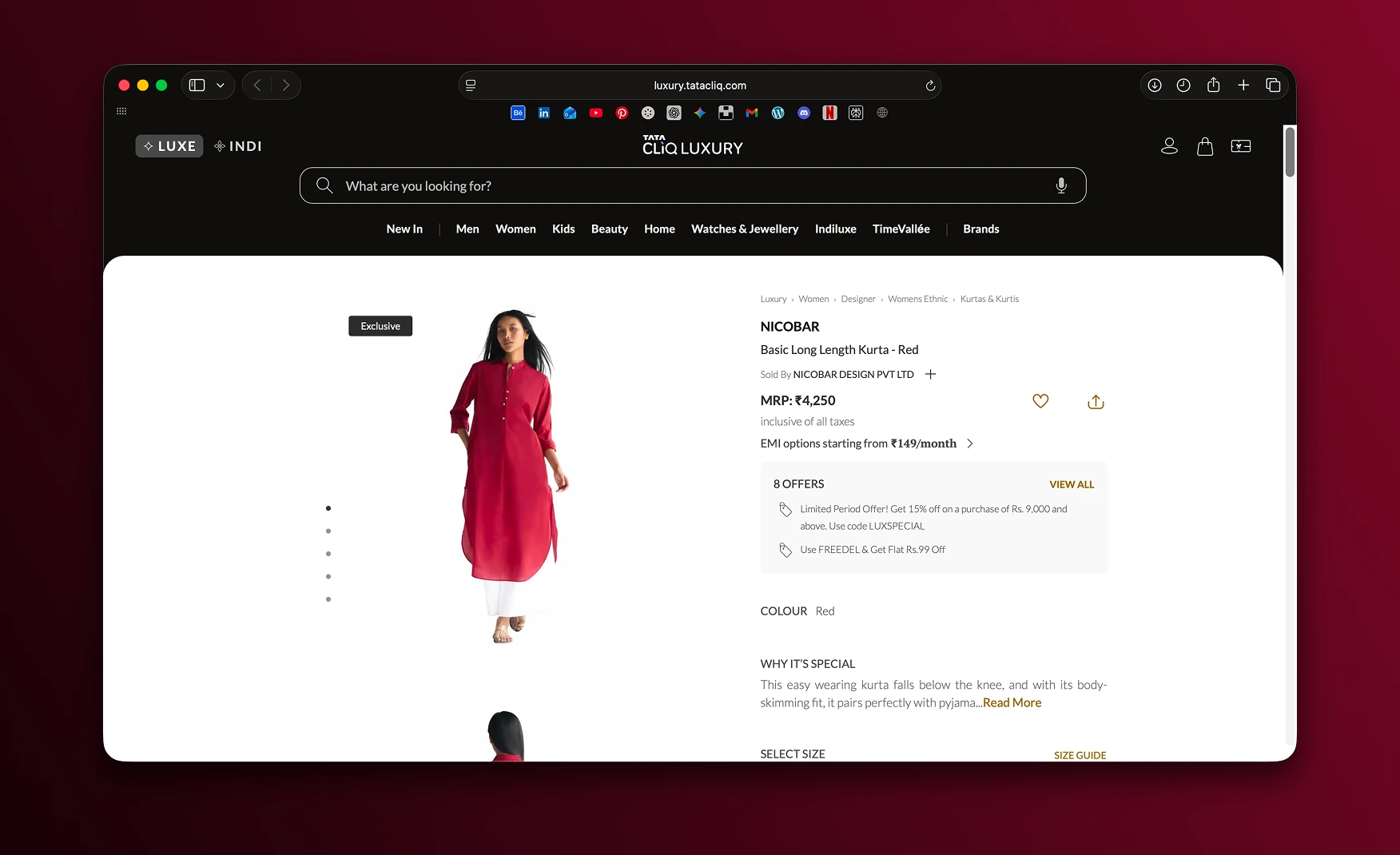
Nicobar's e-commerce flows primarily through its own platform, generating 40% of total revenue, supplemented by a deliberately limited partnership with Tata CLiQ Luxury. This is not a distribution gap. It is a refusal to compete on marketplace terms, where algorithmic visibility, aggressive discounting, and price competition determine outcomes far more than brand equity does. By keeping the primary consumer relationship on its own platform, Nicobar controls the brand environment, the pricing narrative, the content context, and the post-purchase relationship in ways that marketplace dependence fundamentally undermines.
The Tata CLiQ Luxury partnership is the right exception to that principle. CLiQ Luxury's consumer is already premium-disposed, browsing in a context that signals elevated taste, and comparing Nicobar against international lifestyle brands. Nicobar appears in an environment that reinforces its positioning rather than diluting it, which is the most important question a brand should ask before entering any new distribution channel. Most consumer brands get this wrong and distribute as widely as possible, trusting the brand to hold its value wherever it appears. Nicobar distributes selectively and curates the contexts in which new consumers encounter it for the first time.
When Nicobar launched in 2015, the contemporary Indian lifestyle brand category did not meaningfully exist as a commercial proposition. The brand had near-exclusive ownership of its positioning. In 2026, the space has significantly more entrants. Chidiyaa, Nappa Dori, Raw Mango, Torani, and a growing range of smaller design-led labels are all competing for the same design-conscious Indian consumer with aesthetics that share Nicobar's general sensibility. None of them match the execution, but the distinctiveness now has to be actively maintained through quality and consistency rather than assumed through category ownership that no longer exists by default.
The brand is also expanding into cities like Chandigarh and Lucknow, with Indore coming, where the consumer exists but where establishing brand presence without significant marketing spend is a different challenge from what worked in Mumbai and Delhi. This is not a reason to stay in the metros. It is a reason to think carefully about how the brand introduces itself to a consumer who has not had a decade to absorb it through passive cultural osmosis.
Nicobar has proven that the bootstrapped path works to Rs 200 crore. Whether it works to Rs 500 crore, especially into international markets, new categories, or deeper tier-2 penetration, is a different question from the one the brand has already answered. The brand will at some point have to choose between accepting external capital and its pressures, or accepting a growth rate that preserves the discipline but potentially cedes the category to better-capitalised competitors who are watching the model closely and learning from it.
Neither option is clean. Raising capital risks the brand-first culture that makes Nicobar worth investing in. Not raising it may leave the international opportunity, which is real and currently unclaimed, to competitors who move faster. The Eicher Goodearth parent structure gives Nicobar more runway than a standalone bootstrapped brand would have, which is a structural advantage. But it does not make the strategic choice disappear.
The WhatsApp gifting concierge currently operates as a genuinely helpful customer service function. Its potential is to become a flagship brand experience, something that people talk about and share in the same way that exceptional service always generates word of mouth. Investing in making the concierge genuinely exceptional means deeply personalised recommendations, bespoke gift notes, beautifully considered packaging for every concierge order, and a follow-up that makes the gifter feel as celebrated as the recipient. That converts a practical service into a brand story that people repeat. The brand that earns the position of India's most trusted gifting choice, and actively builds the experience to justify that position, has a competitive advantage that a product competitor cannot replicate. Product quality can be matched over time. A trusted relationship built through consistent, thoughtful personal service cannot.
Nicobar already reaches NRI consumers through e-commerce, but it has not yet made a deliberate move into international retail. The contemporary Indian aesthetic it has spent a decade refining has genuine international commercial appeal, not as an "ethnic" product serving a niche diaspora audience, but as a serious design-led lifestyle brand that happens to be rooted in one of the world's most sophisticated craft traditions. The Dubai market, the UK South Asian diaspora, and the design-curious international consumer who is ready for something beyond Scandinavian minimalism are all audiences that Nicobar's aesthetic is built to reach.
At Confetti, we worked on House of Agam, a premium South Indian rooted apparel brand where the challenge was building an identity that carried genuine cultural specificity without looking like it was designed for an outside audience's version of that culture. The discipline of that balance, being rooted and contemporary simultaneously, is what Nicobar has already mastered domestically. The international expansion work is largely about finding the right retail partners in the right markets rather than building the brand identity from scratch. The identity is already built.
Nicobar has a coherent aesthetic and a consistent design philosophy. What it does not yet have is an explicit brand idea, which is a statement of what it believes about living and making that is distinct enough from the product range to be repeated in language rather than shown in objects. The brands that scale without losing their identity are the ones that have articulated their organising principle clearly enough that every new product, new market, and new category can be tested against it.
For Nicobar, that idea is implicit in everything the brand already does. It lives somewhere in the intersection of modern Indian confidence, genuine craft intelligence, and the refusal to borrow a vocabulary from anywhere else. Making that idea explicit, in language the brand can use publicly and consistently, is what allows Nicobar to grow into new territories without fragmenting. The brand world is already coherent. What it needs is a sentence that holds it together when the objects are not in the room.
Nicobar has done something that most Indian consumer brands have attempted and almost none have achieved: built a premium lifestyle brand on design integrity alone, without external capital, without discounting, without borrowing another culture's aesthetic, and without compromising to hit a growth number. The Rs 200 crore revenue and double-digit EBITDA margins are the financial proof that design discipline, held consistently over a decade, is itself a business strategy. The brand has become the quiet reference point that newer Indian lifestyle brands cite when they describe where they want to go.
The rating reserves one star for the work ahead rather than for anything missing in what has been built. The capital question will need an answer. The international opportunity is real and currently unclaimed. And the brand idea that already lives in the design needs to be named before the design world gets crowded enough that being implicit is no longer sufficient. None of these are problems. They are the next questions for a brand that has answered the first decade's questions better than almost anyone.
If you are building a lifestyle brand and want an identity and product language that is genuinely rooted in who you are rather than adapted from what already sells, Confetti can help you build the brand your vision deserves.
Want strategic branding and packaging like this for your business?




.webp)
.webp)

.webp)
.webp)
.webp)
.webp)
.webp)







.svg)
.webp)





.svg)
.svg)








































































.webp)







.webp)



.svg)