%201.webp)
02
AI Snaps
.svg)
.svg)
01
Our Work
03
About Us
04
Brand Audit
05
Contact Us
06
Client Success
12
07
Blogs
08
Careers
Book A Call
.svg)



Need Help In Building Your Brand?
Click the button below & book a call with our founder directly.

Rishabh Jain
Managing Director
Bombay Shirt Company | Confetti's Verdict ⭐⭐⭐½
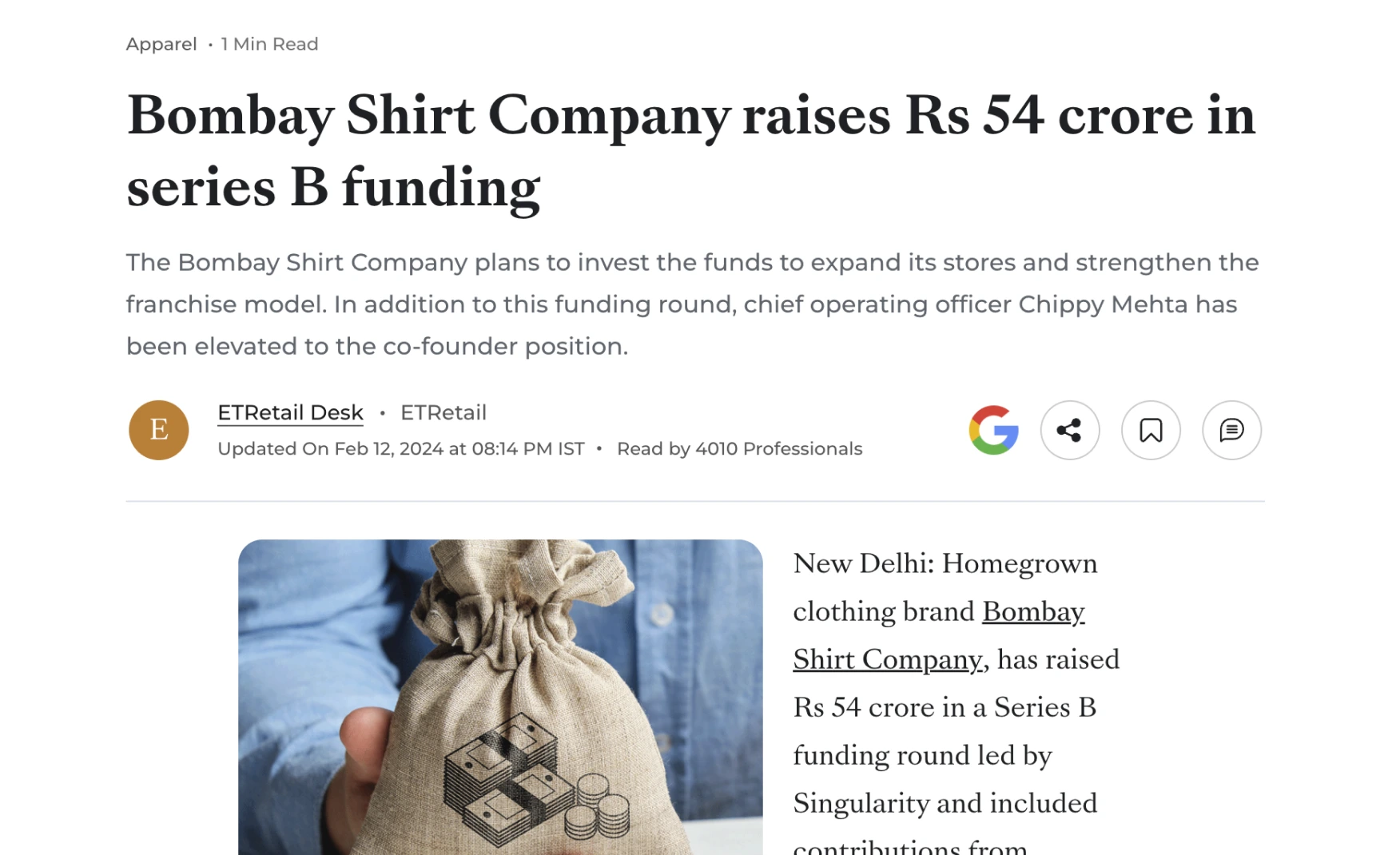
Confetti Design Studio has analysed Bombay Shirt Company to understand whether India's first custom shirt brand can take its made to order promise into 40 physical stores without it starting to feel ordinary. The brand closed FY25 at ₹71.8 Cr in revenue, growing from ₹52.6 Cr the year before, and raised a ₹54 Cr Series B from Singularity Ventures to fund the next phase of retail expansion.
Akshay Narvekar founded the company in 2012 on a simple frustration, that shirts built for mannequins rarely fit real men, and built the FitSmart algorithm and a zero inventory model to solve it properly.
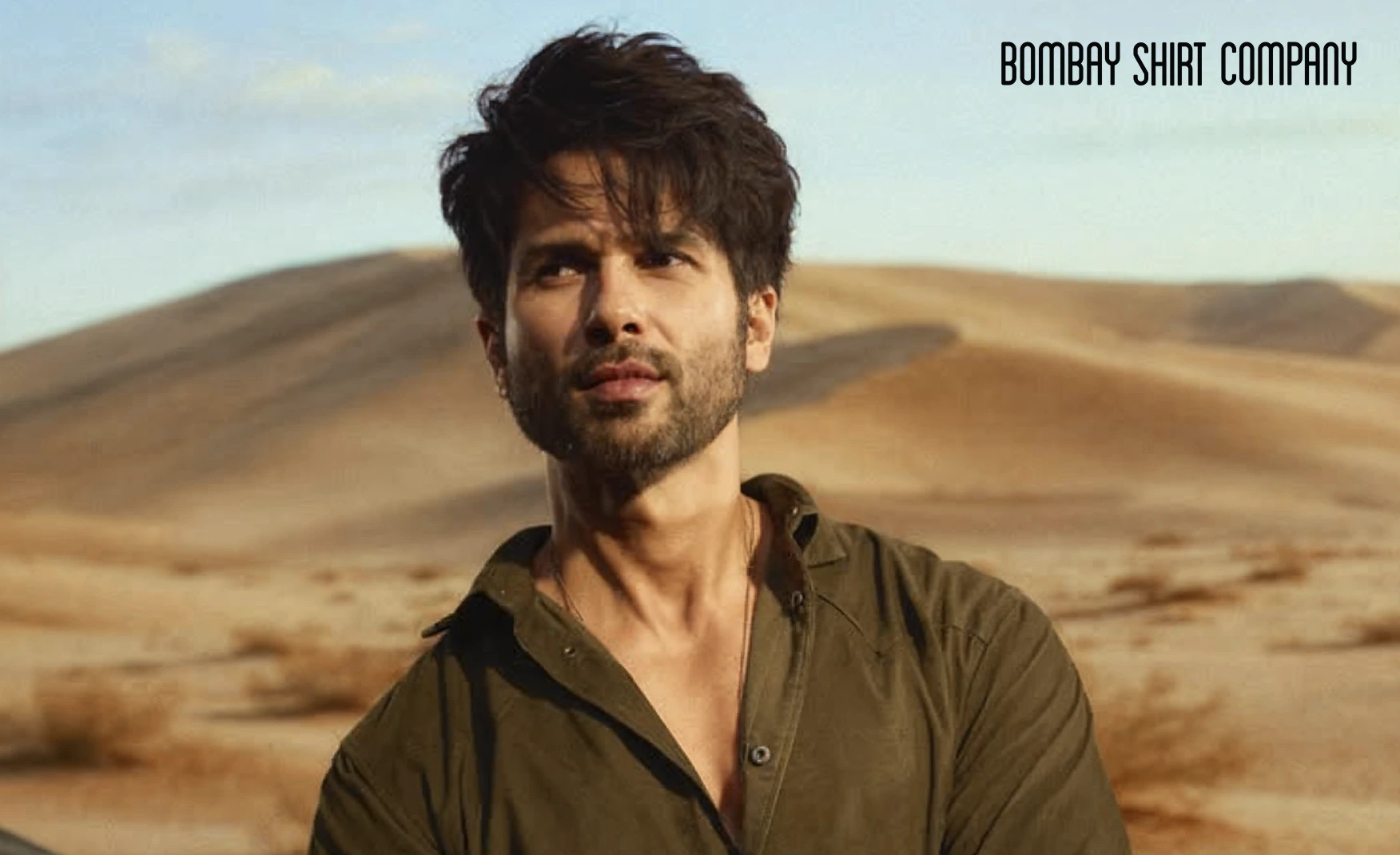
Every shirt at Bombay Shirt Company is made to order, so there is no unsold stock and no seasonal waste sitting in a warehouse.
That operational choice does double duty, working as both a genuine cost advantage and a story the brand can tell honestly, unlike most fast fashion labels claiming sustainability after the fact.
It also reframes the entire customer relationship, since nothing is made until someone actually wants it.
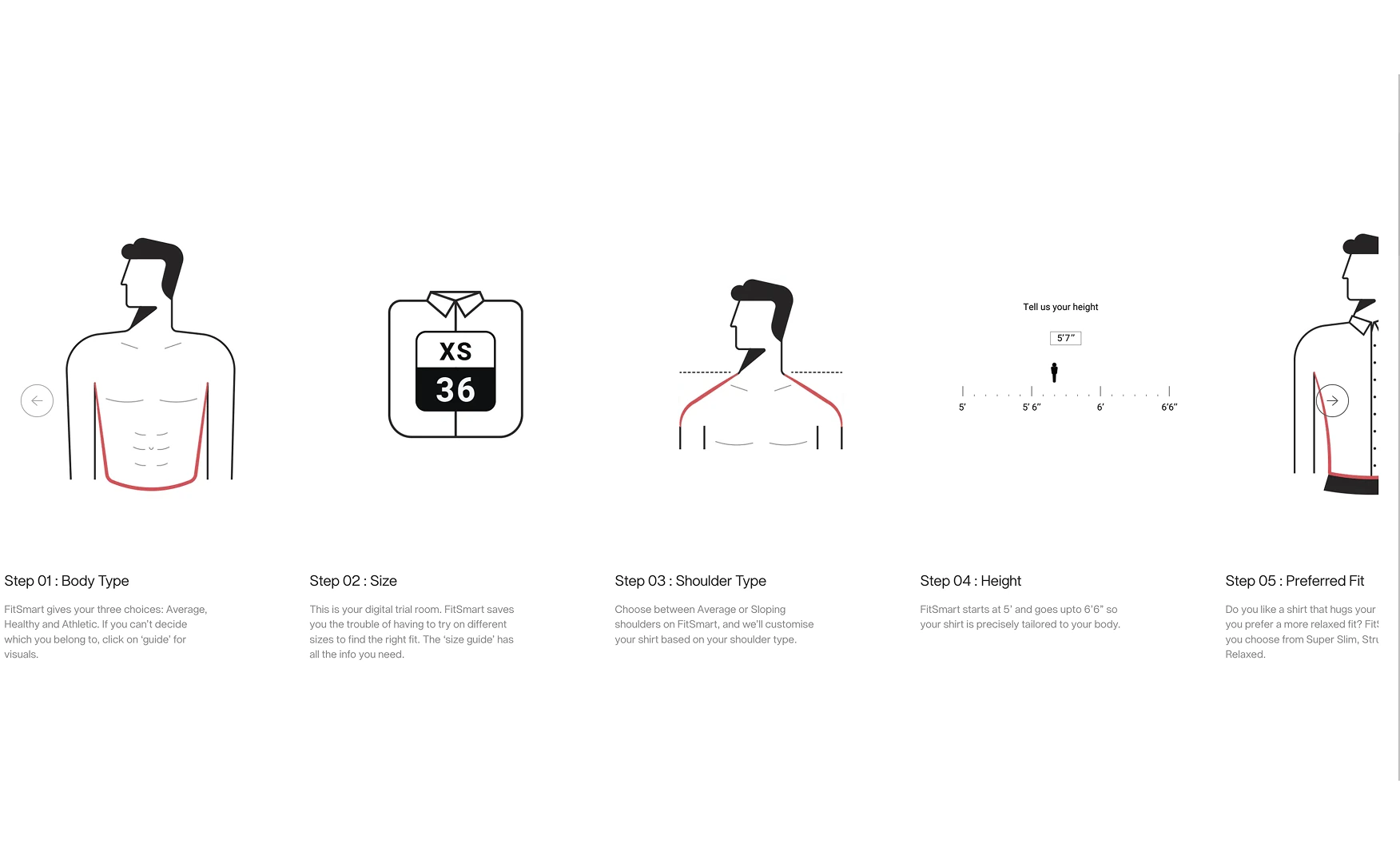
Off-the-rack shirts are built for a mannequin, and almost no real man is shaped like one.
FitSmart takes a customer's measurements and preferences and turns them into a genuinely personalised pattern, which is a real technical differentiation rather than a marketing label.
This is the rare case of a D2C brand solving an actual physical problem with actual technology, and it gives Bombay Shirt Company a defensible reason to exist beyond price or convenience.
Bombay Shirt Company grew revenue from ₹52.6 Cr in FY24 to ₹71.8 Cr in FY25, a healthy jump for a custom apparel business.
The ₹54 Cr Series B closed in February 2024 with Singularity Ventures leading and CaratLane founder Mithun Sacheti personally participating, which is a strong signal from someone who has actually scaled a D2C brand before.
Having a category veteran like Sacheti on the cap table is worth more than the cheque size alone, since his playbook from CaratLane is directly relevant to Bombay Shirt Company's own retail scale-up.
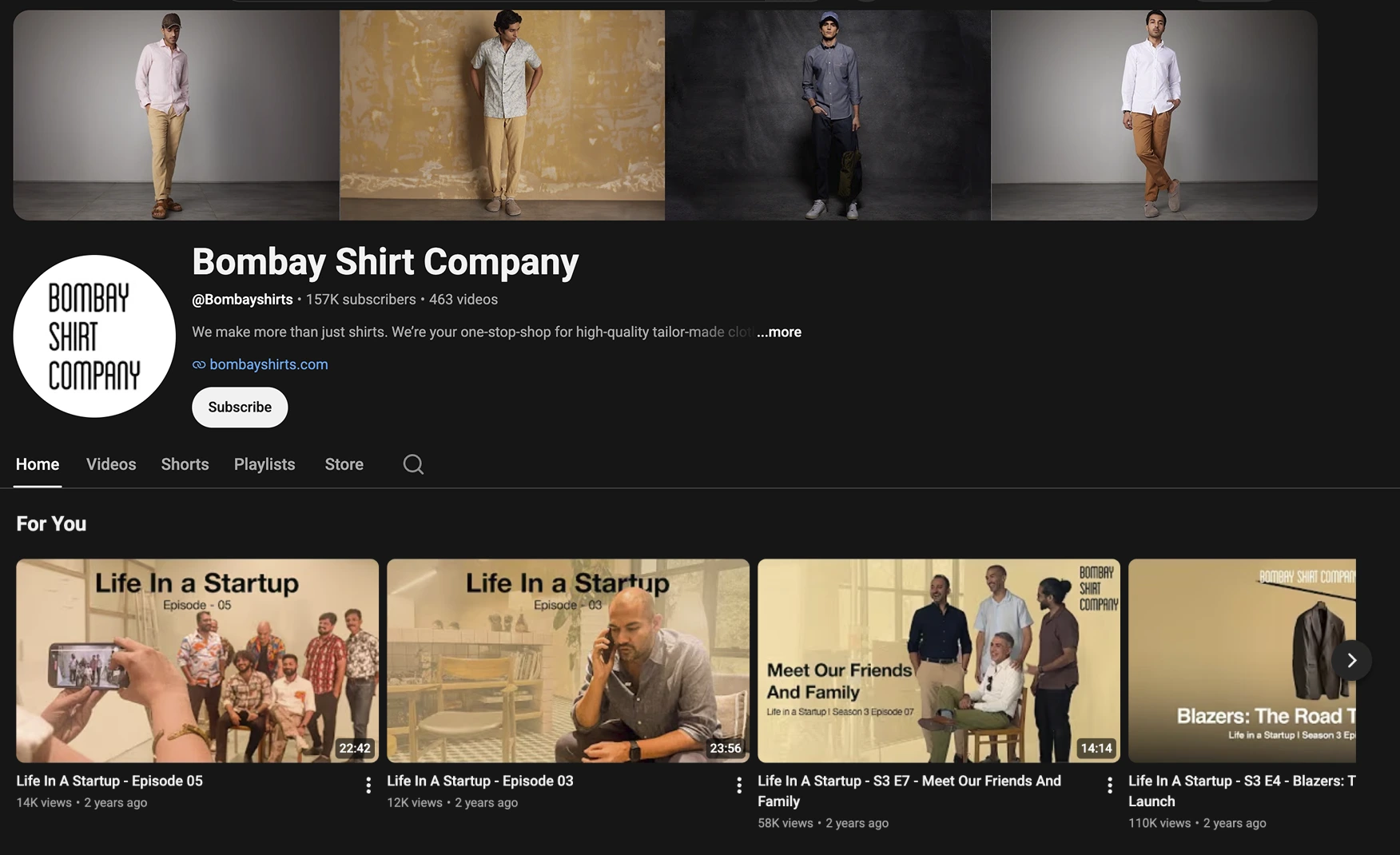
Bombay Shirt Company runs a weekly YouTube series called Life in a Startup, showing the office, the factory floor and the people building the brand.
The channel has built up around 1,50,000 subscribers, and the brand's Instagram sits at roughly 1,80,000 followers, both strong numbers for a menswear brand this specific.
Content that shows the craftsmanship and the people behind it builds trust in a way polished product shots alone cannot, and the brand has kept this format running consistently for years rather than treating it as a one-off campaign.
Going from one or two stores to 40 puts real pressure on the craftsmanship, turnaround time and quality consistency that justify the premium price.
Personalisation is the entire product promise, and personalisation is exactly the kind of thing that resists easy scaling, so the next two years of execution matter more here than in almost any other retail category.
Custom men's shirts is a specific, well defined use case rather than a broad lifestyle category.
The core customer is an urban professional male roughly 28 to 45, which limits how far the addressable market stretches without a genuine category extension.
Forty stores is a serious bet on a customer base that, by definition, cannot be everyone, and growth beyond this ceiling will need new product categories rather than more shirts.
The website reads as clean but genuinely templated, closer to a generic Shopify store than a brand built on bespoke tailoring. For a brand whose entire value proposition is personalisation, the site currently does very little to communicate that, leaving a real gap between what happens in a Bombay Shirt Company store and what a first-time visitor sees online.
The in-store experience and the YouTube content already tell a story of real craftsmanship that the website currently does not.
Rebuilding the site around the FitSmart process, the factory story and real customer transformations would close that gap quickly, and would give first-time online visitors the same confidence a physical store visit already builds.
The brand's biggest asset, the feeling that a shirt was made specifically for you, is also its hardest thing to protect at 40 locations.
A documented in-store ritual, consistent staff training and clear turnaround promises across every location would keep that feeling intact, rather than letting it erode as the network expands.
Bombay Shirt Company built something genuinely rare, a real technology solving a real fit problem, wrapped in a zero inventory model that is honest rather than performative.
What holds it back is a website and a visual identity that have not caught up to the product story, plus the structural challenge of scaling personalisation across 40 stores without losing what made it special in the first place.
If you are building a founder led product brand that needs an identity strong enough to scale into retail, get in touch with Confetti Design Studio.
Want strategic branding and packaging like this for your business?




.webp)
.webp)

.webp)
.webp)
.webp)
.webp)
.webp)







.svg)
.webp)






.svg)
.svg)









































































.webp)








.webp)



.svg)