%201.webp)
02
AI Snaps
.svg)
.svg)
01
Our Work
03
About Us
04
Brand Audit
05
Contact Us
06
Client Success
12
07
Blogs
08
Careers
Book A Call
.svg)



Need Help In Building Your Brand?
Click the button below & book a call with our founder directly.

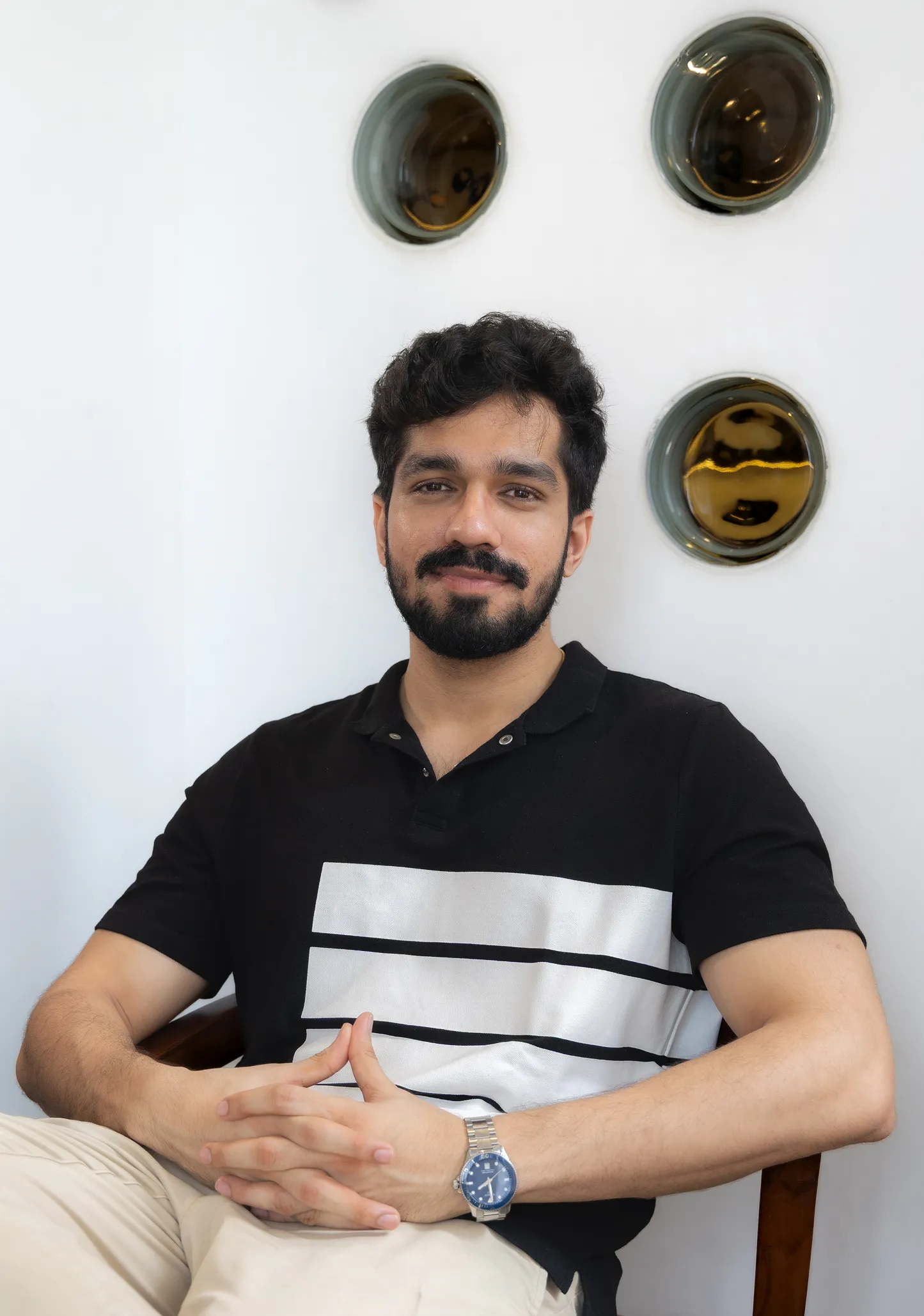
Rishabh Jain
Managing Director
Moxie Beauty | Confetti's Verdict ⭐⭐⭐⭐
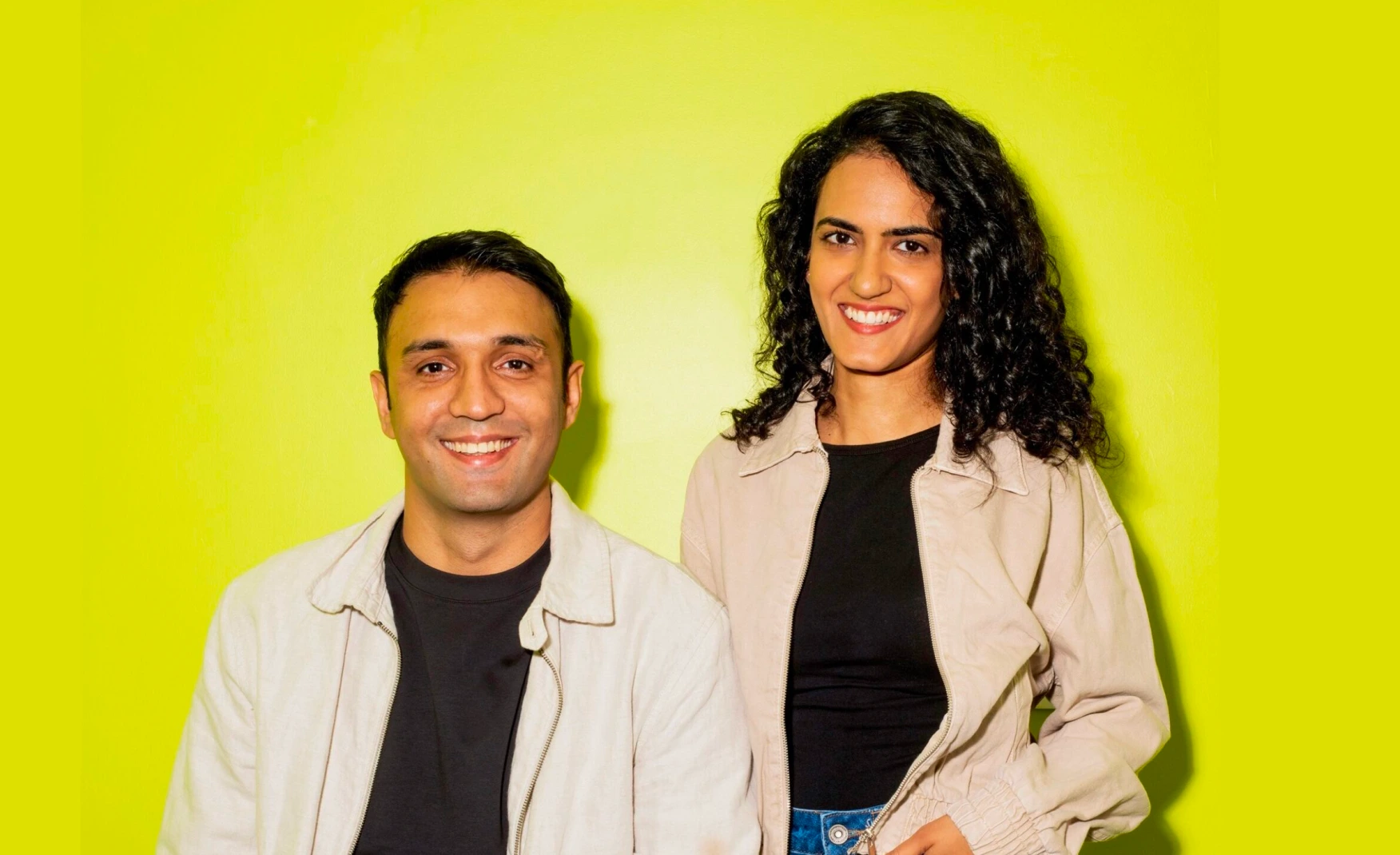
Confetti Design Studio has analysed Moxie Beauty to understand how a clean haircare brand launched in November 2023 by Nikita Khanna, a former McKinsey consultant and XLRI alumna, and Anmol Ahlawat, former General Manager at Paytm and FMS alumnus, grew to Rs 100 crore in annual recurring revenue within two years, 4Xed monthly revenue in the year since November 2024, reported Rs 18.6 crore in registered FY25 revenue, raised USD 17.8 million across four rounds including a USD 15 million Series A led by Bessemer Venture Partners in December 2025 with participation from Fireside Ventures and angel investors including Samir Singh (former Unilever CMO Personal Care), Suhasini Sampath (Yogabar), and the founders of Mokobara, and built a portfolio of 19 SKUs that rank among the bestselling products on Nykaa, Amazon, Blinkit, and Zepto, all by doing the thing every global haircare brand formulating specifically for Indian hair.
India has one of the most diverse hair populations in the world. The range of curl patterns, textures, porosity levels, and scalp conditions across Indian consumers is not a niche characteristic, it is the norm. Frizz in Indian humidity is a real and specific condition. Curly and wavy hair in India requires products that address the coil pattern, the climate, and the specific way Indian hair responds to protein and moisture. Global brands knew this and chose not to address it, because reformulating for the Indian market was a cost that did not justify itself against the volume they were already doing with Western formulations adapted for Indian distribution.
Nikita Khanna built Moxie Beauty because she lived this problem herself: hair she could not manage, products that consistently failed her, and the gradual realisation that the issue was never her hair. Khanna has been direct about the founding insight: India is simply not on the R&D roadmap for most global brands. As Rishabh, the founder of Confetti Design Studio can confirm from his own experience managing curly hair in India, the default assumption for decades was that your hair was the problem, never that the product was inadequate. The moment that assumption is challenged, and challenged with a product that actually works for the hair type it claims to serve, is the moment brand loyalty is created from the foundations upward. Moxie's entire commercial thesis rests on that moment.
The Indian beauty market is dominated by brands that try to serve everyone. Dove is for every woman. Pantene is for every hair type. The implicit message of this universal positioning is that your hair is like everyone else's hair, and this product is for everyone. For a consumer with curly or wavy hair who has spent years watching straight-haired models in these brands' advertising, the message is also clear in its absence: this brand is not actually built for you.
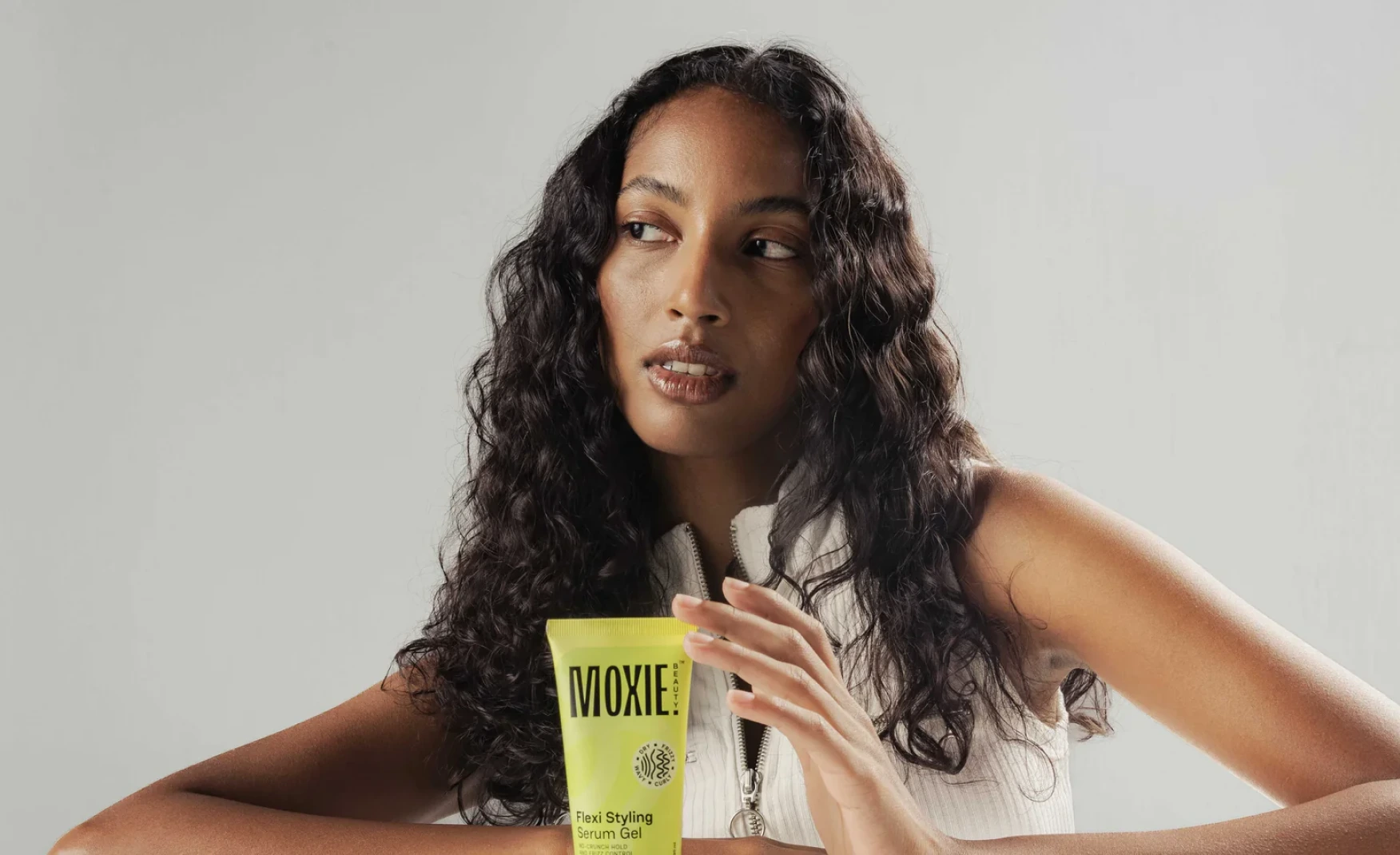
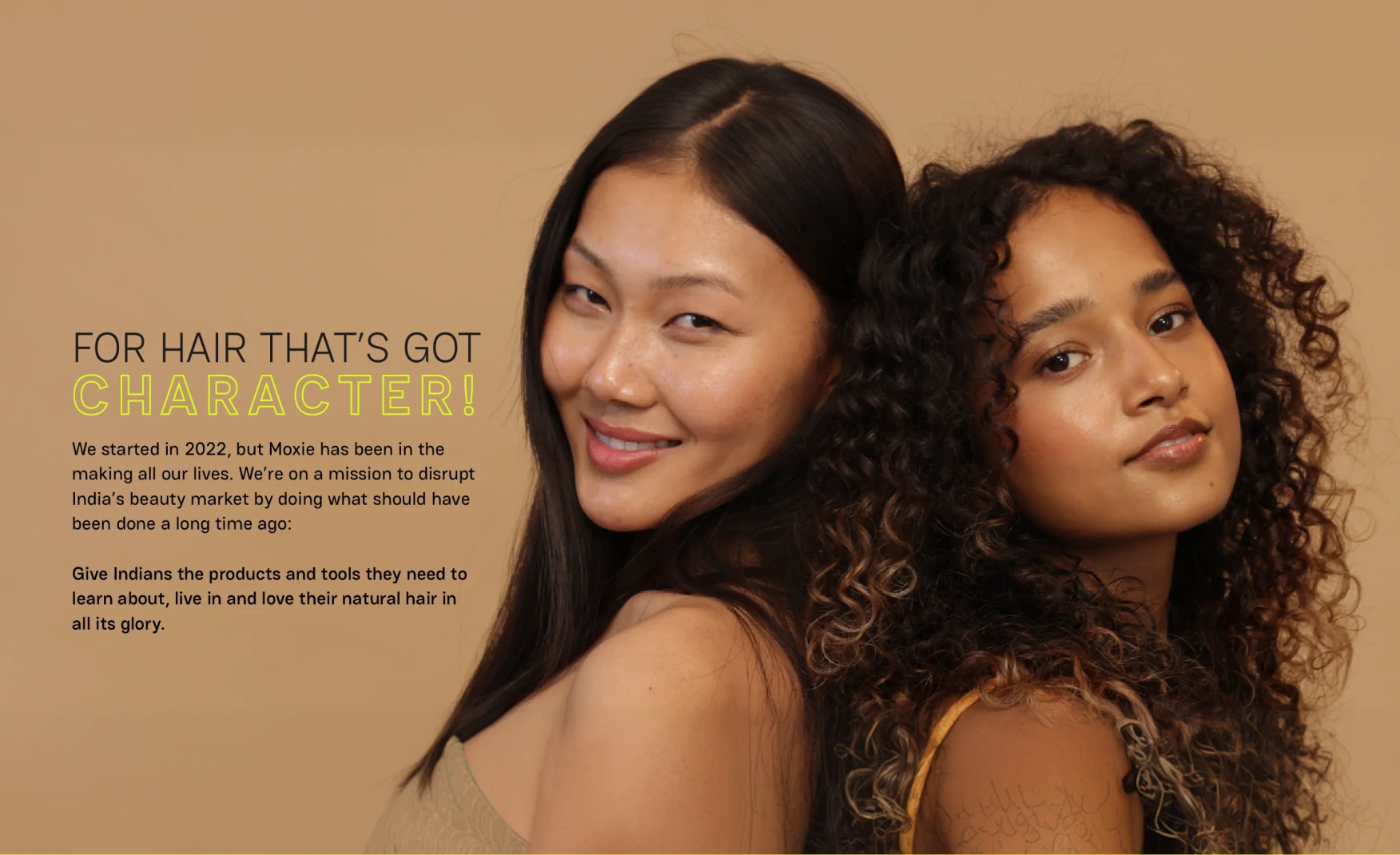
Moxie made the opposite commercial bet. The brand is explicitly, visibly, and proudly for people with curly and wavy hair. The photography, the product naming, the communication, and the brand world are all built around a specific hair type rather than a universal aspiration. This is a bet that most brand managers in large FMCG companies would decline to make, because it visibly excludes a portion of the addressable market, and it is precisely the bet that creates the consumer trust and loyalty that FMCG brands spend decades trying to manufacture through advertising spend. The international haircare market understood this logic years ago. Entire brand ecosystems exist specifically for curly and textured hair in the UK, the US, and the Middle East. India has been late. Moxie has arrived with the right product, the right positioning, and via the Bessemer Series A, the capital to execute at the scale the insight deserves.
The most strategically intelligent thing Moxie has done is not the product innovation or the distribution execution, it is a messaging decision. The brand's communication is built on a reframe that is simple, it was never your hair that was the problem. It was a haircare industry that spent decades making the curly-haired Indian consumer feel guilty about hair that did not fit the Western straight-hair mould, and which sold her products formulated for someone else's head.
This messaging works because it is true, emotionally resonant, and structurally impossible for the incumbent global brands to co-opt. Dove cannot run a campaign acknowledging that it spent thirty years ignoring Indian hair types without indicting its own product history. L'Oréal cannot celebrate the curly hair it never formulated for without undermining the authority of the products it sold to those consumers. Moxie has no such incumbency problem. The brand was born in this insight and owns it completely. The practical result is a consumer relationship built on vindication rather than aspiration. The consumer who finds Moxie is not just discovering a product that works, she is in fact receiving validation that her hair was never wrong, which is a qualitatively different emotional experience from discovering a better shampoo.
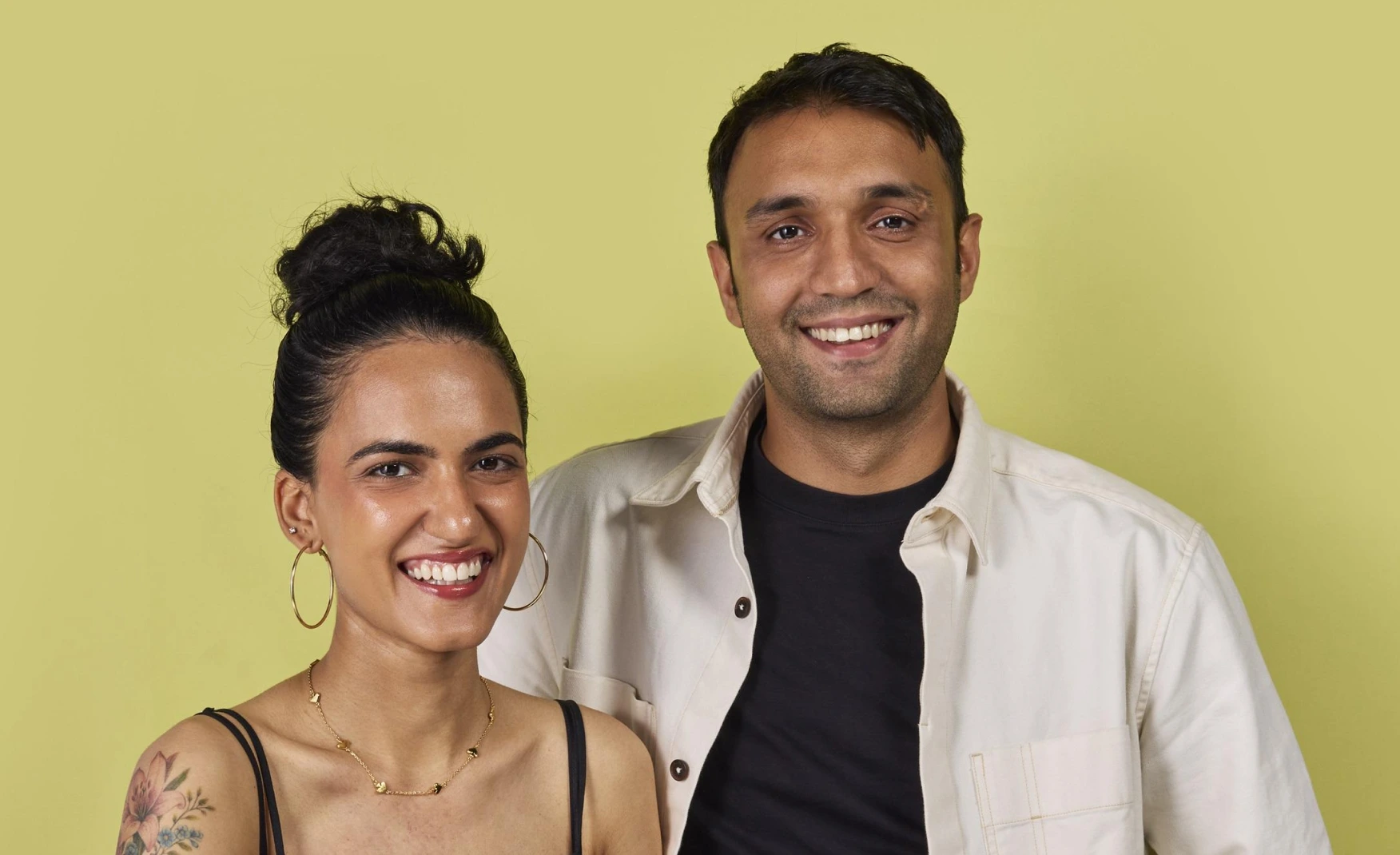
The founding team behind Moxie is not a pair of beauty industry veterans entering a familiar category. Nikita Khanna spent her pre-Moxie years as a consultant at McKinsey and Company, which gives her a specific kind of analytical rigour about market sizing, consumer insight, and operational structure that is less common in founder-led beauty brands than the industry sometimes assumes. Anmol Ahlawat was a General Manager at Paytm, which gives him a specific kind of understanding of digital distribution, growth marketing, and the mechanics of scaling a D2C business through Indian e-commerce and quick commerce infrastructure.
Both hold postgraduate degrees from top Indian institutions, Khanna from XLRI and Ahlawat from FMS. The angel investor roster reflects the credibility this founding team has assembled Samir Singh, former Unilever CMO Personal Care and Chair Unilever Asia, invested personal capital in a brand competing directly with his former employer's category. Suhasini Sampath, who built Yogabar from a founder insight into a major acquisition, invested. The founders of Mokobara invested. When operators who have built or overseen significant consumer brands put their own money into a two-year-old startup, they are communicating something specific about the founding team's quality.
The Bessemer partner who led Moxie's Series A noted that the brand's core products, shampoos and conditioners, rank among the bestsellers on most Indian e-commerce and quick commerce marketplaces. This commercial traction arrived before the USD 15 million Series A capital, which means it was earned rather than bought. The brand was growing without the media budget that a fully funded D2C brand would typically deploy at this stage.
The distribution footprint already in place tells the same story. Moxie is selling on its own website, Nykaa, Amazon, Blinkit, Zepto, and Swiggy Instamart. It has begun offline pilots with Bodycraft salons and entered modern trade through Health and Glow and Reliance Fresh Pick. For a brand 18 months into commercial operation at the time of its Series A, this omnichannel reach is unusual and reflects a founding team that understood that distribution breadth, not just D2C excellence, is what takes a haircare brand from enthusiast community to mainstream category player.
Rs 18.6 crore in FY25 registered revenue alongside a Rs 100 crore ARR claim is a gap that requires transparency as the brand scales toward institutional partnerships and modern trade relationships where financial credibility matters beyond the D2C community that currently trusts the brand's commercial narrative. The four-fold monthly revenue increase makes the trajectory credible, and the ARR figure likely reflects a post-November 2024 run rate rather than annualised registered revenue. But investor conversations, retail buyer conversations, and future funding rounds will each require a cleaner line between claimed and auditable commercial metrics.
This is not a criticism of the brand's commercial performance, which is genuinely strong for a two-year-old business. It is an observation about the brand's communication as it moves from D2C startup to serious omnichannel beauty brand. The brands that build the most durable institutional credibility are those that explain the basis of their headline numbers before anyone asks, not after.
Moxie has a resonant consumer message and a strong product thesis. The brand identity system, the visual language, the packaging design, the brand world in its fullest expression, is nascent for a brand with USD 17.8 million in total funding and Rs 100 crore in claimed ARR. This is not unusual for a brand that has deployed capital primarily into R&D and performance marketing in its first two years. It does become commercially material as distribution expands into modern trade and salon channels where the packaging and shelf presence carry the brand without the supporting digital context that D2C channels provide.
The consumer who finds Moxie on Instagram has a rich brand context around the product before she buys it. The consumer who encounters it on a Bodycraft salon shelf or in Health and Glow has the packaging alone to make that argument. The investment in brand identity needs to move at the same pace as the distribution ambition, not behind it.
Moxie's product thesis is built from a specific, researched understanding of Indian hair textures, climate conditions, and the formulation gaps that global brands left open. The visual identity should be built from the same specificity. The brand that is celebrating curly and wavy Indian hair deserves a design language as distinctive and unapologetic as the hair it is championing, not a clean D2C aesthetic borrowed from global beauty conventions, but something that looks like it was built from the coil and texture and movement of actual Indian curls.
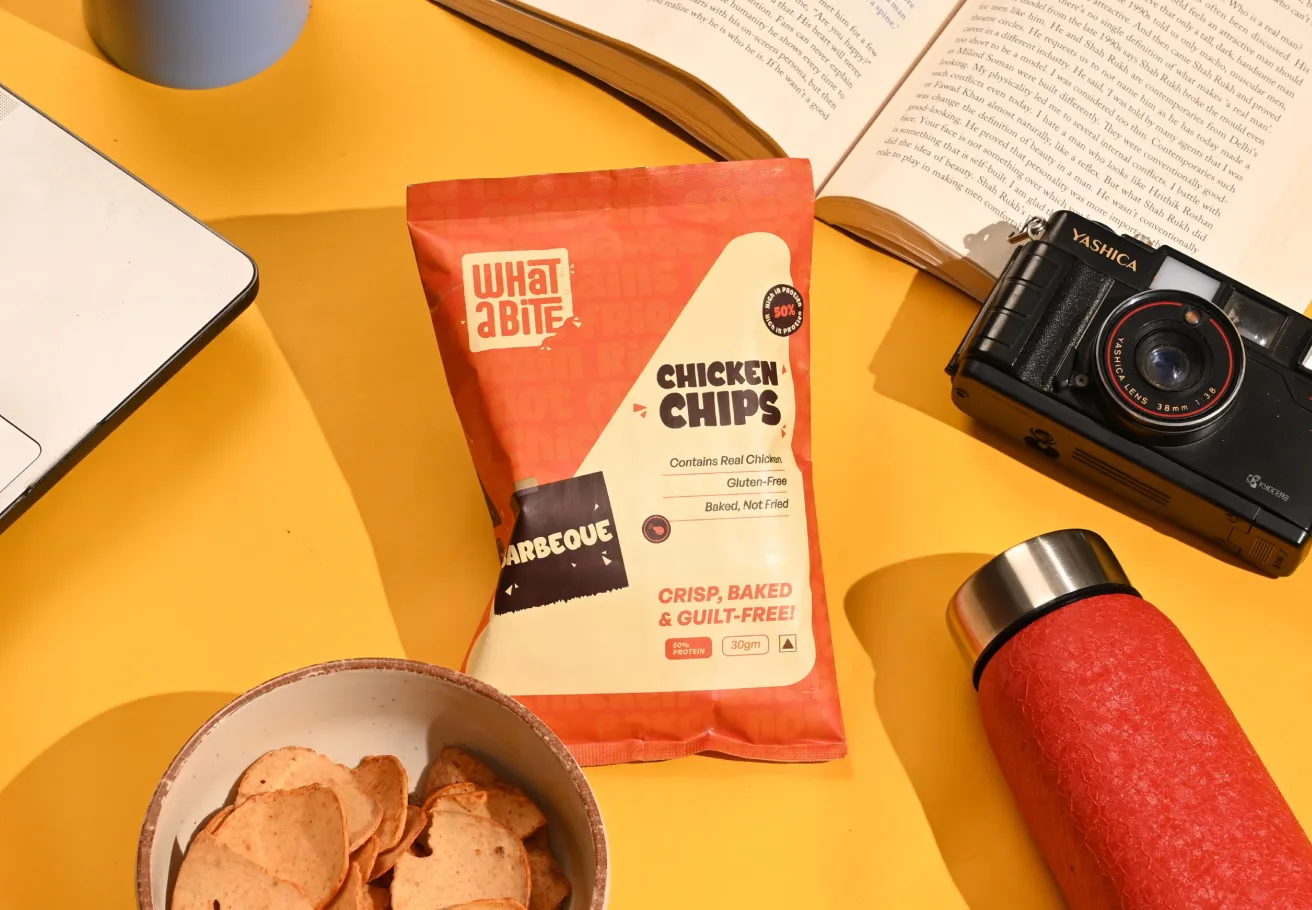
At Confetti, we think about this as building a brand identity from the material truth of the product outward. For Moxie, the curl pattern, the frizz behaviour in Indian humidity, the specific colour and weight of Indian textured hair: these are design properties, not just brand properties. A visual identity built from these material truths creates something that is unmistakably Moxie and unmistakably Indian in a way that no competitor can replicate by changing their colour palette. Our work with WhatABite, a brand operating in a category that required significant consumer education and a distinctive visual identity to stand apart from a generic shelf, is the most directly relevant reference for the kind of visual specificity Moxie needs.
The window in which Moxie can establish itself as the definitive Indian curly and wavy haircare brand is finite. The commercial logic of India-specific hair formulation is too compelling for global brands to ignore indefinitely. When a Dove curl range arrives, or an L'Oréal India-specific formulation programme is announced, the consumer encounter will be with brands that have the distribution scale to reach markets Moxie has not yet penetrated.
Moxie's permanent advantages in that scenario are two things no incumbent can manufacture retroactively, the authentic origin story, a founder who built the brand because she personally needed it, and the eight-year head start in the cultural conversation about Indian hair that the brand is helping to create. Using the next 18 months to establish Moxie's name as synonymous with Indian curly and wavy hair, in salons, in modern trade, in the creator community, and in the everyday word-of-mouth of 1.5 million satisfied customers, is the work that makes the brand durable beyond the early adopter phase.
The Bodycraft salon pilot is the most strategically interesting distribution move Moxie has made. Salons are not just a retail channel in the haircare category. They are a recommendation channel. When a professional whose entire reputation rests on the quality of their hair outcomes recommends a product, the commercial weight of that recommendation is qualitatively different from a Nykaa bestseller badge or an Instagram creator partnership.
A stylist who uses Moxie on a client with curly hair, achieves a visible result, and recommends the product for home use is creating a consumer relationship that arrives pre-validated by professional expertise. In a category where the consumer's primary purchase barrier is scepticism, having salon professionals as the referral source is among the highest-quality acquisition channels available. The capital from the Bessemer Series A should be deployed into the salon channel more aggressively than the draft business plan probably contemplates, because the ROI on a professionally validated referral in this category is significantly higher than the ROI on digital performance marketing.
Moxie Beauty has identified one of the clearest genuine consumer insights in Indian beauty in recent years and built a brand around it with uncommon discipline. Specific product, specific consumer, specific message, and a founding team with the operational credentials to execute at the scale the insight deserves. The result is a brand that earns emotional loyalty rather than transactional repeat purchase, because the consumer who finds Moxie is not just discovering a product that works. She is receiving validation that her hair was never the problem, and that is a qualitatively different relationship from the one every other haircare brand in India is offering.
The rating reserves one star for two specific and solvable gaps. The brand identity system needs to match the product thesis in its specificity and distinctiveness, and the ARR-to-registered-revenue narrative needs to be clarified proactively before the institutional partnerships the distribution ambition requires begin asking the question. Neither of these is a fundamental business problem. Both are the natural challenges of a brand that has built faster than its systems have formalised, which is the right kind of problem to have at this stage of growth.
If you are building a brand around a specific consumer who has been systematically underserved by the category, and want a visual identity and brand narrative that makes that consumer feel genuinely seen rather than broadly addressed, Confetti can help you build the brand language that earns loyalty rather than just purchase.
Want strategic branding and packaging like this for your business?




.webp)
.webp)

.webp)
.webp)
.webp)
.webp)
.webp)







.svg)
.webp)



.svg)
.svg)







































































.webp)









.webp)



.svg)