%201.webp)
02
AI Snaps
.svg)
.svg)
01
Our Work
03
About Us
04
Brand Audit
05
Contact Us
06
Client Success
12
07
Blogs
08
Careers
Book A Call
.svg)




Need Help In Building Your Brand?
Click the button below & book a call with our founder directly.

Rishabh Jain
Managing Director
NEEDLEDUST | Confetti's Verdict ⭐⭐⭐½
Confetti Design Studio has analysed NEEDLEDUST, the brand that took one of India's oldest and least fashionable shoes and rebuilt it into a designer object worn by Deepika Padukone, Priyanka Chopra and Sonam Kapoor. Shirin Mann Sangha, a former investigative journalist, designed her own wedding juttis after finding nothing that met her standard, sold out her first batch within a week of listing it online, and never looked back. The brand has grown into a celebrity-favourite house that ships to over 200 countries, entirely without outside capital. This audit asks what a genuine category creator with this much cultural equity does once it bumps against the ceiling that occasion-led, handmade luxury eventually hits. This audit is as per August, 2026.
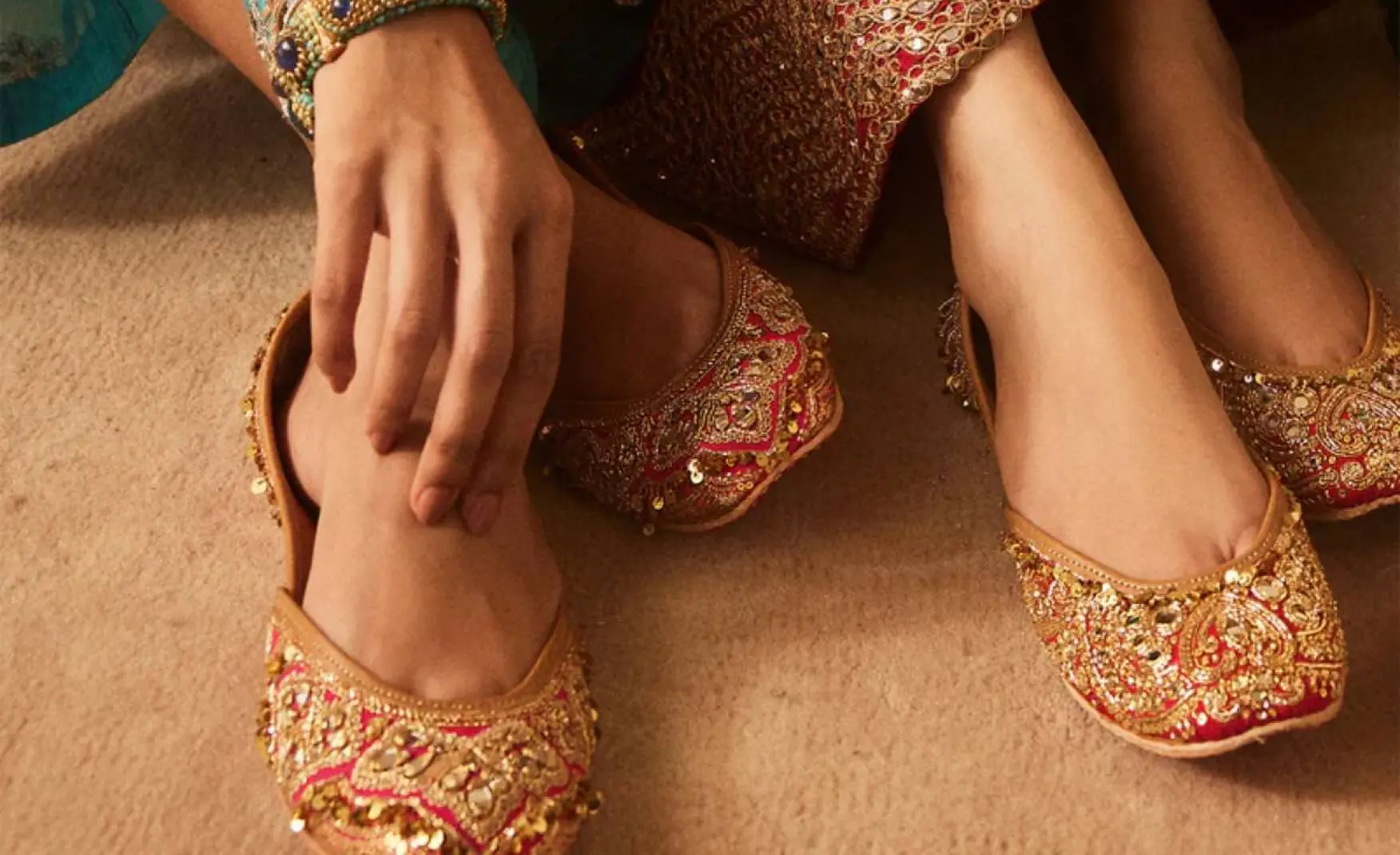
Most fashion brands enter a market that already exists and try to win share within it, Needledust did something harder.
It took the jutti, a shoe most urban Indian women associated with their mothers' wardrobes or cheap tourist-market pairs, and reframed it as an object worth designing seriously and paying a premium for. Before Needledust, the jutti was a commodity sold on price and nostalgia, and the brand is widely credited with legitimising the handmade leather jutti as its own design tier.
When an Indian bride or a stylist thinks of a designer jutti, Needledust is one of the first names that surfaces, and that association was built over a decade rather than bought in a quarter.
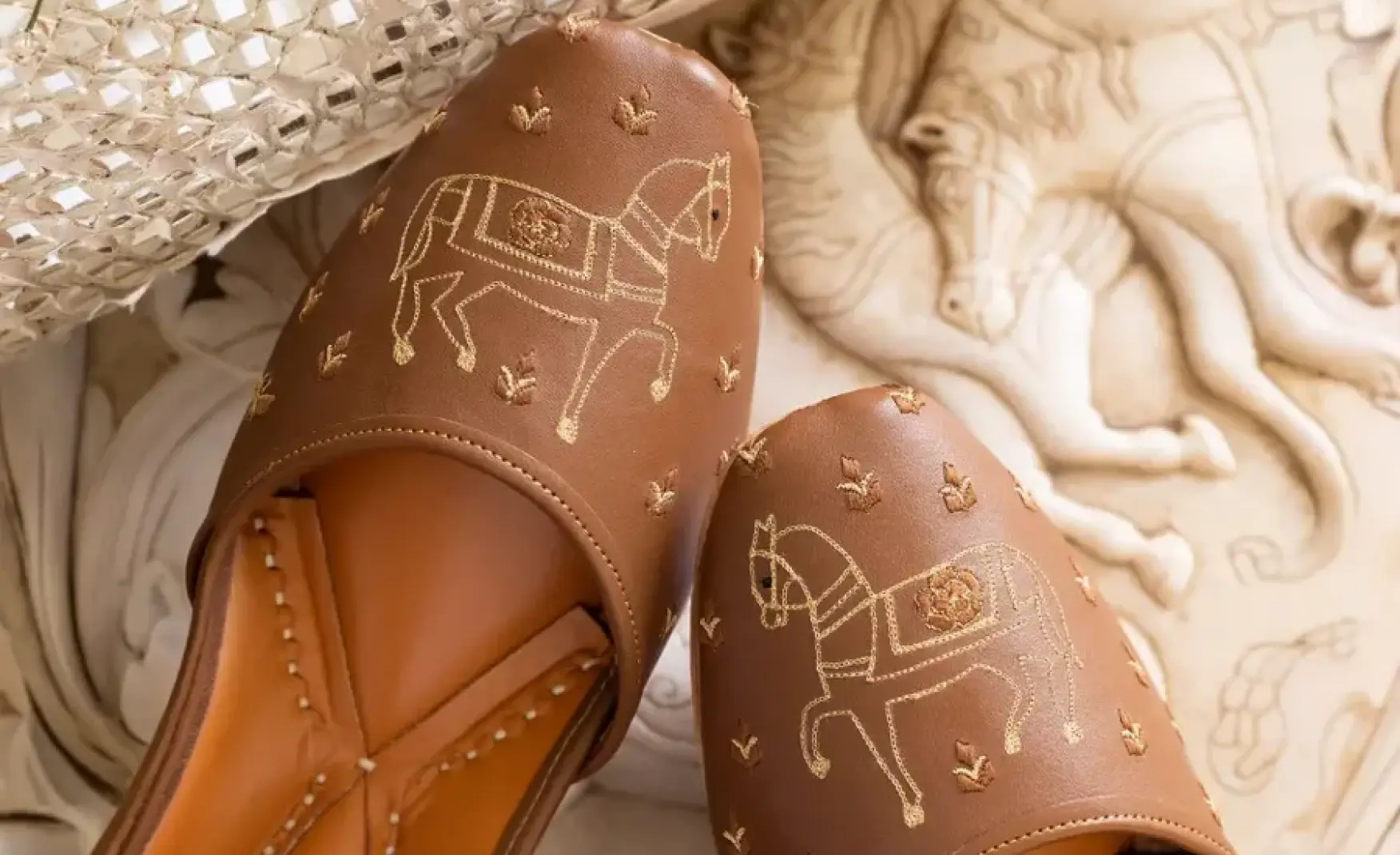
It is easy to look at Needledust and see only the embroidery, but the more durable innovation sits underneath, in the sole.
Traditional juttis are notorious for their stiffness, and Needledust treated that as a product problem to be engineered, cushioning the shoe with memory foam while keeping the traditional silhouette. Comfort is a smarter moat than decoration, since embroidery patterns can be copied within a season while a re-engineered fit built on genuine R&D cannot.
The brand reinforced this with a series of firsts, including becoming, by its own account, the first handicraft brand to collaborate with Swarovski, and adding made-to-order customisation.
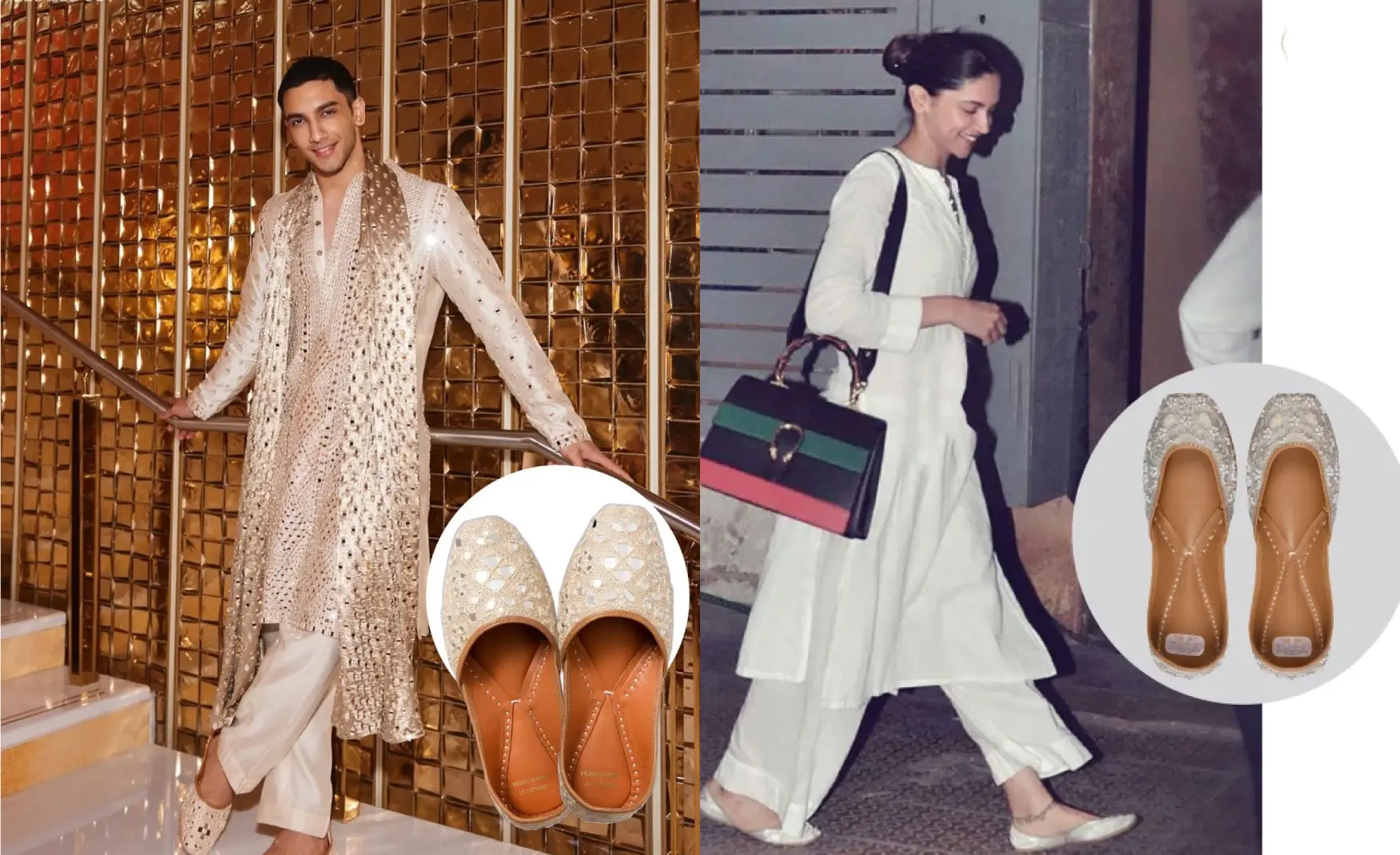
Needledust's most visible asset is the roster of names attached to it, and the important detail is how that roster was built.
Sonam Kapoor wore the brand first, and Deepika Padukone, Priyanka Chopra, Alia Bhatt, Kangana Ranaut, Kareena Kapoor and Sara Ali Khan followed organically, with both Chopra and Padukone choosing Needledust for their own weddings. The brand also supplied designs for high-visibility films including Padmaavat and Veere Di Wedding.
Earned celebrity adoption reads as taste rather than advertising, and for a bootstrapped company that effectively substituted for a marketing war chest, amplified by an Instagram following of roughly 546,000.
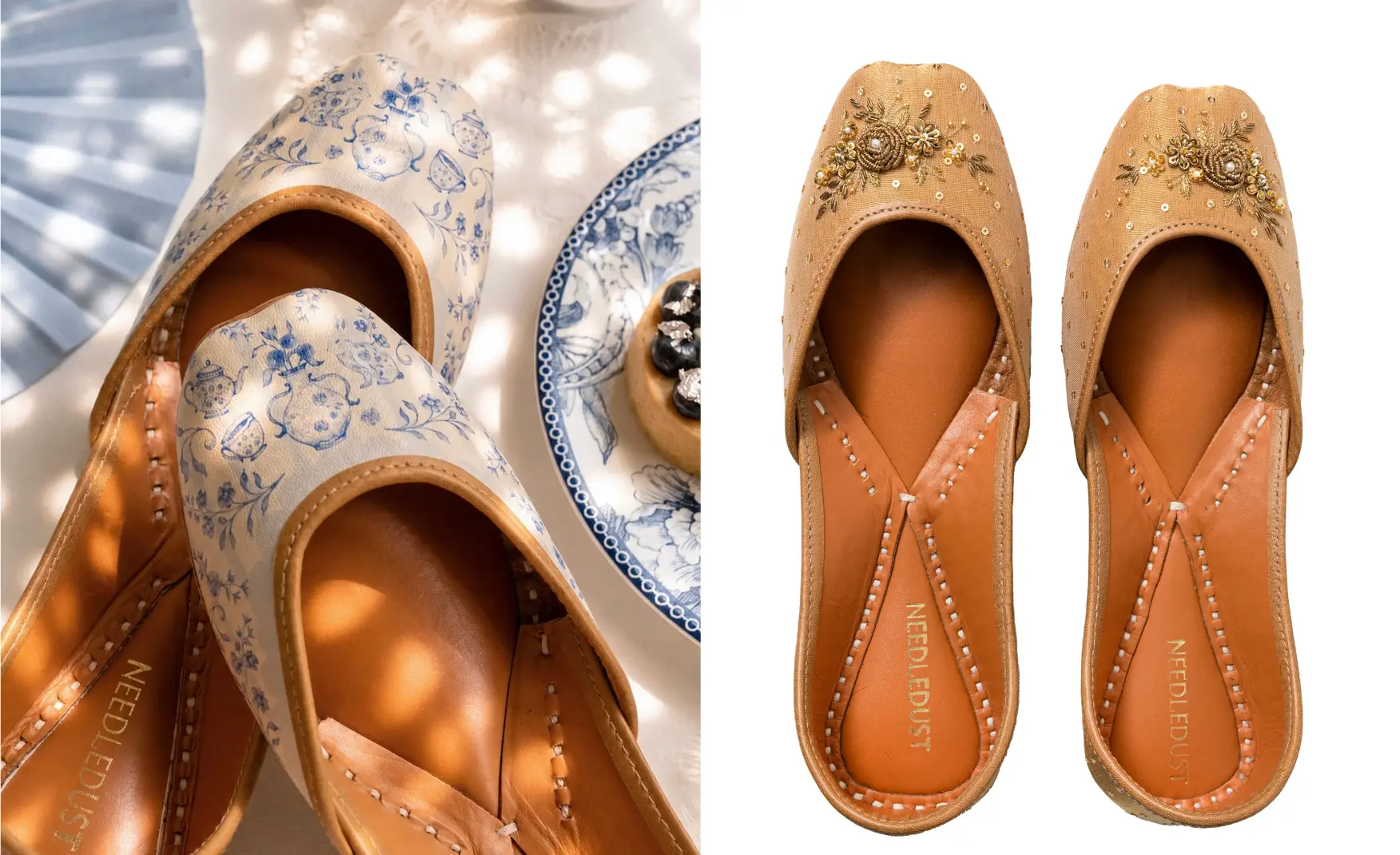
Needledust is an unusually good name, evoking the fine dust of hand-embroidery and the intimacy of the needle without ever naming the shoe outright.
The brand describes its mission as sustaining the finery of an heirloom, which frames a jutti not as a fashion purchase but as something closer to an inheritance. That framing justifies the price and defends against cheaper imitators, since the buyer is no longer comparing on price but buying into a story about craft and permanence.
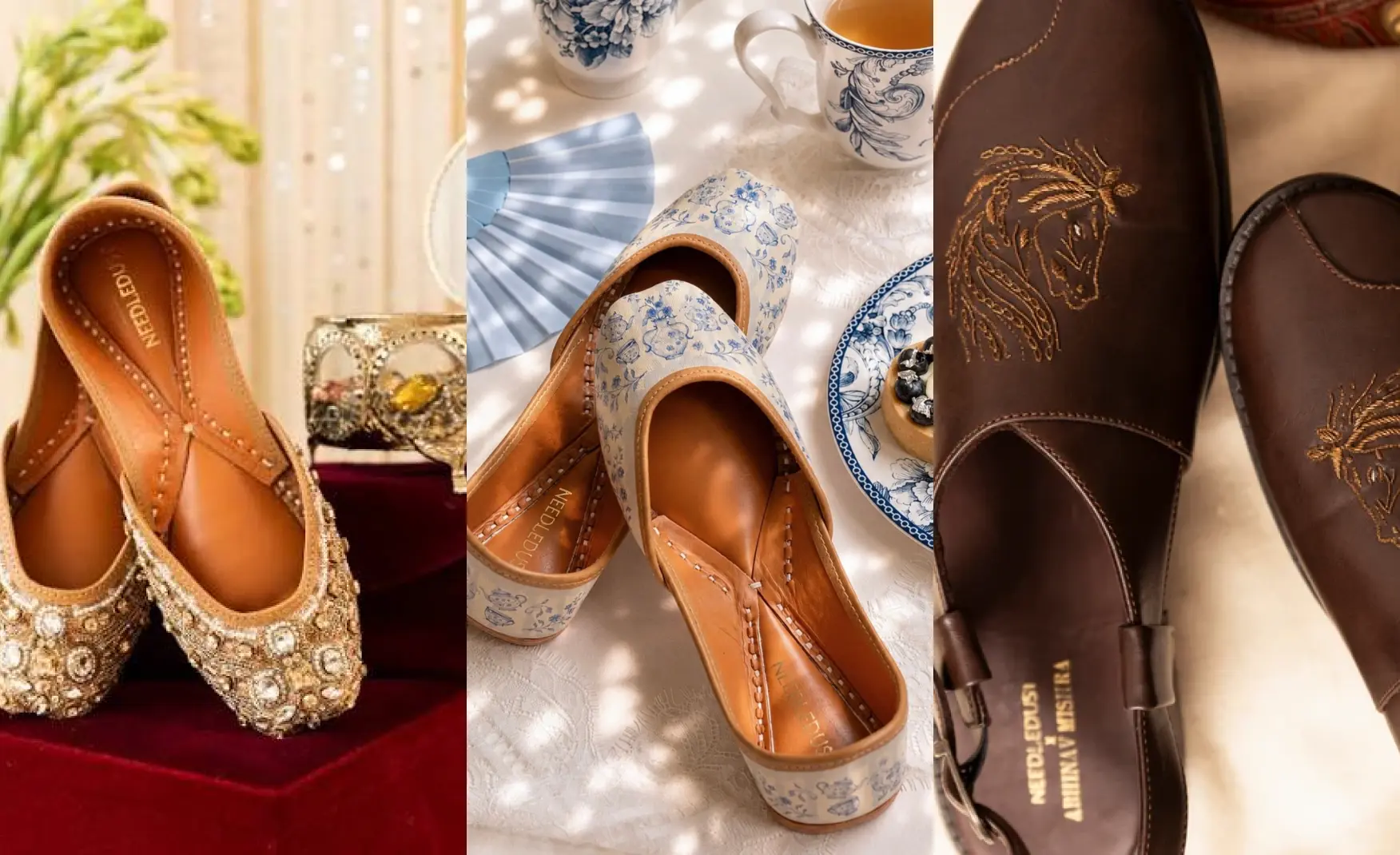
Needledust has taken the more durable path of extending carefully outward from the jutti while keeping the craft identity intact.
The catalogue now spans mules, a vegan line, heels, sandals, kolhapuri styles, purses, accessories, a men's collection and a mom-and-me range, each staying within the brand's handmade, embellished design language. Its ongoing collaboration with couturier Abhinav Mishra, now in its third edition, borrows fashion authority from a respected name while reinforcing rather than confusing what Needledust already stands for.
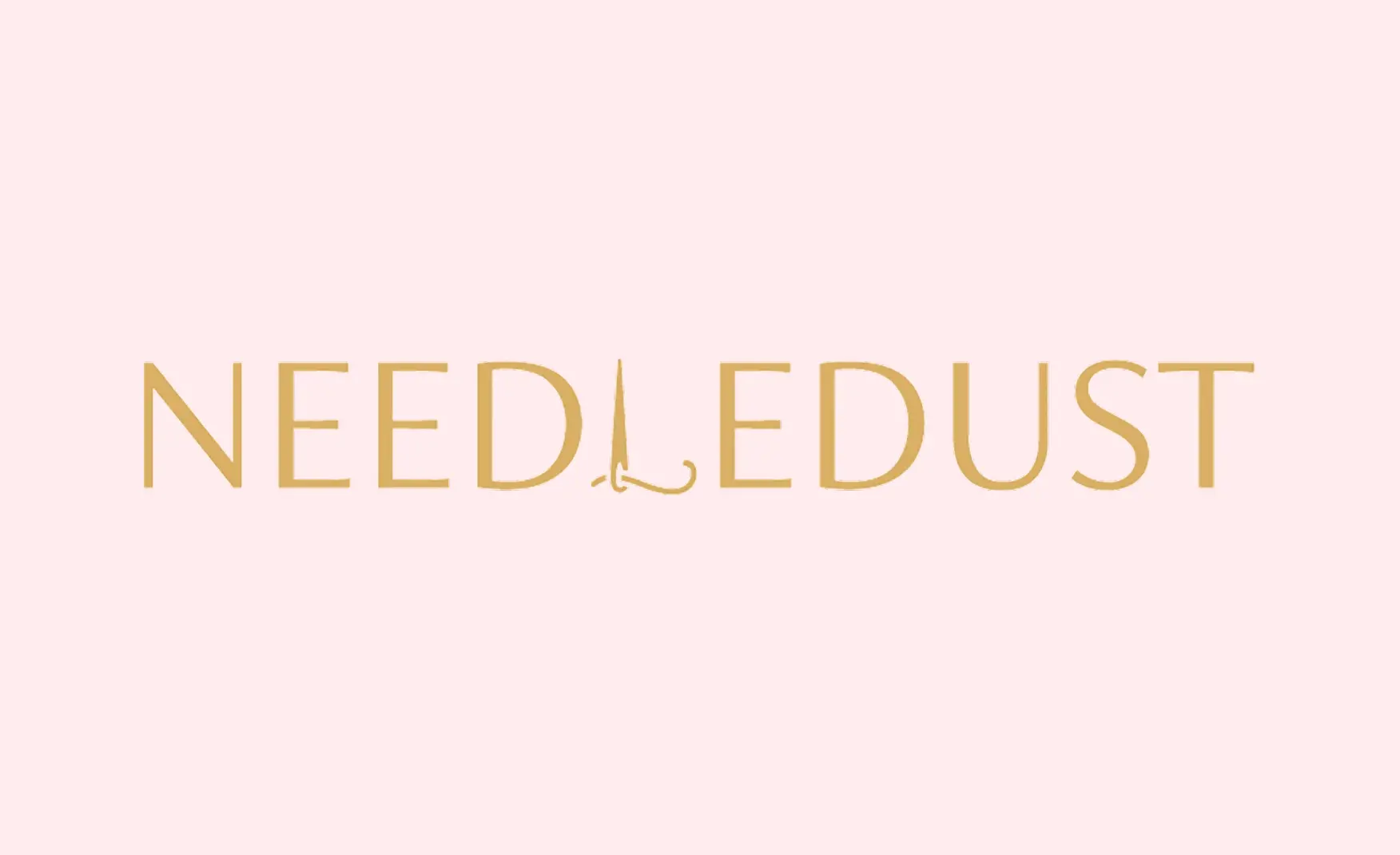
Needledust's wordmark carries a small but deliberate detail, a jutti-style carving worked into the base of the letter L, rendered in gold.
That single flourish gives the logo a sense of premiumness most footwear wordmarks never attempt, signalling craft in the mark itself rather than leaving all of that work to the product photography.
The single biggest structural constraint on Needledust is that its core demand is tied to occasions rather than daily life.
The brand is strongest at weddings and festive moments, which are high-emotion and high-spend but also infrequent and heavily concentrated around the wedding calendar. A shoe bought for one's own wedding is, by definition, not a shoe bought often, which caps how frequently even a delighted customer comes back.
The comfort engineering the brand has invested in is the obvious lever against this, but positioning, pricing and imagery still lean firmly toward the special occasion.
Everything that makes Needledust special also makes it hard to scale, since every pair is entirely handmade and the brand remains bootstrapped.
Handmade craft does not enjoy the clean unit economics of machine-made footwear, output is limited by the number of skilled hands, and margins are pressured by labour the brand rightly refuses to cut. Compounding this, the same embroidered aesthetic Needledust pioneered is now widely copied at lower prices, with listicles of Needledust dupes easy to find online.
Needledust helped create the category, but it has not been the one to broaden it.
Rivals such as Fizzy Goblet have taken external funding and expanded well beyond the jutti into sneakers, loafers, brogues and Indo-western fusion styles designed for everyday wear, colonising exactly the daily-use territory Needledust has largely left open.
Category leadership in perception does not automatically translate into category leadership in scale, and a well-funded rival that owns everyday wear can end up building the larger business around the creator who still owns the occasion.
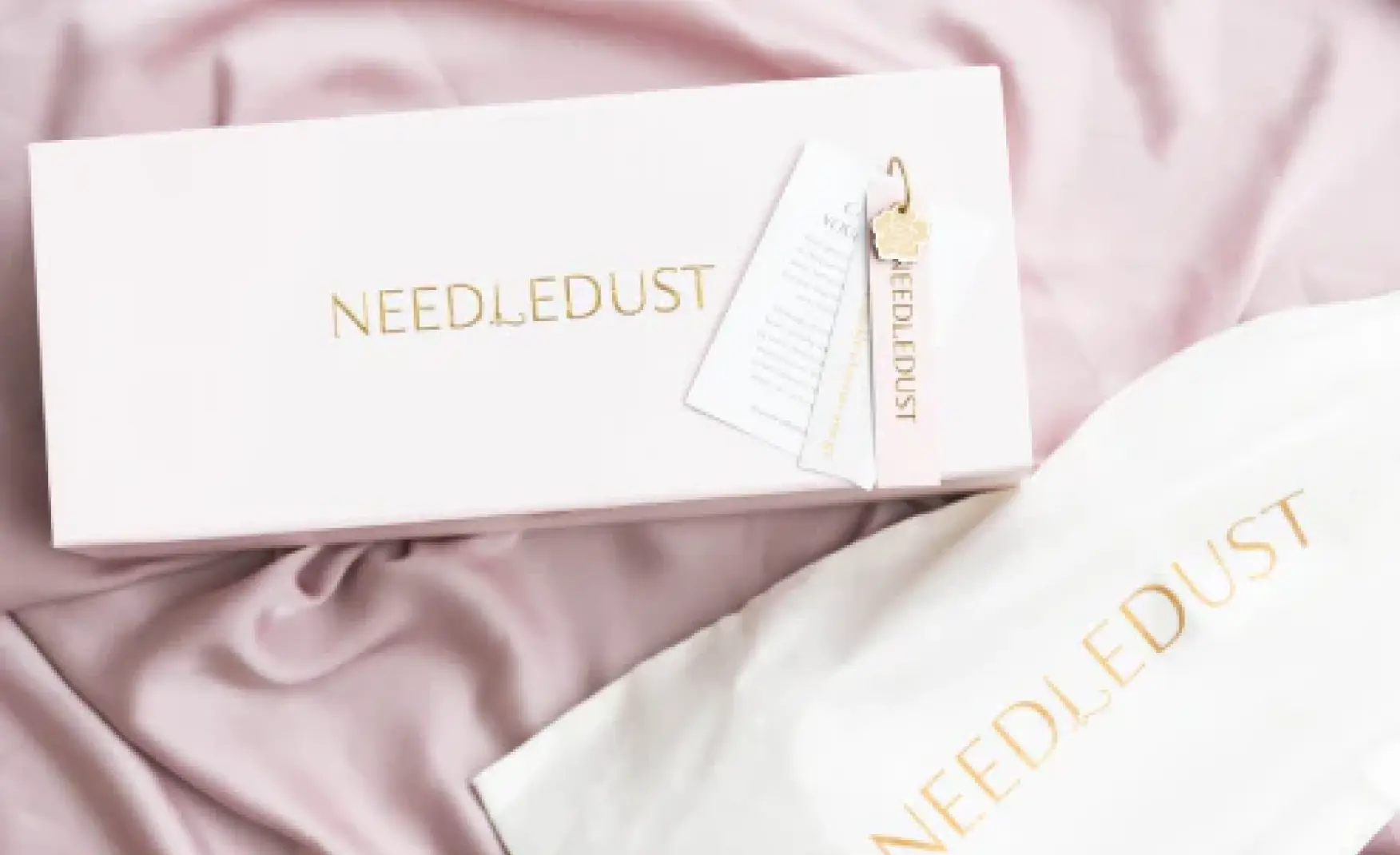
Needledust's primary packaging does its job, a light pastel pink box with a transparent butter paper wrap around the jutti, and an off-white potli bag with a gold flower mark for purses.
For a brand whose entire positioning rests on the word heirloom, the box currently stops at competent rather than reaching for memorable. There is no note from the founder, no story of the craftsperson who made the pair, nothing that turns the unboxing itself into part of the inheritance being sold.
The most valuable unrealised asset Needledust owns is a jutti people can genuinely wear all day, marketed almost exclusively for special occasions.
The clearest path past the occasion ceiling is an explicit everyday line, priced and styled for daily wear, that leads with comfort rather than embellishment. The bridal and festive collections remain the high-margin flagship, while a cleaner, more understated everyday range widens the base and increases purchase frequency.
Needledust's greatest vulnerability is that its aesthetic is easier to copy than its construction, and the market is already full of imitations.
Confetti's general experience with craft-led fashion brands shows that the defence is not more embroidery but a stronger, more ownable brand system, one a dupe cannot replicate because it lives in the identity rather than the shoe. When the brand experience is distinctive enough, the copies stay stuck competing on price while the original owns meaning, and meaning is where the margin lives.
Needledust already ships to over 200 countries, which means the international appetite for authentic Indian craft footwear is real and largely unclaimed at the luxury end.
The discipline required is to lead with specificity rather than sand it away for foreign palates, keeping the heritage of hand-embroidery and the wedding storytelling intact. An everyday line and a codified identity are what give the brand the frequency and the distinctiveness to make that international push successfully.
The packaging gap is one of the cheapest, highest-return fixes available to Needledust.
A handwritten-style note from the founder, a small card naming the artisan who made the pair, or a proper dust cover styled like a miniature jutti bag would each turn the unboxing into a piece of the heirloom story rather than a functional wrapper. This is a small production cost against a brand whose entire premium rests on exactly this kind of specificity.
Needledust is a brand with a rare and valuable core, having created a category out of a forgotten craft and built a genuine product moat in comfort rather than decoration alone.
It earned a celebrity following that money cannot buy and owns a name and a narrative built for heirloom luxury, all without a rupee of outside capital.
The hurdle is that the same qualities that make it special also cap it, with demand anchored to occasions, a handmade model that resists easy scaling, and a better-funded rival building the everyday business it has left open. None of this is fatal, and all of it is exactly the kind of problem sharper positioning and an everyday product tier can address.
If you are building a craft-led or occasion-led brand and want your identity and packaging to carry the same weight as your product, get in touch with Confetti Design Studio.
Want strategic branding and packaging like this for your business?





.webp)
.webp)

.webp)
.webp)
.webp)
.webp)
.webp)







.svg)
.webp)




.svg)
.svg)































































.webp)








.webp)


.svg)