%201.webp)
02
AI Snaps
.svg)
.svg)
01
Our Work
03
About Us
04
Brand Audit
05
Contact Us
06
Client Success
12
07
Blogs
08
Careers
Book A Call
.svg)



Need Help In Building Your Brand?
Click the button below & book a call with our founder directly.

Rishabh Jain
Managing Director
Zouk | Confetti's Verdict ⭐⭐⭐⭐
Confetti Design Studio has analysed Zouk, current as of August 2026, the Mumbai brand that set out to make Indian handicraft feel like something you would actually carry to work rather than display on a shelf. Disha Singh and her IIM Ahmedabad classmate and husband Pradeep Krishnakumar built the brand around a single, unusually clear promise, Proudly Indian, pairing traditional Indian fabrics with fully vegan, PETA-approved materials. What began as twenty Ikat laptop bags stitched in Thane has grown into a full bags, wallets and luggage house serving over seven lakh customers, and it has just closed a fresh funding round to push further into physical retail. This audit asks what a brand with this much conviction in its story needs to do to make its design as memorable as its mission. This audit is as per August, 2026.
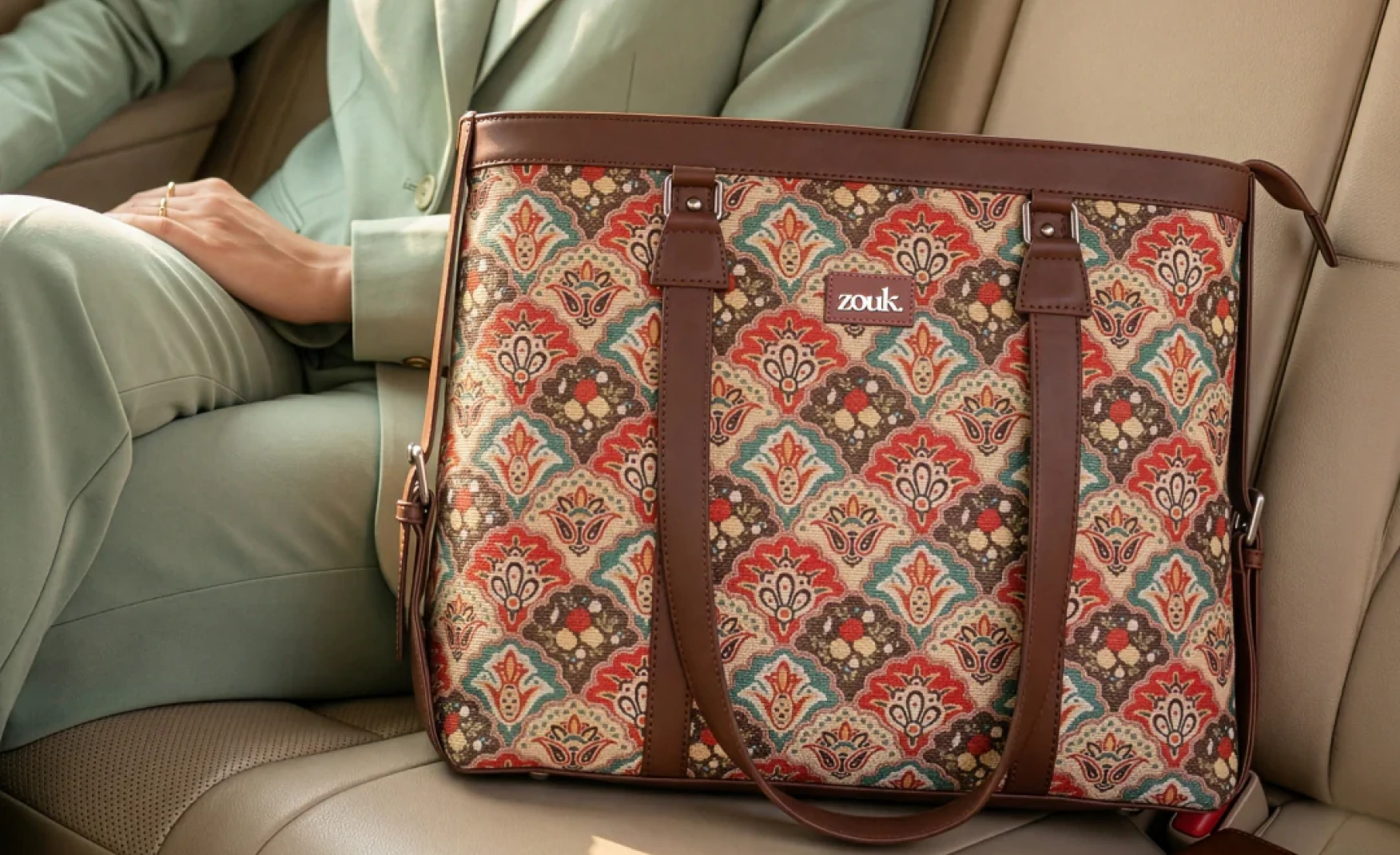
Most Indian accessory brands spend their first years quietly borrowing the vocabulary of somewhere else, an Italian-sounding name, a French serif logo, a product that could have come off any global shelf.
Zouk did the opposite, building its entire identity around being Proudly Indian, and unlike the many brands that treat that phrase as a slogan, it earned the right to say it before it ever put it on a banner. The conviction traces back to a 2015 trip to Kutch, where Singh and her classmates found villages full of beautiful handcrafted fabric that no modern buyer wanted.
The founding insight was not that India lacked craft but that it lacked translation, a way to move that craft from souvenir to something a young professional would carry every day.
The market confirmed the thesis almost immediately when the first twenty Ikat laptop bags sold out in five hours at a Mumbai flea market. Because the Indianness is manufactured into every bag rather than printed on the marketing, the claim is defensible in a way a tagline never could be.
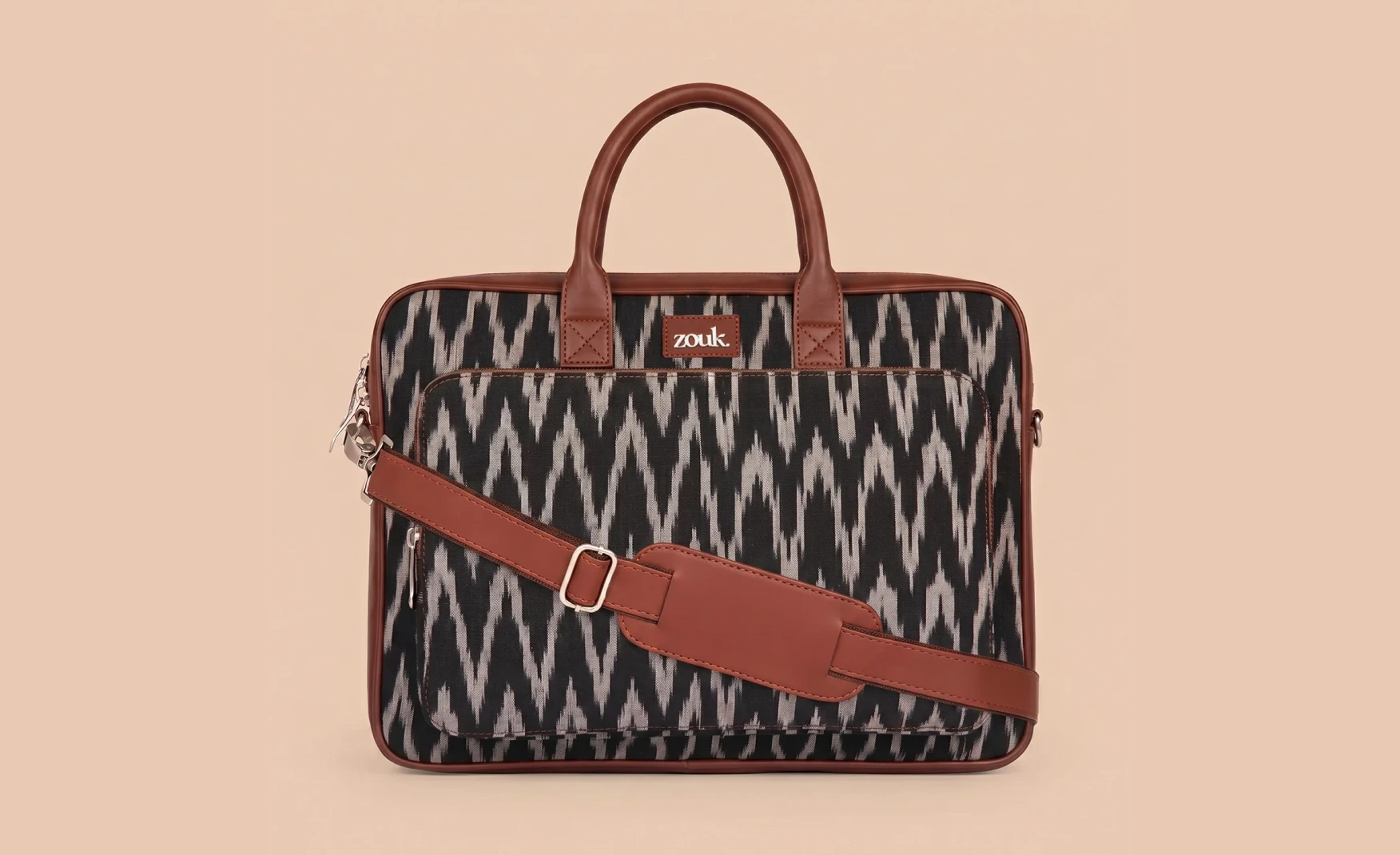
Within weeks of launching, Zouk made a decision most bag brands never seriously consider, going fully vegan and rejecting animal leather entirely.
On the surface this reads as an ethics choice, and it genuinely was one, but it doubled as one of the sharpest category wedges available to a challenger in Indian accessories. The legacy players in this market built their premium on the language of genuine leather, and by opting out of that conversation entirely, Zouk did not lose on the incumbents' terms, it quietly redefined the terms.
For a generation of consumers increasingly fluent in the vocabulary of conscious consumption, a bag that is stylish, functional and free of animal leather is not a compromise but a preference.
The strategic elegance is that the vegan stance reinforces the Indian one rather than competing with it, together letting Zouk occupy a position no heritage leather house can follow without contradicting itself.
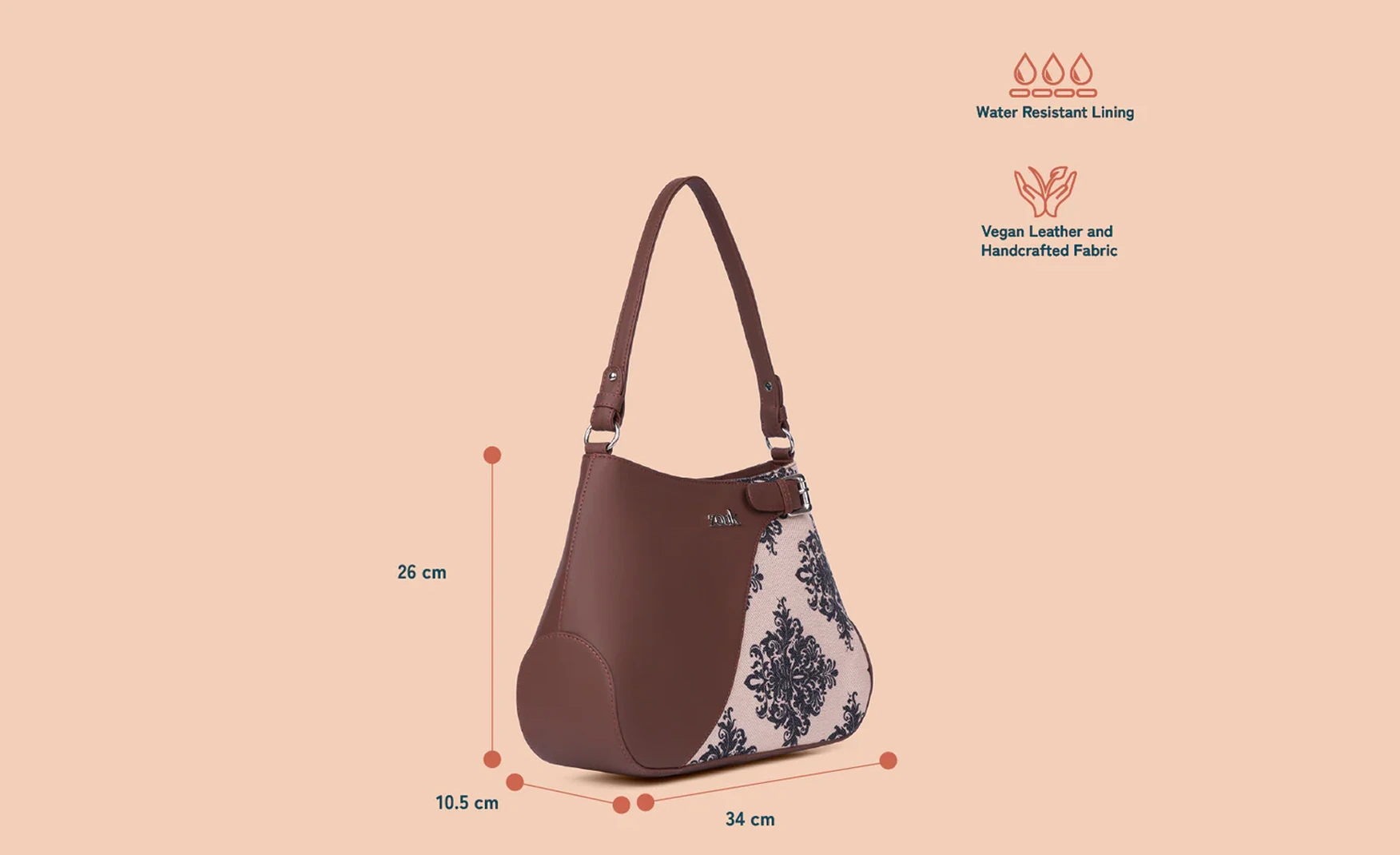
The hardest part of building a craft-led brand is not sourcing the craft, it is making it wearable to someone who does not want to look like they are wearing craft.
Rather than pasting handloom onto a generic silhouette, Zouk treats Indian textile as one considered element inside a clean, contemporary product, an Ikat panel here, a handwoven print there, set against restrained faux-leather bodies. The fabrics are sourced from villages across Gujarat, Karnataka, Maharashtra, Uttar Pradesh and Tamil Nadu, then assembled at the brand's Dharavi facility.
That editorial restraint is what separates Zouk from the fair-trade aesthetic that has trapped so many artisan brands, since the heritage is present but disciplined, used as a signature accent rather than the entire story.
The recurring use of Indian print against neutral structure gives the range a family resemblance, so a new tote or wallet launches into an existing frame of recognition rather than starting from scratch.
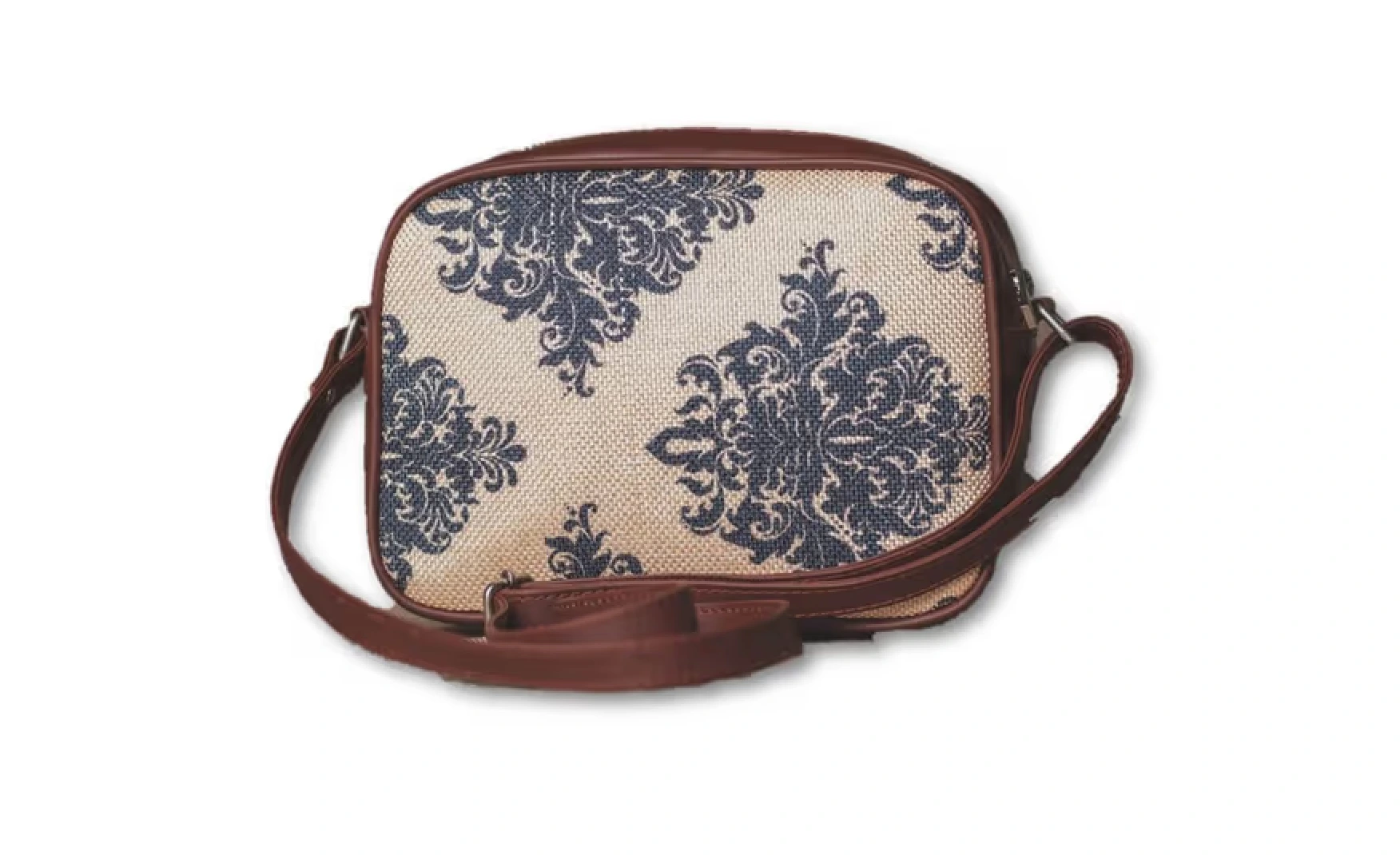
Zouk did not start with a fashion statement, it started with a laptop bag.
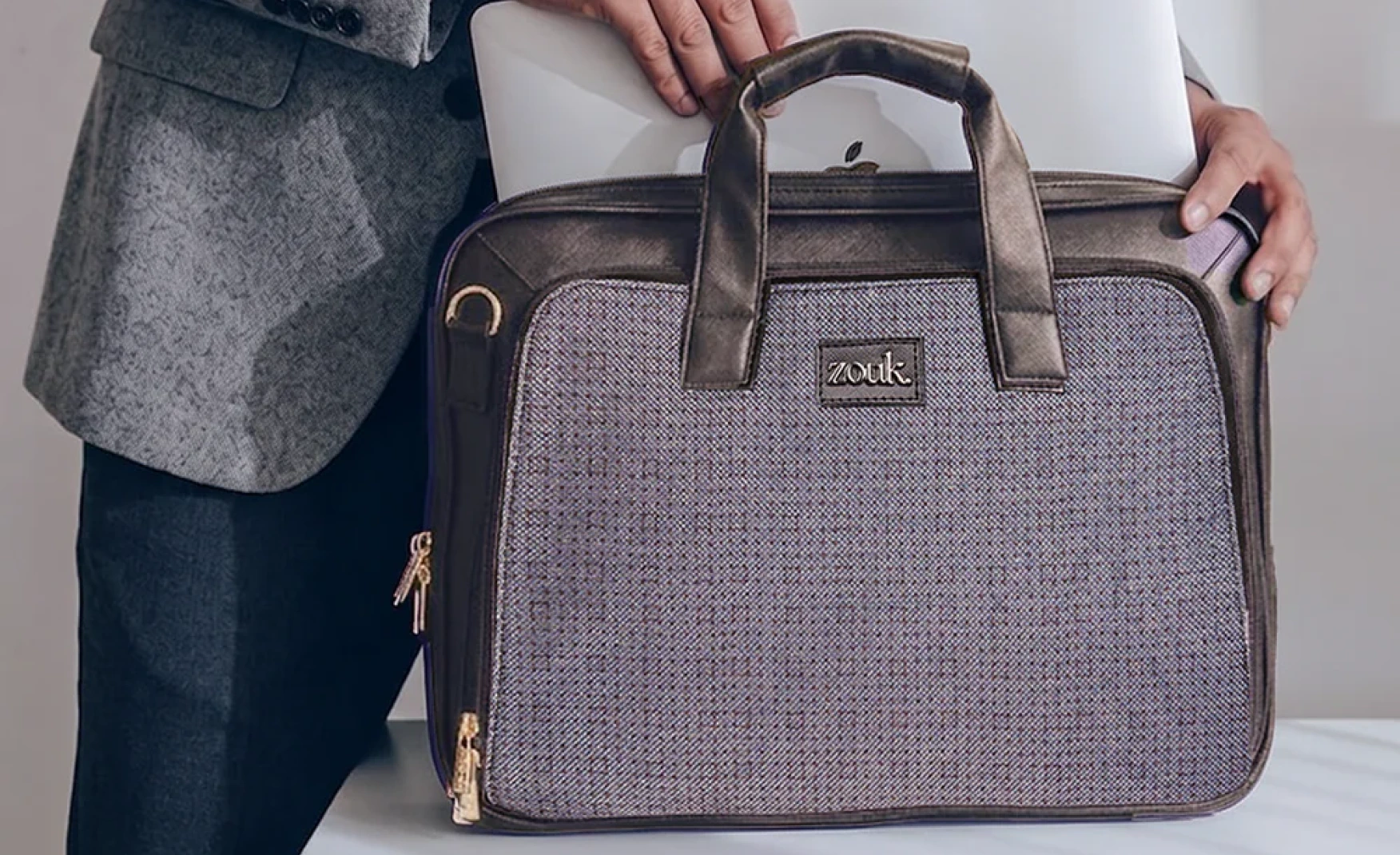
That choice looks modest but it entered through a job every urban professional needs done rather than a want it had to manufacture, and a working woman looking for a bag that holds a laptop and looks polished at the office was genuinely underserved. From that beachhead the brand extended into a full architecture of everyday carry, office bags, totes, slings, satchels, backpacks, wallets and now travel luggage, each addition solving a practical need.
This function-first logic gives Zouk a clarity of purpose many aesthetically driven accessory brands lack, with compartments, structure and durability treated as features rather than afterthoughts.
That pragmatism is a large part of why the brand crossed seven lakh customers and grew revenue from ₹21.82 Cr in FY22 to ₹127 Cr in FY25. A customer who buys a Zouk office bag because it works, and finds that it does, is primed to buy the wallet, the sling and eventually the luggage.
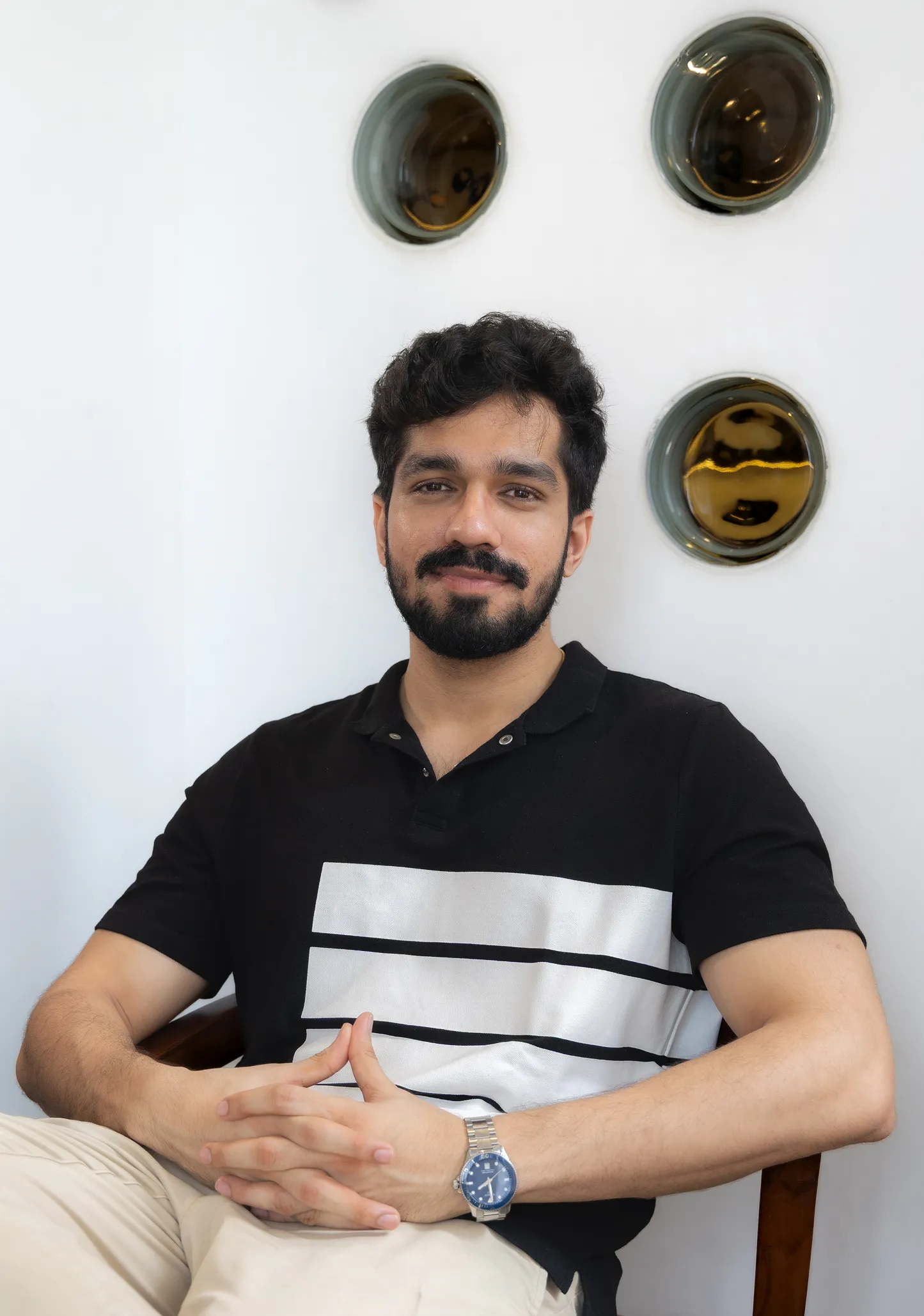
Zouk has the rarest asset a young brand can own, a founding story that is both genuinely interesting and completely true, and it has used it well.
Disha Singh has become a visible, credible face for the brand, telling the artisan story across press, interviews and social with a consistency that has helped Zouk build a following of roughly a million on Instagram. In a category where most competitors are faceless, a real founder narrating a real mission is a meaningful edge.
The substance behind the story is what makes it durable, since the brand works with a large and growing base of skilled artisans, reported at over six hundred, across multiple Indian craft clusters.
That supply chain is not a marketing prop but the actual engine of the product, which gives Zouk's content a supply of authentic material that never runs dry, the villages, the fabrics, the makers, the process.
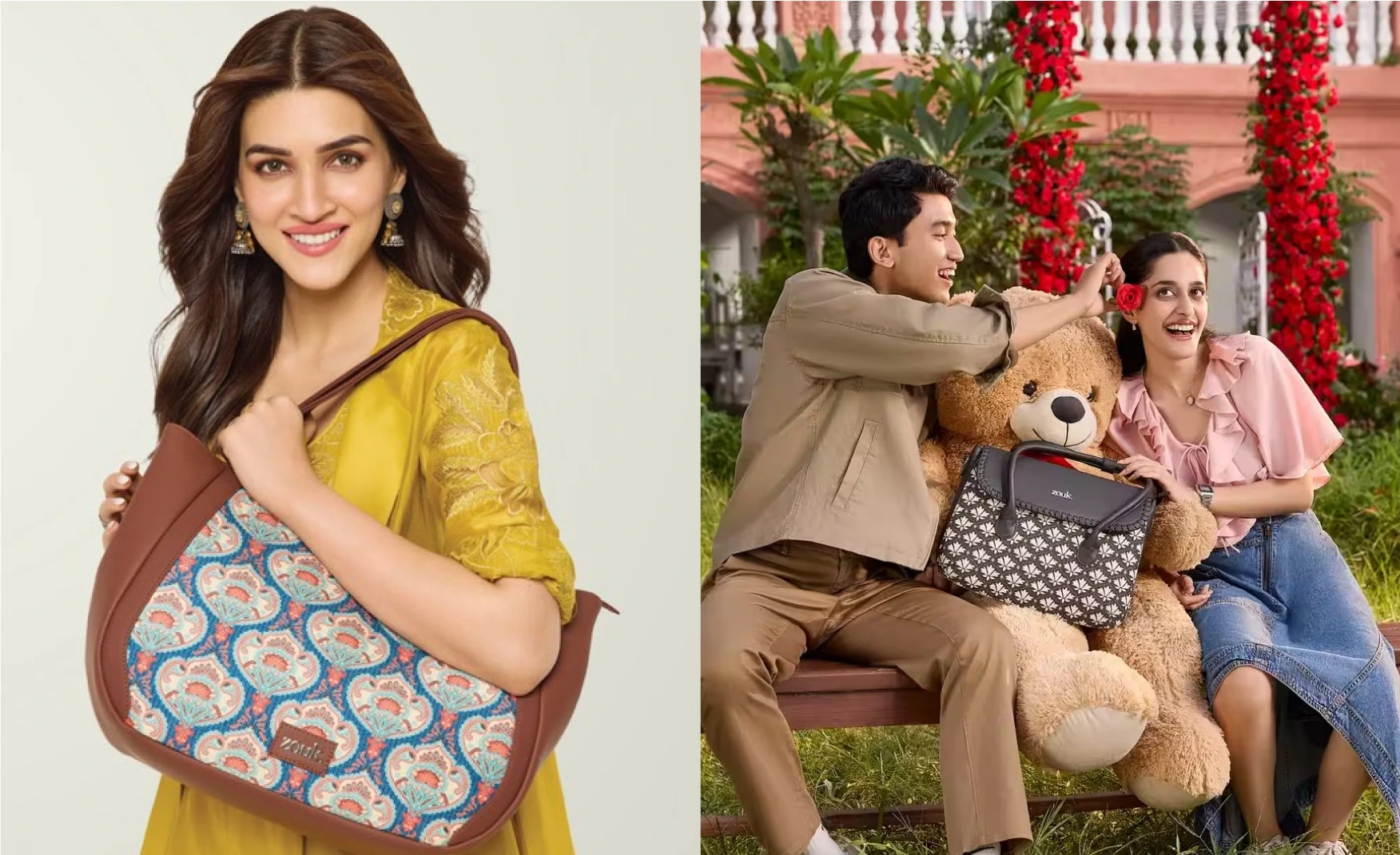
Zouk's social presence mixes influencer collaborations, get-ready-with-me videos with the bag woven into the routine, and genuine product storytelling rather than plain product shots.
Its "A Bagful of You" campaign, fronted by Kriti Sanon, celebrated individuality and cultural pride by framing an everyday bag as a reflection of a woman's identity, and it is one of the brand's most loved pieces of work. Its Valentine's Day campaign, "Make Space for Love," took the familiar habit of a woman putting her bag on the empty seat next to her and turned it into a metaphor for emotional openness.
Both campaigns show a brand willing to build genuine narrative around a product category most competitors treat as purely transactional.
That storytelling instinct is a real asset, since it gives the product emotional weight well beyond its function, and it is consistent with the same values-led voice the brand uses everywhere else.
Zouk's revenue trajectory is genuinely impressive, but it has come at a cost the brand will eventually have to close.
Revenue grew 62% to ₹127 Cr in FY25, but net loss widened sharply to ₹19.6 Cr from ₹3.6 Cr the year before, driven by heavier spending on advertising and retail. Advertisement and sale promotion expenses alone more than doubled to ₹56.3 Cr in FY25, more than the entire loss figure by itself.
That is a defensible pattern for a scaling D2C business, and management has publicly targeted break-even, but the pressure is real and growing at the current pace.
The offline expansion sharpens this question further, since Zouk has moved from a purely online brand to opening exclusive stores with an ambition of reaching seventy-five outlets, and physical retail is expensive and slow to pay back.
Zouk competes in one of the most contested corners of Indian retail, against established names such as Baggit, Hidesign, Caprese, Lavie and Da Milano.
In that environment, positioning is not enough, a brand also needs to be instantly recognisable, and this is where Zouk is still doing more with its story than with its visual identity. The Indian-print design language is distinctive, but the brand mark itself does little heavy lifting, with no ownable symbol a customer could sketch from memory.
For a brand whose whole thesis is that Indian design can be iconic, the identity is not yet iconic, and as Zouk moves into physical stores that absence becomes a genuine limitation.

Zouk's vegan, PETA-approved stance is a real strength, but it carries a contradiction the brand will increasingly be asked about.
Most vegan leather, including the faux leather Zouk builds on, is a plastic-based material, typically polyurethane or PVC, which sits awkwardly against the conscious-consumption values the brand invokes. A consumer who chooses Zouk because it feels like the responsible option may eventually notice that cruelty-free is not the same as sustainable.
This is not a reason to retreat from the vegan position, which remains a smart differentiator, but it is a reason to get ahead of the question before critics or competitors frame it first.
Zouk's positioning is fully formed, its visual identity is not yet.
The most valuable work available to the brand is to convert the strength of its story into the strength of a signature, a proprietary design element that makes a Zouk bag recognisable without a logo or a label. That could mean a proprietary print developed exclusively for Zouk, a signature hardware detail, or a recurring silhouette that becomes shorthand for the brand.
The company has already proven the story lands and the product sells, so the next unlock is making the design as memorable as the mission.
If Zouk is going to spend fresh capital opening exclusive stores, those stores need to do more than sell bags, they need to be the fullest expression of what the brand stands for.
A Zouk store is a rare chance to make the artisan story tangible, letting a customer see and feel the fabrics and understand the craft, rather than experiencing the brand as a shelf of product. The discipline required is to treat each store as a designed experience, with the space, merchandising and service all reinforcing the same craft-led narrative the brand tells online.
Get this right and the offline expansion stops being a cost worry and becomes a competitive advantage, since experience is the one thing cheap imports can never replicate.
Zouk's clearest long-term opportunity is to own the future of conscious accessories in India, and the path runs directly through the material question.
Confetti's general experience with values-led consumer brands shows the smarter move is to get ahead of the plastic-leather critique by investing in and championing genuinely next-generation vegan materials, and being transparent about what its products are made of. A brand that is already Proudly Indian and already trusted for its values is unusually well placed to lead that conversation rather than defend against it.
Done well, it lets Zouk graduate from a brand that is cruelty-free to a brand that is credibly, visibly sustainable, which is the version of Zouk that can travel internationally.
Zouk is one of the more convincing young brands in Indian consumer, and the reason is coherence, from finding a real gap in Indian craft to entering through function rather than fashion.
The revenue tells the same story as the branding, growing from ₹21.82 Cr to ₹127 Cr in three years, backed by repeat investors and a founder who can carry the narrative.
The tension is that the brand's story is currently stronger than its design, and its growth is currently stronger than its profitability. None of these are weaknesses in the thesis, they are the natural next problems of a brand that has done the hard early work well.
If you are building a values-led brand with a story this strong, Confetti Design Studio can help you give it a visual signature the shelf cannot ignore.
Want strategic branding and packaging like this for your business?




.webp)
.webp)

.webp)
.webp)
.webp)
.webp)
.webp)







.svg)
.webp)





.svg)
.svg)




































































.webp)








.webp)


.svg)