%201.webp)
02
AI Snaps
.svg)
.svg)
01
Our Work
03
About Us
04
Brand Audit
05
Contact Us
06
Client Success
12
07
Blogs
08
Careers
Book A Call
.svg)



Need Help In Building Your Brand?
Click the button below & book a call with our founder directly.

Rishabh Jain
Managing Director
BlissClub | Confetti's Verdict ⭐⭐⭐⭐
Confetti Design Studio has analysed BlissClub, the women's activewear brand that built an audience before it built a product. Minu Margeret spent the early months of the pandemic building an online community of Indian women through Instagram and a network of WhatsApp groups, running fitness challenges and open conversations about what activewear actually needed to do for them, long before there was a legging to sell. That sequence, community first and product second, is the single most important decision in the brand's story and the thread that runs through almost everything it does well. This audit talks about what a brand built on genuine community has to do next to prove it can also build durable profit. This audit is as per August, 2026.
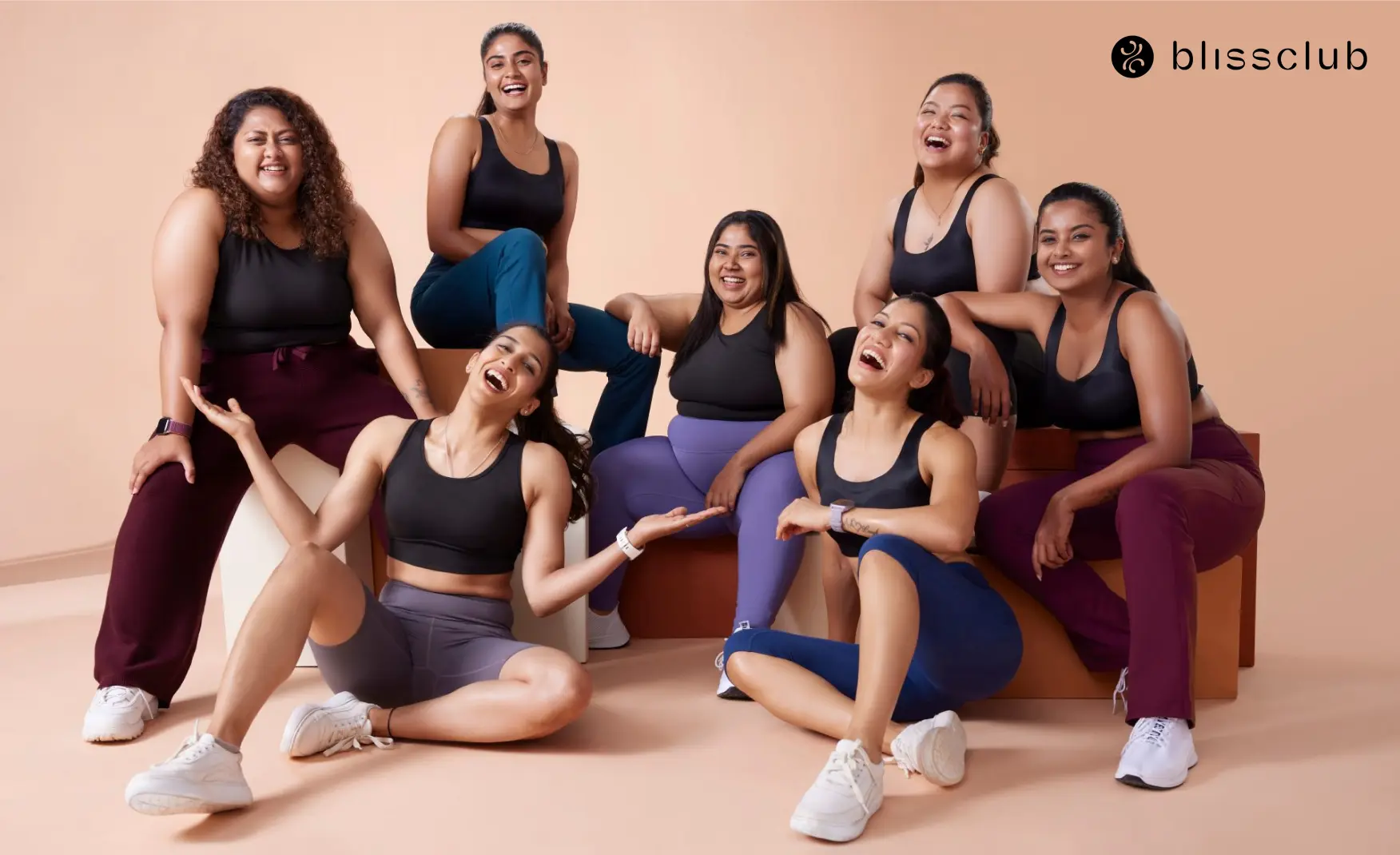
Most D2C brands launch a product, then spend heavily to find people who want it, BlissClub did the reverse.
By the time The Ultimate Leggings launched in December 2020, the audience already existed, already trusted the brand, and had effectively co-written the brief. The pockets, the sizing and the fabric behaviour were decided by the women who would go on to buy them.
This is co-creation in its truest commercial form, and it produced something rare, a launch that felt less like a company selling to a market and more like a community equipping itself.
The compounding value here is trust, since BlissClub's early growth was earned rather than purchased, which meant its customer acquisition ran on word of mouth from women who felt genuine ownership of the brand.
A community that feels it built the brand does not churn the way a paid audience does, and BlissClub started with that advantage as its deepest moat.
Every durable consumer brand needs a product that becomes shorthand for the whole house, and BlissClub found one almost immediately.
The Ultimate Leggings, engineered with four pockets deep enough to hold a phone, keys and headphones, solved a problem so ordinary the entire category had simply stopped noticing it. Women's activewear in India, where it existed at all, was largely an afterthought to men's ranges built with poor fabric and inconsistent sizing.
Pockets are not a fashion statement, they are a daily, tangible reason to prefer one legging over another, and that kind of utility generates the word of mouth a premium price point needs to survive.
Around that hero, the brand built genuine product credibility, investing months of research before a launch and developing proprietary fabrics such as Cloudsoft, EverFlow and SculptCotton. This turns a single viral product into a system of trust, so every bit of goodwill the leggings earned flows back into the flare pants, sports bras and co-ord sets that followed.


For years, activewear in India was designed and marketed around men, with women treated as a smaller, softer footnote to the real business.
BlissClub made the harder bet, that a women-first activewear brand built entirely around how Indian women actually move and think about their bodies could own a space the global giants were addressing only generically. That decision gave the brand a clarity of positioning that Nike, Adidas and even most local players simply could not match.
LinkedIn named BlissClub one of India's Top 25 Startups in 2022, the first activewear and women-focused brand to make that list, signalling that the market saw it as category-defining rather than niche.
The positioning runs all the way through the product and the language, with the brand speaking to working women in their late twenties and thirties and designing for size inclusivity through its Blisscurves extended range rather than as an afterthought.
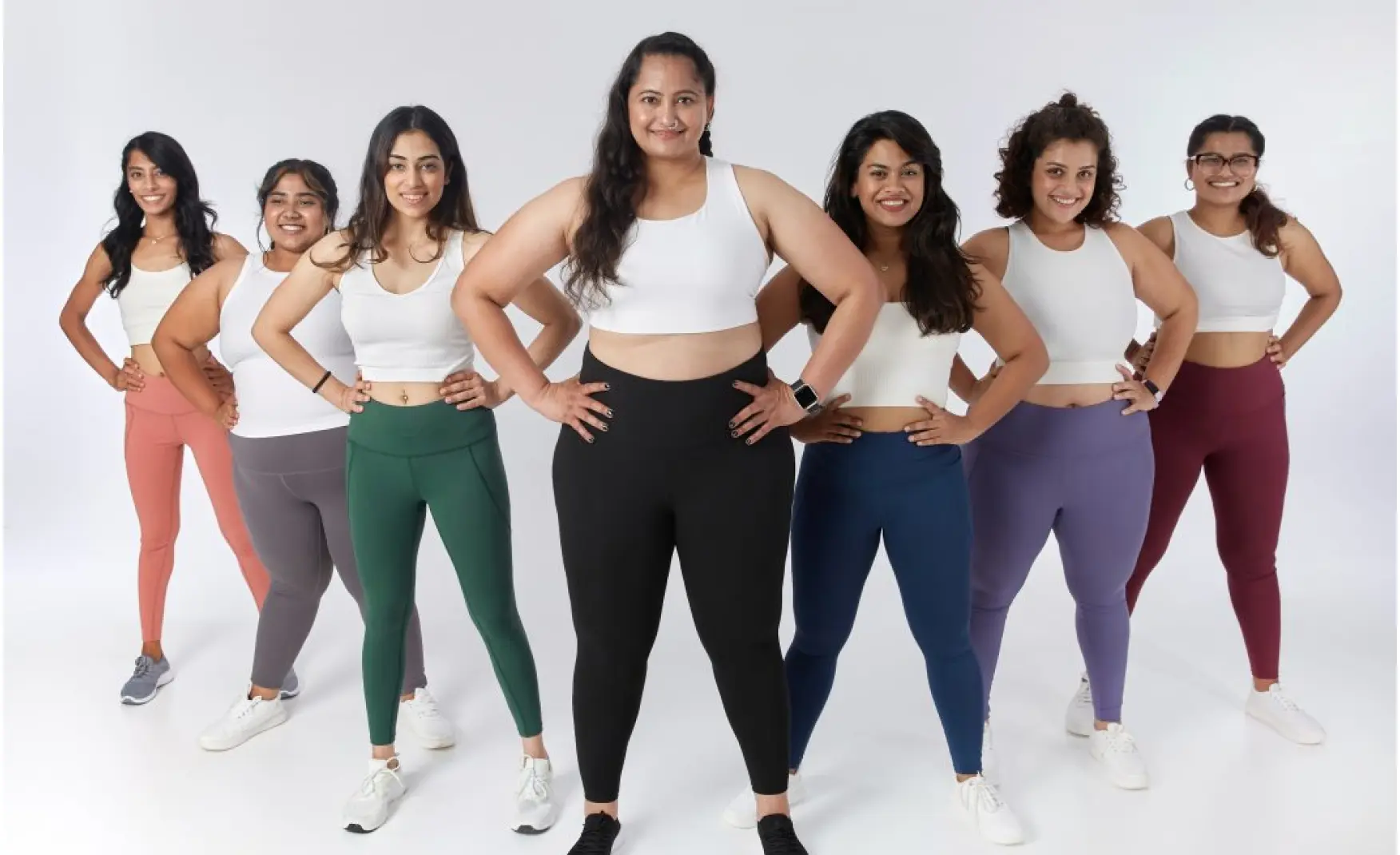
In a category where most brands default to sweat, grit and aspirational aesthetics borrowed from Western sportswear, BlissClub built a voice that sounds like a friend rather than a coach.
Its communication is warm and often funny, framed around a judgment-free idea of movement captured in its #KeepMoving positioning and its habit of calling its customers BlissQueens. That tonal choice is the brand's clearest point of differentiation in a market where the products themselves can start to look similar.
Its Bitchcoin campaign in 2025 reclaimed a loaded word as a symbol of strength, extending into yoga workshops rather than staying confined to a single ad, and its Approved by Kusha collaboration with creator Kusha Kapila leaned on real relatability over polished celebrity distance.
Voice is one of the few things a competitor cannot copy outright, and BlissClub has accumulated a following of nearly 600,000 on Instagram to broadcast it, giving the brand a cultural surface area far larger than its revenue would suggest.
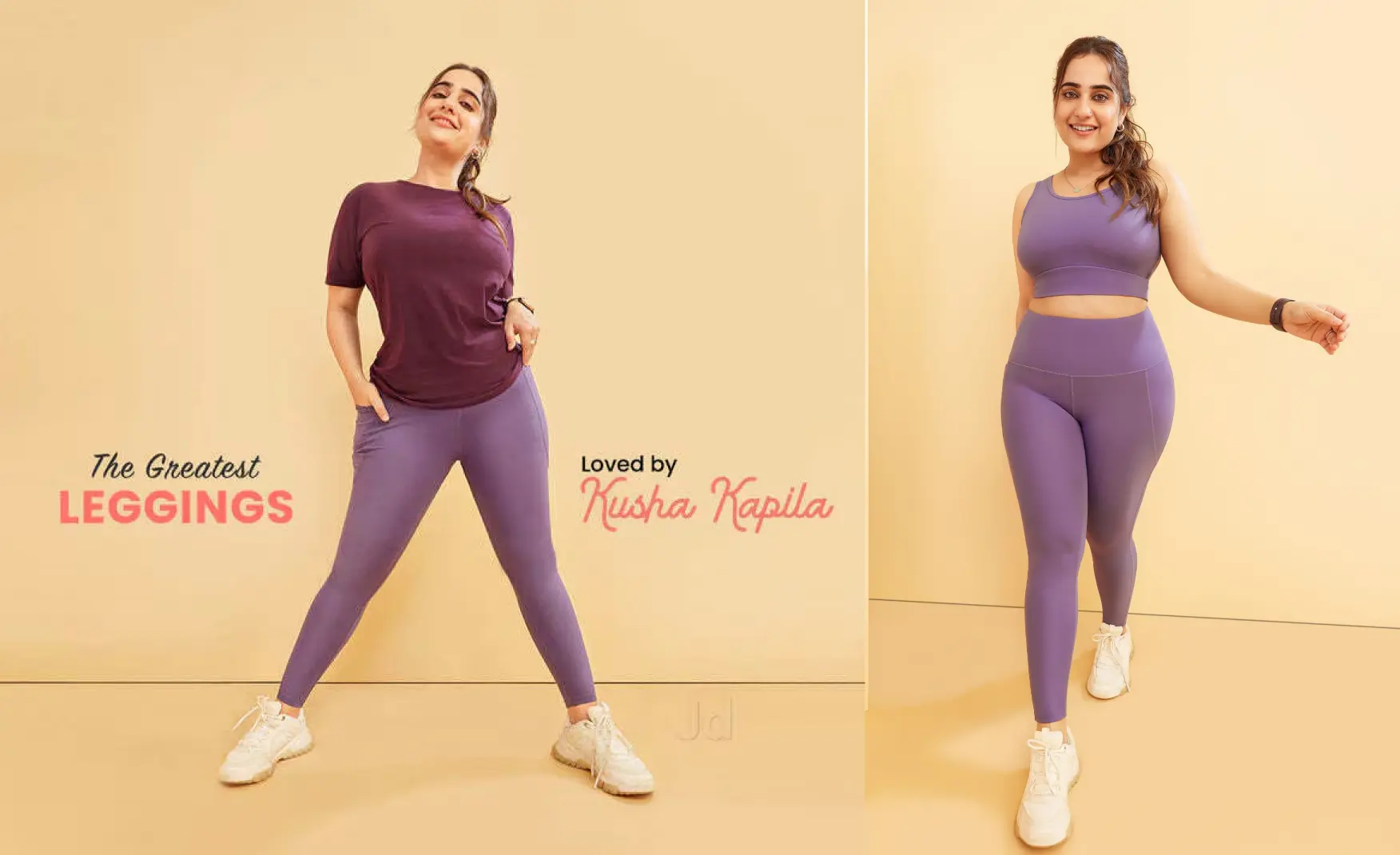
BlissClub has resisted the trap of remaining a one-product brand, and the disciplined way it has extended its range is a strength in itself.
From the founding leggings, it has grown into sports bras, shorts, tops, flare pants, co-ord sets and even active accessories, with each new category developed through the same community-input and wear-trial process that produced the original hero. This means the range expands without diluting the credibility the leggings established.
Underpinning that expansion is a clear premium intent, with pricing that reflects a genuine belief that better products justify a higher ticket, tees around ₹799 and pants around ₹1,699.
That premium claim is backed by substance, the fabric research and the sizing rigour, and a customer base whose loyalty shows up in an unusually high Net Promoter Score.

The most important number BlissClub has to confront is not its revenue but its loss.
The brand closed FY25 with a net loss of ₹20 Cr, and while cutting that figure by more than half from ₹44 Cr the previous year is real progress, the business still spent roughly ₹1.18 to earn each rupee of income. For a brand whose founding myth is that community, not advertising, drove its early rise, an advertising spend of around ₹29.5 Cr in FY25 is a signal worth watching.
Growth that increasingly leans on paid acquisition sits in tension with the organic, community-first story that made BlissClub distinctive in the first place.
None of this is unusual for a D2C brand at this stage, and the trajectory is moving the right way, but the path to profitability is now the defining question the brand's next chapter will be judged on.
BlissClub built its lead while the global majors were treating Indian women's activewear as an afterthought, but that window is closing.
Nike, Adidas and increasingly Lululemon are sharpening their focus on Indian women, and a cluster of local challengers including Kica, Aastey and Silvertraq are competing for the same category-conscious customer. The women-first positioning that once felt like open water is becoming a crowded lane.
The risk is that the functional advantages BlissClub pioneered, the pockets, the fit, the size inclusivity, become table stakes that everyone eventually matches.
When the product differentiators equalise, the brand has to win on identity, community and experience rather than features, and it will need to keep widening that gap deliberately, since a well-funded giant can close a functional advantage far faster than it can manufacture a real community.
BlissClub's dependence on The Ultimate Leggings and its close cousins remains a concentration risk.
A large share of its recognition and revenue still rides on a narrow band of hero products, and the Indian market for premium women's activewear, while growing quickly, is still being educated on why it should pay up for performance apparel at all. BlissClub is simultaneously building a brand and expanding a category, which is expensive and slow.
The offline expansion sharpens this challenge, since the brand has grown to more than a dozen physical stores across metros and is taking on the fixed costs of physical retail at the same time it is chasing profitability.
Stores can deepen the brand and lift trust, but only if the in-store experience lives up to the premium promise, and getting that translation right, at pace, without straining the balance sheet, is a genuine operational test.
BlissClub's community is its rarest asset, and the next chapter is about converting that goodwill into a structural advantage rather than a founding anecdote.
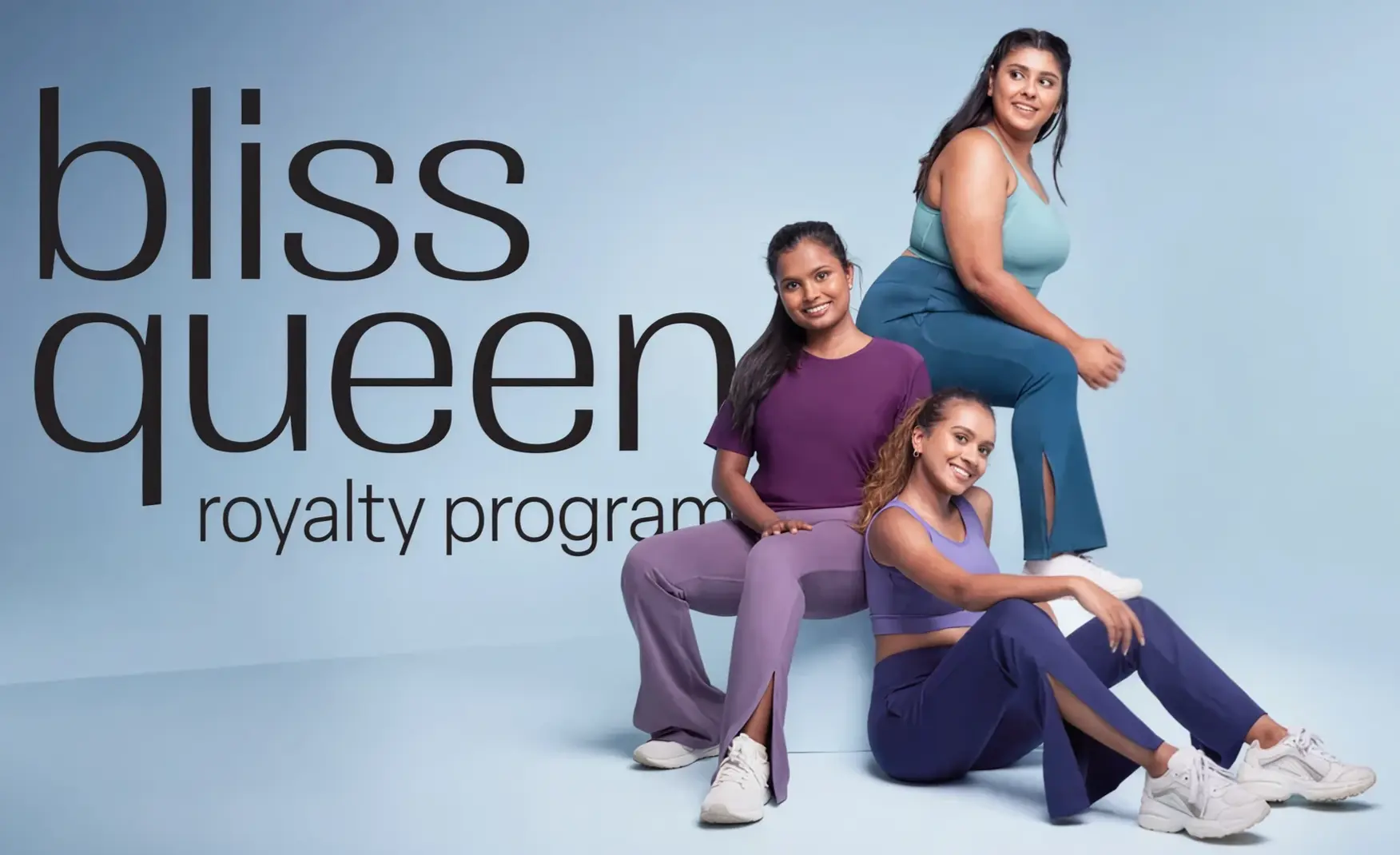
As the brand scales and leans more on paid acquisition, there is a real danger that the community becomes a story the brand tells about its past instead of a system that drives its present. The opportunity is to formalise it, building loyalty, referral and co-creation mechanics that make being a BlissQueen an ongoing, rewarded relationship.
A community is only a moat if it is designed to compound, and BlissClub already has the raw material and the trust to make that happen.
BlissClub has staked a claim on being the premium brand in Indian activewear, and its physical stores are where that claim is either proven or quietly undermined.
Confetti's general experience with community-led consumer brands shows that the most valuable thing a store can do is recreate the feeling that made the brand, the sense of a room full of women who get it, through fit consultations and movement events. That is how a store justifies its cost, by deepening the relationship rather than merely adding a sales channel.
Done well, retail becomes the proof point that converts BlissClub's premium intent into premium perception.
BlissClub's long-term prize is to become a wardrobe and a lifestyle rather than a hero product, and the path there runs through disciplined expansion.
The brand's community gives it a built-in filter, since every new category can be validated by the women it serves before it launches, which is exactly the discipline that protects focus during growth. The opportunity is to move into the adjacent spaces its customer already lives in, the transition from a workout to work to travel, while keeping movement as the organising idea.
Every new line should feel like the same brand solving the next everyday problem, not a different brand chasing a trend.
BlissClub is one of the most genuinely impressive brand-building stories in Indian D2C, and its strengths are the hard kind to replicate.
It built a community before it built a product, turned a neglected functional detail into a category-defining hero, and gave women-first activewear a voice distinctive enough to earn conversation rather than buy it.
The next phase is harder than the last, with the community-led magic now sitting alongside real advertising spend and profitability still unproven even as the trajectory improves. None of these are signs of a weak brand, they are the standard tests a category leader faces as it grows up.
If your brand runs on genuine community, Confetti Design Studio can help you turn that loyalty into an identity and retail experience built to last.
Want strategic branding and packaging like this for your business?




.webp)
.webp)

.webp)
.webp)
.webp)
.webp)
.webp)







.svg)
.webp)




.svg)
.svg)


























































































.webp)









.webp)



.svg)