%201.webp)
02
AI Snaps
.svg)
.svg)
01
Our Work
03
About Us
04
Brand Audit
05
Contact Us
06
Client Success
12
07
Blogs
08
Careers
Book A Call
.svg)




Need Help In Building Your Brand?
Click the button below & book a call with our founder directly.

Rishabh Jain
Managing Director
Kimirica | Confetti's Verdict ⭐⭐⭐⭐½
Confetti Design Studio has analysed Kimirica, the Indore-based house that became one of the most unusual luxury businesses in India by selling to five-star hotels long before it ever sold to consumers. Brothers Rajat and Mohit Jain founded the company in 2013 with their wives Kimi and Rica, at a moment when nearly 90% of hotel amenities in India were imported from China, and built a domestic alternative from a hundred square feet of family factory space. That decision to start in hospitality rather than retail is the thread that runs through everything the brand does differently. This audit is all about what it takes for a consumer brand raised inside a manufacturing business to become as recognisable as the factory that built it. This audit is as per August, 2026.
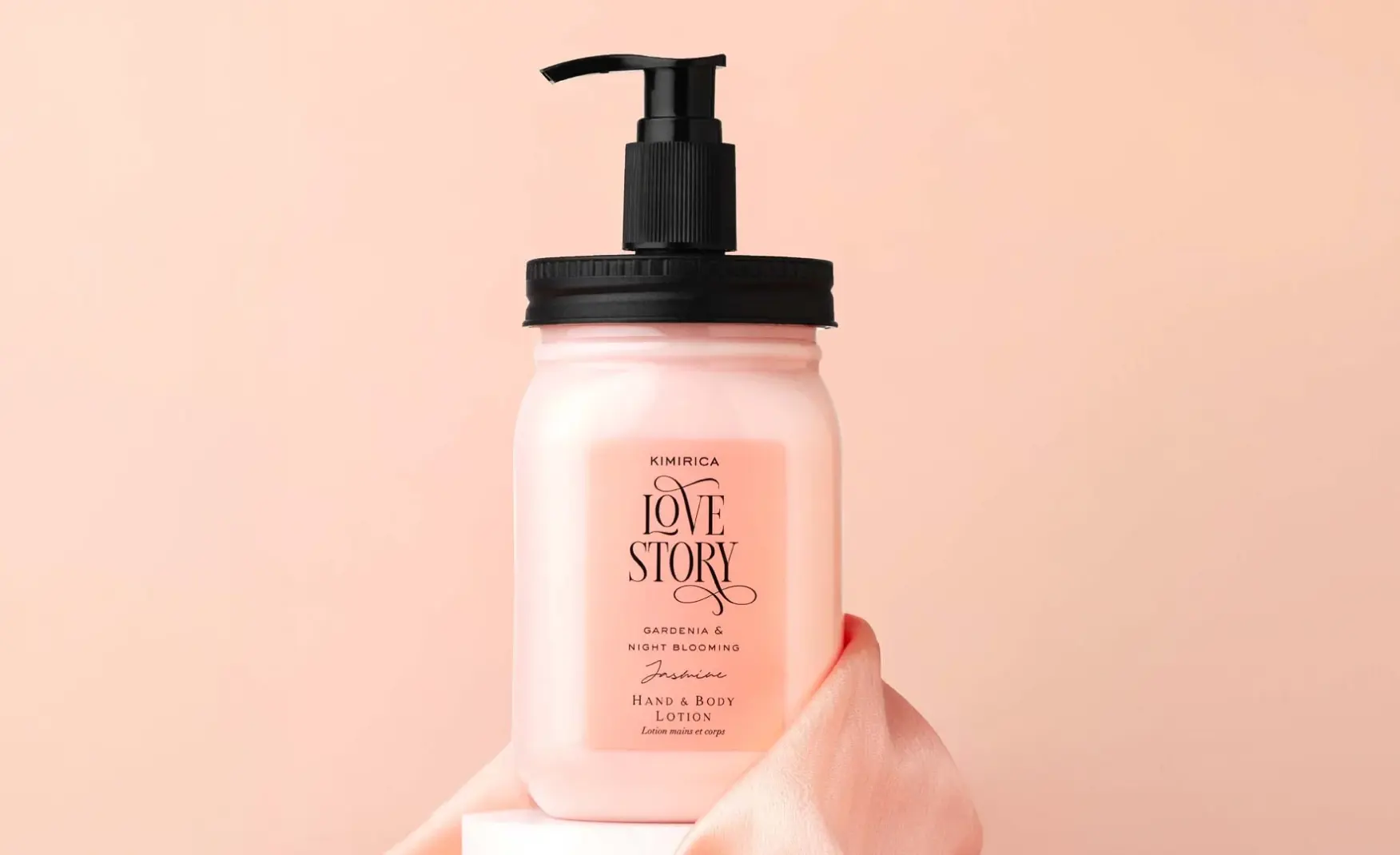
Most consumer beauty brands in India begin with the hardest problem in the category, persuading a stranger to try a product they have never smelled from a name they have never heard.
Kimirica sidestepped that problem entirely by building the opposite way around, with its first business, Kimirica Hunter, manufacturing the soaps, lotions and fragrances that sit in the bathrooms of the world's best hotels. That business seeds trial in the single most persuasive environment a luxury personal-care brand could ask for.
Kimirica Hunter supplies more than 10,000 luxury hotels and airlines, counting Marriott, Hilton, Hyatt, Accor and Air India among its clients, and exports to over 70 countries.
Every one of those placements is a paid product sample delivered in a context that pre-frames the brand as premium, so when a guest later encounters Kimirica on Nykaa or in an airport store, the brand is not starting from zero.
Very few Indian personal-care brands own a trial channel this credible, and fewer still have it paid for by their largest customers, which makes it the closest thing Kimirica has to a moat.
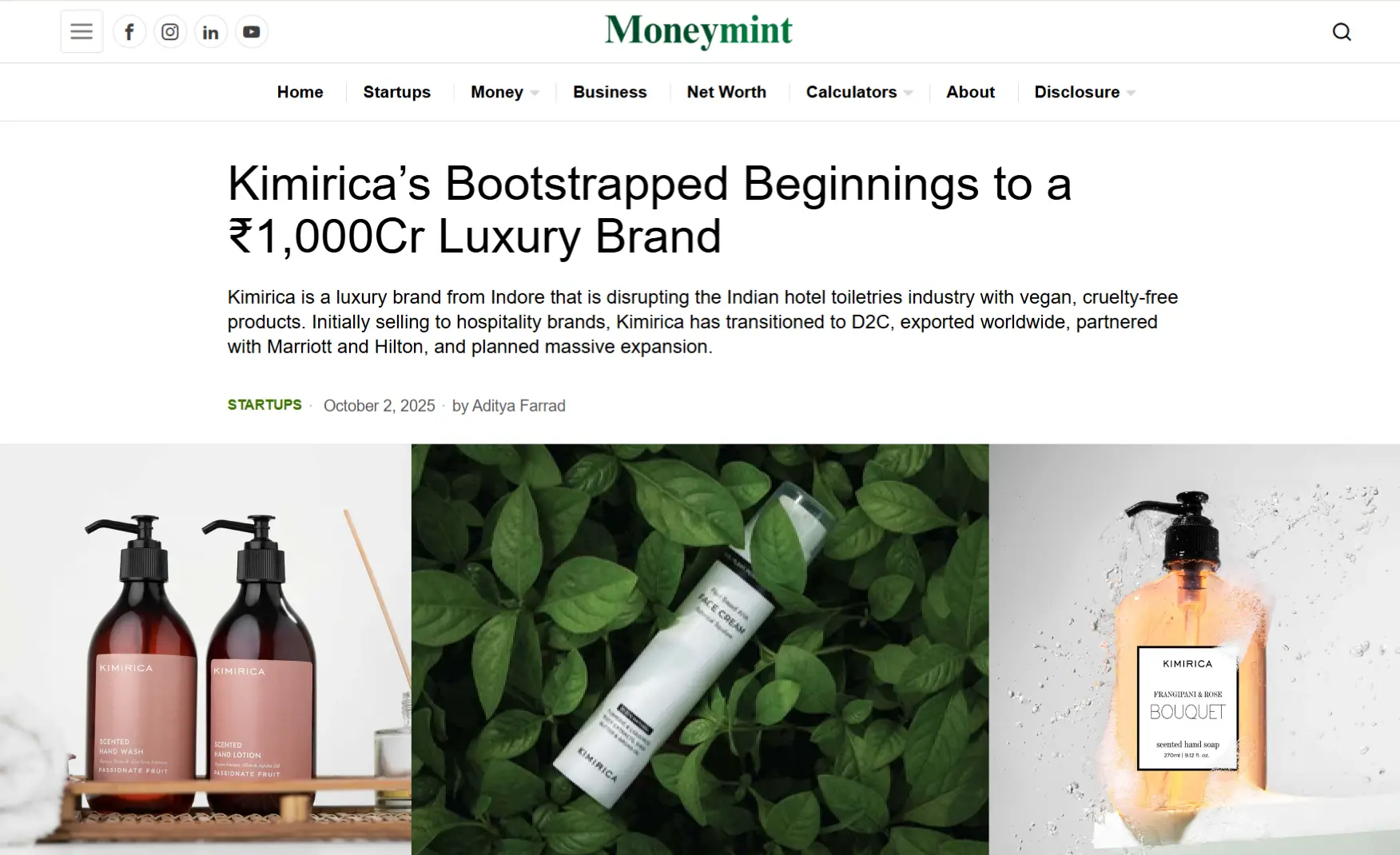
Kimirica did not start as a brand that later found a manufacturer, it started as a manufacturer that later built a brand, and that sequence has given it a structural advantage most D2C companies never acquire.
The business began inside the family's existing manufacturing unit in Indore with borrowed capital of roughly ₹15 lakh, a hundred square feet of floor space and five products. It grew from there under its own control rather than through third-party contract factories.
That control now shows up everywhere in the catalogue, with a brand that owns its production able to carry more than 200 products across skincare, body care, fragrance and men's grooming.
The planned six-lakh-square-foot integrated facility in Indore, with a projected annual capacity in the region of ₹1,500 to 2,000 Cr, is the clearest signal of how central manufacturing remains to the brand's ambition. Its hospitality partner has spoken of building "10X value" since 2017, which underlines how much scale already sits behind the consumer brand most shoppers never see.
When a brand controls its own formulation and filling, packaging and product become a single decision rather than a negotiation, and the sensory consistency luxury depends on becomes something the company can guarantee.

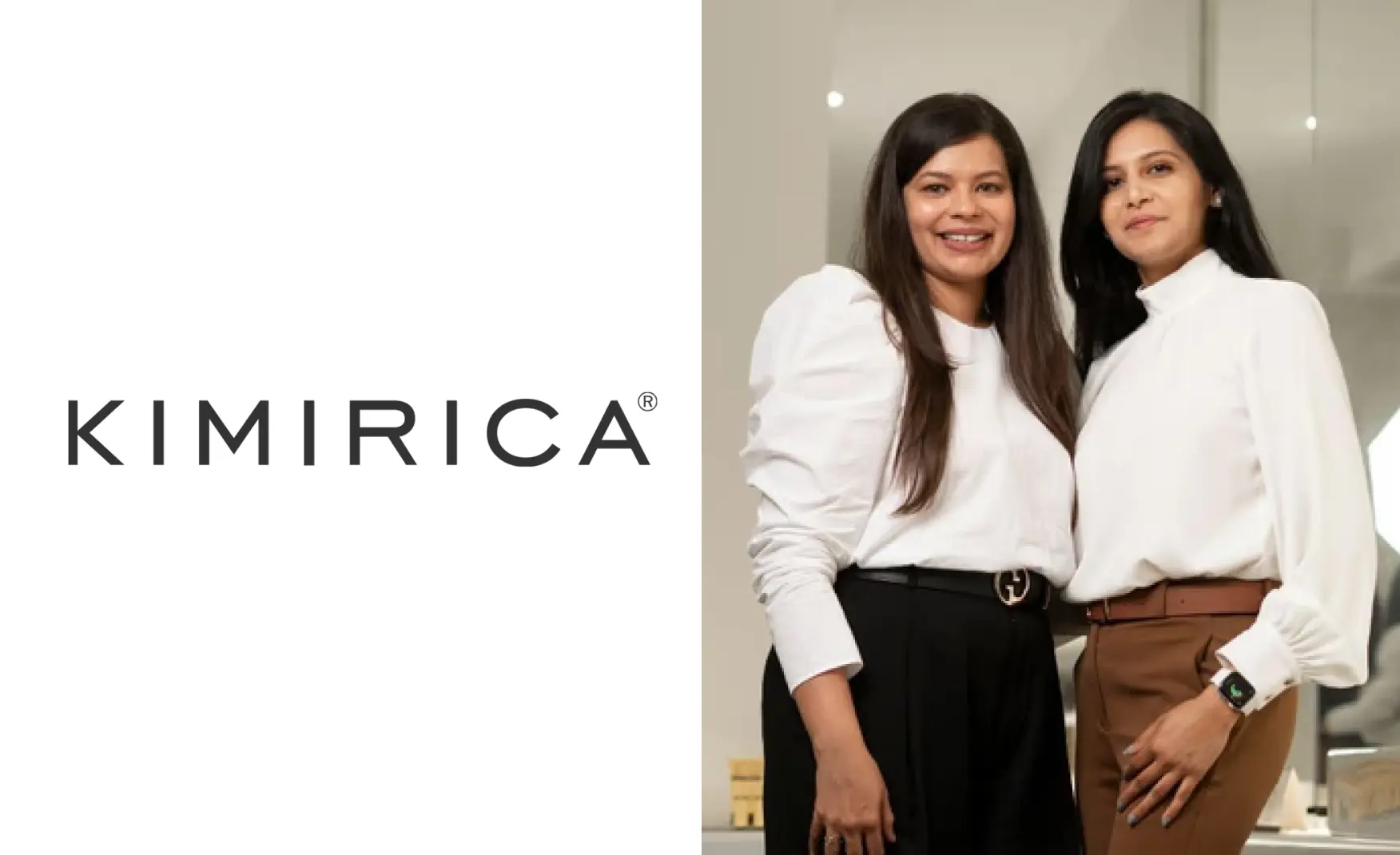
Kimirica is a portmanteau of Kimi and Rica, the two co-founders whose names the brand is literally built from Kimi Jain & Rica Jain, and that origin gives the name a warmth most invented luxury words never have.
It has no dictionary meaning in any language, which frees it from having to translate or explain itself in new markets, yet it sounds premium, is easy to pronounce, and carries genuine recall once heard.
Rather than symbolising an abstract idea, the name quietly encodes a real story of family partnership and shared vision, which is a rarer kind of authenticity than most manufactured brand names can claim.
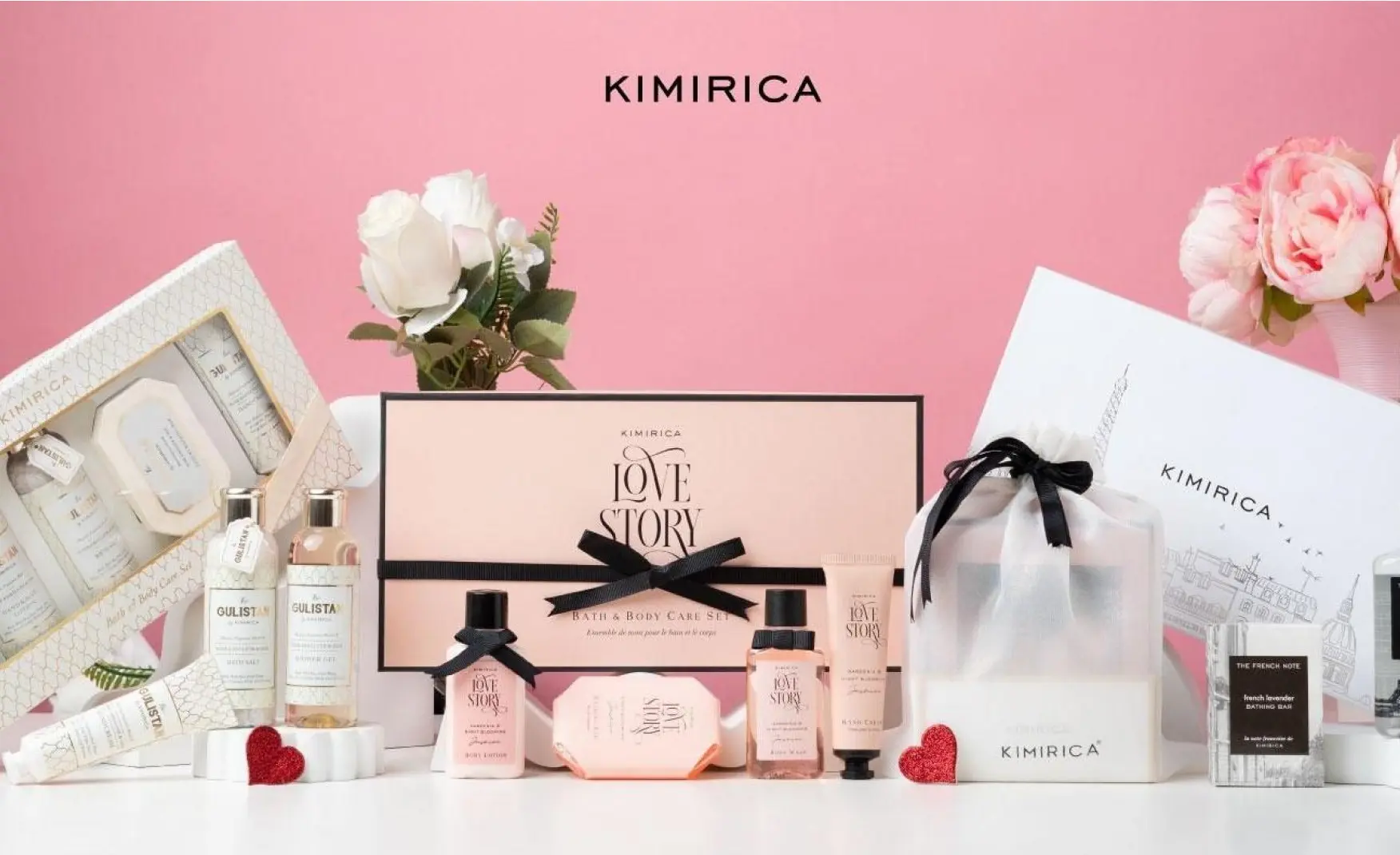
Where a lot of Indian personal-care brands treat the box as protection for the product inside, Kimirica treats the box as the product.
The idea came to Rajat Jain while staying in a five-star hotel and being struck by the shapes and fragrances of the amenity bottles, and that fixation on how a small object looks and feels has carried into everything the consumer brand makes. The result is a catalogue built around presentation, where sets arrive boxed, ribboned and ready to hand over without further wrapping.
Sets like the Love Story bath and body box, curated around notes of gardenia and night-blooming jasmine, are not sold as a shower routine but as a gesture, and customers describe the packaging as something they would expect from a luxury boutique.
That instinct shows up across occasions, from wedding gifts to festive hampers, where a beautifully presented set does the emotional work a plain bottle never could.
Fragrance sits at the centre of this world and holds it together, so a hand cream, a bath salt and a candle can feel like members of the same family even when they serve different needs.
Kimirica arrived at conscious luxury before the phrase became a marketing reflex, and it backed the claim with substance rather than a green logo.
The entire range is positioned as 100% vegan, paraben-free and cruelty-free, with fair-trade-certified sourcing, letting the brand occupy a space becoming the default expectation at the premium end of beauty. Luxury has historically signalled richness while clean beauty has signalled restraint, and brands often end up choosing one language at the cost of the other.
Kimirica refuses that trade-off by making the clean credentials part of what makes the product feel considered, so the vegan formulation reads as a mark of quality rather than a concession.
A formulation story is durable in a way that aesthetics are not, since packaging can be imitated but a consistent, verifiable commitment to how a product is made builds a kind of trust that compounds over time.

Perhaps the most underrated asset Kimirica holds is the discipline written into how it grew.
The company built its way to roughly ₹300 Cr in revenue over more than a decade without institutional funding, and took its first outside capital, the $15M round from Carnelian Asset Management in August 2025, from a position of strength rather than need. A business that has to be profitable to survive develops habits that a well-funded one often never learns.
Underpinning that discipline is an unusually clear operating model, with Rajat Jain leading manufacturing and R&D, Mohit Jain driving sales and D2C, Kimi Jain heading brand experience, and Rica Jain, a medicinal chemist, owning quality assurance.
That division of labour gives the brand genuine depth in exactly the functions a premium personal-care company must get right, rather than a single founder stretched thin across all of them.

The central tension in Kimirica is that most of what the company earns comes from a business the consumer never sees.
The hospitality arm generates the bulk of revenue by supplying amenities that carry a hotel's welcome, not always Kimirica's own story, while the consumer brand the company most wants to build remains the smaller side of the house. That imbalance raises a real question about what Kimirica actually is, a manufacturer with a promising consumer brand attached, or a consumer brand that happens to own a factory.
The answer matters because the two identities pull in different directions, since a hotel-amenities business competes on reliability and scale while a consumer luxury brand competes on distinctiveness and meaning.
The equity Kimirica is trying to build with its ₹1,000 Cr ambition lives almost entirely on the consumer side, and closing the gap between the size of the business and the size of the brand is the work of the next few years.
The consumer brand's greatest strength, its command of gifting, is also its sharpest limitation.
Gifting is occasion-led and seasonal, which makes it a brilliant way to acquire a first customer and a difficult way to build a daily one. A beautifully boxed set is something a person buys for a birthday or an anniversary, and the risk is that Kimirica becomes the brand people love to give without becoming the brand they reach for every morning.
Repeat purchase, the metric that determines whether a personal-care brand compounds or stalls, is harder to earn on gifting than on routine.
Kimirica has the products and the formulation credibility to become a daily ritual for its customers, but the brand's centre of gravity currently sits on the gift table, and moving it toward the shower shelf is a distinct challenge that gifting success can actually disguise.
At the price and positioning Kimirica plays in, the competition is formidable and getting louder.
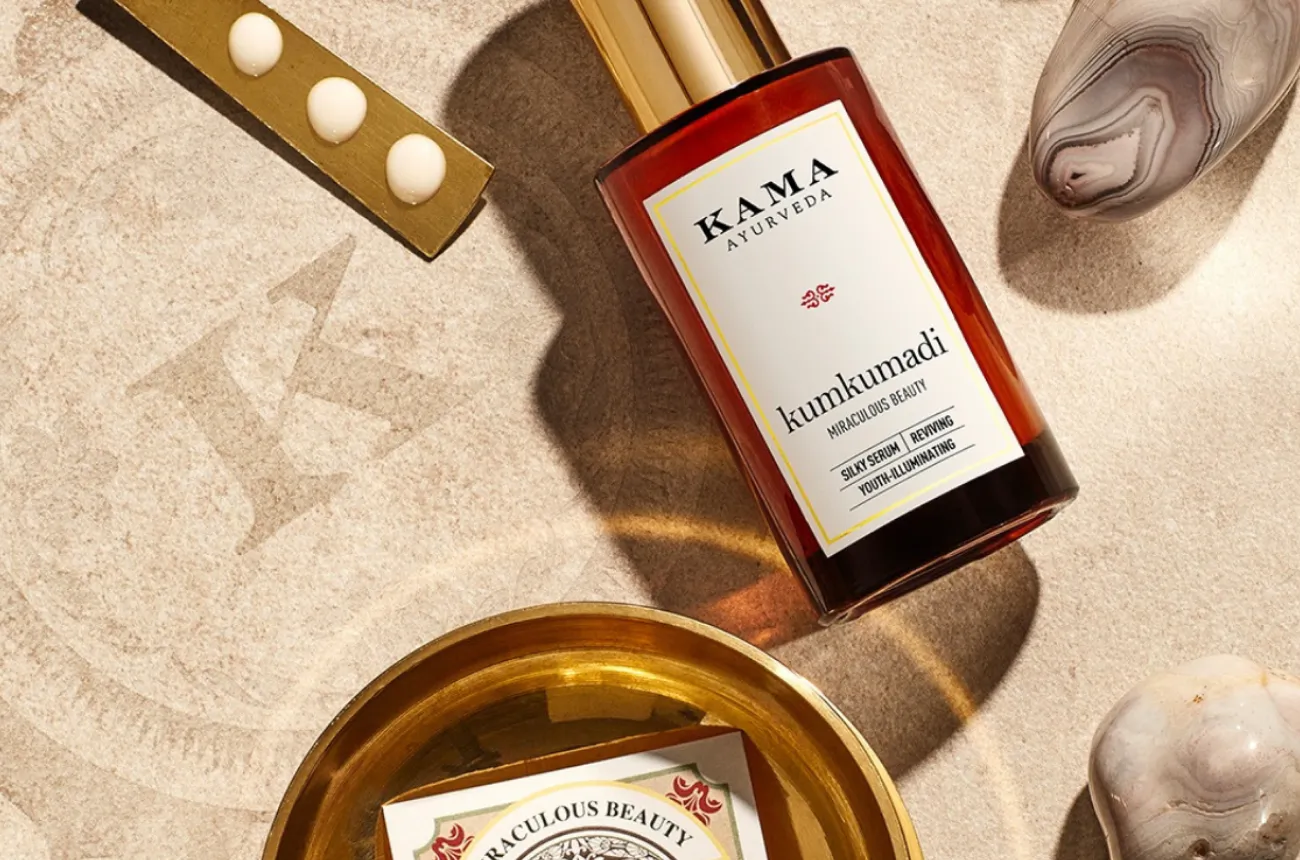
Bath and Body Works is expanding aggressively across Indian malls with a theatrical, fragrance-forward retail experience, Forest Essentials and Kama Ayurveda own the luxury-heritage narrative, and L'Occitane and The Body Shop crowd the same shelves and gift guides. Each of these rivals is associated with one sharp idea, and that single association does a great deal of work in a shopper's memory.
Kimirica's difficulty is that its own point of difference is less immediately legible, since vegan formulation, luxury gifting and a hospitality pedigree are each genuine advantages that do not yet resolve into one idea a consumer can repeat in a sentence.
The brand is tasteful and coherent, which is necessary, but in a category this competitive, coherence without a distinctive claim risks reading as pleasant rather than memorable.
Kimirica's most valuable and least-used asset in consumer marketing is the fact that it already makes the amenities in some of the world's best hotels.
That is a trust story no competitor can copy, because it is not a claim about quality but a demonstration of it, and right now that connection is left largely for the customer to discover when it should be the headline. A line as simple as the idea that this is the house behind the amenities travellers remember does more persuasive work than any generic luxury language.
Confetti would treat the hotel bathroom not as a supply-chain fact to be buried, but as the founding narrative the whole consumer brand is told through.
Kimirica has the raw material for a distinctive identity but has not yet committed to a single organising idea, and the next chapter depends on choosing one.
Whether the brand decides to own conscious sensorial luxury, hospitality-grade indulgence for the home, or fragrance-led gifting, the decision itself is what unlocks a design system with a signature rather than a catalogue that is merely tasteful. Confetti's general experience with vertically integrated beauty brands shows that the most valuable premium identities are recognisable in a fraction of a second, and that recognition comes from committing to a point of view.
The goal is not to abandon the elegance the brand already has, but to give that elegance a spine, so the range stops relying on the ribbon to signal that it is special.
The commercial prize for Kimirica is turning the people who receive its gifts into the people who repurchase its products.
The omnichannel push and the experiential stores are the right tools, but they need to be pointed at retention rather than only acquisition. A clear hero product, a refill or replenishment path, and a ritual the customer builds around a daily-use item are the mechanics that convert a memorable gift into a standing purchase.
The experiential retail expansion across India and the Middle East is a natural place to build this, letting a customer smell and test a product in a way a page never can.
Kimirica is one of the more quietly impressive brand-building stories in Indian personal care, growing from a hundred square feet in a family factory to roughly ₹300 Cr without outside money.
It owns a hospitality-amenities business that both funds the brand and seeds trial in the world's best hotels, and it has a real command of fragrance, formulation and the design of gifting.
The only thing holding it back from the very top of the category is one of identity rather than capability, since most of the business remains invisible to the consumer and its point of difference has not yet resolved into a single ownable idea. None of this is a weakness in the product, it is a gap in how clearly the brand tells the market what it is.
Confetti Design Studio works with founders who have built real manufacturing depth and now need a consumer identity that finally matches it.
Want strategic branding and packaging like this for your business?





.webp)
.webp)

.webp)
.webp)
.webp)
.webp)
.webp)







.svg)
.webp)






.svg)
.svg)
















































































.webp)









.webp)


.svg)