%201.webp)
02
AI Snaps
.svg)
.svg)
01
Our Work
03
About Us
04
Brand Audit
05
Contact Us
06
Client Success
12
07
Blogs
08
Careers
Book A Call
.svg)




Need Help In Building Your Brand?
Click the button below & book a call with our founder directly.

Rishabh Jain
Managing Director
WishCare | Confetti's Verdict ⭐⭐⭐⭐
Confetti Design Studio has analysed WishCare to understand how a Kolkata-based, largely self-funded beauty brand built the most profitable business.
Stuti Kothari, Ankit Kothari and Ayush Kothari built the brand around a simple insight, that effective, research backed ingredients were being priced as a luxury and grew revenue from Rs 70 crore to Rs 350 crore in two years on a single Rs 20 crore funding round.
The audit explores whether WishCare can put its own idea into words before that process prices the brand as a manufacturer rather than a brand. The audit is as per September 2026.
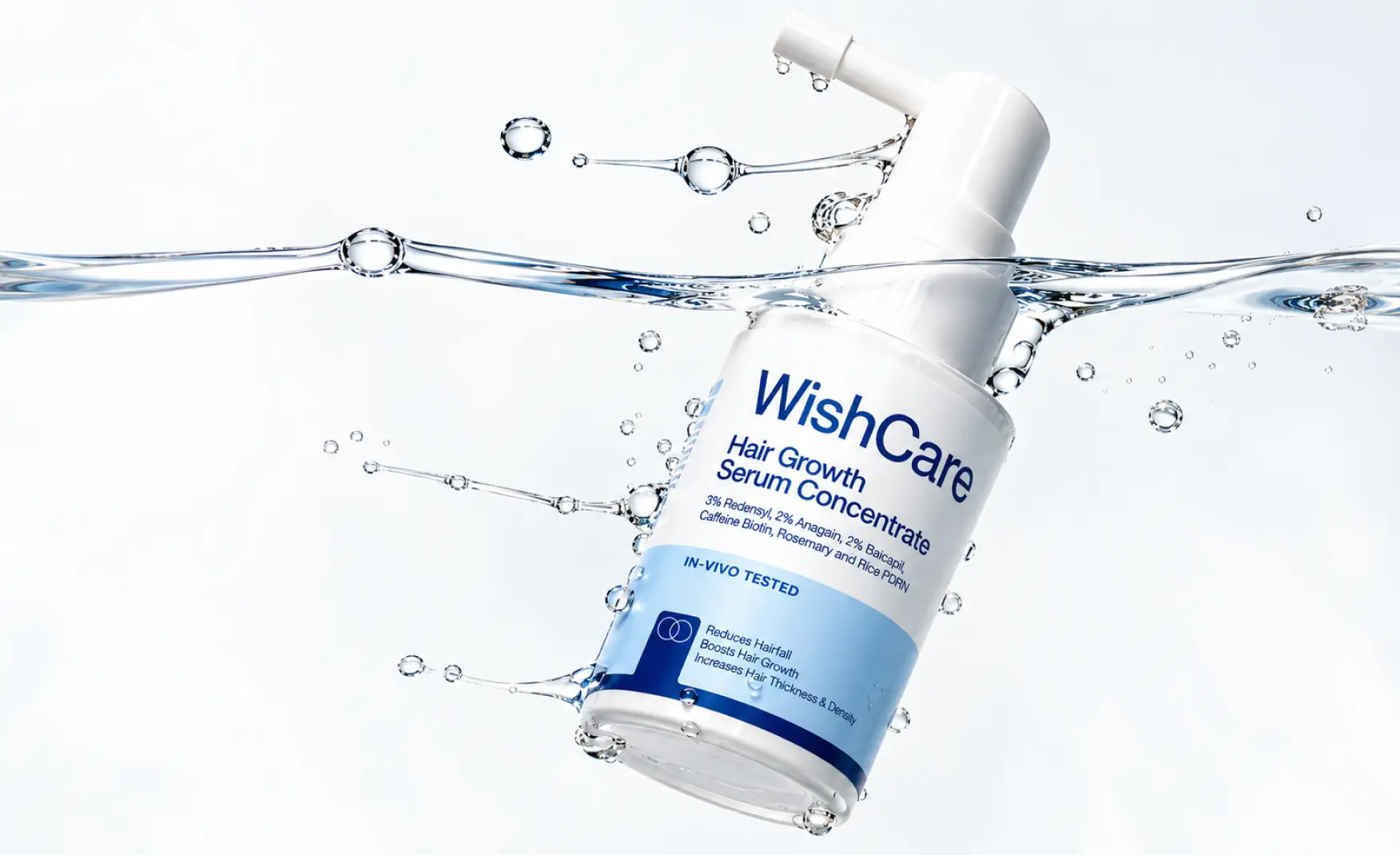
WishCare is running at roughly 29% EBITDA margins on Rs 350 crore of FY26 revenue.
Foxtale lost Rs 73 crore on Rs 199 crore of revenue in the same period, and Nat Habit lost Rs 29 crore on Rs 106 crore.
Most brands in this space are still paying for their growth. Foxtale lost Rs 73 crore on Rs 199 crore of revenue. Nat Habit lost Rs 29 crore on Rs 106 crore.
WishCare, on the other hand, is making roughly Rs 100 crore in profit on Rs 350 crore of revenue, a nearly 29% margin. That's not a small difference. It means WishCare isn't buying customers with discounts and ad spend the way most of its competitors are, it's actually earning them.
For a company looking to acquire WishCare, that one fact alone says more than any brand deck could.
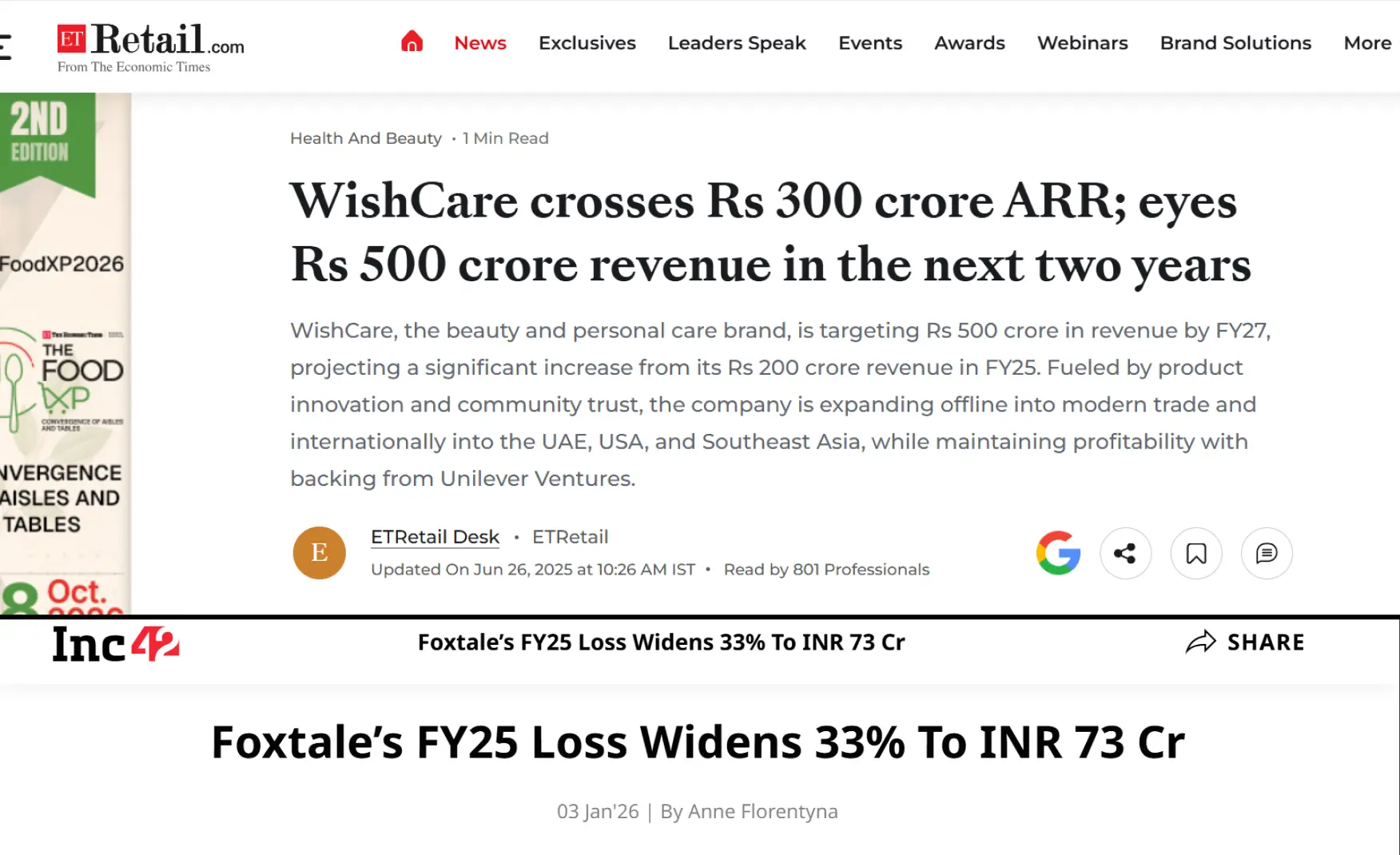

WishCare has raised Rs 20 crore in total, in a single round from Unilever Ventures in 2023.
The founders still own roughly 85% of the company, and revenue has grown tenfold in the two years since that round closed.
That is a different kind of company from the venture funded brands built on repeated rounds and widening losses, and it gives the founders real control over how any exit gets priced.
Stuti Kothari started from a simple observation about pricing.
Pure, cold-pressed oils were being sold as a luxury category when they did not need to be.
Most of the current range still sits between Rs 245 and Rs 695, and that pricing is the direct cause of the volume sitting below the EBITDA margin.
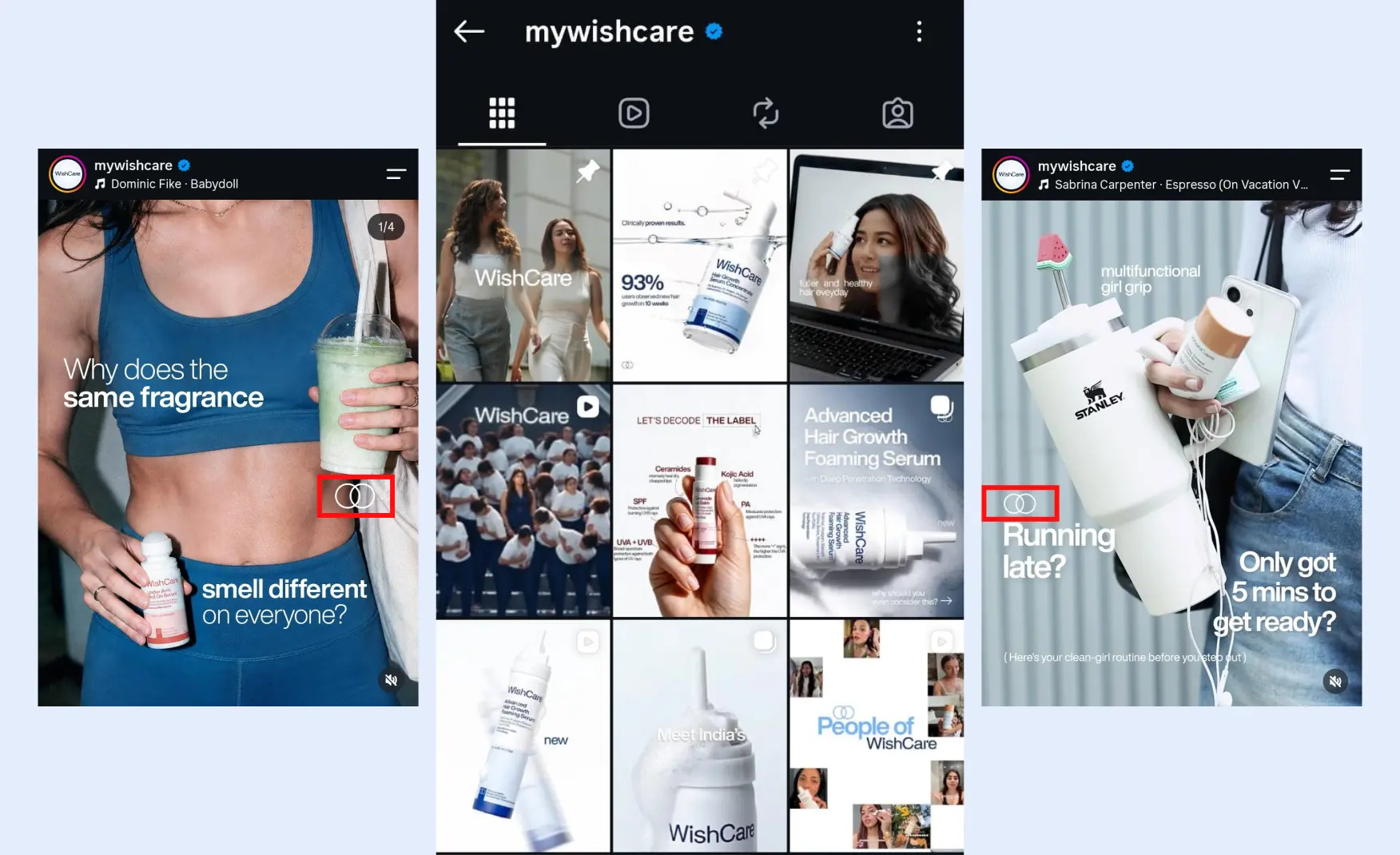
WishCare leans on user-generated content and real customer results rather than styled campaign imagery.
The brand has also collaborated with well known names like Sonakshi Sinha and Parul Gulati, adding a layer of star power to their grounded, real people approach.
The brand logo appears in almost every post, which builds recognition even when the content itself is simple, and the account moves quickly on trends.
The overall feed stays minimal and organised, which keeps everything feeling consistent even with a mix of UGC and celebrity content. Consistent visual branding across content is doing more for recall here.
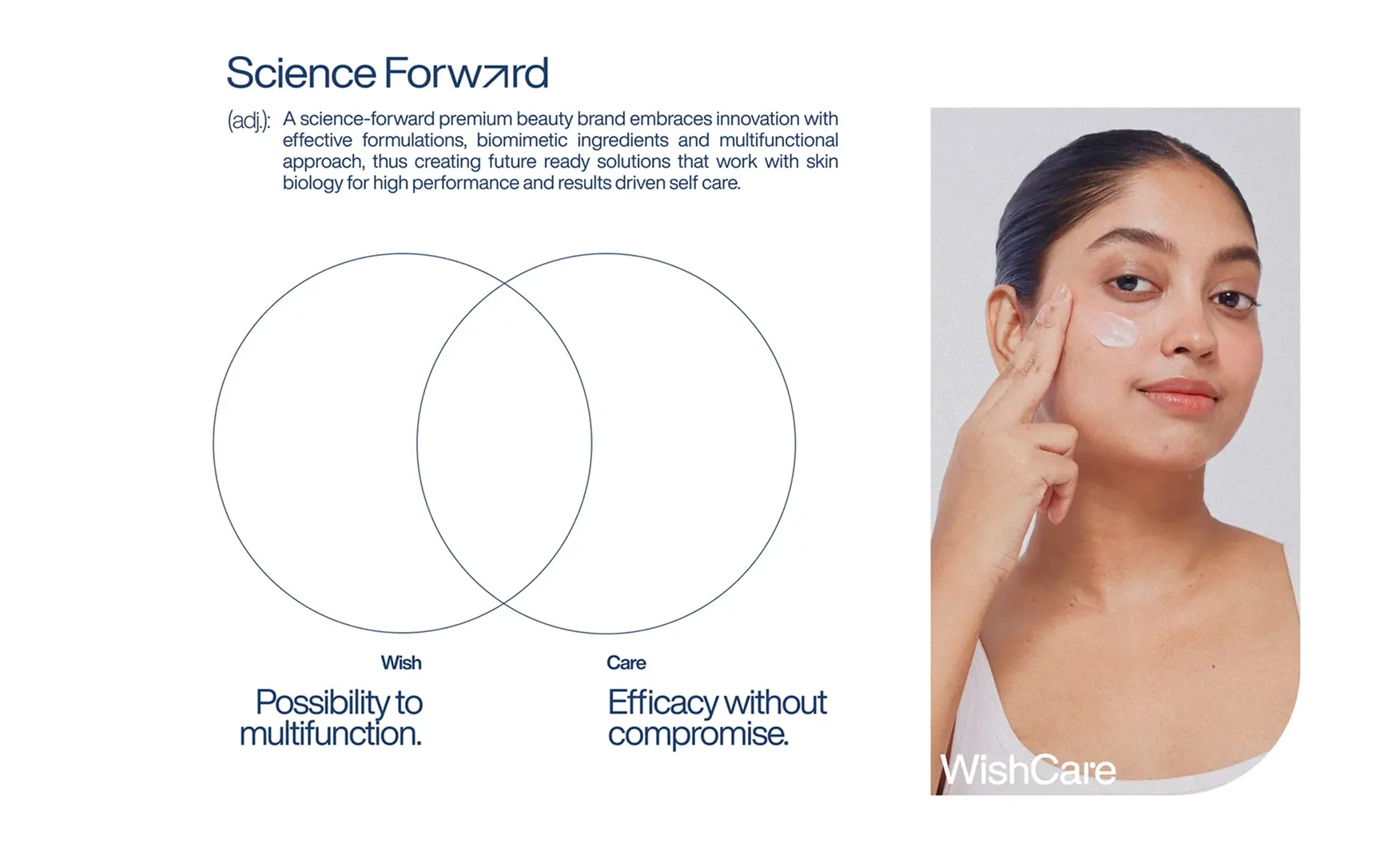
WishCare, the brand name splits into two words that carry the entire brand promise.
"Wish" is the multifunctional promise, the dream of one product doing everything.
"Care" is the efficacy claim, the discipline that makes sure it actually works.
The logo mirrors this directly, two circles overlapping at the center, visually placing the brand exactly between "wants everything" and "needs it to work" gets resolved.
Naming and logo are doing brand strategy.
The feed proves the products work through real customers and real UGC.
It rarely explains the ingredient science behind that result the way Minimalist does, which means WishCare is winning trust through proof rather than through understanding, and loses the chance to teach customers why its two very different product philosophies both deserve that trust.
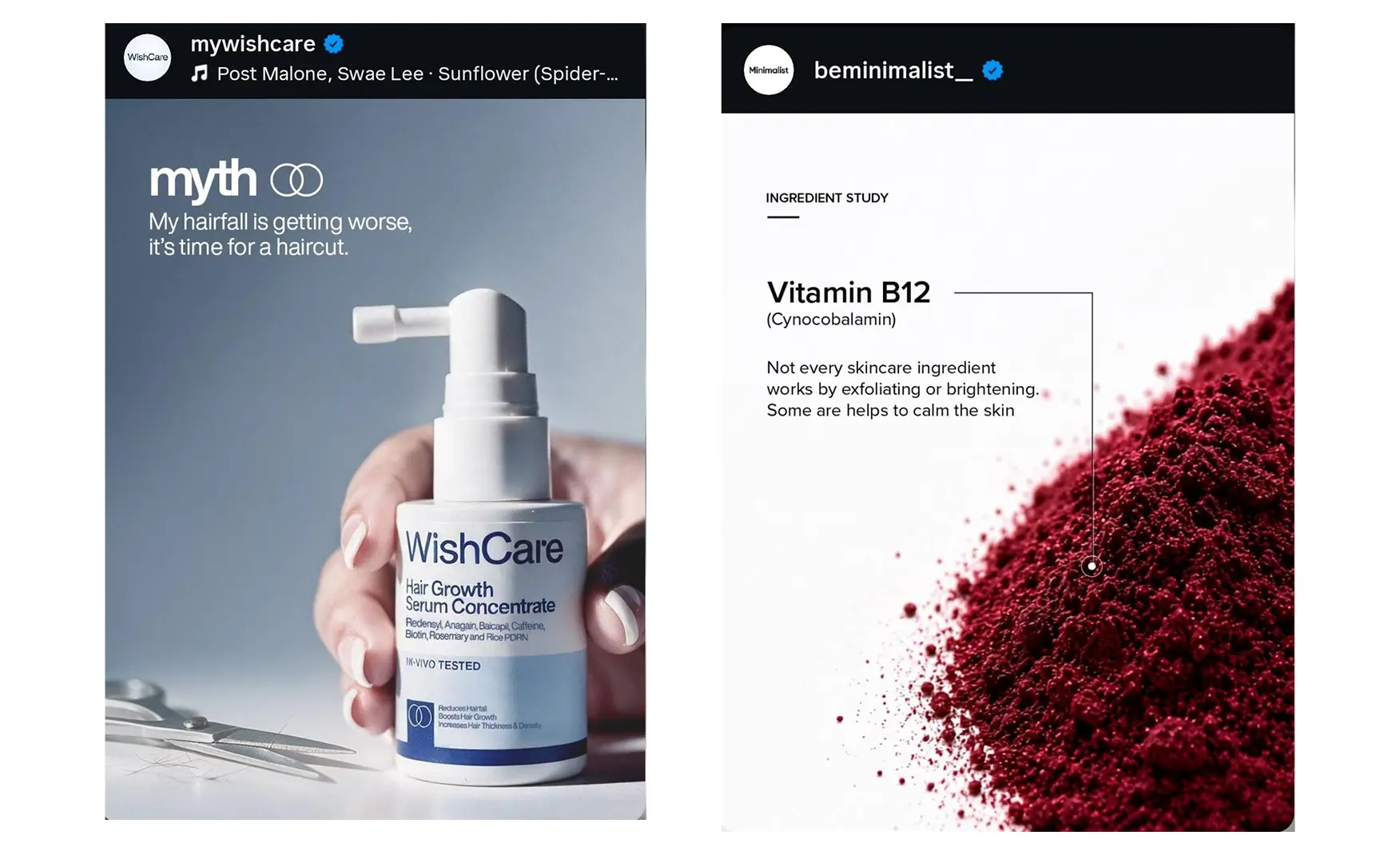
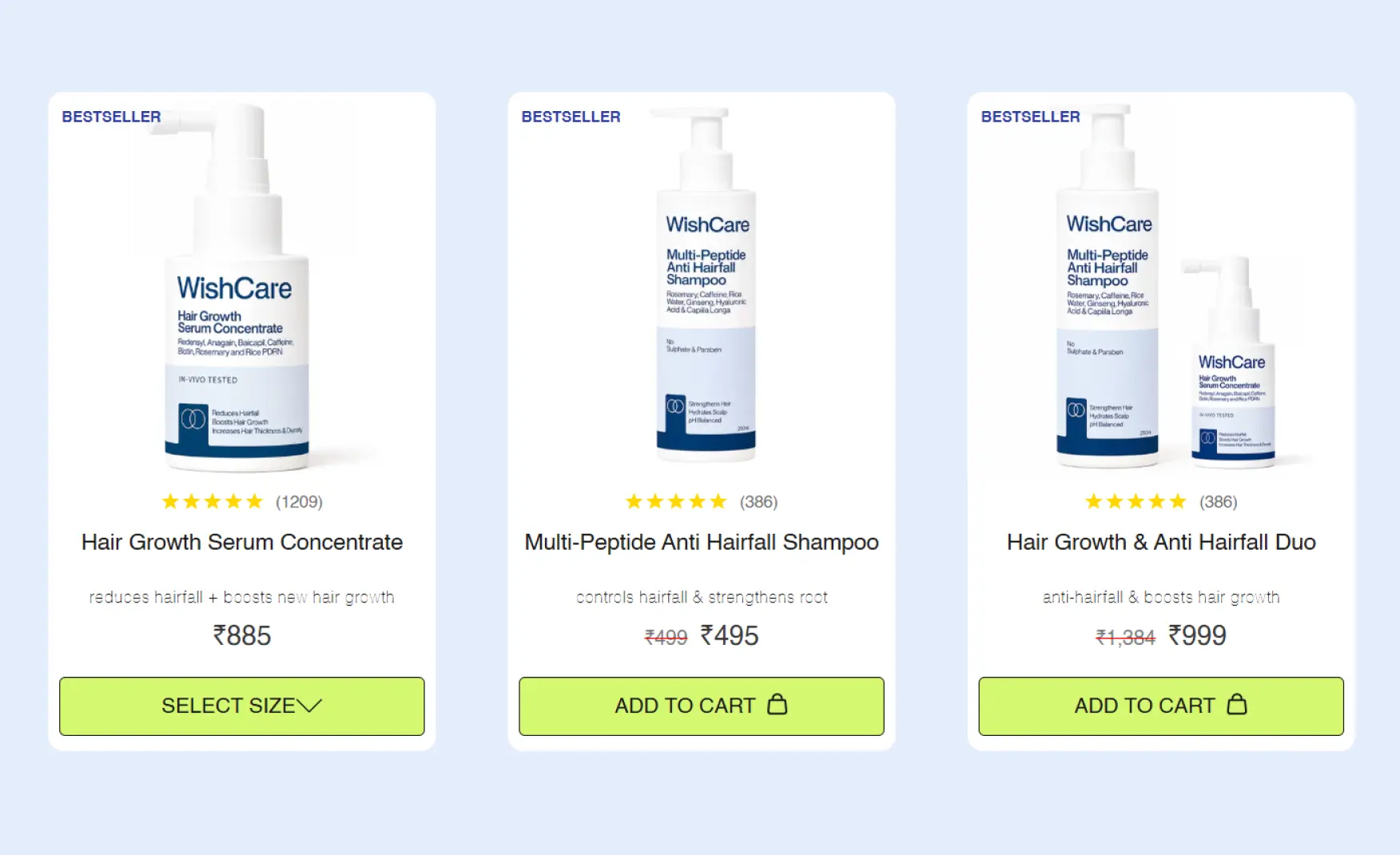
Right now, WishCare sells two very different kinds of products.
On one side, there is a simple castor oil (₹245), sold on the idea that nothing extra was added. On the other side, there is a peptide moisturizer (₹395), sold on lab science and biomimetic formulas.
The packaging and design also need to show that these two products belong together.
One way to do this is to build two clear looks within the same range, one style for the simple, natural products, and one style for the science led products, but both carrying the same small design detail, like a shared colour, symbol, or layout rule, so people can tell at a glance that they come from the same brand.
This kind of work, deciding how a brand's different products should look and feel so they clearly belong together, is exactly what we do. And in WishCare's case, getting this right is not just about looking nicer. It directly affects how much money a buyer is willing to pay when they purchase the company.
WishCare runs its own factory and has never made that part of the story.
Owning your own manufacturing is a real trust signal in a category full of white label brands, and whether or not Kolkata itself becomes part of the narrative.
The fact of control over production is worth saying rather than leaving as an operational detail nobody outside the company knows.
WishCare is the most commercially impressive brand in this batch of audits, profitable at scale, barely diluted, and built on a pricing insight that still holds years later. Very few Indian D2C beauty brands can say all three of those things at once, and WishCare can.
What holds it back from a full score is that the brand has not caught up to the business, and there is now a clock on fixing that. A live sale process means every month without a clear point of view is a month the company risks being valued as a very good manufacturer rather than a brand worth a premium.
If your product range has grown faster than the design system holding it together, this is exactly the work we do. Get in touch with our team at Confetti.
Want strategic branding and packaging like this for your business?





.webp)
.webp)

.webp)
.webp)
.webp)
.webp)
.webp)







.svg)
.webp)




.svg)
.svg)

















































































.webp)








.webp)


.svg)